Method of preparing phosphonium compound for cyclic olefin polymerization
A technology of compound and general formula, applied in the field of preparation of phosphonium compounds, to achieve the effect of high yield
- Summary
- Abstract
- Description
- Claims
- Application Information
AI Technical Summary
Problems solved by technology
Method used
Image


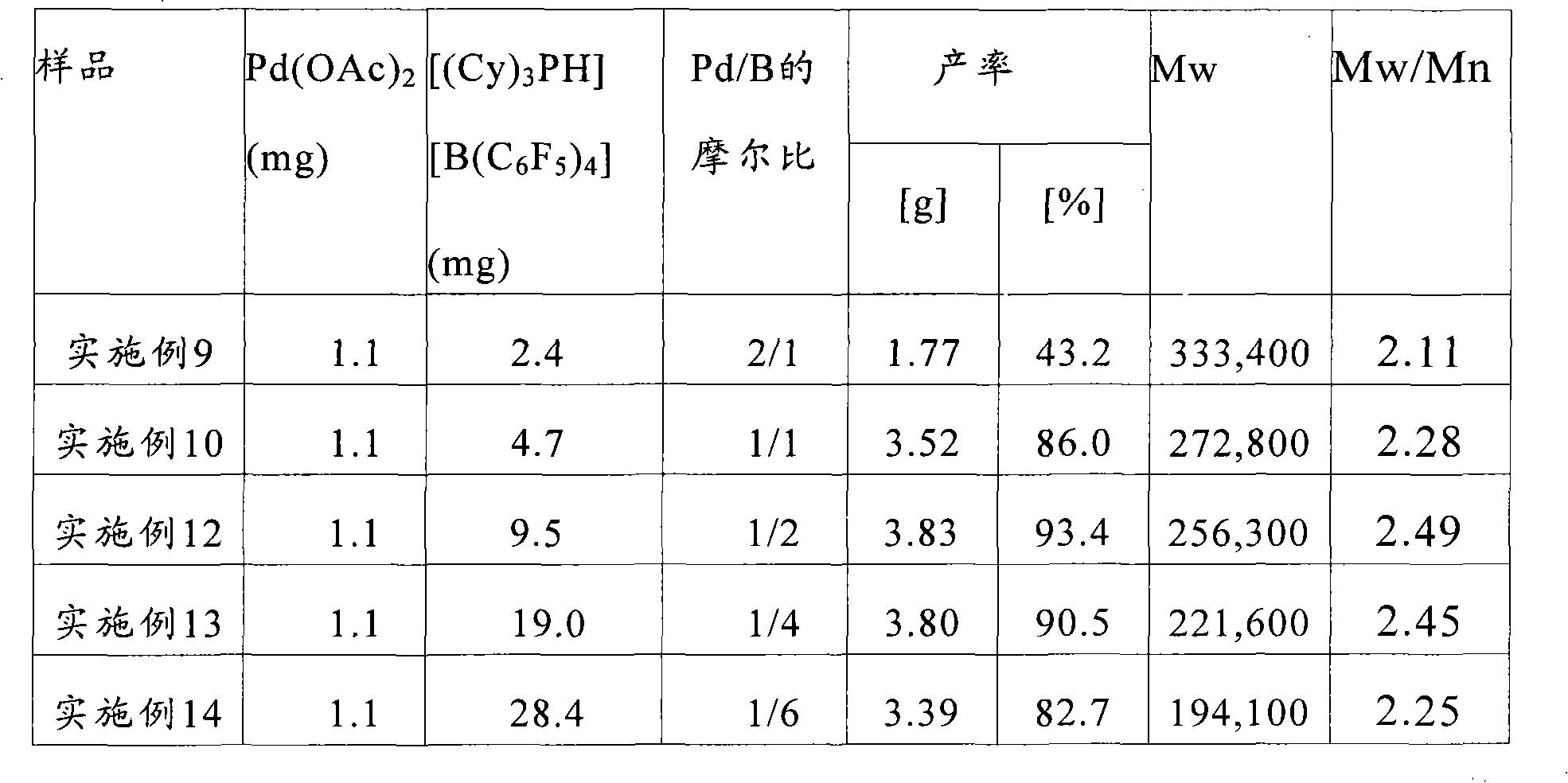
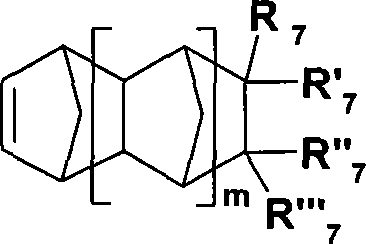
Examples
preparation example Construction
[0056] The preparation method of the present invention may further comprise preparing a phosphonium compound represented by the general formula 2 by treating a phosphine compound represented by the following general formula 4 with an acid:
[0057]
[0058] [(R 1 )-P(R 2 ) a (R 2’ ) b ]
[0059] Among them, R 1 , R 2 , R 2’ , a and b are as defined above.
[0060] In more detail, the phosphonium compound represented by the general formula 2 can be prepared by reacting a protonic acid with the phosphine compound represented by the general formula 4. Here, the protic acid is such as HCl, HBr, HI, HF or HPF 6 Acids that can act as H+ donors. The protic acid is not particularly limited and may be any acid commonly used in the art. The reaction between the phosphine compound represented by the general formula 4 and a protic acid may be performed in a solvent such as hydrocarbon (for example, hexane) and ether to prepare the protic phosphonium compound represented by th...
Embodiment 1
[0099] (Cy) 3 Preparation of PHCl
[0100] Will (Cy) 3 P (2.02 g, 7.2 mmol, Cy=cyclohexyl) was charged into a 250 mL Schlenk flask, and diethyl ether (150 mL) was added thereto. Then, anhydrous HCl (14.4 mL, 1.0 M in ether) was added to the flask at room temperature and the reaction mixture was allowed to react for about 20 minutes. The resulting white precipitate was filtered through a glass filter and washed three times with diethyl ether (80 mL), and the residual solvent was removed in vacuo at room temperature to give (Cy) 3 PHCl (86%, 1.95 g).
[0101] 1 H-NMR (600MHz, CD 2 Cl 2 ): δ7.02~6.23 (d, 1H, J H-P =470Hz), 2.56~1.30(m, 33H); 13 C-NMR (600MHz, CD 2 Cl 2 ): δ28.9(d), 28.5(d), 26.8(d), 25.6(s). 31 P-NMR (600MHz, CD 2 Cl 2 ): δ22.98 (d, J P-H = 470 Hz).
Embodiment 2
[0103] (n-Bu) 3 Preparation of PHCl
[0104] Will (n-Bu) 3 P (2.0 g, 10.0 mmol, n-Bu=n-butyl) was charged into a 250 mL Schlenk flask, and diethyl ether (100 mL) was added thereto. Then, anhydrous HCl (20.0 mL, 1.0 M in ether) was added to the flask at room temperature, and the reaction mixture was allowed to react for about 20 minutes. The resulting white precipitate was filtered through a glass filter and washed with diethyl ether (80 mL), and the residual solvent was removed in vacuo at room temperature to give (n-Bu) 3 PHCl (90%, 2.15 g).
PUM
 Login to View More
 Abstract
Description
Claims
Application Information
 Login to View More
 - R&D
- Intellectual Property
- Life Sciences
- Materials
- Tech Scout
- Unparalleled Data Quality
- Higher Quality Content
- 60% Fewer Hallucinations
Browse by: Latest US Patents, China's latest patents, Technical Efficacy Thesaurus, Application Domain, Technology Topic, Popular Technical Reports.
© 2025 PatSnap. All rights reserved.Legal|Privacy policy|Modern Slavery Act Transparency Statement|Sitemap|About US| Contact US: help@patsnap.com