Check patentability & draft patents in minutes with Patsnap Eureka AI!

Methods and substances for isolation and detection of small polynucleotides

A technology of polynucleotides and detection probes, applied in biochemical equipment and methods, sugar derivatives, microbial determination/inspection, etc., can solve the problems of low abundance expression, low efficiency, expensive, etc.

Inactive Publication Date: 2012-06-27
BIOVENTURES INC
View PDF2 Cites 0 Cited by
  • Summary
  • Abstract
  • Description
  • Claims
  • Application Information

AI Technical Summary

Problems solved by technology

Because of the numerous steps in these processes and the poor efficiencies associated with repeated purification, isolation and identification of miRNAs, current methods are time-consuming, relatively expensive, require relatively large amounts of material and are not fully representative of conditions such as tumors. The population of miRNAs expressed in the sample, or those miRNAs expressed in low abundance
Additionally, these methods do not specifically isolate and characterize miRNAs, but often isolate and characterize siRNA, tRNA, 5S / 5.8SrRNA, and degraded RNA from additional cellular RNAs

Method used

the structure of the environmentally friendly knitted fabric provided by the present invention; figure 2 Flow chart of the yarn wrapping machine for environmentally friendly knitted fabrics and storage devices; image 3 Is the parameter map of the yarn covering machine
View more

Image

Smart Image Click on the blue labels to locate them in the text.
Viewing Examples
Smart Image
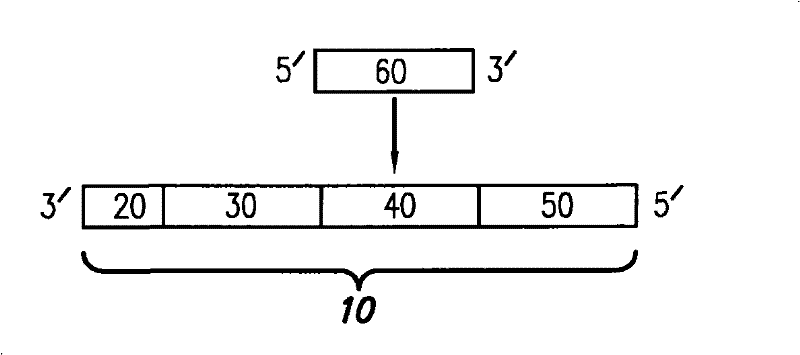
  • Methods and substances for isolation and detection of small polynucleotides
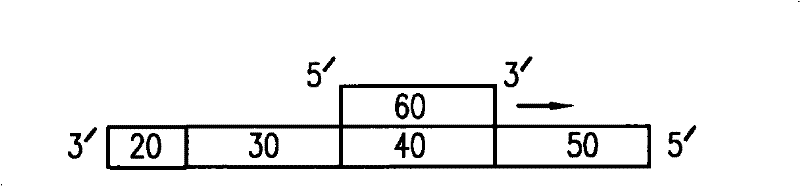
  • Methods and substances for isolation and detection of small polynucleotides
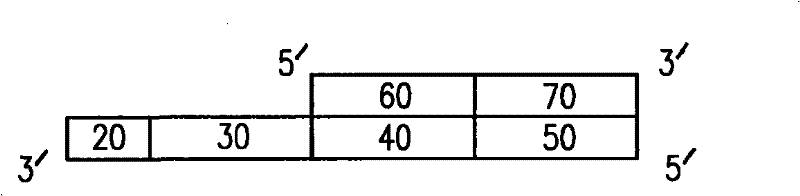
  • Methods and substances for isolation and detection of small polynucleotides

Examples

Experimental program
Comparison scheme
Effect test

Embodiment 1

[0201] One embodiment of the invention is carried out as follows. Human total RNA samples from peripheral blood mononuclear cells were first labeled with the labeling method disclosed in the disclosure, and then hybridized with commercially available miRNA microarray slides to measure the specificity of the isolated hybridization probes prepared by the methods disclosed herein. Fluorescence, and analyze the results.

[0202] small RNA capture-extension probe

[0203] A set of capture-extension probes containing miRNA-binding segments corresponding to 210 single human miRNAs and 2 replicates of 3 other human miRNAs, for a total of 216 capture-extension-probes designed with their corresponding Human miRNAs are fully and specifically complementary, eight examples of which are shown in Table III, with different miRNA binding segments, with associated identical solid phase binding segments, identical extension segments, and identical spacer segments , the solid phase binding segm...

the structure of the environmentally friendly knitted fabric provided by the present invention; figure 2 Flow chart of the yarn wrapping machine for environmentally friendly knitted fabrics and storage devices; image 3 Is the parameter map of the yarn covering machine
Login to View More

PUM

No PUM Login to View More

Abstract

The present invention provides a capture probe suitable for use with methods for isolating, labeling or detecting small polynucleotides. A method for isolating a small polynucleotide of interest from a sample comprising hybridizing the small polynucleotide to the capture probe and lengthening the small polynucleotide by primer extension or ligation. A method for detecting a small polynucleotide of interest following isolation by amplification of the primer extension products and / or hybridization and subsequent cleavage of dual labeled detector probes.

Description

[0001] Cross References to Related Applications [0002] This application claims the rights of U.S. Provisional Patent Application 60 / 824,068 filed on August 30, 2006 entitled "Method and Substances for Isolating RNAs"; Claim to U.S. Provisional Patent Application 60 / 825,888 for "Method and Substances for Isolating RNAs"; claims filed on November 1, 2006 entitled "Method and Substances for Isolating RNAs" and Substances)" U.S. Provisional Patent Application 60 / 863,886; claim U.S. Provisional Patent Application 60 / 866,210, filed November 16, 2006, entitled "Method and Substances for Isolating RNAs" and U.S. Provisional Patent Application 60 / 871,094, entitled "Method and Substances for Isolating RNAs," filed December 20, 2006; the contents of which are incorporated by reference in their entirety incorporated into this disclosure. Background of the invention [0003] There is a wide variety of naturally occurring and synthetic small polynucleotides, which are of scientific and ...

Claims

the structure of the environmentally friendly knitted fabric provided by the present invention; figure 2 Flow chart of the yarn wrapping machine for environmentally friendly knitted fabrics and storage devices; image 3 Is the parameter map of the yarn covering machine
Login to View More

Application Information

Patent Timeline
no application Login to View More
Patent Type & Authority Patents(China)
IPC IPC(8): C12N15/11C12Q1/68C07H21/04
CPCC12Q1/6813C12Q1/682C12Q2525/207C12Q2525/161C12Q2525/143C12Q1/6876
Inventor 艾利尔特·P·道森克里斯蒂·E·旺布尔
Owner BIOVENTURES INC
Features
  • R&D
  • Intellectual Property
  • Life Sciences
  • Materials
  • Tech Scout
Why Patsnap Eureka
  • Unparalleled Data Quality
  • Higher Quality Content
  • 60% Fewer Hallucinations
Social media
Patsnap Eureka Blog
Learn More