Ganoderma strain capable of producing laccase
A technology of Ganoderma lucidum and laccase, applied in the field of biochemistry, can solve the problems of environmental protection, high production cost, and difficult operation
- Summary
- Abstract
- Description
- Claims
- Application Information
AI Technical Summary
Problems solved by technology
Method used
Image

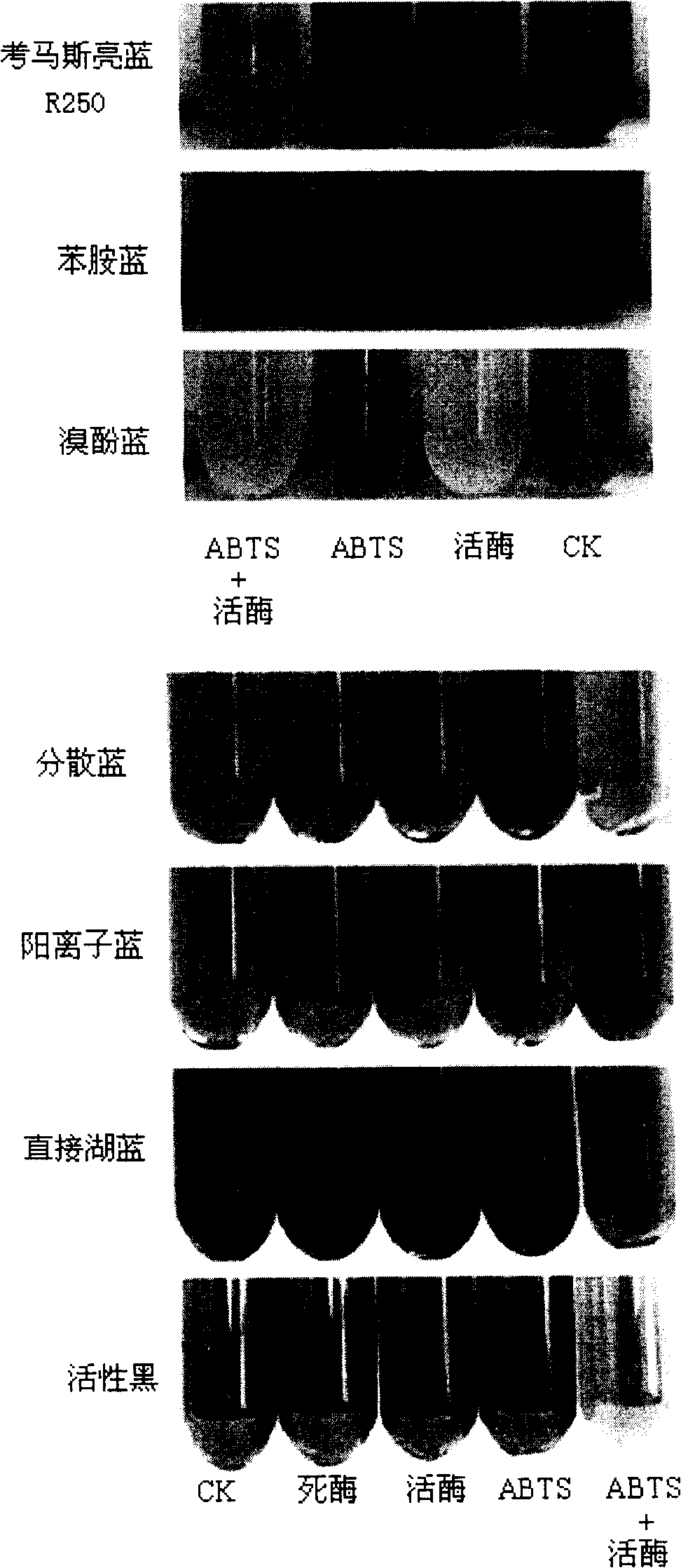
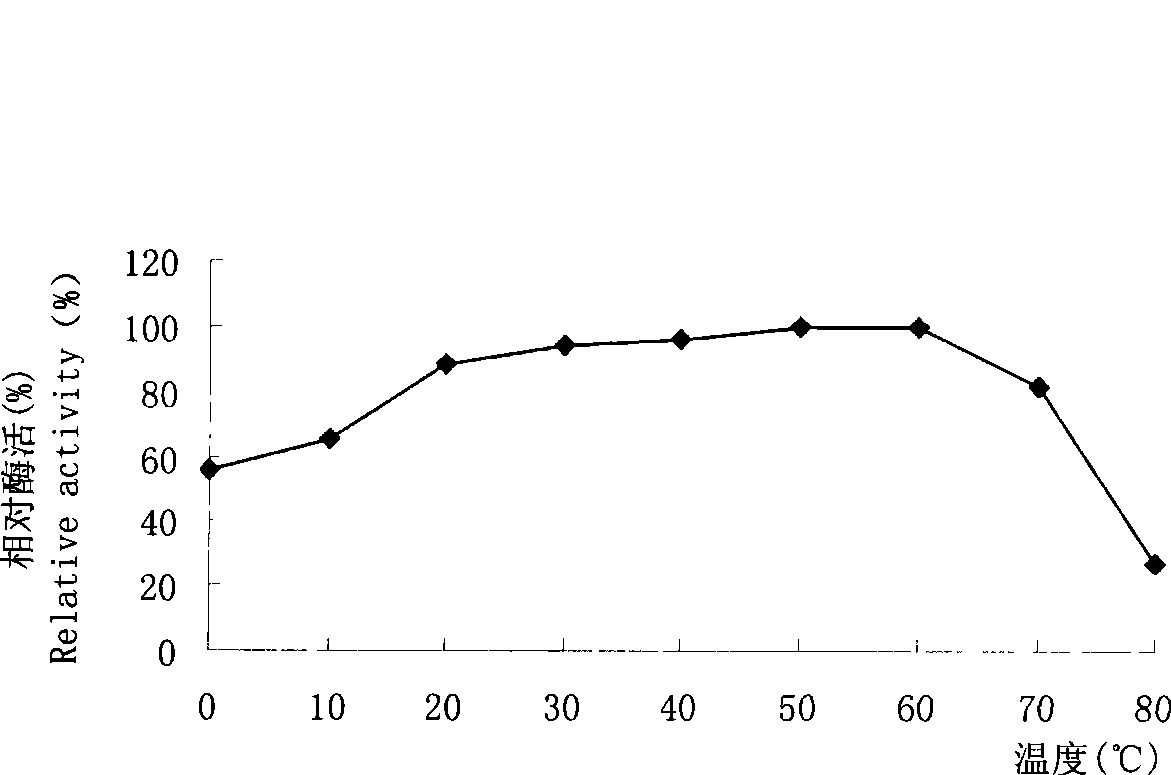

Examples
example 1
[0023] Example 1 Fermentation of Weber Ganoderma lucidum TZC1 in liquid enzyme-producing basal medium
[0024] 1. Strain isolation: The fruiting body of Ganoderma weberianum TZC1 (Ganoderma weberianum TZC1) was isolated and purified by tissue separation method, then transferred to fresh comprehensive PDA slant medium, cultured in an electric thermostat incubator at 28°C for 6 days, and the bacteria were picked The silk block was transferred to the plate by three-point inoculation method, cultured at 28°C for 4 days, and the bacteria on the plate were made into a plug with a diameter of 10 mm and a thickness of 2 mm with a sterile puncher for future use.
[0025] 2. Seed liquid culture: inoculate the seed plug into a 300ml triangular conical flask containing 50mL shake flask seed medium and 10 glass beads with a diameter of 5mm, insert 3 bacterial plugs into each bottle, and inoculate at 28°C, 160r Shake culture under the condition of shaking / min for 4 days.
[0026] 3. Shake ...
example 2
[0031] Example 2 Fermentation of Weber Ganoderma lucidum TZC1 in special culture medium
[0032] 1. Strain isolation: The fruiting body of Ganoderma weberianum TZC1 (Ganoderma weberianum TZC1) was isolated and purified by tissue separation method, then transferred to fresh comprehensive PDA slant medium, cultured in an electric thermostat incubator at 28°C for 6 days, and the bacteria were picked The silk block was transferred to the plate by three-point inoculation method, cultured at 28°C for 4 days, and the bacteria on the plate were made into a plug with a diameter of 10 mm and a thickness of 2 mm with a sterile puncher for future use.
[0033] 2. Seed liquid culture: inoculate the seed plug into a 300ml triangular conical flask containing 50mL shake flask seed medium and 10 glass beads with a diameter of 5mm, insert 3 bacterial plugs into each bottle, and inoculate at 28°C, 160r Shake culture under the condition of shaking / min for 4 days.
[0034] 3. Shake flask fermenta...
example 3
[0039] Example 3 Fermentation of Weber Ganoderma lucidum TZC1 in special culture medium
[0040] 1. Strain isolation: The fruiting body of Ganoderma weberianum TZC1 (Ganoderma weberianum TZC1) was isolated and purified by tissue separation method, then transferred to fresh comprehensive PDA slant medium, cultured in an electric thermostat incubator at 28°C for 6 days, and the bacteria were picked The silk block was transferred to the plate by three-point inoculation method, cultured at 28°C for 4 days, and the bacteria on the plate were made into a plug with a diameter of 10 mm and a thickness of 2 mm with a sterile puncher for future use.
[0041] 2. Seed liquid culture: inoculate the seed plug into a 300ml triangular conical flask containing 50mL shake flask seed medium and 10 glass beads with a diameter of 5mm, insert 3 bacterial plugs into each bottle, and inoculate at 28°C, 160r Shake culture under the condition of shaking / min for 4 days.
[0042] 3. Shake flask fermenta...
PUM
 Login to View More
 Abstract
Description
Claims
Application Information
 Login to View More
 - R&D
- Intellectual Property
- Life Sciences
- Materials
- Tech Scout
- Unparalleled Data Quality
- Higher Quality Content
- 60% Fewer Hallucinations
Browse by: Latest US Patents, China's latest patents, Technical Efficacy Thesaurus, Application Domain, Technology Topic, Popular Technical Reports.
© 2025 PatSnap. All rights reserved.Legal|Privacy policy|Modern Slavery Act Transparency Statement|Sitemap|About US| Contact US: help@patsnap.com