Camera lens
A photographic lens and lens technology, which is applied in the field of photographic lenses, can solve the problems of miniaturization difficulty, difficulty, and long total length of the lens, and achieve the effect of shortening the total length and improving performance
- Summary
- Abstract
- Description
- Claims
- Application Information
AI Technical Summary
Problems solved by technology
Method used
Image

Examples
no. 1 example
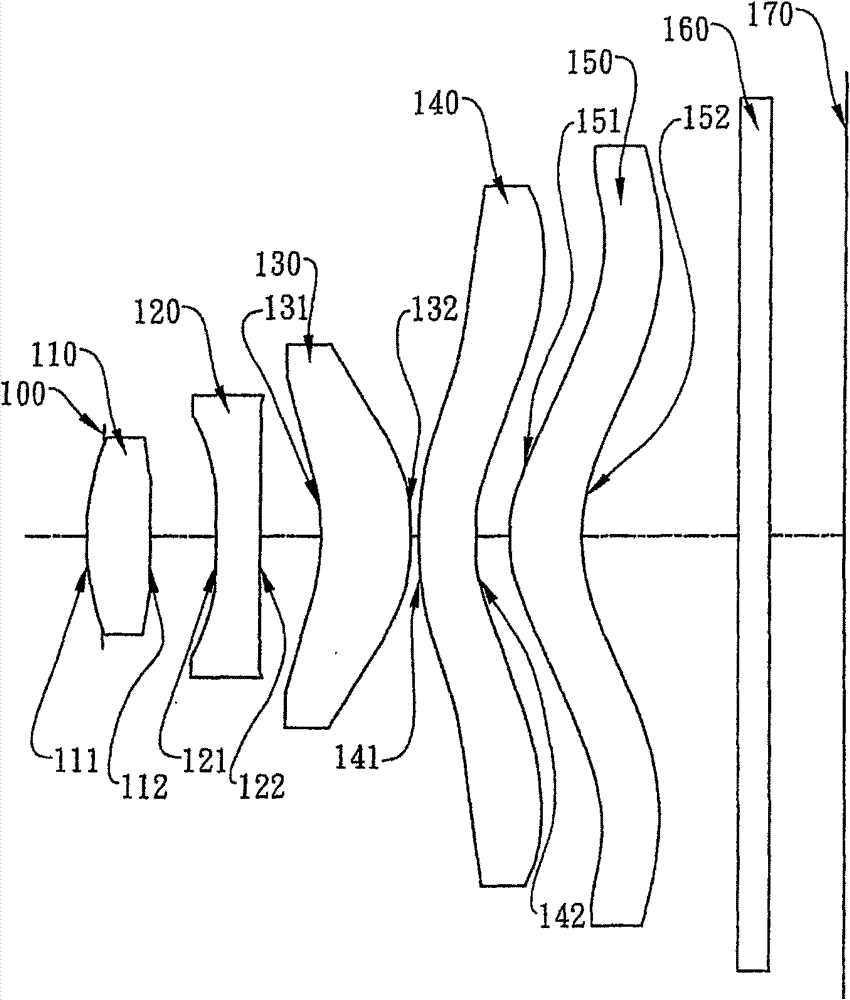
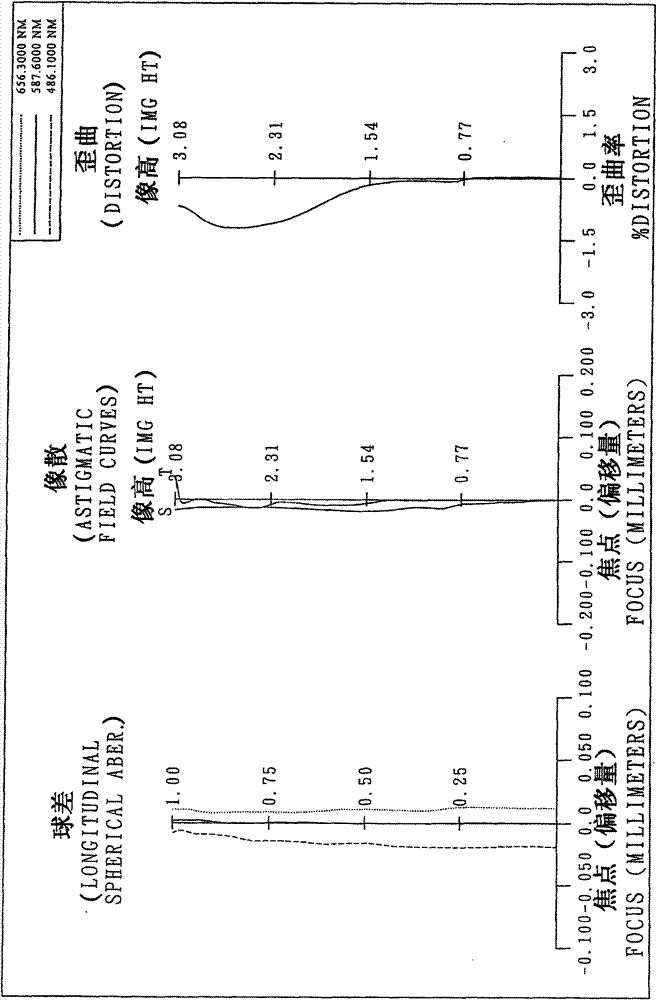
[0088] Please refer to the first embodiment of the present invention Figure 1A , for the aberration curve of the first embodiment, please refer to Figure 1B . The photographic lens of the first embodiment is mainly composed of five lenses, which include sequentially from the object side to the image side:
[0089] A first lens 110 with positive refractive power, its object-side surface 111 and image-side surface 112 are both convex, and its material is plastic, and the object-side surface 111 and image-side surface 112 of the first lens 110 are both aspherical;
[0090] A second lens 120 with negative refractive power, its object-side surface 121 is concave and image-side surface 122 is convex, and its material is plastic. The object-side surface 121 and image-side surface 122 of the second lens 120 are both aspherical ;
[0091] A third lens 130 with positive refractive power, its object side surface 131 is concave and image side surface 132 is convex, its material is pla...
no. 2 example
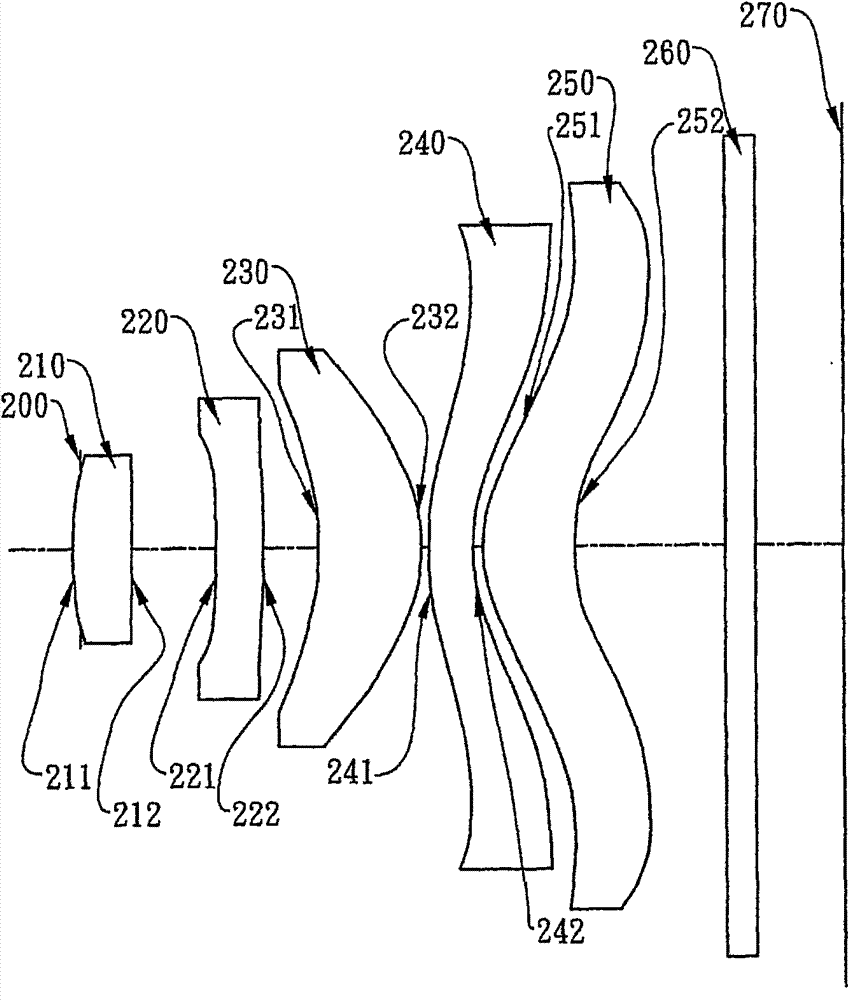
[0120] Please refer to the second embodiment of the present invention Figure 2A , for the aberration curve of the second embodiment, please refer to Figure 2B . The photographic lens of the second embodiment is mainly composed of five lenses, which sequentially include from the object side to the image side:
[0121] A first lens 210 with positive refractive power, its object-side surface 211 and image-side surface 212 are both convex, and its material is plastic, and the object-side surface 211 and image-side surface 212 of the first lens 210 are both aspherical;
[0122] A second lens 220 with negative refractive power, its object-side surface 221 is concave and image-side surface 222 is convex, and its material is plastic. The object-side surface 221 and image-side surface 222 of the second lens 220 are both aspherical ;
[0123] A third lens 230 with positive refractive power, its object-side surface 231 is concave and image-side surface 232 is convex, and its materia...
no. 3 example
[0146] Please refer to the third embodiment of the present invention Figure 3A , for the aberration curve of the third embodiment, please refer to Figure 3B . The photographic lens of the third embodiment is mainly composed of five lenses, which sequentially include from the object side to the image side:
[0147] A first lens 310 with positive refractive power, its object-side surface 311 and image-side surface 312 are both convex, and its material is plastic, and the object-side surface 311 and image-side surface 312 of the first lens 310 are both aspherical;
[0148] A second lens 320 with negative refractive power, its object-side surface 321 is concave and image-side surface 322 is convex, and its material is plastic. The object-side surface 321 and image-side surface 322 of the second lens 320 are both aspherical ;
[0149] A third lens 330 with positive refractive power, its object side surface 331 is concave and image side surface 332 is convex, its material is pl...
PUM
 Login to View More
 Abstract
Description
Claims
Application Information
 Login to View More
 - R&D
- Intellectual Property
- Life Sciences
- Materials
- Tech Scout
- Unparalleled Data Quality
- Higher Quality Content
- 60% Fewer Hallucinations
Browse by: Latest US Patents, China's latest patents, Technical Efficacy Thesaurus, Application Domain, Technology Topic, Popular Technical Reports.
© 2025 PatSnap. All rights reserved.Legal|Privacy policy|Modern Slavery Act Transparency Statement|Sitemap|About US| Contact US: help@patsnap.com