Method for coordinated uplink resource allocation
A downlink and link technology, applied in the field of allocating uplink radio resources, can solve the problems of reduced spectrum efficiency, unoptimistic utilization of information in small cells, and inability to predict TTI6 interference levels in small cells. Uplink performance, effect of expanding capacity
- Summary
- Abstract
- Description
- Claims
- Application Information
AI Technical Summary
Problems solved by technology
Method used
Image

Examples
Embodiment Construction
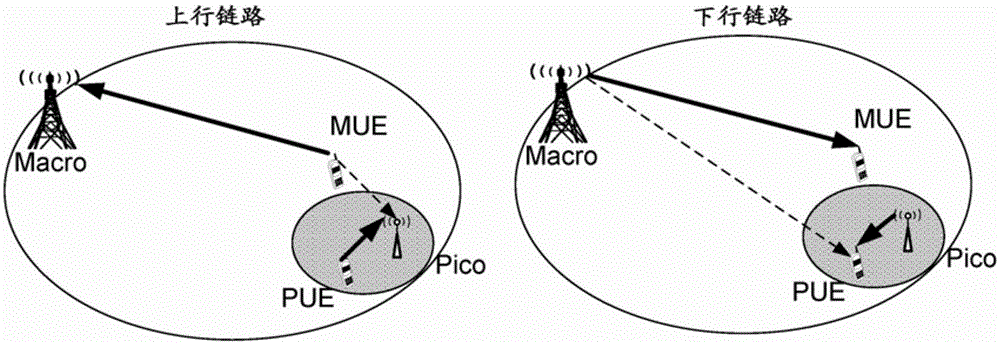
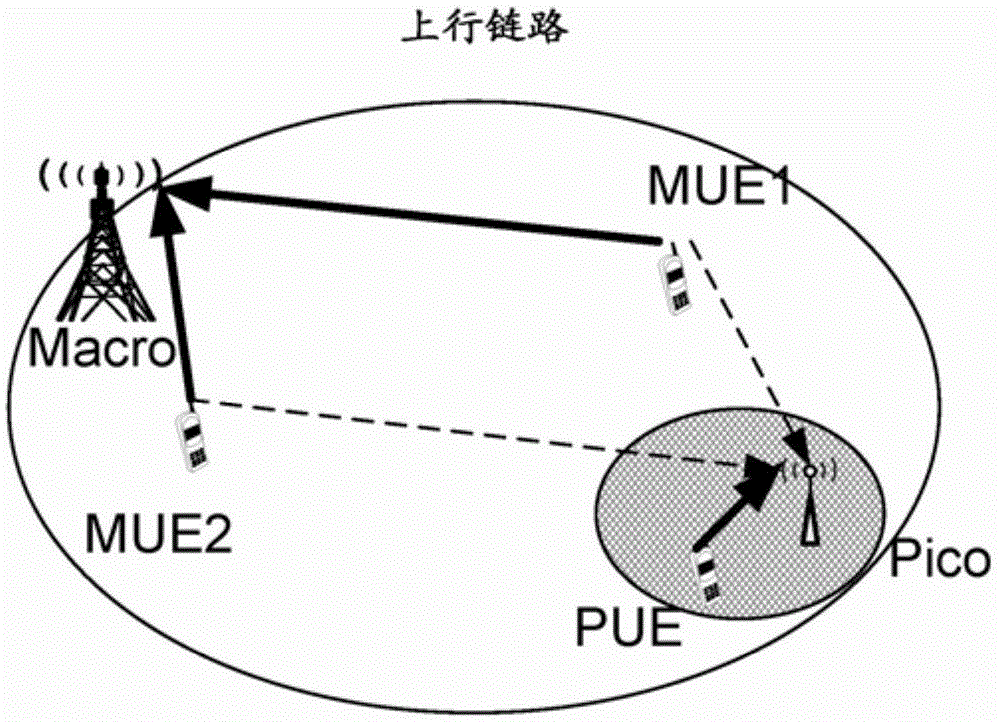
[0100] In order to achieve the above object and other objects, the present invention relates to a method for allocating uplink radio resources in a cellular wireless communication system such as 3GPP Long Term Evolution (LTE, Long Term Evolution) or Enhanced LTE system. The cellular system includes at least one cell of a first type associated with a first control node and one or more first mobile stations served by the first cell, and the system further includes at least one cell of a first type associated with a second control node. a type 2 cell and one or more second mobile stations served by the second cell.
[0101] A typical control node can be a base station, such as an eNB in an LTE system, or other control nodes with corresponding functions, such as a central control entity, such as a virtual base station in a cloud-based radio access network (C-RAN, cloudbasedRadioAccessNetwork) pool. Also, the expression that a mobile station is served by a cell means that the mo...
PUM
 Login to View More
 Abstract
Description
Claims
Application Information
 Login to View More
 - R&D
- Intellectual Property
- Life Sciences
- Materials
- Tech Scout
- Unparalleled Data Quality
- Higher Quality Content
- 60% Fewer Hallucinations
Browse by: Latest US Patents, China's latest patents, Technical Efficacy Thesaurus, Application Domain, Technology Topic, Popular Technical Reports.
© 2025 PatSnap. All rights reserved.Legal|Privacy policy|Modern Slavery Act Transparency Statement|Sitemap|About US| Contact US: help@patsnap.com