Check patentability & draft patents in minutes with Patsnap Eureka AI!

Method for Coordinating Uplink Resource Allocation

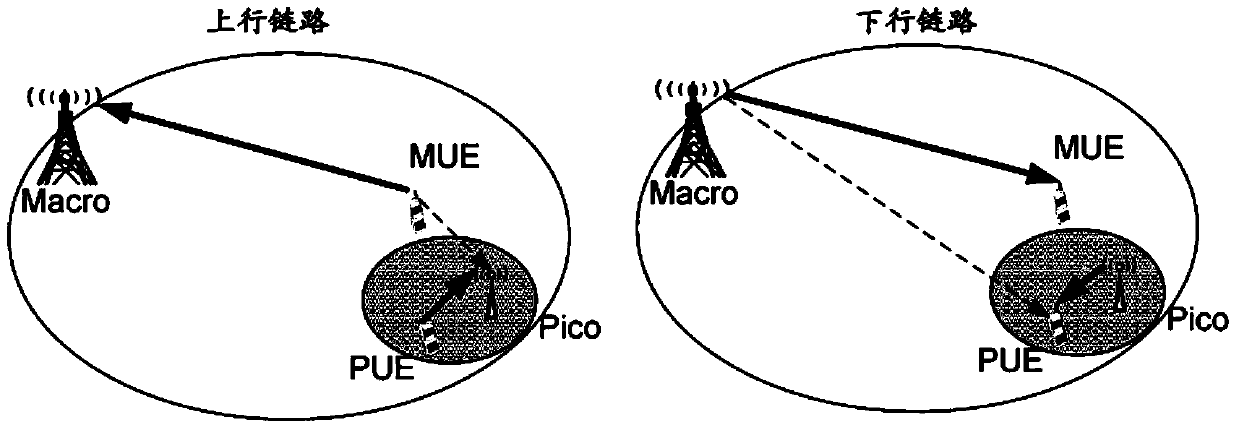
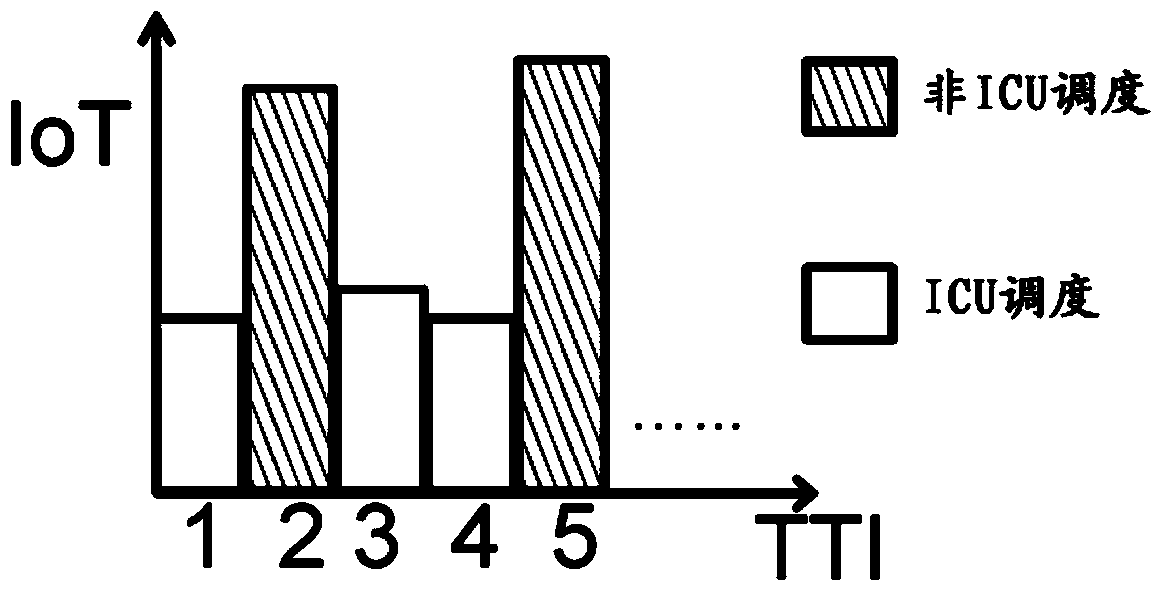
A technology of links and wireless resources, applied in the directions of sub-channel allocation, allocation standards, and distributed allocation of transmission paths, which can solve the problems of reducing spectral efficiency, inability to predict TTI6 interference levels in small cells, and unoptimistic utilization of information in small cells. Achieve the effect of enhancing network performance, enhancing uplink performance, and expanding capacity

Active Publication Date: 2020-07-03
绍兴市寅川软件开发有限公司
View PDF2 Cites 0 Cited by
  • Summary
  • Abstract
  • Description
  • Claims
  • Application Information

AI Technical Summary

Problems solved by technology

The disadvantage of this choice is: Since the small cell cannot predict the interference level of TTI6, if the next TTI is low interference, the selected MCS is too conservative and will reduce the spectral efficiency
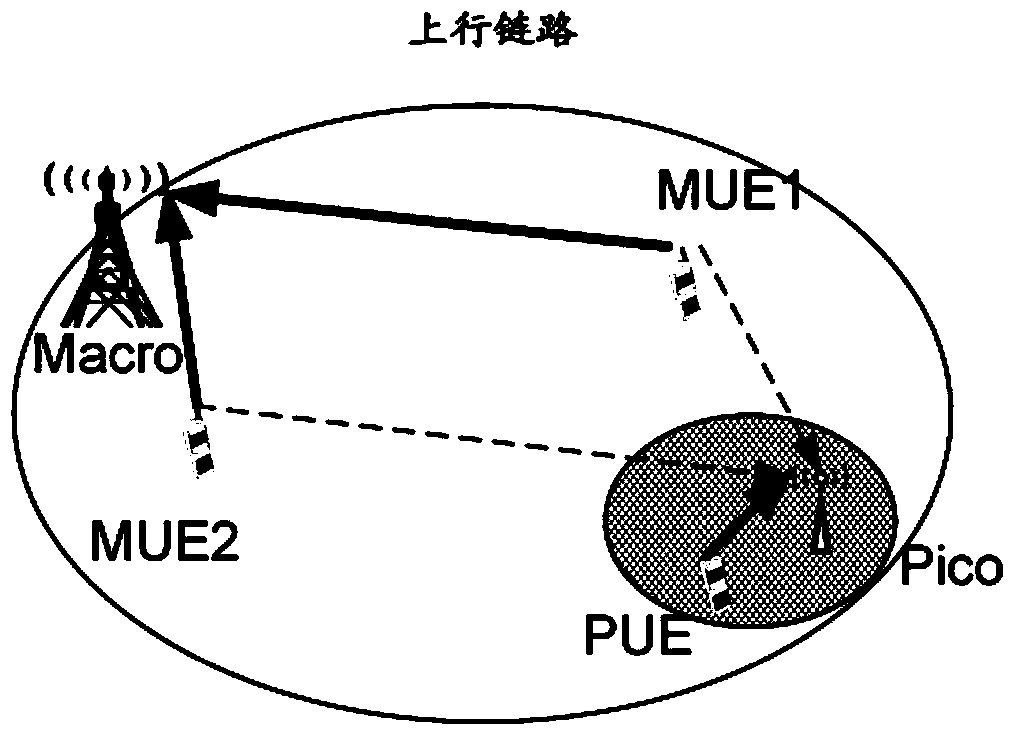
[0040] However, in this solution, although the macro base station has detected the interfering device and also limited the interference in the frequency domain (or carrier domain), the information utilization in the small cell is still not optimistic

Method used

the structure of the environmentally friendly knitted fabric provided by the present invention; figure 2 Flow chart of the yarn wrapping machine for environmentally friendly knitted fabrics and storage devices; image 3 Is the parameter map of the yarn covering machine
View more

Image

Smart Image Click on the blue labels to locate them in the text.
Viewing Examples
Smart Image
  • Method for Coordinating Uplink Resource Allocation
  • Method for Coordinating Uplink Resource Allocation
  • Method for Coordinating Uplink Resource Allocation

Examples

Experimental program
Comparison scheme
Effect test

Embodiment Construction

[0100] In order to achieve the above object and other objects, the present invention relates to a method for allocating uplink radio resources in a cellular wireless communication system such as 3GPP Long Term Evolution (LTE, Long Term Evolution) or Enhanced LTE system. The cellular system includes at least one cell of a first type associated with a first control node and one or more first mobile stations served by the first cell, and the system further includes at least one cell of a first type associated with a second control node. a type 2 cell and one or more second mobile stations served by the second cell.

[0101] A typical control node can be a base station, such as an eNB in ​​an LTE system, or other control nodes with corresponding functions, such as a central control entity, such as in a cloud-based radio access network (C-RAN, cloud based RadioAccess Network) virtual base station pool. Also, the expression that a mobile station is served by a cell means that the m...

the structure of the environmentally friendly knitted fabric provided by the present invention; figure 2 Flow chart of the yarn wrapping machine for environmentally friendly knitted fabrics and storage devices; image 3 Is the parameter map of the yarn covering machine
Login to View More

PUM

No PUM Login to View More

Abstract

The invention relates to a method for allocating uplink radio resources in a cellular radio communication system comprising: at least one first cell associated with a first control node and a cell served by said first cell or more first mobile stations, and at least one second cell associated with a second control node and one or more second mobile stations served by said second cell; and said method comprises the steps of: The first control node groups the one or more first mobile stations into at least two different groups according to the interference impact of the first mobile stations on the second cell; the first control node based on the grouping allocating uplink radio resources of the first cell for the one or more first mobile stations, thereby obtaining a first radio resource allocation pattern for the one or more first mobile stations; the The first control node transmits a first message including the first radio resource allocation mode; the second control node receives the first message including the first radio resource allocation mode; and the second control node based on the The first radio resource allocation mode allocates uplink radio resources of the second cell to one or more second mobile stations. Furthermore, the invention also relates to a method in a first control node, a method in a second control node, a first control node device, a second control node device, a computer program, and a computer program product thereof.

Description

technical field [0001] The invention relates to a method for allocating uplink radio resources in a cellular radio communication system. Furthermore, the invention also relates to a method in a first control node, a method in a second control node, a first control node device, a second control node device, a computer program, and a computer program product thereof. Background technique [0002] In a heterogeneous network (HetNet, Heterogeneous Network) environment, when more and more cells and mobile stations such as user equipment (UE, User Equipment) become part of the network, the interference in the network will also become more and more complex. The interference situation together with the imbalance of uplink (UL, uplink) and downlink (DL, downlink) interference and the huge uplink interference variation poses a great challenge to the network. [0003] In order to better utilize the radio resources of small cells (such as microcells, picocells and femtocells), differe...

Claims

the structure of the environmentally friendly knitted fabric provided by the present invention; figure 2 Flow chart of the yarn wrapping machine for environmentally friendly knitted fabrics and storage devices; image 3 Is the parameter map of the yarn covering machine
Login to View More

Application Information

Patent Timeline
no application Login to View More
Patent Type & Authority Patents(China)
IPC IPC(8): H04W72/08H04W72/04H04W72/54
CPCH04L5/0035H04L5/0073H04W72/27H04W72/541
Inventor 周国华克里斯特·卡尔福特
Owner 绍兴市寅川软件开发有限公司
Features
  • R&D
  • Intellectual Property
  • Life Sciences
  • Materials
  • Tech Scout
Why Patsnap Eureka
  • Unparalleled Data Quality
  • Higher Quality Content
  • 60% Fewer Hallucinations
Social media
Patsnap Eureka Blog
Learn More