Primer and method for detecting variable adenylate site usage of ostc gene mrna
A variable adenosine, gene technology, applied in biochemical equipment and methods, DNA/RNA fragments, recombinant DNA technology, etc., can solve the problems of low virus content, short viremia time, high detection cost, and achieve specificity. The effect of good performance, convenient and fast detection method and high sensitivity
- Summary
- Abstract
- Description
- Claims
- Application Information
AI Technical Summary
Problems solved by technology
Method used
Image


Examples
Embodiment 1
[0026] Use 1×10 5 pfu Md5 (Marek's disease virus Md5, MDV Md5) infected a single layer of CEF cells (chicken embryo fibroblasts), using uninfected CEF cells as a control, collected cells after 18h, 36h, 54h, and 72h, and extracted total RNA; After digesting DNA, detect OD260 / 280, and the ratio is 2.0-2.1 as qualified. Qualified total RNA was constructed for SAPAS (sequence of alternative polyadenylation site, SAPAS) library, and the constructed library was subjected to high-throughput sequencing on the Hi-Seq-2500 platform, and the sequencing results were analyzed by APA (alternative polyadenylation, APA) .
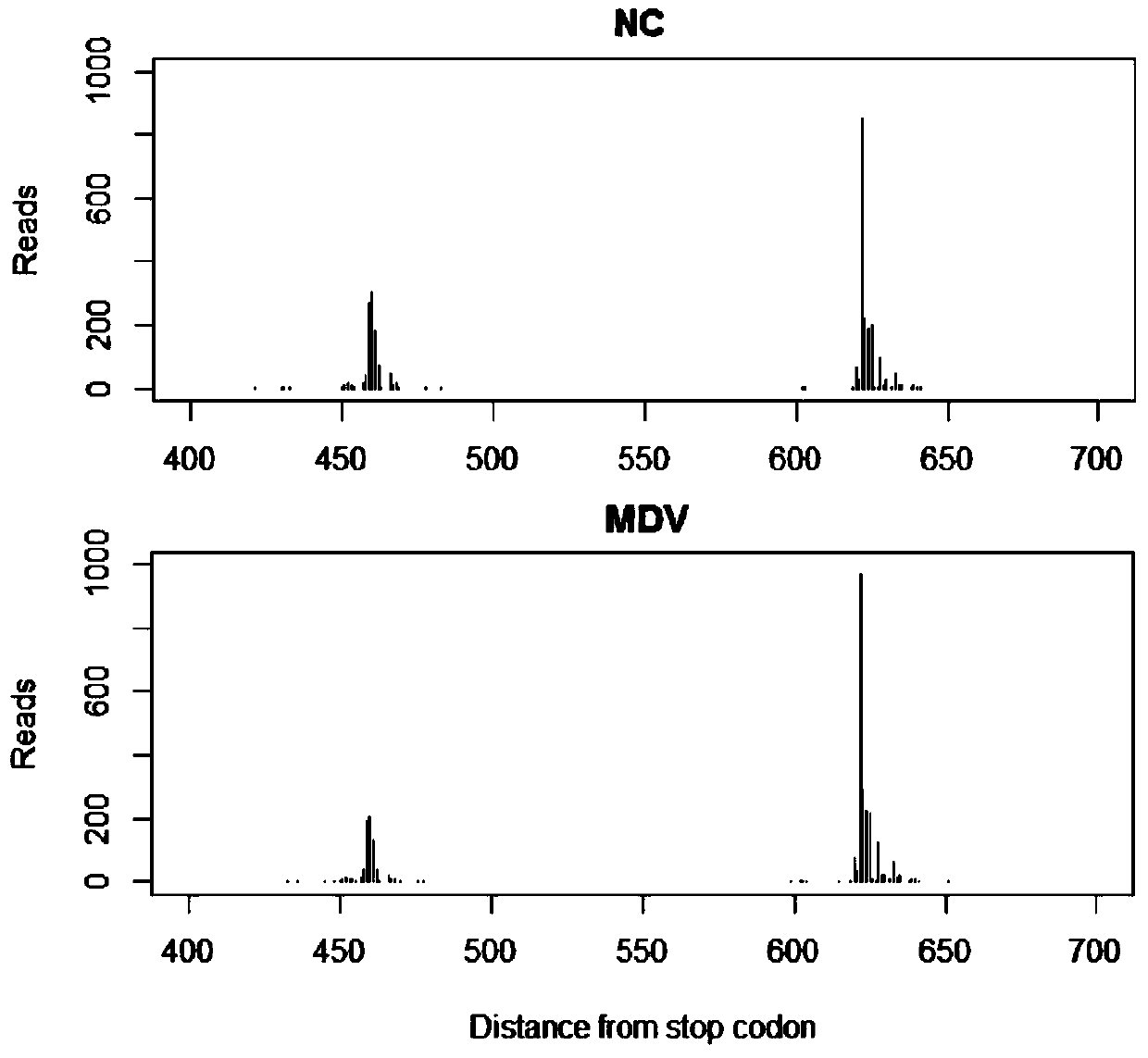
[0027] The result is as figure 2 As shown, comparing the APA analysis results of Md5-infected and non-Md5-infected CEF cells, it was found that the use of OSTC gene polyadenylation sites has changed significantly, and the LMAN2 gene of Md5-infected CEF cells uses distal APA sites. The increased ratio of mRNA can be used as a biomarker of MDV infection.
Embodiment 2
[0029] The primers used to detect the use of variable adenylate sites in OSTC gene mRNA in this example are shown in Table 1. The primer was designed with primer premier 5 based on the OSTC gene (gene bank Accession: NM_001006442.1). The first pair of primers is designed according to the common region and used to amplify the Proximal fragment of the common region; the second pair of primers is designed according to the Extended region and used to amplify the Distal fragment of the Extended region. Two pairs of primers were synthesized by Invitrogen Company.
[0030] Table 1. Primer sequence list
[0031] Primer name sequence OSTC-short-F (SEQ ID NO: 1) tgtcttcagc tctgccttga OSTC-short-R (SEQ ID NO: 2) cagacacgtt gcatttggac OSTC-long-F (SEQ ID NO: 3) actgtatgaa tgtgcttttg OSTC-long-R (SEQ ID NO: 4) gaaaccaact acccaactat
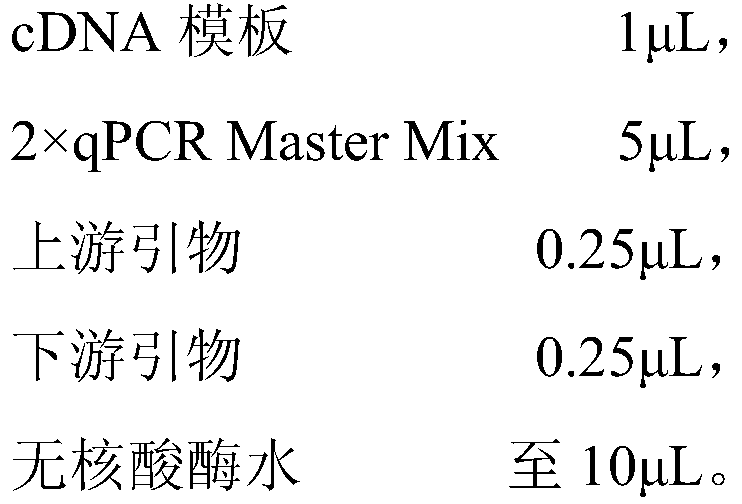
[0032] A method for detecting the use of variable adenine acid sites in OSTC gene mRNA, comprising the following...
Embodiment 3
[0043] Embodiment 3, animal experiments
[0044] Infect ten one-day-old chickens with 2000pfu Md5, collect the whole blood of chickens infected with Md5 30 days later, and collect the whole blood of ten chickens not infected with MDV at the same time, separate lymphocytes from the blood as samples, and carry out the detection of OSTC gene mRNA The usage of variable adenosine acid sites is detected, and the detection method is the same as that in Example 2. The CT value of control group in this embodiment dis / CT value pro The average value is 0.6, the CT value of the virus-infected group dis / CT value pro The average value is 0.71, and the result is consistent with Example 2. Therefore, the polyadenylation site usage of OSTC gene can be used as a biomarker for MDV infection in chickens.
PUM
 Login to View More
 Abstract
Description
Claims
Application Information
 Login to View More
 - R&D
- Intellectual Property
- Life Sciences
- Materials
- Tech Scout
- Unparalleled Data Quality
- Higher Quality Content
- 60% Fewer Hallucinations
Browse by: Latest US Patents, China's latest patents, Technical Efficacy Thesaurus, Application Domain, Technology Topic, Popular Technical Reports.
© 2025 PatSnap. All rights reserved.Legal|Privacy policy|Modern Slavery Act Transparency Statement|Sitemap|About US| Contact US: help@patsnap.com