

Serum 7 type haemophilus parasuis low virulent strain and application thereof
A technology for Haemophilus suis and Haemophilus suis disease, applied in bacteria, antibacterial drugs, veterinary vaccines, etc., can solve the problems of loss of efficacy, lack of cross protection, lack of efficacy of strain-specific inactivated vaccines, etc. The effect of high production efficiency, simple conditions and reduced pathogenicity
- Summary
- Abstract
- Description
- Claims
- Application Information
AI Technical Summary
Problems solved by technology
Method used
Image

Examples
preparation example Construction
[0031] The preparation method of vaccine comprises the following steps:
[0032] 1) Preparation of first-level seed liquid: Inoculate the attenuated strain of Haemophilus parasuis type 7 lyophilized and preserved on a TSA solid plate, and culture it at 37°C for 18-24 hours; then pick a single colony and culture it on TSB In the medium, under the condition of temperature of 37°C, shake and cultivate at 120-180rpm for 16-18h, after the pure test is passed, it will be used as the first-class seed liquid, and stored at 2-8°C for later use, and the storage time should not exceed 3 days. ;
[0033] 2) Preparation of secondary seed liquid: take the primary seed liquid obtained in step 1), inoculate it in TSB medium according to the volume ratio of seed liquid to medium of 1:20, and inoculate at a temperature of 37°C at a speed of 120 ~180rpm shaking culture for 16~18h, after passing the pure inspection, as the secondary seed liquid, store at 2~8°C for later use, and the storage time...
Embodiment 1
[0037] Isolation and identification of attenuated strain of Haemophilus parasuis:
[0038] Pig tonsils were collected from slaughterhouses in Kaiping, Guangdong in 2016. Under aseptic operation, wipe the entire tonsil tissue with alcohol cotton balls, cut a small piece, and inoculate the cut surface with TSA containing 10% calf serum and 0.1% NAD by volume Plates were incubated overnight at 37°C.
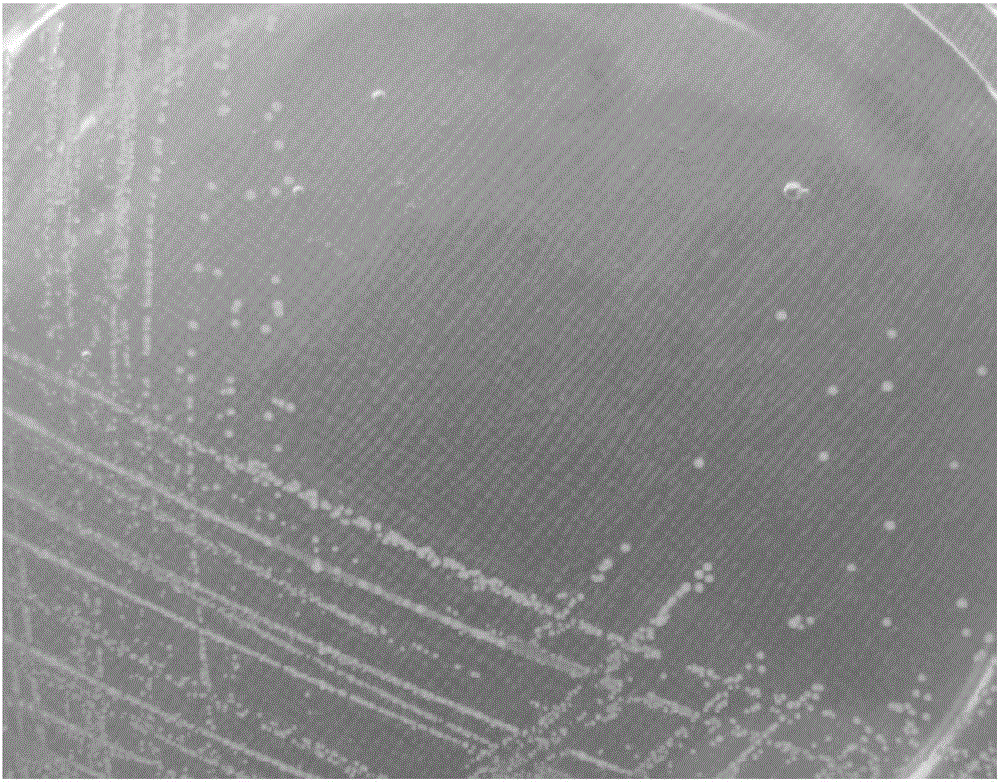
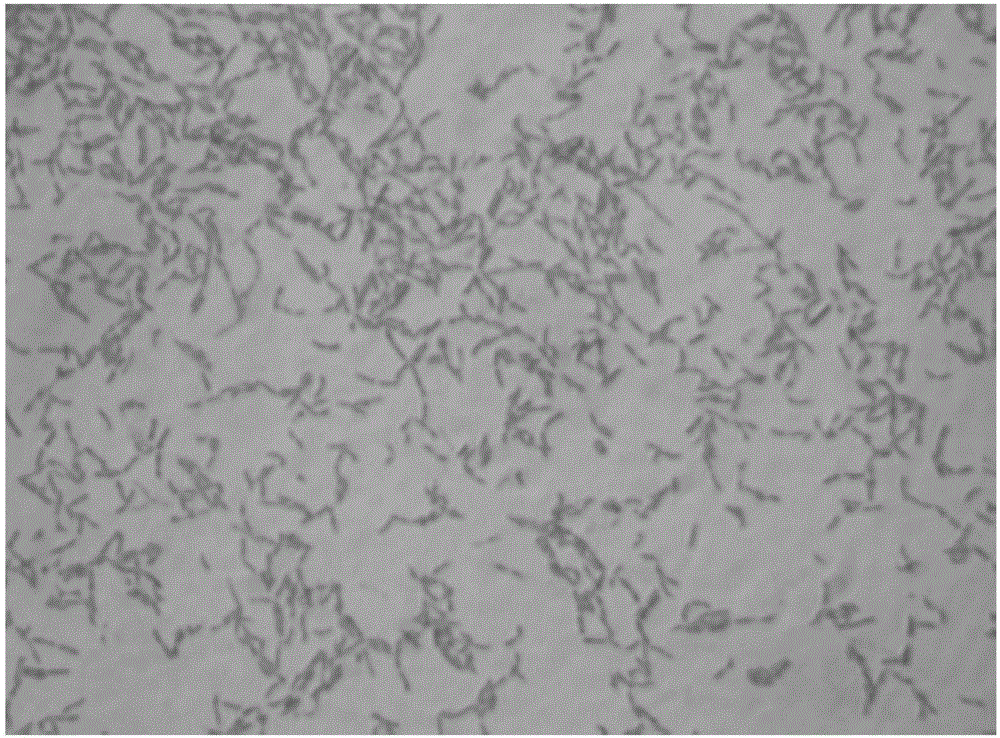
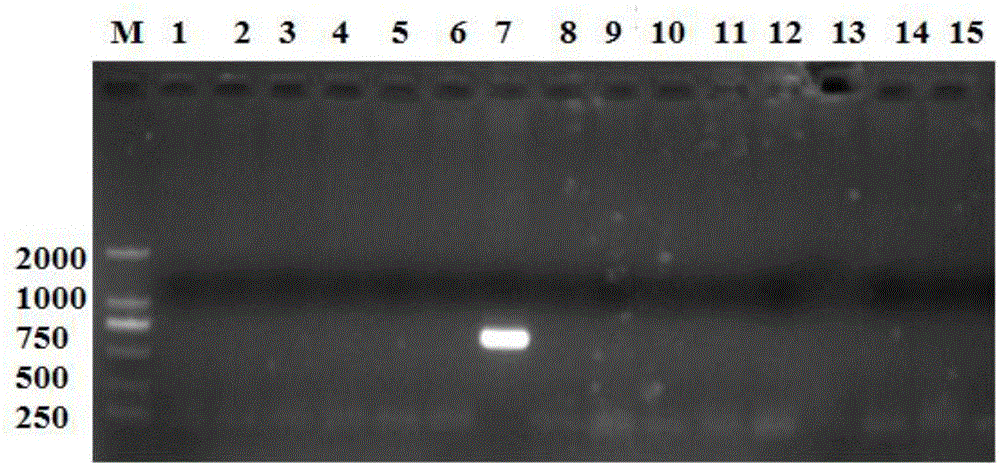
[0039] The growth morphology of the colony on the plate is as follows figure 1 As shown, the colonies that grow well on the plate are picked, the colonies are small, off-white, translucent, with neat edges, and slightly sticky. After Gram staining, the colonies under the microscope are observed under the microscope. The colony morphology under the microscope is as follows: figure 2 As shown, it is light red, long-chain or short-chain colonies, and the identification of 16S rRNA is carried out after the suspicious colonies are enlarged and cultured. The primer sequences used were:...
Embodiment 2
[0046] The serotype 7 Haemophilus parasuis attenuated strain HPKP-7 that embodiment 1 obtains is carried out pathogenicity detection:
[0047] 1) Detection of pathogenicity in guinea pigs
[0048] Guinea pigs were used as model animals to detect the virulence of the isolated HPKP-7.
[0049] Guinea pigs were observed for three days after purchase, and after no abnormalities were found, they were randomly divided into twelve groups, with 5 guinea pigs in each group, and the twelve groups were kept in isolation and kept under the same experimental conditions.
[0050] During the test, the HPKP-7 obtained in Example 1 was used to artificially infect 5 groups of guinea pigs by intraperitoneal injection, and the other 6 groups of guinea pigs were infected with the reference virulent strain of Haemophilus parasuis serotype 5 Nagasaki as a control strain, and 1 group of guinea pigs was used as a control strain. Negative control, injected with normal saline, observed continuously for...
PUM
 Login to View More
 Abstract
Description
Claims
Application Information
 Login to View More