Lithium battery optimal charging current acquisition method
A technology of charging current and maximum charging current, applied in the direction of charging/discharging secondary batteries, secondary batteries, electrochemical generators, etc., can solve the problems of increased charging current, increased battery loss, and reduced charging time.
- Summary
- Abstract
- Description
- Claims
- Application Information
AI Technical Summary
Problems solved by technology
Method used
Image


Examples
specific Embodiment approach 1
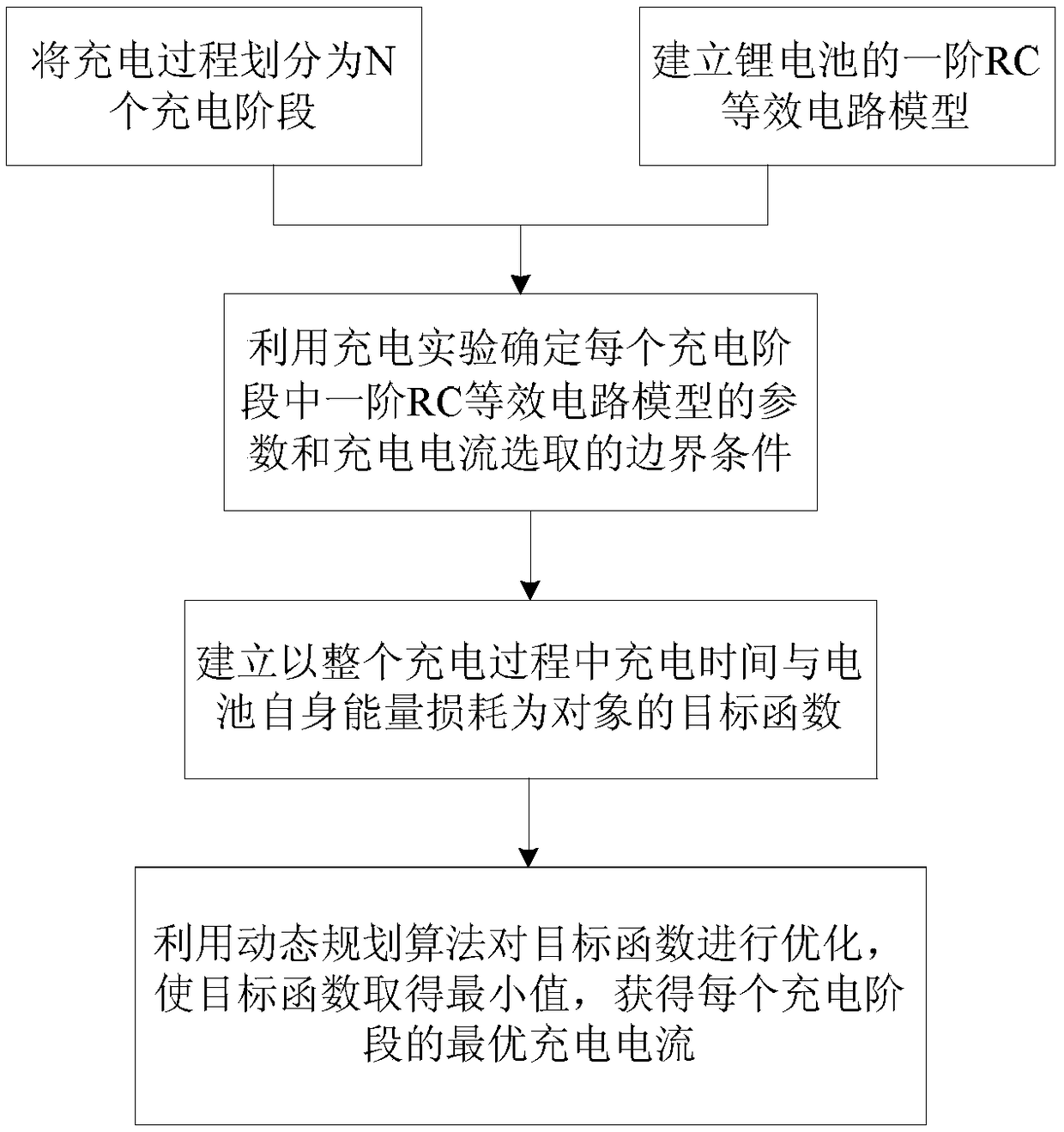
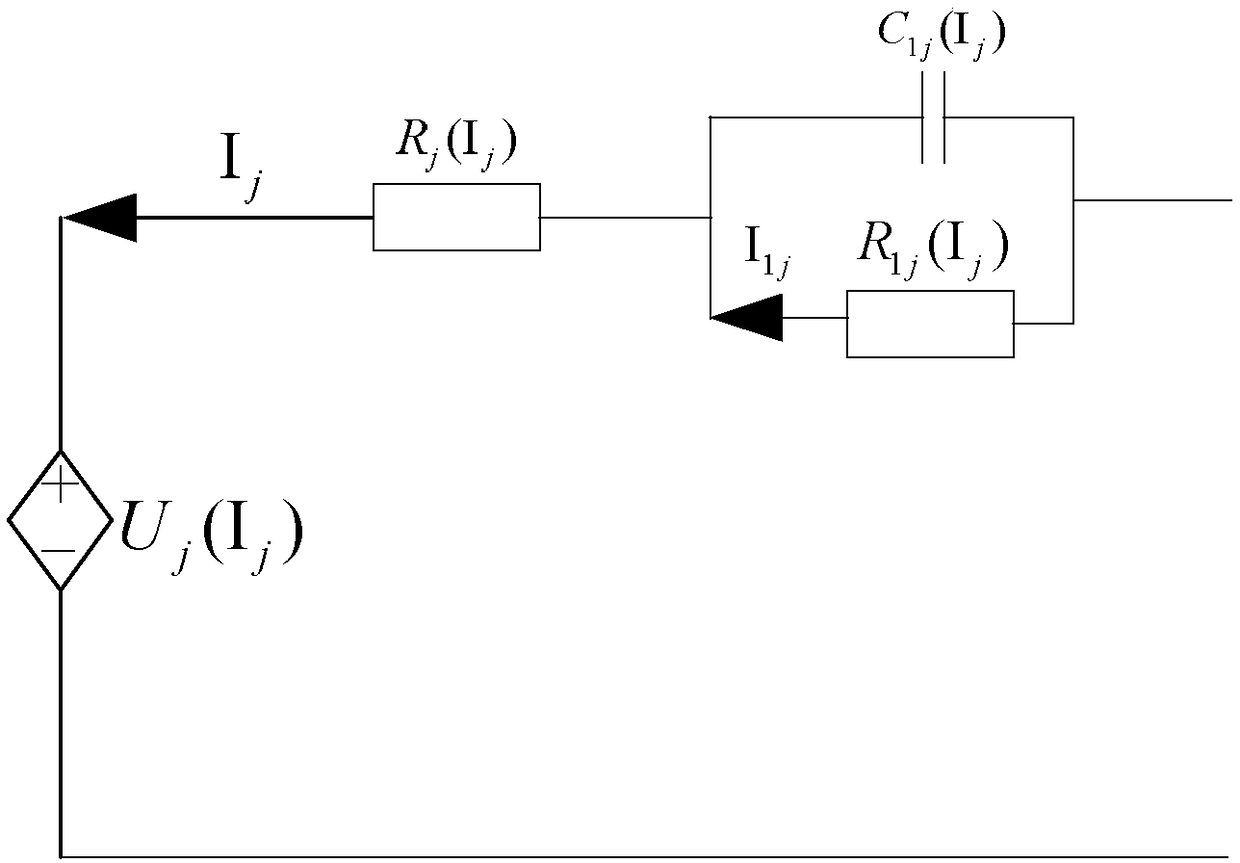
[0021] Specific implementation mode one: refer to figure 1 , figure 2 with Figure 5 Specifically explaining this embodiment, the method for obtaining the optimal charging current of a lithium battery based on the charging time and energy loss of the battery itself described in this embodiment includes the following steps:
[0022] Charging process division steps: Divide the charging process into N charging stages, in which the SOC increases from 0 to 1, every increase of p% SOC is a charging stage;
[0023] Model establishment steps: establish a first-order RC equivalent circuit model of a lithium battery, which includes the following parameters: controlled voltage source, battery internal resistance, polarization resistance, and polarization capacitance;
[0024] Boundary condition determination step: use charging experiments to determine the parameters of the first-order RC equivalent circuit model in each charging stage and the boundary conditions for charging current s...
specific Embodiment approach 2
[0029] Specific embodiment 2: This embodiment is a further description of the method for obtaining the optimal charging current of a lithium battery based on the charging time and the energy loss of the battery itself described in the specific embodiment 1. In this embodiment, the following method is used to determine each charging current. The parameters of the first-order RC equivalent circuit model in the stage and the boundary conditions for the selection of charging current:
[0030] In each charging stage, the charging rate starts from 0.1C (C represents the rated capacity of the battery), and a charging experiment is carried out every time the charging rate increases by 0.1C, until the charging rate reaches the maximum charging rate allowed by the lithium battery, and a total of X times of charging experiments are carried out. Obtain the parameters of the X group of first-order RC equivalent circuit models and the X maximum charging currents, fit the X maximum charging c...
specific Embodiment approach 3
[0031] Specific implementation mode three: refer to image 3 Describe this embodiment in detail. This embodiment is to further explain the method for obtaining the optimal charging current of a lithium battery based on the charging time and the energy loss of the battery itself described in the second embodiment. In this embodiment, before the charging experiment, first set the The charging experiment process is divided into M experimental stages, in which, during the growth of SOC from 0 to 1, every increase of q% SOC is an experimental stage,
[0032] Described charging experiment comprises the following steps:
[0033] Step 11: Charge the lithium battery for 10 seconds and then rest for 5 minutes to obtain the first-order RC equivalent circuit model parameters of the i-th experimental stage, where the initial value of i is 1, and then perform step 12;
[0034] Step 12: Charge the lithium battery, and judge whether the voltage of the lithium battery is greater than the char...
PUM
 Login to View More
 Abstract
Description
Claims
Application Information
 Login to View More
 - R&D
- Intellectual Property
- Life Sciences
- Materials
- Tech Scout
- Unparalleled Data Quality
- Higher Quality Content
- 60% Fewer Hallucinations
Browse by: Latest US Patents, China's latest patents, Technical Efficacy Thesaurus, Application Domain, Technology Topic, Popular Technical Reports.
© 2025 PatSnap. All rights reserved.Legal|Privacy policy|Modern Slavery Act Transparency Statement|Sitemap|About US| Contact US: help@patsnap.com