Check patentability & draft patents in minutes with Patsnap Eureka AI!

Method for diagnosis of alzheimer's disease

A technology of Alzheimer's disease, glyceraldehyde, applied in the field of prognosis and monitoring, Alzheimer's disease risk detection, diagnosis, can solve non-specific, expensive and other problems

Active Publication Date: 2018-05-04
BIO STEM BIOTECH CO LTD
View PDF2 Cites 0 Cited by
  • Summary
  • Abstract
  • Description
  • Claims
  • Application Information

AI Technical Summary

Problems solved by technology

Methods traditionally used to assess AD are either not specific (degree) or very expensive, including, for example, the Mini Mental State Examination (MMSE), which is a Functional Assessment Questionnaire (FAQ) Formal psychometric test to examine levels of functional autonomy (Tombaugh, The mini-mental state examination: a comprehensive review. J. Am. Geriatr. Soc. 40, 922-935, 1992); tau and beta-amyloid in cerebrospinal fluid Invasive detection of protein (Aβ) concentration (Wang et al., Proteomic analysis of neurofibrillary tangles in Alzheimer disease identifies GAPDH as a detergent-insoluble paired helicalfilament tau binding protein. FASEB J.19, 869-871, 2005); neuroimaging, especially It is computed tomography (CT), which is very expensive (Haydel et al.,Indications for computedtomography in patients with minor head injury.N.Engl.J.Med.343,100-105,2000)

Method used

the structure of the environmentally friendly knitted fabric provided by the present invention; figure 2 Flow chart of the yarn wrapping machine for environmentally friendly knitted fabrics and storage devices; image 3 Is the parameter map of the yarn covering machine
View more

Image

Smart Image Click on the blue labels to locate them in the text.
Viewing Examples
Smart Image
  • Method for diagnosis of alzheimer's disease
  • Method for diagnosis of alzheimer's disease
  • Method for diagnosis of alzheimer's disease

Examples

Experimental program
Comparison scheme
Effect test

Embodiment

[0058] I. Materials and methods

[0059] 1. Individual

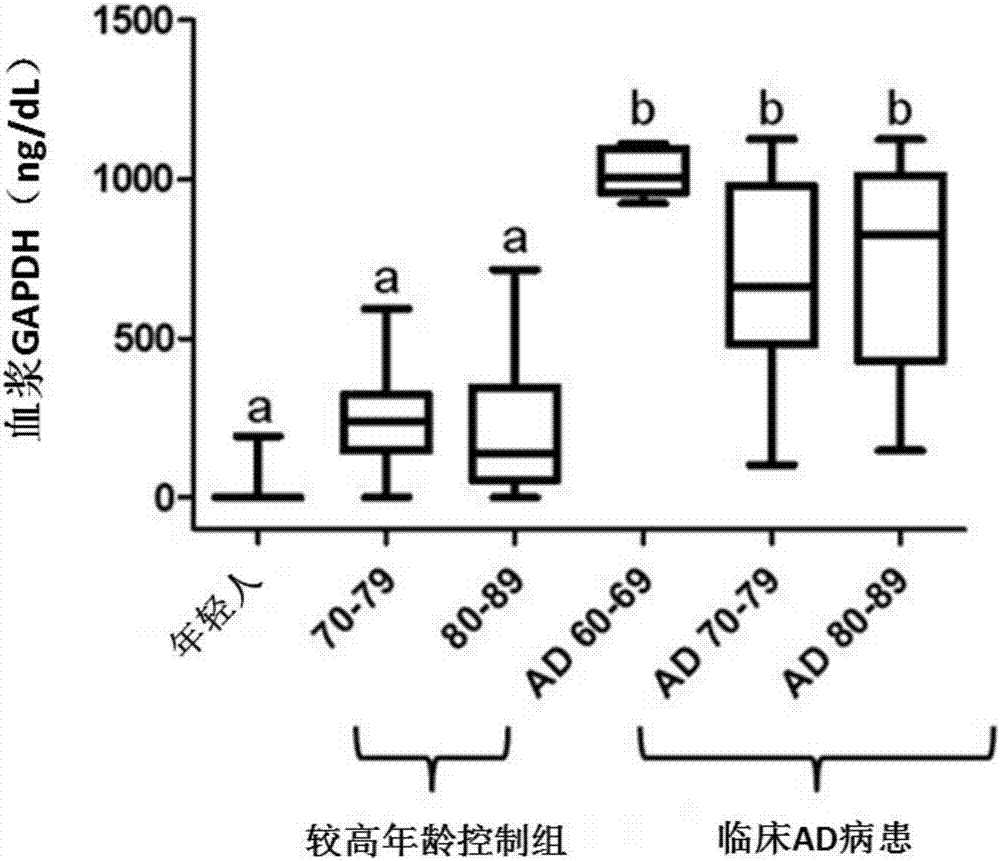
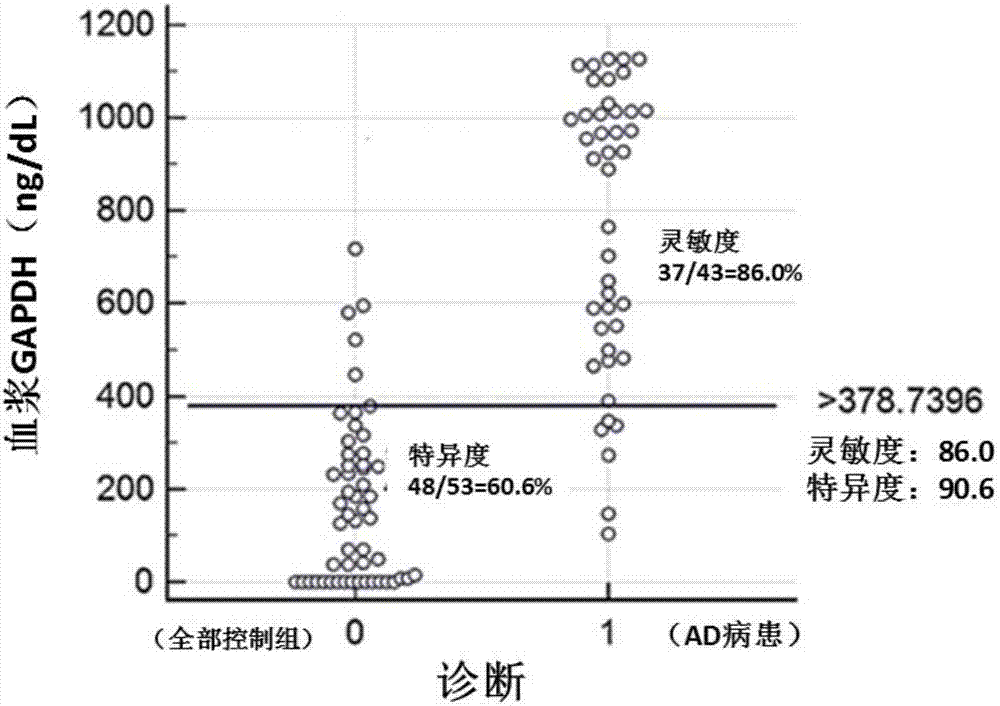
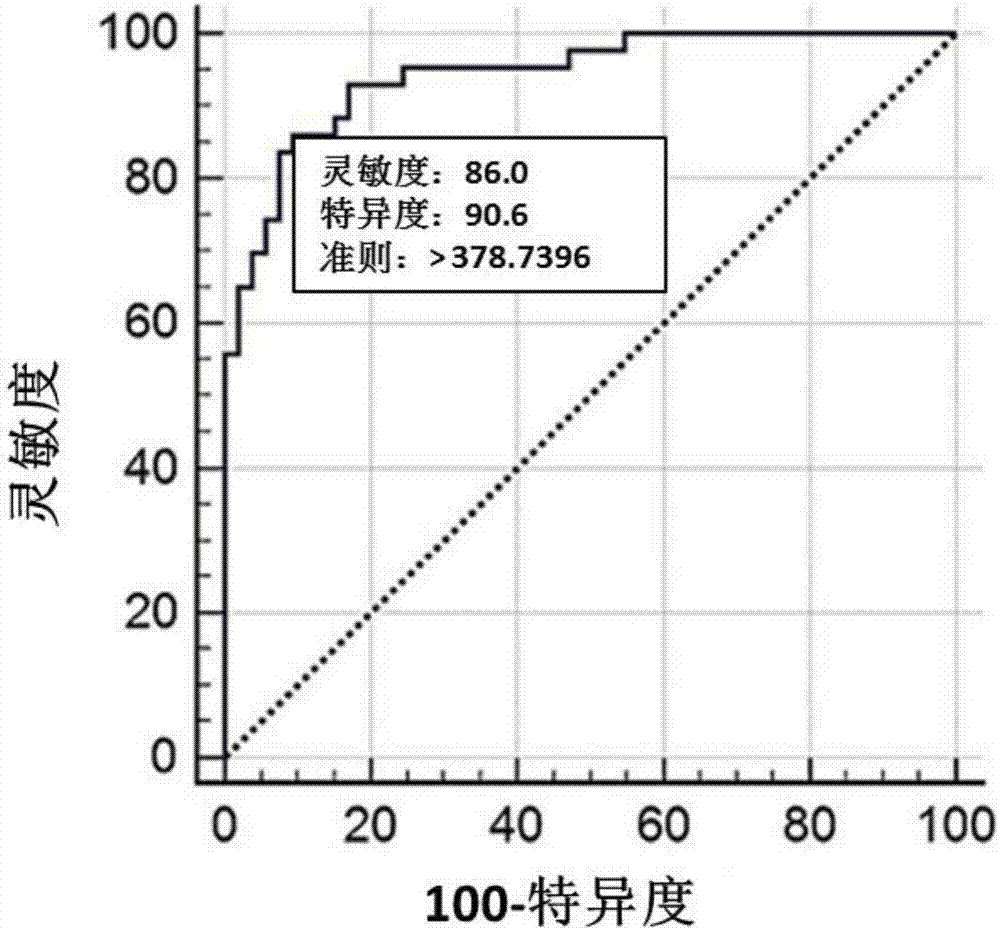
[0060] A total of 43 AD patients were recruited from the memory clinic of Taipei Veterans General Hospital (TVGH), aged 60-69 (n=5, male 3, female 2), 70-79 (n=18, 9 males, 9 females) and 80-89 (n=20, 10 males, 10 females), and 37 older control groups, whose ages were distributed between 70-79 (n=20, 11 males, 9 females) and 80- 89 (n=17, male 13, female 4). Based on the results of clinical interviews, physical examinations, laboratory investigations and imaging tests (CT and / or MRI), AD patients are diagnosed in a clinical seminar. The diagnosis of AD was based on the guidelines of the National Society of Neurological and Communication Disorders and Stroke-Alzheimer's Disease and Related Diseases Association (NINCDS-ADRDA) (Froese, Cube law, conditionfactor and weight–length relationships: history, meta‐analysis and recommendations. J. Appl. Ichthyol. 22, 241-253, 2006). All AD patients were evaluated by neurologica...

the structure of the environmentally friendly knitted fabric provided by the present invention; figure 2 Flow chart of the yarn wrapping machine for environmentally friendly knitted fabrics and storage devices; image 3 Is the parameter map of the yarn covering machine
Login to View More

PUM

No PUM Login to View More

Abstract

The invention relates to a method for diagnosis of Alzheimer's disease. Specifically, the invention relates to a method for risk detection, diagnosis, prognosis and monitoring of Alzheimer's disease (AD). The method comprises the steps of: (1) measuring the level of glyceraldehyde 3-phosphate dehydrogenase (GAPDH) in a sample from the subject, and (2) comparing the level of GAPDH in the sample with two or more AD reference levels of GAPDH.

Description

technical field [0001] The present invention relates to a method for Alzheimer's disease risk detection, diagnosis, prognosis and monitoring. Background technique [0002] Alzheimer's disease (AD) is the most common form of dementia. Alzheimer's disease is classified as a neurodegenerative disorder, the causes and progression of which are not well understood. Its course expression appears to be associated with plaques and tangles in the brain. The most common early symptom is short-term memory loss – trouble remembering recent events. [0003] To date, there are no standard diagnostic tests for AD, so the diagnosis still relies on the clinical information provided by the AD patient and the confirmation of the neurological examination as the diagnosis. Typically, AD is diagnosed by tests to assess a patient's behavior and thinking abilities, often followed by a brain scan when available. However, final diagnosis requires examination of brain tissue. Methods traditionally...

Claims

the structure of the environmentally friendly knitted fabric provided by the present invention; figure 2 Flow chart of the yarn wrapping machine for environmentally friendly knitted fabrics and storage devices; image 3 Is the parameter map of the yarn covering machine
Login to View More

Application Information

Patent Timeline
no application Login to View More
Patent Type & Authority Applications(China)
IPC IPC(8): G01N33/68
CPCG01N33/6896G01N2800/2821C12Y102/01012G01N33/573G01N2333/90203G01N2800/50
Inventor 林佳静蔡澄伟
Owner BIO STEM BIOTECH CO LTD
Features
  • R&D
  • Intellectual Property
  • Life Sciences
  • Materials
  • Tech Scout
Why Patsnap Eureka
  • Unparalleled Data Quality
  • Higher Quality Content
  • 60% Fewer Hallucinations
Social media
Patsnap Eureka Blog
Learn More