Method for measuring electron transfer process and application thereof in organic pollutant degradation process
A technology of electron transfer and determination method, applied in the fields of measurement device, material electrochemical variable, material analysis by electromagnetic means, etc., can solve problems such as large adsorption, surface electrochemical property change, and dispute of mechanism research results.
- Summary
- Abstract
- Description
- Claims
- Application Information
AI Technical Summary
Problems solved by technology
Method used
Image

Examples
Embodiment 1
[0036] Determination of Electron Transfer Process of Carbon Nanotubes Activated Potassium Peroxodisulfate to Phenol
[0037] (1) The carbon nanotube powder and Nafion binder were mixed and fixed on the glassy carbon electrode to make the working electrode, the platinum electrode was used as the counter electrode, and the saturated calomel electrode was used as the reference electrode to form a three-electrode system and the electrodes were immersed in an appropriate amount of 20mmol / L, pH 7.3 phosphate buffer;
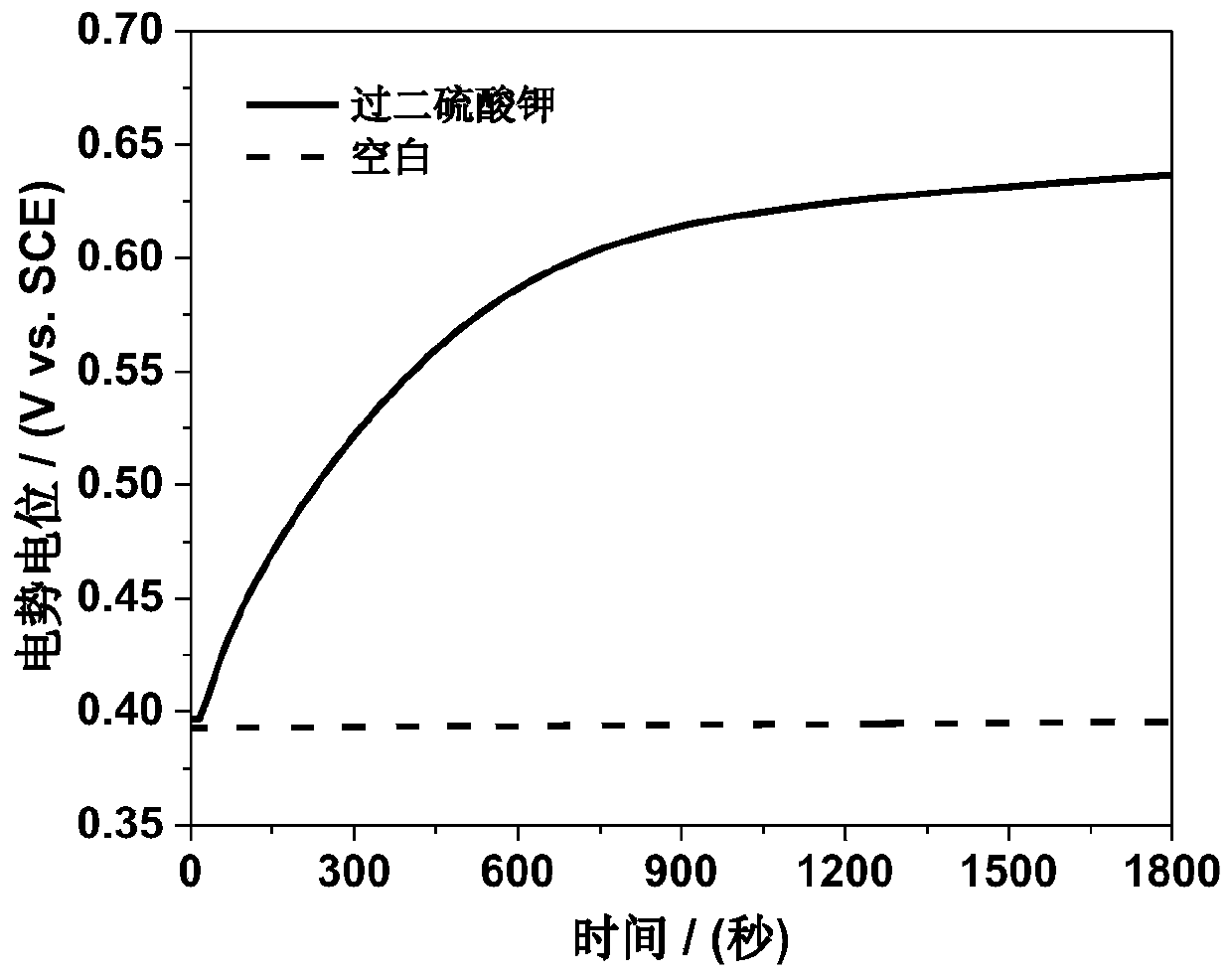
[0038] (2) The open circuit potential of the carbon nanotube when adding potassium peroxodisulfate in the detection step (1) solution, the stable value is 0.636V;
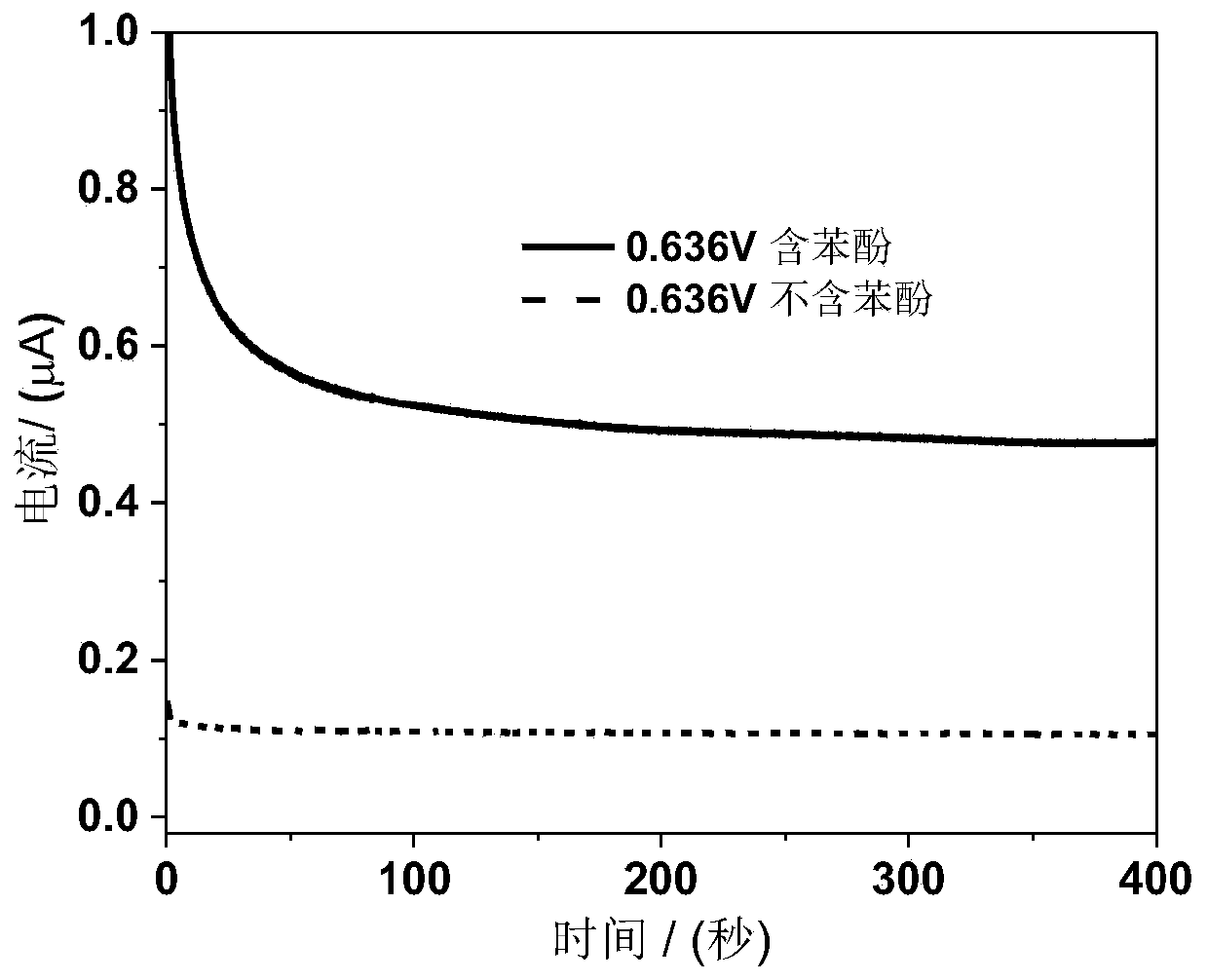
[0039] (3) With 0.636V as the initial potential, detect the current change before and after adding phenol to the solution in step (1), and the result shows that the current change value ΔI is about 0.4 μA;
[0040] In this embodiment, the concentration of phenol is 0.1 mmol / L, the concentration of carbon n...
Embodiment 2
[0048] Determination of the electron transfer process of carbon nanotube activated potassium peroxodisulfate to 4-nitrophenol
[0049] (1) The carbon nanotube powder and Nafion binder are mixed and fixed on the glassy carbon electrode as the working electrode, the platinum electrode is the counter electrode, and the saturated calomel electrode is the reference electrode, forming a three-electrode system and immersing the electrode in an appropriate amount of 20mmol / L, pH 7.3 in phosphate buffer;
[0050] (2) The open circuit potential of the carbon nanotubes after adding potassium peroxodisulfate in the solution in the detection step (1) has a stable value of 0.636V;
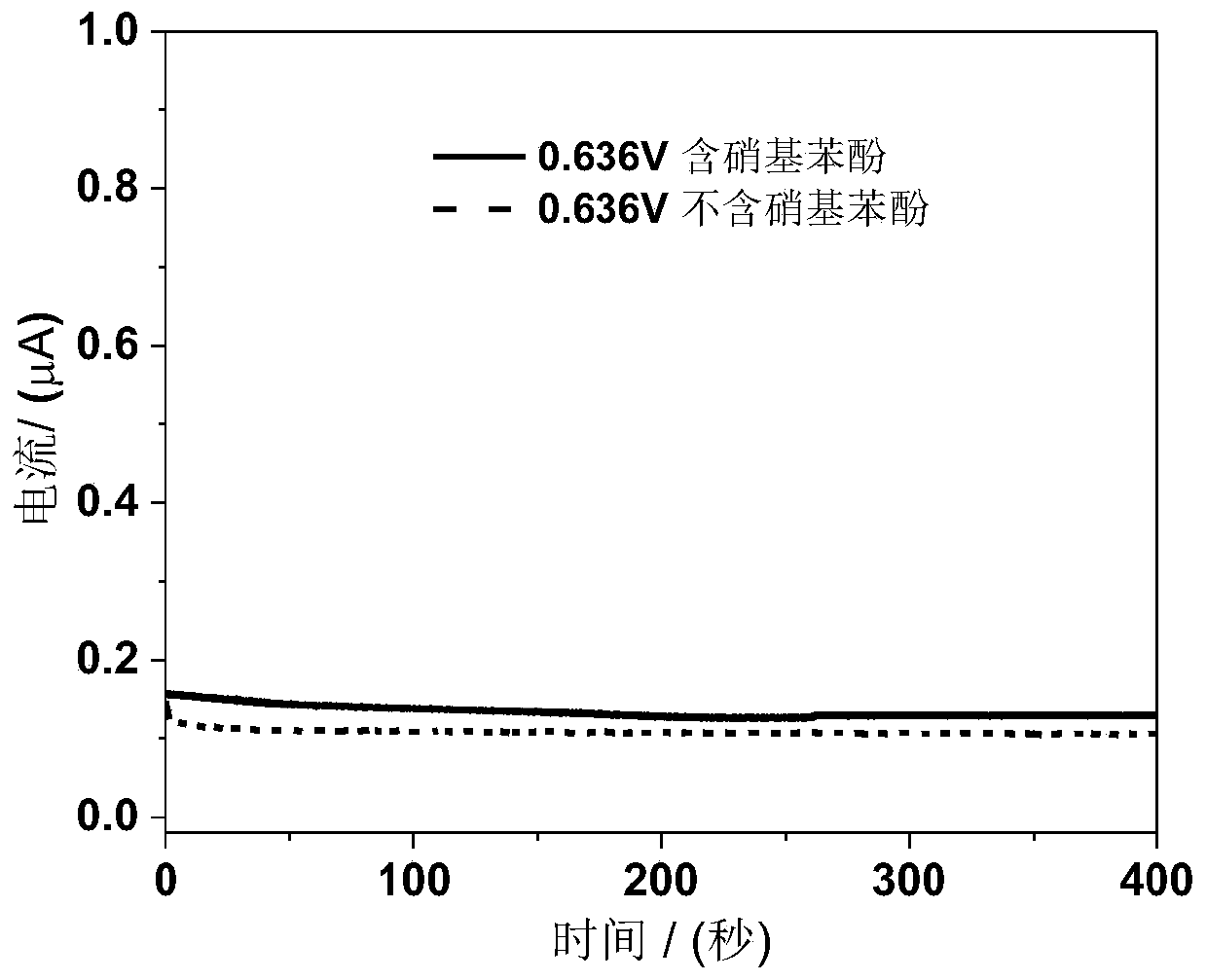
[0051] (3) With 0.636V as the initial potential, the current change in the detection step (1) before and after adding 4-nitrophenol to the solution, the result shows that the change value ΔI is about 0.025 μA;
[0052] In this embodiment, the concentration of 4-nitrophenol is 0.1 mmol / L, the concentration of ca...
Embodiment 3
[0059] Determination of Electron Transfer Process of Dimethyl Terephthalate Activated by Carbon Nanotubes with Potassium Peroxodisulfate
[0060] (1) The carbon nanotube powder and Nafion binder were mixed and fixed on the glassy carbon electrode to make the working electrode, the platinum electrode was used as the counter electrode, and the saturated calomel electrode was used as the reference electrode to form a three-electrode system and the electrodes were immersed in an appropriate amount of 20mmol / L, pH 7.3 phosphate buffer;
[0061] (2) The open circuit potential of the carbon nanotubes after adding potassium peroxodisulfate in the solution in the detection step (1) has a stable value of 0.636V;
[0062] (3) Taking 0.636V as the initial potential, the detection step (1) shows that the current changes before and after adding dimethyl phthalate to the solution. The results show that the current has no obvious change, and ΔI is about 0.
[0063] In this embodiment, the co...
PUM
 Login to View More
 Abstract
Description
Claims
Application Information
 Login to View More
 - R&D
- Intellectual Property
- Life Sciences
- Materials
- Tech Scout
- Unparalleled Data Quality
- Higher Quality Content
- 60% Fewer Hallucinations
Browse by: Latest US Patents, China's latest patents, Technical Efficacy Thesaurus, Application Domain, Technology Topic, Popular Technical Reports.
© 2025 PatSnap. All rights reserved.Legal|Privacy policy|Modern Slavery Act Transparency Statement|Sitemap|About US| Contact US: help@patsnap.com