Supercharge Your Innovation With Domain-Expert AI Agents!

A method for improving the stability and conversion efficiency of narrow-bandgap semiconductor photoanodes

A conversion efficiency, photoanode technology, applied in the field of photocatalytic water splitting, can solve the problems of photocorrosion, limited application, instability, etc., and achieve the effect of improving injection efficiency, good hole storage effect, and reducing overpotential

Active Publication Date: 2022-03-22
DALIAN INST OF CHEM PHYSICS CHINESE ACAD OF SCI
View PDF5 Cites 0 Cited by
  • Summary
  • Abstract
  • Description
  • Claims
  • Application Information

AI Technical Summary

Problems solved by technology

However, this kind of material is unstable in the process of catalysis and oxygen generation, and there is a serious photocorrosion phenomenon, which limits its application in the field of solar hydrogen production.

Method used

the structure of the environmentally friendly knitted fabric provided by the present invention; figure 2 Flow chart of the yarn wrapping machine for environmentally friendly knitted fabrics and storage devices; image 3 Is the parameter map of the yarn covering machine
View more

Image

Smart Image Click on the blue labels to locate them in the text.
Viewing Examples
Smart Image
  • A method for improving the stability and conversion efficiency of narrow-bandgap semiconductor photoanodes
  • A method for improving the stability and conversion efficiency of narrow-bandgap semiconductor photoanodes
  • A method for improving the stability and conversion efficiency of narrow-bandgap semiconductor photoanodes

Examples

Experimental program
Comparison scheme
Effect test

Embodiment approach

[0031] Anodizing:

[0032] Configuration contains 0.15M NH 4 Ethylene glycol electrolyte of F and 1vol% ultrapure water, tantalum foil as anode, and platinum sheet as cathode. Maintained at 40-50V bias for 10min, the solution was stirred at 120rpm and kept circulating water cooling. The resulting sample was kept in a muffle furnace at 400 °C for 30 min.

[0033] Hydrothermal:

[0034] Configure 2M NaOH solution in a hydrothermal kettle, place tantalum foil at the bottom of the hydrothermal kettle, seal the hydrothermal kettle well and keep it at 200°C for 24 hours. After the reaction was completed and the temperature was naturally lowered to room temperature, the samples were taken out, rinsed with ultrapure water, ultrasonically treated in absolute ethanol for 1 min, and dried for later use.

[0035] High temperature nitriding:

[0036] NaTaO after heating the water 3 Put the sample into a quartz boat and put it into a horizontally placed quartz tube, and inject 250mLmi...

Embodiment 2

[0038] This example illustrates the implementation of preparing an aluminum oxide dielectric layer on the surface of a photoanode:

[0039] The atomic layer deposition (ALD) method is used, trimethylaluminum (TMA) is used as an aluminum source, water is used as an oxygen source, and the use temperature of the aluminum source is room temperature. The electrode 1 was placed in a reaction chamber at 150°C, the pulse time of the aluminum source was 0.01s, the pulse time of the oxygen source was 0.02s, and the growth thickness was 3nm controlled by the number of ALD cycles to obtain the electrode 2.

Embodiment 3

[0041] This example illustrates the implementation of preparing a titanium oxide dielectric layer on the surface of the photoanode:

[0042] The atomic layer deposition (ALD) method was used, tetrakis(dimethylamino)titanium (TDMAT) was used as a titanium source, water was used as an oxygen source, and the temperature of the titanium source was 80°C. The electrode was placed in a reaction chamber at 150°C, the pulse time of the titanium source was 0.1s, the pulse time of the oxygen source was 0.02s, and the growth thickness was controlled by the number of ALD cycles to 3nm.

the structure of the environmentally friendly knitted fabric provided by the present invention; figure 2 Flow chart of the yarn wrapping machine for environmentally friendly knitted fabrics and storage devices; image 3 Is the parameter map of the yarn covering machine
Login to View More

PUM

PropertyMeasurementUnit
particle diameteraaaaaaaaaa
Login to View More

Abstract

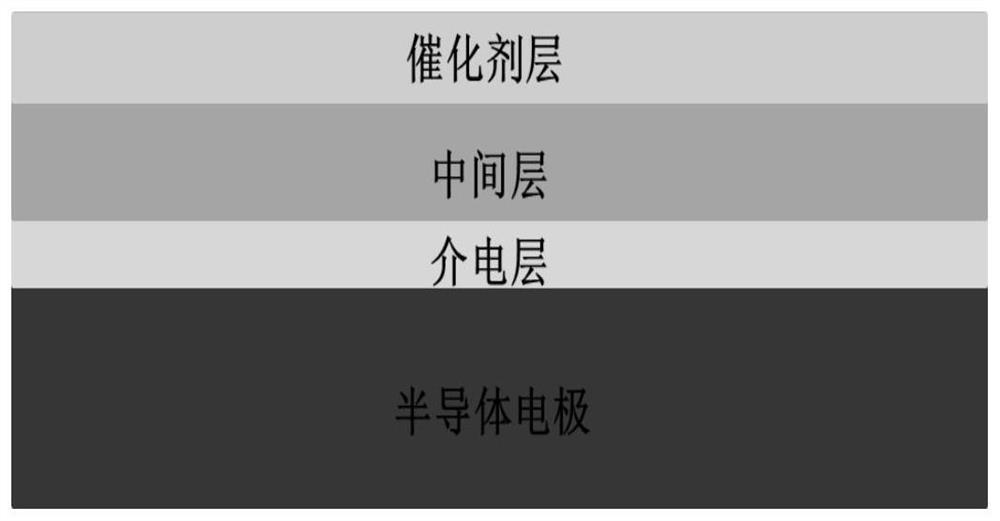
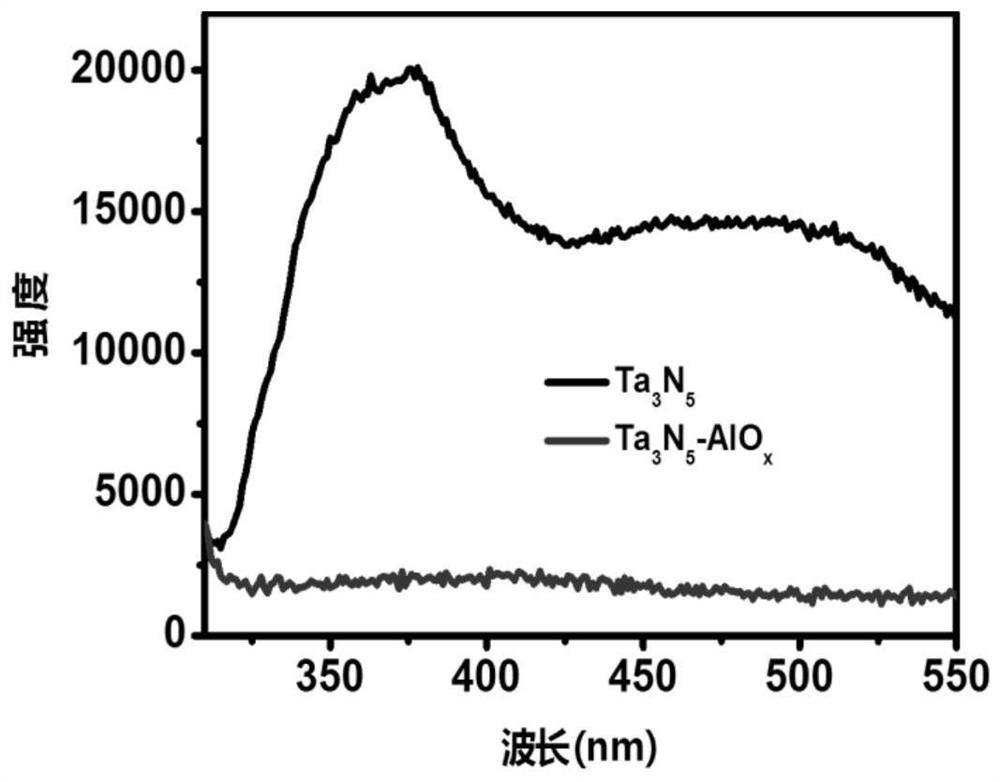
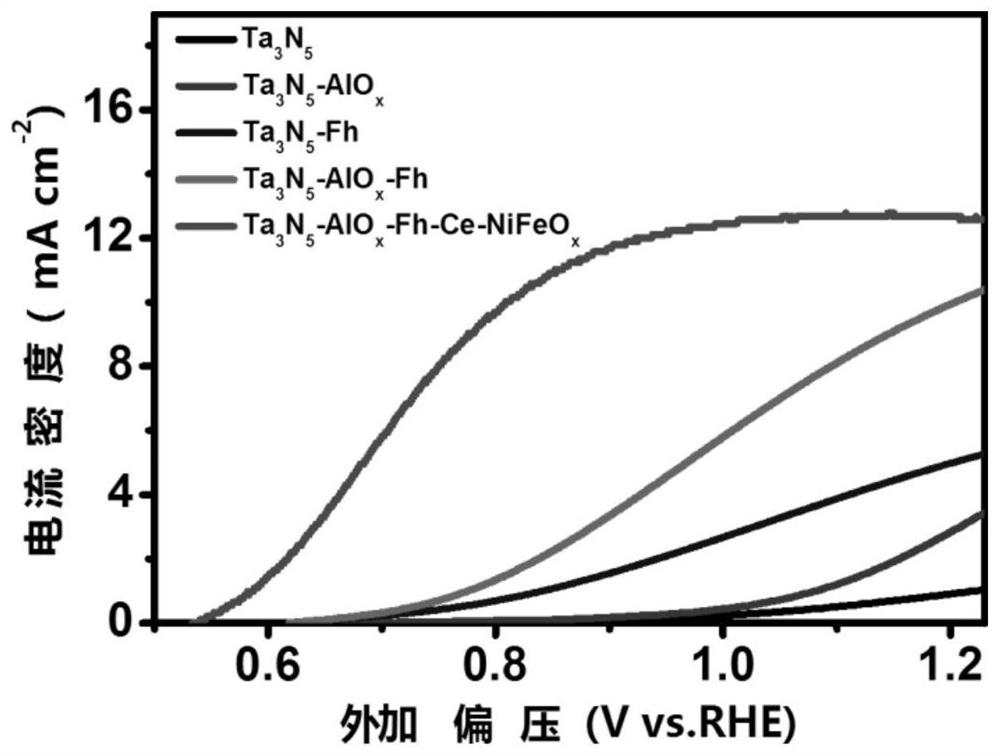
The invention provides a method for improving the stability and conversion efficiency of a narrow band gap semiconductor photoanode. By performing functional multi-layer protection on the surface of the narrow-bandgap semiconductor photoanode, the surface defects of the photoanode can be effectively passivated, the semiconductor photogenerated holes can be efficiently extracted, and the surface photocorrosion reaction can be significantly suppressed, thereby improving the stability of the photoanode. The characteristic is that the insulating oxide is used as the dielectric layer, and the hydrated iron oxide is used as the hole storage layer and the oxygen-generating catalyst layer, which can largely avoid the recombination of photo-generated charges. By using the method provided by the present invention, the stability of the narrow band gap semiconductor photoanode can be improved from several minutes to more than 5 days. This not only provides a new idea for the interface regulation of high-efficiency photoelectrodes, but also lays the foundation for the large-scale application of solar water splitting technology for hydrogen production.

Description

technical field [0001] The invention belongs to the field of photoelectrocatalytic water splitting, and relates to modifying functional multilayers on the surface of a narrow-bandgap semiconductor photoanode, thereby improving the effective separation of photogenerated carriers on the surface of the photoanode and improving the stability of photoelectrocatalytic oxygen production. Background technique [0002] As population and economy grow, energy consumption will increase. At present, this demand is mainly met by non-renewable fossil energy such as coal, oil, and natural gas. However, due to the uneven distribution of these fossil energy, limited reserves and environmental problems caused by large-scale use, it seriously threatens the survival and sustainable development of human beings. . In order to achieve sustainable development, the search for clean, cheap, abundant and efficient new energy has become an urgent key issue. The characteristics of solar energy, such as...

Claims

the structure of the environmentally friendly knitted fabric provided by the present invention; figure 2 Flow chart of the yarn wrapping machine for environmentally friendly knitted fabrics and storage devices; image 3 Is the parameter map of the yarn covering machine
Login to View More

Application Information

Patent Timeline
no application Login to View More
Patent Type & Authority Patents(China)
IPC IPC(8): C25B11/052C25B11/091C25B1/04C25B1/55C23C16/455C23C28/04C23C16/40
CPCC25B1/04C23C16/45525Y02E60/36
Inventor 李灿赵永乐
Owner DALIAN INST OF CHEM PHYSICS CHINESE ACAD OF SCI
Features
  • R&D
  • Intellectual Property
  • Life Sciences
  • Materials
  • Tech Scout
Why Patsnap Eureka
  • Unparalleled Data Quality
  • Higher Quality Content
  • 60% Fewer Hallucinations
Social media
Patsnap Eureka Blog
Learn More