Exchange method of rare earth ion for molecular sieve
A rare earth ion and ion exchange technology, applied in the field of rare earth ion exchange of molecular sieves, can solve problems such as easy clogging of filter cloth meshes, and achieve the effect of high degree of exchange automation and high efficiency
- Summary
- Abstract
- Description
- Claims
- Application Information
AI Technical Summary
Problems solved by technology
Method used
Image

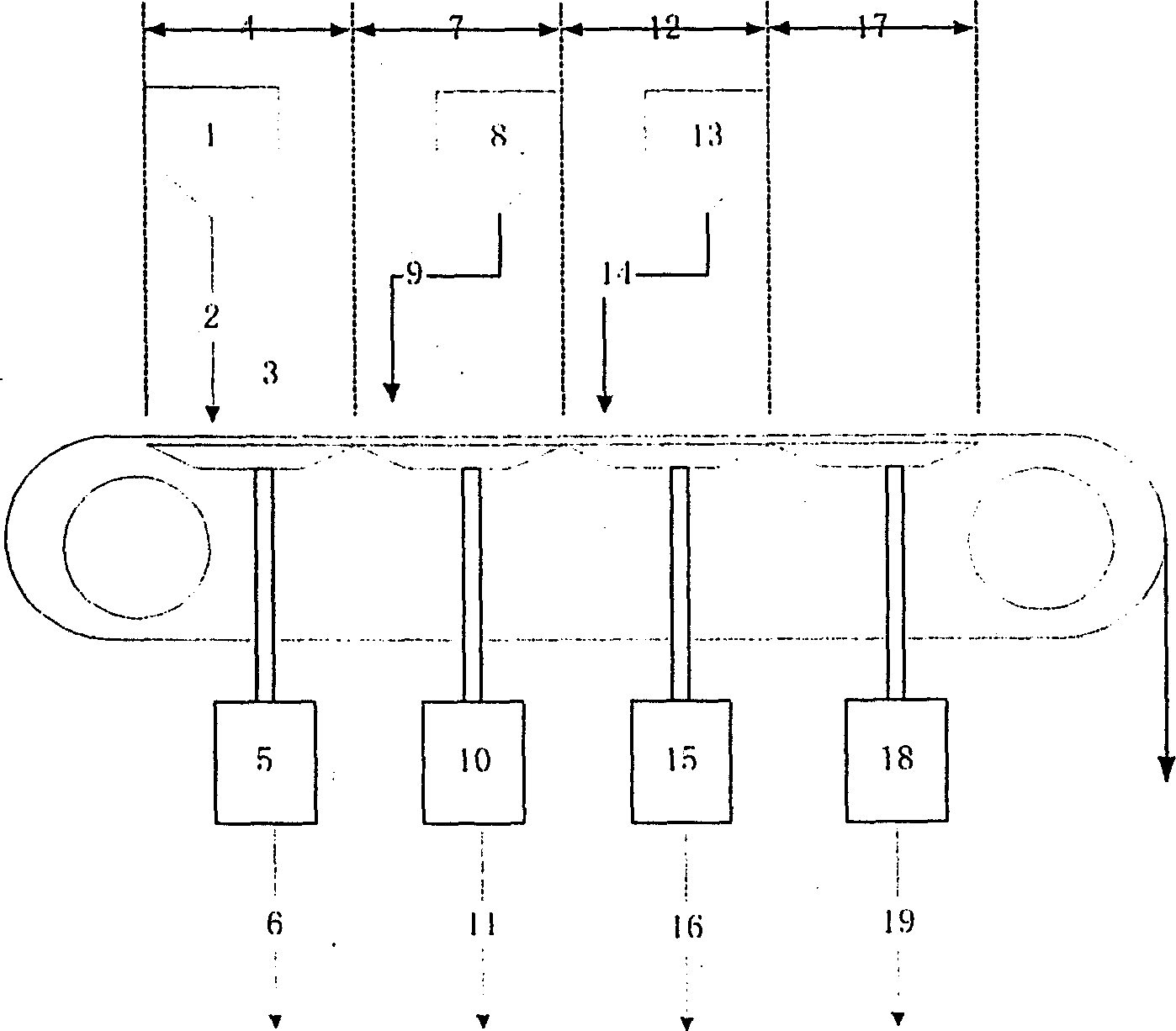
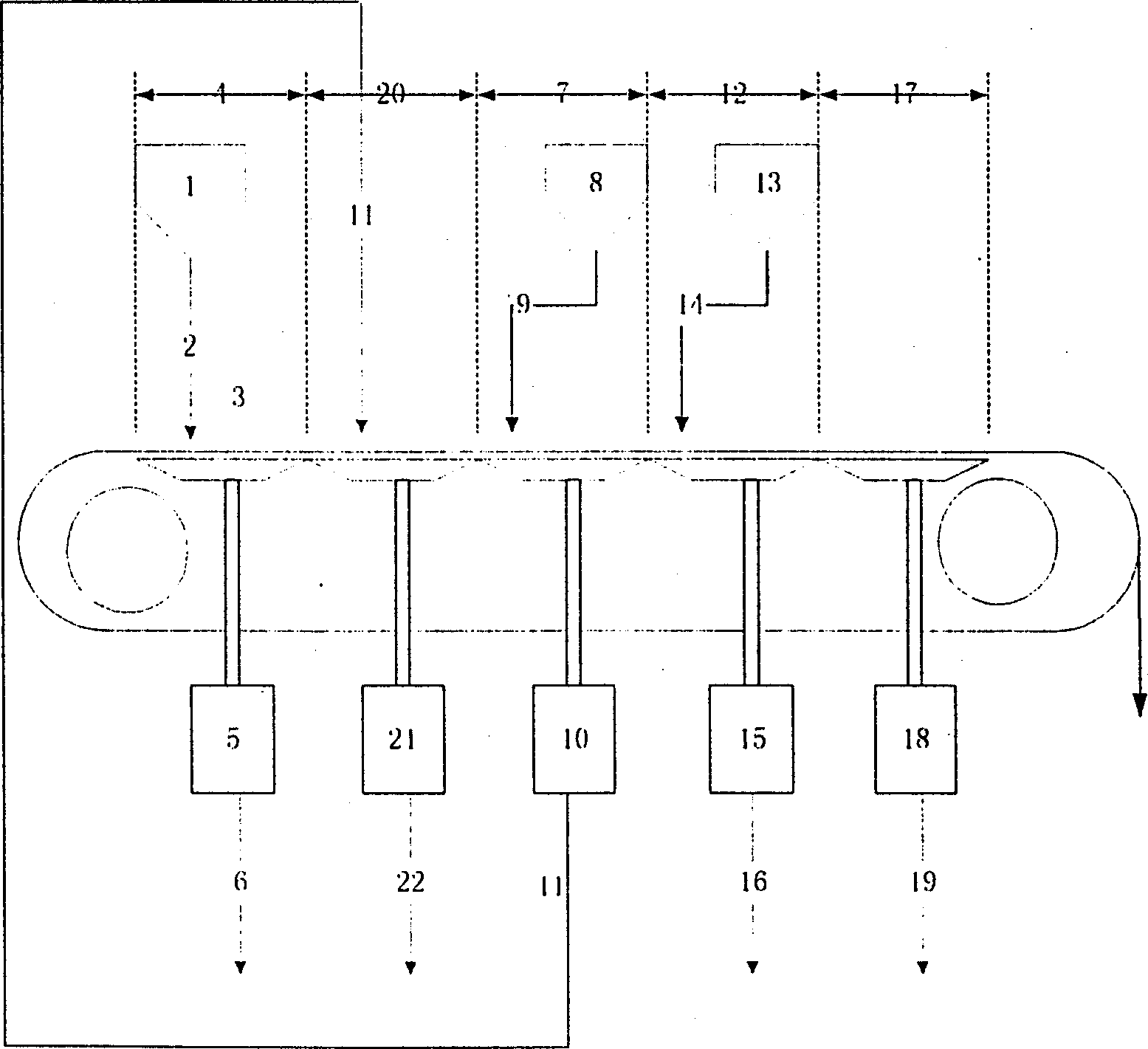

Examples
example 1
[0084] The present example illustrates the method provided by the invention with a Buchner funnel as a separation device simulating an industrial device.
[0085] 1. Formation of filter cake.
[0086] NaY zeolite (same as Comparative Example 1) was mixed with deionized water to prepare a slurry with a pH value of 9 and a solid content of 80 g / L. Add hydrochloric acid to the obtained slurry, adjust the pH value of the slurry to 6.0, heat the obtained slurry to 70°C under stirring, pour it into the Buchner funnel with the filter cloth of the same material as that of Comparative Example 1, and at the same time, put the cloth Vacuum the filter flask of the Scherner funnel to 0.04 MPa. Under vacuum, a layer of about 1.2 cm thick filter cake is formed on the filter cloth of the Buchner funnel, and the waste liquid in the suction filter bottle is emptied.
[0087] Second, ion exchange.
[0088] Keep the vacuum in the filter bottle, when there will be no liquid on the surface of th...
example 2
[0096] The present example illustrates the method provided by the invention with a Buchner funnel as a separation device simulating an industrial device.
[0097] Use the same piece of filter cloth that example 1 uses, repeat above-mentioned whole operation process, when repeating the 30th time, the color of filter cloth still does not change, and filtering speed is still identical with the first time.
example 3-6
[0099] The following examples illustrate the method provided by the invention with the Buchner funnel as the separation device simulation industrial device.
[0100] Carry out rare earth ion exchange to NaY molecular sieve by the method of example 1, difference is, the acid that adds, the pH value of slurry after adding acid, the temperature of slurry, the weight ratio of rare earth oxide and molecular sieve, the temperature and consumption of deionized water are different . The acid added, the pH value of the slurry after adding the acid, the temperature of the slurry, the weight ratio of the rare earth oxide to the molecular sieve, and the temperature and amount of deionized water are shown in Table 1 respectively. The rare earth oxide and sodium oxide contents in the obtained rare earth-containing molecular sieve are shown in Table 2.
[0101] instance number
[0102] instance number
PUM
| Property | Measurement | Unit |
|---|---|---|
| solid content | aaaaa | aaaaa |
Abstract
Description
Claims
Application Information
 Login to View More
 - R&D
- Intellectual Property
- Life Sciences
- Materials
- Tech Scout
- Unparalleled Data Quality
- Higher Quality Content
- 60% Fewer Hallucinations
Browse by: Latest US Patents, China's latest patents, Technical Efficacy Thesaurus, Application Domain, Technology Topic, Popular Technical Reports.
© 2025 PatSnap. All rights reserved.Legal|Privacy policy|Modern Slavery Act Transparency Statement|Sitemap|About US| Contact US: help@patsnap.com