Fluidic systems comprising an incubation channel, including fluidic systems formed by molding
a technology of fluidic systems and incubation channels, applied in fluid controllers, laboratory glassware, instruments, etc., can solve problems such as adding a level of cost and sophistication
- Summary
- Abstract
- Description
- Claims
- Application Information
AI Technical Summary
Problems solved by technology
Method used
Image

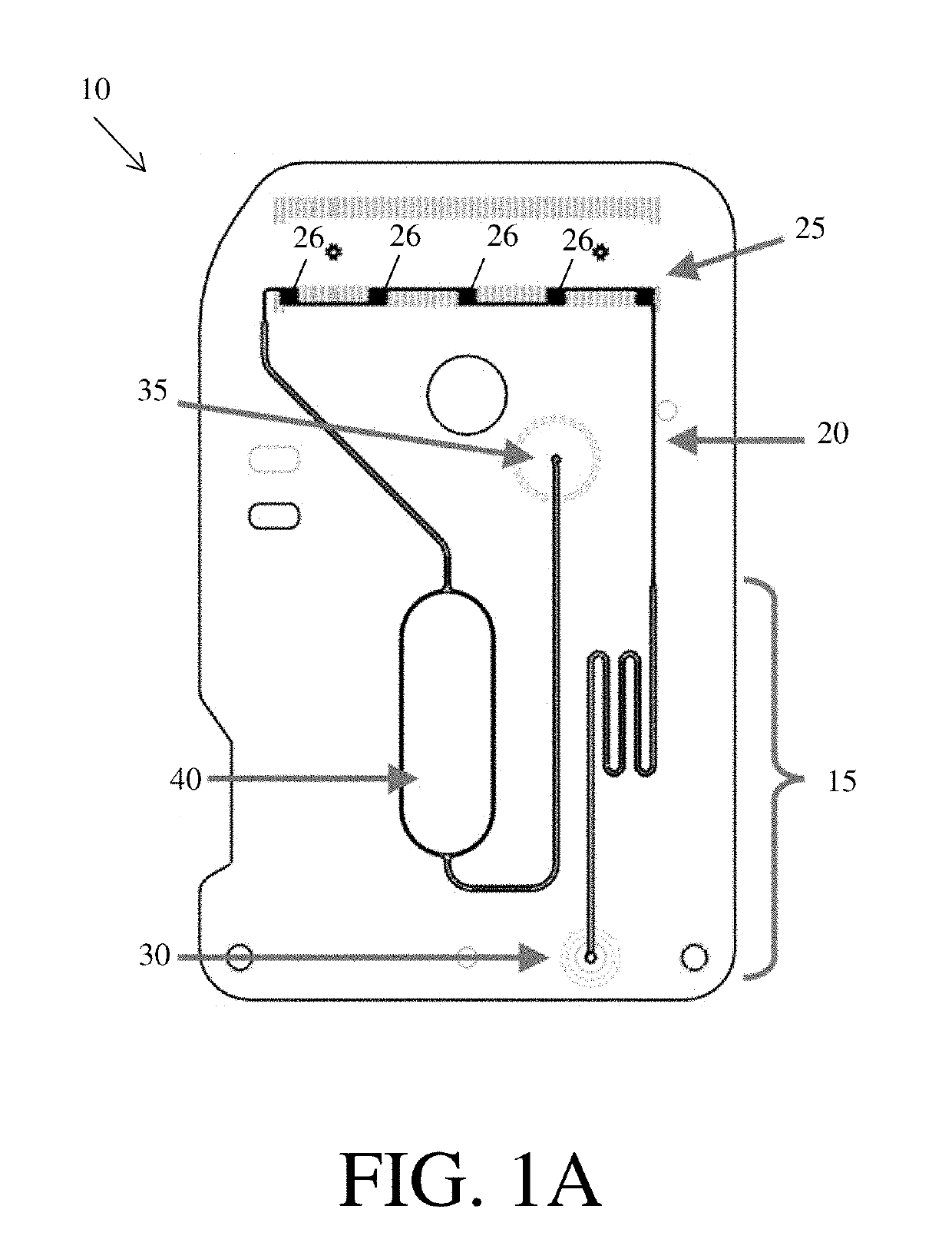

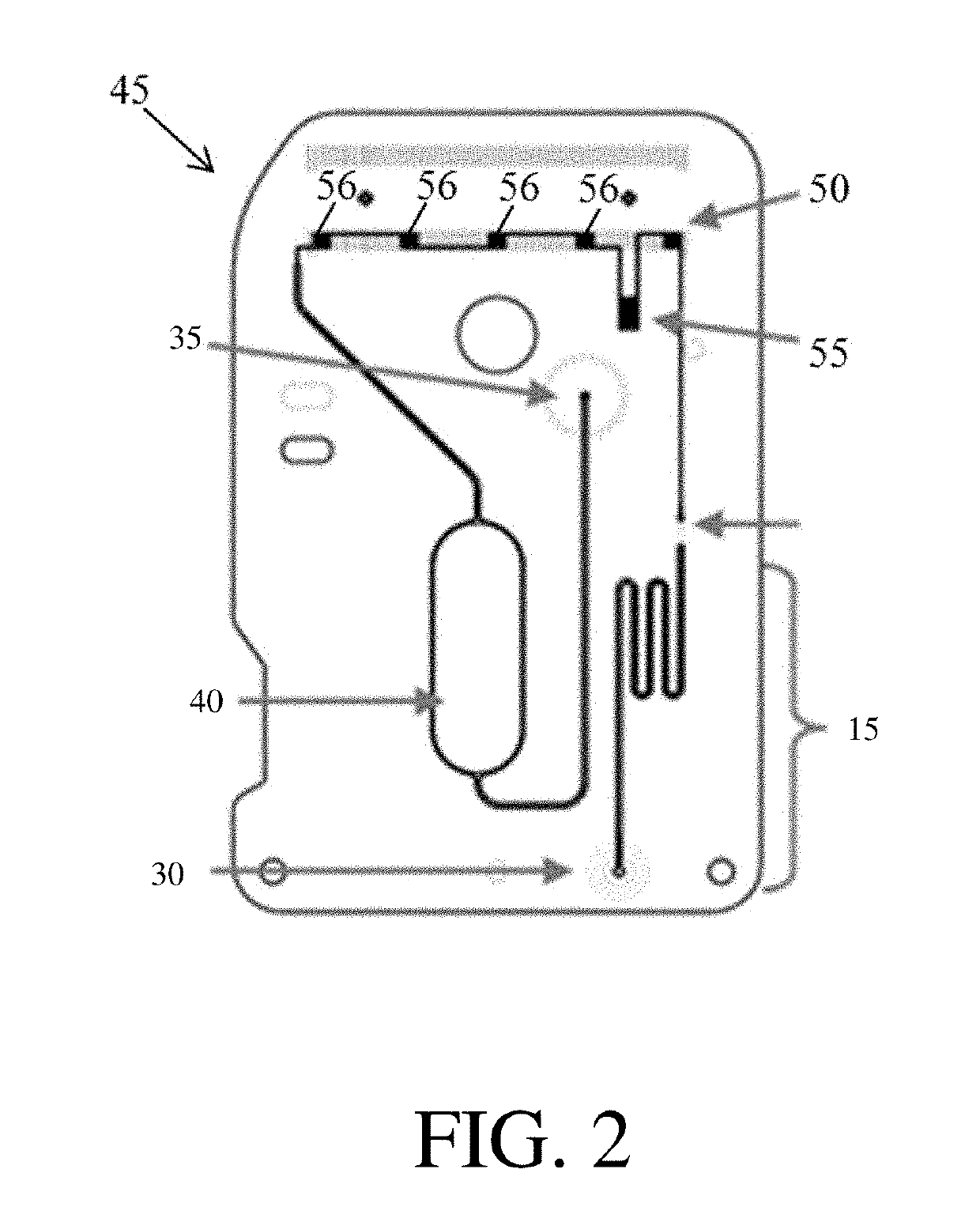
Examples
example 1
[0173]This example describes a testosterone assay performed in a fluidic device comprising an incubation channel.
[0174]Testosterone exists in blood free and also bound to a binding protein, specifically, Sex Hormone Binding Globulin (SHGB). A test for total testosterone should accurately measure the combination of both free and bound testosterone. A common assay format for testosterone involves a pre-analytical step where all the bound testosterone in a sample is released from the binding protein, such that all the testosterone remaining in the sample is free testosterone. This free testosterone is then measured by a competitive assay, whereby the testosterone in a sample competes with testosterone attached to a solid support to bind with a labelled anti-testosterone antibody. After the competition, the sample is washed away, and the amount of labelled material attached to the surface is measured via any suitable method such as fluorescence, chemiluminescence, optical transmission, ...
example 2
[0186]This example describes a testosterone assay performed in a fluidic device comprising an incubation channel.
[0187]A testosterone assay was performed in a microfluidic device having the same configuration shown in FIG. 5A and as described in Example 1, except
[0188]approximately 12 uL of EDTA-anticoagulated venous whole blood was collected into the sample collector via capillary action.
[0189]The assay steps were performed automatically with no user intervention as follows.
[0190]To introduce the sample, the analyzer applied a vacuum to the microfluidic device, pulling the sample mixture from the sample collector into the incubation channel in the microfluidic device. Downstream of the incubation channel was a detection channel of the microfluidic device. The vacuum was applied at a level and for a period of time determined to bring the majority of the sample within the incubation channel (which had a trapezoidal cross section with a maximum width of 500 um and a minimum width of 3...
example 3
[0197]This example describes a testosterone assay performed in a fluidic device comprising an incubation channel.
[0198]Testosterone exists in blood free and also bound to a binding protein, specifically, Sex Hormone Binding Globulin (SHGB). A test for total testosterone should accurately measure the combination of both free and bound testosterone. A common assay format for testosterone involves a pre-analytical step where all the bound testosterone in a sample is released from the binding protein, such that all the testosterone remaining in the sample is free testosterone. This free testosterone is then measured by a competitive assay, whereby the testosterone in a sample competes with labeled testosterone to bind with an anti-testosterone antibody attached onto a solid support. After the competition, the sample is washed away, and the amount of labelled material attached to the surface is measured via any suitable method such as fluorescence, chemiluminescence, optical transmission...
PUM
| Property | Measurement | Unit |
|---|---|---|
| area | aaaaa | aaaaa |
| volume | aaaaa | aaaaa |
| height | aaaaa | aaaaa |
Abstract
Description
Claims
Application Information
 Login to View More
 - R&D
- Intellectual Property
- Life Sciences
- Materials
- Tech Scout
- Unparalleled Data Quality
- Higher Quality Content
- 60% Fewer Hallucinations
Browse by: Latest US Patents, China's latest patents, Technical Efficacy Thesaurus, Application Domain, Technology Topic, Popular Technical Reports.
© 2025 PatSnap. All rights reserved.Legal|Privacy policy|Modern Slavery Act Transparency Statement|Sitemap|About US| Contact US: help@patsnap.com