Laminated glass article with low compaction and method for forming the same
a technology of laminated glass and low compaction, which is applied in the field of laminated glass articles with low compaction and methods for forming the same, can solve the problems of difficult or even impossible for a display manufacturer to properly align the various components of the display, and their manufacture requires higher processing temperatures
- Summary
- Abstract
- Description
- Claims
- Application Information
AI Technical Summary
Benefits of technology
Problems solved by technology
Method used
Image


Examples
example 1
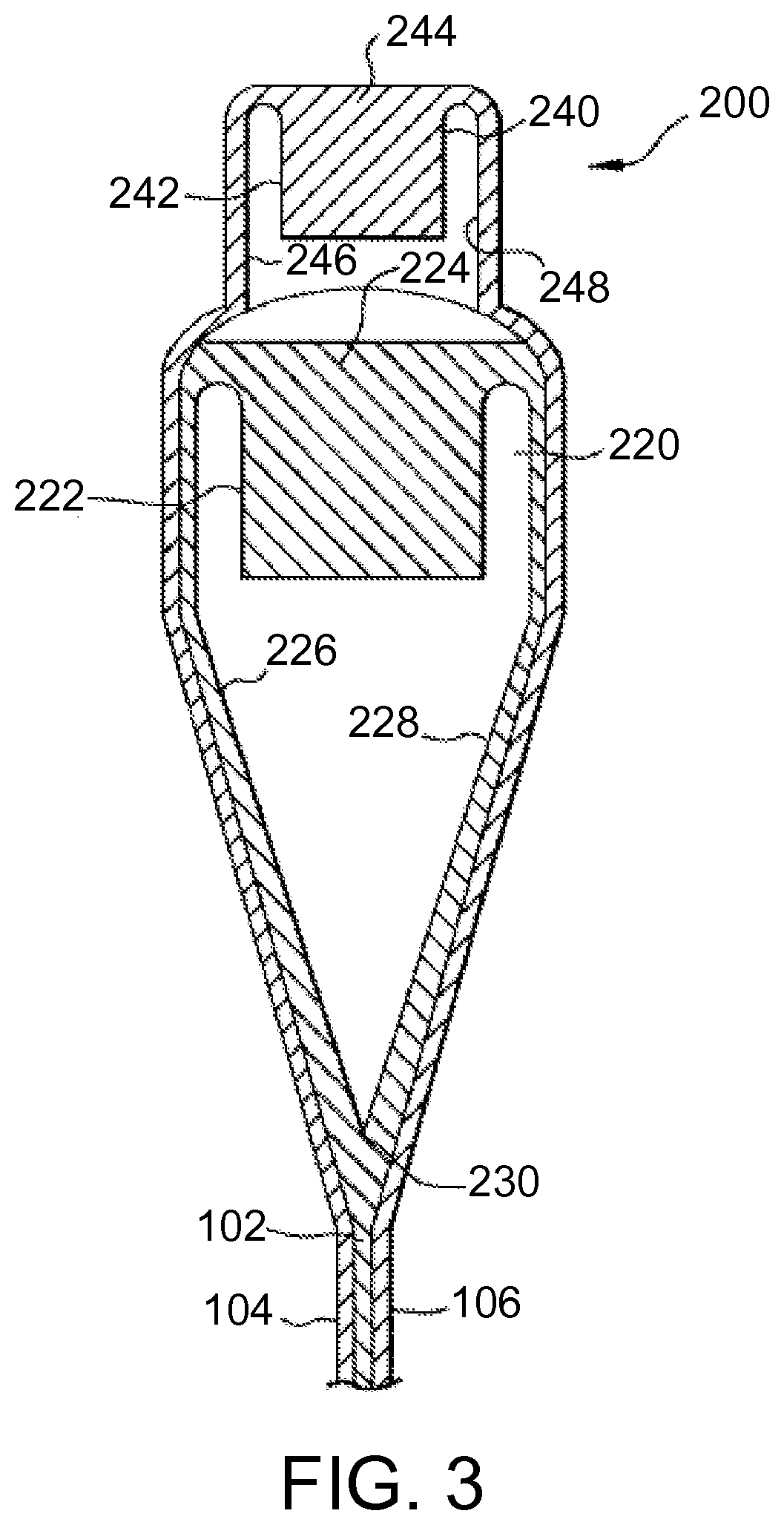
[0054]A laminated glass sheet having the laminate structure shown in FIG. 2 was formed using a fusion draw process. The core layer was formed from exemplary glass composition 1-16, which had a strain point of 614° C. and a CTE of about 59.8×10⁻⁷° C.−1. Each of the first cladding layer and the second cladding layer was formed from exemplary glass composition 2-9, which had a strain point of about 660° C. and a CTE of about 31.7×10⁻⁷° C.−1. The laminated glass sheet had a thickness of about 0.7 mm. A ratio of the thickness of the core layer to the total thickness of the cladding layers was about 9. As formed, the laminated glass sheet had a compaction of about 50 ppm.
[0055]The laminated glass sheet was subjected to a heat treatment that included (in order) heating the laminated glass sheet to about 500° C. over about 4 min, holding the laminated glass sheet at about 500° C. for about 56 min, cooling the laminated glass sheet to 200° C. at a rate of about 5° C. / min, and cooling the lam...
example 2
[0056]A laminated glass sheet having the laminate structure shown in FIG. 2 was formed using a fusion draw process. The core layer was formed from exemplary glass composition 1-16. Each of the first cladding layer and the second cladding layer was formed from exemplary glass composition 2-9. The laminated glass sheet had a thickness of about 0.7 mm. A ratio of the thickness of the core layer to the total thickness of the cladding layers was about 9. As formed, the laminated glass sheet had a compaction of about 50 ppm.
[0057]The laminated glass sheet was subjected to a heat treatment that included (in order) heating the laminated glass sheet to about 500° C. over about 4 min, holding the laminated glass sheet at about 500° C. for about 56 min, and cooling the laminated glass sheet to room temperature over about 2 min using a fan. The compaction of the laminated glass sheet following the heat treatment was about 22.89 ppm.
example 3
[0058]Four laminated glass sheets having the laminate structure shown in FIG. 2 were formed using a fusion draw process. The core layer of each laminated glass sheet was formed from exemplary glass composition 1-16. Each of the first cladding layer and the second cladding layer of each laminated glass sheet was formed from exemplary glass composition 2-9. Each laminated glass sheet had a thickness of about 0.7 mm. A ratio of the thickness of the core layer of each laminated glass sheet to the total thickness of the cladding layers of the laminated glass sheet was about 9. As formed, each of the laminated glass sheets had a compaction of about 50 ppm.
[0059]Each of the laminated glass sheets was subjected to a heat treatment that included (in order) heating the laminated glass sheet to about 675° C. over about 4 min, holding the laminated glass sheet at about 675° C. for about 56 min, and cooling the laminated glass sheet to room temperature over about 2 min using a fan. The average c...
PUM
| Property | Measurement | Unit |
|---|---|---|
| strain point | aaaaa | aaaaa |
| compressive stress | aaaaa | aaaaa |
| hold temperature | aaaaa | aaaaa |
Abstract
Description
Claims
Application Information
 Login to View More
 - R&D
- Intellectual Property
- Life Sciences
- Materials
- Tech Scout
- Unparalleled Data Quality
- Higher Quality Content
- 60% Fewer Hallucinations
Browse by: Latest US Patents, China's latest patents, Technical Efficacy Thesaurus, Application Domain, Technology Topic, Popular Technical Reports.
© 2025 PatSnap. All rights reserved.Legal|Privacy policy|Modern Slavery Act Transparency Statement|Sitemap|About US| Contact US: help@patsnap.com