Supercharge Your Innovation With Domain-Expert AI Agents!

Subsea level diversion of a gas entrainment with incorporated emergency measures upon a well blow out

a technology of gas entrainment and well blowout, which is applied in the direction of liquid degasification, separation process, and well accessories, etc., can solve the problems of oil spills, oil spills, and large risks to the natural environment, and achieve the effect of preventing ecosystem pollution

Active Publication Date: 2020-12-22
SUMATHI PATURU
View PDF10 Cites 1 Cited by
  • Summary
  • Abstract
  • Description
  • Claims
  • Application Information

AI Technical Summary

Benefits of technology

The system effectively prevents rig fires and minimizes environmental pollution by diverting and dissipating gas entrainment in the ocean, providing a proactive and responsive solution to potential well blowouts, enhancing safety and containment capabilities beyond conventional Blow-out-preventer limitations.

Problems solved by technology

Historically, the production of petroleum from the earth's mantle in the ocean floor has shrouded risk and great hazard to the natural environment that includes both the marine life forms and the terrestrial ecosystem adjacent.
The greatest hazard is the entrainment and ignition of the highly inflammable gases like Methane, causing dangerous fires, coupled with the risk of oil spewing and polluting the ocean waters.
Such two man-made calamities at the same time can be uncontrollable with available resources, and devastating to the healthy existence of the earth's planetary life forms.
Despite such stringent laws, system failures and catastrophic results did occur historically, and are still occurring, though the derived remedial measures through the ‘adverse event experiences’, each uniquely different from the other in some form or other, are still nascent, and less than perfect.
The recent event in the Gulf Shores of Mexico, involving BP Oil Company's oil well under construction (the Macondo Prospect oil well of the Deep Water Horizon), wherein the ignition of the entrained Methane gas and its fire that continued unstopped for 36 hours, had culminated in a collapse of the surface structure of the well, resulting in an ever increasing gusher from the source.
Several different attempts by the BP Oil company's technological team to contain the spewing geyser from finding its way into the body of water and into the gulf shores had failed, mostly due to the inherently limited robotic attempts involved in a moderately deep aquatic habitat.
Many unforeseen adversities are inherent to ventures such as the deep sea explorations and the like, shrouded in mystery and counting on the tides of nature yet to be conquered by the evolving technological sophistication.

Method used

the structure of the environmentally friendly knitted fabric provided by the present invention; figure 2 Flow chart of the yarn wrapping machine for environmentally friendly knitted fabrics and storage devices; image 3 Is the parameter map of the yarn covering machine
View more

Image

Smart Image Click on the blue labels to locate them in the text.
Viewing Examples
Smart Image
  • Subsea level diversion of a gas entrainment with incorporated emergency measures upon a well blow out
  • Subsea level diversion of a gas entrainment with incorporated emergency measures upon a well blow out
  • Subsea level diversion of a gas entrainment with incorporated emergency measures upon a well blow out

Examples

Experimental program
Comparison scheme
Effect test

Embodiment Construction

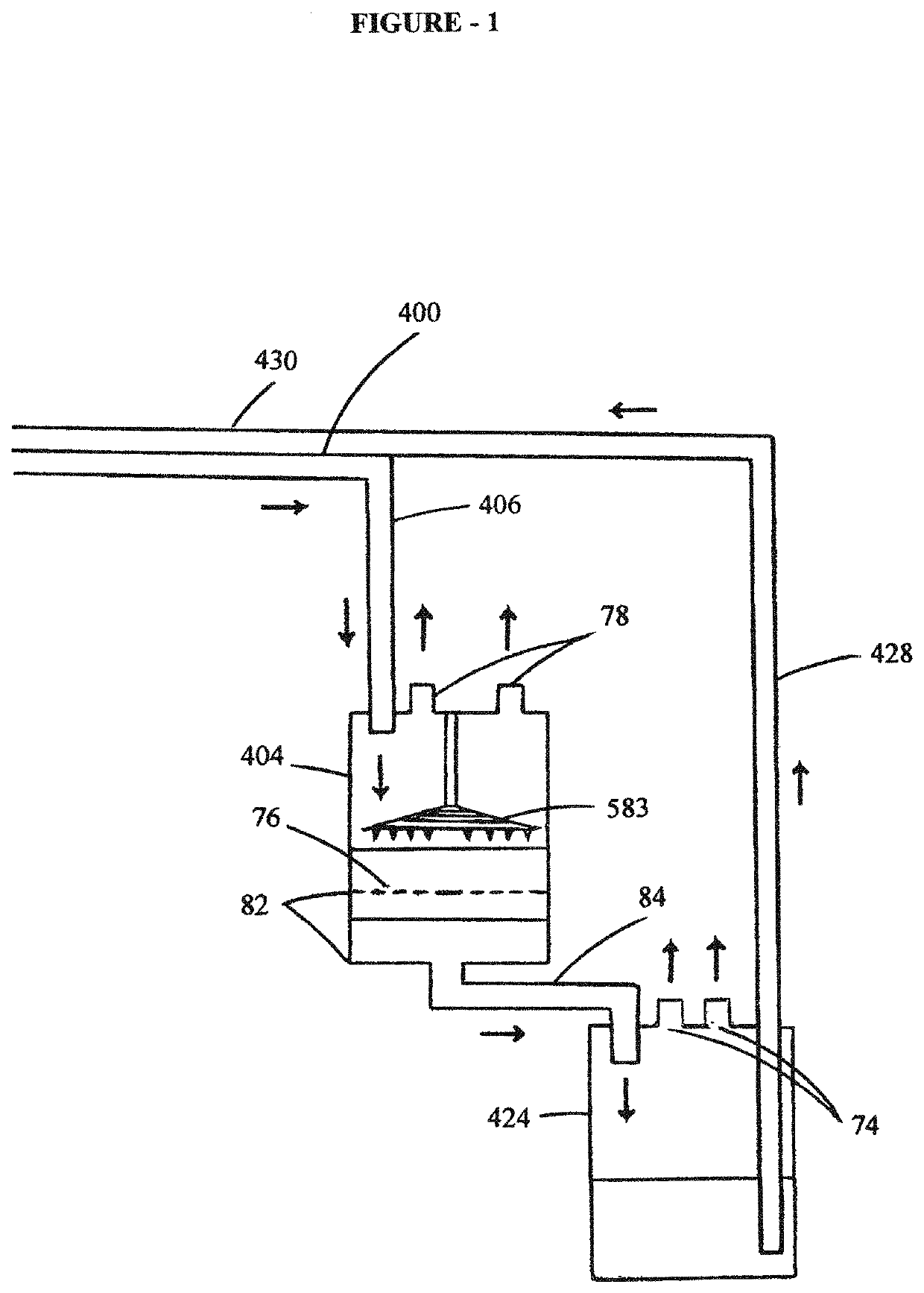
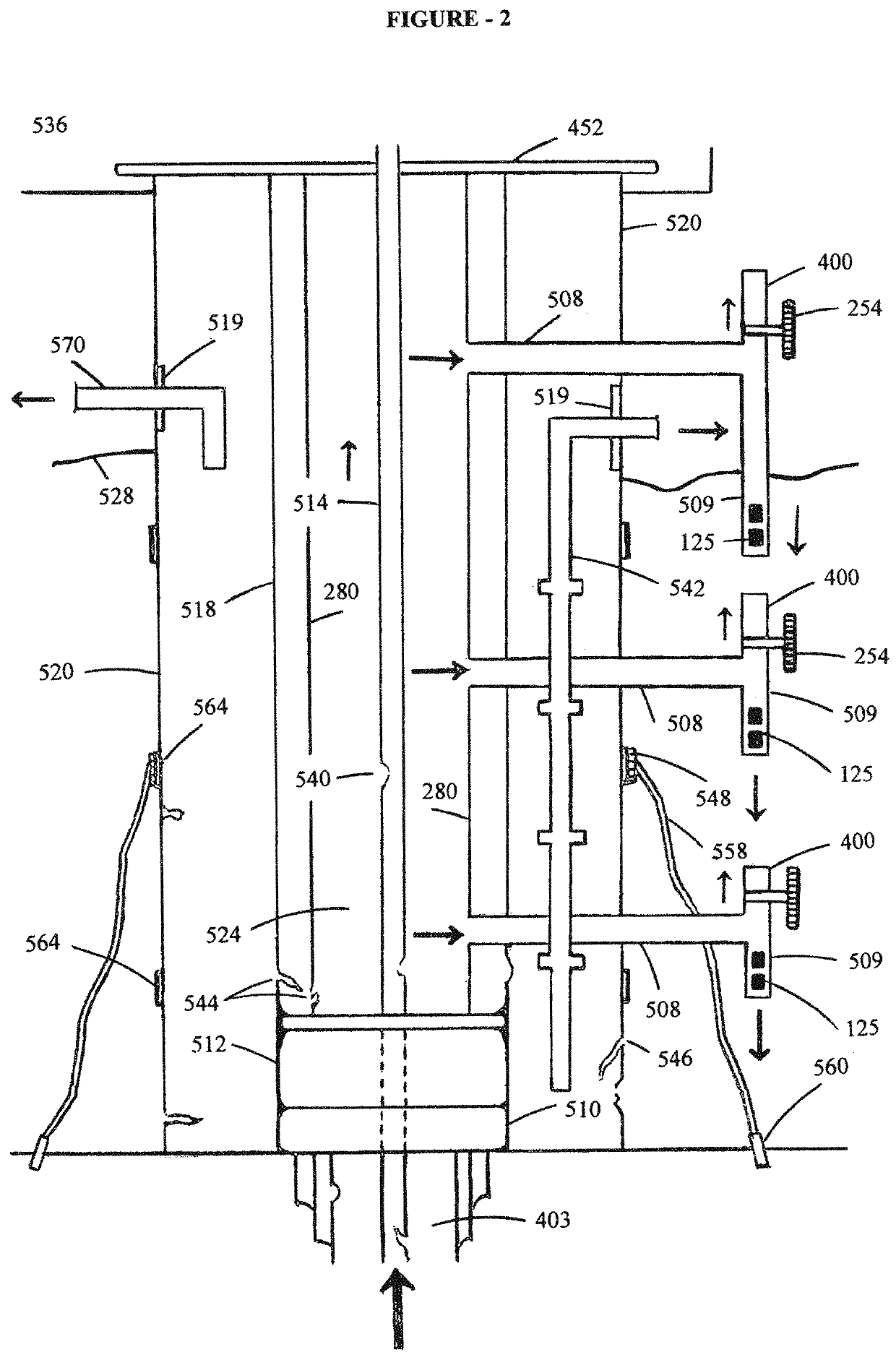
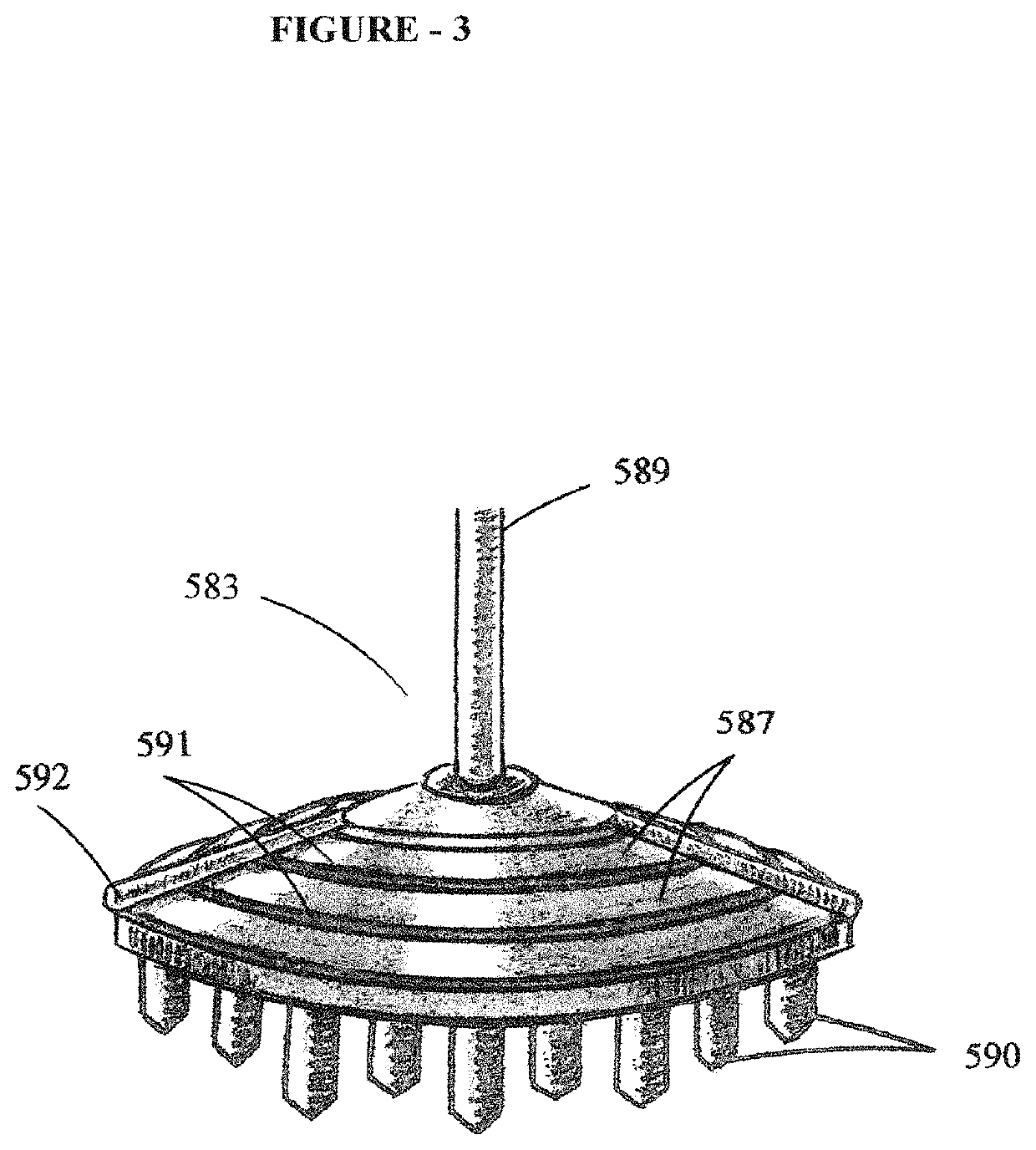
[0024]The following is a detailed elaboration of what was earlier briefed in the section foregoing, about the scheme of ‘Subsea level Oceanic Diversion of a Gas Entrainment’ (shown in FIG. 2), and additionally, about the two variable models of ‘Sea Level Gas Separator of Oil Well Effluent’ (SLGOE) Unit, the outline of a prototype illustrated in FIG. 1. An ‘effluent’ herein is generally defined as an admixed formation of an under ground oil containment, substantially in its natural form, containing gaseous hydrocarbons like methane and the liquid and semisolid crude of petroleum analogs, emanating with or without a conduit of ‘production tubing’. The scheme of oceanic ‘diversion’ of a highly pressured ‘gas entrainment’ is incorporated into the system during a predictable time, as when the down-hole digging is reaching or had reached its completion. How-ever, following the acute event of subsea diversion of the ‘gas entrainment’, when an admixed effluent starts to emerge, the ‘Emergen...

the structure of the environmentally friendly knitted fabric provided by the present invention; figure 2 Flow chart of the yarn wrapping machine for environmentally friendly knitted fabrics and storage devices; image 3 Is the parameter map of the yarn covering machine
Login to View More

PUM

PropertyMeasurementUnit
radiusaaaaaaaaaa
diameteraaaaaaaaaa
pressureaaaaaaaaaa
Login to View More

Abstract

A Subsea Diversion of a pressured Gas Entrainment from the riser pipe, by a ‘Gas Entrainment Diversion Tubing’ (GDT) prevents rig-fire upon a well blow-out, wherein the giant bubbles emerging from water and rising to the atmospheric air are neither ‘pressured’ nor ‘explosive’, however precluded to enter the air-gap. A ‘Sea Level Gas Separator of Oil Well Effluent’ (SLGOE) unit working in conjunction instantly separates gas from the down-flowing oil-gas effluent, whereas the unit's voluminous top outlets for gas are subject to attenuating the pressured elements (volume and pressure being inversely related). Another model of SLGOE unit diverts pressured gaseous elements into oceanic waters, obviating an explosive gas-fire by its oxygen-free ‘milieu’. Upon a breach to the drilling conductor, an ‘oil-separator’ tank isolates oil from oceanic waters, while precluding oceanic waters entering the oil-containment, the latter, otherwise a brewing danger of mounting pressure culminating into a spewing geyser.

Description

CROSS-REFERENCE TO RELATED APPLICATIONS[0001]U.S. Pat. No. 9,175,549 Title: Emergency Salvage of a Crumbled Oceanic oil well Filing Date Jun. 6, 2011 U.S. Pat. No. 9,879,517 Title: Subsea Level Gas Separator of Crude Petroleum Oil Filing Date Nov. 3, 2015STATEMENT REGARDING FEDERALLY SPONSORED RESEARCH[0002]Not Federally Sponsored (No Joint Research Agreement)SEQUENCE LISTING OF PROGRAMS[0003]NA[0004]This is a Continuation-in-part (CIP) application of U.S. Pat. No. 9,879,517 titled as ‘SUBSEA LEVEL GAS SEPARATOR OF CRUDE PETROLEUM OIL’ which was a CIP of U.S. Pat. No. 9,175,549.BACK GROUND OF THE INVENTION[0005]There are innumerable petroleum oil wells bored into the oceanic floor by highly evolved modern devices to tap the petroleum (crude oil) reservoirs. Many oil wells are clustered in oceanic grounds, often of significant distance from the coast line, such wells bored through the ocean floor as deep as ⅛th of a mile from the surface waters, to find their way into the underground...

Claims

the structure of the environmentally friendly knitted fabric provided by the present invention; figure 2 Flow chart of the yarn wrapping machine for environmentally friendly knitted fabrics and storage devices; image 3 Is the parameter map of the yarn covering machine
Login to View More

Application Information

Patent Timeline
no application Login to View More
Patent Type & Authority Patents(United States)
IPC IPC(8): E21B43/01E21B43/36
CPCE21B43/0122E21B43/36B01D19/0042
Inventor PATURU, SUMATHI
Owner SUMATHI PATURU
Features
  • R&D
  • Intellectual Property
  • Life Sciences
  • Materials
  • Tech Scout
Why Patsnap Eureka
  • Unparalleled Data Quality
  • Higher Quality Content
  • 60% Fewer Hallucinations
Social media
Patsnap Eureka Blog
Learn More