Supercharge Your Innovation With Domain-Expert AI Agents!

Rate-reducing membrane for release of an agent

a rate-reducing membrane and agent technology, applied in the coating field, can solve the problems of affecting the release rate of the agent, affecting the quality of the product, so as to reduce the rate of release of the agen

Inactive Publication Date: 2006-06-08
PACETTI STEPHEN D
View PDF99 Cites 10 Cited by
  • Summary
  • Abstract
  • Description
  • Claims
  • Application Information

AI Technical Summary

Benefits of technology

The solution effectively reduces the release rate of therapeutic agents, maintaining a therapeutically useful concentration for an extended duration without the need for thicker coatings or higher drug loadings, thereby minimizing side effects and improving the mechanical functionality of stents.

Problems solved by technology

A problem associated with the above procedure includes formation of intimal flaps or torn arterial linings, which can collapse and occlude the conduit after the balloon is deflated.
Vasospasms and recoil of the vessel wall also threaten vessel closure.
Yet, restenosis is still a significant clinical problem with rates ranging from 20-40%.
When restenosis does occur in the stented segment, its treatment can be challenging, as clinical options are more limited as compared to lesions that were treated solely with a balloon.
In order to provide an efficacious concentration to the treated site, systemic administration of such medication often produces adverse or even toxic side effects for the patient.
Significant disadvantages associated with the aforementioned method include loss of the therapeutic substance from the body of the stent during delivery and expansion of the stent as well as lack of control of the release rate of the substance from the stent.
Increasing the quantity of the therapeutic substance in the polymeric coating can lead to poor coating mechanical properties, inadequate coating adhesion, and overly rapid rate of release.
Increasing the quantity of the polymeric compound by producing a thicker coating can perturb the geometrical and mechanical functionality of the stent as well as limit the procedures for which the stent can be used.

Method used

the structure of the environmentally friendly knitted fabric provided by the present invention; figure 2 Flow chart of the yarn wrapping machine for environmentally friendly knitted fabrics and storage devices; image 3 Is the parameter map of the yarn covering machine
View more

Image

Smart Image Click on the blue labels to locate them in the text.
Viewing Examples
Smart Image
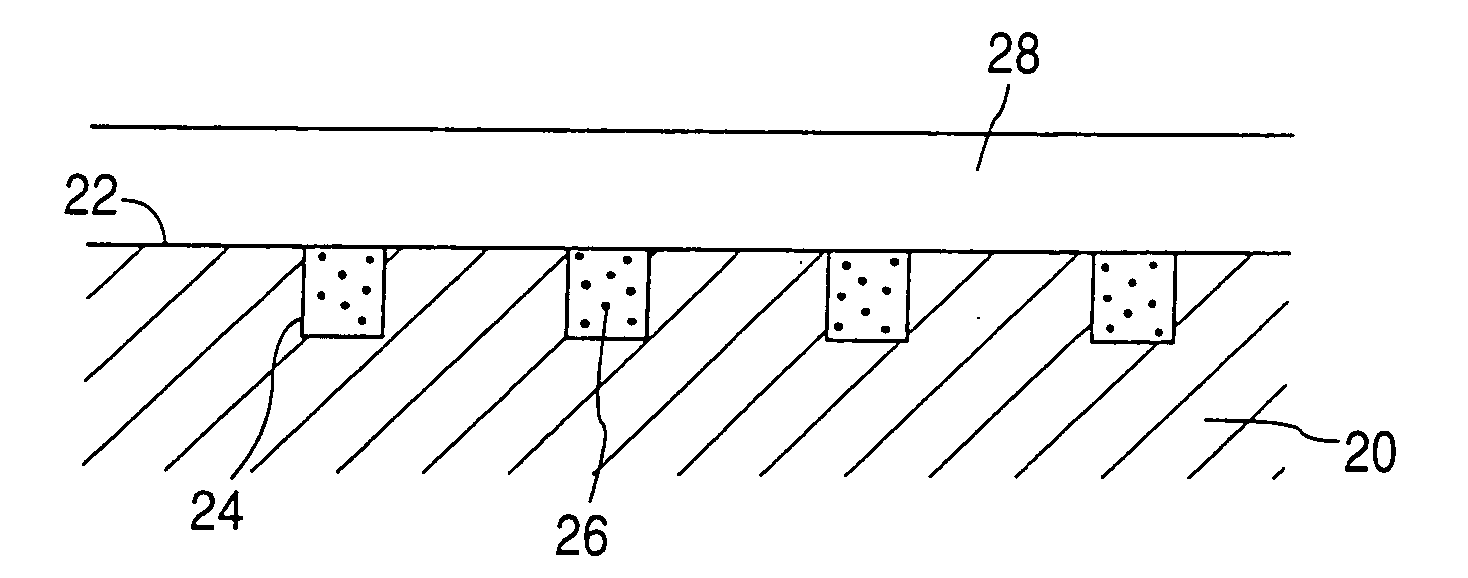
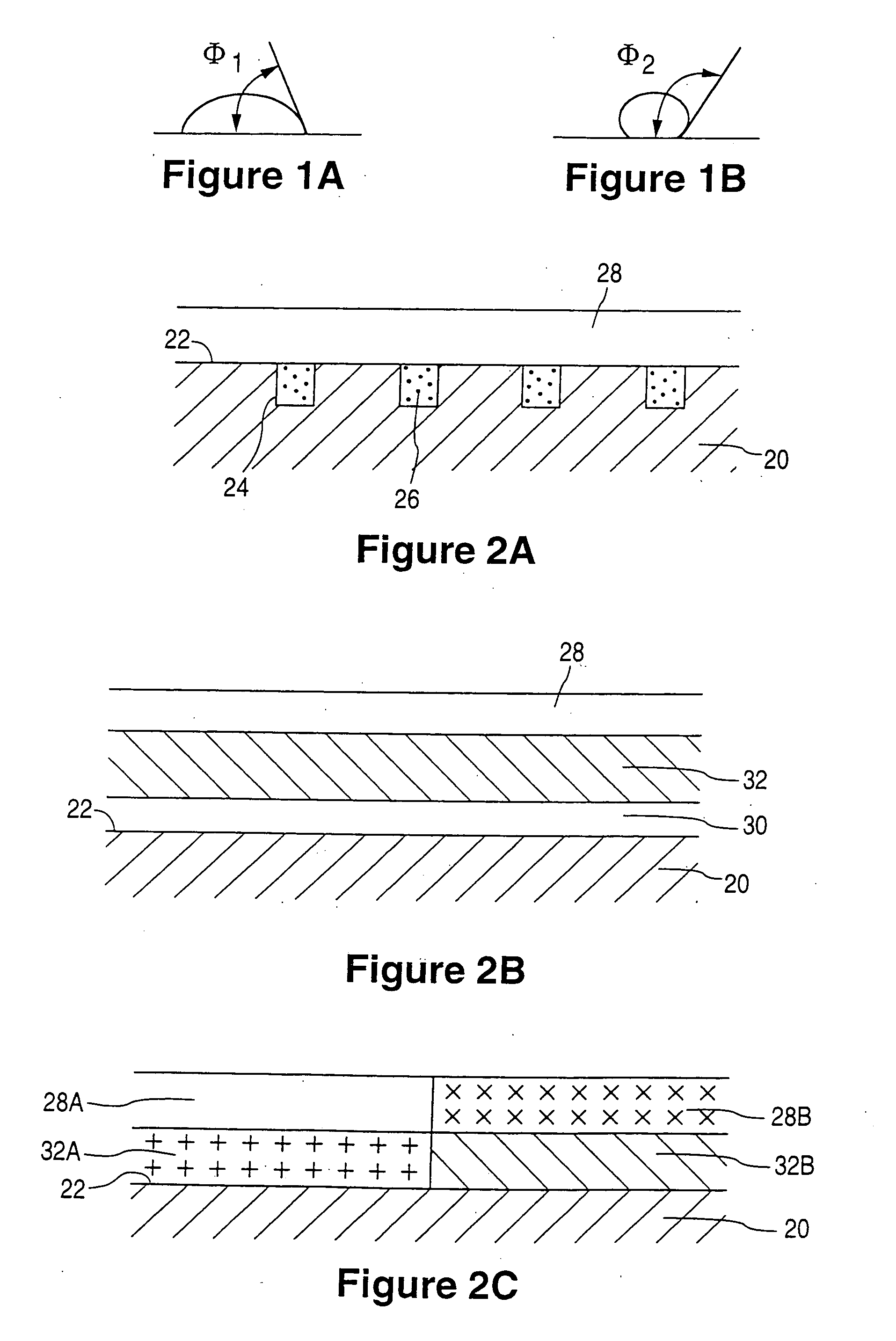
  • Rate-reducing membrane for release of an agent
  • Rate-reducing membrane for release of an agent

Examples

Experimental program
Comparison scheme
Effect test

example 1

[0078] A 13 mm, 316L stainless steel TETRA stent is primer coated by spraying with a 2% (w / w) solution of poly(ethylene-co-vinyl alcohol) (44 mole % ethylene) in dimethylacetamide. The solvent is removed by baking at 140° C. for 1 hour. A solution of 2% (w / w) EVAL and 0.25% (w / w) actinomycin D in dimethylacetamide is spray coated onto the stent to a thickness that gives 25 μg of actinomycin D on the stent. The stent is then baked at 50° C. for two hours. A hydrophobic release rate limiting membrane is formed by spraying the stent with a 2% (w / w) solution of polybutylmethacrylate in a 1 / 3 (w / w) mixture of ethyl acetate and cyclohexanone. A second two hour bake at 50° C. is performed to remove the solvent.

example 2

[0079] A 13 mm, 316L stainless steel TETRA stent is primer coated by spraying with a 2% (w / w) solution of poly(ethylene-co-vinyl alcohol) (44 mole % ethylene) in dimethylacetamide. The solvent is removed by baking at 140° C. for 1 hour. A solution of 2% (w / w) EVAL and 0.5% (w / w) paclitaxel in dimethylacetamide is spray coated onto the stent to a thickness that gives 50 μg of paclitaxel on the stent. The stent is then baked at 50° C. for two hours. A hydrophobic release rate limiting membrane is formed by spraying on a 2% (w / w) solution of poly(ethylene-co-vinylacetate) (25 mole % acetate content) in a 1 / 1 (w / w) solution of toluene and n-butyl acetate. Another two hour bake at 50° C. is performed to remove the solvent.

example 3

[0080] A 13 mm, 316L stainless steel TETRA stent is primer coated by spraying with a 2% (w / w) solution of poly(ethylene-co-vinyl alcohol) (44 mole % ethylene) in dimethylacetamide. The solvent is removed by baking at 140° C. for 1 hour. A solution of 2% (w / w) EVAL and 0.67% (w / w) clobetasol propionate in dimethylacetamide is spray coated onto the stent to a thickness that gives 150 μg of clobetasol propionate on the stent. The stent is then baked at 50° C. for two hours. A hydrophobic release rate limiting membrane is formed by coating on a 5% (w / w) solution of Nusil MED3-6605 silicone dispersion in a 1 / 1 (w / w) of trichloroethylene and cyclohexane. This process is accomplished by placing the stent on a section of 0.070 inch OD stainless steel tubing. The coating is then applied to the stent via syringe. With the stent covered with fluid, it is pushed along the length of the tube with a short section of TEFLON tubing, while simultaneously rotating the stainless steel tube. The coatin...

the structure of the environmentally friendly knitted fabric provided by the present invention; figure 2 Flow chart of the yarn wrapping machine for environmentally friendly knitted fabrics and storage devices; image 3 Is the parameter map of the yarn covering machine
Login to View More

PUM

PropertyMeasurementUnit
mole percentageaaaaaaaaaa
mole percentaaaaaaaaaa
contact angleaaaaaaaaaa
Login to View More

Abstract

A membrane that reduces the rate at which a therapeutic substance is released from an implantable medical device, such as a stent, is disclosed.

Description

CROSS REFERENCE [0001] This is a continuation of application Ser. No. 10 / 760,132 filed on Jan. 15, 2004, which is a continuation of application Ser. No. 09 / 966,787 filed on Sep. 27, 2001 (U.S. Pat. No. 6,753,071).BACKGROUND OF THE INVENTION [0002] 1. Field of the Invention [0003] The invention relates to a coating disposed on an implantable device, one example of which is a stent, for reducing the release rate of an agent carried by the device. [0004] 2. Description of the Background [0005] Percutaneous transluminal coronary angioplasty (PTCA) is a procedure for treating heart disease. A catheter assembly having a balloon portion is introduced percutaneously into the cardiovascular system of a patient via the brachial or femoral artery. The catheter assembly is advanced through the coronary vasculature until the balloon portion is positioned across the occlusive lesion. Once in position across the lesion, the balloon is inflated to a predetermined size to remodel the vessel wall. Th...

Claims

the structure of the environmentally friendly knitted fabric provided by the present invention; figure 2 Flow chart of the yarn wrapping machine for environmentally friendly knitted fabrics and storage devices; image 3 Is the parameter map of the yarn covering machine
Login to View More

Application Information

Patent Timeline
no application Login to View More
Patent Type & Authority Applications(United States)
IPC IPC(8): B32B27/00B32B27/32A61F2/82A61L31/10A61L31/16
CPCA61F2/82Y10T428/1355A61L27/34A61L31/10A61L31/16A61L2300/00A61L2300/416A61L2300/602A61L2300/606A61L2420/02B05D7/586C08L53/02C08L53/025C09D129/04C09D153/02C09D153/025A61F2250/0068Y10T428/139Y10T428/24942Y10T428/1393C08L2666/02Y10T428/31678Y10T428/31935Y10T428/31504Y10T428/3154Y10T428/31663Y10T428/31931Y10T428/31855Y10T428/31938Y10T428/31551Y10T428/31544
Inventor PACETTI, STEPHEN D.
Owner PACETTI STEPHEN D
Features
  • R&D
  • Intellectual Property
  • Life Sciences
  • Materials
  • Tech Scout
Why Patsnap Eureka
  • Unparalleled Data Quality
  • Higher Quality Content
  • 60% Fewer Hallucinations
Social media
Patsnap Eureka Blog
Learn More