Check patentability & draft patents in minutes with Patsnap Eureka AI!

Building support vector machines with reduced classifier complexity

a technology of classifier complexity and support vector machine, which is applied in the field of building support vector machine with reduced classifier complexity, can solve problems such as complex and expensive problems

Inactive Publication Date: 2007-01-11
R2 SOLUTIONS
View PDF1 Cites 16 Cited by
  • Summary
  • Abstract
  • Description
  • Claims
  • Application Information

AI Technical Summary

Benefits of technology

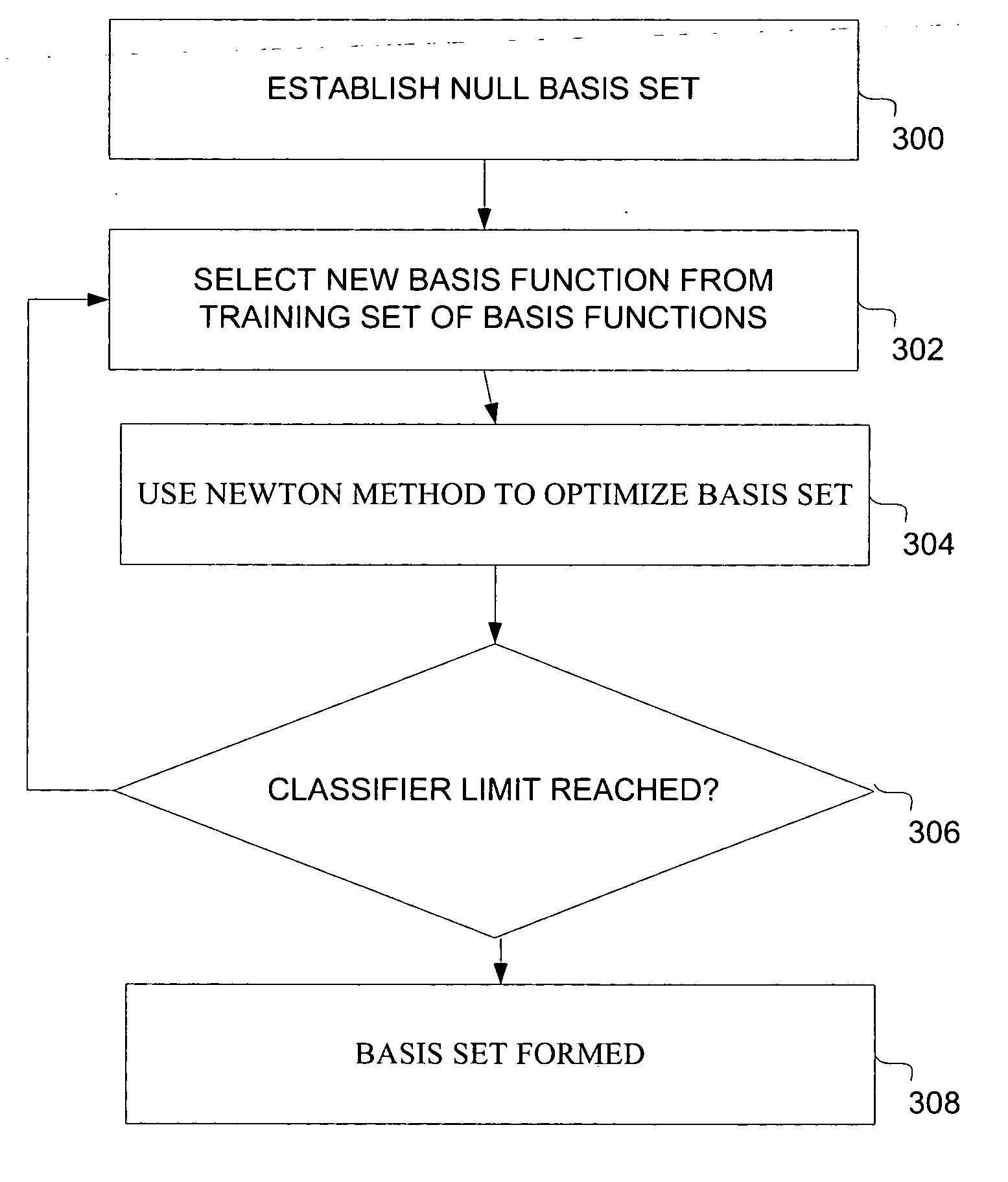
[0004] Briefly, and in general terms, to solve the above problems with prior art systems, various embodiments are directed to a computerized system and method learning for categorizing and labelling elements. In a preferred embodiment, the system establishes an empty set of basis functions. A basis function from a set of training functions is selected. The basis function is added to the set of to the set of basis functions. One or more parameters associated with the set of basis functions are optimized. The selecting, adding and optimizing are repeated until a set limit of complexity in the number of basis functions is reached.

Problems solved by technology

This is because a large set of basis functions is usually needed to form the SVM classifier, making it complex and expensive.

Method used

the structure of the environmentally friendly knitted fabric provided by the present invention; figure 2 Flow chart of the yarn wrapping machine for environmentally friendly knitted fabrics and storage devices; image 3 Is the parameter map of the yarn covering machine
View more

Image

Smart Image Click on the blue labels to locate them in the text.
Viewing Examples
Smart Image
  • Building support vector machines with reduced classifier complexity
  • Building support vector machines with reduced classifier complexity
  • Building support vector machines with reduced classifier complexity

Examples

Experimental program
Comparison scheme
Effect test

Embodiment Construction

[0011] Referring now to the drawings, wherein like reference numerals denote like or corresponding parts throughout the drawings and, more particularly to FIGS. 1-4 there are shown various embodiments of a system for building support vector machines with reduced classifier complexity. In one embodiment, a method incrementally finds basis functions to maximize accuracy. The process of adding new basis functions is stopped when the classifier has reached a level of complexity. In some embodiments, the method forms classifiers that have an order of magnitude of a smaller number of basis functions compared to a full SVM, while achieving substantially the same level of accuracy.

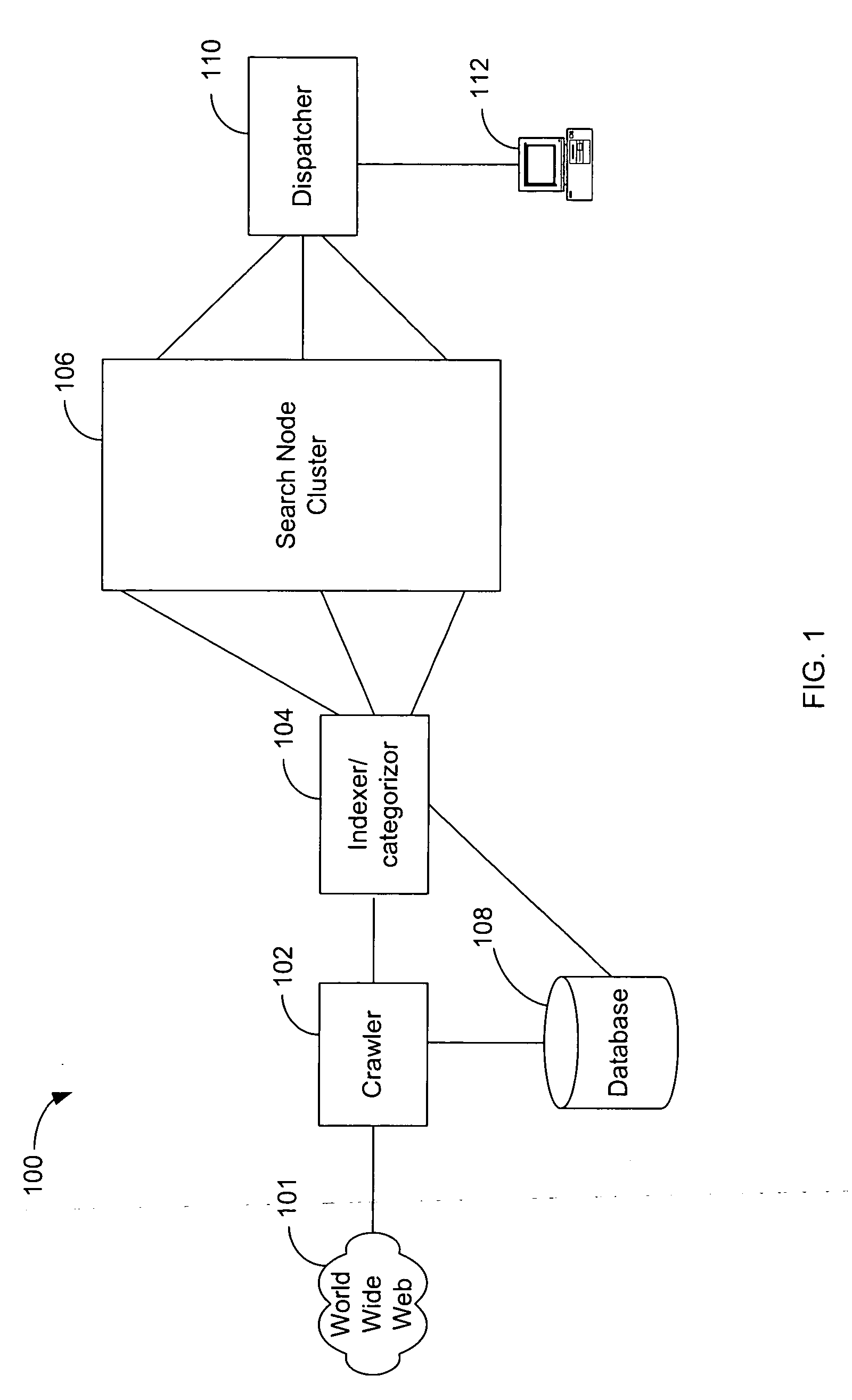
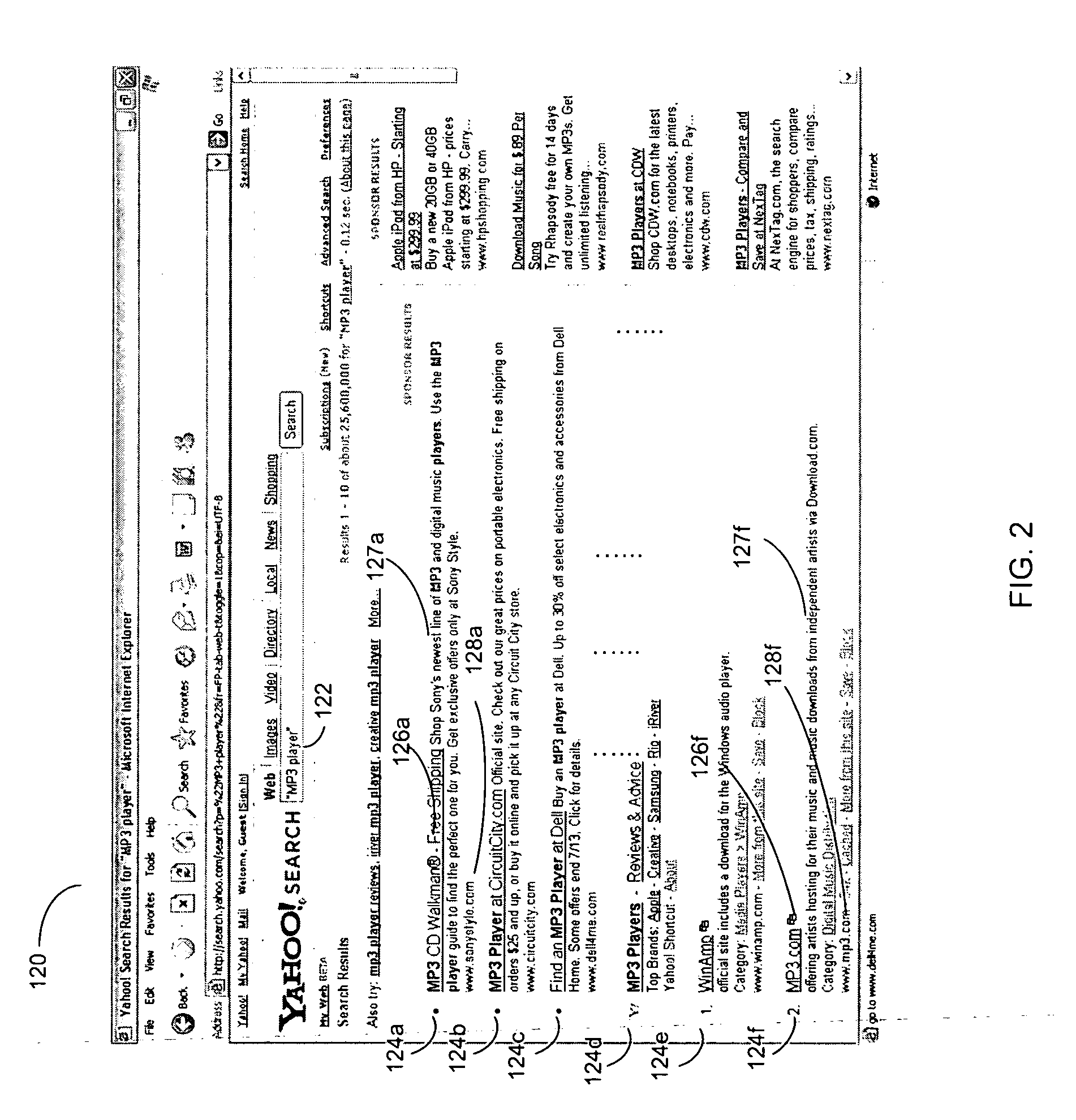
[0012] In one embodiment, as an example, and not by way of limitation, an improvement in Internet search engine categorization and scoring of web pages is provided. The World Wide Web is a distributed database comprising billions of data records accessible through the Internet. Search engines are commonly used to...

the structure of the environmentally friendly knitted fabric provided by the present invention; figure 2 Flow chart of the yarn wrapping machine for environmentally friendly knitted fabrics and storage devices; image 3 Is the parameter map of the yarn covering machine
Login to View More

PUM

No PUM Login to View More

Abstract

Support vector machines (SVMs), though accurate, are not preferred in applications requiring great classification speed, due to the number of support vectors being large. To overcome this problem a primal system and method with the following properties has been devised: (1) it decouples the idea of basis functions from the concept of support vectors; (2) it greedily finds a set of kernel basis functions of a specified maximum size (dmax) to approximate the SVM primal cost function well; (3) it is efficient and roughly scales as O(ndmax2) where n is the number of training examples; and, (4) the number of basis functions it requires to achieve an accuracy close to the SVM accuracy is usually far less than the number of SVM support vectors.

Description

CROSS-REFERENCE TO RELATED APPLICATIONS [0001] This application is based on U.S. Provisional Application No. 60 / 680,348, filed May 12, 2005, which is / are herein incorporated by reference in its / their entirety.FIELD OF THE INVENTION [0002] The invention relates to a system and method for building support vector machines with reduced classifier complexity. More specifically, a system and method incrementally finds basis functions to maximize accuracy, and the process of adding new basis functions is stopped when the classifier has reached a level of complexity. BACKGROUND OF THE INVENTION [0003] Support Vector Machines (SVMs) are modern learning systems that deliver state-of-the-art performance in real world pattern recognition and data mining applications, such as text categorization, hand-written character recognition, image classification and bioinformatics. Even though SVMs yield accurate solutions, they are not preferred in online applications where classification has to be perfo...

Claims

the structure of the environmentally friendly knitted fabric provided by the present invention; figure 2 Flow chart of the yarn wrapping machine for environmentally friendly knitted fabrics and storage devices; image 3 Is the parameter map of the yarn covering machine
Login to View More

Application Information

Patent Timeline
no application Login to View More
Patent Type & Authority Applications(United States)
IPC IPC(8): G06F15/18
CPCG06K9/6269G06F18/2411
Inventor SELVARAJ, SATHIYA KEERTHIDECOSTE, DENNIS M.
Owner R2 SOLUTIONS
Features
  • R&D
  • Intellectual Property
  • Life Sciences
  • Materials
  • Tech Scout
Why Patsnap Eureka
  • Unparalleled Data Quality
  • Higher Quality Content
  • 60% Fewer Hallucinations
Social media
Patsnap Eureka Blog
Learn More