Sanitized animal bedding material and process
a bedding material and process technology, applied in the field of microbiology, can solve the problems of increasing the likelihood of disease-causing microorganisms (pathogens) being present in bedding materials, high levels of microbial contamination, and reducing the probability of disease-causing microorganisms (pathogens) being present, so as to reduce or eliminate the populations of bacterial endospores, and reduce or eliminate the populations of bacterial endospor
- Summary
- Abstract
- Description
- Claims
- Application Information
AI Technical Summary
Benefits of technology
Problems solved by technology
Method used
Image

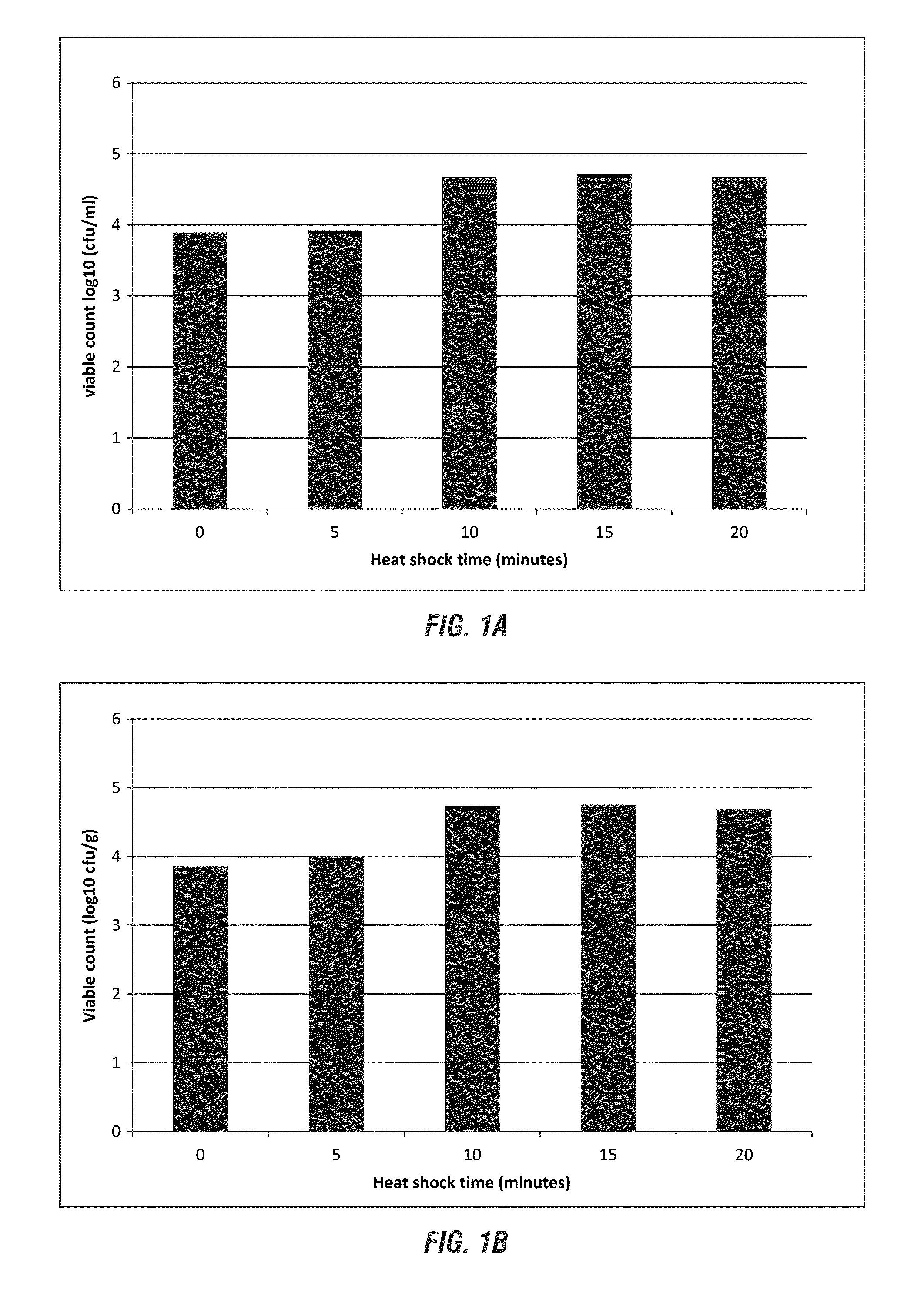

Examples
example 1
Extent of Germination of Bacterial Spores Following Heat-Shock Treatments in Sterile Water and in Sterile Wet Corncob Particles
[0049]Bacterial spores are extremely heat resistant. Reliable heat inactivation of bacterial spores can be achieved by autoclaving which typically refers to the application of pressurized steam at 121° C., 15 psi, for about 20 minutes depending on the quantity of material to be treated. However, autoclaving can be costly, time consuming, and limited by the volumetric constraints of the autoclave. It is documented that bacterial spores (if triggered to germinate) exhibit decreased resistance to heat. Some bacterial spores will not germinate unless activated by heat-shock, which breaks spore dormancy. Sub-lethal heating (heat-shock) increases the number of bacterial spores that germinate within a spore population. Thus, it is important to determine the extent of germination of bacterial spores following heat-shock treatments in sterile water and in sterile wet...
example 2
Enterobacteriaceae, Yeast, Molds and Spore-Forming Bacteria Viability in Heat-Shocked and Non-Heat-Shocked Corncob Particles
[0056]Corncob particles, like many raw agricultural products, are contaminated with organisms (other than spore-forming bacteria) such as Enterobacteriaceae, yeast and molds. One or more temperature / time combinations used for heat-shock may kill these microorganisms to reduce the microbial load of corncob particles.
[0057]To determine whether vegetative bacterial cells, yeast, and molds are capable of surviving the heating conditions used for heat-shock of bacterial spores in corncob particles, heat-shock temperature and time that produce the largest amount of spores that germinate (based on plate counts of spore-formers) were used in experiments to determine the effect of this procedure on the natural microbial content of traditional corncob particles. Enumeration of microbial groups (bacteria and fungi) was performed before and after heat-shock treatment. Brie...
example 3
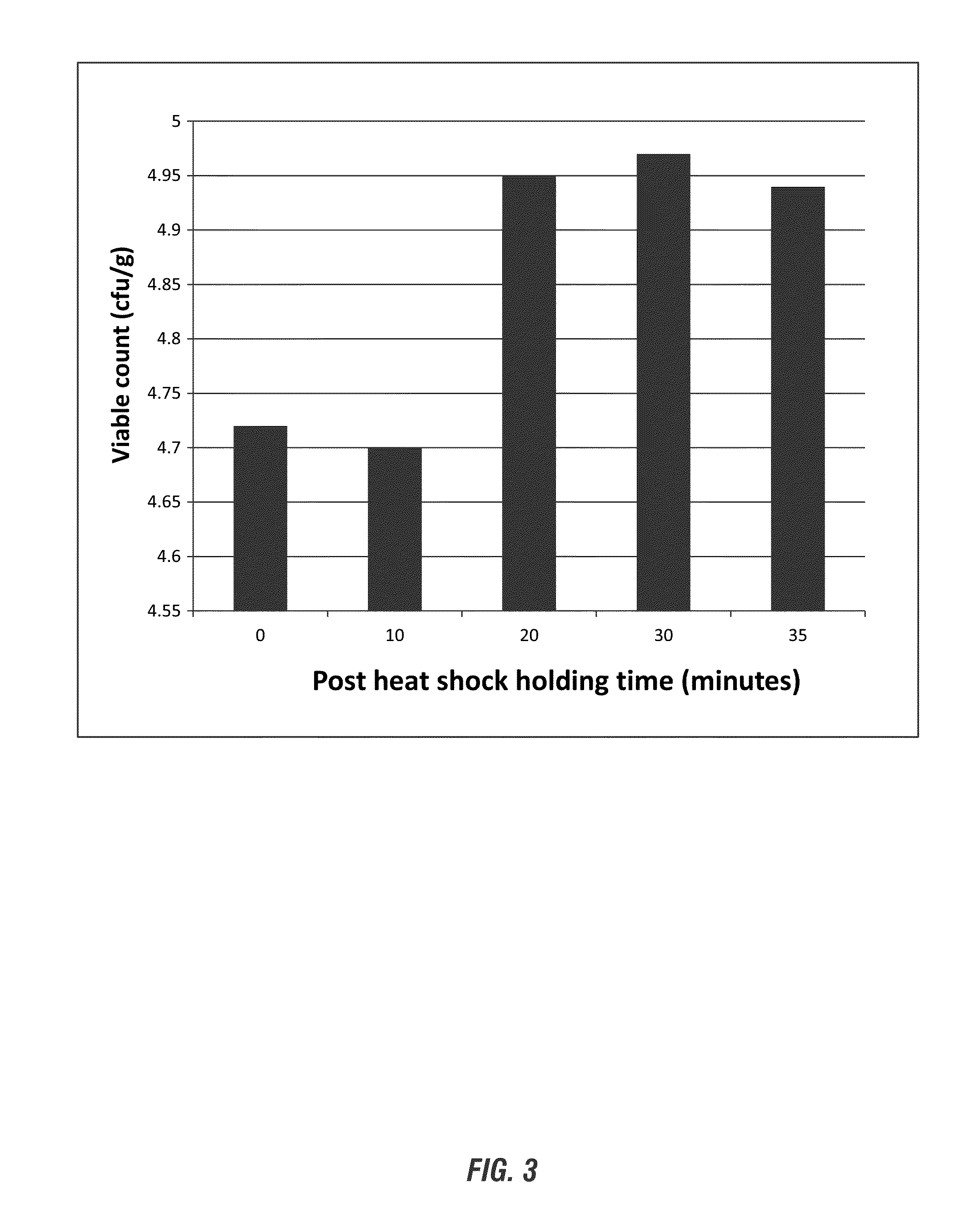
Effect of Holding Temperature and Time (Post Heat-Shock) on the Extent of Germination of Bacterial Spores in Corncob Particles
[0065]After bacterial spores are heat-shocked, the length of time for the start of germination can vary among spores in a population. Also, the ideal post-heat-shock temperature for germination may vary depending on whether the spores are mesophilic or thermophilic. Since both groups of spores are present in corncob particles, it was important to determine temperature / time conditions that produced the maximum amount of germinating spores of both groups to enhance their destruction.
[0066]The extent of germination of heat-shocked bacterial spores is dependent on post heat-shock conditions of temperature and length of time at a specified temperature. Sterile water and corncob particles were inoculated with bacterial spores and heat-shocked as described above. Following heat-shock, the samples were placed in a 50 / 50 ice / water mixture. Temperature of the samples o...
PUM
| Property | Measurement | Unit |
|---|---|---|
| temperature | aaaaa | aaaaa |
| temperature | aaaaa | aaaaa |
| temperature | aaaaa | aaaaa |
Abstract
Description
Claims
Application Information
 Login to View More
 - R&D
- Intellectual Property
- Life Sciences
- Materials
- Tech Scout
- Unparalleled Data Quality
- Higher Quality Content
- 60% Fewer Hallucinations
Browse by: Latest US Patents, China's latest patents, Technical Efficacy Thesaurus, Application Domain, Technology Topic, Popular Technical Reports.
© 2025 PatSnap. All rights reserved.Legal|Privacy policy|Modern Slavery Act Transparency Statement|Sitemap|About US| Contact US: help@patsnap.com