TCP fast recovery extended method and apparatus

a fast recovery and extended method technology, applied in the field of tcp fast recovery extended method and apparatus, can solve the problems of smooth recovery, most internet loss, and sufficient time available, and achieve the effects of smooth recovery, improved throughput for individual users, and faster recovery

US6958997B1Inactive Publication Date: 2005-10-25CISCO TECH INC
5 Cites 59 Cited by

Patent Information

Authority / Receiving Office
US · United States
Current Assignee / Owner
Publication Date
2005-10-25
Estimated Expiration
Not applicable · inactive patent

Smart Images

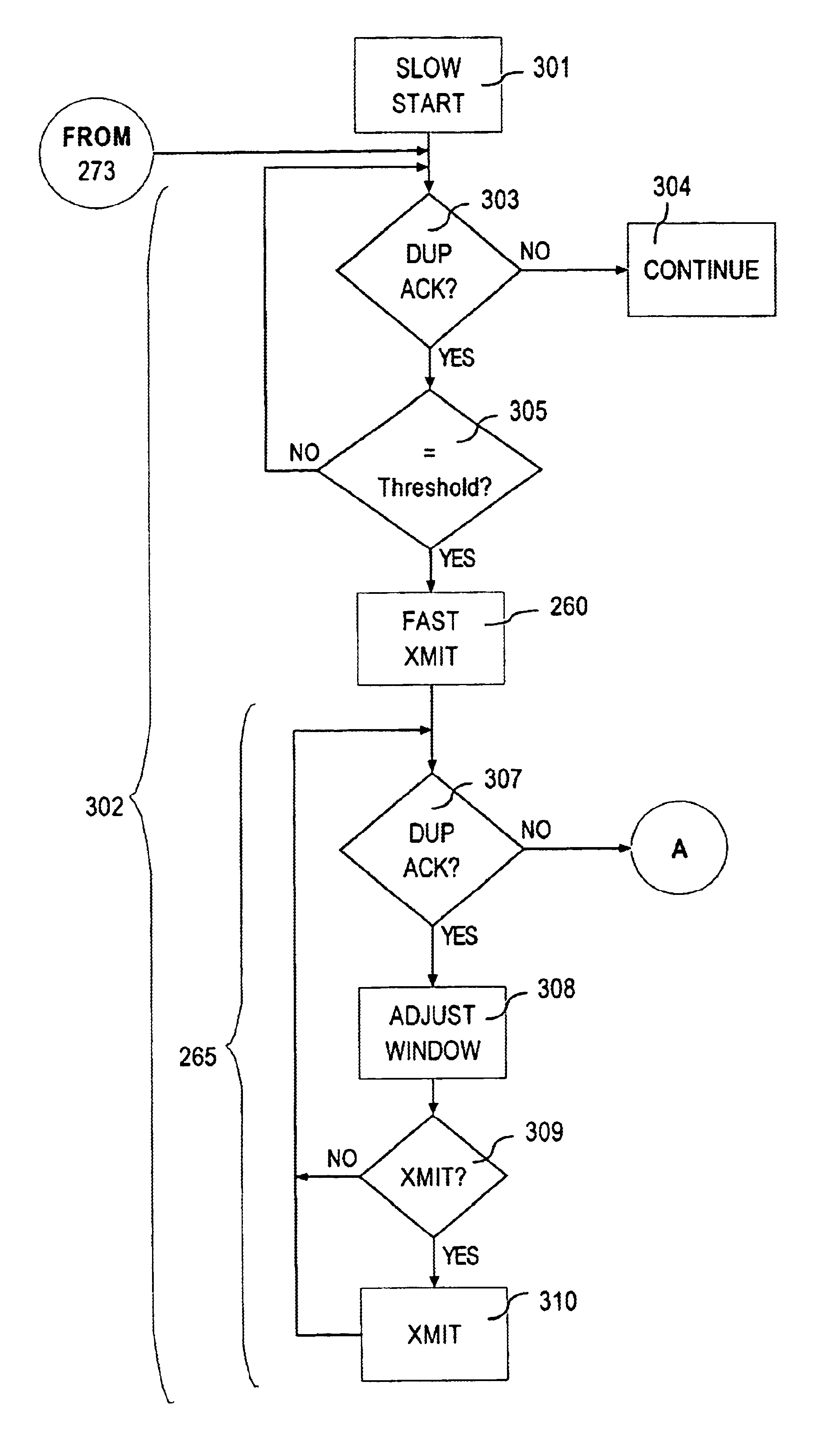
  • Figure 1
    Figure 1
  • Figure 2
    Figure 2
  • Figure 3
    Figure 3
Patent Text Reader

Abstract

A fast recovery extended method is used to enhance the performance of TCP fast recovery when multiple segment losses occur within a single round trip time between a TCP sender and a TCP receiver. A TCP fast recovery process is performed by a TCP sender, and then a TCP fast recovery extended process is performed by the TCP sender upon receiving acknowledgement of receipt of new data from a TCP receiver in the TCP fast recovery process. The fast recovery extended process determines, following receipt of the acknowledgement of receipt of new data, an excess number of duplicate acknowledgements based upon a count of consecutive duplicate acknowledgement packets. The fast recovery extended process takes a network packet transmission recovery action based upon the excess number of duplicate acknowledgements, and then stores the excess number of duplicate acknowledgements as a number of duplicate acknowledgements for further use.
Need to check novelty before this filing date? Find Prior Art

Description

BACKGROUND OF THE INVENTION

[0001] 1. Field of the Invention

[0002] This invention relates generally to methods used in implementation of the network Transmission Control Protocol, and more specifically to congestion control methods used in the Transmission Control Protocol.

[0003] 2. Description of Related Art

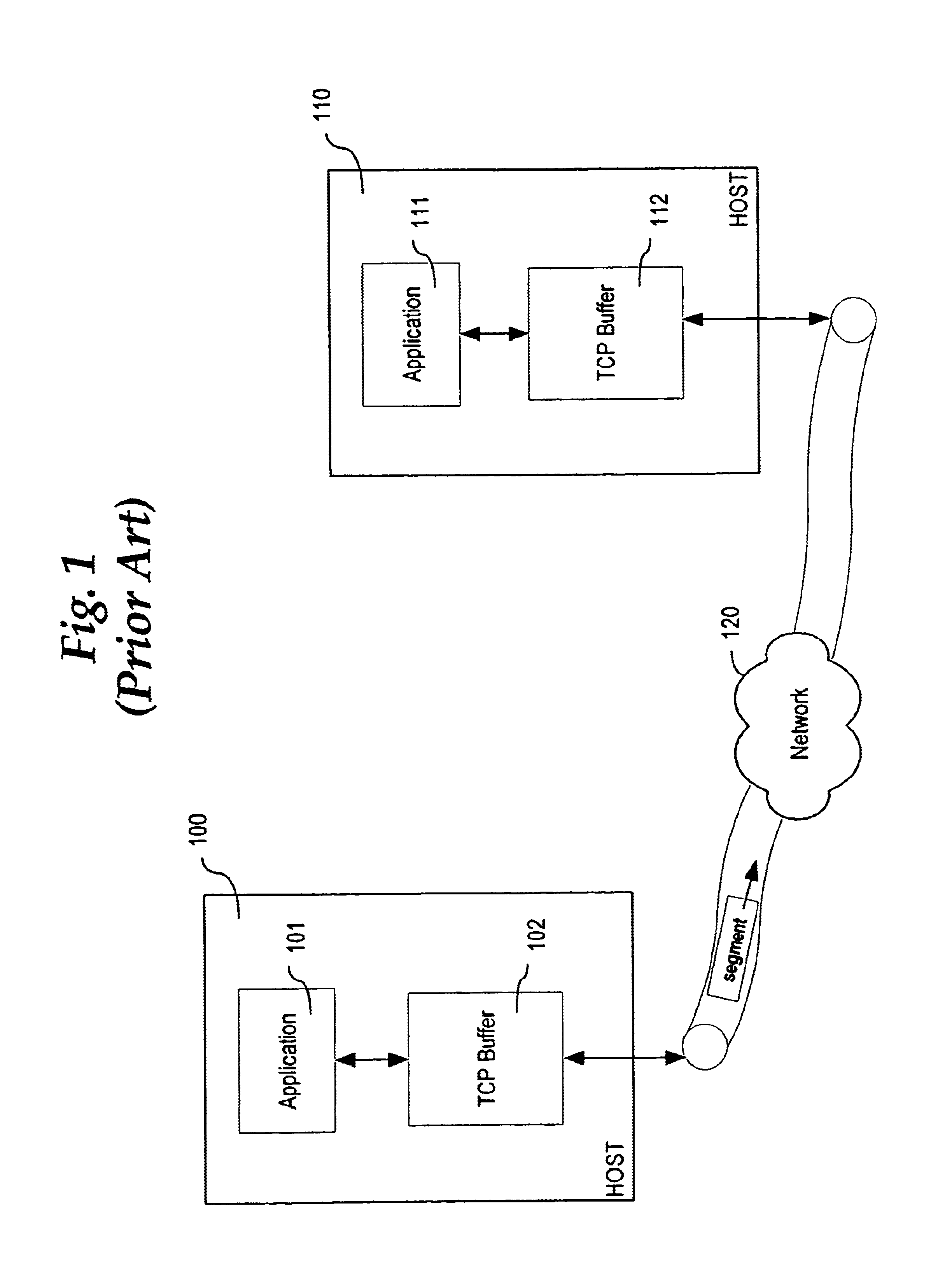
[0004] The network Transmission Control Protocol (TCP) is well known. TCP runs only in end systems 100, 110 on a network 120 and not in intermediate network elements such as routers or bridges. The intermediate network elements do not maintain TCP connection state. A TCP connection between end systems 100, 110, sometimes called hosts 100, 110, provides full duplex data transfer between hosts 100, 110. A TCP connection is always point-to-point, i.e., between a single TCP sender and a single TCP receiver.

[0005] When a TCP connection is established, two application processes 101, 111 can send data to each other. Data is transmitted in segments. A segment includes header fields and a data...

Examples

Embodiment Construction

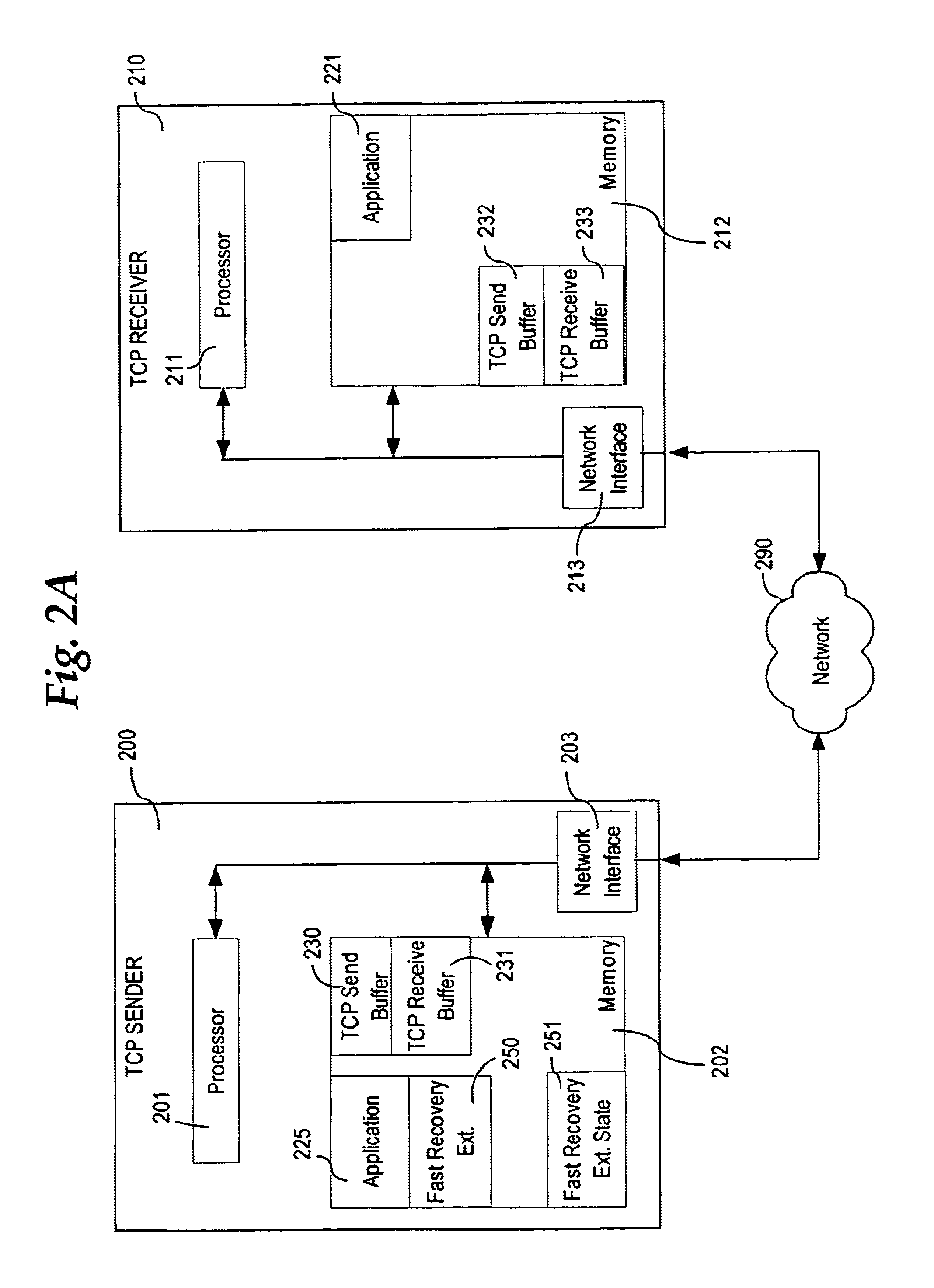
[0050]According to the principles of this invention, a novel fast recovery extended method 250 (FIG. 2A) is used to enhance the performance of TCP fast recovery when multiple segment losses occur within a single round trip time between a TCP sender 200, which is a network device, and a TCP receiver 210. Unlike the prior art fast recovery technique that worked well in only limited circumstances, fast recovery extended method 250 enhances recovery for second and subsequent segment losses within a single round trip time.

[0051]Fast recovery extended method 250 is used by TCP sender 200 upon receipt of an acknowledgement of receipt of new data by TCP receiver 210 that follows receipt of at least a predefined number of duplicate acknowledgement packets from TCP receiver 210. In particular, fast recovery extended method 250 utilizes information in fast recovery extended state data 251 that is stored in a memory 202 to determine the best way to extend fast recovery. Hence, in contrast to th...