Check patentability & draft patents in minutes with Patsnap Eureka AI!

System, apparatuses and methods to increase supply of specialty care surgical-medical treatments

Active Publication Date: 2014-04-01
HCM INFO
View PDF2 Cites 1 Cited by
  • Summary
  • Abstract
  • Description
  • Claims
  • Application Information

AI Technical Summary

Benefits of technology

This approach provides a reliable, high-quality, and cost-effective alternative for specialty care, creating jobs, enhancing collaboration, and reducing healthcare costs, while empowering tribal nations and patients with more treatment choices and safer, secure environments.

Problems solved by technology

In 2008, the health care system in the United States was troubling for patients, taxpayers and the public.
. . broken.” With “patient needs” frequently “clashing with economic reality” to produce “staggering” waste.
A significant part of health care costs are for specialty care surgical-medical treatment, including cardiac care.
Concurrently, the well-being of the more than 520 federally-recognized sovereign American Indian / Alaskan Native (AI / AN) tribal nations was very uneven.
However, most AI / AN tribal nations still struggled mightily with serious issues, such as lack of Rural American jobs, economic development, economics, health care, the lingering effects of decades of brutal, ugly racism, and what AI / AN leaders believed as institutional indifference to AI / ANs.
However, given IHS funding levels, many tribal nations strongly questioned whether those commitments were being honored appropriately.
And a 2009 Harvard-affiliated study cited a substantial lack of specialty care surgical-medicine in Indian Country.
Health care systems of the world's nations chronically had operational and financial problems.
Those problems included funding, level and quality of treatment, organizational structuring, and quarrelsome labor relations (including provider strikes).
As a result, many countries reported significant financial strain.
In the U.S., among the long-standing and systemic issues in medical care cited by the U.S. news media:medical costs rising higher than general inflation, unaffordability;few, if any, patient options on provider choice;uneven service-levels, with over-serviced metros and under-serviced rural areas reported;very high level of bureaucracy and organizational conflict, including seemingly-perpetual litigation;uneven quality, including in single-payer programs such as Veterans Administration; andhigher costs that can accompany large numbers of small, dispersed providers.
Many patients in a wide variety of medical-insurance plans described the situation in U.S. medical-care as personally difficult.
That is, dealing personally with coverage questions and costly, highly-stressful billing disputes with providers, payers, and state and federal agencies, including Medicaid and Medicare.
Further, in Medicaid and Medicare, increasing numbers of treatment-providers were withdrawing from those programs, citing acrimoniously-debated provider-reimbursement levels.
Also, many asserted that a significant barrier to lowering medical costs were substantial regulatory and legal issues.
Further, because any proposed change to U.S. provider-practices can require reviews by many groups—e.g., American Medical Association (AMA), Medicare, Medicaid, American Hospital Association (AHA)—attempts to make cost-containment changes can take a very long time.
Also, in the opinion of many, the possibility of questionable medical-malpractice lawsuits were increasing costs.
Among the outcomes cited: increased costs, costly and wasteful “defensive medicine,” and deterred investment in provider-practice innovation.
Indeed, to keep charity clinics operating, some states restricted the filing of medical-malpractice lawsuits against such clinics.
However, not all “medical tourism” clinics were accredited via global agencies such as Joint Commission International (JCI), as most U.S. hospitals are.
Others offered theoretical strategies for total U.S. system overhauls—which, given the large number of politically-powerful, moneyed factions involved, would be challenging.
Clayton Christensen, DBA, both of Harvard, identified regulatory issues as blocking U.S. health care innovation—but offered no specific solutions publicly.
Near-desperate for basic dental services in their remote Arctic homelands, after decades of very limited recruiting success, the Alaskan Native tribal nations decided to directly contract with New Zealand colleges to import DTs.
To most tribal nations, the ADA-Alaska Native matter was just another replay of a very frequent, expensive, and litigation-intense occurrence—either (1) lack of understanding of federally-recognized tribal-nation sovereignty, (2) lack of respect for federally-recognized tribal-sovereignty, or (3) some combination thereof.
However, many American Indians / Alaskan Natives live in rural areas without fiber-optic networking.
As such, for the high-speed inter-networking required for video “telemedicine,” satellite links that are occasionally problematic (e.g., signal-interference during heavy precipitation) would be required.

Method used

the structure of the environmentally friendly knitted fabric provided by the present invention; figure 2 Flow chart of the yarn wrapping machine for environmentally friendly knitted fabrics and storage devices; image 3 Is the parameter map of the yarn covering machine
View more

Image

Smart Image Click on the blue labels to locate them in the text.
Viewing Examples
Smart Image
  • System, apparatuses and methods to increase supply of specialty care surgical-medical treatments
  • System, apparatuses and methods to increase supply of specialty care surgical-medical treatments
  • System, apparatuses and methods to increase supply of specialty care surgical-medical treatments

Examples

Experimental program
Comparison scheme
Effect test

example

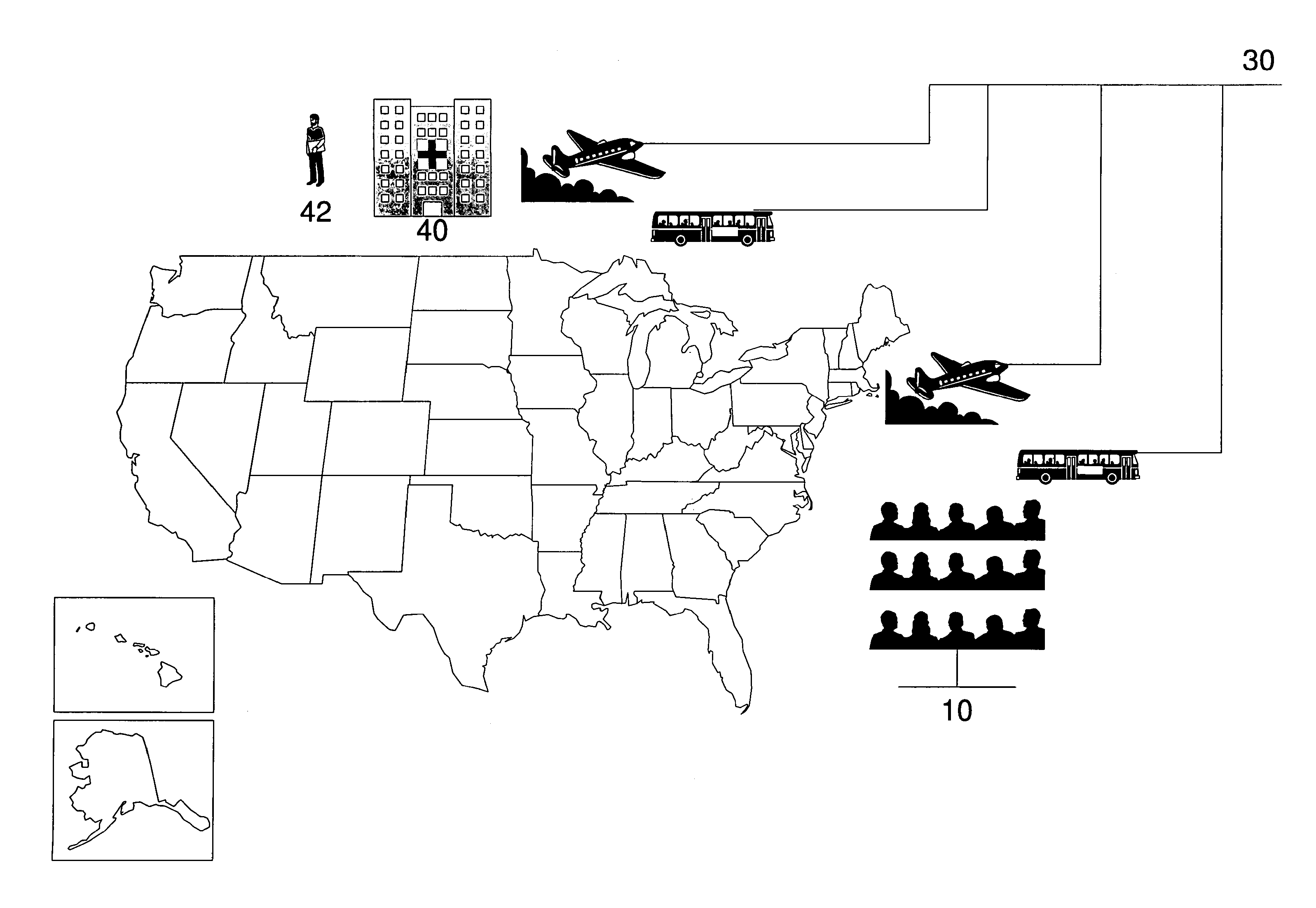
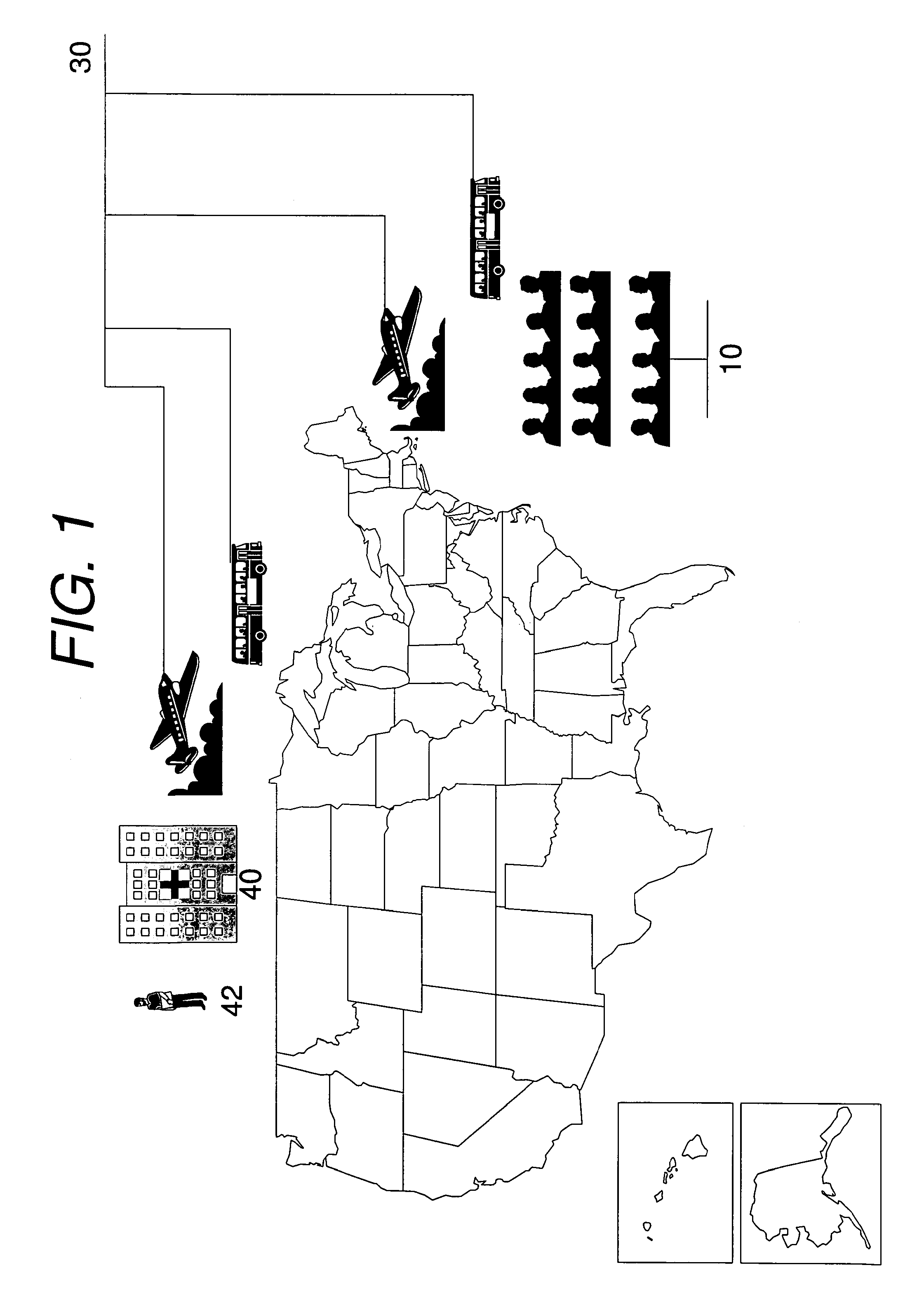
[0103]There are more than 520 federally-recognized American Indian / Alaskan Native tribal-nations. In theory, any one of them could host a hospital-clinic 40. Further, the novel, nonobvious knowledge in my invention could be applied as gaming-as-economic development has been applied.

[0104]Thus, the scope of my invention should be determined by the appended claims and their legal equivalents. rather than the example given. The goal: saving lives by preventing needless delays due to high costs.

the structure of the environmentally friendly knitted fabric provided by the present invention; figure 2 Flow chart of the yarn wrapping machine for environmentally friendly knitted fabrics and storage devices; image 3 Is the parameter map of the yarn covering machine
Login to View More

PUM

No PUM Login to View More

Abstract

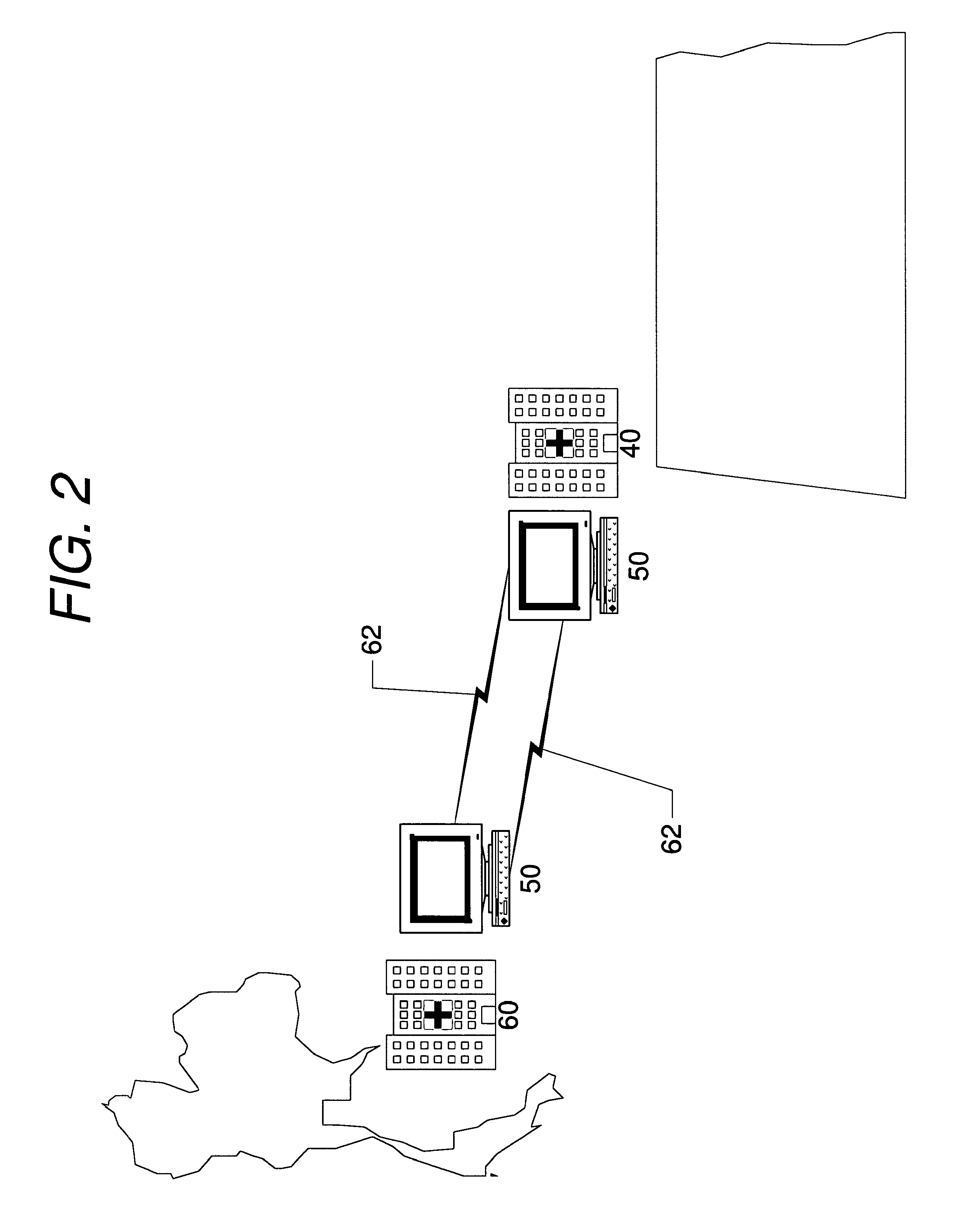
System, apparatuses and methods for treating specialty care surgical-medical patients (10) who are medically-stable. A specialty care surgical-medical hospital-clinic (40) is sited on a quasi-sovereign geographic area, including federally-recognized American Indian / Alaskan Native tribal nations. Surgical-medical treatments by provider group (42) who are citizens of countries worldwide. Transportation (30) of patients to hospital-clinic (40) by non-emergency vehicles. Treatment of patients (10) maximized via surgical-medical expertise from other hospital-clinics (60) provided via information technology systems (50) connected by global wide-area network linkages (62).

Description

CROSS-REFERENCE TO RELATED APPLICATIONS[0001]This continuation-in-part application claims the benefit of provisional application Ser. No. 61 / 000,868 filed on Oct. 30, 2007 (acknowledgment mailed Dec. 27, 2007) and Ser. No. 61 / 125,721 filed on Apr. 30, 2008, both by Applicant. Also continuation-in-part of application Ser. No. 12 / 255,711, filed on Oct. 22, 2008, now abandoned and which is incorporated herein by reference.FEDERALLY SPONSORED RESEARCH[0002]Not ApplicableSEQUENCE LISTING OR PROGRAM[0003]Not ApplicableBACKGROUND OF THE INVENTION[0004]1. Field of the Invention[0005]This invention generally applies to delivering specialty care surgical-medical treatments to patients who are medically-stable.[0006]2. Prior Art[0007]In 2008, the health care system in the United States was troubling for patients, taxpayers and the public. It was described by one observer as “dysfunctional . . . broken.” With “patient needs” frequently “clashing with economic reality” to produce “staggering” wa...

Claims

the structure of the environmentally friendly knitted fabric provided by the present invention; figure 2 Flow chart of the yarn wrapping machine for environmentally friendly knitted fabrics and storage devices; image 3 Is the parameter map of the yarn covering machine
Login to View More

Application Information

Patent Timeline
no application Login to View More
Patent Type & Authority Patents(United States)
IPC IPC(8): G06Q50/00G16H20/40G16H40/20
CPCG06Q50/22G16H40/20G16H20/40
Inventor CHIEN, CL., ALEX.
Owner HCM INFO
Features
  • R&D
  • Intellectual Property
  • Life Sciences
  • Materials
  • Tech Scout
Why Patsnap Eureka
  • Unparalleled Data Quality
  • Higher Quality Content
  • 60% Fewer Hallucinations
Social media
Patsnap Eureka Blog
Learn More