Check patentability & draft patents in minutes with Patsnap Eureka AI!

Orthopaedic safety system

a safety system and orthopaedic technology, applied in the field of orthopaedic safety system, can solve the problems of excessive bone strength, intraoperative morbidity, hoop stress in the bone, etc., and achieve the effects of improving signal-to-noise ratio, increasing measurement resolution, and increasing the error rate of the sensor member

Active Publication Date: 2014-07-29
SILESCO
View PDF11 Cites 3 Cited by
  • Summary
  • Abstract
  • Description
  • Claims
  • Application Information

AI Technical Summary

Benefits of technology

The patent describes a device for measuring strain in a bone during a procedure. The device includes a sensor member that is susceptible to noise from other electrical devices, so a shielding member is included to shield the noise. The sensor member also has an amplifier to increase the measurement resolution and improve signal-to-noise ratios. A filtering means is included to remove high-frequency noise. The device also includes a driving member with both an indicator member and a force limiting member to indicate a force in a certain range and prevent the transfer of force in a greater range. The device can help limit the forces transmitted to the implant during a procedure.

Problems solved by technology

Particularly, one complication associated with the implant process is the formation of a longitudinal split in the bone known as a periprosthetic fracture (PPF) which results from hoop stress in the bone (created by insertion of the implant or broach or trial implant) exceeding the strength of bone.
PPFs are a significant cause of intraoperative morbidity and one of the most common causes of early post-operative failure of prosthetic components.
However, there still is surprisingly little in the orthopaedic literature regarding acetabular PPF at the time of surgery.
Further, the problem of intra-operative PPF in both the femur and acetabulum might be more prevalent than reported.
Whatever the incidence of intra-operative PPF the severity of the problem is highlighted by the poor outcomes reported.
Currently, there is no useful mechanism by which a surgeon can determine the risk of fracture both during and after an operative procedure.

Method used

the structure of the environmentally friendly knitted fabric provided by the present invention; figure 2 Flow chart of the yarn wrapping machine for environmentally friendly knitted fabrics and storage devices; image 3 Is the parameter map of the yarn covering machine
View more

Image

Smart Image Click on the blue labels to locate them in the text.
Viewing Examples
Smart Image
  • Orthopaedic safety system
  • Orthopaedic safety system
  • Orthopaedic safety system

Examples

Experimental program
Comparison scheme
Effect test

example 1

(i) Co-ordinates of several landmarks are used to construct femoral and acetabular reference frames which are then exported as text files.

(ii) Co-ordinates of a tool tracker in the relevant reference frame (femoral or acetabular) are exported with associated time values, e.g

[0179]At t=t1, the tool tracker will be at co-ordinates; (x1, y1, z1).

[0180]Then t=t2 the tool tracker will be at co-ordinates (x2, y2, z2).

(iii) Data processing, the time based positions of the tool tracker are processed relative to the reference frames.

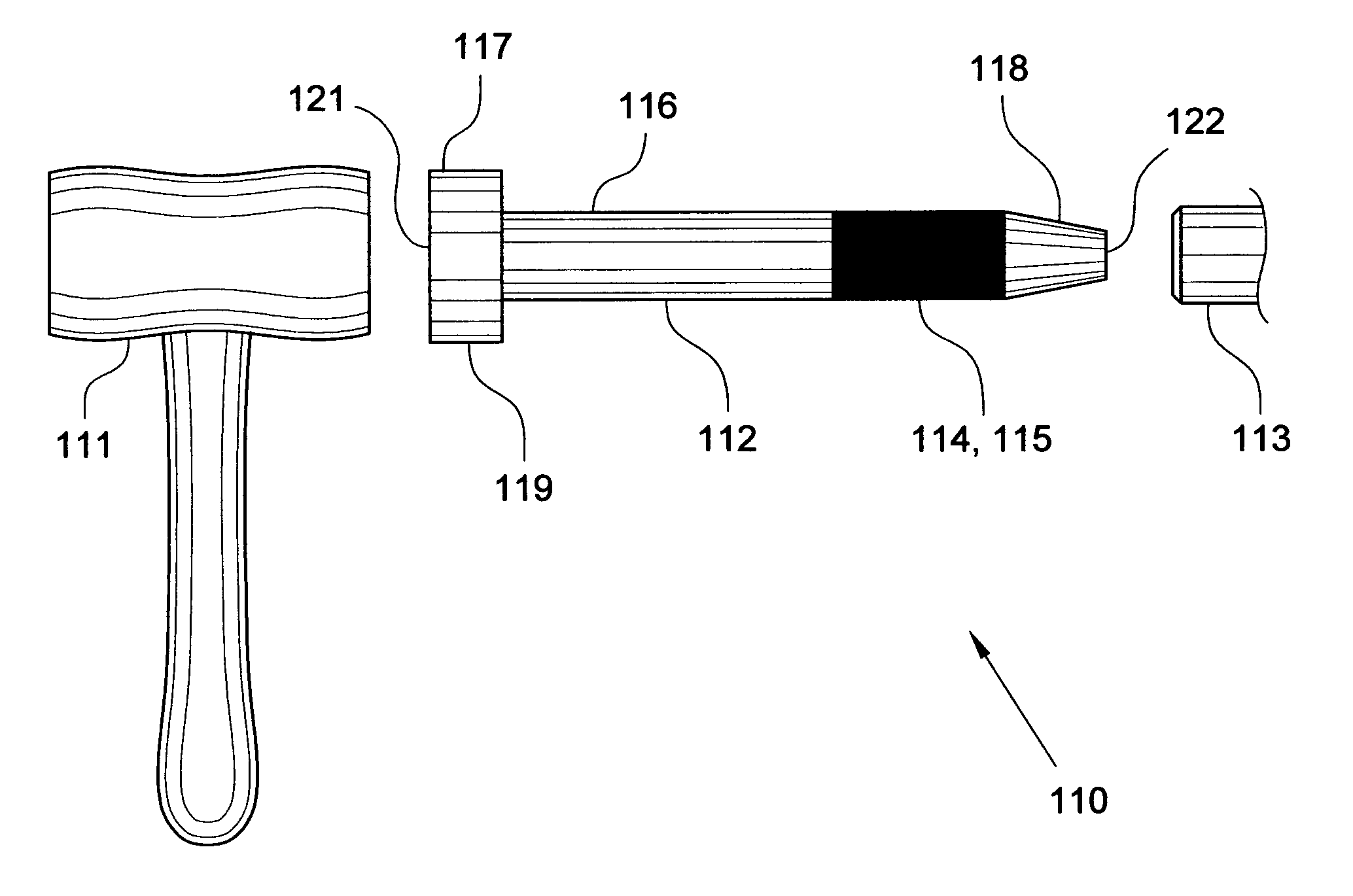
[0181](iv) The relative velocity and relative acceleration of the components can be calculated. With the time based co-ordinates of the tool tracker and the relevant geometry of the component / implant obtained this enables a reconstruction of the relevant geometry of the prosthetic components, or a segment of the component that is of interest, for example the apex of the cup or the distal tip of the stem.

(v) The processed data is further processed comparatively ag...

the structure of the environmentally friendly knitted fabric provided by the present invention; figure 2 Flow chart of the yarn wrapping machine for environmentally friendly knitted fabrics and storage devices; image 3 Is the parameter map of the yarn covering machine
Login to View More

PUM

No PUM Login to View More

Abstract

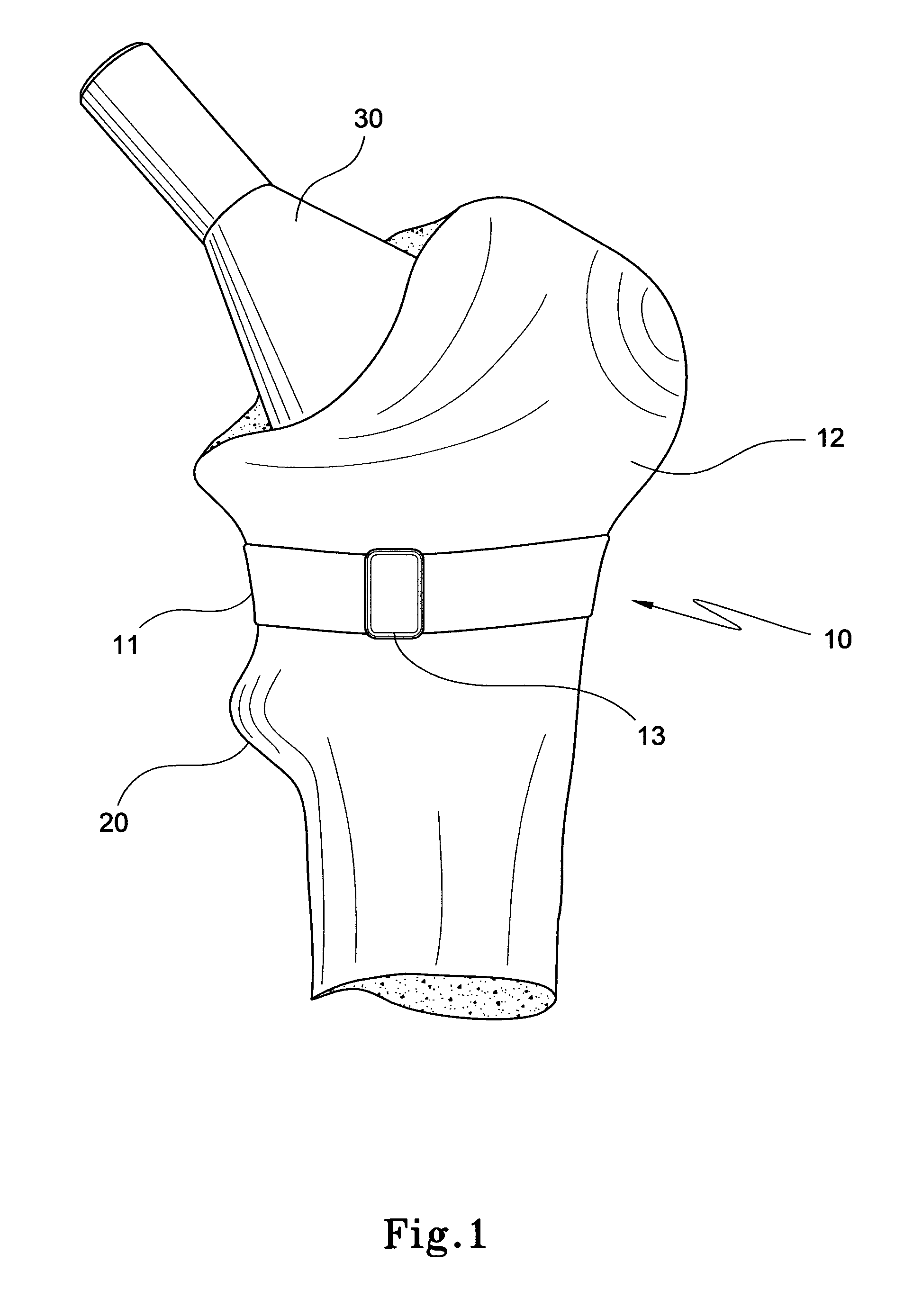
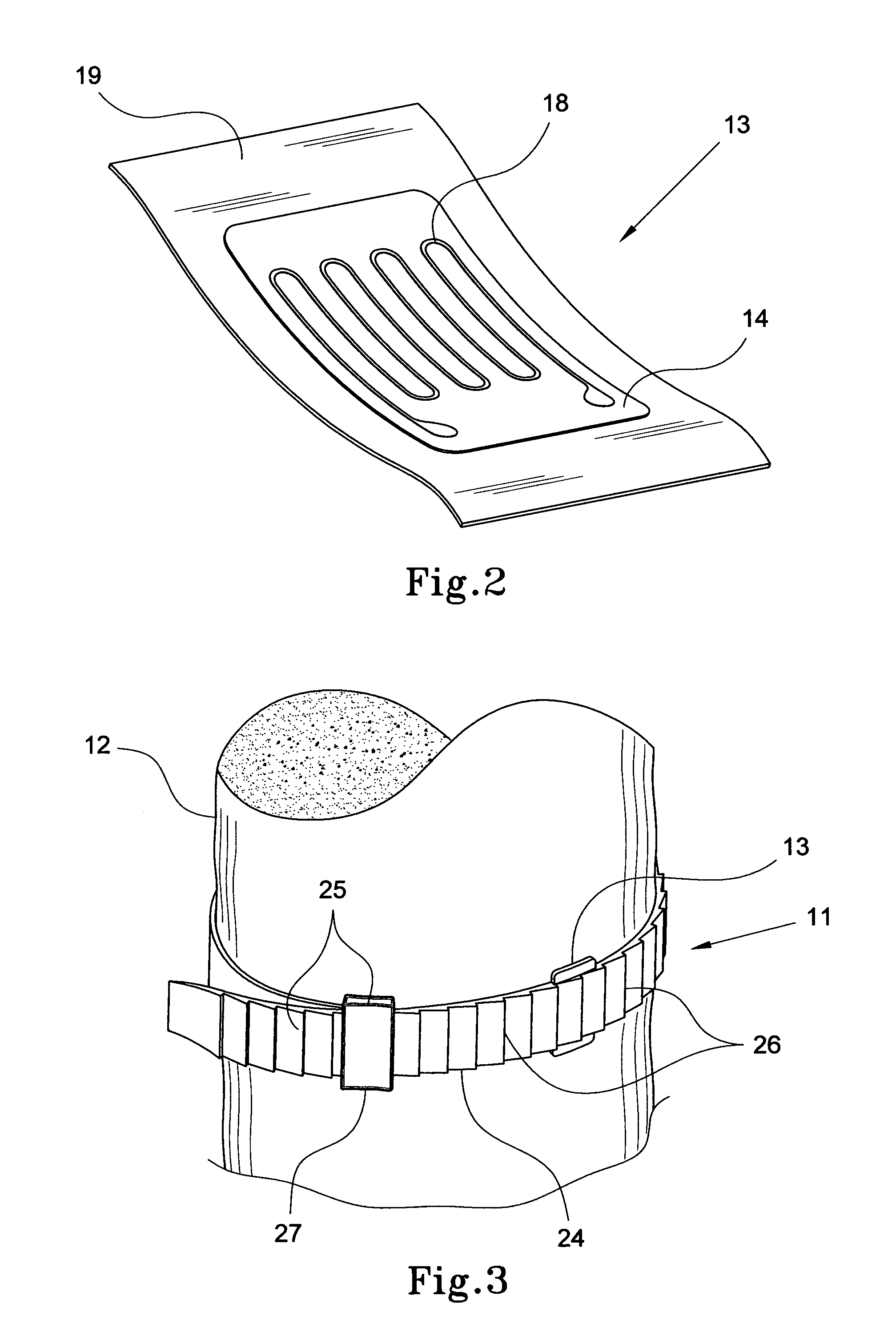
An orthopaedic device for generating one or more strain signals representative of the strain in a bone in response to a force applied to the bone. The device includes an encircling member (11) for encircling the bone of a subject and a sensor member (13) connected thereto, the sensor member including a strain sensor (14). In a preferred embodiment the strain sensor comprises one or more bridging members configured to break when subjected to a particular strain.

Description

CROSS-REFERENCE TO RELATED APPLICATIONS[0001]The present application claims priority from Australian Provisional Patent Application No 2008901009 filed on 29 Feb. 2008, Australian Provisional Patent Application No 2008901066 filed on 4 Mar. 2008, Australian Provisional Patent Application No 2008902854 filed on 5 Jun. 2008, the contents of which are incorporated herein by reference.FIELD OF THE INVENTION[0002]The present invention relates to a device for monitoring the strain in a bone to enable a user to evaluate the risk of fracture during or after an orthopaedic procedure.BACKGROUND ART[0003]Orthopaedic implants are typically mechanically hammered into position either through use of a mallet or a repetitive automated hammer. In both cases, force is applied by a mallet / hammer and through an impactor to an implant. Bone preparation typically uses a broach which may be hammered into the bone—the force being applied through a broach handle. On some occasions a trial implant may be ham...

Claims

the structure of the environmentally friendly knitted fabric provided by the present invention; figure 2 Flow chart of the yarn wrapping machine for environmentally friendly knitted fabrics and storage devices; image 3 Is the parameter map of the yarn covering machine
Login to View More

Application Information

Patent Timeline
no application Login to View More
Patent Type & Authority Patents(United States)
IPC IPC(8): A61B5/00
CPCA61F2/4657A61B5/4504A61B5/68A61B2562/0261A61F2/32A61F2002/30561A61F2002/30581A61F2002/4666A61F2002/4681
Inventor WALTER, WILLIAM LINDSAYGILLIES, RONALD MARKDONOHOO, SHANE MCCARTHY
Owner SILESCO
Features
  • R&D
  • Intellectual Property
  • Life Sciences
  • Materials
  • Tech Scout
Why Patsnap Eureka
  • Unparalleled Data Quality
  • Higher Quality Content
  • 60% Fewer Hallucinations
Social media
Patsnap Eureka Blog
Learn More