Supercharge Your Innovation With Domain-Expert AI Agents!

Cell-penetrating fusion protein for regenerating or proliferating stem cell

a fusion protein and stem cell technology, applied in the direction of polypeptides with his-tags, drug compositions, peptides, etc., can solve the problems of not being significantly effective in the regeneration of lost bone, osteogenesis stimulators, and too large molecular weight of these proteins to be introduced into the cytoplasm or tissue for a specific purpose, etc., to achieve the effect of strengthening the regenerative potential of stem cells

Active Publication Date: 2016-08-09
SEOUL NAT UNIV R&DB FOUND +1
View PDF3 Cites 0 Cited by
  • Summary
  • Abstract
  • Description
  • Claims
  • Application Information

AI Technical Summary

Benefits of technology

The fusion protein effectively penetrates cells, stimulates differentiation, inhibits apoptosis, maintains cell functionality, and restores stress-inhibited functionality, enhancing the regenerative potential of stem cells and promoting bone tissue regeneration without toxicity issues.

Problems solved by technology

However, the problems to be solved in the transplantation of stem cells are developing technology for facilitating engraftment (improving adaptability) and proliferation in vivo after transplantation and ensuring the capability to differentiate selectively into a desired tissue.
However, the molecular weight of these proteins is too large to be introduced into the cytoplasm or tissue for a specific purpose (substances having a molecular weight of 600 or more are almost impossible to pass through the cell membrane).
However, osteogenesis stimulators, such as bisphosphonates, calcitonin, estradiol or vitamin D, developed to date, mainly aim to inhibit bone resorption, and are not significantly effective to the regeneration of lost bone.
However, there has not yet been an attempt to apply the transcription factor NF-Ya or antioxidant protein (e.g., SOD, thioredoxin, etc.) linked to a cell-penetrating peptide to tissue engineering for the purposes of promoting the engraftment of mesenchymal stem cells and inducing the proliferation thereof.

Method used

the structure of the environmentally friendly knitted fabric provided by the present invention; figure 2 Flow chart of the yarn wrapping machine for environmentally friendly knitted fabrics and storage devices; image 3 Is the parameter map of the yarn covering machine
View more

Image

Smart Image Click on the blue labels to locate them in the text.
Viewing Examples
Smart Image
  • Cell-penetrating fusion protein for regenerating or proliferating stem cell
  • Cell-penetrating fusion protein for regenerating or proliferating stem cell
  • Cell-penetrating fusion protein for regenerating or proliferating stem cell

Examples

Experimental program
Comparison scheme
Effect test

example 1

Preparation of Recombinant LMWP-Thoredoxin-1 Fusion Protein and Examination of the Ability Thereof to Penetrate Cells

[0065]An LMWP peptide was synthesized, and then conjugated with thioredoxin (1 mg / ml in PBS) using SMCC (Pierce). The LMWP-thioredoxin conjugate was purified using a heparin-agarose bead (Sigma).

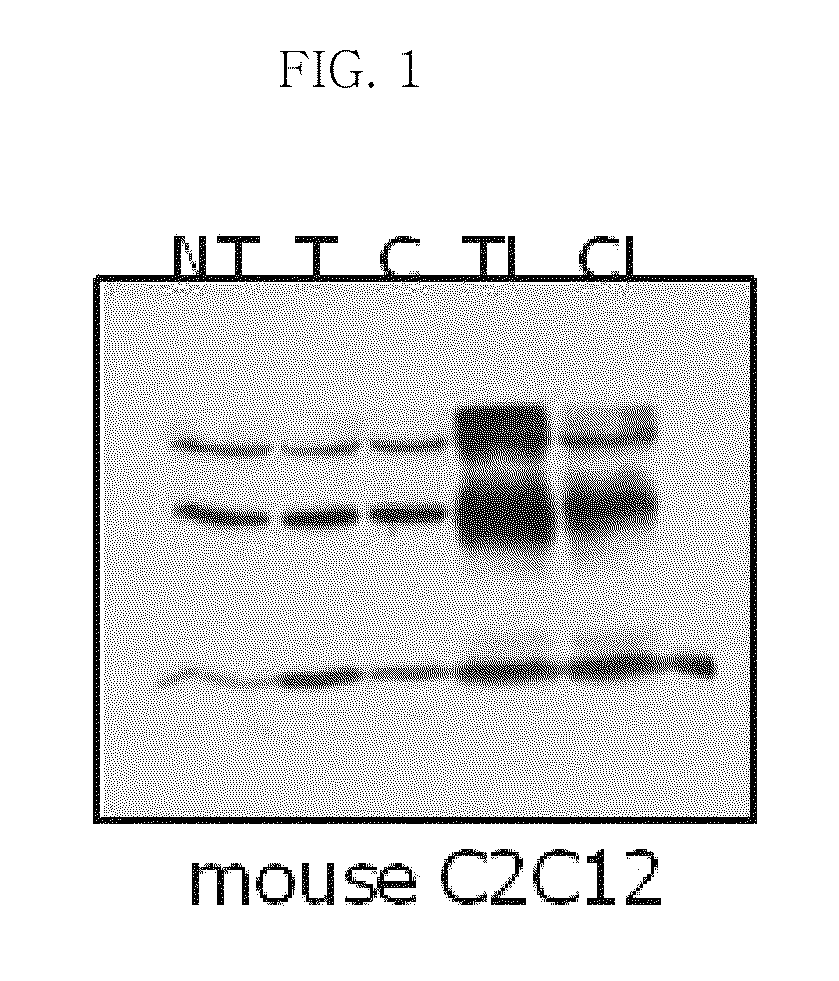
[0066]A C2C12 model cell line (ATCC) was cultured in serum-free medium for 24 hours under the conditions of 95% air, 5% CO2 and 37° C. Next, the model cell line (mouse C2C12) was treated with the LMWP-Trx-1 (WT and C3134S) conjugates and incubated in serum-free medium for 30 min, and then an experiment for comparison of the conjugates with non-conjugated thioredoxin-1 was performed. As a result, it was shown that the ability of the conjugates to penetrate the cells was excellent compared to that of thioredoxin-1 alone, the ability of WT conjugate to penetrate the cells was superior to that of the C3134S conjugate (see FIG. 1).

example 2

Examination of the Ability of Recombinant LMWP-Thoredoxin-1 Fusion Protein to Stimulate the Differentiation of Stem Cells

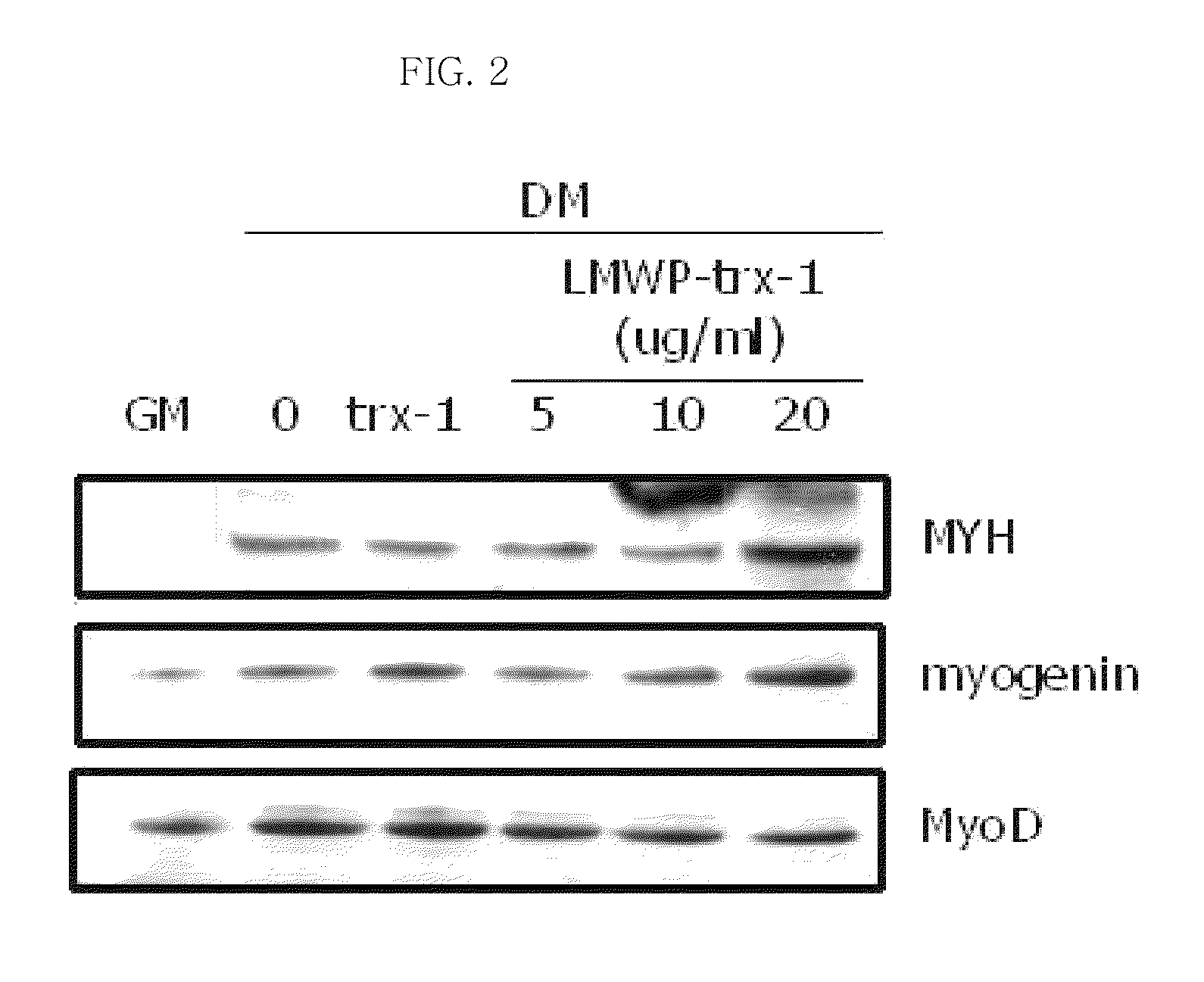
[0067]In order to examine the influence of the LMWP-thioredoxin-1 fusion protein on the differentiation of stem cells (Lonza) into myocytes, stem cells were treated with the LMWP-thioredoxin-1-WT conjugate according to the concentration and incubated under the conditions of 95% air, 5% CO2 and 37° C. Then, the expression levels of MYH, Myogenin and MyoD proteins (myocyte differentiation markers) in the cells were analyzed by a Western blotting technique. In this experiment, thioredoxin-1 not conjugated with LMWP was used as a control. As a result, it was shown that, when the cells were treated with the LMWP-thioredoxin-1-WT conjugate, the differentiation of the cells into myocytes increased in a concentration-depterminalent manner (see FIG. 2).

example 3

Preparation of Recombinant LMWP-SOD Fusion Protein and Examination of the Ability Thereof to Inhibit Apoptosis

[0068]A LMWP peptide was synthesized, and then conjugated with SOD (Sigma, 1 mg / ml in PBS) using SMCC (Pierce). The LMWP-SOD conjugate was purified using a heparin-agarose bead (Sigma).

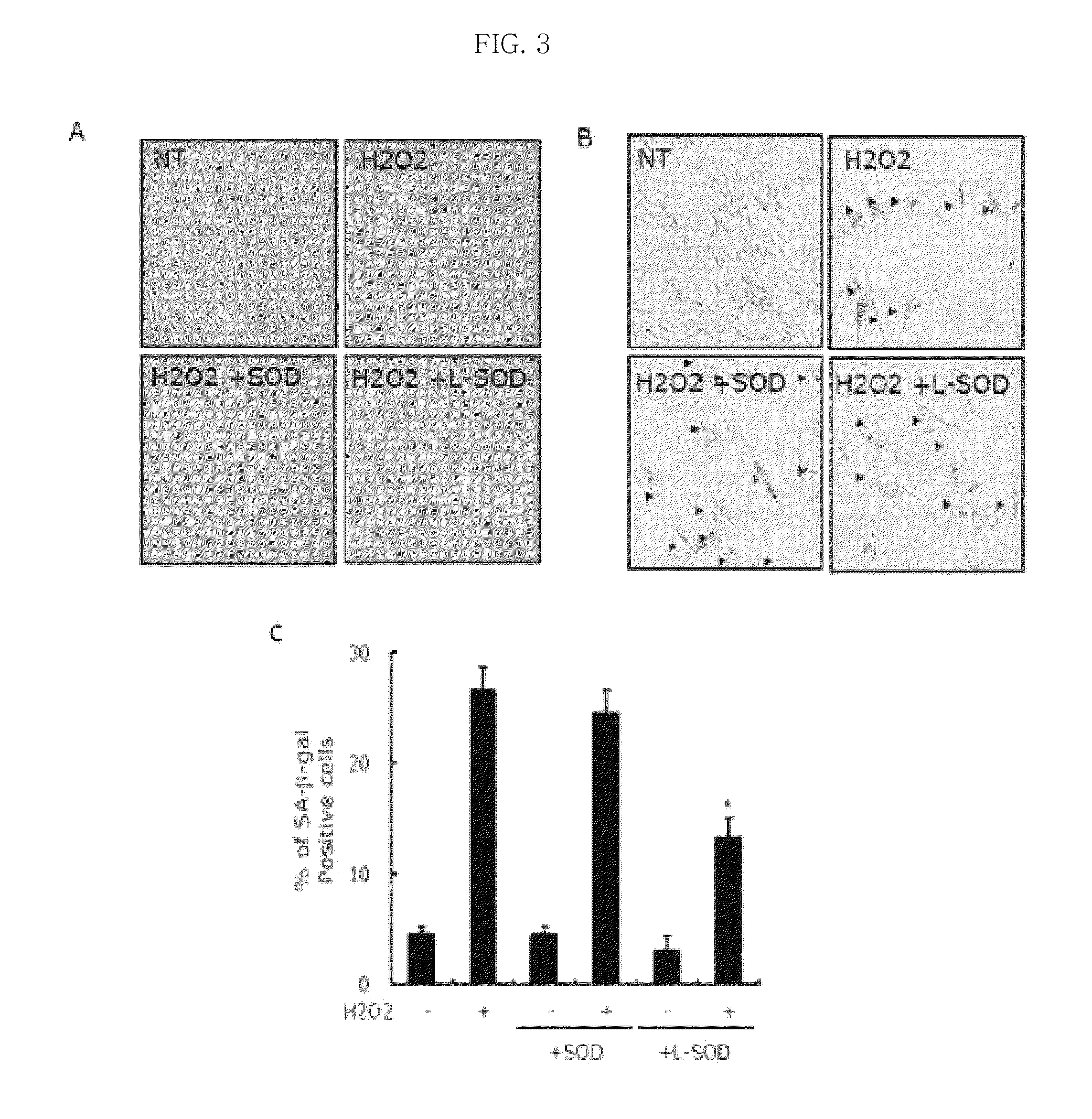
[0069]Analysis was carried out to examine the influence of the LMWP-SOD fusion protein having the ability to penetrate cells on apoptosis. Specifically, human dental pulp stem cells (primary culture) were seeded into a 6-well plate at a density of 1×10⁴ cells per well, and then cultured under the conditions of 95% air, 5% CO2 and 37° C. for 24 hours. Next, the cells were treated with varying concentrations of the LMWP-SOD conjugate and incubated for 2 hours. Then, the cells were treated with a low concentration (150 uM) of hydrogen peroxide in serum-free medium for 2 hours to artificially induce cell senescence, and then incubated in general medium for 3 days. The degree of senescence of the c...

the structure of the environmentally friendly knitted fabric provided by the present invention; figure 2 Flow chart of the yarn wrapping machine for environmentally friendly knitted fabrics and storage devices; image 3 Is the parameter map of the yarn covering machine
Login to View More

PUM

PropertyMeasurementUnit
molecular weightaaaaaaaaaa
permeableaaaaaaaaaa
bone resorptionaaaaaaaaaa
Login to View More

Abstract

The present invention relates to a cell permeable fusion protein for strengthening regenerative potential of stem cells, and more particularly to a cell permeable fusion protein for strengthening regenerative potential of stem cells for stimulating the differentiation of stem cells, inhibiting apoptosis, maintaining the functionality of stem cells and restoring the stress-inhibited functionality of stem cells.

Description

CROSS-REFERENCE TO RELATED APPLICATIONS[0001]This application is a U.S. national phase under the provisions of 35 U.S.C. §371 of International Patent Application No. PCT / KR11 / 09709 filed Dec. 16, 2011, which in turn claims priority of Korean Patent Application No. 10-2011-0051621 filed May 30, 2011. The disclosures of such international patent application and Korean priority patent application are hereby incorporated herein by reference in their respective entireties, for all purposes.TECHNICAL FIELD[0002]The present invention relates to a cell permeable fusion protein for strengthening regenerative potential of stem cells, and more particularly to a cell permeable fusion protein for strengthening regenerative potential of stem cells for stimulating the differentiation of stem cells, inhibiting apoptosis, maintaining the functionality of stem cells and restoring the stress-inhibited functionality of stem cells.BACKGROUND ART[0003]The term “mesenchymal stem cells” refers to cells tha...

Claims

the structure of the environmentally friendly knitted fabric provided by the present invention; figure 2 Flow chart of the yarn wrapping machine for environmentally friendly knitted fabrics and storage devices; image 3 Is the parameter map of the yarn covering machine
Login to View More

Application Information

Patent Timeline
no application Login to View More
Patent Type & Authority Patents(United States)
IPC IPC(8): A61K38/00C07K16/00C07K14/47A61K47/48C07K14/51C12N9/02
CPCC07K14/51C12N9/0089A61K47/48246C07K14/4702C12N9/0036C07K2319/10C07K2319/21C07K2319/35C07K2319/73A61K47/64A61P19/00C07K2/00C07K17/00C07K19/00C12N15/10C12N15/62
Inventor CHUNG, CHONG-PYOUNGPARK, YOON-JEONGLEE, JUE-YEON
Owner SEOUL NAT UNIV R&DB FOUND
Features
  • R&D
  • Intellectual Property
  • Life Sciences
  • Materials
  • Tech Scout
Why Patsnap Eureka
  • Unparalleled Data Quality
  • Higher Quality Content
  • 60% Fewer Hallucinations
Social media
Patsnap Eureka Blog
Learn More