Hydroxy compound, ion conducting agent, and electroconductive resin composition
a technology of hydroxy compound and ion conducting agent, which is applied in the direction of non-metal conductors, conductors, organic chemistry, etc., can solve the problems of resin being liable to be charged and dust being liable to adhere to resin, and achieve excellent electroconductivity, excellent electroconductivity, and suppressed bleeding
- Summary
- Abstract
- Description
- Claims
- Application Information
AI Technical Summary
Benefits of technology
Problems solved by technology
Method used
Image

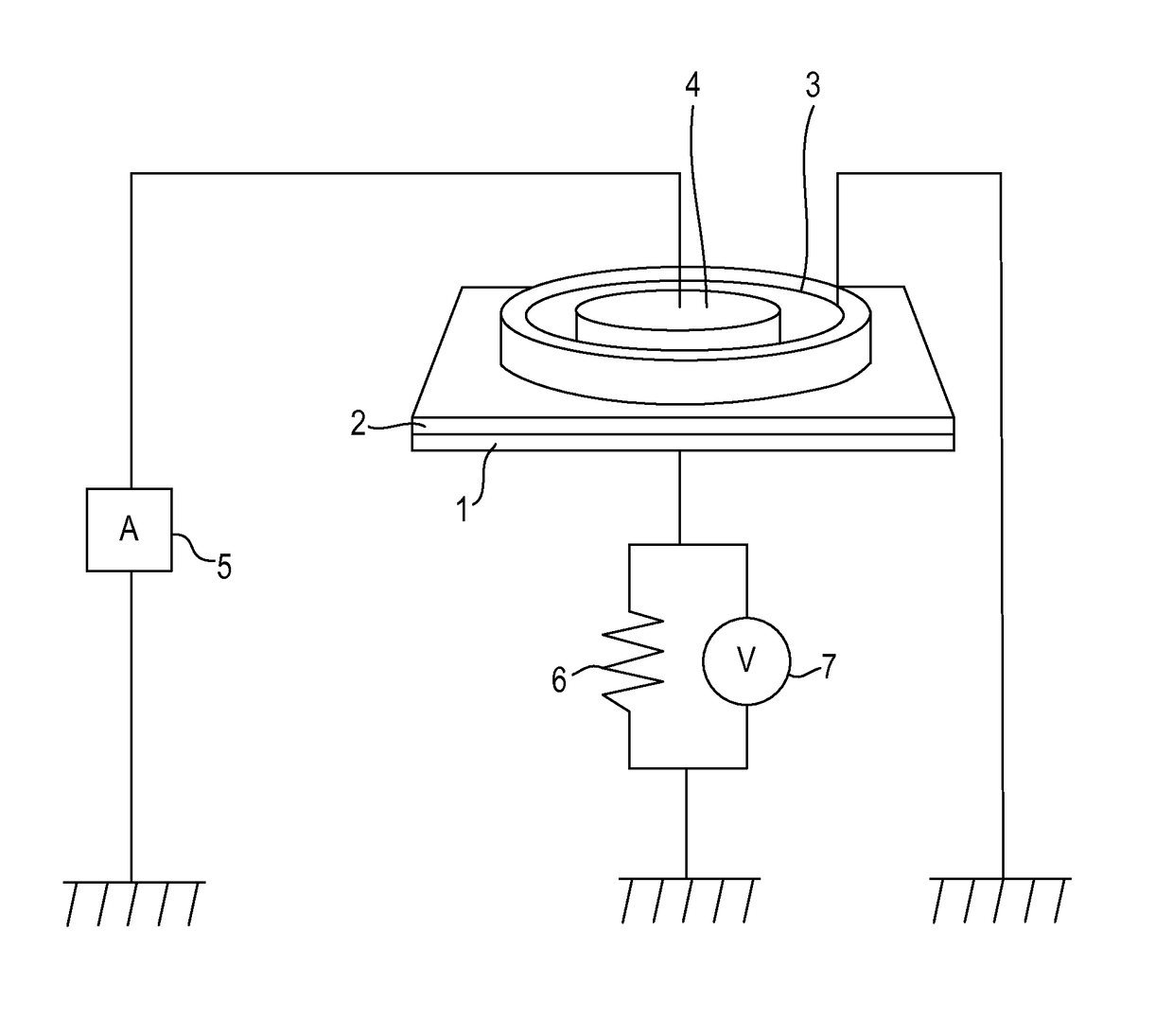
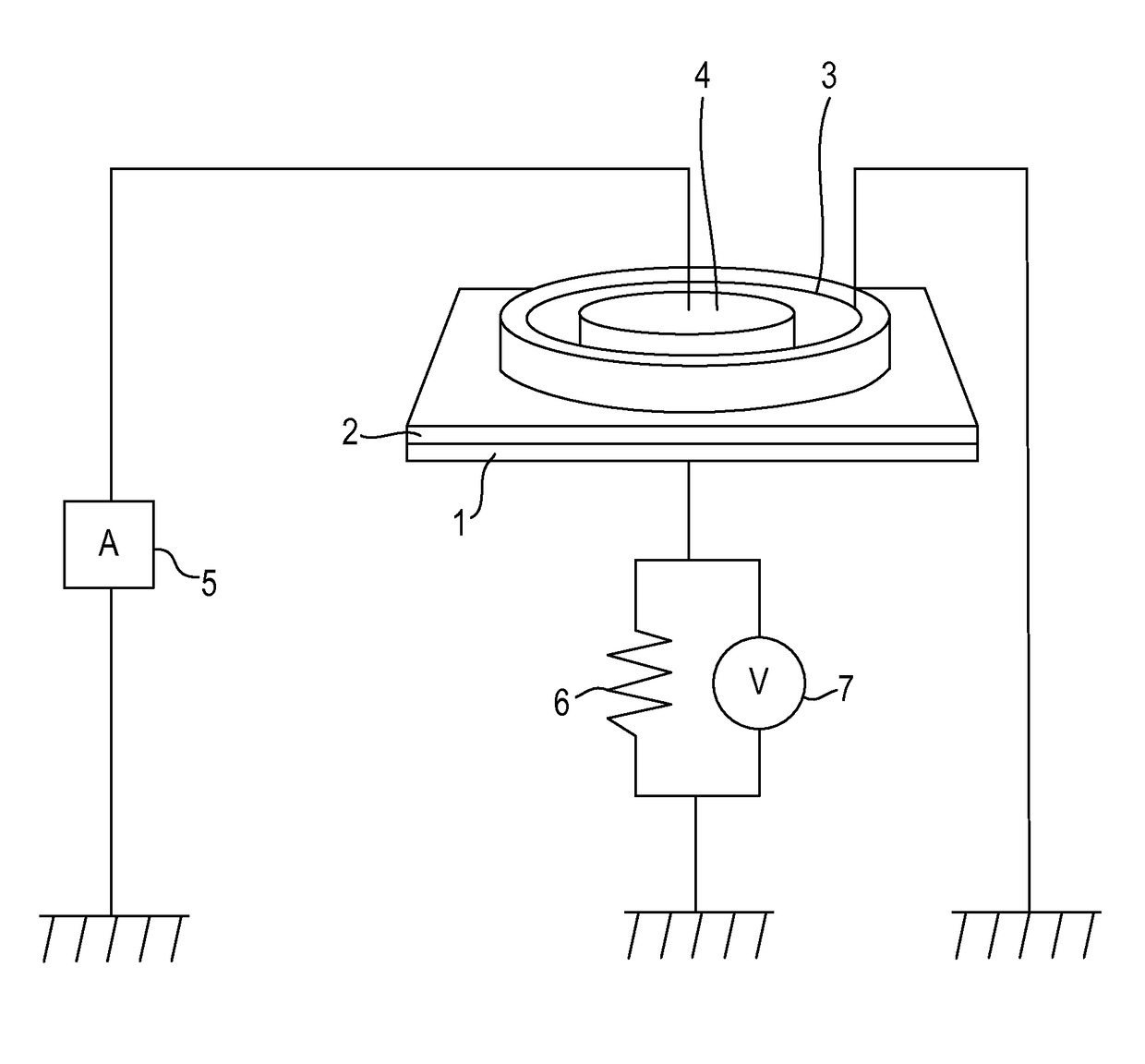
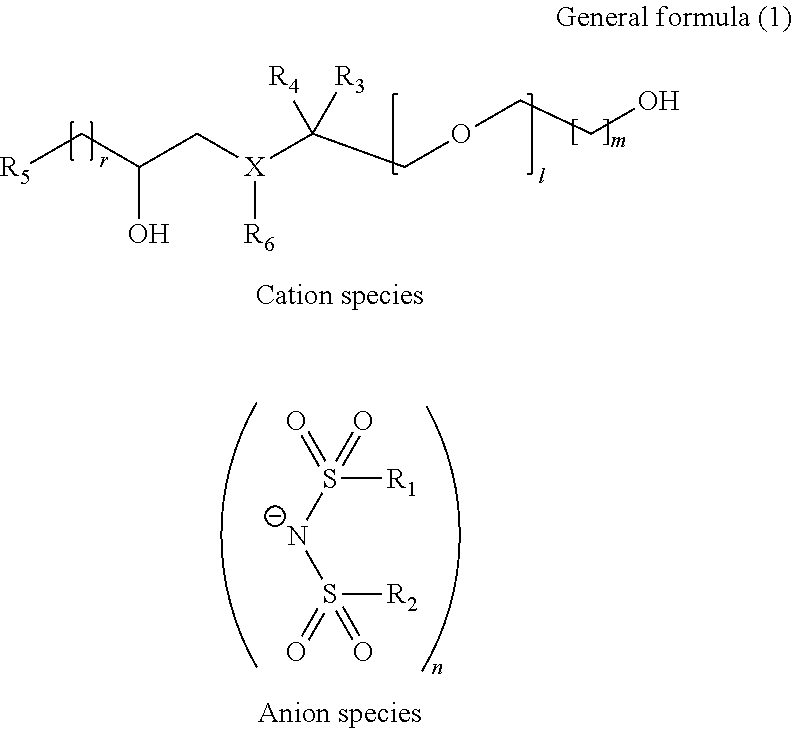
Examples
production example 1
Production of Compound (4)
[0115]14.8 Grams (107 mmol) of potassium carbonate was added to a solution of 15.4 mL (160 mmol) of 3-(methylamino)-1-propanol and 16.1 g (107 mmol) of 4-chloromethyl-2,2-dimethyl-1,3-dioxolane in 100 mL of acetonitrile, and the mixture was heated to reflux for 18 hours. After the completion of the reaction, the resultant was cooled to room temperature, and the precipitated solid was filtered and washed with 300 mL of acetonitrile. The filtrate was concentrated under reduced pressure, and was then purified by silica gel column chromatography to provide 5.7 g (28 mmol) of an intermediate 1.
[0116]2.1 Milliliters of α-monochlorohydrin was added to 5.0 g (24.5 mmol) of the intermediate 1, and the mixture was subjected to a reaction at 100° C. for 96 hours. After the completion of the reaction, the resultant was cooled to room temperature and diluted with 5 mL of methanol. After that, 10 mL of a 1 mol / L aqueous solution of hydrochloric acid was added to the dilu...
production examples 2 to 4
Production of Compounds (8), (16), and (17)
[0120]The compounds (8) , (16), and (17) were each obtained by performing the same synthesis as that of Example 1 except that an imide corresponding to a compound shown in Table 1 was used instead of the use of lithium bistrifluoromethanesulfonylimide in Production Example 1, and the compounds were identified by using the above-mentioned analyzers.
production example 5
Production of Compound (18)
[0121]10 Milliliters (75 mmol) of 4-dimethylamino-1-butanol was added to a solution of 8.3 g (75 mmol) of α-monochlorohydrin in 10 mL of water, and the mixture was stirred at 50° C. for 22 hours. After the completion of the reaction, the resultant was diluted with 60 mL of water, and a solution of 21.5 g (75 mmol) of lithium bistrifluoromethanesulfonylimide in 60 mL of water was dropped to the diluted product. The mixture was stirred for 4 hours and then concentrated under reduced pressure. 35 Milliliters of acetonitrile was added to the concentrate, and the mixture was stirred and left at rest. After that, the supernatant was decanted. The residue was dried under reduced pressure to provide 31.5 g of the compound (18).
[0122][Results of Analysis of Compound (18)]
[0123][1]1H-NMR (400 MHz, DMSO-d6, room temperature) : δ (ppm)=1.39-1.46 (2H, m), 1.69-1.79 (2H, m), 3.08 (6H, d, J=1.83 Hz), 3.21-3.28 (2H, m), 4.01 (1H, br), 4.60 (1H, t, J=5.04 Hz), 5.04 (1H, t,...
PUM
| Property | Measurement | Unit |
|---|---|---|
| temperature | aaaaa | aaaaa |
| temperature | aaaaa | aaaaa |
| temperature | aaaaa | aaaaa |
Abstract
Description
Claims
Application Information
 Login to View More
 - R&D
- Intellectual Property
- Life Sciences
- Materials
- Tech Scout
- Unparalleled Data Quality
- Higher Quality Content
- 60% Fewer Hallucinations
Browse by: Latest US Patents, China's latest patents, Technical Efficacy Thesaurus, Application Domain, Technology Topic, Popular Technical Reports.
© 2025 PatSnap. All rights reserved.Legal|Privacy policy|Modern Slavery Act Transparency Statement|Sitemap|About US| Contact US: help@patsnap.com