
Resin, manufacturing method for composite material from said resin and composite material obtained from said manufacturing method
Incorporating an aliphatic chain into the polyether ether ketone resin for in situ polymerization at moderate temperatures addresses the high processing costs and porosity issues of PEEK, achieving cost-effective and efficient composite material production with improved properties.
Patent Information
- Application Number
- EP2023382959
- Authority / Receiving Office
- EP · EP
- Patent Type
- Applications
- Current Assignee / Owner
- Filing Date
- 2023-09-22
- Publication Date
- 2025-03-26
AI Technical Summary
The high melting temperature of Polyether ether ketone (PEEK) thermoplastic polymer requires expensive and energy-intensive processing methods, leading to high manufacturing costs and porosity issues in composite materials, particularly in the aeronautical industry.
A resin with a polyether ether ketone composition incorporating an aliphatic chain, allowing for in situ polymerization at moderate temperatures (120-200°C) using a prepolymer reagent with an aliphatic chain, which reduces melting temperature and processing costs while maintaining similar physical properties to PEEK.
The resin enables efficient in situ polymerization of composite materials at lower temperatures, reducing energy costs and porosity, resulting in composite parts with improved wettability and reduced manufacturing expenses.
Smart Images
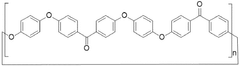
Figure IMGB0001 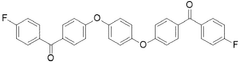
Figure IMGB0002 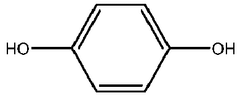
Figure IMGB0003
Abstract
Description
Sector of the art
[0001] The present invention is related to the composite materials industry and more specifically to a composite material, the matrix of which is a thermoplastic polymer for in situ polymerisation in the manufacturing process of structural parts.Prior Art
[0002] Nowadays, the use of Polyether ether ketone (PEEK), a semi-crystalline thermoplastic polymer which, due to the properties thereof (thermal stability, good mechanical properties and chemical resistance), is used for difficult applications in terms of temperature and / or mechanical and chemical stresses, is widely known.
[0003] PEEKs are of special interest in the aeronautical and space fields, as well as in the automotive rail, marine, wind power, sport, construction, and electronics sectors, and even for medical implants.
[0004] One of the methods for making PEEK is, firstly, preparing a resin that comprises a prepolymer reagent of the formula: through the reaction of an aromatic dihalide, specifically difluoro ketone with the formula: and hydroquinone, formula:
[0005] In polymer chemistry, the term prepolymer refers to a monomer or system of monomers that have reacted to a state of intermediate molecular mass. This material is capable of a greater polymerisation through reactive groups, up to a high state of molecular mass in which it is completely cured.
[0006] In an example of the preparation of said resin, firstly, in a round flask, potassium carbonate (K 2 CO 3 ) (15 mol), toluene (15 ml) and N,N-dimethylformamide (DMF) are mixed. Toluene is added to remove the water that forms during the reaction, potassium carbonate (K 2 CO 3 ) is used as a base for the deprotonation of hydroquinone and DMF is used as a high-boiling polar solvent.
[0007] Once all reagents have been added, the openings of the flask are closed, the solution is stirred at room temperature and N 2 gas is introduced to create an inert atmosphere in order to increase the reaction yield. After 15 minutes at room temperature and with an inert atmosphere, the temperature is raised to 155 °C. Meanwhile, on one hand, the solution of hydroquinone (1 mol) with DMF is prepared and, on the other hand, the solution of difluoro ketone (1 mol) with DMF is prepared and both solutions are added drop by drop to the spherical flask being heated. When the hydroquinone and the difluoro ketone are added, the N 2 gas is removed and the mixture is stirred for 48 hours.
[0008] In another example of the preparation of said resin, firstly, potassium carbonate (K 2 CO 3 ) (15 mol), toluene (15 ml), DMF and difluoro ketone (1 mol) are placed in a round-bottom flask.
[0009] N 2 gas is then allowed to pass through for 15 minutes and the temperature is raised to 155 °C. Meanwhile, the solution of hydroquinone (1 mol) in DMF is prepared. Once the solution has reached 155°C, the hydroquinone is added little by little. Then, the mixture is stirred at that temperature for 48 hours.
[0010] In both examples of the preparation of said molecule, the following steps are carried out to purify the crude: Firstly, the solution is filtered, and the filtered part is saved. Secondly, The filtrate is extracted with chloroform and the organic phase is washed with water to remove the substrates. The organic phase is then concentrated in a rotary evaporator to eliminate chloroform and DMF. Lastly, The solid obtained is dried in an oven at 190°C for 3 days.
[0011] A known method for the polymerisation of said molecules (PEEK) is to use cesium fluoride (CsF) as an initiator. To do so, said molecules in a molten state and the CsF initiator (0.5 to 4% by weight) are added to a round-bottom flask in an inert atmosphere at a temperature between 200 and 450°C and left to polymerise for 1 to 72 hours.
[0012] Normally, products for aeronautical applications made with this polymer (PEEK) are usually based on a thermoplastic prepreg in the manufacturing process. In these types of methods, the polymer is already polymerised and in order to process it, the polymer must be in a molten state. Specifically, in order to process PEEK, a temperature greater than 380°C is necessary.
[0013] Likewise, Products made with PEEK are usually manufactured by thermoforming processing, continuous compression moulding, pultrusion, laser-assisted AFP and ATL, hybrid methods, additive manufacturing or injection moulding.Thermoforming processing
[0014] The thermoforming method is a rapid manufacturing method used to form a 2D panel into a 3D shape. In general, it requires the use of a semi-manufactured product. To optimise the method, the thermoforming step is fed with a pre-consolidated laminate. The pre-consolidated laminate is manufactured using thermoplastic composite material from a roll. The material is cut into a certain number of layers and the stacking sequence is done by keeping them joined with a soldering iron at the edge of the preform.
[0015] As an example, PEEK autoclave consolidation requires a curing cycle with a holding phase at 380°C for 20-30 min and a pressure of 7-10 bar, depending on the final application of the piece.Continuous compression moulding
[0016] Continuous compression moulding (CCM) is a manufacturing technique that is based on the use of a press with a temperature that decreases from one side to the other; the part to be manufactured can move along the press plates with an alternating opening / closing cycle, moving the part forward during opening. This method makes it possible to obtain a progressive cooling of the piece thanks to the movement thereof in the direction of the low temperature areas.Pultrusion
[0017] Thermoplastic pultrusion is a method in which, for the production of composite profiles based on thermoplastics, prepregs are preheated in the oven to the required temperature, melted and consolidated in the mould, and then cooled.Laser-assisted AFP and ATL.
[0018] AFP / ATL methods used to process thermoplastic materials generally involve the installation of a diode laser in the end-effector, which is commonly used in the case of thermoset prepregs (due to the need to reach higher temperatures to melt the polymer and allow adhesion between layers). Furthermore, for the lamination of thermoplastic composites, an infrared camera is used to monitor the temperature at the cutting point, which is at the interface between the roller and the mould surface.
[0019] Currently, the main problem in manufacturing composite materials for the aeronautical industry by AFP / ATL methods is that it requires consolidation in an autoclave at high temperatures with high energy costs and the use of very expensive materials.Hybrid methods
[0020] An example of a hybrid method involves making a sandwich with a prepreg carbon PEEK matrix between two amorphous films, and subsequently consolidating them in a method that provides complete consolidation and a controlled cooling rate to obtain the correct crystallinity of the PEEK. A good integration of the two materials mentioned above is achieved by means of a transition zone with different percentages of the two materials, ranging progressively from 100 to 0% to 0 to 100%, which is possible due to the ability of the two materials to make mixtures.Additive manufacturing
[0021] Additive manufacturing or 3D printing involves producing complex shapes by adding molten layers. the thermoplastic material layers can be produced by both amorphous and semi-crystalline resins; in the case of PEEK (semi-crystalline), the problem of the cooling rate and its effect on the final crystallinity must be considered.Injection moulding
[0022] Injection moulding is a technique based on the insertion of a continuous fibre composite part into an injection moulding cavity and subsequently injecting the short fibre reinforced polymer into the mould. This technique is called "overmoulding" and allows for the manufacturing of complex shapes to be combined with the partial use of continuous fibres.
[0023] Therefore, PEEK has the disadvantage in that it is difficult to process due to the high melting temperature (T m > 340 °C), which in turn leads to high energy costs.
[0024] Likewise, the most commonly used methods for manufacturing composite materials from PEEK, previously mentioned, are complex and slow methods, which also makes the manufacturing of composite materials for the aeronautical industry more expensive.
[0025] Furthermore, composite materials manufactured by the methods and / or from PEEK have the disadvantage in that the final pieces usually have porosity problems, which makes them not very efficient for the aeronautical industry (as well as the naval, etc.).
[0026] Therefore, a resin is necessary for a composite material with final properties similar to PEEK that allow for in situ polymerisation in a manufacturing method for composite materials at moderate temperatures, which in turn leads to a reduction in manufacturing costs, with respect to what is known in the state of the art.Object of the invention
[0027] For the purpose of fulfilling this objective and solving the technical problems discussed up until now, in addition to providing additional advantages that may later result, the present invention provides a resin for a composite material, wherein said resin comprises at least one prepolymer reagent of a polyether ether ketone (PEEK) type composition that comprises at least one aliphatic chain.
[0028] It has been found that the presence of an aliphatic chain in the prepolymer reagent surprisingly causes the resin to have a lower melting temperature than PEEK but similar physical properties, which in turn allows said resin to polymerise in situ in a composite material manufacturing method at moderate temperatures (between 120 and 200 °C). This, in turn, leads to a reduction in manufacturing costs of said composite materials.
[0029] In one embodiment of the invention, the prepolymer reagent has the formula (I): where X comprises at least one aliphatic chain.
[0030] In another embodiment of the invention, the prepolymer reagent has the formula (II): where X comprises at least one aliphatic chain.
[0031] Preferably, The aliphatic chain comprises between 1 and 12 carbons.
[0032] The number of carbons in the aliphatic chain determines the melting temperature of the resin, and thus depending on the temperature required for the manufacturing method for composite materials, a resin with an aliphatic chain with a different number of carbons will be used.
[0033] Likewise, an aliphatic chain in which the number of carbons is greater than 12 could imply a decrease in the final properties of the composite material manufactured from the present resin.
[0034] According to another aspect of the invention, it is a manufacturing method for a composite material, comprising the steps of: 1) mixing the aforementioned resin in an inert atmosphere and in a molten state, and a first initiator, 2) impregnating a fibrous substrate with said mixture in a molten state in a mould, 3) allowing the mixture to polymerise.
[0035] Thus, through this manufacturing method, a piece of composite material is obtained using the aforementioned resin so that it is polymerised in situ, given the low melting temperature thereof, obtaining a piece with similar final properties to PEEK.
[0036] Thanks to the in situ polymerisation of the polymer, a greater wettability of the resin in the fibrous substrate is achieved, and the piece itself has a lower porosity than if it had been manufactured from PEEK and according to one of the methods described in the state of the art.
[0037] Preferably, wherein the manufacturing method is carried out at a temperature between 120 °C and 200 °C, which in turn leads to lower manufacturing costs.
[0038] Preferably, the first initiator for the manufacturing method is selected from a list comprising CsF, Titanium butoxide (TiBut), Antimony oxide (Sb 2 O 3 ) or a phenoxide, thereby achieving a higher yield of the reaction.
[0039] Preferably, the first initiator would be CsF, since it has been proven that a higher yield of the reaction is obtained.
[0040] Preferably, the duration of the polymerisation of step 3 has a value from 1 to 72 h, thereby achieving a faster manufacturing method for pieces than the methods described in the state of the art.
[0041] Lastly, another object of the invention is a composite material, manufactured through the previously mentioned manufacturing method.Detailed description of the invention
[0042] As mentioned above, the present invention consists of a resin used for manufacturing a composite material, which can be prepared by reacting an aromatic dihalide (such as difluoro ketone) or an aromatic-aliphatic dihalide with an aromatic-aliphatic dialcohol.
[0043] By way of example, aromatic-aliphatic dialcohol can be Bis(4-hydroxyphenyl)methane, formula:
[0044] Given that several methodologies known in the state of the art for the preparation of an aromatic dihalide (difluoro ketone) have already been detailed previously, examples are provided below of the preparation of an aromatic-aliphatic dihalide, and subsequently, of the resin object of the present invention.Embodiments of an aromatic-aliphatic dihalide
[0045] The aromatic-aliphatic dihalide is obtained through the Friedel-Crafts reaction. Between 2 mmol and 0.06 moles, preferably 0.03 moles, of an aromatic dihalide reagent, 0.05 moles of aluminium chloride (AlCl 3 ) as an initiator and 150 ml of dichloromethane as a solvent are put in a round-bottom flask.
[0046] Then, while the solution is stirred, between 1 mmol and 0.03 moles, preferably 14mmol of a second reagent (such as 1,4-Diphenoxybenzene or Diphenyl ether) is added little by little, producing an aromatic-aliphatic dihalide in 24-72 hours.
[0047] Preferably, the reaction is brought to room temperature and in the last hour it is refluxed.
[0048] As an example of aromatic-aliphatic dihalides that can be obtained by means of this embodiment, we can take an aromatic-aliphatic dihalide of formula (III): or an aromatic-aliphatic dihalide of formula (IV): Embodiment of the resin
[0049] Below, examples of producing the resin object of the invention are described, and from now on, the reference RC1 will be used for a resin that comprises at least one prepolymer reagent of a polyether ether ketone (PEEK) type composition with an aliphatic chain comprising a number of carbons between 2 and 4, and the reference RC2 for a resin that comprises at least one prepolymer reagent of a polyether ether ketone (PEEK) type composition with an aliphatic chain comprising a number of carbons between 3 and 8.First embodiment of the resin
[0050] Firstly, in the production of the RC1 and RC2 resin, an aromatic dihalide (or an aromatic-aliphatic dihalide) (0.8 mmol), potassium carbonate (K 2 CO 3 ) (0.012 mol) and N,N-dimethylformamide (DMF) (16.46 ml) as a solvent are put in a spherical flask.
[0051] At room temperature, N 2 is allowed to pass through so as to obtain an inert atmosphere and the temperature is raised to 150°C. Once the solution has reached said temperature, an aromatic-aliphatic dialcohol (0.8 mmol) dissolved in DMF (1.32 ml) is added drop by drop, the reaction time being one week for the RC1 composition and two weeks for the RC2 composition.
[0052] The aqueous phase is then extracted with dichloromethane. Subsequently, the organic phases are washed with aqueous sodium bicarbonate solution (NaHCO 3 ) and dried with sodium sulphate (Na 2 SO 4 ). Lastly, the resin is concentrated in the rotary evaporator.Second embodiment of the resin
[0053] In a 3-neck round-bottom flask, sodium carbonate (Na 2 CO 3 ) or potassium carbonate (K 2 CO 3 ), DMF and an aromatic dihalide (or an aromatic-aliphatic dihalide) and an aromatic-aliphatic dialcohol (between 0.1 and 10 mmol) a placed at room temperature and in an inert atmosphere. Subsequently, the temperature is raised between 80 and 220 °C, the reaction time being between 48 hours and 2 weeks.
[0054] Subsequently, the aqueous phase is extracted with dichloromethane or chloroform and cleaned with an aqueous solution of sodium carbonate (Na 2 CO 3 ) or potassium carbonate (K 2 CO 3 ) and water. Lastly, it is dried with sodium sulphate (Na 2 SO 4 ) and is concentrated in the rotary evaporator.Embodiment of resin polymerisation
[0055] In the present embodiment of a method for the polymerisation of resin RC1, firstly, placed in the round-bottom flask is the RC1 resin with a first initiator (between 1 and 5% by weight), in this case cesium fluoride (CsF).
[0056] Polymerisation is done at the melting temperature (between 120 and 200°C) with constant stirring in a vacuum between 1 hour and 72 hours.
[0057] It is noteworthy that other possible first initiators could be Titanium butoxide (TiBut), Antimony oxide (Sb 2 O 3 ) or phenoxides.Embodiment of manufacturing a composite material
[0058] Stored in a first tank is the RC1 or RC2 resin, and stored in a second tank is the corresponding first initiator (which can be selected from a list that comprises CsF, Titanium butoxide (TiBut), Antimony oxide (Sb 2 O 3 ) or phenoxides).
[0059] They are subsequently mixed in an inert atmosphere in a third tank, wherein said third tank comprises an agitator, the RC1 or RC2 resin in the molten state and the second initiator at a temperature between 120°C and 200°C.
[0060] Secondly, a fibrous substrate located inside a mould (of the composite part to be manufactured) is impregnated with the aforementioned mixture at a temperature between 120°C and 200°C.
[0061] Lastly, the compound polymerises after a time between 1h and 72h, depending on the temperature at which the method is carried out.
Claims
1. A resin for a composite material, characterised in that it comprises at least one prepolymer reagent of a polyether ether ketone (PEEK) type of composition that comprises at least one aliphatic chain.
2. The resin for a composite material, according to the preceding claim, wherein the prepolymer reagent has the formula (I): where X comprises at least one aliphatic chain.
3. The resin for a composite material, according to the first claim, wherein the prepolymer reagent has the formula (II): where X comprises at least one aliphatic chain.
4. The resin for a composite material, according to any one of the preceding claims, where the aliphatic chain comprises between 1 and 12 carbons.
5. A manufacturing method for a composite material, comprising the steps of: 1) mixing, in an inert atmosphere and molten state, a resin according to any one of claims 1 to 4, and a first initiator, 2) impregnating a fibrous substrate with said mixture in a molten state in a mould; 3) allowing the mixture to polymerise.
6. The manufacturing method, according to the preceding claim, wherein the method is carried out at a temperature between 120°C and 200°C.
7. The manufacturing method, according to any one of claims 5 to 6, wherein the first initiator is selected from a list comprising CsF, Titanium butoxide (TiBut), Antimony oxide (Sb2O3) or phenoxides.
8. The manufacturing method, according to any one of claims 5 to 7, wherein the duration of polymerisation has a value between 1 to 72 h.
9. A composite material, manufactured according to a manufacturing method in accordance with any one of claims 5 to 8.
Citation Information
Patent Citations
Cyclic polyphenylene ether ether ketone composition and method for producing the same
EP2508518A1
Curable composition
US20230054785A1
Polymerization of cyclic poly(aryl ether) oligomers
US5264520A
Cyclic poly(arylene ether ketone) and production method therefor
WO2019181829A1