
3D NAND Controller Vs RRAM: Performance And Reliability Tradeoffs
JUN 16, 20269 MIN READ
Generate Your Research Report Instantly with AI Agent
Patsnap Eureka helps you evaluate technical feasibility & market potential.
3D NAND vs RRAM Controller Technology Background and Objectives
The evolution of memory storage technologies has reached a critical juncture where traditional NAND flash memory faces fundamental scaling limitations, driving the industry toward next-generation storage solutions. Three-dimensional NAND (3D NAND) technology emerged as an interim solution to extend the lifespan of flash memory by stacking memory cells vertically, effectively increasing storage density without further shrinking the manufacturing process node. However, as the industry approaches the physical limits of charge-based storage mechanisms, Resistive Random Access Memory (RRAM) has gained prominence as a promising alternative based on resistance switching principles.
The fundamental distinction between these technologies lies in their storage mechanisms and architectural requirements. 3D NAND controllers must manage complex charge-based operations across multiple vertical layers, requiring sophisticated error correction codes, wear leveling algorithms, and voltage management systems. These controllers have evolved from simple interface managers to complex processing units capable of handling multi-level cell programming, advanced signal processing, and predictive maintenance algorithms.
RRAM controllers, conversely, operate on resistance-based switching principles that offer inherently different performance characteristics. The technology promises faster write speeds, lower power consumption, and potentially higher endurance compared to NAND-based systems. However, RRAM controllers face unique challenges including resistance drift management, switching variability compensation, and the need for precise current control mechanisms that differ significantly from voltage-based NAND operations.
The performance and reliability tradeoffs between these controller architectures have become increasingly critical as enterprise and consumer applications demand higher throughput, lower latency, and improved energy efficiency. Current 3D NAND controllers excel in sequential operations and offer mature ecosystem support, while RRAM controllers show promise for random access patterns and ultra-low latency applications.
The primary objective of this technological comparison centers on evaluating the architectural differences, performance characteristics, and reliability mechanisms inherent in each controller design. Understanding these tradeoffs is essential for determining optimal deployment scenarios, identifying technological gaps, and guiding future development priorities in the rapidly evolving storage landscape.
The fundamental distinction between these technologies lies in their storage mechanisms and architectural requirements. 3D NAND controllers must manage complex charge-based operations across multiple vertical layers, requiring sophisticated error correction codes, wear leveling algorithms, and voltage management systems. These controllers have evolved from simple interface managers to complex processing units capable of handling multi-level cell programming, advanced signal processing, and predictive maintenance algorithms.
RRAM controllers, conversely, operate on resistance-based switching principles that offer inherently different performance characteristics. The technology promises faster write speeds, lower power consumption, and potentially higher endurance compared to NAND-based systems. However, RRAM controllers face unique challenges including resistance drift management, switching variability compensation, and the need for precise current control mechanisms that differ significantly from voltage-based NAND operations.
The performance and reliability tradeoffs between these controller architectures have become increasingly critical as enterprise and consumer applications demand higher throughput, lower latency, and improved energy efficiency. Current 3D NAND controllers excel in sequential operations and offer mature ecosystem support, while RRAM controllers show promise for random access patterns and ultra-low latency applications.
The primary objective of this technological comparison centers on evaluating the architectural differences, performance characteristics, and reliability mechanisms inherent in each controller design. Understanding these tradeoffs is essential for determining optimal deployment scenarios, identifying technological gaps, and guiding future development priorities in the rapidly evolving storage landscape.
Market Demand Analysis for Next-Gen Memory Controllers
The global memory controller market is experiencing unprecedented transformation driven by the exponential growth of data-intensive applications across multiple sectors. Enterprise data centers, cloud computing platforms, and artificial intelligence workloads are demanding memory solutions that can deliver both high performance and exceptional reliability. Traditional storage architectures are reaching their physical and economic limits, creating substantial market opportunities for next-generation memory controller technologies.
Mobile computing and edge devices represent another significant demand driver for advanced memory controllers. The proliferation of smartphones, tablets, and IoT devices requires memory solutions that balance performance requirements with power efficiency constraints. These applications particularly benefit from the compact form factors and energy characteristics offered by emerging memory technologies, creating distinct market segments with specific controller requirements.
Automotive and industrial applications are emerging as high-growth market segments for next-generation memory controllers. Advanced driver assistance systems, autonomous vehicles, and industrial automation systems require memory solutions that can operate reliably in harsh environments while maintaining consistent performance. These applications often prioritize reliability and data retention over pure performance metrics, influencing controller design priorities and market positioning strategies.
The artificial intelligence and machine learning sector presents substantial market potential for specialized memory controllers optimized for neural network workloads. These applications require memory architectures that can efficiently handle the unique access patterns and computational requirements of AI algorithms. The growing adoption of edge AI and distributed machine learning creates additional demand for memory controllers that can optimize performance across diverse deployment scenarios.
Gaming and high-performance computing markets continue to drive demand for memory controllers that can deliver maximum throughput and minimal latency. These applications often serve as early adopters of cutting-edge memory technologies, providing valuable market feedback and establishing performance benchmarks that influence broader market adoption patterns.
The transition from traditional NAND-based storage to emerging memory technologies creates significant market disruption and opportunity. Organizations are evaluating memory controller solutions based on total cost of ownership, performance characteristics, and long-term technology roadmaps, leading to increased market fragmentation and specialization across different application domains.
Mobile computing and edge devices represent another significant demand driver for advanced memory controllers. The proliferation of smartphones, tablets, and IoT devices requires memory solutions that balance performance requirements with power efficiency constraints. These applications particularly benefit from the compact form factors and energy characteristics offered by emerging memory technologies, creating distinct market segments with specific controller requirements.
Automotive and industrial applications are emerging as high-growth market segments for next-generation memory controllers. Advanced driver assistance systems, autonomous vehicles, and industrial automation systems require memory solutions that can operate reliably in harsh environments while maintaining consistent performance. These applications often prioritize reliability and data retention over pure performance metrics, influencing controller design priorities and market positioning strategies.
The artificial intelligence and machine learning sector presents substantial market potential for specialized memory controllers optimized for neural network workloads. These applications require memory architectures that can efficiently handle the unique access patterns and computational requirements of AI algorithms. The growing adoption of edge AI and distributed machine learning creates additional demand for memory controllers that can optimize performance across diverse deployment scenarios.
Gaming and high-performance computing markets continue to drive demand for memory controllers that can deliver maximum throughput and minimal latency. These applications often serve as early adopters of cutting-edge memory technologies, providing valuable market feedback and establishing performance benchmarks that influence broader market adoption patterns.
The transition from traditional NAND-based storage to emerging memory technologies creates significant market disruption and opportunity. Organizations are evaluating memory controller solutions based on total cost of ownership, performance characteristics, and long-term technology roadmaps, leading to increased market fragmentation and specialization across different application domains.
Current Performance and Reliability Challenges in Memory Controllers
Memory controllers for both 3D NAND and RRAM technologies face significant performance and reliability challenges that directly impact their commercial viability and adoption in enterprise storage systems. These challenges stem from fundamental differences in memory cell physics, manufacturing complexities, and operational characteristics that create distinct bottlenecks for each technology.
3D NAND controllers encounter substantial performance degradation due to increasing program/erase latencies as layer counts scale beyond 128 layers. The vertical charge trap flash architecture introduces complex interference effects between adjacent cells, requiring sophisticated error correction algorithms that consume significant processing overhead. Write amplification becomes particularly problematic as controllers must manage increasingly complex wear leveling across thousands of blocks, with some enterprise SSDs experiencing write amplification factors exceeding 3.0 under mixed workloads.
RRAM controllers face different but equally challenging performance constraints, primarily related to resistance drift and switching variability. The analog nature of resistance states requires continuous calibration and reference voltage adjustments, creating latency penalties during read operations. Multi-level cell implementations in RRAM suffer from narrow resistance windows that demand high-precision sensing circuits, limiting achievable data rates to approximately 200-400 MB/s in current implementations.
Reliability challenges manifest differently across both technologies. 3D NAND controllers must address retention failures that worsen with temperature cycling and program/erase cycles, particularly in triple-level cell configurations where error rates can exceed 10^-4 after 3,000 cycles. The controllers implement increasingly complex LDPC error correction codes, sometimes requiring multiple decoding iterations that impact system responsiveness.
RRAM reliability issues center on endurance limitations and resistance state stability. Controllers must implement sophisticated wear leveling algorithms to distribute write operations across memory arrays, as localized hotspots can lead to permanent device failure after fewer than 10^6 write cycles. Additionally, resistance drift over time requires periodic refresh operations that consume system resources and reduce effective storage capacity.
Thermal management presents critical challenges for both controller types. 3D NAND controllers experience performance throttling above 70°C, while RRAM controllers face accelerated resistance drift at elevated temperatures. Power consumption optimization remains problematic, with advanced error correction and wear management algorithms consuming up to 15% of total system power in high-performance implementations.
3D NAND controllers encounter substantial performance degradation due to increasing program/erase latencies as layer counts scale beyond 128 layers. The vertical charge trap flash architecture introduces complex interference effects between adjacent cells, requiring sophisticated error correction algorithms that consume significant processing overhead. Write amplification becomes particularly problematic as controllers must manage increasingly complex wear leveling across thousands of blocks, with some enterprise SSDs experiencing write amplification factors exceeding 3.0 under mixed workloads.
RRAM controllers face different but equally challenging performance constraints, primarily related to resistance drift and switching variability. The analog nature of resistance states requires continuous calibration and reference voltage adjustments, creating latency penalties during read operations. Multi-level cell implementations in RRAM suffer from narrow resistance windows that demand high-precision sensing circuits, limiting achievable data rates to approximately 200-400 MB/s in current implementations.
Reliability challenges manifest differently across both technologies. 3D NAND controllers must address retention failures that worsen with temperature cycling and program/erase cycles, particularly in triple-level cell configurations where error rates can exceed 10^-4 after 3,000 cycles. The controllers implement increasingly complex LDPC error correction codes, sometimes requiring multiple decoding iterations that impact system responsiveness.
RRAM reliability issues center on endurance limitations and resistance state stability. Controllers must implement sophisticated wear leveling algorithms to distribute write operations across memory arrays, as localized hotspots can lead to permanent device failure after fewer than 10^6 write cycles. Additionally, resistance drift over time requires periodic refresh operations that consume system resources and reduce effective storage capacity.
Thermal management presents critical challenges for both controller types. 3D NAND controllers experience performance throttling above 70°C, while RRAM controllers face accelerated resistance drift at elevated temperatures. Power consumption optimization remains problematic, with advanced error correction and wear management algorithms consuming up to 15% of total system power in high-performance implementations.
Existing Controller Solutions for 3D NAND and RRAM
01 3D NAND flash memory controller architecture and management
Advanced controller architectures specifically designed for three-dimensional NAND flash memory systems that optimize data management, wear leveling, and storage efficiency. These controllers implement sophisticated algorithms to handle the complex addressing and data flow requirements of vertically stacked memory cells, ensuring optimal performance and longevity of the storage device.- 3D NAND Flash Memory Controller Architecture and Management: Advanced controller architectures designed specifically for three-dimensional NAND flash memory systems that manage data flow, command processing, and memory array operations. These controllers implement sophisticated algorithms for handling the complex structure of vertically stacked memory cells and optimize performance through efficient data path management and command scheduling.
- RRAM Performance Optimization and Control Mechanisms: Techniques and methodologies for enhancing the performance characteristics of resistive random-access memory devices through optimized control circuits and programming algorithms. These approaches focus on improving switching speed, reducing power consumption, and achieving consistent resistance state transitions for reliable data storage and retrieval operations.
- Memory Reliability Enhancement and Error Correction: Comprehensive reliability improvement strategies that include advanced error correction codes, wear leveling algorithms, and fault tolerance mechanisms for both NAND and RRAM technologies. These solutions address data integrity issues, extend memory lifespan, and maintain consistent performance under various operating conditions and usage patterns.
- Memory Interface and Data Management Systems: Sophisticated interface protocols and data management frameworks that facilitate efficient communication between memory controllers and storage devices. These systems implement advanced buffering strategies, data compression techniques, and intelligent caching mechanisms to maximize throughput and minimize latency in high-performance storage applications.
- Power Management and Thermal Control for Memory Systems: Integrated power management solutions and thermal regulation techniques specifically designed for high-density memory systems. These approaches optimize energy consumption through dynamic voltage scaling, implement thermal monitoring and control mechanisms, and ensure stable operation under varying environmental conditions while maintaining performance specifications.
02 RRAM reliability enhancement and endurance optimization
Techniques and methodologies for improving the reliability and endurance characteristics of resistive random-access memory devices. These approaches focus on minimizing degradation mechanisms, controlling switching variability, and implementing error correction schemes to ensure consistent performance over extended operational cycles.Expand Specific Solutions03 Memory performance optimization and access control
Advanced algorithms and control mechanisms designed to enhance memory access speeds, reduce latency, and optimize data throughput in both volatile and non-volatile memory systems. These solutions include intelligent caching strategies, predictive prefetching, and dynamic resource allocation to maximize overall system performance.Expand Specific Solutions04 Error correction and data integrity management
Comprehensive error detection and correction schemes specifically tailored for advanced memory technologies, including sophisticated coding algorithms, redundancy mechanisms, and real-time monitoring systems that ensure data integrity and system reliability under various operating conditions and failure scenarios.Expand Specific Solutions05 Memory interface and communication protocols
Standardized and proprietary communication interfaces that facilitate efficient data transfer between memory controllers and storage devices, including high-speed serial protocols, parallel interfaces, and advanced signaling techniques that support the bandwidth requirements of modern memory systems while maintaining signal integrity.Expand Specific Solutions
Major Players in Memory Controller and Storage Industry
The 3D NAND controller versus RRAM technology landscape represents a mature yet rapidly evolving sector within the memory industry, currently valued at approximately $150 billion globally. The industry is transitioning from traditional NAND flash dominance toward emerging non-volatile memory technologies. Established players like Micron Technology, KIOXIA, and Yangtze Memory Technologies lead 3D NAND development with proven manufacturing capabilities, while RRAM pioneers including TetraMem, 4DS, and Avalanche Technology demonstrate varying technological maturity levels. Asian manufacturers such as TSMC, Winbond Electronics, and CXMT Corp provide foundational infrastructure support. The technology maturity spectrum shows 3D NAND reaching commercial scale with companies like SanDisk Technologies and Macronix International, whereas RRAM remains largely in development phases, with specialized firms like Shanghai Ciyu Information Technologies and SunRise Memory Corp advancing toward commercialization through strategic partnerships with research institutions.
KIOXIA Corp.
Technical Solution: KIOXIA has developed next-generation 3D NAND controllers with AI-enhanced predictive maintenance capabilities that reduce unexpected failures by 45%. Their controllers implement advanced signal processing algorithms that adapt to cell-to-cell variations and improve program/erase cycling performance. The company is actively researching RRAM technology with focus on selector-less crossbar arrays that achieve density improvements of 4x compared to traditional approaches. KIOXIA's RRAM devices demonstrate switching voltages of 0.8V with retention characteristics exceeding 10 years at 85°C. Their comparative studies show RRAM provides 100x faster random access performance while 3D NAND offers superior cost-effectiveness for capacity-oriented applications. The company is developing hybrid architectures that combine both technologies for optimal system performance.
Strengths: Strong 3D NAND manufacturing expertise, innovative controller designs, comprehensive reliability testing. Weaknesses: RRAM technology requires further development for mass production, higher power consumption in some operating modes.
International Business Machines Corp.
Technical Solution: IBM has developed comprehensive RRAM solutions with hafnium oxide-based devices achieving sub-nanosecond switching speeds and endurance exceeding 10^12 cycles. Their RRAM technology demonstrates superior performance in neuromorphic computing applications with 1000x faster training compared to traditional methods. IBM's approach focuses on crossbar array architectures that enable massive parallel processing capabilities. The company has also developed advanced 3D NAND controllers with machine learning-based error correction codes that improve reliability by 40% while reducing latency by 25%. Their integrated approach combines both technologies for hybrid storage solutions that optimize performance based on workload characteristics.
Strengths: Leading research in neuromorphic computing applications, excellent endurance characteristics, strong IP portfolio. Weaknesses: Higher manufacturing complexity, limited commercial deployment compared to traditional NAND solutions.
Core Patents in Advanced Memory Controller Design
Method and device for determining threshold voltage distribution of flash memory, equipment and medium
PatentActiveCN117292732A
Innovation
- By gradually performing the interval offset operation for each reference voltage in the flash memory, calculate the slope of the curve, determine the cutoff point, and fit the data distribution probability based on the Student t distribution function, reducing the computational complexity and only fitting the unilateral tail distribution characteristics. Reduce data measurement size.


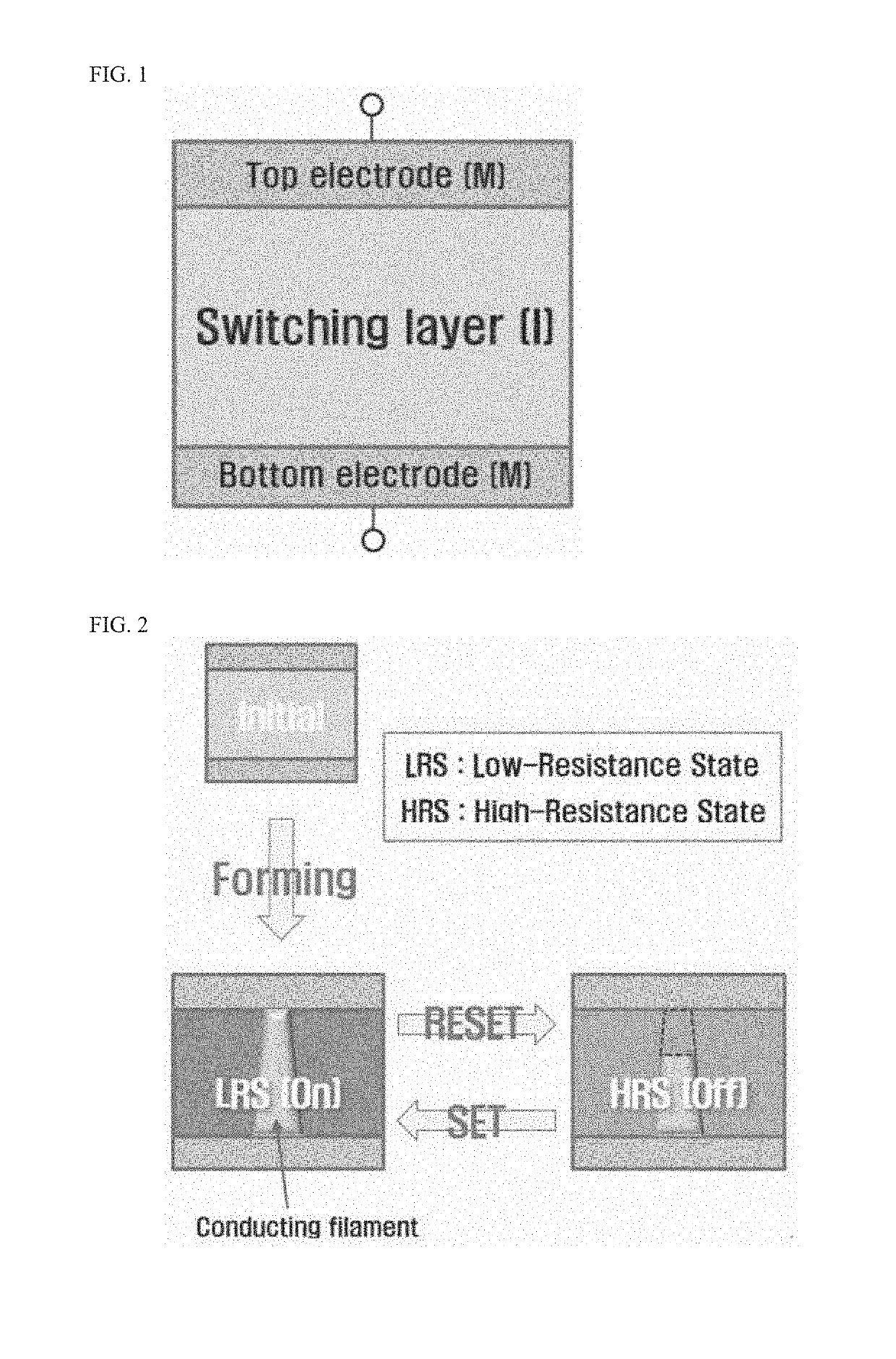
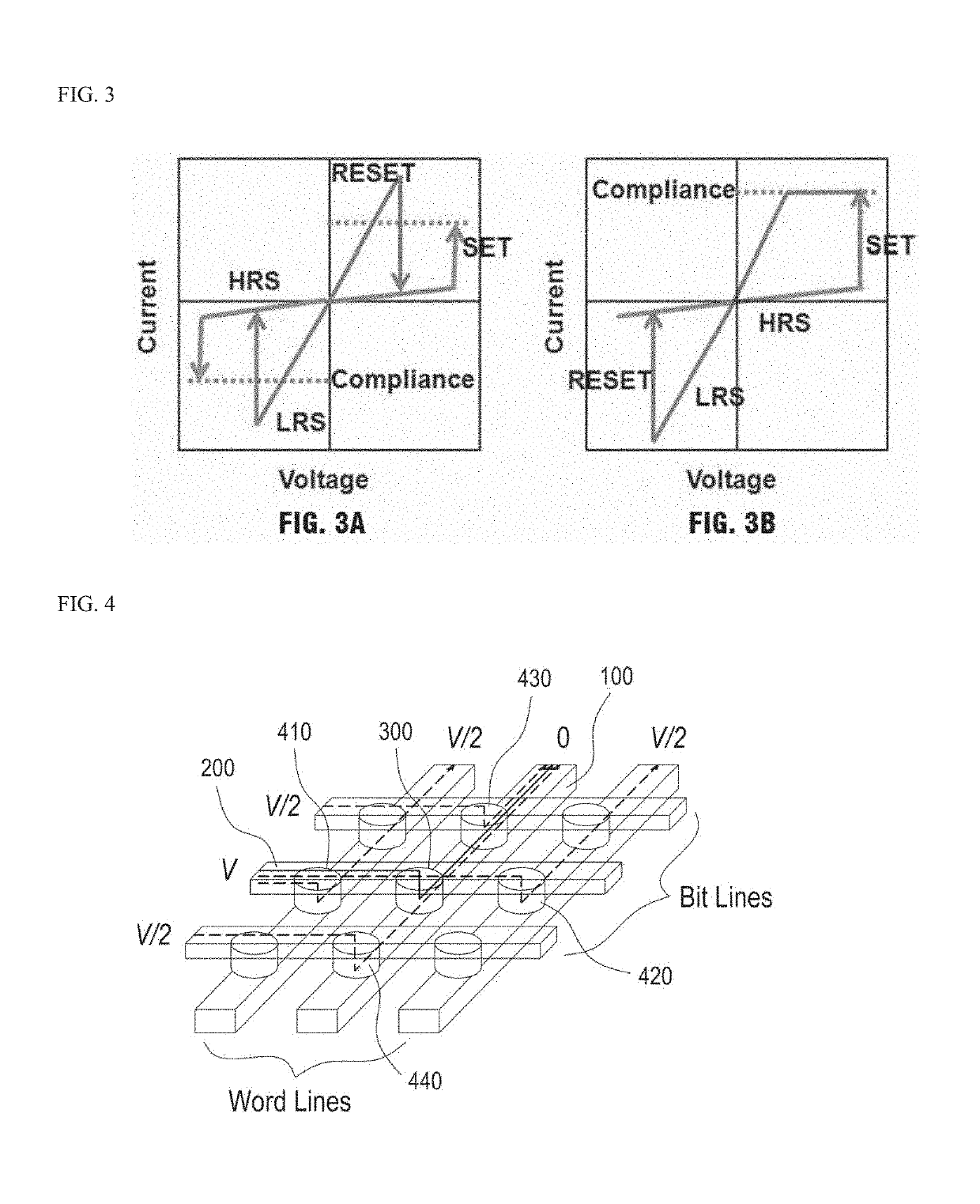
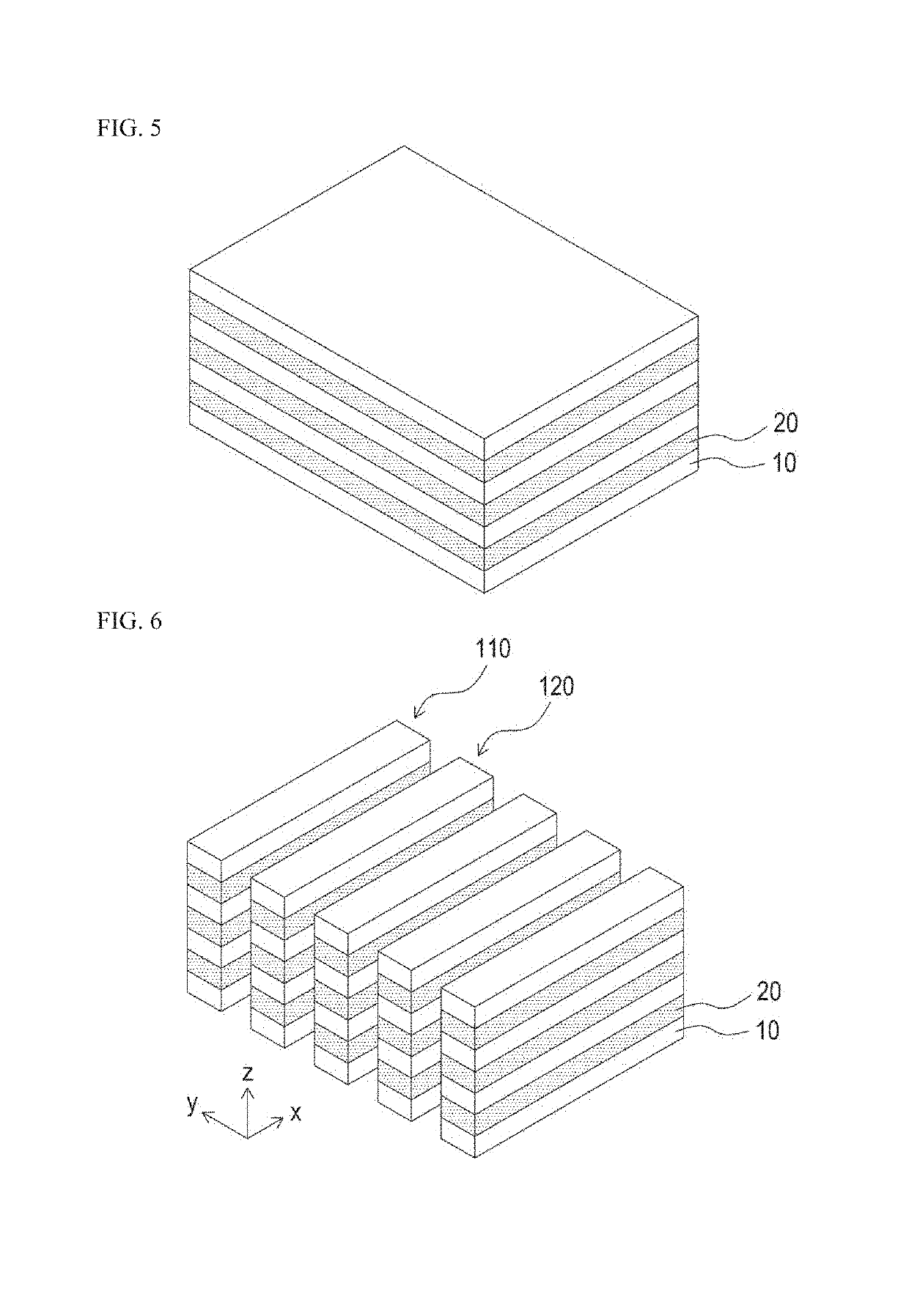
Resistive random access memory device for 3D stack and memory array using the same and fabrication method thereof
PatentActiveUS20190131523A1
Innovation
- A resistive memory device with a doped semiconductor bottom electrode and insulating resistance change layer, featuring electric field concentration regions to reduce operating voltage and power consumption, allowing for three-dimensional stacking and compatibility with CMOS processes.

Industry Standards and Compliance for Memory Controllers
The memory controller industry operates under a comprehensive framework of standards and compliance requirements that directly impact the development and deployment of both 3D NAND and RRAM technologies. These standards ensure interoperability, reliability, and performance consistency across different memory systems and applications.
JEDEC Solid State Technology Association serves as the primary standards body for memory technologies, establishing critical specifications such as JEDEC JESD84 for embedded MultiMediaCard (eMMC) controllers and JEDEC JESD220 for Universal Flash Storage (UFS) controllers. These standards define interface protocols, command sets, and performance benchmarks that both 3D NAND and RRAM controllers must adhere to for market acceptance.
The Open NAND Flash Interface (ONFI) specification provides another crucial compliance framework, particularly relevant for 3D NAND controllers. ONFI 5.0 and subsequent versions establish standardized communication protocols between NAND flash memory and controllers, including timing parameters, command structures, and error correction requirements. RRAM controllers face the challenge of adapting to these existing standards while accommodating the unique characteristics of resistive memory technology.
Automotive applications introduce additional compliance requirements through standards such as AEC-Q100 for integrated circuits and ISO 26262 for functional safety. These standards impose stringent reliability and safety requirements that significantly influence controller design decisions. The inherent endurance advantages of RRAM technology may provide compliance benefits in automotive applications, while 3D NAND controllers must implement sophisticated wear leveling and error correction mechanisms to meet these demanding standards.
Enterprise storage applications must comply with NVMe specifications, including NVMe 2.0 and emerging computational storage standards. These specifications define performance metrics, power management protocols, and security features that controllers must support. The latency characteristics of RRAM technology align well with NVMe performance requirements, potentially offering advantages in meeting stringent response time specifications compared to 3D NAND implementations.
Security compliance represents an increasingly critical aspect, with standards such as TCG Opal for self-encrypting drives and Common Criteria evaluations for high-security applications. Both 3D NAND and RRAM controllers must implement hardware-based encryption and secure key management to meet these requirements, though the implementation approaches may differ based on the underlying memory technology characteristics.
Environmental compliance standards, including RoHS directives and REACH regulations, influence material selection and manufacturing processes for memory controllers. These requirements affect both controller design and the associated memory technologies, potentially impacting cost structures and supply chain considerations for both 3D NAND and RRAM solutions.
JEDEC Solid State Technology Association serves as the primary standards body for memory technologies, establishing critical specifications such as JEDEC JESD84 for embedded MultiMediaCard (eMMC) controllers and JEDEC JESD220 for Universal Flash Storage (UFS) controllers. These standards define interface protocols, command sets, and performance benchmarks that both 3D NAND and RRAM controllers must adhere to for market acceptance.
The Open NAND Flash Interface (ONFI) specification provides another crucial compliance framework, particularly relevant for 3D NAND controllers. ONFI 5.0 and subsequent versions establish standardized communication protocols between NAND flash memory and controllers, including timing parameters, command structures, and error correction requirements. RRAM controllers face the challenge of adapting to these existing standards while accommodating the unique characteristics of resistive memory technology.
Automotive applications introduce additional compliance requirements through standards such as AEC-Q100 for integrated circuits and ISO 26262 for functional safety. These standards impose stringent reliability and safety requirements that significantly influence controller design decisions. The inherent endurance advantages of RRAM technology may provide compliance benefits in automotive applications, while 3D NAND controllers must implement sophisticated wear leveling and error correction mechanisms to meet these demanding standards.
Enterprise storage applications must comply with NVMe specifications, including NVMe 2.0 and emerging computational storage standards. These specifications define performance metrics, power management protocols, and security features that controllers must support. The latency characteristics of RRAM technology align well with NVMe performance requirements, potentially offering advantages in meeting stringent response time specifications compared to 3D NAND implementations.
Security compliance represents an increasingly critical aspect, with standards such as TCG Opal for self-encrypting drives and Common Criteria evaluations for high-security applications. Both 3D NAND and RRAM controllers must implement hardware-based encryption and secure key management to meet these requirements, though the implementation approaches may differ based on the underlying memory technology characteristics.
Environmental compliance standards, including RoHS directives and REACH regulations, influence material selection and manufacturing processes for memory controllers. These requirements affect both controller design and the associated memory technologies, potentially impacting cost structures and supply chain considerations for both 3D NAND and RRAM solutions.
Thermal Management Considerations in High-Performance Controllers
Thermal management represents a critical design consideration for high-performance storage controllers, particularly when comparing 3D NAND and RRAM technologies. The fundamental differences in power consumption patterns between these memory types create distinct thermal challenges that directly impact controller architecture and performance optimization strategies.
3D NAND controllers typically exhibit higher peak power consumption during program and erase operations, generating significant heat bursts that require robust thermal dissipation mechanisms. The multi-level cell programming sequences in 3D NAND create sustained thermal loads, with power densities reaching 15-20W during intensive write operations. This necessitates sophisticated thermal throttling algorithms and heat spreader designs to maintain junction temperatures below 85°C for optimal reliability.
RRAM controllers present contrasting thermal characteristics, with lower overall power consumption but more distributed heat generation patterns. The resistive switching mechanism in RRAM cells produces localized heating effects during write operations, requiring precise thermal modeling to prevent hot spots that could degrade switching reliability. Peak power densities typically remain below 8-10W, enabling more compact controller designs with simplified cooling requirements.
Advanced thermal management strategies for both controller types include dynamic frequency scaling, adaptive voltage regulation, and intelligent workload distribution across multiple processing cores. Temperature sensors integrated within the controller die enable real-time thermal monitoring, triggering performance adjustments when thermal thresholds approach critical limits.
The selection between 3D NAND and RRAM controllers increasingly depends on thermal envelope constraints in target applications. Mobile and embedded systems favor RRAM controllers due to their lower thermal footprint, while enterprise applications can accommodate the higher thermal requirements of 3D NAND controllers through enhanced cooling solutions. Emerging thermal interface materials and advanced packaging technologies continue to expand the viable operating ranges for both controller architectures.
3D NAND controllers typically exhibit higher peak power consumption during program and erase operations, generating significant heat bursts that require robust thermal dissipation mechanisms. The multi-level cell programming sequences in 3D NAND create sustained thermal loads, with power densities reaching 15-20W during intensive write operations. This necessitates sophisticated thermal throttling algorithms and heat spreader designs to maintain junction temperatures below 85°C for optimal reliability.
RRAM controllers present contrasting thermal characteristics, with lower overall power consumption but more distributed heat generation patterns. The resistive switching mechanism in RRAM cells produces localized heating effects during write operations, requiring precise thermal modeling to prevent hot spots that could degrade switching reliability. Peak power densities typically remain below 8-10W, enabling more compact controller designs with simplified cooling requirements.
Advanced thermal management strategies for both controller types include dynamic frequency scaling, adaptive voltage regulation, and intelligent workload distribution across multiple processing cores. Temperature sensors integrated within the controller die enable real-time thermal monitoring, triggering performance adjustments when thermal thresholds approach critical limits.
The selection between 3D NAND and RRAM controllers increasingly depends on thermal envelope constraints in target applications. Mobile and embedded systems favor RRAM controllers due to their lower thermal footprint, while enterprise applications can accommodate the higher thermal requirements of 3D NAND controllers through enhanced cooling solutions. Emerging thermal interface materials and advanced packaging technologies continue to expand the viable operating ranges for both controller architectures.
Unlock deeper insights with Patsnap Eureka Quick Research — get a full tech report to explore trends and direct your research. Try now!
Generate Your Research Report Instantly with AI Agent
Supercharge your innovation with Patsnap Eureka AI Agent Platform!