3D Printing EGR Components: How to Maximize Output
MAR 10, 20269 MIN READ
Generate Your Research Report Instantly with AI Agent
PatSnap Eureka helps you evaluate technical feasibility & market potential.
3D Printing EGR Technology Background and Output Goals
Exhaust Gas Recirculation (EGR) systems have evolved significantly since their introduction in the 1970s as a primary emission control technology for internal combustion engines. Initially developed to reduce nitrogen oxide (NOx) emissions by recirculating a portion of exhaust gases back into the combustion chamber, EGR components have undergone continuous refinement to meet increasingly stringent environmental regulations. The technology operates by lowering combustion temperatures through the introduction of inert exhaust gases, effectively reducing the formation of NOx compounds during the combustion process.
The integration of additive manufacturing into EGR component production represents a paradigm shift from traditional manufacturing methods. Conventional EGR components, including valves, coolers, and piping systems, have historically been produced through casting, machining, and welding processes that often impose design limitations and require extensive tooling investments. These traditional approaches frequently result in components with suboptimal internal geometries, leading to pressure drops, flow restrictions, and reduced overall system efficiency.
3D printing technology offers unprecedented design freedom for EGR components, enabling the creation of complex internal channels, optimized flow paths, and integrated cooling features that were previously impossible to manufacture. Advanced additive manufacturing techniques, including selective laser melting (SLM), electron beam melting (EBM), and binder jetting, have demonstrated capability to produce high-temperature resistant components suitable for harsh exhaust environments. These technologies enable the consolidation of multiple parts into single, monolithic structures, reducing assembly complexity and potential failure points.
The primary output maximization goals for 3D printed EGR components encompass multiple performance dimensions. Production efficiency targets include reducing manufacturing lead times from weeks to days, minimizing material waste through near-net-shape manufacturing, and eliminating the need for expensive tooling and fixtures. Performance optimization objectives focus on enhancing heat transfer efficiency through advanced internal geometries, reducing pressure losses via streamlined flow channels, and improving durability through optimized stress distribution patterns.
Quality consistency represents another critical output goal, as additive manufacturing enables precise replication of complex geometries across production batches. The technology's capability to produce customized components for different engine configurations without additional tooling costs opens opportunities for application-specific optimization. Furthermore, the integration of sensors and monitoring capabilities directly into printed components presents possibilities for smart EGR systems with real-time performance feedback, representing the next evolution in emission control technology.
The integration of additive manufacturing into EGR component production represents a paradigm shift from traditional manufacturing methods. Conventional EGR components, including valves, coolers, and piping systems, have historically been produced through casting, machining, and welding processes that often impose design limitations and require extensive tooling investments. These traditional approaches frequently result in components with suboptimal internal geometries, leading to pressure drops, flow restrictions, and reduced overall system efficiency.
3D printing technology offers unprecedented design freedom for EGR components, enabling the creation of complex internal channels, optimized flow paths, and integrated cooling features that were previously impossible to manufacture. Advanced additive manufacturing techniques, including selective laser melting (SLM), electron beam melting (EBM), and binder jetting, have demonstrated capability to produce high-temperature resistant components suitable for harsh exhaust environments. These technologies enable the consolidation of multiple parts into single, monolithic structures, reducing assembly complexity and potential failure points.
The primary output maximization goals for 3D printed EGR components encompass multiple performance dimensions. Production efficiency targets include reducing manufacturing lead times from weeks to days, minimizing material waste through near-net-shape manufacturing, and eliminating the need for expensive tooling and fixtures. Performance optimization objectives focus on enhancing heat transfer efficiency through advanced internal geometries, reducing pressure losses via streamlined flow channels, and improving durability through optimized stress distribution patterns.
Quality consistency represents another critical output goal, as additive manufacturing enables precise replication of complex geometries across production batches. The technology's capability to produce customized components for different engine configurations without additional tooling costs opens opportunities for application-specific optimization. Furthermore, the integration of sensors and monitoring capabilities directly into printed components presents possibilities for smart EGR systems with real-time performance feedback, representing the next evolution in emission control technology.
Market Demand for Additive Manufacturing EGR Components
The automotive industry's transition toward stricter emission regulations has created substantial demand for advanced EGR components manufactured through additive manufacturing technologies. Traditional manufacturing methods for EGR systems face limitations in producing complex internal geometries required for optimal exhaust gas recirculation, driving manufacturers to explore 3D printing solutions that enable intricate cooling channels and optimized flow paths.
Market drivers for additive manufacturing EGR components stem from multiple regulatory and performance pressures. Euro 7 emission standards and similar regulations worldwide mandate significant reductions in nitrogen oxide emissions, requiring more sophisticated EGR designs. Additive manufacturing enables the production of components with internal lattice structures and conformal cooling channels that cannot be achieved through conventional machining or casting processes.
The commercial vehicle segment represents the largest market opportunity for 3D printed EGR components, particularly in heavy-duty diesel engines where emission control requirements are most stringent. Fleet operators increasingly demand fuel-efficient solutions that maintain performance while meeting environmental standards, creating market pull for innovative EGR designs that maximize heat transfer efficiency and minimize pressure drop.
Aerospace and marine applications present emerging market segments for additive manufacturing EGR technology. These sectors require lightweight, high-performance components capable of operating under extreme conditions. The ability to consolidate multiple parts into single 3D printed assemblies offers significant weight reduction benefits while improving thermal management capabilities.
Supply chain considerations further drive market demand as traditional EGR component suppliers face capacity constraints and long lead times. Additive manufacturing offers distributed production capabilities, enabling manufacturers to produce components closer to assembly facilities and reduce inventory requirements. This localized production model becomes particularly attractive for low-volume, high-complexity EGR variants required for specialized applications.
Cost dynamics in the additive manufacturing EGR market continue evolving as material costs decrease and printing speeds increase. While initial tooling investments for traditional manufacturing remain substantial, 3D printing eliminates these barriers for complex geometries, making it economically viable for medium-volume production runs that were previously cost-prohibitive.
Market drivers for additive manufacturing EGR components stem from multiple regulatory and performance pressures. Euro 7 emission standards and similar regulations worldwide mandate significant reductions in nitrogen oxide emissions, requiring more sophisticated EGR designs. Additive manufacturing enables the production of components with internal lattice structures and conformal cooling channels that cannot be achieved through conventional machining or casting processes.
The commercial vehicle segment represents the largest market opportunity for 3D printed EGR components, particularly in heavy-duty diesel engines where emission control requirements are most stringent. Fleet operators increasingly demand fuel-efficient solutions that maintain performance while meeting environmental standards, creating market pull for innovative EGR designs that maximize heat transfer efficiency and minimize pressure drop.
Aerospace and marine applications present emerging market segments for additive manufacturing EGR technology. These sectors require lightweight, high-performance components capable of operating under extreme conditions. The ability to consolidate multiple parts into single 3D printed assemblies offers significant weight reduction benefits while improving thermal management capabilities.
Supply chain considerations further drive market demand as traditional EGR component suppliers face capacity constraints and long lead times. Additive manufacturing offers distributed production capabilities, enabling manufacturers to produce components closer to assembly facilities and reduce inventory requirements. This localized production model becomes particularly attractive for low-volume, high-complexity EGR variants required for specialized applications.
Cost dynamics in the additive manufacturing EGR market continue evolving as material costs decrease and printing speeds increase. While initial tooling investments for traditional manufacturing remain substantial, 3D printing eliminates these barriers for complex geometries, making it economically viable for medium-volume production runs that were previously cost-prohibitive.
Current State and Challenges of 3D Printed EGR Systems
The current landscape of 3D printed EGR systems presents a complex technological environment characterized by significant advancement potential alongside substantial implementation barriers. Traditional EGR manufacturing relies heavily on casting and machining processes, which impose geometric limitations and extended production cycles. Additive manufacturing has emerged as a transformative approach, enabling the creation of intricate internal cooling channels, optimized flow geometries, and integrated heat exchanger designs that were previously impossible to achieve through conventional methods.
Leading automotive manufacturers and tier-one suppliers have initiated pilot programs for 3D printed EGR components, with notable progress in metal powder bed fusion and directed energy deposition technologies. However, the transition from prototype development to mass production remains constrained by several critical factors. Material certification processes for automotive-grade applications require extensive validation, particularly for components exposed to high-temperature exhaust gases and corrosive environments.
Production scalability represents the most significant challenge facing widespread adoption of 3D printed EGR systems. Current additive manufacturing equipment struggles to achieve the throughput rates necessary for automotive production volumes, with typical build times ranging from 8 to 24 hours per component depending on complexity and size. This limitation directly impacts manufacturing economics, as traditional casting methods can produce multiple components simultaneously within comparable timeframes.
Quality consistency and repeatability issues further complicate the manufacturing landscape. Variations in powder characteristics, thermal management during printing, and post-processing requirements contribute to dimensional tolerances that often exceed automotive industry standards. Surface roughness of as-printed components typically ranges from 15 to 50 micrometers, necessitating additional finishing operations that increase production time and costs.
Material property optimization remains an ongoing challenge, particularly regarding thermal fatigue resistance and long-term durability under cyclic loading conditions. Current metal powder formulations designed for 3D printing often exhibit different microstructural characteristics compared to traditionally manufactured materials, requiring comprehensive validation of mechanical properties and performance under real-world operating conditions.
The integration of 3D printed components within existing EGR system architectures also presents compatibility challenges, as traditional assembly methods and joining techniques may require modification to accommodate the unique characteristics of additively manufactured parts.
Leading automotive manufacturers and tier-one suppliers have initiated pilot programs for 3D printed EGR components, with notable progress in metal powder bed fusion and directed energy deposition technologies. However, the transition from prototype development to mass production remains constrained by several critical factors. Material certification processes for automotive-grade applications require extensive validation, particularly for components exposed to high-temperature exhaust gases and corrosive environments.
Production scalability represents the most significant challenge facing widespread adoption of 3D printed EGR systems. Current additive manufacturing equipment struggles to achieve the throughput rates necessary for automotive production volumes, with typical build times ranging from 8 to 24 hours per component depending on complexity and size. This limitation directly impacts manufacturing economics, as traditional casting methods can produce multiple components simultaneously within comparable timeframes.
Quality consistency and repeatability issues further complicate the manufacturing landscape. Variations in powder characteristics, thermal management during printing, and post-processing requirements contribute to dimensional tolerances that often exceed automotive industry standards. Surface roughness of as-printed components typically ranges from 15 to 50 micrometers, necessitating additional finishing operations that increase production time and costs.
Material property optimization remains an ongoing challenge, particularly regarding thermal fatigue resistance and long-term durability under cyclic loading conditions. Current metal powder formulations designed for 3D printing often exhibit different microstructural characteristics compared to traditionally manufactured materials, requiring comprehensive validation of mechanical properties and performance under real-world operating conditions.
The integration of 3D printed components within existing EGR system architectures also presents compatibility challenges, as traditional assembly methods and joining techniques may require modification to accommodate the unique characteristics of additively manufactured parts.
Current Solutions for Maximizing 3D Printing Output
01 Additive manufacturing methods for EGR components
Various additive manufacturing techniques can be employed to produce EGR components through layer-by-layer material deposition. These methods enable the creation of complex geometries and internal structures that are difficult to achieve with traditional manufacturing. The process typically involves digital design files that guide the 3D printing equipment to build the component with precise dimensional control and material properties suitable for exhaust gas recirculation applications.- Additive manufacturing methods for EGR components: Three-dimensional printing technologies enable the fabrication of exhaust gas recirculation components through layer-by-layer material deposition. These additive manufacturing processes allow for complex geometries and internal structures that are difficult to achieve with traditional manufacturing methods. The technology supports rapid prototyping and customization of EGR system parts with optimized flow characteristics and thermal management properties.
- Material selection and composition for 3D printed EGR parts: Specific material compositions and alloys are utilized in the additive manufacturing of exhaust gas recirculation components to withstand high temperatures and corrosive exhaust environments. The selection of appropriate powders, metals, or composite materials ensures durability, thermal resistance, and mechanical strength. Material properties are optimized to meet the demanding operational conditions of EGR systems while maintaining dimensional accuracy during the printing process.
- Design optimization and topology for 3D printed EGR components: Advanced design methodologies leverage the capabilities of additive manufacturing to create optimized geometries for exhaust gas recirculation components. Topology optimization and computational fluid dynamics are employed to enhance flow efficiency, reduce pressure drops, and improve heat transfer characteristics. The design freedom provided by three-dimensional printing enables the integration of cooling channels, lattice structures, and complex internal passages that maximize component performance.
- Post-processing and surface treatment of additively manufactured EGR parts: Post-manufacturing treatments are applied to three-dimensionally printed exhaust gas recirculation components to enhance surface quality, dimensional accuracy, and functional properties. These processes include heat treatment, surface finishing, coating applications, and quality inspection procedures. Post-processing steps ensure that the printed components meet stringent performance requirements and industry standards for automotive applications.
- Integration and assembly of 3D printed EGR systems: The integration of additively manufactured components into complete exhaust gas recirculation systems involves assembly techniques, connection methods, and system-level optimization. Three-dimensional printing enables the consolidation of multiple parts into single components, reducing assembly complexity and potential failure points. The technology facilitates the production of customized EGR systems tailored to specific engine configurations and emission control requirements.
02 Material selection and composition for 3D printed EGR parts
The selection of appropriate materials is critical for 3D printed EGR components to withstand high temperatures and corrosive exhaust gases. Metal alloys and specialized composite materials with enhanced thermal resistance and durability are utilized in the printing process. Material composition can be optimized to meet specific performance requirements including thermal conductivity, mechanical strength, and resistance to oxidation and thermal cycling.Expand Specific Solutions03 Design optimization for 3D printed EGR systems
Computer-aided design and topology optimization techniques enable the creation of EGR components with improved flow characteristics and reduced weight. The design process leverages the freedom of additive manufacturing to incorporate features such as integrated cooling channels, optimized flow paths, and consolidated assemblies that reduce part count. Simulation tools are used to validate thermal and fluid dynamic performance before manufacturing.Expand Specific Solutions04 Post-processing and quality control of 3D printed EGR components
Post-processing steps are essential to achieve the required surface finish, dimensional accuracy, and mechanical properties for EGR components. These processes may include heat treatment, surface machining, coating application, and stress relief procedures. Quality control measures involve non-destructive testing, dimensional inspection, and performance validation to ensure the printed components meet specifications for exhaust gas recirculation systems.Expand Specific Solutions05 Integration of 3D printed EGR components in engine systems
The integration of additively manufactured EGR components into engine systems requires consideration of mounting interfaces, connection points, and compatibility with existing engine architecture. Design approaches focus on creating components that can be easily installed and serviced while maintaining proper sealing and thermal management. System-level testing validates the performance of 3D printed EGR components under actual operating conditions including various engine loads and environmental factors.Expand Specific Solutions
Key Players in 3D Printing and EGR Component Industry
The 3D printing EGR components market is in a growth phase, driven by automotive industry demands for lightweight, efficient exhaust gas recirculation systems. The market shows significant expansion potential as manufacturers seek cost-effective, customizable solutions. Technology maturity varies considerably across players: established companies like Stratasys and 3D Systems (through dp polar) offer proven industrial-grade systems, while emerging firms like NEW AIM3D and Evolve Additive Solutions are developing innovative approaches to reduce metal printing costs. Research institutions including University of Maine and Xi'an Jiaotong University are advancing materials science, particularly in high-temperature resistant polymers and metal composites. Material suppliers such as BASF, Solvay, and 3M are developing specialized filaments and powders optimized for EGR applications. The competitive landscape spans from mature 3D printing leaders to automotive suppliers like Schaeffler exploring additive manufacturing integration, indicating a transitioning industry moving toward production-scale applications.
Stratasys, Inc.
Technical Solution: Stratasys employs advanced FDM (Fused Deposition Modeling) and PolyJet technologies for manufacturing EGR components with high-performance thermoplastics. Their multi-material 3D printing systems enable production of complex geometries with integrated cooling channels and lightweight structures. The company's industrial-grade printers utilize optimized layer adhesion techniques and precision temperature control to maximize throughput while maintaining dimensional accuracy. Their automated build preparation software and continuous printing capabilities allow for 24/7 production cycles, significantly increasing output volumes for automotive EGR applications.
Strengths: Industry-leading multi-material capabilities and proven automotive applications. Weaknesses: Higher equipment costs and material limitations compared to metal alternatives.
Aptiv Technologies AG
Technical Solution: Aptiv leverages selective laser sintering (SLS) and direct metal laser sintering (DMLS) technologies for producing functional EGR prototypes and low-volume production parts. Their approach integrates topology optimization algorithms to reduce material usage while maintaining structural integrity, enabling faster printing cycles and higher throughput. The company utilizes automated powder handling systems and multi-laser configurations to maximize build chamber utilization. Their quality control systems include real-time monitoring and adaptive process control to minimize print failures and ensure consistent output quality for critical automotive components like EGR valves and housings.
Strengths: Strong automotive integration expertise and proven component validation processes. Weaknesses: Primarily focused on prototyping rather than high-volume production capabilities.
Core Technologies for High-Volume EGR Component Production
Exhaust Gas Recirculation Mixer for a Turbo-Charged Internal Combustion Engine
PatentActiveUS20080264060A1
Innovation
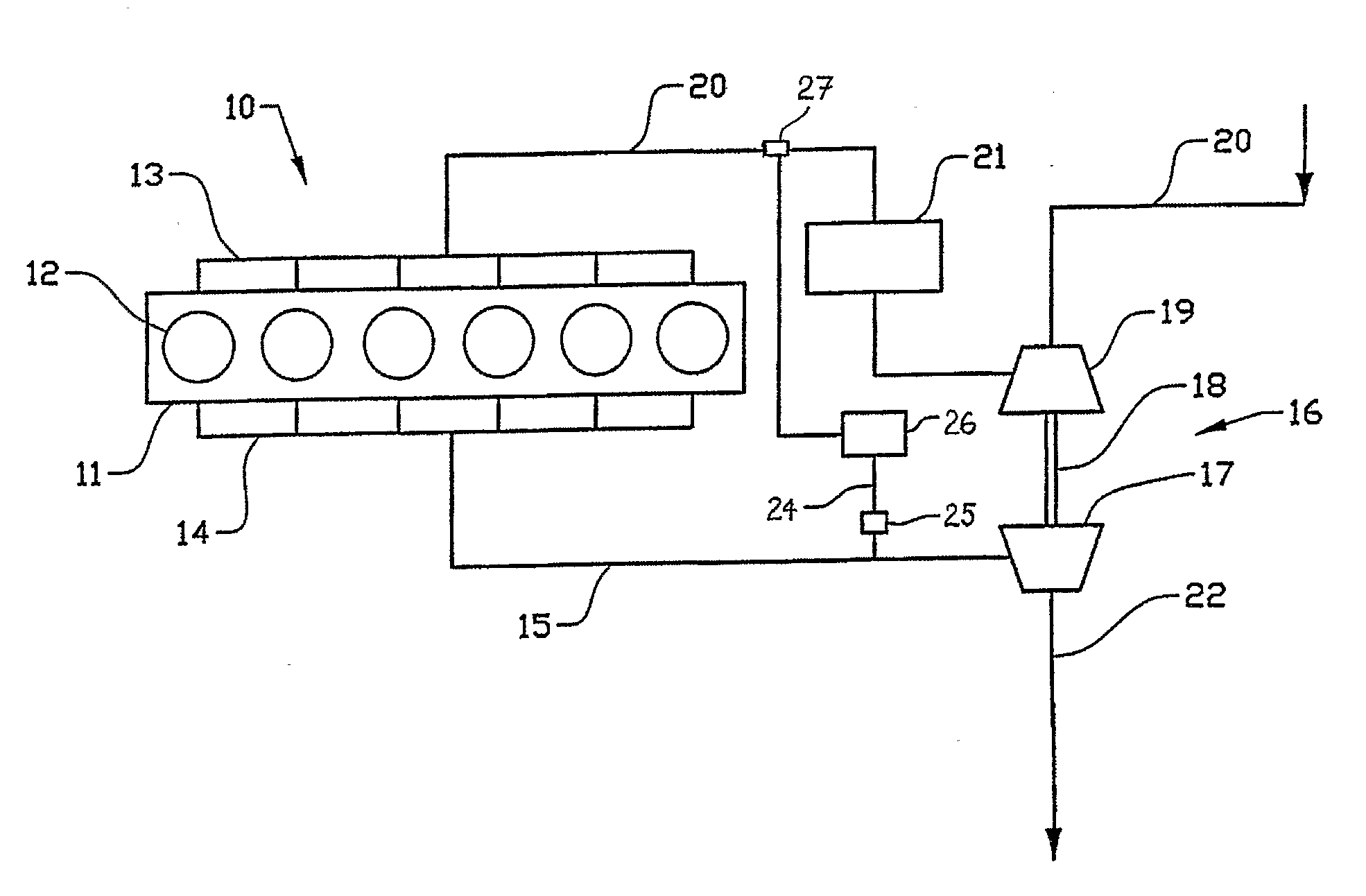
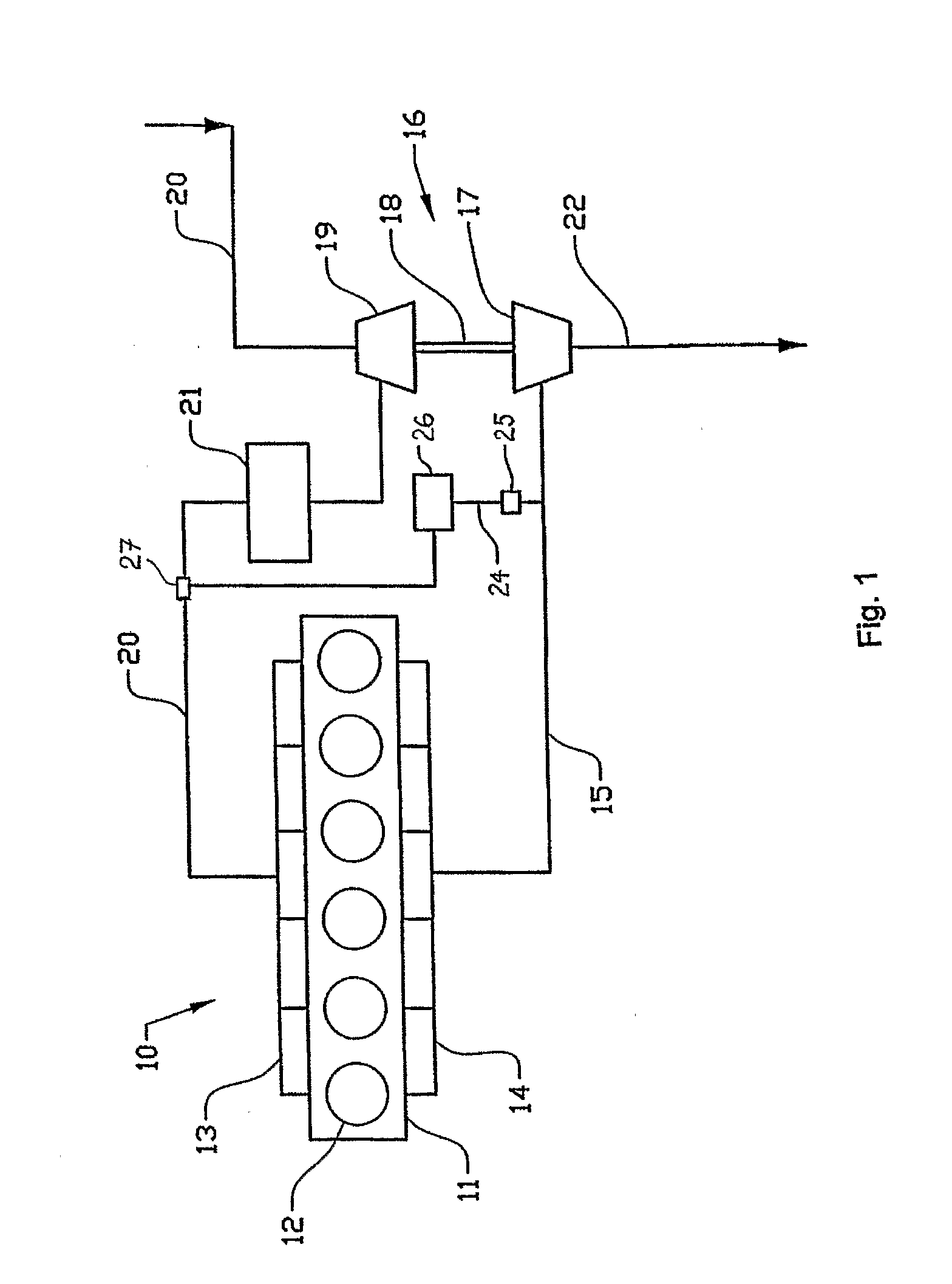
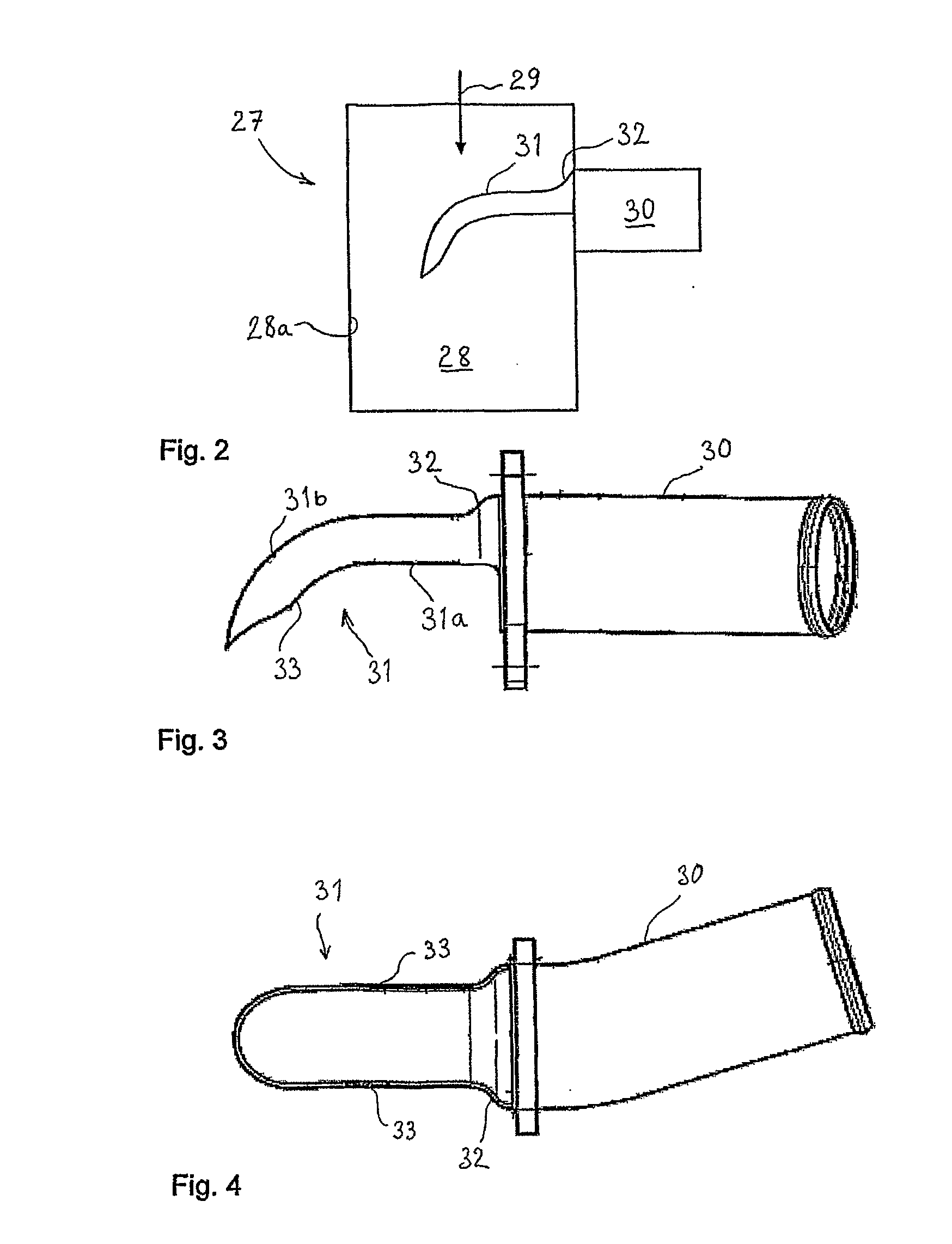
- The EGR mixer arrangement features an inlet port with a branch pipe insertion section that forms a positively double-bent diffuser vane, minimizing pressure drop and ensuring efficient mixing of EGR gas into the intake air by directing the gas flow to align with the intake air flow, preventing rebound and soot particle deposition.
Boosting devices with integral features for recirculating exhaust gas
PatentActiveUS20120159949A1
Innovation
- Incorporating an integral exhaust gas recirculation conduit within the compressor housing of turbochargers and superchargers, allowing for the combination of exhaust gas flow with air flow to the compressor wheel, which enhances packaging efficiency and flexibility by integrating EGR supply ports with the turbine housing, enabling exhaust gas recirculation upstream of catalytic converters.


Environmental Regulations Impact on EGR Manufacturing
Environmental regulations have fundamentally transformed the landscape of EGR manufacturing, creating both challenges and opportunities for 3D printing applications. The implementation of stringent emission standards, particularly Euro VI in Europe and EPA Tier 4 in North America, has driven unprecedented demand for high-performance EGR components. These regulations mandate significant reductions in nitrogen oxide emissions, requiring EGR systems to operate under more extreme conditions with enhanced durability and precision.
The regulatory framework has established specific material requirements that directly impact 3D printing processes. Components must withstand temperatures exceeding 800°C while maintaining structural integrity under cyclic thermal stress. This has necessitated the development of advanced metal powders and ceramic materials compatible with additive manufacturing technologies. Regulatory compliance testing protocols now include extensive validation of 3D printed components, requiring manufacturers to demonstrate equivalent or superior performance compared to traditionally manufactured parts.
Quality assurance standards have evolved to accommodate additive manufacturing processes while maintaining regulatory compliance. The ISO 26262 functional safety standard and IATF 16949 automotive quality management system now incorporate specific guidelines for 3D printed components. These standards mandate comprehensive process validation, including powder quality control, build parameter optimization, and post-processing verification procedures that ensure consistent regulatory compliance across production batches.
Certification pathways for 3D printed EGR components have become increasingly complex, requiring extensive documentation of manufacturing processes and material traceability. Regulatory bodies now demand detailed process maps that demonstrate how additive manufacturing parameters affect final component performance. This includes validation of support structure removal, heat treatment protocols, and surface finishing procedures that ensure components meet emission control requirements.
The regulatory emphasis on lifecycle assessment and sustainability has created new opportunities for 3D printing in EGR manufacturing. Additive manufacturing's ability to reduce material waste and enable local production aligns with emerging environmental regulations focused on manufacturing carbon footprint reduction. This regulatory shift toward sustainable manufacturing practices positions 3D printing as a strategically advantageous technology for future EGR component production, provided manufacturers can demonstrate compliance with both performance and environmental standards.
The regulatory framework has established specific material requirements that directly impact 3D printing processes. Components must withstand temperatures exceeding 800°C while maintaining structural integrity under cyclic thermal stress. This has necessitated the development of advanced metal powders and ceramic materials compatible with additive manufacturing technologies. Regulatory compliance testing protocols now include extensive validation of 3D printed components, requiring manufacturers to demonstrate equivalent or superior performance compared to traditionally manufactured parts.
Quality assurance standards have evolved to accommodate additive manufacturing processes while maintaining regulatory compliance. The ISO 26262 functional safety standard and IATF 16949 automotive quality management system now incorporate specific guidelines for 3D printed components. These standards mandate comprehensive process validation, including powder quality control, build parameter optimization, and post-processing verification procedures that ensure consistent regulatory compliance across production batches.
Certification pathways for 3D printed EGR components have become increasingly complex, requiring extensive documentation of manufacturing processes and material traceability. Regulatory bodies now demand detailed process maps that demonstrate how additive manufacturing parameters affect final component performance. This includes validation of support structure removal, heat treatment protocols, and surface finishing procedures that ensure components meet emission control requirements.
The regulatory emphasis on lifecycle assessment and sustainability has created new opportunities for 3D printing in EGR manufacturing. Additive manufacturing's ability to reduce material waste and enable local production aligns with emerging environmental regulations focused on manufacturing carbon footprint reduction. This regulatory shift toward sustainable manufacturing practices positions 3D printing as a strategically advantageous technology for future EGR component production, provided manufacturers can demonstrate compliance with both performance and environmental standards.
Quality Standards for 3D Printed Automotive Components
The establishment of rigorous quality standards for 3D printed automotive components, particularly EGR systems, represents a critical foundation for maximizing production output while maintaining safety and performance requirements. Current automotive industry standards such as ISO/TS 16949 and IATF 16949 are being adapted to accommodate additive manufacturing processes, with specific emphasis on layer adhesion, surface finish, and dimensional accuracy requirements that directly impact EGR component functionality.
Material certification standards for 3D printed EGR components focus on high-temperature polymer composites and metal alloys capable of withstanding exhaust gas recirculation environments. ASTM D638 and ISO 527 standards govern tensile strength requirements, while ASTM D790 addresses flexural properties essential for EGR valve housings and connecting pipes. These standards ensure that printed components can endure thermal cycling between ambient and operational temperatures exceeding 200°C without structural degradation.
Dimensional tolerance specifications for 3D printed EGR components typically follow ISO 2768 standards, with particular attention to critical interfaces where components connect to engine blocks and intake manifolds. Geometric dimensioning and tolerancing principles become especially important for internal flow passages, where surface roughness directly affects exhaust gas flow characteristics and overall system efficiency.
Process validation standards require comprehensive documentation of printing parameters, including layer height, infill density, print speed, and post-processing procedures. Statistical process control methods, aligned with automotive Six Sigma methodologies, monitor key quality indicators such as porosity levels, surface finish consistency, and mechanical property variations across production batches.
Non-destructive testing protocols incorporate advanced inspection techniques including computed tomography scanning for internal void detection, coordinate measuring machine verification for dimensional accuracy, and thermal imaging for identifying potential weak points in printed structures. These quality assurance measures ensure that each EGR component meets stringent automotive reliability requirements while enabling high-volume production scalability.
Traceability requirements mandate complete documentation of material lot numbers, printing machine identification, operator certification, and environmental conditions during production, creating a comprehensive quality audit trail essential for automotive supply chain compliance and continuous improvement initiatives.
Material certification standards for 3D printed EGR components focus on high-temperature polymer composites and metal alloys capable of withstanding exhaust gas recirculation environments. ASTM D638 and ISO 527 standards govern tensile strength requirements, while ASTM D790 addresses flexural properties essential for EGR valve housings and connecting pipes. These standards ensure that printed components can endure thermal cycling between ambient and operational temperatures exceeding 200°C without structural degradation.
Dimensional tolerance specifications for 3D printed EGR components typically follow ISO 2768 standards, with particular attention to critical interfaces where components connect to engine blocks and intake manifolds. Geometric dimensioning and tolerancing principles become especially important for internal flow passages, where surface roughness directly affects exhaust gas flow characteristics and overall system efficiency.
Process validation standards require comprehensive documentation of printing parameters, including layer height, infill density, print speed, and post-processing procedures. Statistical process control methods, aligned with automotive Six Sigma methodologies, monitor key quality indicators such as porosity levels, surface finish consistency, and mechanical property variations across production batches.
Non-destructive testing protocols incorporate advanced inspection techniques including computed tomography scanning for internal void detection, coordinate measuring machine verification for dimensional accuracy, and thermal imaging for identifying potential weak points in printed structures. These quality assurance measures ensure that each EGR component meets stringent automotive reliability requirements while enabling high-volume production scalability.
Traceability requirements mandate complete documentation of material lot numbers, printing machine identification, operator certification, and environmental conditions during production, creating a comprehensive quality audit trail essential for automotive supply chain compliance and continuous improvement initiatives.
Unlock deeper insights with PatSnap Eureka Quick Research — get a full tech report to explore trends and direct your research. Try now!
Generate Your Research Report Instantly with AI Agent
Supercharge your innovation with PatSnap Eureka AI Agent Platform!