
Absolute Encoders in Smart Buildings: Optimizing Elevator Control
MAY 25, 20269 MIN READ
Generate Your Research Report Instantly with AI Agent
Patsnap Eureka helps you evaluate technical feasibility & market potential.
Absolute Encoder Technology Background and Smart Building Goals
Absolute encoders represent a critical advancement in position sensing technology, fundamentally transforming how mechanical systems determine and communicate positional data. Unlike incremental encoders that require reference points and can lose position information during power interruptions, absolute encoders provide unique digital codes for each angular or linear position, ensuring continuous and reliable position feedback regardless of system power cycles.
The evolution of absolute encoder technology has progressed through several distinct phases, beginning with basic optical disc systems in the 1960s and advancing to sophisticated multi-turn magnetic and optical solutions capable of tracking millions of rotations. Early implementations utilized Gray code patterns etched onto rotating discs, read by photoelectric sensors to generate position data. Modern absolute encoders incorporate advanced signal processing, error correction algorithms, and multiple sensing technologies including magnetic, capacitive, and inductive principles.
Contemporary absolute encoders demonstrate remarkable precision capabilities, with single-turn resolutions reaching 22 bits and multi-turn capabilities extending to 16 additional bits, enabling position tracking across 65,536 complete rotations. This technological sophistication directly addresses the demanding requirements of modern elevator systems, where precise floor positioning, smooth acceleration profiles, and safety-critical position monitoring are paramount.
Smart building integration represents the convergence of traditional building systems with advanced digital technologies, creating interconnected environments that optimize energy efficiency, occupant comfort, and operational performance. Within this ecosystem, elevator systems serve as critical vertical transportation infrastructure, requiring seamless integration with building management systems, energy optimization protocols, and predictive maintenance frameworks.
The primary technological objectives for absolute encoders in smart building elevator applications encompass several key performance areas. Precision positioning accuracy must achieve sub-millimeter tolerances to ensure proper floor alignment and passenger safety. Real-time communication capabilities must support high-speed data transmission to building management systems, enabling coordinated traffic management and energy optimization strategies.
Integration goals extend beyond basic position feedback to encompass comprehensive system intelligence. Advanced absolute encoders must provide diagnostic data for predictive maintenance algorithms, support dynamic load balancing across multiple elevator cars, and contribute to overall building energy management through optimized travel patterns and regenerative braking coordination.
Future technological targets include enhanced cybersecurity features to protect against potential network vulnerabilities, improved environmental resilience for diverse building conditions, and expanded diagnostic capabilities that enable proactive maintenance scheduling and performance optimization within the broader smart building ecosystem.
The evolution of absolute encoder technology has progressed through several distinct phases, beginning with basic optical disc systems in the 1960s and advancing to sophisticated multi-turn magnetic and optical solutions capable of tracking millions of rotations. Early implementations utilized Gray code patterns etched onto rotating discs, read by photoelectric sensors to generate position data. Modern absolute encoders incorporate advanced signal processing, error correction algorithms, and multiple sensing technologies including magnetic, capacitive, and inductive principles.
Contemporary absolute encoders demonstrate remarkable precision capabilities, with single-turn resolutions reaching 22 bits and multi-turn capabilities extending to 16 additional bits, enabling position tracking across 65,536 complete rotations. This technological sophistication directly addresses the demanding requirements of modern elevator systems, where precise floor positioning, smooth acceleration profiles, and safety-critical position monitoring are paramount.
Smart building integration represents the convergence of traditional building systems with advanced digital technologies, creating interconnected environments that optimize energy efficiency, occupant comfort, and operational performance. Within this ecosystem, elevator systems serve as critical vertical transportation infrastructure, requiring seamless integration with building management systems, energy optimization protocols, and predictive maintenance frameworks.
The primary technological objectives for absolute encoders in smart building elevator applications encompass several key performance areas. Precision positioning accuracy must achieve sub-millimeter tolerances to ensure proper floor alignment and passenger safety. Real-time communication capabilities must support high-speed data transmission to building management systems, enabling coordinated traffic management and energy optimization strategies.
Integration goals extend beyond basic position feedback to encompass comprehensive system intelligence. Advanced absolute encoders must provide diagnostic data for predictive maintenance algorithms, support dynamic load balancing across multiple elevator cars, and contribute to overall building energy management through optimized travel patterns and regenerative braking coordination.
Future technological targets include enhanced cybersecurity features to protect against potential network vulnerabilities, improved environmental resilience for diverse building conditions, and expanded diagnostic capabilities that enable proactive maintenance scheduling and performance optimization within the broader smart building ecosystem.
Market Demand for Smart Elevator Control Systems
The global smart building market is experiencing unprecedented growth, driven by increasing urbanization, energy efficiency mandates, and the integration of Internet of Things technologies. Within this ecosystem, elevator control systems represent a critical component that directly impacts building performance, user experience, and operational costs. The demand for intelligent elevator solutions has intensified as building owners and facility managers seek to optimize vertical transportation efficiency while reducing energy consumption and maintenance expenses.
Modern commercial and residential buildings are increasingly adopting smart elevator technologies to address growing passenger traffic volumes and enhance building intelligence. The integration of absolute encoders in elevator control systems has emerged as a key enabler for achieving precise positioning, improved safety protocols, and predictive maintenance capabilities. These advanced positioning systems eliminate the need for reference runs and provide continuous, accurate floor-level information, which is essential for modern elevator management systems.
The market demand is particularly strong in high-rise construction projects, where elevator efficiency directly correlates with building usability and tenant satisfaction. Smart elevator control systems equipped with absolute encoders enable advanced features such as destination dispatch algorithms, traffic pattern analysis, and real-time performance monitoring. These capabilities are becoming standard requirements in premium commercial buildings, luxury residential complexes, and mixed-use developments.
Energy efficiency regulations and green building certifications are further accelerating market adoption. Absolute encoder-based systems contribute to energy savings through optimized travel patterns, reduced unnecessary movements, and improved motor control precision. Building developers increasingly recognize that advanced elevator control systems can significantly impact overall building energy ratings and operational sustainability metrics.
The retrofit market presents substantial opportunities as existing buildings upgrade their vertical transportation infrastructure. Legacy elevator systems with traditional positioning methods are being modernized with absolute encoder technology to meet contemporary performance standards and regulatory requirements. This modernization trend is particularly pronounced in urban centers where building owners must enhance competitiveness while maintaining operational efficiency.
Emerging applications in smart city initiatives and integrated building management platforms are expanding the addressable market beyond traditional elevator control. The convergence of elevator systems with building automation, security, and energy management platforms creates new value propositions that drive demand for sophisticated positioning and control technologies.
Modern commercial and residential buildings are increasingly adopting smart elevator technologies to address growing passenger traffic volumes and enhance building intelligence. The integration of absolute encoders in elevator control systems has emerged as a key enabler for achieving precise positioning, improved safety protocols, and predictive maintenance capabilities. These advanced positioning systems eliminate the need for reference runs and provide continuous, accurate floor-level information, which is essential for modern elevator management systems.
The market demand is particularly strong in high-rise construction projects, where elevator efficiency directly correlates with building usability and tenant satisfaction. Smart elevator control systems equipped with absolute encoders enable advanced features such as destination dispatch algorithms, traffic pattern analysis, and real-time performance monitoring. These capabilities are becoming standard requirements in premium commercial buildings, luxury residential complexes, and mixed-use developments.
Energy efficiency regulations and green building certifications are further accelerating market adoption. Absolute encoder-based systems contribute to energy savings through optimized travel patterns, reduced unnecessary movements, and improved motor control precision. Building developers increasingly recognize that advanced elevator control systems can significantly impact overall building energy ratings and operational sustainability metrics.
The retrofit market presents substantial opportunities as existing buildings upgrade their vertical transportation infrastructure. Legacy elevator systems with traditional positioning methods are being modernized with absolute encoder technology to meet contemporary performance standards and regulatory requirements. This modernization trend is particularly pronounced in urban centers where building owners must enhance competitiveness while maintaining operational efficiency.
Emerging applications in smart city initiatives and integrated building management platforms are expanding the addressable market beyond traditional elevator control. The convergence of elevator systems with building automation, security, and energy management platforms creates new value propositions that drive demand for sophisticated positioning and control technologies.
Current State and Challenges of Absolute Encoders in Elevators
Absolute encoders in elevator systems have achieved significant technological maturity over the past decade, with current implementations primarily utilizing optical and magnetic sensing technologies. Modern elevator installations predominantly employ multi-turn absolute encoders capable of tracking position across multiple shaft rotations without requiring reference positioning upon power restoration. These encoders typically offer resolution ranges from 12 to 17 bits per revolution, providing position accuracy within 0.1 to 0.01 degrees, which translates to millimeter-level precision in elevator car positioning.
The integration of absolute encoders with elevator control systems has evolved from simple position feedback mechanisms to sophisticated components within comprehensive building management networks. Contemporary installations feature encoders with built-in diagnostic capabilities, real-time data transmission protocols, and compatibility with industrial communication standards such as EtherCAT, PROFINET, and CANopen. This connectivity enables seamless integration with smart building infrastructure and centralized monitoring systems.
Despite technological advances, several critical challenges persist in absolute encoder implementation within elevator systems. Environmental factors present ongoing difficulties, particularly in high-rise buildings where temperature variations, humidity fluctuations, and electromagnetic interference can affect encoder accuracy and reliability. Shaft misalignment and mechanical vibrations continue to cause premature wear and signal degradation, necessitating frequent calibration and maintenance interventions.
Power management remains a significant constraint, especially in energy-efficient smart buildings where power consumption optimization is paramount. While absolute encoders eliminate the need for homing procedures, they still require continuous power supply to maintain position memory, creating challenges in emergency situations and power outage scenarios. Battery backup systems add complexity and maintenance requirements to the overall elevator control architecture.
Communication latency and data integrity issues emerge in networked elevator systems where multiple encoders must coordinate with centralized control units. Signal transmission delays can impact real-time positioning accuracy, particularly in high-speed elevator applications where rapid acceleration and deceleration cycles demand instantaneous feedback. Additionally, cybersecurity vulnerabilities in networked encoder systems pose emerging risks as smart building integration increases, requiring robust encryption and authentication protocols to prevent unauthorized access and potential safety compromises.
Calibration complexity and long-term drift compensation represent ongoing technical challenges that require sophisticated algorithms and periodic maintenance procedures to ensure sustained performance accuracy throughout the encoder's operational lifetime.
The integration of absolute encoders with elevator control systems has evolved from simple position feedback mechanisms to sophisticated components within comprehensive building management networks. Contemporary installations feature encoders with built-in diagnostic capabilities, real-time data transmission protocols, and compatibility with industrial communication standards such as EtherCAT, PROFINET, and CANopen. This connectivity enables seamless integration with smart building infrastructure and centralized monitoring systems.
Despite technological advances, several critical challenges persist in absolute encoder implementation within elevator systems. Environmental factors present ongoing difficulties, particularly in high-rise buildings where temperature variations, humidity fluctuations, and electromagnetic interference can affect encoder accuracy and reliability. Shaft misalignment and mechanical vibrations continue to cause premature wear and signal degradation, necessitating frequent calibration and maintenance interventions.
Power management remains a significant constraint, especially in energy-efficient smart buildings where power consumption optimization is paramount. While absolute encoders eliminate the need for homing procedures, they still require continuous power supply to maintain position memory, creating challenges in emergency situations and power outage scenarios. Battery backup systems add complexity and maintenance requirements to the overall elevator control architecture.
Communication latency and data integrity issues emerge in networked elevator systems where multiple encoders must coordinate with centralized control units. Signal transmission delays can impact real-time positioning accuracy, particularly in high-speed elevator applications where rapid acceleration and deceleration cycles demand instantaneous feedback. Additionally, cybersecurity vulnerabilities in networked encoder systems pose emerging risks as smart building integration increases, requiring robust encryption and authentication protocols to prevent unauthorized access and potential safety compromises.
Calibration complexity and long-term drift compensation represent ongoing technical challenges that require sophisticated algorithms and periodic maintenance procedures to ensure sustained performance accuracy throughout the encoder's operational lifetime.
Current Absolute Encoder Solutions for Elevator Systems
01 Optical absolute encoder systems
Optical absolute encoders utilize light-based detection methods to determine absolute position. These systems typically employ photodetectors, light sources, and coded disks or patterns to generate unique position signals. The optical approach provides high resolution and accuracy for position measurement applications without requiring reference positioning.- Optical absolute encoder systems: Optical absolute encoders utilize light sources and photodetectors to determine absolute position. These systems employ coded disks or linear scales with unique patterns that provide distinct digital codes for each position. The optical sensing mechanism offers high resolution and accuracy for position measurement applications.
- Multi-turn absolute encoder configurations: Multi-turn absolute encoders are designed to track both rotational position within a single turn and the number of complete turns. These systems incorporate gear trains or electronic counting mechanisms to maintain absolute position information even after power loss, enabling precise position tracking across multiple rotations.
- Magnetic absolute encoder technologies: Magnetic absolute encoders use magnetic field sensing to determine position without physical contact. These systems employ magnetic scales or rings with Hall effect sensors or magnetoresistive elements to detect position changes. They offer robust performance in harsh environments and are resistant to contamination.
- Absolute encoder signal processing and communication: Advanced signal processing techniques are employed to convert raw encoder signals into digital position data. These systems incorporate various communication protocols and interfaces to transmit absolute position information to control systems, including serial communication methods and fieldbus protocols for industrial applications.
- Compact and integrated absolute encoder designs: Modern absolute encoder designs focus on miniaturization and integration with motor systems. These compact solutions incorporate advanced manufacturing techniques and materials to achieve high performance in reduced form factors, making them suitable for space-constrained applications while maintaining accuracy and reliability.
02 Multi-turn absolute encoder configurations
Multi-turn absolute encoders are designed to track position across multiple complete rotations while maintaining absolute position information. These systems incorporate gear trains or electronic counting mechanisms to extend the measurement range beyond single revolution limits, enabling precise position tracking in applications requiring extended rotational movement.Expand Specific Solutions03 Magnetic absolute encoder technology
Magnetic absolute encoders employ magnetic field detection principles for position sensing. These systems use magnetic sensors and magnetized elements to generate position-dependent signals, offering robust performance in harsh environmental conditions where optical systems might be compromised by contamination or vibration.Expand Specific Solutions04 Digital signal processing for absolute encoders
Advanced digital signal processing techniques enhance absolute encoder performance through improved signal conditioning, error correction, and position calculation algorithms. These methods enable higher accuracy, better noise immunity, and enhanced reliability in position measurement systems across various industrial applications.Expand Specific Solutions05 Compact and integrated absolute encoder designs
Miniaturized absolute encoder designs focus on space-efficient integration while maintaining high performance characteristics. These compact systems incorporate advanced manufacturing techniques and integrated circuit technologies to reduce size and weight while providing reliable absolute position feedback for space-constrained applications.Expand Specific Solutions
Key Players in Elevator Control and Encoder Industry
The absolute encoder market for smart building elevator control represents a mature, growth-stage industry driven by urbanization and smart infrastructure demands. The market demonstrates significant scale with established global players like Otis Elevator Co., Mitsubishi Electric Corp., Hitachi Ltd., and Siemens AG dominating through comprehensive elevator solutions. Technology maturity varies across segments, with traditional manufacturers like FANUC Corp., YASKAWA Electric Corp., and DR. JOHANNES HEIDENHAIN GmbH offering highly sophisticated encoder technologies, while emerging players such as Shenzhen Hpmont Technology and Changchun Huitong Optoelectronic Technology focus on cost-effective solutions. The competitive landscape shows consolidation around integrated building management systems, with companies like Renishaw Plc and Nidec Precision Corp. providing specialized precision components. Market dynamics favor players offering IoT-enabled, cloud-based solutions that integrate seamlessly with smart building ecosystems, indicating a shift toward digitally-native elevator control systems.
Otis Elevator Co.
Technical Solution: Otis implements advanced absolute encoder systems integrated with their Gen2 and Gen3 elevator technologies, utilizing magnetic absolute encoders that provide precise position feedback without requiring homing sequences. Their ReGen drive systems incorporate multi-turn absolute encoders capable of tracking elevator car position across multiple floors with resolution up to 4096 counts per revolution. The company's Compass destination management system leverages absolute position data to optimize traffic flow and reduce wait times by up to 30%. Their smart building integration allows real-time monitoring of elevator performance metrics including speed variations, door timing, and energy consumption patterns through IoT-enabled absolute encoder feedback systems.
Strengths: Market leader with extensive field experience, proven reliability in high-rise applications, comprehensive smart building integration capabilities. Weaknesses: Higher initial costs, proprietary systems may limit third-party integration options.
Mitsubishi Electric Corp.
Technical Solution: Mitsubishi Electric employs high-resolution optical absolute encoders in their NEXIEZ elevator control systems, featuring 17-bit resolution encoders that provide position accuracy within ±0.1mm for precise floor leveling. Their HOPE-III traction machine integrates absolute encoders with permanent magnet synchronous motors, enabling regenerative energy recovery of up to 75% during descent operations. The company's AI-enhanced predictive maintenance system analyzes absolute encoder data patterns to predict component failures up to 6 months in advance, reducing unplanned downtime by 40%. Their Building Energy Management System (BEMS) utilizes encoder feedback to optimize elevator scheduling algorithms, achieving 25% improvement in energy efficiency compared to conventional systems.
Strengths: Superior precision and reliability, excellent energy efficiency, advanced predictive maintenance capabilities. Weaknesses: Complex installation requirements, higher maintenance expertise needed for optical systems.
Core Innovations in High-Precision Elevator Positioning
Device for controlling hydraulical or electrical elevators
PatentInactiveEP1302429A2
Innovation
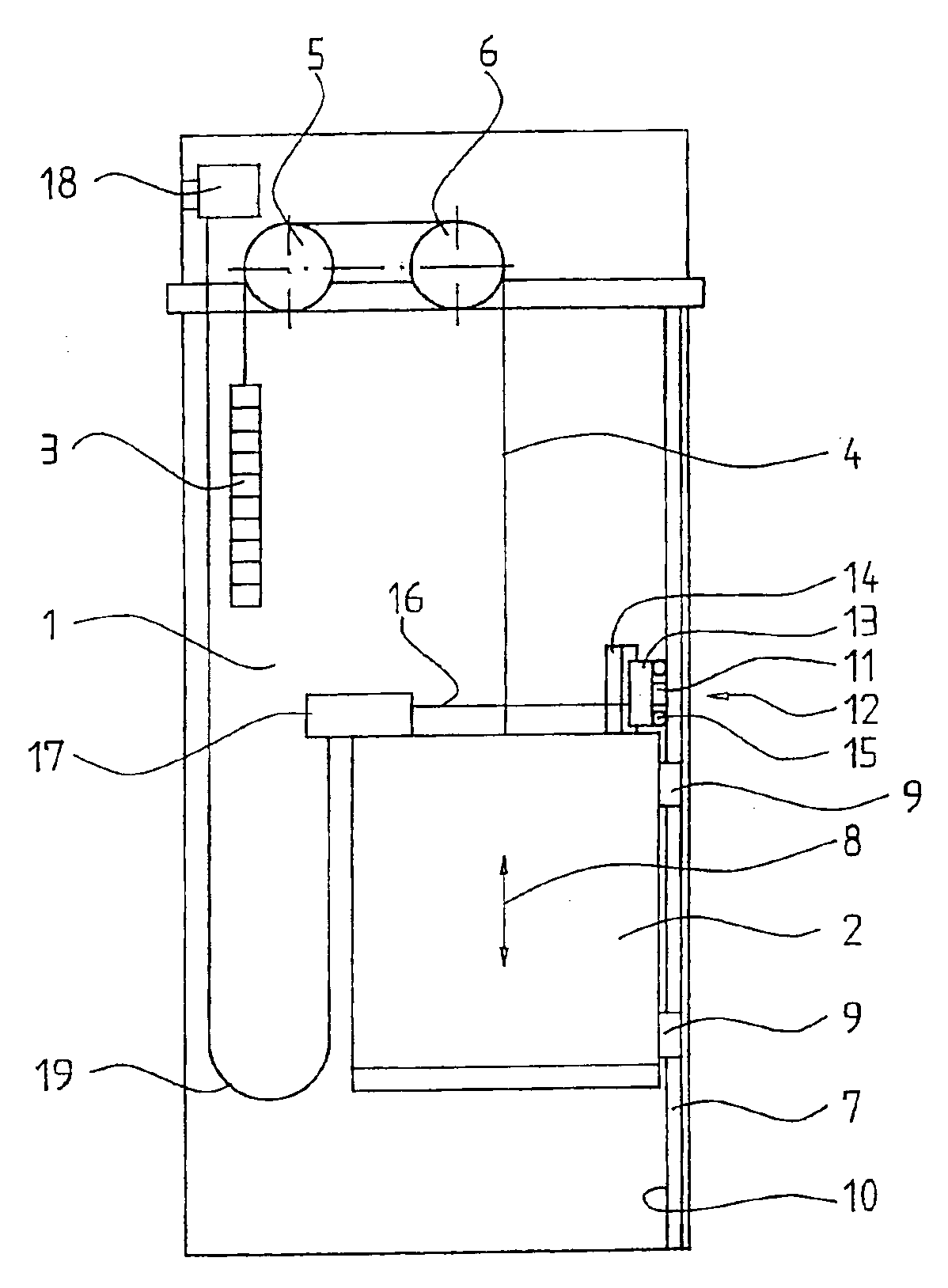
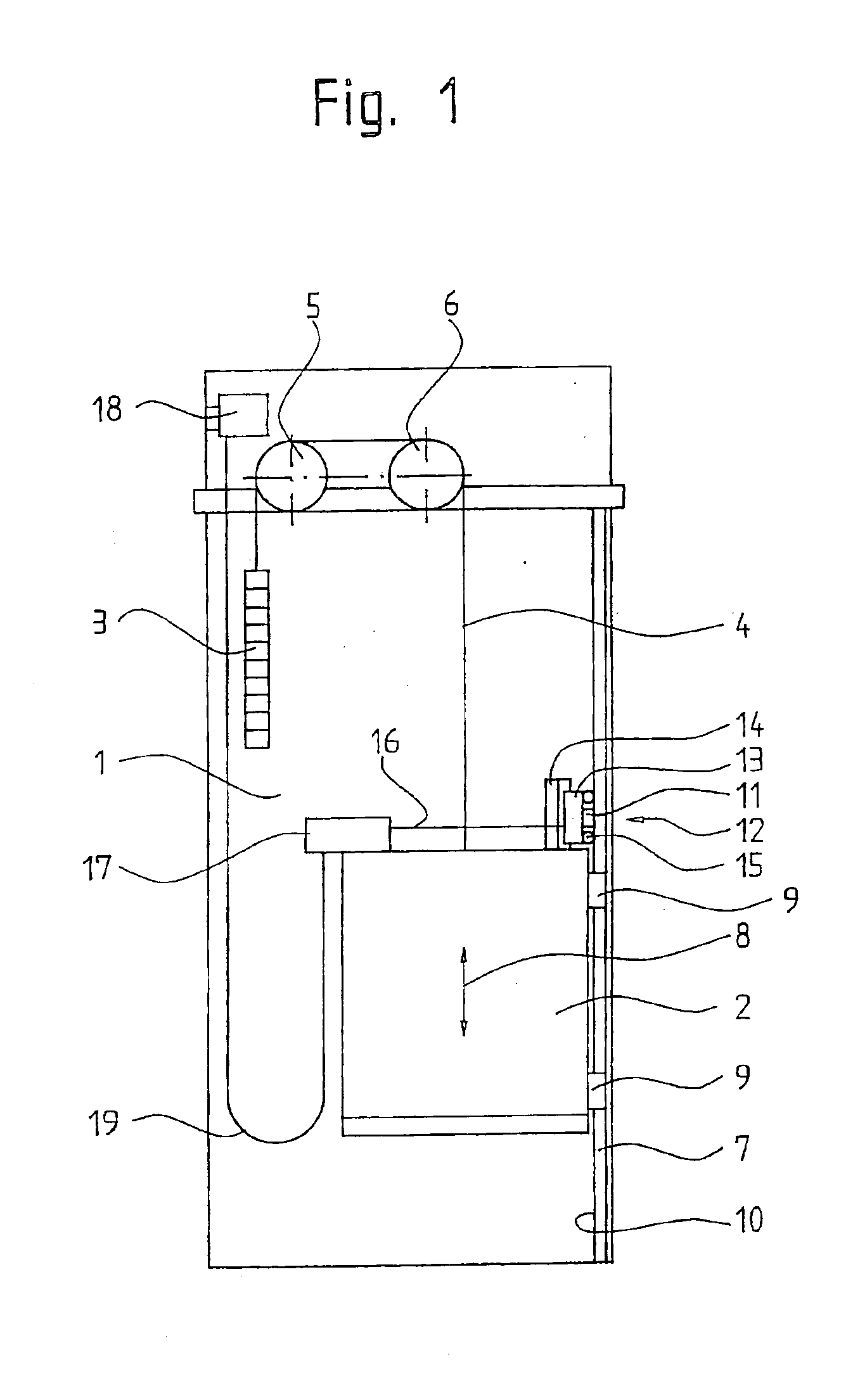
- A device that continuously determines the elevator car's position using an absolute encoder and microprocessor-controlled speed profiles, allowing for flexible speed adjustments and safety monitoring, independent of proximity switches, and directly controls hydraulic valves for precise positioning and braking.


Elevator installation with a measuring system for determining absolute car position
PatentInactiveUS6874244B2
Innovation
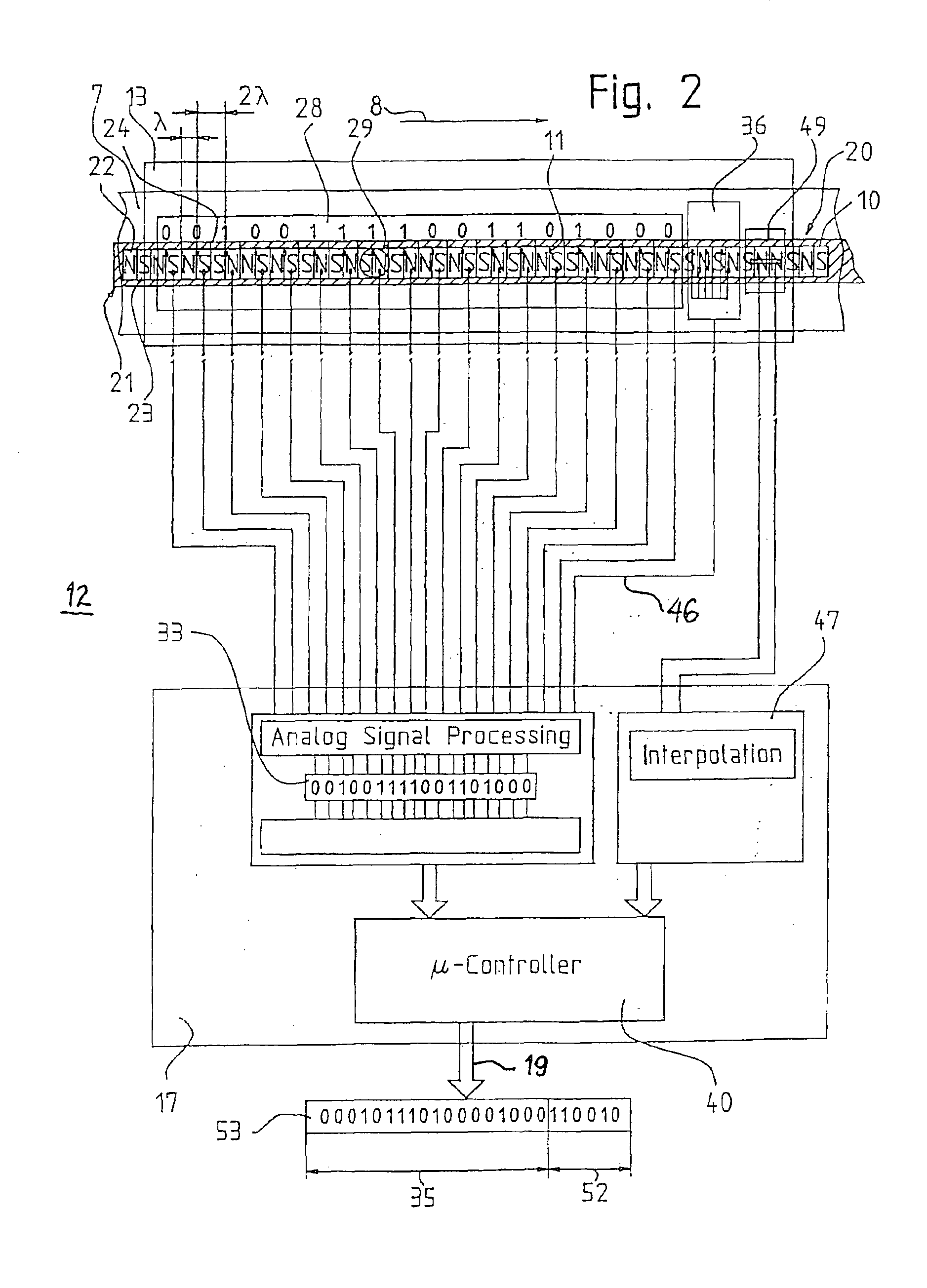
- A single-track combined code mark pattern using Manchester coding, where each binary n-digit pseudo random sequence is extended with additional bits, allowing 'n+1' code marks to be scanned, enabling high-resolution position recognition over longer paths with reduced hardware complexity and size.

Building Safety Standards and Elevator Regulations
Building safety standards and elevator regulations form the foundational framework governing the implementation of absolute encoders in smart building elevator systems. These regulatory requirements establish mandatory safety protocols, performance benchmarks, and operational parameters that directly influence encoder selection, installation, and maintenance practices across global markets.
The American Society of Mechanical Engineers (ASME) A17.1 Safety Code for Elevators and Escalators represents the primary regulatory standard in North America, mandating specific position feedback accuracy requirements for elevator control systems. This standard requires position sensing devices to maintain accuracy within ±3mm throughout the entire travel range, directly impacting absolute encoder resolution specifications. European markets operate under EN 81 standards, which establish similar precision requirements while emphasizing fail-safe operation modes and redundant position sensing capabilities.
International Building Code (IBC) provisions specifically address elevator safety systems in high-rise structures, requiring dual-redundant position feedback mechanisms for buildings exceeding 420 feet in height. These regulations mandate that absolute encoders demonstrate continuous operational reliability under emergency conditions, including power failures and seismic events. The code further specifies that position sensing systems must maintain functionality during fire service operations, necessitating encoders with enhanced temperature resistance and electromagnetic interference immunity.
Recent regulatory updates have introduced cybersecurity requirements for connected elevator systems, establishing data encryption standards and network security protocols. The National Institute of Standards and Technology (NIST) Cybersecurity Framework now applies to smart building elevator systems, requiring absolute encoders with secure communication protocols and tamper-resistant hardware designs. These requirements have driven development of encoders with built-in security features and encrypted data transmission capabilities.
Regional variations in safety standards create additional complexity for global implementations. Asian markets, particularly Japan and South Korea, maintain stricter seismic resistance requirements, mandating absolute encoders capable of maintaining position accuracy during earthquake events up to magnitude 7.0. Middle Eastern regulations emphasize extreme temperature operation, requiring encoders to function reliably in ambient temperatures reaching 60°C while maintaining specified accuracy tolerances.
Compliance certification processes require extensive testing and documentation, with third-party validation becoming increasingly mandatory. Underwriters Laboratories (UL) certification for elevator components now includes specific testing protocols for absolute encoders, evaluating electromagnetic compatibility, environmental resistance, and long-term reliability under simulated operational conditions.
The American Society of Mechanical Engineers (ASME) A17.1 Safety Code for Elevators and Escalators represents the primary regulatory standard in North America, mandating specific position feedback accuracy requirements for elevator control systems. This standard requires position sensing devices to maintain accuracy within ±3mm throughout the entire travel range, directly impacting absolute encoder resolution specifications. European markets operate under EN 81 standards, which establish similar precision requirements while emphasizing fail-safe operation modes and redundant position sensing capabilities.
International Building Code (IBC) provisions specifically address elevator safety systems in high-rise structures, requiring dual-redundant position feedback mechanisms for buildings exceeding 420 feet in height. These regulations mandate that absolute encoders demonstrate continuous operational reliability under emergency conditions, including power failures and seismic events. The code further specifies that position sensing systems must maintain functionality during fire service operations, necessitating encoders with enhanced temperature resistance and electromagnetic interference immunity.
Recent regulatory updates have introduced cybersecurity requirements for connected elevator systems, establishing data encryption standards and network security protocols. The National Institute of Standards and Technology (NIST) Cybersecurity Framework now applies to smart building elevator systems, requiring absolute encoders with secure communication protocols and tamper-resistant hardware designs. These requirements have driven development of encoders with built-in security features and encrypted data transmission capabilities.
Regional variations in safety standards create additional complexity for global implementations. Asian markets, particularly Japan and South Korea, maintain stricter seismic resistance requirements, mandating absolute encoders capable of maintaining position accuracy during earthquake events up to magnitude 7.0. Middle Eastern regulations emphasize extreme temperature operation, requiring encoders to function reliably in ambient temperatures reaching 60°C while maintaining specified accuracy tolerances.
Compliance certification processes require extensive testing and documentation, with third-party validation becoming increasingly mandatory. Underwriters Laboratories (UL) certification for elevator components now includes specific testing protocols for absolute encoders, evaluating electromagnetic compatibility, environmental resistance, and long-term reliability under simulated operational conditions.
Energy Efficiency Requirements in Smart Building Systems
Energy efficiency has become a paramount concern in modern smart building systems, driven by escalating energy costs, environmental regulations, and corporate sustainability commitments. The integration of absolute encoders in elevator control systems represents a critical component in achieving these efficiency objectives, as vertical transportation typically accounts for 3-8% of a building's total energy consumption.
Smart building energy efficiency requirements are governed by multiple international standards and certification programs. The ASHRAE 90.1 standard establishes minimum energy efficiency requirements for buildings, while LEED certification demands measurable energy performance improvements. The European Union's Energy Performance of Buildings Directive (EPBD) mandates near-zero energy buildings, creating stringent efficiency benchmarks that elevator systems must meet.
Absolute encoder-based elevator control systems contribute significantly to energy efficiency through precise positioning and optimized travel patterns. These systems eliminate the need for continuous referencing runs, reducing unnecessary motor operation by up to 15%. The precise positioning capability enables advanced algorithms such as destination dispatch systems, which can reduce energy consumption by 20-30% through optimized car allocation and reduced travel distances.
Regenerative braking capabilities, enhanced by absolute encoder precision, allow elevators to feed energy back into the building's electrical grid. Modern systems can recover 15-45% of consumed energy, with absolute encoders ensuring optimal regeneration timing and efficiency. This recovered energy can power LED lighting systems, HVAC components, or be stored in building-integrated battery systems.
Integration with building management systems (BMS) enables real-time energy monitoring and adaptive control strategies. Absolute encoders provide continuous feedback for predictive maintenance algorithms, preventing energy waste from mechanical inefficiencies. Machine learning algorithms utilize encoder data to optimize elevator scheduling based on building occupancy patterns, weather conditions, and peak demand periods.
Standby power consumption requirements have become increasingly stringent, with many jurisdictions mandating less than 50 watts per elevator during idle periods. Absolute encoders support these requirements by maintaining position memory without continuous power draw, enabling deep sleep modes while ensuring immediate operational readiness when called upon.
Smart building energy efficiency requirements are governed by multiple international standards and certification programs. The ASHRAE 90.1 standard establishes minimum energy efficiency requirements for buildings, while LEED certification demands measurable energy performance improvements. The European Union's Energy Performance of Buildings Directive (EPBD) mandates near-zero energy buildings, creating stringent efficiency benchmarks that elevator systems must meet.
Absolute encoder-based elevator control systems contribute significantly to energy efficiency through precise positioning and optimized travel patterns. These systems eliminate the need for continuous referencing runs, reducing unnecessary motor operation by up to 15%. The precise positioning capability enables advanced algorithms such as destination dispatch systems, which can reduce energy consumption by 20-30% through optimized car allocation and reduced travel distances.
Regenerative braking capabilities, enhanced by absolute encoder precision, allow elevators to feed energy back into the building's electrical grid. Modern systems can recover 15-45% of consumed energy, with absolute encoders ensuring optimal regeneration timing and efficiency. This recovered energy can power LED lighting systems, HVAC components, or be stored in building-integrated battery systems.
Integration with building management systems (BMS) enables real-time energy monitoring and adaptive control strategies. Absolute encoders provide continuous feedback for predictive maintenance algorithms, preventing energy waste from mechanical inefficiencies. Machine learning algorithms utilize encoder data to optimize elevator scheduling based on building occupancy patterns, weather conditions, and peak demand periods.
Standby power consumption requirements have become increasingly stringent, with many jurisdictions mandating less than 50 watts per elevator during idle periods. Absolute encoders support these requirements by maintaining position memory without continuous power draw, enabling deep sleep modes while ensuring immediate operational readiness when called upon.
Unlock deeper insights with Patsnap Eureka Quick Research — get a full tech report to explore trends and direct your research. Try now!
Generate Your Research Report Instantly with AI Agent
Supercharge your innovation with Patsnap Eureka AI Agent Platform!