

Advanced Heat Flow Management Techniques for Enhanced Electrolyzer Stacks
MAY 20, 20269 MIN READ
Generate Your Research Report Instantly with AI Agent
PatSnap Eureka helps you evaluate technical feasibility & market potential.
Electrolyzer Heat Management Background and Objectives
Electrolyzer technology has emerged as a cornerstone of the global transition toward sustainable energy systems, serving as the primary mechanism for converting renewable electricity into hydrogen fuel. The fundamental process involves splitting water molecules into hydrogen and oxygen through electrochemical reactions, yet this seemingly straightforward conversion presents significant thermal management challenges that directly impact system efficiency, durability, and economic viability.
The evolution of electrolyzer technology spans over two centuries, beginning with early water electrolysis experiments in the 1800s and progressing through various technological iterations including alkaline, proton exchange membrane (PEM), and solid oxide electrolyzers. Each generation has brought improvements in efficiency and scalability, yet thermal management remains a persistent challenge that limits optimal performance across all electrolyzer types.
Contemporary electrolyzer stacks operate under demanding thermal conditions, with operating temperatures ranging from 50-80°C for PEM systems to over 700°C for solid oxide electrolyzers. The electrochemical processes generate substantial waste heat due to overpotentials and resistance losses, creating temperature gradients that can lead to uneven current distribution, accelerated component degradation, and reduced overall system efficiency. These thermal challenges become increasingly critical as electrolyzer systems scale up to meet industrial hydrogen production demands.
The primary objective of advanced heat flow management techniques centers on achieving uniform temperature distribution across electrolyzer stacks while maximizing thermal energy recovery and utilization. Effective thermal management aims to maintain optimal operating temperatures that enhance reaction kinetics while preventing hotspot formation that can damage membrane materials and catalyst layers. Additionally, sophisticated heat management systems seek to capture and repurpose waste heat for auxiliary processes, thereby improving overall system efficiency.
Strategic thermal control objectives also encompass extending component lifespan through temperature stabilization, reducing thermal cycling stress, and enabling rapid startup and shutdown procedures. Advanced heat management techniques must balance cooling requirements with energy efficiency considerations, ensuring that thermal control systems do not impose excessive parasitic loads on the overall electrolyzer operation.
The ultimate goal involves developing integrated thermal management solutions that can adapt to varying operational conditions, load fluctuations, and environmental factors while maintaining consistent performance metrics. These objectives align with broader industry goals of achieving cost-effective, large-scale hydrogen production that can compete with conventional fossil fuel-based processes and support the emerging hydrogen economy infrastructure.
The evolution of electrolyzer technology spans over two centuries, beginning with early water electrolysis experiments in the 1800s and progressing through various technological iterations including alkaline, proton exchange membrane (PEM), and solid oxide electrolyzers. Each generation has brought improvements in efficiency and scalability, yet thermal management remains a persistent challenge that limits optimal performance across all electrolyzer types.
Contemporary electrolyzer stacks operate under demanding thermal conditions, with operating temperatures ranging from 50-80°C for PEM systems to over 700°C for solid oxide electrolyzers. The electrochemical processes generate substantial waste heat due to overpotentials and resistance losses, creating temperature gradients that can lead to uneven current distribution, accelerated component degradation, and reduced overall system efficiency. These thermal challenges become increasingly critical as electrolyzer systems scale up to meet industrial hydrogen production demands.
The primary objective of advanced heat flow management techniques centers on achieving uniform temperature distribution across electrolyzer stacks while maximizing thermal energy recovery and utilization. Effective thermal management aims to maintain optimal operating temperatures that enhance reaction kinetics while preventing hotspot formation that can damage membrane materials and catalyst layers. Additionally, sophisticated heat management systems seek to capture and repurpose waste heat for auxiliary processes, thereby improving overall system efficiency.
Strategic thermal control objectives also encompass extending component lifespan through temperature stabilization, reducing thermal cycling stress, and enabling rapid startup and shutdown procedures. Advanced heat management techniques must balance cooling requirements with energy efficiency considerations, ensuring that thermal control systems do not impose excessive parasitic loads on the overall electrolyzer operation.
The ultimate goal involves developing integrated thermal management solutions that can adapt to varying operational conditions, load fluctuations, and environmental factors while maintaining consistent performance metrics. These objectives align with broader industry goals of achieving cost-effective, large-scale hydrogen production that can compete with conventional fossil fuel-based processes and support the emerging hydrogen economy infrastructure.
Market Demand for Efficient Electrolyzer Systems
The global electrolyzer market is experiencing unprecedented growth driven by the urgent need for clean hydrogen production to support decarbonization efforts across multiple industries. Governments worldwide are implementing ambitious hydrogen strategies, with the European Union targeting 40 gigawatts of renewable hydrogen electrolyzers by 2030, while the United States has allocated substantial funding through the Inflation Reduction Act to accelerate hydrogen infrastructure development. This regulatory momentum is creating substantial demand for high-performance electrolyzer systems that can operate efficiently at industrial scales.
Industrial applications represent the largest demand segment for efficient electrolyzer systems, particularly in steel production, chemical manufacturing, and refining processes. Steel manufacturers are increasingly seeking hydrogen-based direct reduction technologies to replace carbon-intensive blast furnaces, requiring electrolyzers capable of producing large volumes of high-purity hydrogen consistently. The chemical industry demands reliable hydrogen supply for ammonia synthesis and methanol production, where operational efficiency directly impacts production costs and competitiveness.
The transportation sector is emerging as a significant demand driver, especially for heavy-duty applications including freight trucking, maritime shipping, and aviation. Fuel cell vehicles require consistent hydrogen supply infrastructure, necessitating electrolyzer systems that can maintain high availability and rapid response capabilities. Port authorities and logistics companies are investing in hydrogen refueling stations, creating demand for modular electrolyzer solutions that can scale with growing hydrogen consumption.
Energy storage applications are generating substantial market interest as utilities seek solutions for grid balancing and renewable energy integration. Power-to-gas systems utilizing electrolyzers enable long-duration energy storage by converting excess renewable electricity into hydrogen during peak generation periods. This application requires electrolyzer systems with excellent dynamic response characteristics and high cycling durability to accommodate variable renewable energy inputs.
Cost competitiveness remains the primary market barrier, with current electrolyzer capital costs significantly impacting hydrogen production economics. Industrial customers require electrolyzer systems achieving specific performance thresholds to compete with conventional hydrogen production methods. System efficiency improvements directly translate to reduced operational expenses, making advanced heat flow management techniques crucial for market adoption.
Market demand is increasingly focused on integrated electrolyzer stack solutions that combine high efficiency with enhanced durability and reduced maintenance requirements. Customers prioritize systems offering predictable performance over extended operational periods, driving demand for technologies that can effectively manage thermal stresses and optimize heat distribution within electrolyzer stacks.
Industrial applications represent the largest demand segment for efficient electrolyzer systems, particularly in steel production, chemical manufacturing, and refining processes. Steel manufacturers are increasingly seeking hydrogen-based direct reduction technologies to replace carbon-intensive blast furnaces, requiring electrolyzers capable of producing large volumes of high-purity hydrogen consistently. The chemical industry demands reliable hydrogen supply for ammonia synthesis and methanol production, where operational efficiency directly impacts production costs and competitiveness.
The transportation sector is emerging as a significant demand driver, especially for heavy-duty applications including freight trucking, maritime shipping, and aviation. Fuel cell vehicles require consistent hydrogen supply infrastructure, necessitating electrolyzer systems that can maintain high availability and rapid response capabilities. Port authorities and logistics companies are investing in hydrogen refueling stations, creating demand for modular electrolyzer solutions that can scale with growing hydrogen consumption.
Energy storage applications are generating substantial market interest as utilities seek solutions for grid balancing and renewable energy integration. Power-to-gas systems utilizing electrolyzers enable long-duration energy storage by converting excess renewable electricity into hydrogen during peak generation periods. This application requires electrolyzer systems with excellent dynamic response characteristics and high cycling durability to accommodate variable renewable energy inputs.
Cost competitiveness remains the primary market barrier, with current electrolyzer capital costs significantly impacting hydrogen production economics. Industrial customers require electrolyzer systems achieving specific performance thresholds to compete with conventional hydrogen production methods. System efficiency improvements directly translate to reduced operational expenses, making advanced heat flow management techniques crucial for market adoption.
Market demand is increasingly focused on integrated electrolyzer stack solutions that combine high efficiency with enhanced durability and reduced maintenance requirements. Customers prioritize systems offering predictable performance over extended operational periods, driving demand for technologies that can effectively manage thermal stresses and optimize heat distribution within electrolyzer stacks.
Current Heat Flow Challenges in Electrolyzer Stacks
Electrolyzer stacks face significant thermal management challenges that directly impact their operational efficiency, durability, and overall performance. The primary heat flow challenge stems from the inherent inefficiencies in the electrolysis process, where approximately 20-30% of the electrical energy input is converted to waste heat rather than useful chemical energy. This heat generation creates substantial temperature gradients across the stack, leading to non-uniform current distribution and reduced system efficiency.
Temperature non-uniformity represents one of the most critical challenges in current electrolyzer designs. Hot spots typically develop at the center of large stacks due to inadequate heat removal pathways, while peripheral areas remain relatively cooler. This thermal imbalance causes differential thermal expansion, creating mechanical stress on cell components including membranes, electrodes, and bipolar plates. The resulting stress can lead to premature failure of sealing materials and membrane degradation.
Heat accumulation in dense stack configurations poses another significant challenge, particularly in high-current-density operations. Traditional cooling approaches struggle to maintain optimal operating temperatures when stacks are scaled up for industrial applications. The limited surface area available for heat dissipation relative to the heat generation rate creates bottlenecks that restrict operational capacity and force operators to reduce current densities below optimal levels.
Thermal cycling effects compound these challenges during intermittent operation scenarios, which are increasingly common with renewable energy integration. Frequent start-stop cycles create repeated thermal expansion and contraction, accelerating material fatigue and reducing stack lifespan. The thermal mass of large stacks also creates significant delays in reaching steady-state operating conditions, reducing overall system responsiveness.
Current cooling methodologies exhibit several limitations that constrain electrolyzer performance. Conventional liquid cooling systems often provide insufficient heat removal capacity for high-power-density applications, while air cooling approaches are inadequate for industrial-scale operations. The integration of cooling channels within stack designs frequently compromises electrical performance due to increased ohmic losses and reduced active area.
Membrane dehydration represents an additional thermal challenge, where excessive temperatures cause proton exchange membranes to lose essential water content, dramatically increasing ionic resistance. Conversely, insufficient heating in cold climates can lead to water freezing within the stack structure, causing permanent damage to cell components and flow channels.
Temperature non-uniformity represents one of the most critical challenges in current electrolyzer designs. Hot spots typically develop at the center of large stacks due to inadequate heat removal pathways, while peripheral areas remain relatively cooler. This thermal imbalance causes differential thermal expansion, creating mechanical stress on cell components including membranes, electrodes, and bipolar plates. The resulting stress can lead to premature failure of sealing materials and membrane degradation.
Heat accumulation in dense stack configurations poses another significant challenge, particularly in high-current-density operations. Traditional cooling approaches struggle to maintain optimal operating temperatures when stacks are scaled up for industrial applications. The limited surface area available for heat dissipation relative to the heat generation rate creates bottlenecks that restrict operational capacity and force operators to reduce current densities below optimal levels.
Thermal cycling effects compound these challenges during intermittent operation scenarios, which are increasingly common with renewable energy integration. Frequent start-stop cycles create repeated thermal expansion and contraction, accelerating material fatigue and reducing stack lifespan. The thermal mass of large stacks also creates significant delays in reaching steady-state operating conditions, reducing overall system responsiveness.
Current cooling methodologies exhibit several limitations that constrain electrolyzer performance. Conventional liquid cooling systems often provide insufficient heat removal capacity for high-power-density applications, while air cooling approaches are inadequate for industrial-scale operations. The integration of cooling channels within stack designs frequently compromises electrical performance due to increased ohmic losses and reduced active area.
Membrane dehydration represents an additional thermal challenge, where excessive temperatures cause proton exchange membranes to lose essential water content, dramatically increasing ionic resistance. Conversely, insufficient heating in cold climates can lead to water freezing within the stack structure, causing permanent damage to cell components and flow channels.
Existing Heat Flow Solutions for Electrolyzer Stacks
01 Thermal management systems for electrolyzer stack cooling
Implementation of dedicated cooling systems to manage heat generation in electrolyzer stacks through liquid cooling circuits, heat exchangers, and temperature control mechanisms. These systems help maintain optimal operating temperatures and prevent overheating that could damage stack components or reduce efficiency.- Thermal management systems for electrolyzer stack cooling: Implementation of dedicated cooling systems to manage heat generation in electrolyzer stacks through liquid cooling circuits, heat exchangers, and temperature control mechanisms. These systems help maintain optimal operating temperatures and prevent overheating that could damage stack components or reduce efficiency.
- Heat recovery and utilization from electrolyzer operations: Methods for capturing and utilizing waste heat generated during electrolysis processes to improve overall system efficiency. Heat recovery systems can redirect thermal energy for preheating feed water, space heating, or integration with other industrial processes, thereby reducing energy consumption and improving economic viability.
- Stack design optimization for improved heat dissipation: Structural modifications and design improvements to electrolyzer stacks that enhance natural heat dissipation and thermal distribution. This includes optimized cell spacing, improved materials with better thermal conductivity, and stack configurations that promote efficient heat transfer away from active components.
- Temperature monitoring and control systems: Advanced sensing and control technologies for real-time monitoring of temperature distribution within electrolyzer stacks. These systems provide feedback for automated thermal management, early detection of hot spots, and predictive maintenance capabilities to ensure safe and efficient operation under varying load conditions.
- Integrated thermal management with system components: Holistic approaches that integrate heat flow management with other electrolyzer system components such as power electronics, gas processing units, and balance of plant equipment. This comprehensive thermal management strategy optimizes overall system performance while minimizing thermal stress on individual components.
02 Heat recovery and utilization from electrolyzer operations
Methods for capturing and utilizing waste heat generated during electrolysis processes to improve overall system efficiency. Heat recovery systems can redirect thermal energy for preheating feed water, space heating, or integration with other industrial processes, thereby reducing energy consumption and improving economic viability.Expand Specific Solutions03 Stack design optimization for improved heat dissipation
Structural modifications and design improvements to electrolyzer stacks that enhance natural heat dissipation and thermal distribution. This includes optimized cell spacing, improved materials with better thermal conductivity, and stack configurations that promote better airflow and heat transfer throughout the system.Expand Specific Solutions04 Temperature monitoring and control systems
Advanced sensing and control technologies for real-time monitoring of temperature conditions within electrolyzer stacks. These systems provide feedback for automated temperature regulation, early warning of thermal issues, and optimization of operating parameters to maintain safe and efficient operation under varying load conditions.Expand Specific Solutions05 Integrated thermal management with system components
Comprehensive approaches that integrate heat flow management with other electrolyzer system components such as power electronics, gas processing units, and balance of plant equipment. This holistic thermal management ensures coordinated temperature control across the entire system while optimizing energy efficiency and component longevity.Expand Specific Solutions
Key Players in Electrolyzer and Thermal Management Industry
The advanced heat flow management techniques for enhanced electrolyzer stacks represent an emerging technology sector within the rapidly expanding hydrogen economy. The industry is currently in its growth phase, transitioning from research and development to commercial deployment, with market size projected to reach significant scale as global decarbonization efforts intensify. Technology maturity varies considerably across players, with established industrial giants like Robert Bosch GmbH, Toshiba Corp., and ExxonMobil Technology & Engineering Co. leveraging their extensive R&D capabilities alongside specialized hydrogen companies such as Electric Hydrogen Co. and Hydrogenics Corp. Research institutions like CEA and Zhejiang University are advancing fundamental heat management solutions, while companies like Ceres Power Ltd. and Convion Oy focus on solid oxide technologies requiring sophisticated thermal control systems.
Toshiba Corp.
Technical Solution: Toshiba has developed integrated thermal management systems for electrolyzer stacks featuring advanced heat exchanger designs and intelligent cooling control systems. Their technology incorporates multi-zone temperature control with optimized coolant distribution networks and thermal barrier coatings to enhance heat transfer efficiency. The company's approach includes predictive thermal modeling and adaptive cooling strategies that maintain optimal operating temperatures while minimizing energy consumption and thermal stress on electrolyzer components.
Strengths: Strong technological capabilities and experience in industrial energy systems with robust thermal management solutions. Weaknesses: Broader technology focus may result in less specialized electrolyzer thermal optimization compared to dedicated hydrogen companies.
AVL List GmbH
Technical Solution: AVL has developed sophisticated thermal simulation and management solutions for electrolyzer stacks, leveraging their expertise in powertrain thermal systems. Their approach includes advanced computational modeling tools for heat flow optimization, integrated cooling system design, and real-time thermal monitoring capabilities. The company's technology features multi-physics simulation platforms that enable precise prediction and control of thermal behavior in electrolyzer stacks, incorporating advanced materials and cooling architectures for enhanced performance and durability.
Strengths: Excellent simulation and modeling capabilities with strong automotive thermal management background. Weaknesses: Relatively newer to hydrogen electrolyzer market compared to established hydrogen technology companies.
Core Thermal Innovations in Advanced Electrolyzer Design
Thermal management of a high temperature fuel cell electrolyzer
PatentActiveUS8231774B2
Innovation
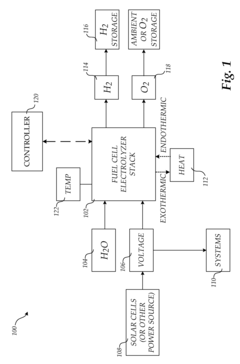
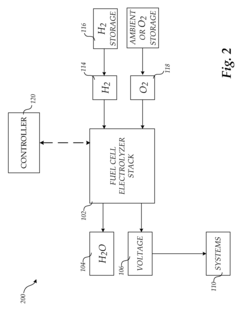
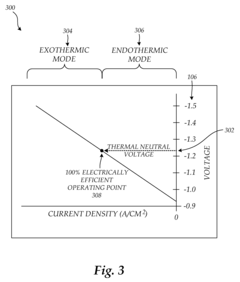
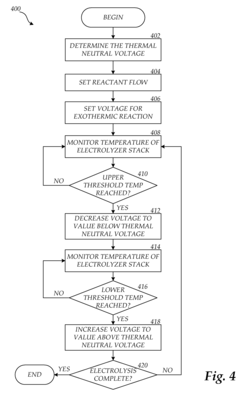
- A thermal control system that monitors the temperature of a high temperature electrolyzer cell and adjusts the voltage above and below the thermal neutral voltage to cycle the cell between endothermic and exothermic modes, eliminating the need for additional cooling systems.
Bipolar plate, electrolytic cell and electrolyzer stack with integrated cooling circuit
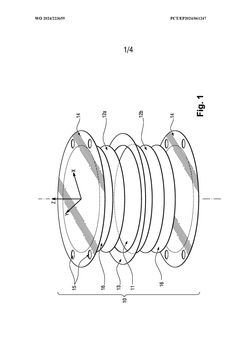
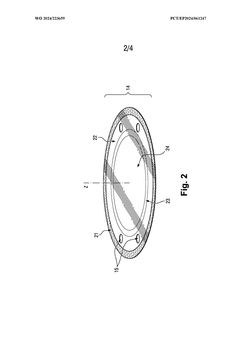
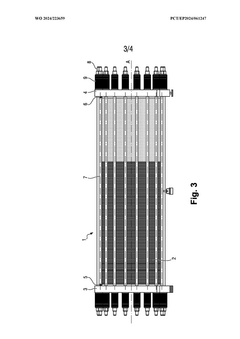
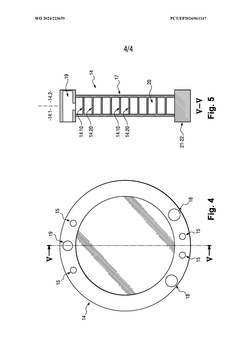
PatentWO2024223659A1
Innovation
- The introduction of bipolar plates with separate conduits for electrolyte supply, electrolysis product evacuation, and a built-in cooling fluid circuit, allowing for independent management and enhancing heat transfer efficiency using a heat transfer liquid with higher specific heat capacity than traditional electrolytes.
Safety Standards for High-Temperature Electrolyzer Operations
High-temperature electrolyzer operations present unique safety challenges that require comprehensive standards and protocols to ensure personnel protection and equipment integrity. The elevated operating temperatures, typically ranging from 700°C to 1000°C for solid oxide electrolyzers, introduce thermal hazards that demand specialized safety frameworks beyond conventional electrochemical system requirements.
Current safety standards for high-temperature electrolyzer operations are primarily derived from adaptations of existing industrial furnace regulations, pressure vessel codes, and hydrogen handling protocols. The International Electrotechnical Commission (IEC) 62282 series provides foundational guidelines, while ASME Boiler and Pressure Vessel Code Section VIII addresses high-temperature containment requirements. However, these standards often lack specific provisions for the unique thermal cycling and rapid temperature gradient conditions inherent in advanced electrolyzer stack operations.
Critical safety considerations include thermal shock prevention protocols, which mandate controlled heating and cooling rates to prevent ceramic component failure in solid oxide systems. Emergency shutdown procedures must account for thermal inertia and the potential for thermal runaway conditions. Personnel protection standards require specialized heat-resistant personal protective equipment and minimum safe distances from operating units, with thermal barrier requirements extending beyond traditional electrical safety zones.
Material compatibility standards play a crucial role, particularly regarding high-temperature sealing materials and thermal expansion management. Safety protocols must address the increased risk of hydrogen embrittlement at elevated temperatures and the potential for accelerated corrosion rates. Ventilation requirements are more stringent due to enhanced hydrogen diffusion rates and the need for effective heat dissipation.
Monitoring and detection systems require enhanced sensitivity and response times, with thermal imaging integration becoming standard practice. Safety interlocks must incorporate multi-parameter monitoring including temperature gradients, pressure differentials, and gas composition analysis. Regular inspection protocols demand specialized non-destructive testing techniques suitable for high-temperature materials and thermal cycling effects.
The development of comprehensive safety standards specific to high-temperature electrolyzer operations remains an evolving field, requiring continuous updates as operational experience and failure mode analysis data become available from commercial deployments.
Current safety standards for high-temperature electrolyzer operations are primarily derived from adaptations of existing industrial furnace regulations, pressure vessel codes, and hydrogen handling protocols. The International Electrotechnical Commission (IEC) 62282 series provides foundational guidelines, while ASME Boiler and Pressure Vessel Code Section VIII addresses high-temperature containment requirements. However, these standards often lack specific provisions for the unique thermal cycling and rapid temperature gradient conditions inherent in advanced electrolyzer stack operations.
Critical safety considerations include thermal shock prevention protocols, which mandate controlled heating and cooling rates to prevent ceramic component failure in solid oxide systems. Emergency shutdown procedures must account for thermal inertia and the potential for thermal runaway conditions. Personnel protection standards require specialized heat-resistant personal protective equipment and minimum safe distances from operating units, with thermal barrier requirements extending beyond traditional electrical safety zones.
Material compatibility standards play a crucial role, particularly regarding high-temperature sealing materials and thermal expansion management. Safety protocols must address the increased risk of hydrogen embrittlement at elevated temperatures and the potential for accelerated corrosion rates. Ventilation requirements are more stringent due to enhanced hydrogen diffusion rates and the need for effective heat dissipation.
Monitoring and detection systems require enhanced sensitivity and response times, with thermal imaging integration becoming standard practice. Safety interlocks must incorporate multi-parameter monitoring including temperature gradients, pressure differentials, and gas composition analysis. Regular inspection protocols demand specialized non-destructive testing techniques suitable for high-temperature materials and thermal cycling effects.
The development of comprehensive safety standards specific to high-temperature electrolyzer operations remains an evolving field, requiring continuous updates as operational experience and failure mode analysis data become available from commercial deployments.
Environmental Impact of Electrolyzer Thermal Efficiency
The environmental implications of electrolyzer thermal efficiency represent a critical intersection between renewable energy technology advancement and sustainable industrial practices. Enhanced heat flow management in electrolyzer stacks directly correlates with reduced environmental footprint through multiple pathways, fundamentally altering the lifecycle environmental assessment of hydrogen production systems.
Improved thermal efficiency in electrolyzer operations significantly reduces overall energy consumption per unit of hydrogen produced. This efficiency gain translates to decreased demand on electrical grid systems, particularly important when considering the current energy mix that still relies partially on fossil fuel sources. Advanced heat flow management techniques can improve system efficiency by 15-25%, resulting in proportional reductions in indirect carbon emissions associated with electricity consumption.
The thermal management optimization extends equipment operational lifespan by minimizing thermal stress and temperature cycling effects on critical components. Extended equipment life cycles reduce manufacturing frequency requirements, thereby decreasing embodied carbon associated with material extraction, processing, and manufacturing of replacement components. This lifecycle extension particularly impacts high-value materials such as platinum group metals used in electrocatalysts.
Waste heat recovery capabilities enabled by sophisticated thermal management systems create opportunities for beneficial heat utilization in industrial processes or district heating applications. This heat integration approach transforms what would otherwise be environmental waste into useful energy, improving overall system energy efficiency and reducing external heating demands in co-located facilities.
Advanced thermal control systems also enable more stable operating conditions, reducing the need for auxiliary cooling systems and associated refrigerant usage. This stability minimizes the environmental impact related to cooling system energy consumption and potential refrigerant leakage, which often involves high global warming potential substances.
The cumulative environmental benefits of enhanced electrolyzer thermal efficiency contribute significantly to the overall sustainability profile of hydrogen as a clean energy carrier, supporting broader decarbonization objectives across industrial sectors while minimizing the environmental burden of hydrogen production infrastructure.
Improved thermal efficiency in electrolyzer operations significantly reduces overall energy consumption per unit of hydrogen produced. This efficiency gain translates to decreased demand on electrical grid systems, particularly important when considering the current energy mix that still relies partially on fossil fuel sources. Advanced heat flow management techniques can improve system efficiency by 15-25%, resulting in proportional reductions in indirect carbon emissions associated with electricity consumption.
The thermal management optimization extends equipment operational lifespan by minimizing thermal stress and temperature cycling effects on critical components. Extended equipment life cycles reduce manufacturing frequency requirements, thereby decreasing embodied carbon associated with material extraction, processing, and manufacturing of replacement components. This lifecycle extension particularly impacts high-value materials such as platinum group metals used in electrocatalysts.
Waste heat recovery capabilities enabled by sophisticated thermal management systems create opportunities for beneficial heat utilization in industrial processes or district heating applications. This heat integration approach transforms what would otherwise be environmental waste into useful energy, improving overall system energy efficiency and reducing external heating demands in co-located facilities.
Advanced thermal control systems also enable more stable operating conditions, reducing the need for auxiliary cooling systems and associated refrigerant usage. This stability minimizes the environmental impact related to cooling system energy consumption and potential refrigerant leakage, which often involves high global warming potential substances.
The cumulative environmental benefits of enhanced electrolyzer thermal efficiency contribute significantly to the overall sustainability profile of hydrogen as a clean energy carrier, supporting broader decarbonization objectives across industrial sectors while minimizing the environmental burden of hydrogen production infrastructure.
Unlock deeper insights with PatSnap Eureka Quick Research — get a full tech report to explore trends and direct your research. Try now!
Generate Your Research Report Instantly with AI Agent
Supercharge your innovation with PatSnap Eureka AI Agent Platform!