
AI Rendering in Ecology: Precision and Data Visualization
APR 7, 20269 MIN READ
Generate Your Research Report Instantly with AI Agent
Patsnap Eureka helps you evaluate technical feasibility & market potential.
AI Rendering in Ecology Background and Objectives
The intersection of artificial intelligence and ecological research has emerged as a transformative paradigm in environmental science, fundamentally reshaping how researchers collect, process, and interpret ecological data. Traditional ecological monitoring methods, while foundational, often struggle with the scale and complexity of modern environmental challenges, creating an urgent need for more sophisticated analytical approaches that can handle vast datasets while maintaining scientific rigor.
AI rendering in ecology represents a convergence of machine learning algorithms, computer vision technologies, and advanced visualization techniques specifically designed to address the unique challenges of ecological data interpretation. This technological fusion has evolved from basic statistical modeling to sophisticated neural networks capable of processing multi-dimensional environmental datasets, satellite imagery, sensor networks, and real-time monitoring systems with unprecedented accuracy and speed.
The historical development of this field traces back to early computational ecology in the 1970s, progressing through geographic information systems integration in the 1990s, and culminating in today's deep learning applications. Each evolutionary phase has addressed specific limitations in data processing capacity, spatial resolution, and temporal analysis capabilities, gradually building toward current AI-powered solutions that can simultaneously handle multiple data streams and generate actionable insights.
Contemporary ecological challenges demand precision that exceeds human analytical capabilities, particularly when dealing with climate change impacts, biodiversity loss, habitat fragmentation, and ecosystem service quantification. The exponential growth in environmental data collection through remote sensing, IoT devices, and citizen science initiatives has created both opportunities and bottlenecks that traditional analytical methods cannot adequately address.
The primary objective of AI rendering in ecological applications centers on achieving unprecedented precision in environmental monitoring and assessment. This involves developing algorithms capable of detecting subtle environmental changes, predicting ecological trends, and identifying critical intervention points before irreversible damage occurs. The technology aims to transform raw environmental data into comprehensive, actionable intelligence that supports evidence-based conservation strategies.
Data visualization objectives focus on creating intuitive, interactive representations of complex ecological relationships that enable researchers, policymakers, and stakeholders to understand environmental dynamics across multiple scales. This includes developing real-time dashboards, predictive modeling interfaces, and immersive visualization environments that facilitate collaborative decision-making and public engagement with environmental issues.
AI rendering in ecology represents a convergence of machine learning algorithms, computer vision technologies, and advanced visualization techniques specifically designed to address the unique challenges of ecological data interpretation. This technological fusion has evolved from basic statistical modeling to sophisticated neural networks capable of processing multi-dimensional environmental datasets, satellite imagery, sensor networks, and real-time monitoring systems with unprecedented accuracy and speed.
The historical development of this field traces back to early computational ecology in the 1970s, progressing through geographic information systems integration in the 1990s, and culminating in today's deep learning applications. Each evolutionary phase has addressed specific limitations in data processing capacity, spatial resolution, and temporal analysis capabilities, gradually building toward current AI-powered solutions that can simultaneously handle multiple data streams and generate actionable insights.
Contemporary ecological challenges demand precision that exceeds human analytical capabilities, particularly when dealing with climate change impacts, biodiversity loss, habitat fragmentation, and ecosystem service quantification. The exponential growth in environmental data collection through remote sensing, IoT devices, and citizen science initiatives has created both opportunities and bottlenecks that traditional analytical methods cannot adequately address.
The primary objective of AI rendering in ecological applications centers on achieving unprecedented precision in environmental monitoring and assessment. This involves developing algorithms capable of detecting subtle environmental changes, predicting ecological trends, and identifying critical intervention points before irreversible damage occurs. The technology aims to transform raw environmental data into comprehensive, actionable intelligence that supports evidence-based conservation strategies.
Data visualization objectives focus on creating intuitive, interactive representations of complex ecological relationships that enable researchers, policymakers, and stakeholders to understand environmental dynamics across multiple scales. This includes developing real-time dashboards, predictive modeling interfaces, and immersive visualization environments that facilitate collaborative decision-making and public engagement with environmental issues.
Market Demand for Ecological Data Visualization Solutions
The ecological data visualization market is experiencing unprecedented growth driven by increasing environmental awareness and regulatory pressures across multiple sectors. Government agencies worldwide are mandating comprehensive environmental monitoring and reporting, creating substantial demand for sophisticated visualization tools that can transform complex ecological datasets into actionable insights. Climate change mitigation efforts, biodiversity conservation initiatives, and sustainable development goals are driving organizations to seek advanced solutions for presenting environmental data to stakeholders, policymakers, and the public.
Research institutions and academic organizations represent a significant market segment, requiring specialized tools for ecological research visualization. These entities need solutions capable of handling multi-dimensional datasets from various sources including satellite imagery, sensor networks, and field observations. The demand extends beyond basic charting capabilities to include spatial-temporal analysis, predictive modeling visualization, and interactive exploration tools that enable researchers to identify patterns and correlations in complex ecological systems.
Corporate sustainability reporting has emerged as a major market driver, with companies across industries seeking to visualize their environmental impact and sustainability metrics. Organizations are increasingly required to demonstrate environmental compliance and communicate their ecological footprint to investors, customers, and regulatory bodies. This has created demand for user-friendly visualization platforms that can integrate diverse environmental data sources and generate compelling visual narratives for corporate reporting.
The conservation and environmental management sector presents substantial opportunities for AI-powered ecological visualization solutions. Wildlife conservation organizations, national parks, and environmental consulting firms require tools for monitoring ecosystem health, tracking species populations, and visualizing habitat changes over time. These applications demand high precision in data representation and the ability to process real-time environmental monitoring data from various sensors and observation systems.
Urban planning and smart city initiatives are driving demand for ecological visualization tools that can integrate environmental data with urban development planning. City planners and environmental consultants need solutions that visualize air quality, green space distribution, water resources, and urban heat islands to support evidence-based decision making for sustainable urban development.
The agricultural sector represents an expanding market segment, with precision agriculture and sustainable farming practices requiring sophisticated visualization of soil health, crop performance, and environmental conditions. Farmers, agricultural consultants, and agtech companies seek solutions that can visualize complex relationships between environmental factors and agricultural outcomes, supporting data-driven farming decisions that optimize both productivity and environmental sustainability.
Research institutions and academic organizations represent a significant market segment, requiring specialized tools for ecological research visualization. These entities need solutions capable of handling multi-dimensional datasets from various sources including satellite imagery, sensor networks, and field observations. The demand extends beyond basic charting capabilities to include spatial-temporal analysis, predictive modeling visualization, and interactive exploration tools that enable researchers to identify patterns and correlations in complex ecological systems.
Corporate sustainability reporting has emerged as a major market driver, with companies across industries seeking to visualize their environmental impact and sustainability metrics. Organizations are increasingly required to demonstrate environmental compliance and communicate their ecological footprint to investors, customers, and regulatory bodies. This has created demand for user-friendly visualization platforms that can integrate diverse environmental data sources and generate compelling visual narratives for corporate reporting.
The conservation and environmental management sector presents substantial opportunities for AI-powered ecological visualization solutions. Wildlife conservation organizations, national parks, and environmental consulting firms require tools for monitoring ecosystem health, tracking species populations, and visualizing habitat changes over time. These applications demand high precision in data representation and the ability to process real-time environmental monitoring data from various sensors and observation systems.
Urban planning and smart city initiatives are driving demand for ecological visualization tools that can integrate environmental data with urban development planning. City planners and environmental consultants need solutions that visualize air quality, green space distribution, water resources, and urban heat islands to support evidence-based decision making for sustainable urban development.
The agricultural sector represents an expanding market segment, with precision agriculture and sustainable farming practices requiring sophisticated visualization of soil health, crop performance, and environmental conditions. Farmers, agricultural consultants, and agtech companies seek solutions that can visualize complex relationships between environmental factors and agricultural outcomes, supporting data-driven farming decisions that optimize both productivity and environmental sustainability.
Current State of AI Rendering in Environmental Sciences
AI rendering technologies in environmental sciences have reached a significant maturity level, with widespread adoption across multiple ecological research domains. Current implementations primarily focus on three core areas: ecosystem modeling, biodiversity visualization, and climate data representation. Machine learning algorithms, particularly deep neural networks and generative adversarial networks, have become the backbone of modern environmental rendering systems, enabling researchers to process vast datasets with unprecedented speed and accuracy.
The integration of remote sensing data with AI rendering has revolutionized how environmental scientists visualize complex ecological phenomena. Satellite imagery, LiDAR data, and drone-captured information are now routinely processed through sophisticated rendering pipelines that can generate high-resolution 3D models of forest canopies, wetland ecosystems, and urban environmental interfaces. These systems demonstrate remarkable capability in handling multi-temporal datasets, allowing researchers to observe environmental changes over extended periods with enhanced clarity and precision.
Real-time rendering capabilities have emerged as a critical component in environmental monitoring systems. Current technologies can process streaming data from sensor networks, weather stations, and IoT devices to generate dynamic visualizations of air quality, water pollution levels, and habitat conditions. The computational efficiency of modern GPU-accelerated rendering engines enables near-instantaneous updates to complex environmental models, supporting time-critical decision-making processes in conservation and environmental management.
However, significant technical challenges persist in the current landscape. Data heterogeneity remains a primary obstacle, as environmental datasets often originate from diverse sources with varying formats, resolutions, and quality standards. Integration of multi-scale data, from molecular-level biological processes to landscape-scale ecosystem dynamics, continues to strain existing rendering frameworks. Additionally, the computational demands of high-fidelity environmental simulations often exceed the capabilities of standard research infrastructure, limiting accessibility for smaller research institutions.
Accuracy validation represents another critical challenge in current AI rendering applications. Unlike traditional computer graphics where visual appeal is paramount, environmental rendering must maintain scientific rigor and quantitative precision. Current validation methodologies rely heavily on ground-truth data comparison, but comprehensive validation datasets are often limited or unavailable for complex ecological systems, creating uncertainty in rendered outputs and their scientific reliability.
The integration of remote sensing data with AI rendering has revolutionized how environmental scientists visualize complex ecological phenomena. Satellite imagery, LiDAR data, and drone-captured information are now routinely processed through sophisticated rendering pipelines that can generate high-resolution 3D models of forest canopies, wetland ecosystems, and urban environmental interfaces. These systems demonstrate remarkable capability in handling multi-temporal datasets, allowing researchers to observe environmental changes over extended periods with enhanced clarity and precision.
Real-time rendering capabilities have emerged as a critical component in environmental monitoring systems. Current technologies can process streaming data from sensor networks, weather stations, and IoT devices to generate dynamic visualizations of air quality, water pollution levels, and habitat conditions. The computational efficiency of modern GPU-accelerated rendering engines enables near-instantaneous updates to complex environmental models, supporting time-critical decision-making processes in conservation and environmental management.
However, significant technical challenges persist in the current landscape. Data heterogeneity remains a primary obstacle, as environmental datasets often originate from diverse sources with varying formats, resolutions, and quality standards. Integration of multi-scale data, from molecular-level biological processes to landscape-scale ecosystem dynamics, continues to strain existing rendering frameworks. Additionally, the computational demands of high-fidelity environmental simulations often exceed the capabilities of standard research infrastructure, limiting accessibility for smaller research institutions.
Accuracy validation represents another critical challenge in current AI rendering applications. Unlike traditional computer graphics where visual appeal is paramount, environmental rendering must maintain scientific rigor and quantitative precision. Current validation methodologies rely heavily on ground-truth data comparison, but comprehensive validation datasets are often limited or unavailable for complex ecological systems, creating uncertainty in rendered outputs and their scientific reliability.
Existing AI Rendering Solutions for Ecological Applications
01 AI-enhanced rendering optimization techniques
Advanced artificial intelligence algorithms are employed to optimize rendering processes, improving computational efficiency and visual output quality. Machine learning models analyze rendering parameters and automatically adjust settings to achieve optimal performance. These techniques utilize neural networks to predict and enhance rendering outcomes, reducing processing time while maintaining or improving image quality. The AI systems learn from previous rendering tasks to continuously improve precision and adapt to different visualization requirements.- AI-based rendering optimization techniques: Advanced artificial intelligence algorithms are employed to optimize rendering processes, improving computational efficiency and visual output quality. Machine learning models analyze rendering parameters and automatically adjust settings to achieve optimal performance. These techniques enable real-time rendering adjustments based on scene complexity and hardware capabilities, resulting in enhanced precision and reduced processing time.
- Neural network-driven data visualization methods: Neural networks are utilized to transform complex datasets into intuitive visual representations. Deep learning architectures process multidimensional data and generate visualizations that highlight patterns and relationships. These methods enable automatic feature extraction and intelligent layout optimization, making large-scale data more accessible and interpretable for users across various applications.
- Real-time rendering precision enhancement systems: Systems designed to improve rendering accuracy during real-time operations through advanced computational techniques. These solutions incorporate adaptive sampling methods and error correction algorithms to maintain high visual fidelity. The technology enables dynamic quality adjustments based on performance metrics, ensuring consistent precision across different rendering scenarios and hardware configurations.
- Interactive data visualization interfaces with AI integration: Interactive visualization platforms that leverage artificial intelligence to enhance user engagement and data exploration capabilities. These interfaces provide intelligent recommendations for visualization types and automatically adjust display parameters based on data characteristics. The systems support multi-modal interaction methods and enable users to discover insights through AI-assisted exploration tools.
- Precision rendering for scientific and medical visualization: Specialized rendering techniques tailored for scientific and medical applications requiring high accuracy and detail preservation. These methods incorporate domain-specific algorithms to handle complex volumetric data and ensure accurate representation of critical features. The technology supports multi-scale visualization and provides tools for quantitative analysis, enabling professionals to make informed decisions based on precise visual information.
02 Real-time data visualization with AI processing
Systems integrate artificial intelligence capabilities to process and visualize large datasets in real-time, enabling dynamic and interactive data representation. The technology employs intelligent algorithms to automatically select appropriate visualization methods based on data characteristics and user requirements. Advanced processing techniques ensure smooth rendering of complex data structures while maintaining accuracy and responsiveness. These solutions support multiple data formats and provide adaptive visualization that responds to changing data streams.Expand Specific Solutions03 Precision enhancement through deep learning models
Deep learning architectures are implemented to enhance rendering precision by learning complex patterns and relationships in visual data. Neural network models are trained to recognize and correct rendering artifacts, improving overall image quality and accuracy. The systems utilize convolutional networks and other deep learning techniques to refine visual outputs and ensure high-fidelity representation. These models can adapt to various rendering scenarios and continuously improve through feedback mechanisms.Expand Specific Solutions04 Automated visualization parameter optimization
Intelligent systems automatically determine and adjust visualization parameters to optimize rendering quality and performance. The technology analyzes input data characteristics and output requirements to select optimal rendering settings without manual intervention. Machine learning algorithms evaluate multiple parameter combinations to identify the most effective configuration for specific visualization tasks. These automated processes reduce human error and ensure consistent, high-quality visual outputs across different applications.Expand Specific Solutions05 Multi-dimensional data rendering with AI assistance
Advanced systems leverage artificial intelligence to handle complex multi-dimensional data rendering, enabling comprehensive visualization of intricate datasets. The technology employs intelligent algorithms to manage dimensional reduction and projection while preserving critical data relationships. AI-driven approaches facilitate the representation of high-dimensional information in accessible visual formats, supporting better data interpretation and analysis. These solutions incorporate adaptive rendering techniques that adjust to data complexity and user interaction patterns.Expand Specific Solutions
Key Players in AI Rendering and Ecological Modeling Industry
The AI rendering in ecology market represents an emerging sector at the intersection of artificial intelligence and environmental data visualization, currently in its early growth stage with significant expansion potential driven by increasing environmental monitoring needs. The market demonstrates moderate technical maturity, with established technology giants like NVIDIA, Microsoft, and Siemens providing foundational AI and visualization infrastructure, while specialized players such as Ecobot and Wildlife Imaging Systems focus on ecological applications. Traditional industry leaders including Schlumberger and BASF Plant Science are integrating AI rendering capabilities into their environmental and agricultural solutions. Chinese tech companies like Tencent and Huawei are advancing AI visualization technologies, while academic institutions such as Wuhan University and Texas A&M University contribute research innovations. The competitive landscape shows a convergence of hardware providers, software developers, and domain-specific solution providers, indicating a maturing ecosystem with diverse technological approaches and growing commercial viability in precision ecology applications.
NVIDIA Corp.
Technical Solution: NVIDIA has developed comprehensive AI rendering solutions for ecological applications through their Omniverse platform and RTX technology. Their approach combines real-time ray tracing with AI-accelerated rendering to create photorealistic environmental simulations. The company leverages CUDA cores and Tensor cores to process complex ecological datasets, enabling researchers to visualize climate models, biodiversity patterns, and ecosystem dynamics with unprecedented detail. Their DLSS (Deep Learning Super Sampling) technology enhances rendering performance while maintaining visual fidelity, making it possible to render large-scale environmental datasets in real-time. NVIDIA's AI rendering pipeline includes neural network-based denoising, procedural generation of natural environments, and machine learning algorithms for predictive ecological modeling visualization.
Strengths: Industry-leading GPU architecture optimized for AI workloads, comprehensive developer ecosystem, real-time rendering capabilities. Weaknesses: High hardware costs, power consumption concerns for field deployment, steep learning curve for specialized ecological applications.
Microsoft Technology Licensing LLC
Technical Solution: Microsoft has developed AI-powered rendering solutions through Azure Cloud Services and Mixed Reality platforms specifically designed for ecological data visualization. Their approach integrates machine learning algorithms with cloud-based rendering engines to process and visualize large-scale environmental datasets. The platform utilizes computer vision and deep learning models to automatically identify and classify ecological features in satellite imagery and field data. Microsoft's HoloLens technology enables immersive 3D visualization of ecological systems, allowing researchers to interact with complex environmental data in augmented reality environments. Their AI rendering pipeline includes automated feature extraction, predictive modeling visualization, and collaborative tools for distributed research teams working on ecological projects.
Strengths: Robust cloud infrastructure, seamless integration with existing Microsoft ecosystem, strong enterprise support and security features. Weaknesses: Dependency on internet connectivity, subscription-based pricing model, limited customization for specialized ecological research needs.
Core Innovations in Precision Ecological Data Rendering
Visualization of ai methods and data exploration
PatentPendingUS20240127038A1
Innovation
- The latent neural recommender (LNR) system combines recommendation and variational latent-space generation methods to learn interactive clustering patterns of datasets and computation pipelines, predicting their interactions and generating visual representations to facilitate exploration, similar to a 'world map' for AI, using a hybrid loss function for robust feature learning and visualization.


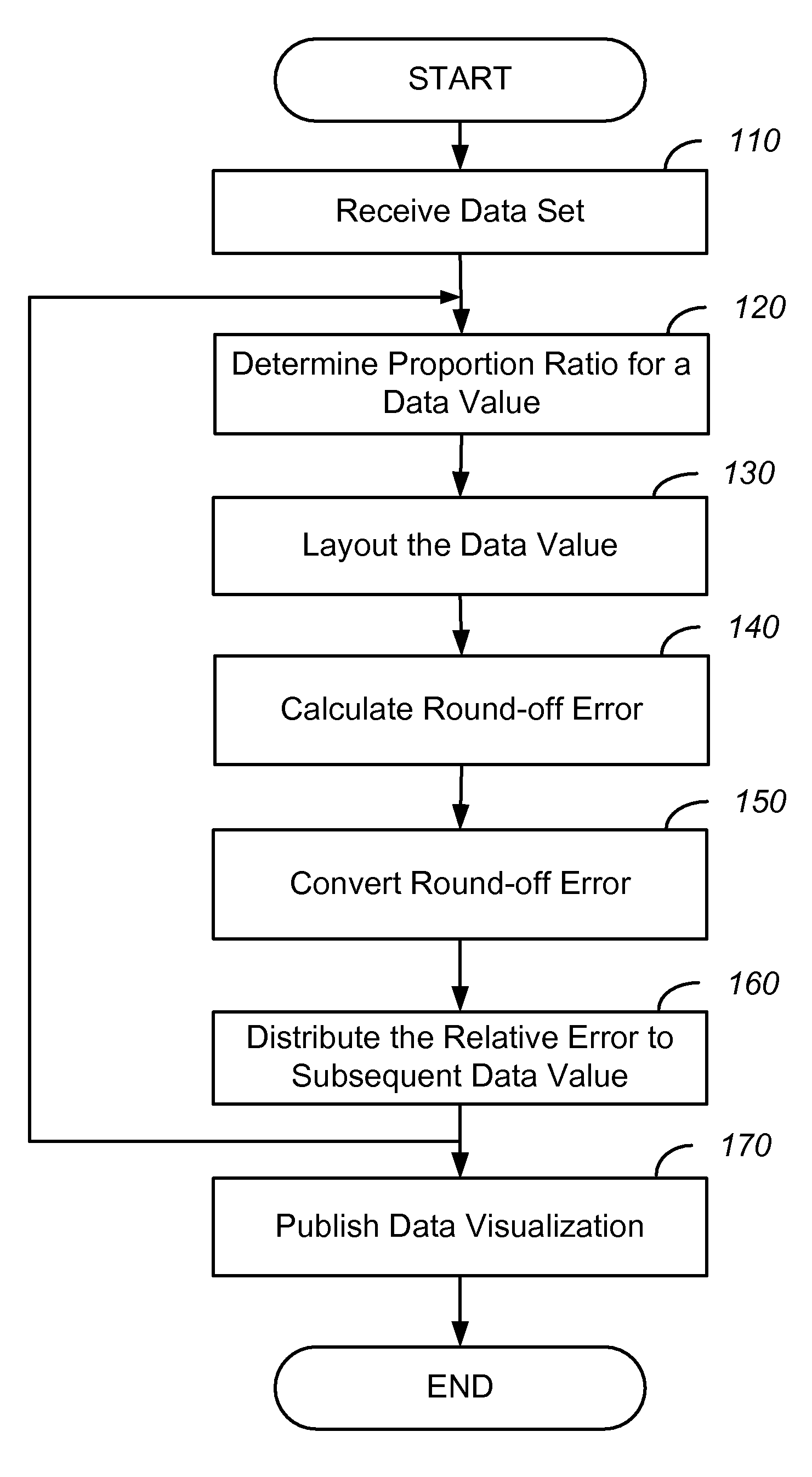
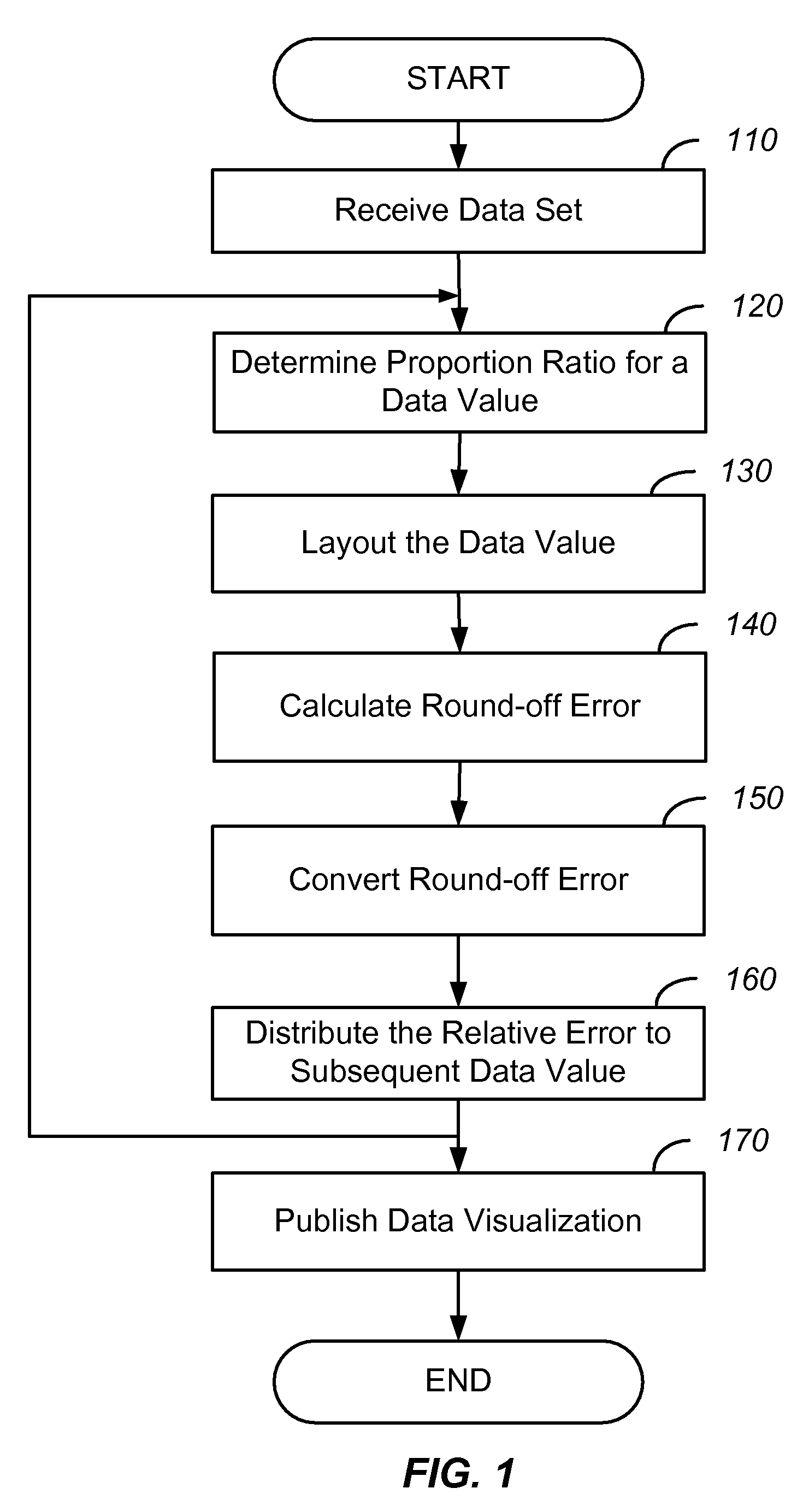
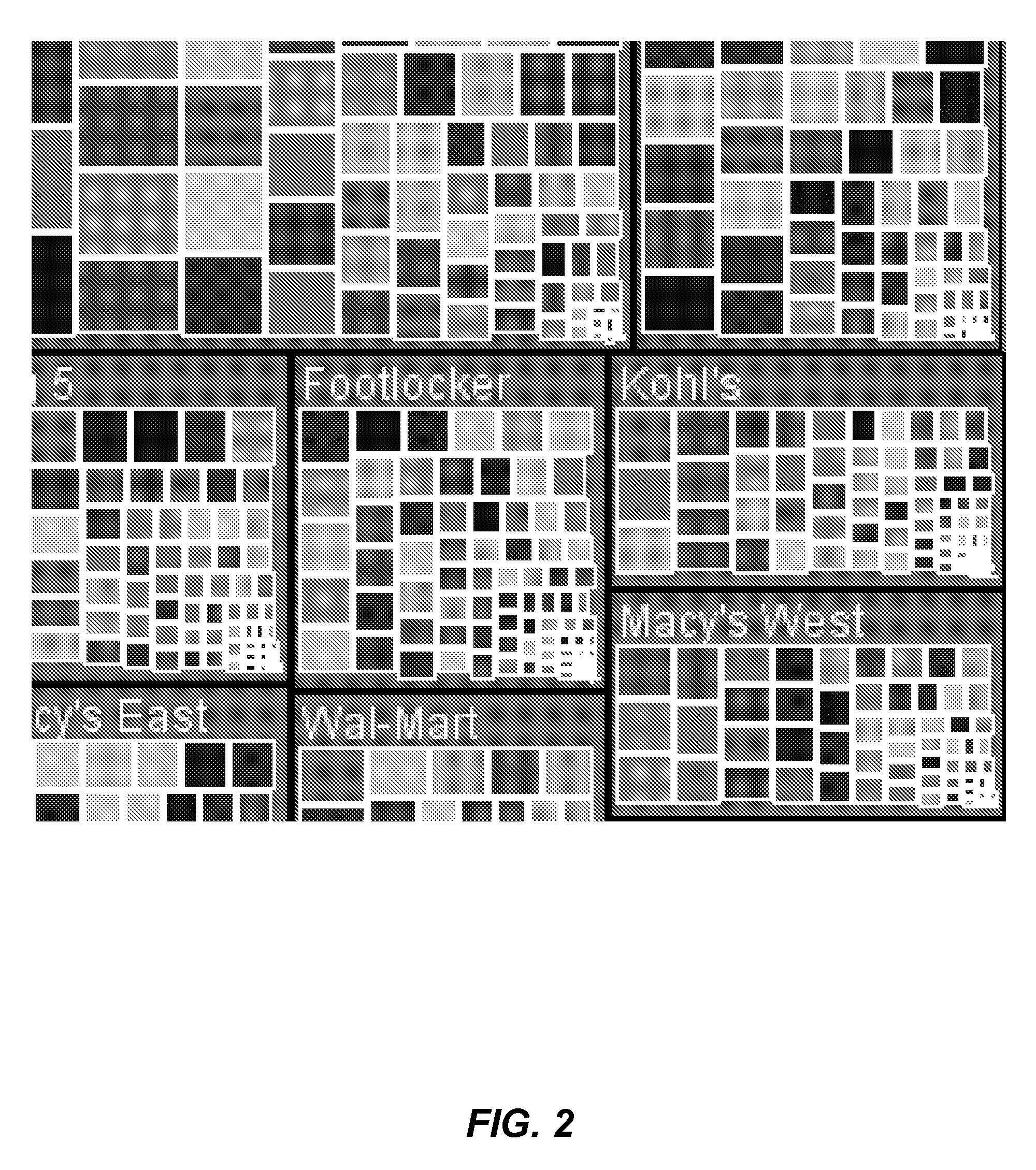
Rendering data visualization with minimal round-off error
PatentActiveUS8139063B2
Innovation
- The method distributes round-off error by calculating the error from one data value and propagating it to subsequent data values, ensuring that the error is minimized and distributed across the entire visualization, thereby preventing its accumulation and improving the accuracy of data representation.

Environmental Data Standards and Compliance Requirements
Environmental data standards and compliance requirements form the regulatory backbone for AI rendering applications in ecological research and visualization. The integration of artificial intelligence in ecological data processing must adhere to established international frameworks such as ISO 14001 environmental management standards, the Global Biodiversity Information Facility (GBIF) data quality requirements, and regional environmental protection regulations. These standards ensure that AI-rendered ecological visualizations maintain scientific integrity while meeting legal obligations for environmental monitoring and reporting.
Data quality standards specifically impact AI rendering precision through mandatory metadata requirements, spatial accuracy thresholds, and temporal resolution specifications. The Environmental Data and Governance Initiative (EDGI) guidelines mandate that ecological datasets used in AI applications must include comprehensive provenance information, uncertainty quantification, and validation protocols. For AI rendering systems, this translates to implementing traceable data lineage tracking, automated quality assessment algorithms, and standardized error propagation methods throughout the visualization pipeline.
Compliance with the FAIR (Findable, Accessible, Interoperable, Reusable) data principles presents both opportunities and challenges for AI rendering in ecology. While these principles enhance data accessibility and cross-platform compatibility, they require sophisticated data management architectures that can handle diverse ecological data formats while maintaining rendering performance. AI systems must incorporate automated metadata generation, standardized taxonomic classifications, and interoperable data exchange protocols to meet FAIR compliance requirements.
Regional regulatory frameworks significantly influence AI rendering implementation strategies. The European Union's Environmental Information Directive mandates public access to environmental data, requiring AI rendering systems to support transparent visualization methods and provide accessible output formats. Similarly, the United States Environmental Protection Agency's data quality standards impose specific validation requirements for computational models used in environmental decision-making, directly affecting AI rendering algorithm design and output verification processes.
Emerging compliance challenges include data sovereignty requirements for indigenous ecological knowledge, cross-border data sharing restrictions, and evolving privacy regulations affecting biodiversity location data. AI rendering systems must incorporate flexible compliance frameworks capable of adapting to jurisdiction-specific requirements while maintaining consistent visualization quality and scientific accuracy across different regulatory environments.
Data quality standards specifically impact AI rendering precision through mandatory metadata requirements, spatial accuracy thresholds, and temporal resolution specifications. The Environmental Data and Governance Initiative (EDGI) guidelines mandate that ecological datasets used in AI applications must include comprehensive provenance information, uncertainty quantification, and validation protocols. For AI rendering systems, this translates to implementing traceable data lineage tracking, automated quality assessment algorithms, and standardized error propagation methods throughout the visualization pipeline.
Compliance with the FAIR (Findable, Accessible, Interoperable, Reusable) data principles presents both opportunities and challenges for AI rendering in ecology. While these principles enhance data accessibility and cross-platform compatibility, they require sophisticated data management architectures that can handle diverse ecological data formats while maintaining rendering performance. AI systems must incorporate automated metadata generation, standardized taxonomic classifications, and interoperable data exchange protocols to meet FAIR compliance requirements.
Regional regulatory frameworks significantly influence AI rendering implementation strategies. The European Union's Environmental Information Directive mandates public access to environmental data, requiring AI rendering systems to support transparent visualization methods and provide accessible output formats. Similarly, the United States Environmental Protection Agency's data quality standards impose specific validation requirements for computational models used in environmental decision-making, directly affecting AI rendering algorithm design and output verification processes.
Emerging compliance challenges include data sovereignty requirements for indigenous ecological knowledge, cross-border data sharing restrictions, and evolving privacy regulations affecting biodiversity location data. AI rendering systems must incorporate flexible compliance frameworks capable of adapting to jurisdiction-specific requirements while maintaining consistent visualization quality and scientific accuracy across different regulatory environments.
Computational Infrastructure for Large-Scale Ecological Rendering
The computational infrastructure for large-scale ecological rendering represents a critical foundation that enables the processing and visualization of massive ecological datasets through AI-powered rendering systems. This infrastructure must accommodate the unique characteristics of ecological data, which often spans multiple temporal and spatial scales while incorporating diverse data types ranging from satellite imagery to sensor networks and biological monitoring systems.
Modern ecological rendering systems require distributed computing architectures capable of handling petabyte-scale datasets. Cloud-based platforms have emerged as the primary solution, offering elastic scalability and specialized hardware configurations including GPU clusters optimized for parallel processing. These systems typically employ hybrid architectures combining high-performance computing nodes for intensive rendering tasks with storage clusters designed for rapid data retrieval and streaming capabilities.
The infrastructure must support real-time data ingestion from multiple sources simultaneously. Edge computing nodes positioned near data collection sites enable preliminary processing and filtering, reducing bandwidth requirements and latency. This distributed approach is particularly crucial for ecological monitoring systems that generate continuous streams of environmental data from remote locations with limited connectivity.
Storage architecture plays a pivotal role in supporting large-scale ecological rendering operations. Modern systems utilize tiered storage solutions combining high-speed solid-state drives for active datasets with cost-effective object storage for archival data. Data compression and deduplication technologies are essential for managing the substantial storage requirements while maintaining rapid access to frequently used datasets.
Network infrastructure requirements extend beyond traditional bandwidth considerations to encompass reliability and redundancy. Ecological rendering systems often operate in environments where network interruptions can result in significant data loss or processing delays. Multi-path networking and intelligent failover mechanisms ensure continuous operation even during infrastructure disruptions.
Specialized hardware accelerators, including graphics processing units and tensor processing units, provide the computational power necessary for complex ecological modeling and visualization tasks. These accelerators enable real-time rendering of dynamic ecological processes and support advanced AI algorithms for pattern recognition and predictive modeling within ecological datasets.
Modern ecological rendering systems require distributed computing architectures capable of handling petabyte-scale datasets. Cloud-based platforms have emerged as the primary solution, offering elastic scalability and specialized hardware configurations including GPU clusters optimized for parallel processing. These systems typically employ hybrid architectures combining high-performance computing nodes for intensive rendering tasks with storage clusters designed for rapid data retrieval and streaming capabilities.
The infrastructure must support real-time data ingestion from multiple sources simultaneously. Edge computing nodes positioned near data collection sites enable preliminary processing and filtering, reducing bandwidth requirements and latency. This distributed approach is particularly crucial for ecological monitoring systems that generate continuous streams of environmental data from remote locations with limited connectivity.
Storage architecture plays a pivotal role in supporting large-scale ecological rendering operations. Modern systems utilize tiered storage solutions combining high-speed solid-state drives for active datasets with cost-effective object storage for archival data. Data compression and deduplication technologies are essential for managing the substantial storage requirements while maintaining rapid access to frequently used datasets.
Network infrastructure requirements extend beyond traditional bandwidth considerations to encompass reliability and redundancy. Ecological rendering systems often operate in environments where network interruptions can result in significant data loss or processing delays. Multi-path networking and intelligent failover mechanisms ensure continuous operation even during infrastructure disruptions.
Specialized hardware accelerators, including graphics processing units and tensor processing units, provide the computational power necessary for complex ecological modeling and visualization tasks. These accelerators enable real-time rendering of dynamic ecological processes and support advanced AI algorithms for pattern recognition and predictive modeling within ecological datasets.
Unlock deeper insights with Patsnap Eureka Quick Research — get a full tech report to explore trends and direct your research. Try now!
Generate Your Research Report Instantly with AI Agent
Supercharge your innovation with Patsnap Eureka AI Agent Platform!