Analyze Sodium Nitrate Crystals for Structural Integrity With Microscopy
MAR 3, 20269 MIN READ
Generate Your Research Report Instantly with AI Agent
Patsnap Eureka helps you evaluate technical feasibility & market potential.
Sodium Nitrate Crystal Analysis Background and Objectives
Sodium nitrate (NaNO₃) crystals have emerged as critical components in various industrial applications, ranging from fertilizer production to pyrotechnics and pharmaceutical manufacturing. The structural integrity of these crystals directly impacts their performance, stability, and safety characteristics across these diverse applications. Understanding the crystalline structure and identifying potential defects or degradation patterns has become increasingly important as industries demand higher quality standards and more reliable materials.
The evolution of sodium nitrate crystal analysis has been closely tied to advances in microscopy technology. Early investigations relied primarily on optical microscopy techniques, which provided limited resolution and structural detail. The development of electron microscopy in the mid-20th century revolutionized crystal analysis capabilities, enabling researchers to examine crystal structures at the nanoscale level. More recently, advanced microscopy techniques such as atomic force microscopy (AFM) and scanning tunneling microscopy (STM) have opened new possibilities for ultra-high-resolution structural analysis.
Current technological trends indicate a growing emphasis on non-destructive analysis methods that can provide comprehensive structural information without compromising sample integrity. The integration of digital imaging systems with traditional microscopy has enhanced data collection and analysis capabilities, allowing for more precise measurements and statistical analysis of crystal properties. Additionally, the development of environmental microscopy techniques enables real-time observation of crystal behavior under various conditions.
The primary objective of sodium nitrate crystal structural integrity analysis is to establish reliable methods for detecting and characterizing structural defects, grain boundaries, and surface irregularities that may compromise crystal performance. This includes identifying stress concentrations, crack propagation patterns, and phase transitions that could lead to mechanical failure or chemical instability. Advanced microscopy techniques aim to provide quantitative measurements of crystal dimensions, surface roughness, and internal structure organization.
Furthermore, the analysis seeks to correlate microscopic structural features with macroscopic properties such as mechanical strength, dissolution rates, and thermal stability. This correlation is essential for predicting crystal behavior in real-world applications and optimizing manufacturing processes to produce crystals with desired characteristics. The ultimate goal is to develop standardized protocols for quality control and performance prediction based on microscopic structural analysis.
The evolution of sodium nitrate crystal analysis has been closely tied to advances in microscopy technology. Early investigations relied primarily on optical microscopy techniques, which provided limited resolution and structural detail. The development of electron microscopy in the mid-20th century revolutionized crystal analysis capabilities, enabling researchers to examine crystal structures at the nanoscale level. More recently, advanced microscopy techniques such as atomic force microscopy (AFM) and scanning tunneling microscopy (STM) have opened new possibilities for ultra-high-resolution structural analysis.
Current technological trends indicate a growing emphasis on non-destructive analysis methods that can provide comprehensive structural information without compromising sample integrity. The integration of digital imaging systems with traditional microscopy has enhanced data collection and analysis capabilities, allowing for more precise measurements and statistical analysis of crystal properties. Additionally, the development of environmental microscopy techniques enables real-time observation of crystal behavior under various conditions.
The primary objective of sodium nitrate crystal structural integrity analysis is to establish reliable methods for detecting and characterizing structural defects, grain boundaries, and surface irregularities that may compromise crystal performance. This includes identifying stress concentrations, crack propagation patterns, and phase transitions that could lead to mechanical failure or chemical instability. Advanced microscopy techniques aim to provide quantitative measurements of crystal dimensions, surface roughness, and internal structure organization.
Furthermore, the analysis seeks to correlate microscopic structural features with macroscopic properties such as mechanical strength, dissolution rates, and thermal stability. This correlation is essential for predicting crystal behavior in real-world applications and optimizing manufacturing processes to produce crystals with desired characteristics. The ultimate goal is to develop standardized protocols for quality control and performance prediction based on microscopic structural analysis.
Market Demand for Crystal Structural Integrity Assessment
The global market for crystal structural integrity assessment has experienced substantial growth driven by increasing demands across multiple industrial sectors. Pharmaceutical manufacturing represents the largest market segment, where sodium nitrate crystals and similar compounds require rigorous structural validation to ensure product efficacy and regulatory compliance. The pharmaceutical industry's emphasis on quality control and batch consistency has created sustained demand for advanced microscopy-based assessment techniques.
Chemical processing industries constitute another significant market driver, particularly in fertilizer production and specialty chemical manufacturing. These sectors rely heavily on crystal structural integrity to maintain product specifications and optimize manufacturing processes. The growing emphasis on process optimization and quality assurance has expanded the addressable market for microscopy-based crystal analysis solutions.
Electronics and semiconductor industries have emerged as rapidly growing market segments for crystal structural integrity assessment. The miniaturization of electronic components and increasing performance requirements have heightened the need for precise crystal structure analysis. Advanced materials research in these sectors demands sophisticated microscopy techniques capable of detecting minute structural defects that could impact device performance.
Research institutions and academic laboratories represent a stable market segment with consistent demand for crystal analysis capabilities. Government funding for materials science research and nanotechnology development has supported steady growth in this sector. The increasing focus on fundamental materials research has created opportunities for specialized microscopy equipment and services.
Market trends indicate growing demand for automated and high-throughput crystal analysis solutions. Industries are seeking faster, more reliable methods to assess crystal structural integrity without compromising accuracy. This trend has driven development of integrated microscopy systems with advanced image processing capabilities and automated defect detection algorithms.
The market shows strong regional variations, with North America and Europe leading in advanced microscopy adoption for crystal analysis. Asia-Pacific regions demonstrate the highest growth rates, driven by expanding pharmaceutical and electronics manufacturing sectors. Emerging markets are increasingly investing in quality control infrastructure, creating new opportunities for crystal structural integrity assessment technologies.
Chemical processing industries constitute another significant market driver, particularly in fertilizer production and specialty chemical manufacturing. These sectors rely heavily on crystal structural integrity to maintain product specifications and optimize manufacturing processes. The growing emphasis on process optimization and quality assurance has expanded the addressable market for microscopy-based crystal analysis solutions.
Electronics and semiconductor industries have emerged as rapidly growing market segments for crystal structural integrity assessment. The miniaturization of electronic components and increasing performance requirements have heightened the need for precise crystal structure analysis. Advanced materials research in these sectors demands sophisticated microscopy techniques capable of detecting minute structural defects that could impact device performance.
Research institutions and academic laboratories represent a stable market segment with consistent demand for crystal analysis capabilities. Government funding for materials science research and nanotechnology development has supported steady growth in this sector. The increasing focus on fundamental materials research has created opportunities for specialized microscopy equipment and services.
Market trends indicate growing demand for automated and high-throughput crystal analysis solutions. Industries are seeking faster, more reliable methods to assess crystal structural integrity without compromising accuracy. This trend has driven development of integrated microscopy systems with advanced image processing capabilities and automated defect detection algorithms.
The market shows strong regional variations, with North America and Europe leading in advanced microscopy adoption for crystal analysis. Asia-Pacific regions demonstrate the highest growth rates, driven by expanding pharmaceutical and electronics manufacturing sectors. Emerging markets are increasingly investing in quality control infrastructure, creating new opportunities for crystal structural integrity assessment technologies.
Current Microscopy Limitations in Nitrate Crystal Analysis
Current microscopy techniques face significant resolution barriers when analyzing sodium nitrate crystal structures at the nanoscale level. Conventional optical microscopy is fundamentally limited by the diffraction limit of visible light, restricting resolution to approximately 200-300 nanometers. This constraint prevents detailed examination of crystal defects, grain boundaries, and microstructural features that are critical for assessing structural integrity in sodium nitrate crystals.
Electron microscopy, while offering superior resolution, introduces substantial challenges specific to nitrate crystal analysis. The high-energy electron beam can cause rapid decomposition of sodium nitrate crystals, leading to structural damage during observation. This beam sensitivity necessitates extremely low-dose imaging conditions, which significantly compromise image quality and contrast. Additionally, the vacuum environment required for electron microscopy can cause dehydration and thermal stress in hygroscopic nitrate crystals, potentially altering their native structure.
Sample preparation represents another critical limitation across all microscopy modalities. Sodium nitrate crystals are highly soluble in water and sensitive to humidity changes, making traditional preparation techniques problematic. Conventional sectioning methods using aqueous solutions are incompatible with nitrate samples, while dry preparation techniques often introduce mechanical stress and surface artifacts that obscure genuine structural features.
Atomic force microscopy encounters specific challenges when applied to nitrate crystal surfaces. The soft nature of many nitrate crystal faces leads to tip-induced deformation during scanning, particularly at higher resolution settings. Surface contamination from atmospheric moisture and the tendency of nitrate crystals to undergo phase transitions under mechanical stress further complicate AFM analysis.
Dynamic imaging limitations pose additional constraints for understanding structural integrity evolution. Most high-resolution microscopy techniques require static conditions and cannot effectively capture real-time structural changes in sodium nitrate crystals under varying environmental conditions such as temperature fluctuations or humidity changes. This limitation prevents comprehensive assessment of how structural integrity responds to operational stresses.
Quantitative analysis capabilities remain underdeveloped for nitrate crystal microscopy. Current imaging techniques lack standardized protocols for measuring critical parameters such as defect density, grain size distribution, and stress concentration factors. The absence of automated image analysis tools specifically designed for nitrate crystal structures limits the reproducibility and statistical significance of structural integrity assessments.
Electron microscopy, while offering superior resolution, introduces substantial challenges specific to nitrate crystal analysis. The high-energy electron beam can cause rapid decomposition of sodium nitrate crystals, leading to structural damage during observation. This beam sensitivity necessitates extremely low-dose imaging conditions, which significantly compromise image quality and contrast. Additionally, the vacuum environment required for electron microscopy can cause dehydration and thermal stress in hygroscopic nitrate crystals, potentially altering their native structure.
Sample preparation represents another critical limitation across all microscopy modalities. Sodium nitrate crystals are highly soluble in water and sensitive to humidity changes, making traditional preparation techniques problematic. Conventional sectioning methods using aqueous solutions are incompatible with nitrate samples, while dry preparation techniques often introduce mechanical stress and surface artifacts that obscure genuine structural features.
Atomic force microscopy encounters specific challenges when applied to nitrate crystal surfaces. The soft nature of many nitrate crystal faces leads to tip-induced deformation during scanning, particularly at higher resolution settings. Surface contamination from atmospheric moisture and the tendency of nitrate crystals to undergo phase transitions under mechanical stress further complicate AFM analysis.
Dynamic imaging limitations pose additional constraints for understanding structural integrity evolution. Most high-resolution microscopy techniques require static conditions and cannot effectively capture real-time structural changes in sodium nitrate crystals under varying environmental conditions such as temperature fluctuations or humidity changes. This limitation prevents comprehensive assessment of how structural integrity responds to operational stresses.
Quantitative analysis capabilities remain underdeveloped for nitrate crystal microscopy. Current imaging techniques lack standardized protocols for measuring critical parameters such as defect density, grain size distribution, and stress concentration factors. The absence of automated image analysis tools specifically designed for nitrate crystal structures limits the reproducibility and statistical significance of structural integrity assessments.
Existing Microscopy Solutions for Nitrate Crystal Evaluation
01 Crystal formation and purification methods for sodium nitrate
Various methods have been developed to improve the crystallization process of sodium nitrate, focusing on controlling crystal growth conditions, temperature, and concentration parameters. These techniques aim to produce crystals with enhanced purity and structural uniformity. The purification processes involve specific cooling rates, seeding techniques, and controlled evaporation to achieve optimal crystal formation with minimal impurities and defects.- Crystal formation and purification methods for sodium nitrate: Various methods have been developed to improve the crystallization process of sodium nitrate, focusing on controlling crystal growth conditions, temperature, and concentration parameters. These techniques aim to produce crystals with enhanced purity and structural uniformity. The purification processes involve specific cooling rates, seeding techniques, and controlled evaporation to achieve optimal crystal formation with minimal impurities and defects.
- Additives and stabilizers for sodium nitrate crystal structure: The incorporation of specific additives and stabilizing agents can significantly enhance the structural integrity of sodium nitrate crystals. These compounds help prevent crystal degradation, reduce hygroscopic behavior, and maintain crystal lattice stability under various environmental conditions. The additives work by modifying the crystal surface properties and internal bonding structures to improve mechanical strength and resistance to environmental factors.
- Storage and handling methods to preserve crystal integrity: Proper storage conditions and handling procedures are critical for maintaining the structural integrity of sodium nitrate crystals. Methods include controlling humidity levels, temperature ranges, and packaging materials to prevent moisture absorption and crystal degradation. Specialized containers and environmental controls help preserve crystal structure during transportation and long-term storage, preventing caking and maintaining free-flowing properties.
- Coating and encapsulation techniques for crystal protection: Surface treatment methods involving coating and encapsulation technologies provide protective barriers for sodium nitrate crystals. These techniques create physical barriers that shield crystals from moisture, atmospheric gases, and mechanical stress. The protective layers help maintain crystal morphology and prevent structural deterioration while allowing the material to retain its functional properties for various applications.
- Quality control and structural analysis methods: Advanced analytical techniques and quality control procedures have been developed to assess and monitor the structural integrity of sodium nitrate crystals. These methods include crystallographic analysis, particle size distribution measurement, and structural defect detection. The evaluation processes help identify crystal imperfections, assess mechanical properties, and ensure consistent product quality through systematic testing protocols.
02 Additives and stabilizers for sodium nitrate crystal structure
The incorporation of specific additives and stabilizing agents can significantly enhance the structural integrity of sodium nitrate crystals. These compounds help prevent crystal degradation, reduce hygroscopic properties, and maintain crystal lattice stability during storage and handling. Various organic and inorganic additives have been identified that can modify crystal habit and improve mechanical strength without compromising the chemical properties of the sodium nitrate.Expand Specific Solutions03 Manufacturing processes for high-quality sodium nitrate crystals
Advanced manufacturing techniques have been developed to produce sodium nitrate crystals with superior structural properties. These processes include specialized equipment designs, controlled atmospheric conditions, and optimized reaction parameters. The methods focus on achieving consistent crystal size distribution, minimizing internal stress, and ensuring uniform crystal morphology through precise control of production variables.Expand Specific Solutions04 Storage and handling methods to preserve crystal integrity
Specific storage conditions and handling procedures have been established to maintain the structural integrity of sodium nitrate crystals over extended periods. These methods address environmental factors such as humidity control, temperature regulation, and protective packaging. The approaches aim to prevent crystal caking, moisture absorption, and physical degradation that can compromise crystal structure and quality during transportation and storage.Expand Specific Solutions05 Testing and quality control methods for crystal structural assessment
Various analytical techniques and quality control procedures have been developed to evaluate the structural integrity of sodium nitrate crystals. These methods include physical characterization, crystallographic analysis, and mechanical testing protocols. The assessment procedures help identify crystal defects, measure structural parameters, and ensure that the crystals meet specified quality standards for different industrial applications.Expand Specific Solutions
Key Players in Microscopy and Crystal Analysis Industry
The sodium nitrate crystal structural integrity analysis field represents an emerging niche within materials characterization, currently in early development stages with limited market penetration. The market remains fragmented across multiple sectors including chemical manufacturing, pharmaceuticals, and research institutions, with modest overall market size but growing demand for advanced microscopy solutions. Technology maturity varies significantly among key players, with established microscopy manufacturers like JEOL Ltd. and Carl Zeiss X-ray Microscopy leading in instrumentation capabilities, while chemical producers such as Deepak Nitrite Ltd. and Tokuyama Corp. provide material expertise. Research institutions including California Institute of Technology, University of Tokyo, and RIKEN Institute drive innovation through fundamental research. Industrial players like Honda Motor Co. and GLOBALFOUNDRIES contribute application-specific requirements, while pharmaceutical companies such as Takeda Pharmaceutical and specialized materials firms like Element Six Technologies represent emerging application domains requiring precise structural analysis capabilities.
California Institute of Technology
Technical Solution: Caltech has developed innovative approaches for sodium nitrate crystal analysis using advanced optical microscopy techniques combined with computational modeling. Their research focuses on polarized light microscopy for stress analysis and birefringence measurements in crystal structures. The institute utilizes atomic force microscopy (AFM) integrated with environmental control systems to study crystal growth mechanisms and surface defects under controlled humidity and temperature conditions. Their multiscale imaging approach combines macro-scale optical inspection with nanoscale AFM analysis to correlate bulk mechanical properties with microscopic structural features and defect distributions.
Strengths: Cutting-edge research capabilities and multiscale analysis approach. Weaknesses: Primarily research-focused rather than commercial applications, limited scalability.
Battelle Memorial Institute
Technical Solution: Battelle has developed specialized microscopy protocols for energetic materials analysis including sodium nitrate crystals, focusing on safety-critical structural integrity assessment. Their approach integrates confocal laser scanning microscopy with Raman spectroscopy for simultaneous structural and chemical analysis. The institute's methodology includes automated image analysis algorithms for quantifying crystal defects, measuring grain boundaries, and assessing mechanical damage. Their environmental SEM capabilities enable real-time observation of crystal behavior under varying temperature and humidity conditions, providing insights into degradation mechanisms and long-term stability of sodium nitrate crystal structures.
Strengths: Specialized expertise in energetic materials and comprehensive safety protocols. Weaknesses: Limited commercial availability of specialized techniques, high operational complexity.
Core Microscopy Innovations for Crystal Defect Detection
Database supported nanocrystal structure identification by lattice-fringe fingerprinting with structure factor extraction
PatentInactiveUS20080275655A1
Innovation
- The method involves determining a complex spectrum from a specimen micrograph, comparing structure factor fingerprint information with candidate structures, and using lattice-fringe and chemical fingerprint information from reference databases to identify the specimen structure, employing phase-contrast transmission electron microscopy and crystallographic image processing to extract reliable fingerprint data.


Method and apparatus for determining material structural integrity
PatentInactiveUS5520052A
Innovation
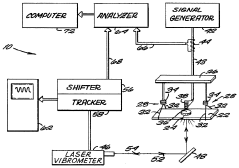
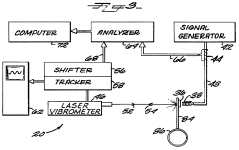
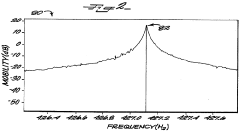
- Combining laser vibrometry with damping analysis techniques to measure the damping loss factor of materials over a known frequency range, allowing for the determination of structural integrity through the use of vibrational force and velocity measurements, and plotting drive point mobility to derive the damping loss factor.
Safety Regulations for Sodium Nitrate Crystal Handling
The handling of sodium nitrate crystals during microscopy analysis requires strict adherence to comprehensive safety protocols due to the compound's oxidizing properties and potential health hazards. Sodium nitrate is classified as an oxidizing agent that can intensify fires and cause combustion of organic materials, necessitating specialized handling procedures in laboratory environments.
Personnel involved in sodium nitrate crystal analysis must wear appropriate personal protective equipment including nitrile or neoprene gloves, safety goggles with side shields, and laboratory coats made from flame-resistant materials. Cotton clothing should be avoided as it can readily ignite when contaminated with oxidizing agents. Respiratory protection may be required when handling large quantities or when dust generation is anticipated.
Storage protocols mandate that sodium nitrate crystals be kept in cool, dry areas away from combustible materials, reducing agents, and organic compounds. Storage containers must be properly labeled with hazard warnings and compatibility information. The storage area should maintain temperatures below 30°C and relative humidity under 60% to prevent crystal degradation and caking.
Laboratory preparation areas must be equipped with appropriate ventilation systems capable of maintaining negative pressure and adequate air exchange rates. Emergency eyewash stations and safety showers should be readily accessible within the immediate work area. Fire suppression systems must be compatible with oxidizing agent fires, typically requiring water-based systems rather than organic foam suppressants.
Sample preparation procedures require the use of stainless steel or glass instruments exclusively, as sodium nitrate can react with certain metals and organic materials. Work surfaces should be constructed from non-reactive materials and cleaned thoroughly before and after each analysis session. Cross-contamination prevention protocols must be implemented when multiple samples are processed sequentially.
Waste disposal regulations specify that sodium nitrate-contaminated materials cannot be disposed of through standard laboratory waste streams. Contaminated gloves, wipes, and other materials must be collected in designated containers and processed through hazardous waste disposal channels. Liquid waste containing dissolved sodium nitrate requires neutralization and professional disposal services.
Emergency response procedures must address potential exposure scenarios including skin contact, eye contact, and inhalation. Immediate flushing with copious amounts of water is required for skin and eye contact, while inhalation exposure necessitates removal to fresh air and potential medical evaluation. Fire emergency protocols should emphasize the use of water-based suppression methods and evacuation procedures specific to oxidizing agent incidents.
Personnel involved in sodium nitrate crystal analysis must wear appropriate personal protective equipment including nitrile or neoprene gloves, safety goggles with side shields, and laboratory coats made from flame-resistant materials. Cotton clothing should be avoided as it can readily ignite when contaminated with oxidizing agents. Respiratory protection may be required when handling large quantities or when dust generation is anticipated.
Storage protocols mandate that sodium nitrate crystals be kept in cool, dry areas away from combustible materials, reducing agents, and organic compounds. Storage containers must be properly labeled with hazard warnings and compatibility information. The storage area should maintain temperatures below 30°C and relative humidity under 60% to prevent crystal degradation and caking.
Laboratory preparation areas must be equipped with appropriate ventilation systems capable of maintaining negative pressure and adequate air exchange rates. Emergency eyewash stations and safety showers should be readily accessible within the immediate work area. Fire suppression systems must be compatible with oxidizing agent fires, typically requiring water-based systems rather than organic foam suppressants.
Sample preparation procedures require the use of stainless steel or glass instruments exclusively, as sodium nitrate can react with certain metals and organic materials. Work surfaces should be constructed from non-reactive materials and cleaned thoroughly before and after each analysis session. Cross-contamination prevention protocols must be implemented when multiple samples are processed sequentially.
Waste disposal regulations specify that sodium nitrate-contaminated materials cannot be disposed of through standard laboratory waste streams. Contaminated gloves, wipes, and other materials must be collected in designated containers and processed through hazardous waste disposal channels. Liquid waste containing dissolved sodium nitrate requires neutralization and professional disposal services.
Emergency response procedures must address potential exposure scenarios including skin contact, eye contact, and inhalation. Immediate flushing with copious amounts of water is required for skin and eye contact, while inhalation exposure necessitates removal to fresh air and potential medical evaluation. Fire emergency protocols should emphasize the use of water-based suppression methods and evacuation procedures specific to oxidizing agent incidents.
Quality Standards for Industrial Crystal Applications
Industrial applications of sodium nitrate crystals demand stringent quality standards to ensure optimal performance across diverse sectors including explosives manufacturing, fertilizer production, and glass processing. The establishment of comprehensive quality benchmarks has become increasingly critical as industries require consistent crystal properties for reliable end-product performance. These standards encompass multiple parameters including crystal purity, structural uniformity, particle size distribution, and mechanical integrity.
Purity specifications typically mandate sodium nitrate content exceeding 99.5% for high-grade industrial applications, with strict limitations on chloride, sulfate, and heavy metal contaminants. Water content must remain below 0.1% to prevent crystal degradation and maintain storage stability. Particle size requirements vary by application, with fertilizer-grade crystals typically ranging from 1-4mm, while explosive-grade materials require more precise size distributions to ensure consistent burn rates and performance characteristics.
Structural integrity standards focus on crystal hardness, fracture resistance, and thermal stability. Industrial-grade sodium nitrate crystals must demonstrate consistent Mohs hardness values between 1.5-2.0, ensuring adequate mechanical strength during handling and processing operations. Fracture patterns should exhibit predictable cleavage planes to facilitate controlled grinding and sizing operations when required.
Microscopic quality assessment protocols have emerged as essential validation tools, incorporating optical microscopy, scanning electron microscopy, and X-ray diffraction techniques. These methods enable detection of internal defects, inclusion particles, and crystal lattice irregularities that could compromise performance. Surface morphology standards specify acceptable levels of surface roughness and the absence of significant pitting or erosion patterns.
Packaging and storage standards complement crystal quality requirements, mandating moisture-proof containers and controlled atmospheric conditions to prevent degradation. Temperature cycling tests ensure crystals maintain structural integrity across expected operational temperature ranges, typically from -20°C to 60°C for most industrial applications.
Quality certification processes require batch testing protocols with statistical sampling methods to ensure consistent product quality. Documentation standards mandate comprehensive certificates of analysis including all relevant physical, chemical, and microscopic characterization data to support traceability and quality assurance throughout the supply chain.
Purity specifications typically mandate sodium nitrate content exceeding 99.5% for high-grade industrial applications, with strict limitations on chloride, sulfate, and heavy metal contaminants. Water content must remain below 0.1% to prevent crystal degradation and maintain storage stability. Particle size requirements vary by application, with fertilizer-grade crystals typically ranging from 1-4mm, while explosive-grade materials require more precise size distributions to ensure consistent burn rates and performance characteristics.
Structural integrity standards focus on crystal hardness, fracture resistance, and thermal stability. Industrial-grade sodium nitrate crystals must demonstrate consistent Mohs hardness values between 1.5-2.0, ensuring adequate mechanical strength during handling and processing operations. Fracture patterns should exhibit predictable cleavage planes to facilitate controlled grinding and sizing operations when required.
Microscopic quality assessment protocols have emerged as essential validation tools, incorporating optical microscopy, scanning electron microscopy, and X-ray diffraction techniques. These methods enable detection of internal defects, inclusion particles, and crystal lattice irregularities that could compromise performance. Surface morphology standards specify acceptable levels of surface roughness and the absence of significant pitting or erosion patterns.
Packaging and storage standards complement crystal quality requirements, mandating moisture-proof containers and controlled atmospheric conditions to prevent degradation. Temperature cycling tests ensure crystals maintain structural integrity across expected operational temperature ranges, typically from -20°C to 60°C for most industrial applications.
Quality certification processes require batch testing protocols with statistical sampling methods to ensure consistent product quality. Documentation standards mandate comprehensive certificates of analysis including all relevant physical, chemical, and microscopic characterization data to support traceability and quality assurance throughout the supply chain.
Unlock deeper insights with Patsnap Eureka Quick Research — get a full tech report to explore trends and direct your research. Try now!
Generate Your Research Report Instantly with AI Agent
Supercharge your innovation with Patsnap Eureka AI Agent Platform!