Analyze Wireless BMS Failures for Energy Efficiency
APR 11, 20269 MIN READ
Generate Your Research Report Instantly with AI Agent
Patsnap Eureka helps you evaluate technical feasibility & market potential.
Wireless BMS Technology Background and Efficiency Goals
Wireless Battery Management Systems represent a paradigmatic shift from traditional wired architectures, emerging as a critical technology for next-generation energy storage applications. The evolution from centralized wired BMS to distributed wireless configurations began in the early 2010s, driven by the increasing complexity of large-scale battery installations and the limitations of conventional cable-based monitoring systems. This technological transition addresses fundamental challenges in battery pack scalability, installation flexibility, and maintenance accessibility.
The foundational technology leverages short-range wireless communication protocols, including Zigbee, Bluetooth Low Energy, and proprietary RF solutions, to establish real-time data transmission between individual cell monitoring units and central management controllers. Early implementations focused primarily on basic voltage and temperature monitoring, but contemporary systems have expanded to encompass comprehensive electrochemical parameter tracking, including impedance spectroscopy and state-of-charge estimation algorithms.
Energy efficiency optimization through wireless BMS technology targets multiple operational dimensions. Primary efficiency goals include minimizing parasitic power consumption of monitoring circuits, reducing communication overhead through intelligent data aggregation protocols, and implementing predictive maintenance algorithms that prevent efficiency-degrading failure modes. Advanced systems integrate machine learning algorithms to optimize charging profiles and load balancing strategies based on real-time cell-level performance data.
The technology roadmap emphasizes achieving sub-milliwatt power consumption for individual wireless nodes while maintaining millisecond-level response times for critical safety functions. Contemporary research focuses on energy harvesting integration, where wireless nodes derive operational power from thermal gradients or electromagnetic fields within the battery environment, potentially achieving energy-neutral monitoring operations.
Failure analysis capabilities represent a cornerstone efficiency enhancement mechanism. Wireless BMS architectures enable granular fault detection through distributed sensing networks that can isolate failing cells or modules without compromising overall system performance. This distributed intelligence approach facilitates predictive failure identification, allowing proactive intervention before efficiency degradation becomes system-critical.
The convergence of wireless communication reliability and energy efficiency optimization continues driving technological advancement, with emerging standards targeting 99.9% communication reliability while maintaining operational power budgets below 100 microwatts per monitoring node. These ambitious targets reflect the technology's maturation toward mainstream deployment in electric vehicles, grid-scale energy storage, and industrial battery applications.
The foundational technology leverages short-range wireless communication protocols, including Zigbee, Bluetooth Low Energy, and proprietary RF solutions, to establish real-time data transmission between individual cell monitoring units and central management controllers. Early implementations focused primarily on basic voltage and temperature monitoring, but contemporary systems have expanded to encompass comprehensive electrochemical parameter tracking, including impedance spectroscopy and state-of-charge estimation algorithms.
Energy efficiency optimization through wireless BMS technology targets multiple operational dimensions. Primary efficiency goals include minimizing parasitic power consumption of monitoring circuits, reducing communication overhead through intelligent data aggregation protocols, and implementing predictive maintenance algorithms that prevent efficiency-degrading failure modes. Advanced systems integrate machine learning algorithms to optimize charging profiles and load balancing strategies based on real-time cell-level performance data.
The technology roadmap emphasizes achieving sub-milliwatt power consumption for individual wireless nodes while maintaining millisecond-level response times for critical safety functions. Contemporary research focuses on energy harvesting integration, where wireless nodes derive operational power from thermal gradients or electromagnetic fields within the battery environment, potentially achieving energy-neutral monitoring operations.
Failure analysis capabilities represent a cornerstone efficiency enhancement mechanism. Wireless BMS architectures enable granular fault detection through distributed sensing networks that can isolate failing cells or modules without compromising overall system performance. This distributed intelligence approach facilitates predictive failure identification, allowing proactive intervention before efficiency degradation becomes system-critical.
The convergence of wireless communication reliability and energy efficiency optimization continues driving technological advancement, with emerging standards targeting 99.9% communication reliability while maintaining operational power budgets below 100 microwatts per monitoring node. These ambitious targets reflect the technology's maturation toward mainstream deployment in electric vehicles, grid-scale energy storage, and industrial battery applications.
Market Demand for Reliable Wireless Battery Management
The global energy storage market is experiencing unprecedented growth driven by the accelerating transition to renewable energy sources and the increasing adoption of electric vehicles. Battery management systems represent a critical component in this ecosystem, with wireless BMS solutions emerging as a transformative technology that addresses traditional wired system limitations including complex installation, maintenance challenges, and scalability constraints.
Electric vehicle manufacturers are increasingly demanding wireless BMS solutions to reduce vehicle weight, simplify assembly processes, and enhance manufacturing efficiency. The automotive sector's push toward higher energy density batteries and faster charging capabilities has intensified the need for more sophisticated monitoring systems that can operate reliably in harsh electromagnetic environments while maintaining precise cell-level monitoring accuracy.
Grid-scale energy storage installations present another significant market driver, where wireless BMS technology offers substantial advantages in reducing installation costs and improving system modularity. Utility companies and independent power producers are seeking solutions that can monitor thousands of battery cells across large installations without the complexity and potential failure points associated with extensive wiring harnesses.
The consumer electronics sector continues to drive demand for miniaturized wireless BMS solutions, particularly in portable devices, wearables, and IoT applications where space constraints and design flexibility are paramount. These applications require ultra-low power consumption wireless monitoring capabilities that can extend overall device battery life while providing essential safety monitoring functions.
Industrial applications including backup power systems, telecommunications infrastructure, and material handling equipment are increasingly adopting wireless BMS technology to reduce maintenance overhead and improve system reliability. These sectors particularly value the enhanced diagnostic capabilities and remote monitoring features that wireless systems enable.
Market demand is further amplified by regulatory requirements for battery safety monitoring and the growing emphasis on circular economy principles that require detailed battery health tracking throughout the product lifecycle. The ability to predict battery failures and optimize charging strategies directly impacts operational efficiency and total cost of ownership across all application sectors.
Emerging markets in developing countries present additional growth opportunities where wireless BMS solutions can enable rapid deployment of energy storage systems without requiring extensive electrical infrastructure modifications, supporting both grid modernization and off-grid renewable energy initiatives.
Electric vehicle manufacturers are increasingly demanding wireless BMS solutions to reduce vehicle weight, simplify assembly processes, and enhance manufacturing efficiency. The automotive sector's push toward higher energy density batteries and faster charging capabilities has intensified the need for more sophisticated monitoring systems that can operate reliably in harsh electromagnetic environments while maintaining precise cell-level monitoring accuracy.
Grid-scale energy storage installations present another significant market driver, where wireless BMS technology offers substantial advantages in reducing installation costs and improving system modularity. Utility companies and independent power producers are seeking solutions that can monitor thousands of battery cells across large installations without the complexity and potential failure points associated with extensive wiring harnesses.
The consumer electronics sector continues to drive demand for miniaturized wireless BMS solutions, particularly in portable devices, wearables, and IoT applications where space constraints and design flexibility are paramount. These applications require ultra-low power consumption wireless monitoring capabilities that can extend overall device battery life while providing essential safety monitoring functions.
Industrial applications including backup power systems, telecommunications infrastructure, and material handling equipment are increasingly adopting wireless BMS technology to reduce maintenance overhead and improve system reliability. These sectors particularly value the enhanced diagnostic capabilities and remote monitoring features that wireless systems enable.
Market demand is further amplified by regulatory requirements for battery safety monitoring and the growing emphasis on circular economy principles that require detailed battery health tracking throughout the product lifecycle. The ability to predict battery failures and optimize charging strategies directly impacts operational efficiency and total cost of ownership across all application sectors.
Emerging markets in developing countries present additional growth opportunities where wireless BMS solutions can enable rapid deployment of energy storage systems without requiring extensive electrical infrastructure modifications, supporting both grid modernization and off-grid renewable energy initiatives.
Current Wireless BMS Failure Modes and Technical Challenges
Wireless Battery Management Systems face several critical failure modes that significantly impact energy efficiency and system reliability. Communication link failures represent the most prevalent issue, occurring when wireless nodes lose connectivity due to signal interference, distance limitations, or environmental factors. These failures can lead to incomplete battery monitoring, resulting in suboptimal charging strategies and reduced overall system efficiency.
Power management failures constitute another major challenge, particularly in wireless sensor nodes that rely on limited battery power or energy harvesting mechanisms. When these nodes experience power depletion or harvesting inefficiencies, critical battery parameters may go unmonitored, leading to dangerous operating conditions and accelerated battery degradation that directly impacts energy efficiency.
Data synchronization failures emerge when wireless communication delays or packet losses create temporal misalignment between battery cell measurements. This asynchronization can result in incorrect state-of-charge calculations and imbalanced charging decisions, ultimately reducing the effective capacity and lifespan of battery systems.
Environmental interference presents significant technical challenges, as wireless BMS operates in electromagnetically noisy environments with metal enclosures, high-current switching, and radio frequency interference from other systems. These conditions can cause signal attenuation, multipath fading, and communication dropouts that compromise system reliability.
Latency and real-time performance constraints pose critical challenges for wireless BMS implementations. Unlike wired systems with deterministic communication timing, wireless networks introduce variable delays that can affect time-critical safety functions such as emergency disconnection and thermal runaway detection.
Security vulnerabilities represent emerging challenges as wireless BMS systems become susceptible to cyber attacks, unauthorized access, and data manipulation. These security concerns require robust encryption and authentication mechanisms that can introduce additional computational overhead and potential points of failure.
Scalability limitations become apparent in large battery installations where numerous wireless nodes must coexist without interference while maintaining reliable communication. Network congestion and collision avoidance protocols can introduce additional latency and reduce system responsiveness, impacting overall energy management effectiveness.
Power management failures constitute another major challenge, particularly in wireless sensor nodes that rely on limited battery power or energy harvesting mechanisms. When these nodes experience power depletion or harvesting inefficiencies, critical battery parameters may go unmonitored, leading to dangerous operating conditions and accelerated battery degradation that directly impacts energy efficiency.
Data synchronization failures emerge when wireless communication delays or packet losses create temporal misalignment between battery cell measurements. This asynchronization can result in incorrect state-of-charge calculations and imbalanced charging decisions, ultimately reducing the effective capacity and lifespan of battery systems.
Environmental interference presents significant technical challenges, as wireless BMS operates in electromagnetically noisy environments with metal enclosures, high-current switching, and radio frequency interference from other systems. These conditions can cause signal attenuation, multipath fading, and communication dropouts that compromise system reliability.
Latency and real-time performance constraints pose critical challenges for wireless BMS implementations. Unlike wired systems with deterministic communication timing, wireless networks introduce variable delays that can affect time-critical safety functions such as emergency disconnection and thermal runaway detection.
Security vulnerabilities represent emerging challenges as wireless BMS systems become susceptible to cyber attacks, unauthorized access, and data manipulation. These security concerns require robust encryption and authentication mechanisms that can introduce additional computational overhead and potential points of failure.
Scalability limitations become apparent in large battery installations where numerous wireless nodes must coexist without interference while maintaining reliable communication. Network congestion and collision avoidance protocols can introduce additional latency and reduce system responsiveness, impacting overall energy management effectiveness.
Existing Wireless BMS Failure Analysis and Mitigation Solutions
01 Wireless communication protocol optimization for BMS
Implementing optimized wireless communication protocols in battery management systems can significantly reduce energy consumption. This includes using low-power wireless technologies, adaptive communication scheduling, and efficient data transmission methods to minimize power usage during battery monitoring and management operations. The optimization focuses on reducing communication overhead while maintaining reliable data exchange between battery cells and the central management unit.- Wireless communication protocol optimization for BMS: Implementing optimized wireless communication protocols in battery management systems can significantly reduce energy consumption. This includes using low-power communication standards, adaptive transmission power control, and efficient data packet structures. The optimization focuses on minimizing the energy required for data transmission while maintaining reliable communication between battery cells and the central management unit.
- Sleep mode and power management strategies: Advanced power management techniques involve implementing intelligent sleep modes and wake-up schedules for wireless BMS components. These strategies include dynamic power state transitions, selective monitoring of critical parameters, and scheduled communication intervals to reduce overall power consumption. The system can enter low-power states during periods of inactivity while maintaining essential monitoring functions.
- Energy harvesting integration in wireless BMS: Integration of energy harvesting technologies enables wireless BMS to supplement or replace traditional power sources. This includes utilizing thermal gradients, vibration energy, or electromagnetic fields generated during battery operation. The harvested energy can power wireless communication modules and sensing circuits, reducing dependency on battery power and extending system operational life.
- Efficient data processing and transmission algorithms: Implementation of intelligent data processing algorithms reduces the amount of data that needs to be transmitted wirelessly. This includes edge computing capabilities, data compression techniques, predictive analytics, and event-driven transmission strategies. By processing data locally and transmitting only essential information, the energy consumption of wireless communication is minimized while maintaining system performance.
- Hardware optimization for low-power wireless BMS: Design and implementation of specialized low-power hardware components for wireless BMS applications. This includes energy-efficient microcontrollers, optimized antenna designs, low-power sensors, and integrated circuit designs that minimize standby and active power consumption. Hardware-level optimization ensures that all components of the wireless BMS operate at maximum energy efficiency.
02 Sleep mode and power management strategies
Advanced power management techniques involve implementing intelligent sleep modes and wake-up mechanisms in wireless BMS components. These strategies include dynamic power state transitions, selective module activation, and energy-aware scheduling algorithms that reduce overall system power consumption during idle periods while ensuring timely response to critical battery events. The approach balances energy efficiency with system responsiveness.Expand Specific Solutions03 Energy harvesting integration in wireless BMS
Incorporating energy harvesting technologies into wireless battery management systems enables self-powered operation or extended battery life. This includes utilizing ambient energy sources such as thermal gradients, vibration, or electromagnetic fields to supplement or replace traditional power sources. The integration reduces dependency on external power supplies and enhances overall system energy efficiency.Expand Specific Solutions04 Efficient data processing and transmission algorithms
Implementing optimized algorithms for data processing and transmission in wireless BMS reduces computational load and communication energy requirements. This includes data compression techniques, intelligent sampling strategies, edge computing capabilities, and predictive analytics that minimize the amount of data transmitted while maintaining monitoring accuracy. These methods significantly decrease power consumption in both processing and wireless transmission operations.Expand Specific Solutions05 Hardware design optimization for low-power wireless BMS
Specialized hardware architectures designed for wireless BMS focus on minimizing power consumption through component selection, circuit design, and system integration. This includes using low-power microcontrollers, efficient voltage regulators, optimized antenna designs, and integrated circuit solutions that reduce overall system power requirements. The hardware optimization works in conjunction with software strategies to achieve maximum energy efficiency in wireless battery management applications.Expand Specific Solutions
Key Players in Wireless BMS and Battery Technology Industry
The wireless BMS failure analysis market for energy efficiency is in a growth stage, driven by increasing electric vehicle adoption and energy storage system deployment. The market demonstrates significant scale potential as battery management becomes critical for safety and performance optimization. Technology maturity varies considerably across key players, with established companies like Texas Instruments, Qualcomm, and Intel providing advanced semiconductor solutions and wireless communication technologies. Battery specialists including LG Energy Solution, Samsung SDI, and Sunwoda Electronic offer mature BMS integration capabilities, while companies like Sensata Technologies contribute specialized sensor technologies. Chinese manufacturers such as CATL-affiliated firms and emerging players like Xiamen Hithium represent rapidly advancing capabilities in battery management systems. The competitive landscape shows a mix of semiconductor giants, battery manufacturers, and specialized technology providers, indicating a maturing ecosystem with diverse technological approaches to wireless BMS reliability and energy efficiency optimization.
QUALCOMM, Inc.
Technical Solution: Qualcomm has developed wireless BMS solutions leveraging their advanced 5G and IoT connectivity platforms, enabling high-speed data transmission and real-time failure analysis for large-scale energy storage systems. Their approach utilizes edge computing capabilities integrated with wireless communication modules to process battery health data locally, reducing latency and improving response times for critical failure detection. The system incorporates machine learning models that analyze historical performance data to predict energy efficiency degradation patterns and optimize battery management strategies. Qualcomm's wireless BMS supports massive IoT deployments with enhanced security features and reliable connectivity even in challenging RF environments.
Strengths: Leading wireless communication technology and robust connectivity solutions. Weaknesses: Higher complexity and cost, primarily focused on communication rather than battery-specific expertise.
LG Energy Solution Ltd.
Technical Solution: LG Energy Solution has developed an advanced wireless BMS architecture that utilizes low-power Bluetooth 5.0 communication protocols for real-time battery monitoring and failure analysis. Their system incorporates machine learning algorithms to predict cell degradation patterns and identify potential failure modes before they impact energy efficiency. The wireless BMS features distributed sensor networks that continuously monitor temperature, voltage, and current parameters across battery packs, enabling proactive maintenance scheduling and optimized charging strategies to maximize energy retention and system longevity.
Strengths: Industry-leading battery expertise and comprehensive wireless monitoring capabilities. Weaknesses: Higher implementation costs and potential wireless interference issues in industrial environments.
Core Technologies for Wireless BMS Reliability Enhancement
Resolving a failure in communication within a wireless battery management system of a vehicle
PatentWO2021162985A1
Innovation
- A wireless network controller (WNC) determines a background radio frequency (RF) power level to assess the likelihood of a communication failure being temporary, allowing it to select and perform corrective actions such as switching to a redundant channel or adjusting RF power to restore communication before a fault-tolerant time interval expires.


Fault tolerant wireless battery area network for a smart battery management system
PatentInactiveUS20150028816A1
Innovation
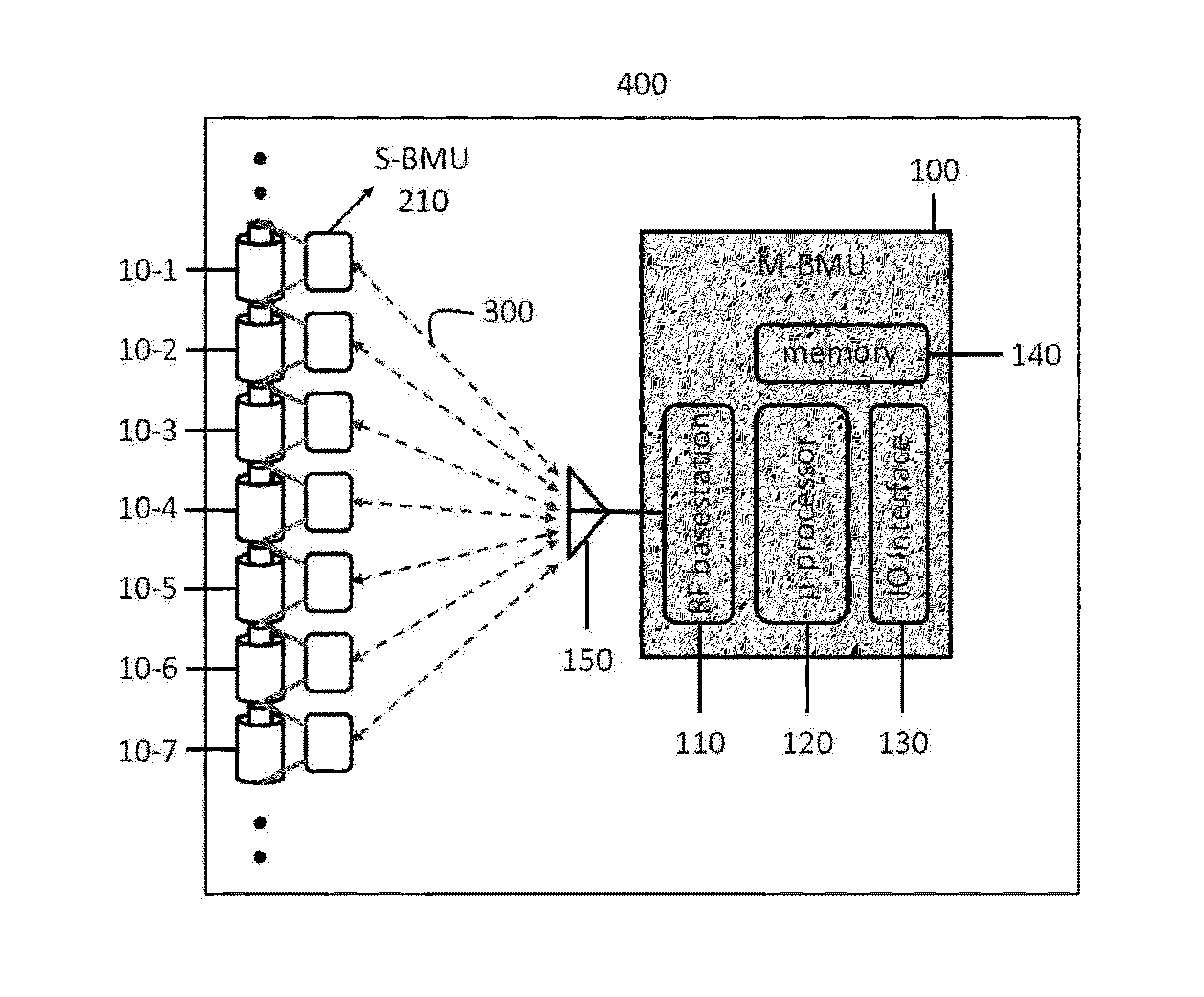
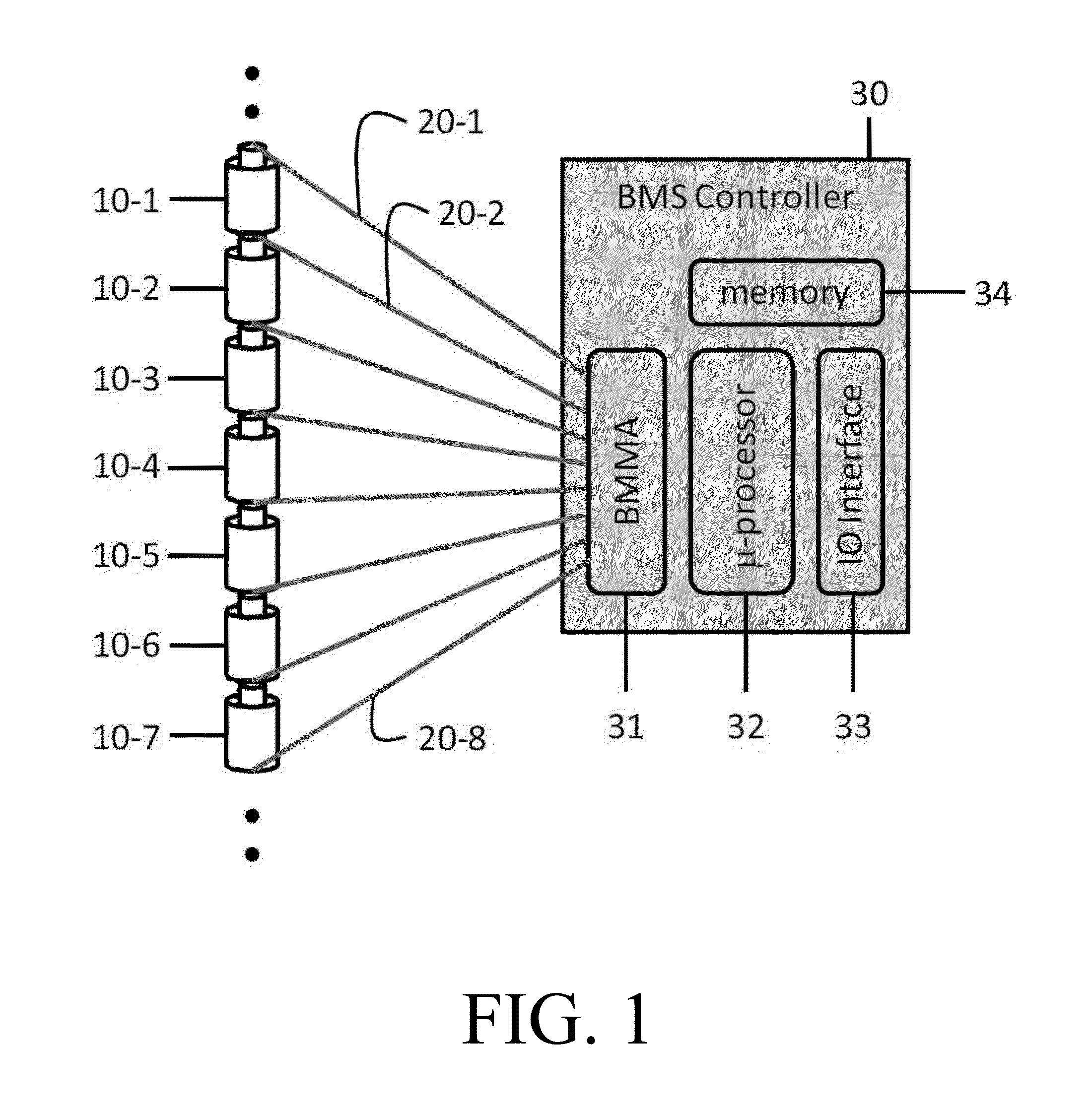
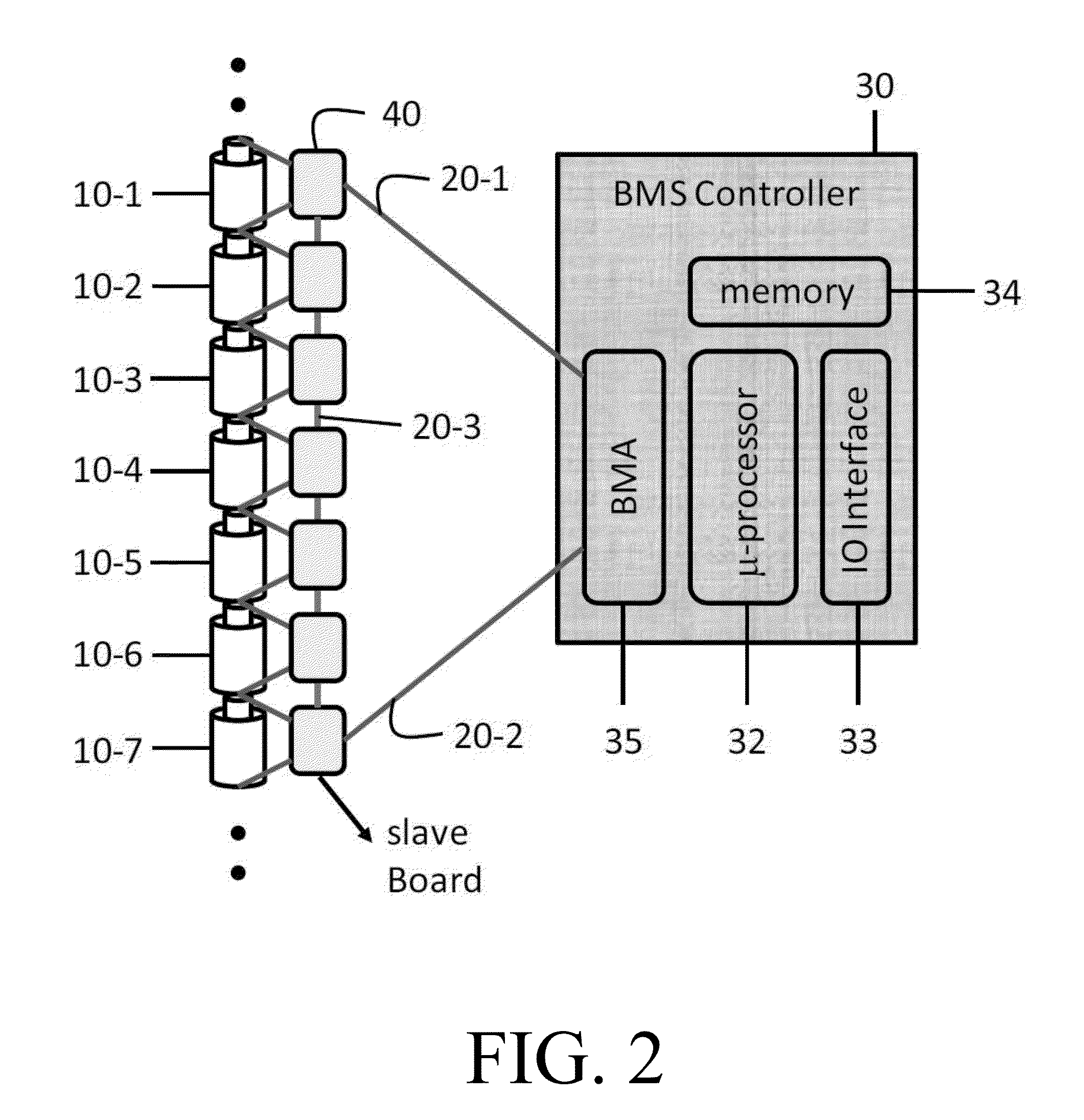
- A self-organizing wireless battery area network (WiBaAN) that uses beamforming technology to establish optimal communication parameters and configure wireless communication conditions, enabling scalable and cost-effective monitoring and control of individual battery cells within a battery pack, regardless of material or shape, and incorporating wireless power up/down features for efficient energy management.

Safety Standards and Regulations for Wireless Battery Systems
The regulatory landscape for wireless battery management systems encompasses multiple international and regional standards that address electromagnetic compatibility, functional safety, and cybersecurity requirements. IEC 61508 serves as the foundational functional safety standard, establishing Safety Integrity Levels (SIL) that wireless BMS implementations must achieve. The automotive sector specifically adheres to ISO 26262, which defines Automotive Safety Integrity Levels (ASIL) ranging from A to D, with wireless communication components typically requiring ASIL B or C certification depending on their criticality in battery monitoring functions.
Electromagnetic compatibility regulations under IEC 61000 series standards govern wireless transmission characteristics, ensuring that BMS communication does not interfere with other electronic systems while maintaining immunity to external electromagnetic disturbances. The 2.4 GHz ISM band commonly used by wireless BMS must comply with regional regulations such as FCC Part 15 in North America, ETSI EN 300 328 in Europe, and similar standards in Asia-Pacific regions.
Cybersecurity frameworks have become increasingly stringent following the rise of connected battery systems. ISO/SAE 21434 establishes cybersecurity engineering requirements for automotive applications, mandating secure communication protocols, authentication mechanisms, and intrusion detection capabilities. The standard requires manufacturers to implement end-to-end encryption, secure key management, and regular security updates throughout the product lifecycle.
Battery-specific safety standards including IEC 62619 for industrial applications and UN 38.3 for transportation safety establish performance criteria that wireless BMS must support. These standards mandate continuous monitoring capabilities, emergency shutdown procedures, and fail-safe communication protocols that wireless systems must maintain even under adverse conditions.
Regional variations in regulatory requirements create additional complexity for global deployment. European Union's Radio Equipment Directive (RED) 2014/53/EU imposes specific requirements for wireless devices, while China's CCC certification and Japan's Radio Law establish distinct compliance pathways. The emerging trend toward harmonized international standards through organizations like the Global Technical Regulation (GTR) aims to streamline compliance processes while maintaining rigorous safety requirements for wireless battery management applications.
Electromagnetic compatibility regulations under IEC 61000 series standards govern wireless transmission characteristics, ensuring that BMS communication does not interfere with other electronic systems while maintaining immunity to external electromagnetic disturbances. The 2.4 GHz ISM band commonly used by wireless BMS must comply with regional regulations such as FCC Part 15 in North America, ETSI EN 300 328 in Europe, and similar standards in Asia-Pacific regions.
Cybersecurity frameworks have become increasingly stringent following the rise of connected battery systems. ISO/SAE 21434 establishes cybersecurity engineering requirements for automotive applications, mandating secure communication protocols, authentication mechanisms, and intrusion detection capabilities. The standard requires manufacturers to implement end-to-end encryption, secure key management, and regular security updates throughout the product lifecycle.
Battery-specific safety standards including IEC 62619 for industrial applications and UN 38.3 for transportation safety establish performance criteria that wireless BMS must support. These standards mandate continuous monitoring capabilities, emergency shutdown procedures, and fail-safe communication protocols that wireless systems must maintain even under adverse conditions.
Regional variations in regulatory requirements create additional complexity for global deployment. European Union's Radio Equipment Directive (RED) 2014/53/EU imposes specific requirements for wireless devices, while China's CCC certification and Japan's Radio Law establish distinct compliance pathways. The emerging trend toward harmonized international standards through organizations like the Global Technical Regulation (GTR) aims to streamline compliance processes while maintaining rigorous safety requirements for wireless battery management applications.
Environmental Impact Assessment of Wireless BMS Failures
Wireless Battery Management System failures present significant environmental implications that extend beyond immediate operational concerns, creating cascading effects throughout energy storage ecosystems. These failures contribute to increased carbon footprints through multiple pathways, including premature battery degradation, inefficient energy utilization, and accelerated replacement cycles that demand additional manufacturing resources.
The most direct environmental impact stems from reduced battery lifespan caused by wireless BMS malfunctions. When communication failures prevent proper cell balancing or temperature monitoring, batteries experience accelerated degradation patterns that can reduce operational life by 20-40%. This shortened lifespan translates to increased demand for raw materials including lithium, cobalt, and rare earth elements, intensifying mining activities and associated environmental disruption.
Energy waste represents another critical environmental consequence of wireless BMS failures. Malfunctioning systems often fail to optimize charging and discharging cycles, leading to energy losses that can reach 15-25% in severe cases. In large-scale applications such as grid storage or electric vehicle fleets, these inefficiencies translate to substantial increases in electricity consumption and corresponding greenhouse gas emissions from power generation.
The manufacturing impact of premature battery replacement creates significant environmental burdens. Battery production is energy-intensive, typically requiring 50-100 kWh of energy per kWh of battery capacity produced. Wireless BMS failures that necessitate early replacement effectively multiply this environmental cost, while simultaneously increasing electronic waste streams containing hazardous materials.
Wireless BMS failures also compromise the environmental benefits of renewable energy integration. When storage systems fail to operate efficiently due to communication breakdowns, renewable energy curtailment increases, forcing greater reliance on fossil fuel backup generation. This undermines the fundamental environmental value proposition of energy storage systems.
The geographic concentration of battery manufacturing in regions with carbon-intensive electricity grids amplifies these environmental impacts. Premature replacement cycles driven by wireless BMS failures effectively increase the carbon intensity of battery systems throughout their lifecycle, potentially offsetting environmental gains from clean energy applications.
The most direct environmental impact stems from reduced battery lifespan caused by wireless BMS malfunctions. When communication failures prevent proper cell balancing or temperature monitoring, batteries experience accelerated degradation patterns that can reduce operational life by 20-40%. This shortened lifespan translates to increased demand for raw materials including lithium, cobalt, and rare earth elements, intensifying mining activities and associated environmental disruption.
Energy waste represents another critical environmental consequence of wireless BMS failures. Malfunctioning systems often fail to optimize charging and discharging cycles, leading to energy losses that can reach 15-25% in severe cases. In large-scale applications such as grid storage or electric vehicle fleets, these inefficiencies translate to substantial increases in electricity consumption and corresponding greenhouse gas emissions from power generation.
The manufacturing impact of premature battery replacement creates significant environmental burdens. Battery production is energy-intensive, typically requiring 50-100 kWh of energy per kWh of battery capacity produced. Wireless BMS failures that necessitate early replacement effectively multiply this environmental cost, while simultaneously increasing electronic waste streams containing hazardous materials.
Wireless BMS failures also compromise the environmental benefits of renewable energy integration. When storage systems fail to operate efficiently due to communication breakdowns, renewable energy curtailment increases, forcing greater reliance on fossil fuel backup generation. This undermines the fundamental environmental value proposition of energy storage systems.
The geographic concentration of battery manufacturing in regions with carbon-intensive electricity grids amplifies these environmental impacts. Premature replacement cycles driven by wireless BMS failures effectively increase the carbon intensity of battery systems throughout their lifecycle, potentially offsetting environmental gains from clean energy applications.
Unlock deeper insights with Patsnap Eureka Quick Research — get a full tech report to explore trends and direct your research. Try now!
Generate Your Research Report Instantly with AI Agent
Supercharge your innovation with Patsnap Eureka AI Agent Platform!