

Analyzing Seal Material Performance in Progressive Cavity Pumps
APR 2, 20269 MIN READ
Generate Your Research Report Instantly with AI Agent
Patsnap Eureka helps you evaluate technical feasibility & market potential.
Seal Material Technology Background and Objectives
Progressive cavity pumps (PCPs) have emerged as critical components in various industrial applications, particularly in oil and gas extraction, wastewater treatment, and chemical processing industries. These positive displacement pumps operate through the interaction between a helical rotor and a double-helix stator, creating sealed cavities that transport fluids from inlet to outlet. The effectiveness of this pumping mechanism fundamentally depends on maintaining optimal sealing between the rotor and stator surfaces.
The seal material technology in PCPs has evolved significantly since the pump's invention in the 1930s by René Moineau. Early implementations relied on basic rubber compounds that provided adequate sealing for simple applications but suffered from rapid degradation under harsh operating conditions. The increasing complexity of modern industrial processes, coupled with demands for higher efficiency and longer operational life, has driven continuous innovation in seal material formulations and manufacturing techniques.
Contemporary seal materials must withstand extreme temperatures ranging from -40°C to 200°C, aggressive chemical environments including hydrogen sulfide and carbon dioxide, abrasive particles, and high differential pressures exceeding 10 MPa. These demanding conditions necessitate advanced elastomeric compounds that maintain flexibility while resisting chemical attack, thermal degradation, and mechanical wear. The development trajectory has progressed from natural rubber to synthetic alternatives including nitrile rubber, fluoroelastomers, and specialized thermoplastic elastomers.
The primary objective of current seal material research focuses on extending operational lifespan while maintaining consistent pumping efficiency across diverse application environments. This involves optimizing material properties such as hardness, tensile strength, compression set resistance, and chemical compatibility. Advanced material characterization techniques enable precise evaluation of how different formulations respond to specific operational stresses.
Performance optimization also encompasses understanding the complex tribological interactions between rotor and stator materials. The seal interface experiences continuous sliding contact under varying loads, requiring materials that provide adequate sealing force without excessive friction that could lead to premature wear or energy losses. Modern research emphasizes developing materials with self-lubricating properties and enhanced fatigue resistance.
Future development objectives include creating smart materials capable of adapting to changing operational conditions, incorporating nanotechnology for improved mechanical properties, and developing predictive models for seal performance degradation. These advancements aim to enable condition-based maintenance strategies and optimize pump selection for specific applications, ultimately reducing operational costs and improving system reliability across industrial sectors.
The seal material technology in PCPs has evolved significantly since the pump's invention in the 1930s by René Moineau. Early implementations relied on basic rubber compounds that provided adequate sealing for simple applications but suffered from rapid degradation under harsh operating conditions. The increasing complexity of modern industrial processes, coupled with demands for higher efficiency and longer operational life, has driven continuous innovation in seal material formulations and manufacturing techniques.
Contemporary seal materials must withstand extreme temperatures ranging from -40°C to 200°C, aggressive chemical environments including hydrogen sulfide and carbon dioxide, abrasive particles, and high differential pressures exceeding 10 MPa. These demanding conditions necessitate advanced elastomeric compounds that maintain flexibility while resisting chemical attack, thermal degradation, and mechanical wear. The development trajectory has progressed from natural rubber to synthetic alternatives including nitrile rubber, fluoroelastomers, and specialized thermoplastic elastomers.
The primary objective of current seal material research focuses on extending operational lifespan while maintaining consistent pumping efficiency across diverse application environments. This involves optimizing material properties such as hardness, tensile strength, compression set resistance, and chemical compatibility. Advanced material characterization techniques enable precise evaluation of how different formulations respond to specific operational stresses.
Performance optimization also encompasses understanding the complex tribological interactions between rotor and stator materials. The seal interface experiences continuous sliding contact under varying loads, requiring materials that provide adequate sealing force without excessive friction that could lead to premature wear or energy losses. Modern research emphasizes developing materials with self-lubricating properties and enhanced fatigue resistance.
Future development objectives include creating smart materials capable of adapting to changing operational conditions, incorporating nanotechnology for improved mechanical properties, and developing predictive models for seal performance degradation. These advancements aim to enable condition-based maintenance strategies and optimize pump selection for specific applications, ultimately reducing operational costs and improving system reliability across industrial sectors.
Market Demand for Enhanced PCP Seal Performance
The global progressive cavity pump market has experienced substantial growth driven by increasing demand across multiple industrial sectors. Oil and gas extraction operations represent the largest market segment, where PCPs are extensively utilized for artificial lift applications in challenging well conditions. The harsh operating environments, including high temperatures, corrosive fluids, and abrasive particles, place extreme demands on seal materials, creating a critical need for enhanced performance solutions.
Industrial wastewater treatment facilities constitute another significant market driver for advanced PCP seal technologies. Municipal and industrial treatment plants require reliable pumping systems capable of handling viscous sludges and chemically aggressive media. Seal failures in these applications result in costly downtime, environmental compliance issues, and increased maintenance expenses, driving operators to seek superior sealing solutions.
The food and beverage industry presents unique market opportunities for enhanced PCP seal performance. Stringent hygiene requirements and the need for FDA-approved materials create demand for specialized sealing solutions that maintain product integrity while delivering extended service life. Dairy processing, beverage production, and food manufacturing operations increasingly rely on PCPs for gentle product handling, necessitating seals that meet both performance and regulatory standards.
Mining and mineral processing operations generate substantial demand for robust PCP seal materials. These applications involve pumping highly abrasive slurries containing suspended solids that rapidly degrade conventional sealing materials. The economic impact of unplanned maintenance shutdowns in mining operations creates strong market pull for seal technologies that can withstand extreme wear conditions while maintaining operational reliability.
Chemical processing industries require PCP seals capable of withstanding aggressive chemical environments while maintaining dimensional stability and sealing effectiveness. The growing emphasis on process efficiency and safety regulations drives demand for advanced seal materials that can operate reliably in corrosive media without compromising system integrity.
Market demand is further intensified by the increasing focus on total cost of ownership optimization. End users are shifting from initial purchase price considerations to lifecycle cost analysis, recognizing that premium seal materials with extended service life deliver superior economic value through reduced maintenance frequency and improved operational reliability.
Industrial wastewater treatment facilities constitute another significant market driver for advanced PCP seal technologies. Municipal and industrial treatment plants require reliable pumping systems capable of handling viscous sludges and chemically aggressive media. Seal failures in these applications result in costly downtime, environmental compliance issues, and increased maintenance expenses, driving operators to seek superior sealing solutions.
The food and beverage industry presents unique market opportunities for enhanced PCP seal performance. Stringent hygiene requirements and the need for FDA-approved materials create demand for specialized sealing solutions that maintain product integrity while delivering extended service life. Dairy processing, beverage production, and food manufacturing operations increasingly rely on PCPs for gentle product handling, necessitating seals that meet both performance and regulatory standards.
Mining and mineral processing operations generate substantial demand for robust PCP seal materials. These applications involve pumping highly abrasive slurries containing suspended solids that rapidly degrade conventional sealing materials. The economic impact of unplanned maintenance shutdowns in mining operations creates strong market pull for seal technologies that can withstand extreme wear conditions while maintaining operational reliability.
Chemical processing industries require PCP seals capable of withstanding aggressive chemical environments while maintaining dimensional stability and sealing effectiveness. The growing emphasis on process efficiency and safety regulations drives demand for advanced seal materials that can operate reliably in corrosive media without compromising system integrity.
Market demand is further intensified by the increasing focus on total cost of ownership optimization. End users are shifting from initial purchase price considerations to lifecycle cost analysis, recognizing that premium seal materials with extended service life deliver superior economic value through reduced maintenance frequency and improved operational reliability.
Current Seal Material Challenges in PCP Applications
Progressive cavity pumps face significant seal material challenges that directly impact operational efficiency and maintenance costs. The primary challenge stems from the harsh operating environments where these pumps typically function, including high-temperature applications, corrosive fluid handling, and abrasive particle exposure. These conditions create a complex matrix of failure modes that conventional sealing materials struggle to address simultaneously.
Temperature-related degradation represents one of the most critical challenges in PCP seal applications. Many conventional elastomeric materials experience accelerated aging, hardening, and loss of elasticity when exposed to temperatures exceeding 150°C. This thermal stress leads to seal shrinkage, cracking, and ultimately catastrophic failure. The challenge is compounded in geothermal applications and heavy oil production where temperatures can reach 200°C or higher, pushing current material limits beyond their design parameters.
Chemical compatibility issues pose another significant challenge, particularly in oil and gas applications where seals encounter hydrogen sulfide, carbon dioxide, and various hydrocarbon compounds. These chemicals can cause swelling, softening, or chemical degradation of seal materials, leading to dimensional instability and loss of sealing effectiveness. The challenge intensifies when multiple aggressive chemicals are present simultaneously, creating synergistic effects that accelerate material degradation.
Abrasive wear presents a persistent challenge in applications involving sand production, drilling fluids, or slurry pumping. Solid particles create mechanical wear on seal surfaces, leading to groove formation, surface roughening, and progressive loss of sealing contact. Current materials often lack the optimal balance between hardness for wear resistance and flexibility for maintaining sealing contact under dynamic conditions.
Pressure cycling and extrusion resistance constitute additional challenges, particularly in high-pressure applications where seals must maintain integrity under fluctuating pressure conditions. Many existing materials exhibit inadequate resistance to extrusion through clearance gaps, leading to nibbling damage and progressive seal deterioration. This challenge is exacerbated by the reciprocating motion inherent in PCP operations.
The economic challenge of balancing performance with cost-effectiveness remains paramount. While advanced materials may offer superior performance characteristics, their high costs often make them economically unfeasible for many applications, driving the need for innovative solutions that optimize the performance-to-cost ratio while maintaining acceptable service life expectations.
Temperature-related degradation represents one of the most critical challenges in PCP seal applications. Many conventional elastomeric materials experience accelerated aging, hardening, and loss of elasticity when exposed to temperatures exceeding 150°C. This thermal stress leads to seal shrinkage, cracking, and ultimately catastrophic failure. The challenge is compounded in geothermal applications and heavy oil production where temperatures can reach 200°C or higher, pushing current material limits beyond their design parameters.
Chemical compatibility issues pose another significant challenge, particularly in oil and gas applications where seals encounter hydrogen sulfide, carbon dioxide, and various hydrocarbon compounds. These chemicals can cause swelling, softening, or chemical degradation of seal materials, leading to dimensional instability and loss of sealing effectiveness. The challenge intensifies when multiple aggressive chemicals are present simultaneously, creating synergistic effects that accelerate material degradation.
Abrasive wear presents a persistent challenge in applications involving sand production, drilling fluids, or slurry pumping. Solid particles create mechanical wear on seal surfaces, leading to groove formation, surface roughening, and progressive loss of sealing contact. Current materials often lack the optimal balance between hardness for wear resistance and flexibility for maintaining sealing contact under dynamic conditions.
Pressure cycling and extrusion resistance constitute additional challenges, particularly in high-pressure applications where seals must maintain integrity under fluctuating pressure conditions. Many existing materials exhibit inadequate resistance to extrusion through clearance gaps, leading to nibbling damage and progressive seal deterioration. This challenge is exacerbated by the reciprocating motion inherent in PCP operations.
The economic challenge of balancing performance with cost-effectiveness remains paramount. While advanced materials may offer superior performance characteristics, their high costs often make them economically unfeasible for many applications, driving the need for innovative solutions that optimize the performance-to-cost ratio while maintaining acceptable service life expectations.
Existing Seal Material Solutions for PCP Performance
01 Fluoropolymer-based seal materials
Fluoropolymer materials such as PTFE and FKM are widely used in seal applications due to their excellent chemical resistance, high temperature stability, and low friction properties. These materials can withstand harsh environments and maintain sealing performance over extended periods. The incorporation of fillers and additives can further enhance their mechanical strength and wear resistance.- Fluoropolymer-based seal materials: Fluoropolymer materials are widely used in seal applications due to their excellent chemical resistance, thermal stability, and low friction properties. These materials can withstand extreme temperatures and aggressive chemical environments, making them suitable for demanding sealing applications. The fluoropolymer-based seals demonstrate superior performance in terms of durability and longevity compared to conventional seal materials.
- Composite seal materials with enhanced mechanical properties: Composite seal materials incorporating reinforcing fillers or fibers exhibit improved mechanical strength, wear resistance, and dimensional stability. These materials combine the benefits of different components to achieve optimal sealing performance under high pressure and dynamic conditions. The composite structure enhances the overall durability and extends the service life of seals in various industrial applications.
- Elastomeric seal materials with improved resilience: Elastomeric materials designed for seal applications provide excellent elastic recovery, flexibility, and compression set resistance. These materials maintain their sealing capability over extended periods and under varying temperature conditions. The formulation of elastomeric seals focuses on achieving optimal balance between hardness, elasticity, and chemical compatibility for specific applications.
- High-temperature resistant seal materials: Specialized seal materials are developed to maintain their sealing performance at elevated temperatures. These materials exhibit minimal thermal degradation, retain their mechanical properties, and resist oxidation under high-temperature conditions. The formulations incorporate heat-stable polymers and additives that ensure reliable sealing in applications such as engines, turbines, and industrial processing equipment.
- Testing and evaluation methods for seal performance: Comprehensive testing methodologies are employed to assess seal material performance including leak rate measurement, compression testing, thermal cycling, and chemical compatibility evaluation. These standardized test procedures help determine the suitability of seal materials for specific applications and ensure quality control. Performance metrics such as sealing efficiency, durability under cyclic loading, and resistance to environmental factors are systematically evaluated.
02 Elastomeric seal compositions
Elastomeric materials including rubber compounds and thermoplastic elastomers provide flexibility and resilience for sealing applications. These compositions can be formulated with various cross-linking agents, plasticizers, and reinforcing fillers to optimize properties such as compression set resistance, tensile strength, and elongation. The material selection depends on operating temperature ranges and chemical exposure requirements.Expand Specific Solutions03 Composite and multi-layer seal structures
Multi-layer seal designs combine different materials to achieve superior performance characteristics. These structures may include metal cores with polymer coatings, fabric-reinforced elastomers, or layered composites that provide enhanced strength, flexibility, and sealing capability. The composite approach allows optimization of individual layer properties to meet specific application requirements.Expand Specific Solutions04 Surface treatment and coating technologies
Surface modification techniques including plasma treatment, chemical coating, and physical vapor deposition can significantly improve seal material performance. These treatments enhance surface properties such as hardness, lubricity, and adhesion while maintaining bulk material characteristics. Surface engineering enables better compatibility with mating surfaces and extends seal service life.Expand Specific Solutions05 Testing and evaluation methods for seal performance
Comprehensive testing protocols assess seal material properties including compression set, leak rate, wear resistance, and chemical compatibility. Standardized test methods evaluate performance under simulated operating conditions such as temperature cycling, pressure variations, and fluid exposure. Advanced characterization techniques provide data for material selection and design optimization.Expand Specific Solutions
Key Players in PCP Seal Material Industry
The progressive cavity pump seal material performance sector represents a mature yet evolving market within the broader industrial pumping industry. The competitive landscape spans multiple development stages, from established multinational corporations to specialized regional players. Market leaders like NOV Inc., Weatherford Technology Holdings, and Halliburton Energy Services dominate the oil and gas applications, while companies such as KSB SE, Saint-Gobain Performance Plastics, and ElringKlinger AG bring advanced sealing technologies from automotive and industrial sectors. The technology maturity varies significantly across applications, with companies like NOK Corp. and Cixi Cahill Sealing Material representing specialized seal manufacturers, while research institutions like Shanghai Research Institute of Chemical Industry Testing drive innovation in material science. The market demonstrates strong growth potential driven by increasing demand for efficient pumping solutions across energy, chemical processing, and industrial applications, with technological advancement focused on enhanced durability, chemical resistance, and operational efficiency of seal materials.
KSB SE & Co. KGaA
Technical Solution: KSB has developed comprehensive sealing solutions for progressive cavity pumps across various industrial applications including water treatment, chemical processing, and mining. Their seal materials utilize advanced elastomer compounds with optimized hardness profiles and enhanced wear resistance characteristics. The company's technology incorporates specialized surface treatments and geometric designs to minimize leakage and extend service intervals. Their materials feature improved resistance to abrasive media and chemical attack, with documented performance improvements in municipal wastewater and industrial process applications where seal reliability is critical for operational efficiency.
Strengths: Broad industrial application experience, strong pump engineering expertise and global service network. Weaknesses: Less specialized focus on extreme environment applications compared to oil and gas service companies.
Weatherford Technology Holdings LLC
Technical Solution: Weatherford has developed proprietary elastomer formulations for progressive cavity pump stators and rotors, focusing on oil and gas applications. Their seal materials incorporate advanced nitrile and fluoroelastomer compounds designed to resist hydrogen sulfide, carbon dioxide, and high-temperature crude oil environments. The company's technology includes specialized surface treatments and geometric optimization to reduce friction coefficients and minimize wear rates. Their sealing solutions feature enhanced tear strength and fatigue resistance, with documented performance improvements of up to 40% in field applications compared to standard materials.
Strengths: Deep expertise in downhole applications and harsh environment sealing, extensive field testing data. Weaknesses: Primary focus on oil and gas sector may limit applicability to other progressive cavity pump applications.
Core Innovations in Advanced PCP Seal Materials
Progressing Cavity Pump/Motor
PatentActiveUS20120156078A1
Innovation
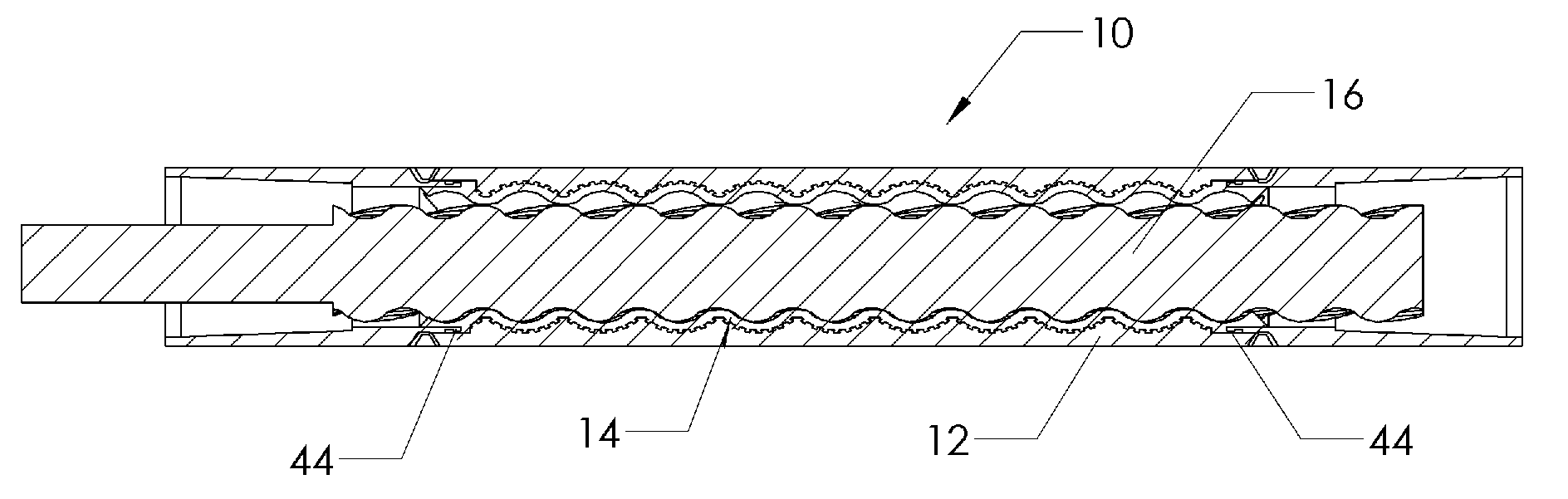
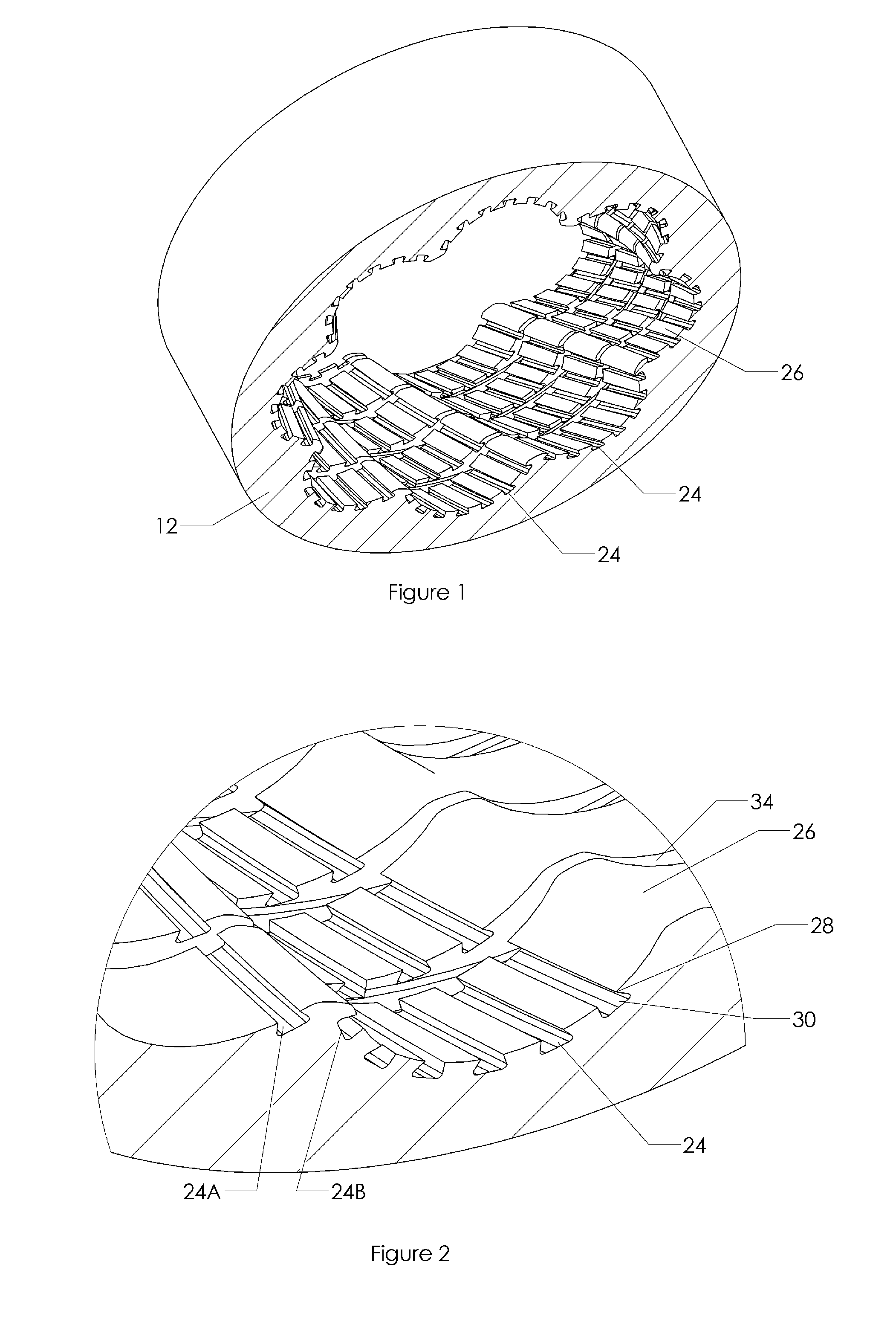
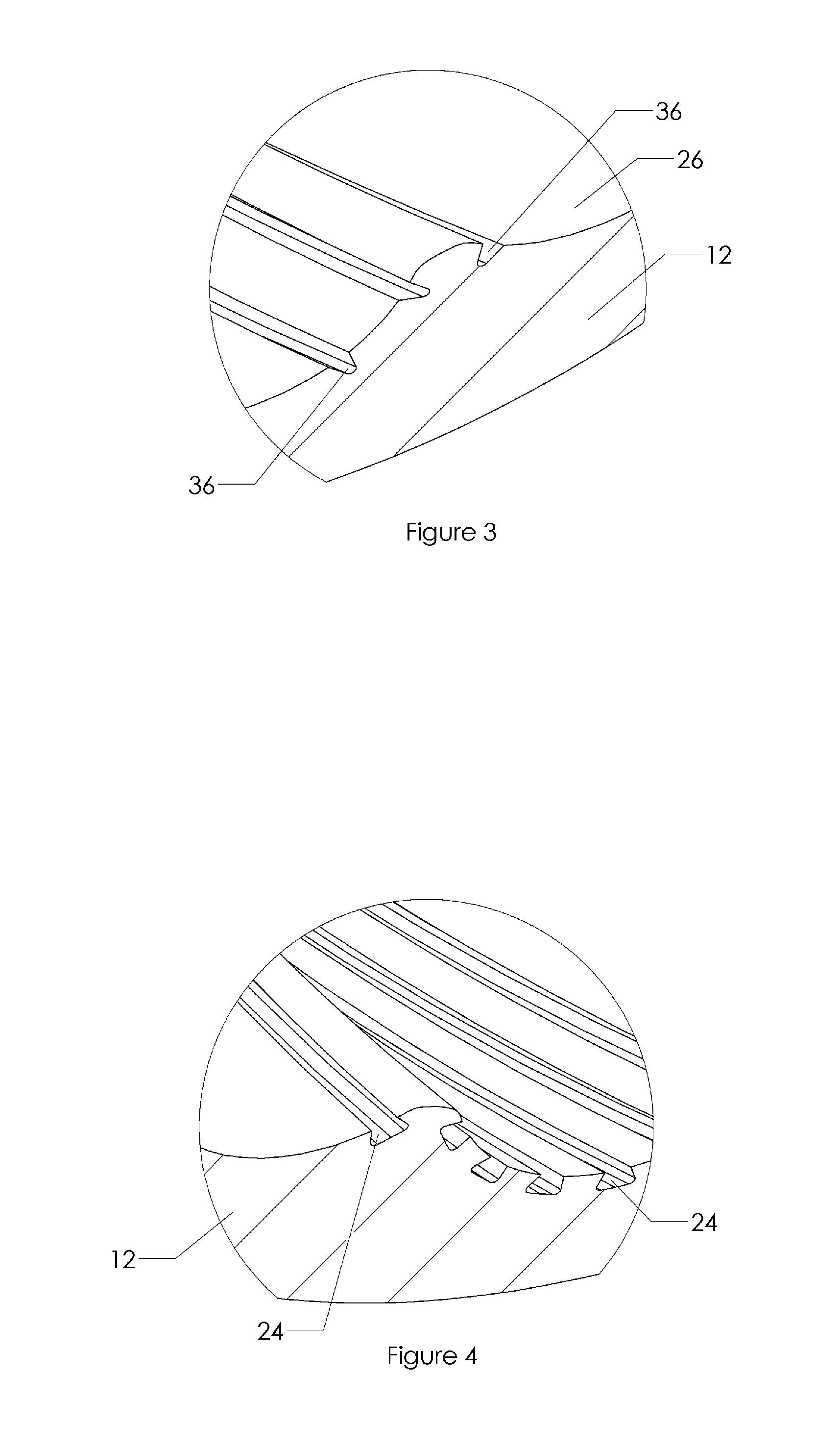
- The use of a combination of axially extending and intersecting grooves on the interior surface of the stator housing, along with seal glands, to create a mechanical lock between the polymeric layer and the stator housing, enhancing the bonding area and resistance to movement, thereby preventing the polymeric sleeve from detaching.

Sealing assembly for a progressive cavity pump
PatentActiveUS20230258177A1
Innovation
- An elastic conical diaphragm sealing assembly is employed, gripping the rotor and sealing to the stator, which prevents fluid leakage and dampens pressure oscillations by using an elastic diaphragm with a conical shape and an O-ring to maintain contact and accommodate planetary motion.


Environmental Impact of PCP Seal Material Selection
The environmental implications of seal material selection in Progressive Cavity Pumps extend far beyond operational performance, encompassing the entire lifecycle from raw material extraction to end-of-life disposal. Traditional elastomeric seals, particularly those based on synthetic rubber compounds like nitrile and fluoroelastomers, present significant environmental challenges due to their petroleum-based origins and non-biodegradable nature.
Manufacturing processes for conventional PCP seal materials typically involve energy-intensive polymerization reactions and the use of various chemical additives, including vulcanizing agents, plasticizers, and stabilizers. These processes generate substantial carbon emissions and often produce hazardous waste streams that require specialized treatment. The production of fluoroelastomer seals, while offering superior chemical resistance, involves particularly environmentally intensive manufacturing processes due to the complex fluorination chemistry required.
The operational phase environmental impact varies significantly based on material selection and application conditions. Seals manufactured from bio-based elastomers or recycled rubber compounds demonstrate reduced carbon footprints during production, though their performance characteristics may require careful evaluation against specific operating parameters. Advanced thermoplastic elastomers offer potential advantages through their recyclability at end-of-life, contrasting sharply with thermoset rubber seals that typically require energy recovery through incineration.
Disposal considerations have become increasingly critical as environmental regulations tighten globally. Traditional elastomeric seals contribute to persistent waste streams, with degradation times measured in decades. This has driven interest in biodegradable seal materials, though current formulations often compromise on performance characteristics essential for PCP applications, particularly in high-temperature or chemically aggressive environments.
Emerging sustainable alternatives include bio-based polyurethanes derived from renewable feedstocks and advanced composite materials incorporating natural fiber reinforcements. These materials show promise in reducing environmental impact while maintaining acceptable performance levels for specific PCP applications. However, comprehensive lifecycle assessments remain limited, and long-term performance data in demanding operational conditions requires further validation.
The regulatory landscape increasingly favors materials with lower environmental impact, creating market pressures for sustainable seal solutions. This trend is particularly pronounced in offshore applications where environmental protection requirements are stringent, driving innovation toward more environmentally compatible seal materials that can withstand harsh operating conditions while minimizing ecological risk.
Manufacturing processes for conventional PCP seal materials typically involve energy-intensive polymerization reactions and the use of various chemical additives, including vulcanizing agents, plasticizers, and stabilizers. These processes generate substantial carbon emissions and often produce hazardous waste streams that require specialized treatment. The production of fluoroelastomer seals, while offering superior chemical resistance, involves particularly environmentally intensive manufacturing processes due to the complex fluorination chemistry required.
The operational phase environmental impact varies significantly based on material selection and application conditions. Seals manufactured from bio-based elastomers or recycled rubber compounds demonstrate reduced carbon footprints during production, though their performance characteristics may require careful evaluation against specific operating parameters. Advanced thermoplastic elastomers offer potential advantages through their recyclability at end-of-life, contrasting sharply with thermoset rubber seals that typically require energy recovery through incineration.
Disposal considerations have become increasingly critical as environmental regulations tighten globally. Traditional elastomeric seals contribute to persistent waste streams, with degradation times measured in decades. This has driven interest in biodegradable seal materials, though current formulations often compromise on performance characteristics essential for PCP applications, particularly in high-temperature or chemically aggressive environments.
Emerging sustainable alternatives include bio-based polyurethanes derived from renewable feedstocks and advanced composite materials incorporating natural fiber reinforcements. These materials show promise in reducing environmental impact while maintaining acceptable performance levels for specific PCP applications. However, comprehensive lifecycle assessments remain limited, and long-term performance data in demanding operational conditions requires further validation.
The regulatory landscape increasingly favors materials with lower environmental impact, creating market pressures for sustainable seal solutions. This trend is particularly pronounced in offshore applications where environmental protection requirements are stringent, driving innovation toward more environmentally compatible seal materials that can withstand harsh operating conditions while minimizing ecological risk.
Cost-Performance Analysis of PCP Seal Materials
The cost-performance analysis of PCP seal materials represents a critical evaluation framework that balances material expenses against operational efficiency and longevity. This analysis encompasses initial material costs, installation expenses, maintenance requirements, and replacement frequencies to determine the total cost of ownership for different sealing solutions.
Elastomeric materials such as nitrile rubber (NBR) and fluoroelastomers (FKM) demonstrate varying cost-performance profiles depending on application conditions. NBR seals offer lower initial costs ranging from $50-150 per unit but may require more frequent replacements in harsh chemical environments, potentially increasing long-term operational expenses. Conversely, FKM seals command higher upfront costs of $200-500 per unit but deliver extended service life in aggressive media, often justifying the premium through reduced maintenance intervals.
Thermoplastic seals present an intermediate cost position with prices typically ranging from $100-300 per unit. Their performance characteristics in temperature cycling and chemical resistance often provide favorable cost-performance ratios in moderate operating conditions. The ability to withstand thermal shock and maintain dimensional stability reduces unplanned maintenance costs significantly.
Metal-based sealing solutions, while representing the highest initial investment at $500-1200 per unit, demonstrate exceptional durability in extreme conditions. The cost-performance equation becomes favorable in high-temperature, high-pressure applications where elastomeric alternatives would fail prematurely. The extended operational life often exceeds 5-7 years compared to 1-3 years for conventional materials.
Lifecycle cost modeling reveals that material selection should consider pump downtime costs, which can range from $1000-5000 per hour in critical applications. Premium sealing materials that extend mean time between failures often provide superior overall value despite higher acquisition costs. The analysis must also factor in inventory carrying costs, emergency replacement premiums, and skilled labor requirements for installation and maintenance activities.
Elastomeric materials such as nitrile rubber (NBR) and fluoroelastomers (FKM) demonstrate varying cost-performance profiles depending on application conditions. NBR seals offer lower initial costs ranging from $50-150 per unit but may require more frequent replacements in harsh chemical environments, potentially increasing long-term operational expenses. Conversely, FKM seals command higher upfront costs of $200-500 per unit but deliver extended service life in aggressive media, often justifying the premium through reduced maintenance intervals.
Thermoplastic seals present an intermediate cost position with prices typically ranging from $100-300 per unit. Their performance characteristics in temperature cycling and chemical resistance often provide favorable cost-performance ratios in moderate operating conditions. The ability to withstand thermal shock and maintain dimensional stability reduces unplanned maintenance costs significantly.
Metal-based sealing solutions, while representing the highest initial investment at $500-1200 per unit, demonstrate exceptional durability in extreme conditions. The cost-performance equation becomes favorable in high-temperature, high-pressure applications where elastomeric alternatives would fail prematurely. The extended operational life often exceeds 5-7 years compared to 1-3 years for conventional materials.
Lifecycle cost modeling reveals that material selection should consider pump downtime costs, which can range from $1000-5000 per hour in critical applications. Premium sealing materials that extend mean time between failures often provide superior overall value despite higher acquisition costs. The analysis must also factor in inventory carrying costs, emergency replacement premiums, and skilled labor requirements for installation and maintenance activities.
Unlock deeper insights with Patsnap Eureka Quick Research — get a full tech report to explore trends and direct your research. Try now!
Generate Your Research Report Instantly with AI Agent
Supercharge your innovation with Patsnap Eureka AI Agent Platform!