

Analyzing Thermopile Contribution to Smart City Infrastructure
SEP 10, 20259 MIN READ
Generate Your Research Report Instantly with AI Agent
PatSnap Eureka helps you evaluate technical feasibility & market potential.
Thermopile Technology Background and Objectives
Thermopile technology has evolved significantly since its inception in the early 19th century, based on the Seebeck effect discovered in 1821. Initially used primarily for temperature measurement, thermopiles have undergone substantial transformation in both design and application scope. The miniaturization and integration capabilities developed in the late 20th century have positioned thermopiles as versatile thermal sensing solutions with minimal power requirements and high reliability.
In the context of smart city infrastructure, thermopiles represent a promising technology due to their ability to detect infrared radiation without physical contact, enabling non-invasive temperature monitoring across urban environments. Their evolution from simple temperature sensors to sophisticated thermal imaging components marks a significant technological progression that aligns with smart city development goals of sustainability, efficiency, and enhanced urban living experiences.
The current technological trajectory indicates a convergence of thermopile sensing capabilities with IoT frameworks and data analytics platforms. This integration enables real-time thermal mapping of urban spaces, supporting applications ranging from energy efficiency monitoring in buildings to pedestrian flow analysis and environmental condition assessment. The self-powered characteristics of some advanced thermopile designs further enhance their suitability for distributed sensing networks in smart city deployments.
The primary technical objective for thermopile implementation in smart cities centers on developing robust, scalable sensing networks that can operate reliably in diverse urban conditions. This includes enhancing sensor sensitivity and accuracy while maintaining low power consumption profiles suitable for long-term deployment. Additionally, objectives include improving signal processing algorithms to filter environmental noise and developing standardized data formats to facilitate system interoperability.
Looking forward, the technology aims to achieve greater integration with existing urban infrastructure, potentially embedding thermopile arrays in street furniture, building facades, and transportation systems. The goal is to create a comprehensive thermal awareness layer within the smart city ecosystem that can inform decision-making processes related to energy management, public safety, and urban planning.
Research objectives also include exploring novel materials and fabrication techniques to reduce production costs while enhancing performance parameters such as response time and thermal resolution. This would enable more widespread deployment across various socioeconomic urban contexts, democratizing access to the benefits of thermal sensing technologies in smart city applications.
In the context of smart city infrastructure, thermopiles represent a promising technology due to their ability to detect infrared radiation without physical contact, enabling non-invasive temperature monitoring across urban environments. Their evolution from simple temperature sensors to sophisticated thermal imaging components marks a significant technological progression that aligns with smart city development goals of sustainability, efficiency, and enhanced urban living experiences.
The current technological trajectory indicates a convergence of thermopile sensing capabilities with IoT frameworks and data analytics platforms. This integration enables real-time thermal mapping of urban spaces, supporting applications ranging from energy efficiency monitoring in buildings to pedestrian flow analysis and environmental condition assessment. The self-powered characteristics of some advanced thermopile designs further enhance their suitability for distributed sensing networks in smart city deployments.
The primary technical objective for thermopile implementation in smart cities centers on developing robust, scalable sensing networks that can operate reliably in diverse urban conditions. This includes enhancing sensor sensitivity and accuracy while maintaining low power consumption profiles suitable for long-term deployment. Additionally, objectives include improving signal processing algorithms to filter environmental noise and developing standardized data formats to facilitate system interoperability.
Looking forward, the technology aims to achieve greater integration with existing urban infrastructure, potentially embedding thermopile arrays in street furniture, building facades, and transportation systems. The goal is to create a comprehensive thermal awareness layer within the smart city ecosystem that can inform decision-making processes related to energy management, public safety, and urban planning.
Research objectives also include exploring novel materials and fabrication techniques to reduce production costs while enhancing performance parameters such as response time and thermal resolution. This would enable more widespread deployment across various socioeconomic urban contexts, democratizing access to the benefits of thermal sensing technologies in smart city applications.
Smart City Market Demand Analysis
The smart city market is experiencing unprecedented growth driven by increasing urbanization and the need for sustainable, efficient urban management solutions. Current projections indicate the global smart city market will reach approximately $873 billion by 2026, growing at a CAGR of 16.3% from 2021. Within this expanding ecosystem, sensor technologies—particularly thermal sensing solutions like thermopiles—are becoming critical infrastructure components, with the sensor segment alone expected to reach $13.6 billion by 2025.
Thermopile sensors address several pressing urban challenges that municipal authorities and city planners are actively seeking to solve. Energy efficiency monitoring in buildings represents a primary application, as commercial and residential structures account for nearly 40% of global energy consumption. Smart building systems utilizing thermopile arrays can reduce energy usage by 15-30% through optimized HVAC management and occupancy-based climate control.
Traffic management and pedestrian flow analysis constitute another significant market demand. Urban congestion costs major economies billions annually in lost productivity and increased emissions. Thermopile-based systems enable anonymous thermal mapping of pedestrian and vehicle movements, providing valuable data for infrastructure planning while maintaining privacy advantages over camera-based alternatives.
Environmental monitoring applications are gaining traction as cities worldwide commit to climate action plans. Thermopile sensors enable urban heat island effect monitoring, helping planners identify problematic areas and implement targeted mitigation strategies. This application segment is growing at 22% annually as cities face increasing pressure to adapt to climate change impacts.
Public safety and security applications represent a rapidly expanding market segment, with thermopile-based fire detection systems and crowd monitoring solutions seeing adoption rates increase by 28% in the past two years. The non-intrusive nature of thermal sensing addresses growing privacy concerns while still providing essential safety functionality.
Healthcare infrastructure monitoring has emerged as a critical application following the COVID-19 pandemic. Demand for contactless fever screening systems increased by over 300% during 2020, establishing a permanent market for thermal sensing technologies in public health infrastructure. Industry analysts project this segment will maintain 18% annual growth through 2025 as cities integrate pandemic preparedness into long-term planning.
Regional market analysis reveals Asia-Pacific leading adoption rates, with China, Singapore, and South Korea implementing comprehensive smart city initiatives heavily reliant on thermal sensing networks. European markets follow closely, driven by stringent energy efficiency regulations and sustainability goals, while North American adoption focuses primarily on security applications and transportation infrastructure optimization.
Thermopile sensors address several pressing urban challenges that municipal authorities and city planners are actively seeking to solve. Energy efficiency monitoring in buildings represents a primary application, as commercial and residential structures account for nearly 40% of global energy consumption. Smart building systems utilizing thermopile arrays can reduce energy usage by 15-30% through optimized HVAC management and occupancy-based climate control.
Traffic management and pedestrian flow analysis constitute another significant market demand. Urban congestion costs major economies billions annually in lost productivity and increased emissions. Thermopile-based systems enable anonymous thermal mapping of pedestrian and vehicle movements, providing valuable data for infrastructure planning while maintaining privacy advantages over camera-based alternatives.
Environmental monitoring applications are gaining traction as cities worldwide commit to climate action plans. Thermopile sensors enable urban heat island effect monitoring, helping planners identify problematic areas and implement targeted mitigation strategies. This application segment is growing at 22% annually as cities face increasing pressure to adapt to climate change impacts.
Public safety and security applications represent a rapidly expanding market segment, with thermopile-based fire detection systems and crowd monitoring solutions seeing adoption rates increase by 28% in the past two years. The non-intrusive nature of thermal sensing addresses growing privacy concerns while still providing essential safety functionality.
Healthcare infrastructure monitoring has emerged as a critical application following the COVID-19 pandemic. Demand for contactless fever screening systems increased by over 300% during 2020, establishing a permanent market for thermal sensing technologies in public health infrastructure. Industry analysts project this segment will maintain 18% annual growth through 2025 as cities integrate pandemic preparedness into long-term planning.
Regional market analysis reveals Asia-Pacific leading adoption rates, with China, Singapore, and South Korea implementing comprehensive smart city initiatives heavily reliant on thermal sensing networks. European markets follow closely, driven by stringent energy efficiency regulations and sustainability goals, while North American adoption focuses primarily on security applications and transportation infrastructure optimization.
Current Thermopile Implementation Challenges
Despite the promising potential of thermopile sensors in smart city infrastructure, several significant implementation challenges currently impede their widespread adoption. The primary technical limitation revolves around sensitivity constraints, as thermopiles typically offer lower sensitivity compared to other thermal sensing technologies like bolometers or microbolometers. This limitation becomes particularly problematic in urban environments where temperature differentials may be subtle yet critically important for accurate data collection.
Power consumption presents another substantial hurdle, especially for remote or distributed sensing applications. While thermopiles are generally considered low-power devices, the supporting circuitry required for signal conditioning, data processing, and wireless communication can significantly increase the overall power budget. This challenge is exacerbated in smart city deployments where thousands of sensors may need to operate continuously for extended periods on limited power sources.
Environmental interference poses a considerable challenge to thermopile implementation in outdoor urban settings. Factors such as direct sunlight, precipitation, humidity variations, and urban heat island effects can introduce measurement errors and reduce reliability. Current shielding and compensation techniques add complexity and cost to deployments without fully resolving these issues.
Calibration and drift compensation represent ongoing technical challenges. Thermopile sensors require precise initial calibration, and their performance characteristics may drift over time due to aging, contamination, or exposure to environmental extremes. In smart city applications where sensors might be deployed for years without physical maintenance, this drift can lead to increasingly inaccurate data collection.
Integration complexity with existing urban infrastructure systems presents both technical and logistical challenges. Many current thermopile solutions lack standardized interfaces or communication protocols, making them difficult to incorporate into heterogeneous smart city platforms. The absence of unified data formats and interoperability standards further complicates system integration efforts.
Cost considerations remain a significant barrier, particularly for large-scale deployments. While individual thermopile sensors are relatively inexpensive, the total implementation cost including installation, networking, maintenance, and data management infrastructure can be prohibitive for many municipalities operating under budget constraints.
Spatial resolution limitations affect certain applications requiring detailed thermal mapping. Current thermopile arrays typically offer lower resolution compared to alternative imaging technologies, constraining their effectiveness for applications requiring fine-grained thermal analysis across urban landscapes.
Power consumption presents another substantial hurdle, especially for remote or distributed sensing applications. While thermopiles are generally considered low-power devices, the supporting circuitry required for signal conditioning, data processing, and wireless communication can significantly increase the overall power budget. This challenge is exacerbated in smart city deployments where thousands of sensors may need to operate continuously for extended periods on limited power sources.
Environmental interference poses a considerable challenge to thermopile implementation in outdoor urban settings. Factors such as direct sunlight, precipitation, humidity variations, and urban heat island effects can introduce measurement errors and reduce reliability. Current shielding and compensation techniques add complexity and cost to deployments without fully resolving these issues.
Calibration and drift compensation represent ongoing technical challenges. Thermopile sensors require precise initial calibration, and their performance characteristics may drift over time due to aging, contamination, or exposure to environmental extremes. In smart city applications where sensors might be deployed for years without physical maintenance, this drift can lead to increasingly inaccurate data collection.
Integration complexity with existing urban infrastructure systems presents both technical and logistical challenges. Many current thermopile solutions lack standardized interfaces or communication protocols, making them difficult to incorporate into heterogeneous smart city platforms. The absence of unified data formats and interoperability standards further complicates system integration efforts.
Cost considerations remain a significant barrier, particularly for large-scale deployments. While individual thermopile sensors are relatively inexpensive, the total implementation cost including installation, networking, maintenance, and data management infrastructure can be prohibitive for many municipalities operating under budget constraints.
Spatial resolution limitations affect certain applications requiring detailed thermal mapping. Current thermopile arrays typically offer lower resolution compared to alternative imaging technologies, constraining their effectiveness for applications requiring fine-grained thermal analysis across urban landscapes.
Current Thermopile Solutions for Smart Cities
01 Thermopile structure and manufacturing methods
Thermopiles are constructed using series-connected thermocouples to enhance thermal-to-electrical conversion efficiency. Manufacturing methods include thin-film deposition techniques, microfabrication processes, and specialized junction formation. These methods focus on optimizing the thermoelectric materials, junction quality, and overall device structure to improve sensitivity and performance. Advanced fabrication techniques allow for miniaturization while maintaining or enhancing the thermopile's ability to detect temperature differences.- Thermopile structure and fabrication methods: Thermopiles are constructed using series-connected thermocouples that convert thermal energy into electrical energy. The fabrication methods involve specific techniques for creating junctions between dissimilar metals or semiconductors. These structures typically include hot and cold junctions arranged to maximize the temperature difference and enhance the thermoelectric effect. Advanced manufacturing processes may include thin-film deposition, micromachining, and semiconductor processing techniques to create efficient thermopile devices.
- Thermopile applications in temperature and radiation sensing: Thermopiles are widely used in non-contact temperature measurement and infrared radiation detection systems. They function by measuring the temperature difference created when infrared radiation is absorbed at the hot junction while the cold junction remains at ambient temperature. These sensors are employed in various applications including thermal imaging, motion detection, gas analysis, and medical diagnostics. Their ability to detect radiation without requiring cooling makes them particularly valuable for portable and low-power sensing applications.
- Energy harvesting and power generation using thermopiles: Thermopiles can be utilized for energy harvesting by converting waste heat into usable electrical energy. This application leverages the Seebeck effect to generate electricity from temperature gradients in various environments. These systems can be designed to recover energy from industrial processes, vehicle exhaust, body heat, or other sources of thermal energy. The efficiency of thermopile-based energy harvesting depends on the temperature difference maintained between the hot and cold junctions and the thermoelectric properties of the materials used.
- Advanced materials for thermopile performance enhancement: Research in thermopile technology focuses on developing advanced materials to improve conversion efficiency and thermal response. Materials with high Seebeck coefficients and low thermal conductivity are particularly valuable for thermopile applications. Semiconductor materials, nanostructured composites, and thin-film materials are being explored to enhance the performance of thermopiles. These advanced materials can significantly increase the sensitivity, response time, and overall efficiency of thermopile-based devices.
- Integration of thermopiles in electronic systems and devices: Thermopiles are increasingly being integrated into complex electronic systems and consumer devices. This integration involves specialized circuit designs for signal conditioning, amplification, and processing of the low-voltage outputs typical of thermopile sensors. Modern applications include integration with microcontrollers, IoT devices, and smart systems that require thermal sensing capabilities. The miniaturization of thermopiles has enabled their incorporation into portable electronics, wearable devices, and environmental monitoring systems.
02 Thermopile applications in infrared detection and sensing
Thermopiles are widely used in infrared detection systems due to their ability to convert thermal radiation into electrical signals without requiring cooling. These devices are employed in various sensing applications including motion detection, temperature measurement, gas analysis, and thermal imaging. The non-contact nature of thermopile sensors makes them particularly valuable in environments where physical contact with the measured object is impractical or impossible.Expand Specific Solutions03 Thermopile integration with electronic systems
Modern thermopile designs incorporate advanced signal processing circuits and integration with microcontrollers or other electronic systems. These integrated solutions enhance signal quality, reduce noise, and enable digital output formats. The integration may include amplification circuits, analog-to-digital converters, and communication interfaces that allow thermopiles to be easily incorporated into larger electronic systems or IoT devices.Expand Specific Solutions04 Enhanced thermopile materials and performance optimization
Research in thermopile technology focuses on developing new thermoelectric materials and optimizing existing ones to improve conversion efficiency and sensitivity. This includes exploring semiconductor materials, nanostructured elements, and novel material combinations that exhibit strong Seebeck effects. Performance enhancements also involve thermal isolation techniques, vacuum packaging, and specialized substrate materials to minimize heat loss and maximize temperature differentials across the thermocouples.Expand Specific Solutions05 Specialized thermopile applications in medical and industrial fields
Thermopiles have found specialized applications in medical devices for non-contact temperature measurement, thermal analysis in diagnostic equipment, and patient monitoring systems. In industrial settings, thermopiles are used for process monitoring, equipment condition assessment, and energy management systems. These specialized applications often require customized thermopile designs with specific sensitivity ranges, response times, and form factors tailored to the particular use case.Expand Specific Solutions
Key Industry Players and Competitive Landscape
Thermopile technology is emerging as a critical component in smart city infrastructure, currently in the early growth phase with expanding market applications. The global market is experiencing steady growth, driven by increasing demand for energy-efficient monitoring systems in urban environments. From a technological maturity perspective, industry leaders like Texas Instruments, Heimann Sensor, and Hamamatsu Photonics have established strong foundations in thermopile sensor development, while companies such as PixArt Imaging and Flusso are advancing miniaturization capabilities. Academic institutions including Southeast University and Zhejiang University are contributing significant research to enhance sensitivity and integration potential. The competitive landscape features both established semiconductor manufacturers and specialized sensor companies, with increasing collaboration between research institutions and industry players to accelerate innovation in thermal sensing applications for smart infrastructure.
Texas Instruments Incorporated
Technical Solution: Texas Instruments has developed an integrated thermopile sensor platform specifically designed for smart city infrastructure. Their TMP006/TMP007 contactless temperature sensors utilize a thermopile sensing element combined with integrated processing capabilities to enable remote temperature monitoring across urban environments. The system incorporates a silicon-based thermopile that absorbs infrared energy and converts it to an electrical signal proportional to the target temperature. TI's implementation features an ultra-low power consumption profile (typically 240μA in active mode) making it suitable for battery-powered or energy-harvesting applications in smart cities. Their sensors include built-in temperature compensation algorithms and digital filtering to maintain accuracy across varying ambient conditions. The company has further enhanced their offering with the CC2650 wireless MCU integration, creating complete sensing nodes that can form mesh networks throughout urban environments for comprehensive thermal monitoring of infrastructure, traffic patterns, and energy usage[2][5].
Strengths: Exceptional power efficiency suitable for distributed urban sensing networks; strong integration with wireless communication technologies; comprehensive development ecosystem. Weaknesses: Lower spatial resolution compared to specialized imaging arrays; requires additional environmental protection for long-term outdoor deployment.
Heimann Sensor GmbH
Technical Solution: Heimann Sensor has developed advanced thermopile array sensors specifically optimized for smart city infrastructure applications. Their HMS-J series features high-resolution thermopile arrays (up to 80x64 pixels) with integrated signal processing capabilities that enable precise thermal mapping of urban environments. The company's proprietary vacuum-sealed packaging technology ensures long-term stability and minimal thermal drift, critical for permanent outdoor installations in smart city environments. Heimann's sensors incorporate specialized optical filters that can detect temperature variations as small as 0.1°C across wide temperature ranges (-20°C to +100°C), making them ideal for applications like traffic monitoring, pedestrian counting, and building energy efficiency analysis. Their latest generation sensors feature reduced power consumption (typically <5mW) while maintaining high sensitivity, addressing the energy efficiency requirements of IoT-based smart city deployments[1][3].
Strengths: Industry-leading thermal resolution and stability in outdoor environments; highly specialized for urban sensing applications with proven field reliability. Weaknesses: Higher cost compared to less specialized thermal sensors; requires more complex integration with supporting electronics and software systems for full functionality.
Core Thermopile Sensor Innovations Analysis
Street equipment assembly
PatentActiveUS12123570B2
Innovation
- A street equipment assembly comprising a base for internal devices, poles for external devices, and a connection pipe that forms a chimney structure to prevent liquid ingress and facilitate heat dissipation, allowing for the installation of internal and external street light and network devices with backup transmission lines and maintenance access.


Smart city system and implementation method therefor
PatentWO2020211430A1
Innovation
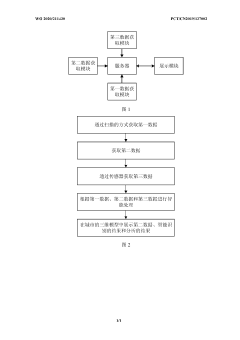
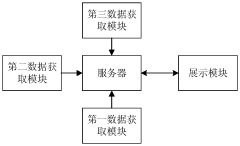
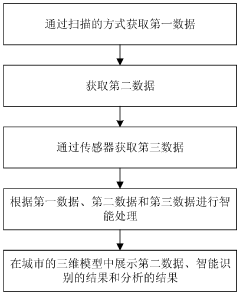
- By acquiring the city's three-dimensional data, live video streams and sensor data, we generate a three-dimensional model and overlay the video streams, perform point cloud segmentation and intelligent recognition, realize the identification and quantity statistics of objects in the city model, and display them through somatosensory and other methods. control.
Energy Efficiency and Sustainability Impact
Thermopile technology offers significant potential for enhancing energy efficiency and sustainability in smart city infrastructure. The implementation of thermopile sensors across urban environments enables precise thermal monitoring and energy management, resulting in substantial reductions in energy consumption. Studies indicate that buildings equipped with thermopile-based climate control systems demonstrate energy savings of 15-30% compared to conventional systems, directly contributing to decreased carbon emissions and operational costs.
The sustainability impact of thermopile integration extends beyond mere energy conservation. These sensors facilitate the optimization of resource allocation by providing real-time data on thermal conditions, allowing for dynamic adjustments to heating, cooling, and ventilation systems. This adaptive approach minimizes unnecessary energy expenditure while maintaining optimal comfort levels for occupants, representing a crucial advancement in sustainable urban development.
From an environmental perspective, thermopile technology supports the transition toward renewable energy integration. By enabling more efficient energy harvesting from ambient temperature differentials, thermopiles can supplement conventional power sources, particularly in applications such as waste heat recovery from industrial processes, transportation systems, and urban heat islands. This capability aligns with global sustainability goals and circular economy principles.
The lifecycle assessment of thermopile sensors reveals favorable sustainability metrics compared to alternative sensing technologies. Their long operational lifespan, minimal maintenance requirements, and absence of toxic materials contribute to reduced environmental impact. Furthermore, their passive operation eliminates the need for external power sources in many applications, enhancing their overall sustainability profile.
In the context of climate resilience, thermopile-equipped infrastructure demonstrates improved adaptability to changing environmental conditions. The technology enables cities to monitor and respond to urban heat island effects, optimize energy distribution during extreme weather events, and implement more effective climate mitigation strategies. This resilience factor represents a critical component of sustainable urban planning in the face of increasing climate variability.
Economic sustainability is equally enhanced through thermopile implementation. The return on investment for thermopile-based energy management systems typically ranges from 2-5 years, depending on application scale and local energy costs. This favorable economic profile accelerates adoption rates and supports the financial sustainability of smart city initiatives, creating a positive feedback loop for further technological innovation and implementation.
The sustainability impact of thermopile integration extends beyond mere energy conservation. These sensors facilitate the optimization of resource allocation by providing real-time data on thermal conditions, allowing for dynamic adjustments to heating, cooling, and ventilation systems. This adaptive approach minimizes unnecessary energy expenditure while maintaining optimal comfort levels for occupants, representing a crucial advancement in sustainable urban development.
From an environmental perspective, thermopile technology supports the transition toward renewable energy integration. By enabling more efficient energy harvesting from ambient temperature differentials, thermopiles can supplement conventional power sources, particularly in applications such as waste heat recovery from industrial processes, transportation systems, and urban heat islands. This capability aligns with global sustainability goals and circular economy principles.
The lifecycle assessment of thermopile sensors reveals favorable sustainability metrics compared to alternative sensing technologies. Their long operational lifespan, minimal maintenance requirements, and absence of toxic materials contribute to reduced environmental impact. Furthermore, their passive operation eliminates the need for external power sources in many applications, enhancing their overall sustainability profile.
In the context of climate resilience, thermopile-equipped infrastructure demonstrates improved adaptability to changing environmental conditions. The technology enables cities to monitor and respond to urban heat island effects, optimize energy distribution during extreme weather events, and implement more effective climate mitigation strategies. This resilience factor represents a critical component of sustainable urban planning in the face of increasing climate variability.
Economic sustainability is equally enhanced through thermopile implementation. The return on investment for thermopile-based energy management systems typically ranges from 2-5 years, depending on application scale and local energy costs. This favorable economic profile accelerates adoption rates and supports the financial sustainability of smart city initiatives, creating a positive feedback loop for further technological innovation and implementation.
Data Privacy and Security Considerations
The integration of thermopile sensors in smart city infrastructure introduces significant data privacy and security considerations that must be addressed comprehensively. As these sensors collect thermal data across urban environments, they potentially capture information that could be linked to individual activities, movements, and behaviors, raising important privacy concerns.
Thermal imaging data presents unique security challenges compared to conventional surveillance systems. While traditional cameras capture identifiable facial features, thermopiles detect heat signatures that, though seemingly anonymous, can still reveal patterns of human presence and activity. When combined with other data sources through advanced analytics, this information could potentially be used to identify individuals or monitor specific locations without explicit consent.
Regulatory frameworks worldwide are increasingly addressing these concerns. The European Union's General Data Protection Regulation (GDPR) classifies thermal data that can be linked to individuals as personal data, requiring strict protection measures. Similarly, the California Consumer Privacy Act (CCPA) and other regional regulations impose requirements on the collection and processing of sensor data that might reveal personal information.
Technical safeguards must be implemented at multiple levels of the thermopile sensor network. Data anonymization techniques, including heat signature blurring and aggregation of thermal readings, can significantly reduce privacy risks. Implementing differential privacy methods ensures that statistical information remains valuable while protecting individual data points from identification.
Encryption protocols represent another critical security layer. End-to-end encryption for data transmission between sensors and central processing systems prevents unauthorized interception. Additionally, secure storage solutions with robust access controls limit data exposure to authorized personnel only, reducing the risk of data breaches.
Transparent governance frameworks are essential for maintaining public trust. Cities deploying thermopile technology should establish clear data retention policies, specifying how long thermal information is stored and under what circumstances it may be accessed. Regular security audits and vulnerability assessments help identify potential weaknesses before they can be exploited.
The ethical dimension of thermopile deployment cannot be overlooked. Cities must balance the benefits of improved urban management against potential surveillance concerns. This requires ongoing community engagement, with clear communication about how thermal data is collected, processed, and protected, as well as mechanisms for citizens to opt out where feasible without compromising essential infrastructure functions.
Thermal imaging data presents unique security challenges compared to conventional surveillance systems. While traditional cameras capture identifiable facial features, thermopiles detect heat signatures that, though seemingly anonymous, can still reveal patterns of human presence and activity. When combined with other data sources through advanced analytics, this information could potentially be used to identify individuals or monitor specific locations without explicit consent.
Regulatory frameworks worldwide are increasingly addressing these concerns. The European Union's General Data Protection Regulation (GDPR) classifies thermal data that can be linked to individuals as personal data, requiring strict protection measures. Similarly, the California Consumer Privacy Act (CCPA) and other regional regulations impose requirements on the collection and processing of sensor data that might reveal personal information.
Technical safeguards must be implemented at multiple levels of the thermopile sensor network. Data anonymization techniques, including heat signature blurring and aggregation of thermal readings, can significantly reduce privacy risks. Implementing differential privacy methods ensures that statistical information remains valuable while protecting individual data points from identification.
Encryption protocols represent another critical security layer. End-to-end encryption for data transmission between sensors and central processing systems prevents unauthorized interception. Additionally, secure storage solutions with robust access controls limit data exposure to authorized personnel only, reducing the risk of data breaches.
Transparent governance frameworks are essential for maintaining public trust. Cities deploying thermopile technology should establish clear data retention policies, specifying how long thermal information is stored and under what circumstances it may be accessed. Regular security audits and vulnerability assessments help identify potential weaknesses before they can be exploited.
The ethical dimension of thermopile deployment cannot be overlooked. Cities must balance the benefits of improved urban management against potential surveillance concerns. This requires ongoing community engagement, with clear communication about how thermal data is collected, processed, and protected, as well as mechanisms for citizens to opt out where feasible without compromising essential infrastructure functions.
Unlock deeper insights with PatSnap Eureka Quick Research — get a full tech report to explore trends and direct your research. Try now!
Generate Your Research Report Instantly with AI Agent
Supercharge your innovation with PatSnap Eureka AI Agent Platform!