

Aqueous Flow vs Structural Battery Integration: Efficiency
APR 29, 20269 MIN READ
Generate Your Research Report Instantly with AI Agent
PatSnap Eureka helps you evaluate technical feasibility & market potential.
Aqueous Flow Battery Integration Background and Objectives
Aqueous flow batteries represent a paradigm shift in energy storage technology, emerging from the growing demand for safe, scalable, and cost-effective grid-scale energy storage solutions. Unlike conventional lithium-ion batteries that store energy in solid electrodes, flow batteries store energy in liquid electrolytes contained in external tanks, enabling independent scaling of power and energy capacity. The aqueous chemistry eliminates fire hazards associated with organic electrolytes while offering superior thermal stability and environmental compatibility.
The integration of aqueous flow batteries into structural applications has gained significant momentum as industries seek multifunctional energy storage solutions. This concept extends beyond traditional stationary installations to encompass load-bearing energy storage systems that can simultaneously provide mechanical support and electrical energy storage. The structural integration approach addresses space constraints in applications ranging from electric vehicles to aerospace systems, where every cubic centimeter must serve multiple purposes.
Current technological evolution in this field focuses on achieving optimal efficiency balance between electrochemical performance and structural integrity. Traditional flow battery designs prioritize electrochemical efficiency through optimized flow field geometries and membrane technologies, while structural applications demand mechanical robustness and weight optimization. The convergence of these requirements has catalyzed research into novel cell architectures, advanced composite materials, and innovative electrolyte formulations.
The primary objective driving this technological development centers on maximizing energy density while maintaining structural load-bearing capabilities. Researchers aim to achieve energy densities exceeding 50 Wh/kg in structural configurations, compared to 20-30 Wh/kg in conventional flow battery systems. This enhancement requires breakthrough innovations in electrolyte chemistry, particularly developing high-concentration aqueous solutions that maintain ionic conductivity while minimizing electrolyte volume.
Secondary objectives include optimizing round-trip efficiency above 85% in integrated systems, developing standardized structural interfaces for modular deployment, and establishing manufacturing processes compatible with both battery and structural component production. The ultimate goal encompasses creating self-supporting energy storage systems that eliminate the need for separate structural frameworks while delivering competitive electrochemical performance metrics comparable to dedicated flow battery installations.
The integration of aqueous flow batteries into structural applications has gained significant momentum as industries seek multifunctional energy storage solutions. This concept extends beyond traditional stationary installations to encompass load-bearing energy storage systems that can simultaneously provide mechanical support and electrical energy storage. The structural integration approach addresses space constraints in applications ranging from electric vehicles to aerospace systems, where every cubic centimeter must serve multiple purposes.
Current technological evolution in this field focuses on achieving optimal efficiency balance between electrochemical performance and structural integrity. Traditional flow battery designs prioritize electrochemical efficiency through optimized flow field geometries and membrane technologies, while structural applications demand mechanical robustness and weight optimization. The convergence of these requirements has catalyzed research into novel cell architectures, advanced composite materials, and innovative electrolyte formulations.
The primary objective driving this technological development centers on maximizing energy density while maintaining structural load-bearing capabilities. Researchers aim to achieve energy densities exceeding 50 Wh/kg in structural configurations, compared to 20-30 Wh/kg in conventional flow battery systems. This enhancement requires breakthrough innovations in electrolyte chemistry, particularly developing high-concentration aqueous solutions that maintain ionic conductivity while minimizing electrolyte volume.
Secondary objectives include optimizing round-trip efficiency above 85% in integrated systems, developing standardized structural interfaces for modular deployment, and establishing manufacturing processes compatible with both battery and structural component production. The ultimate goal encompasses creating self-supporting energy storage systems that eliminate the need for separate structural frameworks while delivering competitive electrochemical performance metrics comparable to dedicated flow battery installations.
Market Demand for Structural Energy Storage Solutions
The global energy storage market is experiencing unprecedented growth driven by the urgent need for grid stabilization, renewable energy integration, and electrification across multiple sectors. Traditional battery systems, while effective, present significant challenges in terms of weight, volume, and integration complexity, particularly in aerospace, automotive, and marine applications where space and weight constraints are critical.
Structural energy storage solutions represent a paradigm shift by combining mechanical load-bearing capabilities with energy storage functionality. This dual-purpose approach addresses the growing demand for lightweight, space-efficient energy systems that can simultaneously serve as structural components and power sources. The aerospace industry demonstrates particularly strong interest, as structural batteries could reduce aircraft weight while maintaining structural integrity and providing distributed power throughout the airframe.
The automotive sector shows increasing demand for structural energy storage integration, especially in electric vehicle applications where battery weight and packaging remain significant challenges. Structural batteries integrated into vehicle chassis, body panels, or composite structures could substantially improve energy density at the vehicle level while reducing manufacturing complexity and costs.
Aqueous flow battery systems are gaining attention due to their inherent safety advantages, scalability, and potential for integration into structural applications. Unlike conventional lithium-ion systems, aqueous flow batteries offer non-flammable electrolytes and the ability to decouple power and energy capacity, making them attractive for large-scale stationary applications and potentially suitable for structural integration in buildings and infrastructure.
The marine industry presents emerging opportunities for structural energy storage, particularly in autonomous underwater vehicles and electric vessels where space optimization is crucial. Structural integration could enable longer mission durations and improved operational efficiency by eliminating the traditional trade-off between structural mass and energy storage capacity.
Grid-scale energy storage applications are driving demand for cost-effective, long-duration storage solutions that can be integrated into existing infrastructure. Structural energy storage concepts applied to building-integrated systems could transform how energy is stored and distributed in urban environments, creating opportunities for distributed energy networks.
The efficiency comparison between aqueous flow systems and structural battery integration becomes critical as market adoption accelerates. End-users increasingly prioritize total system efficiency, including manufacturing, installation, and operational considerations, rather than focusing solely on electrochemical performance metrics.
Structural energy storage solutions represent a paradigm shift by combining mechanical load-bearing capabilities with energy storage functionality. This dual-purpose approach addresses the growing demand for lightweight, space-efficient energy systems that can simultaneously serve as structural components and power sources. The aerospace industry demonstrates particularly strong interest, as structural batteries could reduce aircraft weight while maintaining structural integrity and providing distributed power throughout the airframe.
The automotive sector shows increasing demand for structural energy storage integration, especially in electric vehicle applications where battery weight and packaging remain significant challenges. Structural batteries integrated into vehicle chassis, body panels, or composite structures could substantially improve energy density at the vehicle level while reducing manufacturing complexity and costs.
Aqueous flow battery systems are gaining attention due to their inherent safety advantages, scalability, and potential for integration into structural applications. Unlike conventional lithium-ion systems, aqueous flow batteries offer non-flammable electrolytes and the ability to decouple power and energy capacity, making them attractive for large-scale stationary applications and potentially suitable for structural integration in buildings and infrastructure.
The marine industry presents emerging opportunities for structural energy storage, particularly in autonomous underwater vehicles and electric vessels where space optimization is crucial. Structural integration could enable longer mission durations and improved operational efficiency by eliminating the traditional trade-off between structural mass and energy storage capacity.
Grid-scale energy storage applications are driving demand for cost-effective, long-duration storage solutions that can be integrated into existing infrastructure. Structural energy storage concepts applied to building-integrated systems could transform how energy is stored and distributed in urban environments, creating opportunities for distributed energy networks.
The efficiency comparison between aqueous flow systems and structural battery integration becomes critical as market adoption accelerates. End-users increasingly prioritize total system efficiency, including manufacturing, installation, and operational considerations, rather than focusing solely on electrochemical performance metrics.
Current State of Aqueous Flow Battery Integration Challenges
Aqueous flow batteries face significant integration challenges that limit their widespread adoption in structural applications. The primary obstacle stems from the inherent complexity of managing liquid electrolytes within confined structural geometries. Unlike solid-state batteries, aqueous flow systems require sophisticated fluidic networks, pumps, and storage tanks that complicate integration into load-bearing structures. The bulky external components necessary for electrolyte circulation create design constraints that conflict with structural efficiency requirements.
Electrolyte management presents another critical challenge in structural integration scenarios. Aqueous flow batteries depend on continuous electrolyte circulation to maintain performance, but integrating pumping systems into structural elements introduces reliability concerns and maintenance accessibility issues. The risk of electrolyte leakage poses serious threats to structural integrity, particularly in aerospace and automotive applications where weight penalties and safety margins are critical. Current sealing technologies struggle to maintain long-term reliability under mechanical stress and thermal cycling conditions.
Thermal management complications arise from the dual requirements of maintaining optimal battery operating temperatures while preserving structural thermal properties. Aqueous electrolytes exhibit temperature-dependent performance characteristics that can conflict with structural thermal expansion requirements. The integration of thermal management systems adds complexity and weight, reducing the overall efficiency benefits of structural battery concepts.
Manufacturing scalability represents a significant bottleneck for aqueous flow battery integration. Current production methods for structural batteries rely on established composite manufacturing processes, but incorporating fluidic channels and electrolyte management systems requires specialized tooling and quality control procedures. The complexity of ensuring proper electrolyte flow distribution across large structural components while maintaining mechanical properties creates manufacturing challenges that increase production costs and reduce yield rates.
Performance degradation mechanisms specific to structural integration environments pose additional concerns. Mechanical loading cycles can affect electrolyte flow patterns and membrane integrity, leading to capacity fade and efficiency losses over time. The interaction between structural deformation and electrochemical performance remains poorly understood, limiting the development of robust design guidelines for structural aqueous flow battery systems.
Current research efforts focus on developing solid-polymer electrolyte alternatives and micro-fluidic architectures to address these integration challenges, but significant technological gaps remain before practical structural aqueous flow battery systems can be realized.
Electrolyte management presents another critical challenge in structural integration scenarios. Aqueous flow batteries depend on continuous electrolyte circulation to maintain performance, but integrating pumping systems into structural elements introduces reliability concerns and maintenance accessibility issues. The risk of electrolyte leakage poses serious threats to structural integrity, particularly in aerospace and automotive applications where weight penalties and safety margins are critical. Current sealing technologies struggle to maintain long-term reliability under mechanical stress and thermal cycling conditions.
Thermal management complications arise from the dual requirements of maintaining optimal battery operating temperatures while preserving structural thermal properties. Aqueous electrolytes exhibit temperature-dependent performance characteristics that can conflict with structural thermal expansion requirements. The integration of thermal management systems adds complexity and weight, reducing the overall efficiency benefits of structural battery concepts.
Manufacturing scalability represents a significant bottleneck for aqueous flow battery integration. Current production methods for structural batteries rely on established composite manufacturing processes, but incorporating fluidic channels and electrolyte management systems requires specialized tooling and quality control procedures. The complexity of ensuring proper electrolyte flow distribution across large structural components while maintaining mechanical properties creates manufacturing challenges that increase production costs and reduce yield rates.
Performance degradation mechanisms specific to structural integration environments pose additional concerns. Mechanical loading cycles can affect electrolyte flow patterns and membrane integrity, leading to capacity fade and efficiency losses over time. The interaction between structural deformation and electrochemical performance remains poorly understood, limiting the development of robust design guidelines for structural aqueous flow battery systems.
Current research efforts focus on developing solid-polymer electrolyte alternatives and micro-fluidic architectures to address these integration challenges, but significant technological gaps remain before practical structural aqueous flow battery systems can be realized.
Existing Integration Solutions for Flow Battery Systems
01 Aqueous electrolyte composition and optimization
Development of advanced aqueous electrolyte formulations to enhance ionic conductivity and reduce resistance in flow battery systems. These compositions focus on improving the electrochemical properties through optimized pH levels, salt concentrations, and additive incorporation to maximize energy transfer efficiency and minimize power losses during charge-discharge cycles.- Aqueous electrolyte composition and optimization: Development of advanced aqueous electrolyte formulations to enhance ionic conductivity and reduce resistance in flow batteries. These compositions focus on optimizing pH levels, salt concentrations, and additive materials to improve overall battery performance and energy density while maintaining stability during charge-discharge cycles.
- Structural battery integration and design: Integration of battery components into structural elements to create multifunctional energy storage systems. This approach combines mechanical load-bearing capabilities with energy storage functionality, utilizing composite materials and novel architectures to achieve dual-purpose structures that reduce overall system weight and volume.
- Flow battery stack configuration and cell design: Optimization of flow battery stack arrangements and individual cell configurations to maximize energy conversion efficiency. This includes electrode design, membrane selection, flow field patterns, and cell spacing to minimize pressure drops and enhance mass transfer while reducing parasitic losses.
- Energy management and control systems: Advanced control algorithms and energy management strategies for optimizing battery operation and efficiency. These systems monitor and regulate charging patterns, flow rates, temperature control, and state-of-charge balancing to extend battery life and maintain peak performance under varying operational conditions.
- Electrode materials and surface modifications: Development of high-performance electrode materials and surface treatment techniques to improve electrochemical activity and reduce overpotentials. This includes carbon-based materials, metal oxides, and composite electrodes with enhanced catalytic properties and increased active surface area for better charge transfer kinetics.
02 Structural integration and mechanical design
Integration of battery components into structural elements to create multifunctional energy storage systems. This approach combines mechanical load-bearing capabilities with electrochemical energy storage, optimizing space utilization and weight distribution while maintaining structural integrity and electrical performance in various applications.Expand Specific Solutions03 Flow field and membrane optimization
Enhancement of flow battery efficiency through improved flow field designs and membrane technologies. These innovations focus on optimizing fluid dynamics, reducing pressure drops, and improving ion selectivity to increase overall system efficiency while minimizing parasitic losses and maintaining stable operation over extended periods.Expand Specific Solutions04 Energy density and power management systems
Development of advanced energy management strategies and high-energy-density configurations for both aqueous flow batteries and structural battery applications. These systems incorporate intelligent control algorithms, optimized charging protocols, and enhanced active material utilization to maximize energy storage capacity and power output efficiency.Expand Specific Solutions05 Electrode materials and surface modifications
Innovation in electrode materials and surface treatment technologies to improve charge transfer kinetics and reduce overpotentials in battery systems. These advancements include novel carbon-based materials, surface functionalization techniques, and nanostructured electrodes designed to enhance reaction rates and extend operational lifetime while maintaining high efficiency.Expand Specific Solutions
Key Players in Aqueous Flow and Structural Battery Industry
The aqueous flow versus structural battery integration efficiency landscape represents an emerging sector within the broader energy storage market, currently valued at approximately $120 billion globally and projected to reach $340 billion by 2030. The industry is in a transitional phase from early commercialization to mainstream adoption, driven by renewable energy integration demands and grid modernization initiatives. Technology maturity varies significantly across key players, with established entities like Lockheed Martin Advanced Energy Storage LLC and LG Electronics leveraging decades of engineering expertise, while specialized firms such as VFlowTech and CMBlu Energy focus on next-generation flow battery innovations. Research institutions including MIT, Central South University, and National University of Singapore are advancing fundamental science, particularly in electrolyte chemistry and membrane technologies. Chinese players like Dalian Rongke Power and State Grid Corp demonstrate strong manufacturing capabilities and large-scale deployment experience. The competitive landscape shows a clear bifurcation between aqueous flow battery specialists achieving 75-85% round-trip efficiency and structural battery integrators targeting 90%+ efficiency through advanced materials and system optimization approaches.
Massachusetts Institute of Technology
Technical Solution: MIT researchers have conducted extensive comparative studies on aqueous flow batteries versus structural battery integration, focusing on efficiency optimization and system-level performance. Their research demonstrates that aqueous flow batteries achieve 75-85% round-trip efficiency in stationary applications, while structural battery integration can achieve 90-95% efficiency due to reduced system complexity and elimination of pumping losses. MIT's work on structural batteries involves integrating energy storage directly into load-bearing components, reducing overall system weight and volume while maintaining high efficiency. The research indicates that structural integration can improve overall system efficiency by 15-20% compared to traditional aqueous flow systems in mobile applications, though aqueous flow maintains advantages in stationary, long-duration storage scenarios.
Advantages: Comprehensive research approach, proven efficiency improvements in structural integration, strong academic foundation. Disadvantages: Primarily research-focused rather than commercial deployment, limited manufacturing capabilities, technology still in development phase.
Dalian Rongke Power Co Ltd
Technical Solution: Dalian Rongke Power specializes in vanadium redox flow battery (VRFB) technology, which represents a leading aqueous flow battery solution. Their systems utilize vanadium ions in different oxidation states dissolved in sulfuric acid electrolyte, stored in external tanks and circulated through electrochemical cells. The company has deployed utility-scale energy storage systems with capacities ranging from MW to hundreds of MWh, demonstrating high efficiency in long-duration energy storage applications. Their aqueous flow battery technology offers independent scaling of power and energy capacity, with round-trip efficiency typically achieving 75-85% and cycle life exceeding 20,000 cycles without significant capacity degradation.
Advantages: Proven commercial deployment, excellent safety profile, long cycle life, independent power-energy scaling. Disadvantages: Lower energy density compared to structural batteries, requires complex pumping systems, higher initial capital costs.
Core Innovations in Aqueous Flow Structural Integration
Flow Battery Using Non-Newtonian Fluids
PatentInactiveUS20150125764A1
Innovation
- The implementation of high energy density fluid electrodes with selected non-Newtonian rheology and structure for intermittent flow pulses, promoting interfacial slip to enhance flow uniformity, and optimizing suspension rheology and active-material thermodynamics to minimize efficiency losses.


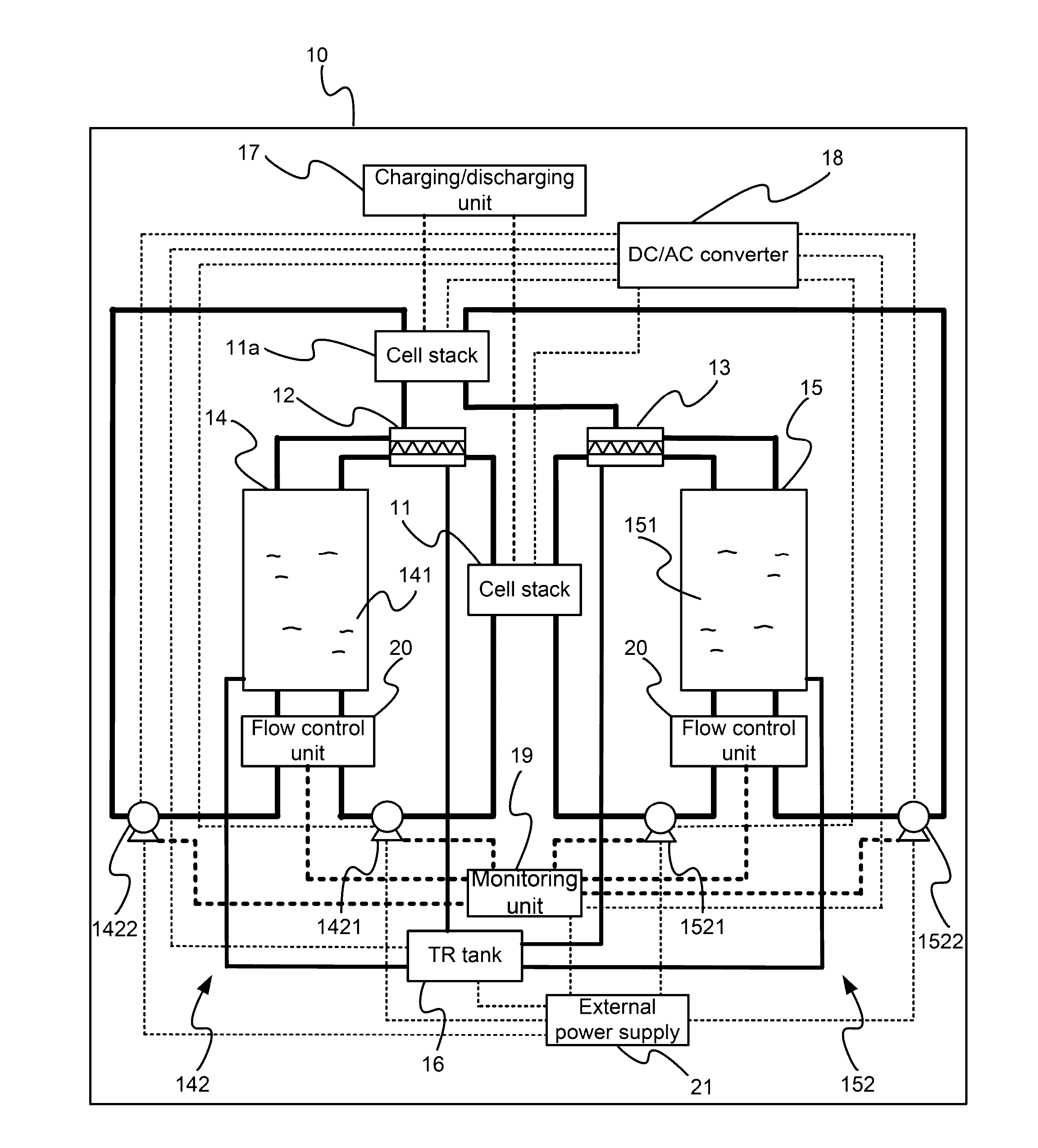
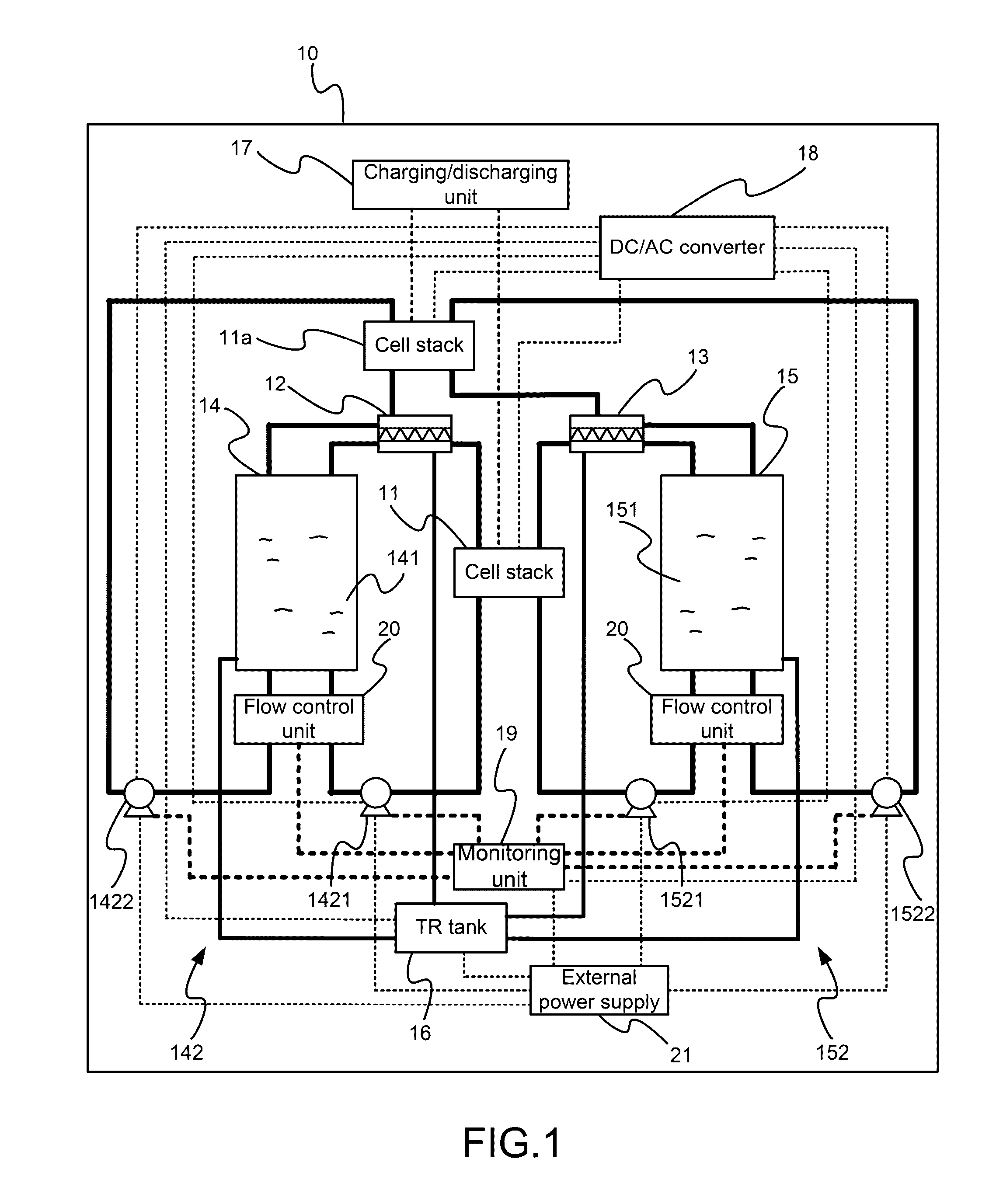
Apparatus of Multifunctional Integrating Flow Battery
PatentInactiveUS20160372763A1
Innovation
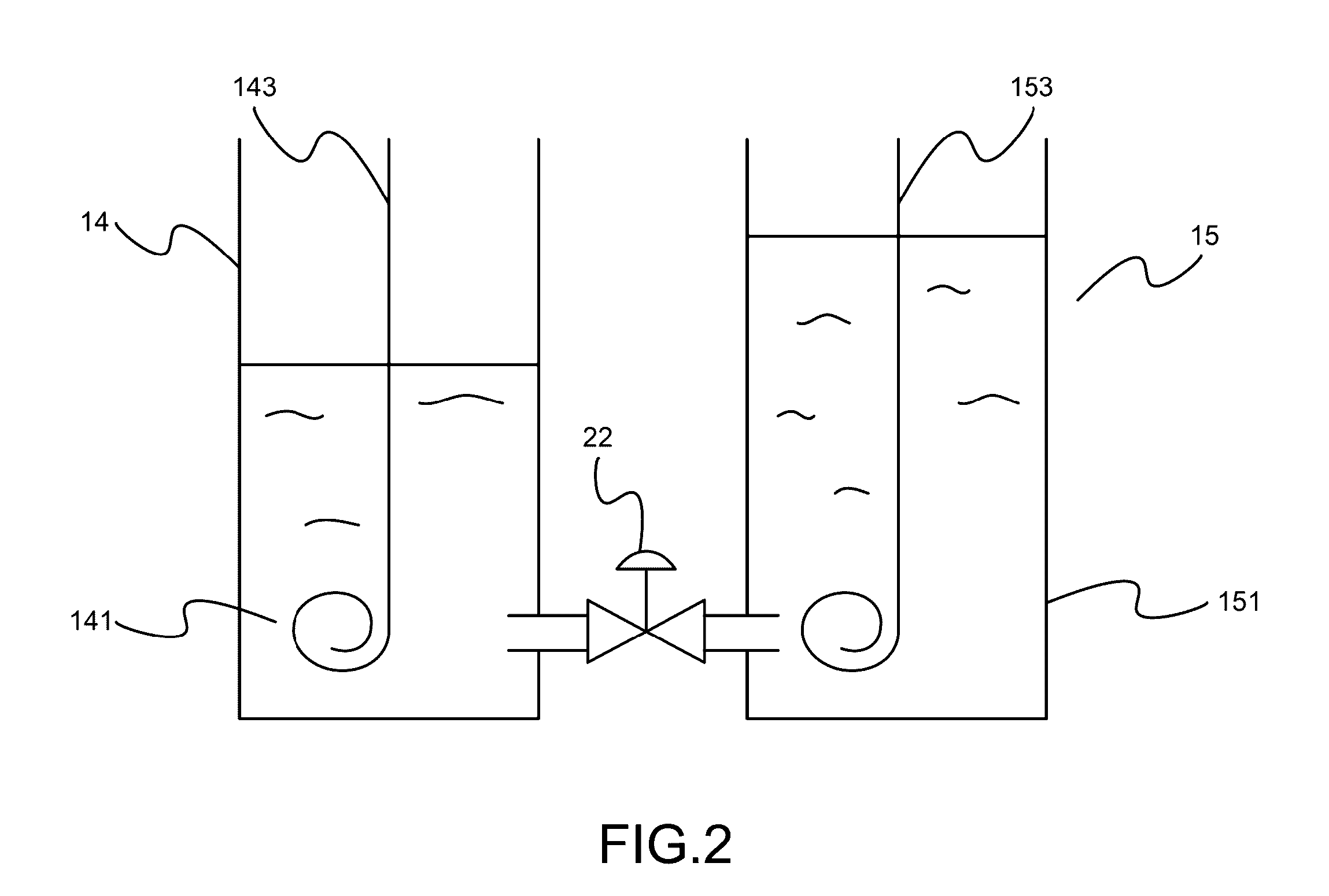
- A multifunctional integrating flow battery system with swappable electrolytes, circulating pumps, and a temperature-retaining tank, allowing for simultaneous charging and discharging across multiple cell stacks, automatic control, and environmental temperature adaptation, enabling efficient and quick charging of electric vehicles.
Safety Standards for Aqueous Flow Battery Systems
Safety standards for aqueous flow battery systems represent a critical framework that distinguishes these technologies from traditional structural battery integration approaches. The fundamental safety architecture for aqueous flow batteries centers on their inherent electrochemical stability, where water-based electrolytes provide significantly reduced fire and explosion risks compared to organic solvent systems used in conventional lithium-ion batteries.
Current international safety standards, including IEC 62932 and UL 1973, establish specific protocols for aqueous flow battery installations. These standards mandate comprehensive electrolyte containment systems, requiring double-wall storage tanks with leak detection capabilities and automated shutdown mechanisms. The aqueous nature of these systems allows for more straightforward emergency response procedures, as water-based electrolytes can typically be neutralized using standard industrial safety protocols.
Thermal management safety requirements for aqueous flow batteries focus on preventing electrolyte freezing and maintaining optimal operating temperatures between 5°C and 40°C. Unlike structural battery systems that must address thermal runaway risks, aqueous flow batteries primarily require freeze protection and corrosion prevention measures. Safety standards mandate temperature monitoring systems with automatic heating elements in cold climates and ventilation systems to prevent hydrogen gas accumulation during charging cycles.
Electrical safety protocols emphasize proper grounding and isolation procedures, particularly important given the conductive nature of aqueous electrolytes. Standards require ground fault circuit interrupters and insulation monitoring systems to detect potential electrical leakage. The modular design of flow battery systems necessitates standardized connection protocols to ensure safe maintenance and component replacement procedures.
Environmental safety considerations include spill containment systems sized to handle the largest single electrolyte tank volume, with chemical-resistant materials specified for all containment structures. Regular electrolyte quality testing protocols are mandated to monitor pH levels, conductivity, and contamination indicators. These comprehensive safety frameworks enable aqueous flow battery systems to achieve superior safety profiles while maintaining competitive efficiency metrics in large-scale energy storage applications.
Current international safety standards, including IEC 62932 and UL 1973, establish specific protocols for aqueous flow battery installations. These standards mandate comprehensive electrolyte containment systems, requiring double-wall storage tanks with leak detection capabilities and automated shutdown mechanisms. The aqueous nature of these systems allows for more straightforward emergency response procedures, as water-based electrolytes can typically be neutralized using standard industrial safety protocols.
Thermal management safety requirements for aqueous flow batteries focus on preventing electrolyte freezing and maintaining optimal operating temperatures between 5°C and 40°C. Unlike structural battery systems that must address thermal runaway risks, aqueous flow batteries primarily require freeze protection and corrosion prevention measures. Safety standards mandate temperature monitoring systems with automatic heating elements in cold climates and ventilation systems to prevent hydrogen gas accumulation during charging cycles.
Electrical safety protocols emphasize proper grounding and isolation procedures, particularly important given the conductive nature of aqueous electrolytes. Standards require ground fault circuit interrupters and insulation monitoring systems to detect potential electrical leakage. The modular design of flow battery systems necessitates standardized connection protocols to ensure safe maintenance and component replacement procedures.
Environmental safety considerations include spill containment systems sized to handle the largest single electrolyte tank volume, with chemical-resistant materials specified for all containment structures. Regular electrolyte quality testing protocols are mandated to monitor pH levels, conductivity, and contamination indicators. These comprehensive safety frameworks enable aqueous flow battery systems to achieve superior safety profiles while maintaining competitive efficiency metrics in large-scale energy storage applications.
Environmental Impact of Structural Battery Integration
The environmental implications of structural battery integration represent a paradigm shift in sustainable energy storage and transportation systems. Unlike conventional battery technologies that require separate housing and mounting systems, structural batteries serve dual functions as both energy storage devices and load-bearing components, fundamentally altering the environmental footprint of energy systems.
Lifecycle carbon emissions analysis reveals significant environmental advantages for structural battery integration compared to traditional approaches. The elimination of redundant materials, particularly heavy metallic housings and mounting brackets, reduces raw material extraction requirements by approximately 15-25%. This reduction translates directly into lower embodied carbon emissions during manufacturing phases, with preliminary assessments indicating potential carbon footprint reductions of 20-30% compared to conventional battery plus structural component combinations.
Material efficiency improvements extend beyond carbon considerations to encompass broader resource utilization patterns. Structural battery integration enables optimal material distribution, where carbon fiber composites or advanced polymer matrices simultaneously provide mechanical strength and electrochemical functionality. This dual-purpose design philosophy minimizes material waste and reduces the overall mass of integrated systems, contributing to enhanced energy efficiency in mobile applications.
End-of-life considerations present both opportunities and challenges for environmental sustainability. The integrated nature of structural batteries complicates traditional recycling processes, as electrochemical components cannot be easily separated from structural elements. However, emerging recycling technologies specifically designed for composite battery structures show promise for recovering valuable materials including lithium, cobalt, and carbon fibers through advanced separation techniques.
Manufacturing process environmental impacts demonstrate mixed outcomes depending on production scale and technology maturity. While initial production phases may require higher energy inputs due to complex integration processes, scaled manufacturing operations show potential for reduced overall environmental impact through consolidated production workflows and elimination of separate assembly processes.
The broader systemic environmental benefits become particularly pronounced in transportation applications, where weight reduction from structural integration directly correlates with operational energy efficiency improvements. Electric vehicles incorporating structural batteries demonstrate 8-12% improvements in energy consumption, translating to reduced grid electricity demand and associated environmental benefits throughout operational lifecycles.
Lifecycle carbon emissions analysis reveals significant environmental advantages for structural battery integration compared to traditional approaches. The elimination of redundant materials, particularly heavy metallic housings and mounting brackets, reduces raw material extraction requirements by approximately 15-25%. This reduction translates directly into lower embodied carbon emissions during manufacturing phases, with preliminary assessments indicating potential carbon footprint reductions of 20-30% compared to conventional battery plus structural component combinations.
Material efficiency improvements extend beyond carbon considerations to encompass broader resource utilization patterns. Structural battery integration enables optimal material distribution, where carbon fiber composites or advanced polymer matrices simultaneously provide mechanical strength and electrochemical functionality. This dual-purpose design philosophy minimizes material waste and reduces the overall mass of integrated systems, contributing to enhanced energy efficiency in mobile applications.
End-of-life considerations present both opportunities and challenges for environmental sustainability. The integrated nature of structural batteries complicates traditional recycling processes, as electrochemical components cannot be easily separated from structural elements. However, emerging recycling technologies specifically designed for composite battery structures show promise for recovering valuable materials including lithium, cobalt, and carbon fibers through advanced separation techniques.
Manufacturing process environmental impacts demonstrate mixed outcomes depending on production scale and technology maturity. While initial production phases may require higher energy inputs due to complex integration processes, scaled manufacturing operations show potential for reduced overall environmental impact through consolidated production workflows and elimination of separate assembly processes.
The broader systemic environmental benefits become particularly pronounced in transportation applications, where weight reduction from structural integration directly correlates with operational energy efficiency improvements. Electric vehicles incorporating structural batteries demonstrate 8-12% improvements in energy consumption, translating to reduced grid electricity demand and associated environmental benefits throughout operational lifecycles.
Unlock deeper insights with PatSnap Eureka Quick Research — get a full tech report to explore trends and direct your research. Try now!
Generate Your Research Report Instantly with AI Agent
Supercharge your innovation with PatSnap Eureka AI Agent Platform!