
Assessing Biocompatibility in Composite Bioink Blends
MAR 5, 20269 MIN READ
Generate Your Research Report Instantly with AI Agent
Patsnap Eureka helps you evaluate technical feasibility & market potential.
Bioink Composite Development Background and Objectives
Bioink composite development has emerged as a critical frontier in tissue engineering and regenerative medicine, driven by the increasing demand for functional biomaterials that can replicate the complex microenvironment of native tissues. The evolution of bioprinting technology has progressed from simple single-material systems to sophisticated multi-component formulations that combine various polymers, cells, and bioactive molecules. This technological advancement reflects the growing understanding that successful tissue regeneration requires materials that not only provide structural support but also promote cellular activities and tissue integration.
The historical development of bioink composites began with basic hydrogel systems in the early 2000s, primarily utilizing natural polymers such as alginate, gelatin, and collagen. These early formulations, while biocompatible, often lacked the mechanical properties and printability required for complex tissue constructs. The introduction of synthetic polymers and hybrid systems marked a significant milestone, enabling researchers to fine-tune material properties through controlled blending ratios and crosslinking mechanisms.
Current technological trends indicate a shift toward multi-functional composite bioinks that incorporate growth factors, nanoparticles, and multiple cell types within a single formulation. This evolution has been accelerated by advances in materials science, particularly in understanding polymer interactions and degradation kinetics. The integration of smart materials that respond to environmental stimuli represents the latest frontier in bioink development.
The primary objective of contemporary bioink composite development centers on achieving optimal biocompatibility while maintaining printability and mechanical integrity. Biocompatibility assessment has become increasingly sophisticated, encompassing not only cytotoxicity evaluation but also comprehensive analysis of cellular behavior, immune response, and long-term tissue integration. The challenge lies in balancing multiple competing requirements: the material must be non-toxic to cells, support cellular proliferation and differentiation, maintain structural integrity during printing, and degrade at appropriate rates to allow tissue remodeling.
Technical goals include developing standardized protocols for biocompatibility assessment that can accurately predict in vivo performance from in vitro testing. This involves establishing reliable metrics for evaluating cell viability, proliferation rates, differentiation markers, and inflammatory responses across different composite formulations. Additionally, the field aims to create predictive models that can guide composite design based on intended applications and target tissues.
The ultimate vision encompasses personalized bioink formulations tailored to specific patient needs and tissue types, supported by comprehensive biocompatibility databases that enable rapid screening and optimization of new composite blends.
Market Demand for Biocompatible 3D Bioprinting Materials
The global 3D bioprinting market is experiencing unprecedented growth, driven by increasing demand for personalized medicine, organ transplantation alternatives, and advanced tissue engineering solutions. Healthcare institutions worldwide are actively seeking biocompatible materials that can replicate the complex mechanical and biological properties of native tissues. This surge in demand stems from the critical shortage of donor organs and the limitations of traditional tissue engineering approaches.
Pharmaceutical companies represent a significant market segment, utilizing biocompatible bioinks for drug testing and toxicity screening applications. The ability to create human tissue models using composite bioink blends offers substantial cost savings compared to animal testing while providing more accurate human-relevant data. Research institutions and biotechnology companies are increasingly investing in biocompatible 3D bioprinting materials to accelerate their research timelines and improve experimental outcomes.
The regenerative medicine sector demonstrates particularly strong demand for biocompatible composite bioinks capable of supporting cell viability, proliferation, and differentiation. Clinical applications ranging from skin grafts to cartilage repair require materials that seamlessly integrate with host tissues without triggering adverse immune responses. This clinical necessity drives continuous innovation in bioink formulations and biocompatibility assessment methodologies.
Market demand is further amplified by regulatory pressures requiring more sophisticated preclinical testing models. Traditional cell culture methods are increasingly inadequate for predicting human responses, creating substantial market opportunities for advanced biocompatible materials that can bridge this gap. The cosmetics industry also contributes to market growth, seeking alternatives to animal testing through bioprinted tissue models.
Emerging applications in personalized medicine are creating new market segments, where patient-specific bioinks derived from individual cell sources require rigorous biocompatibility validation. The demand extends beyond basic compatibility to include functional integration, mechanical matching, and long-term stability in physiological environments.
Geographic market distribution shows strong growth in North America and Europe, driven by established healthcare infrastructure and regulatory frameworks supporting innovative medical technologies. Asia-Pacific regions are rapidly expanding their market presence, with increasing research investments and growing healthcare needs driving demand for biocompatible 3D bioprinting solutions.
Current Biocompatibility Assessment Challenges in Composite Bioinks
The assessment of biocompatibility in composite bioink blends presents multifaceted challenges that significantly impact the advancement of 3D bioprinting technologies. Current evaluation methodologies struggle to comprehensively address the complex interactions between multiple biomaterial components, living cells, and host tissues, creating substantial barriers to clinical translation.
One primary challenge lies in the heterogeneous nature of composite bioinks, which typically combine natural polymers, synthetic materials, and bioactive compounds. Traditional biocompatibility testing protocols, originally designed for single-component materials, prove inadequate for evaluating these complex formulations. The synergistic or antagonistic effects between different components cannot be accurately predicted using conventional in vitro assays, leading to incomplete safety profiles.
Standardization represents another critical obstacle in biocompatibility assessment. The absence of universally accepted testing protocols for composite bioinks results in inconsistent evaluation criteria across research institutions and manufacturers. This lack of standardization complicates regulatory approval processes and hinders the establishment of reliable safety benchmarks for clinical applications.
The temporal dynamics of biocompatibility pose additional complexity, as composite bioinks undergo degradation and remodeling processes that alter their biological interactions over time. Current assessment methods often rely on short-term studies that fail to capture long-term biocompatibility profiles, particularly regarding chronic inflammatory responses and tissue integration patterns.
Scale-dependent biocompatibility effects present further challenges, as material properties and cellular responses can vary significantly between laboratory-scale testing and actual bioprinting applications. The mechanical stresses encountered during the printing process, combined with the three-dimensional architecture of printed constructs, create unique microenvironments that are difficult to replicate in standard biocompatibility assays.
Advanced characterization techniques for composite bioinks remain limited, particularly for real-time monitoring of biocompatibility parameters. Current methods often require destructive sampling or provide insufficient spatial resolution to assess localized biocompatibility variations within heterogeneous constructs, limiting comprehensive evaluation capabilities.
Existing Biocompatibility Testing Methods for Composite Materials
01 Natural polymer-based bioink formulations for enhanced biocompatibility
Bioink compositions incorporating natural polymers such as collagen, gelatin, alginate, and hyaluronic acid to create biocompatible scaffolds for tissue engineering. These natural materials provide excellent cell adhesion properties and mimic the extracellular matrix environment, promoting cell viability and tissue integration. The formulations can be optimized by adjusting polymer concentrations and crosslinking methods to achieve desired mechanical properties while maintaining high biocompatibility.- Natural polymer-based bioink formulations for enhanced biocompatibility: Bioink compositions incorporating natural polymers such as collagen, gelatin, alginate, and hyaluronic acid to create biocompatible scaffolds for tissue engineering. These natural materials provide excellent cell adhesion properties and mimic the extracellular matrix environment, promoting cell viability and tissue integration. The formulations can be optimized by adjusting polymer concentrations and crosslinking methods to achieve desired mechanical properties while maintaining high biocompatibility.
- Synthetic polymer blends for controlled bioink properties: Composite bioinks utilizing synthetic polymers such as polyethylene glycol (PEG), polycaprolactone (PCL), and poly(lactic-co-glycolic acid) (PLGA) to provide tunable mechanical strength and degradation rates. These synthetic components can be blended with natural polymers to balance biocompatibility with structural integrity. The synthetic-natural hybrid approach allows for precise control over printability, cell encapsulation efficiency, and long-term stability of printed constructs.
- Cell-laden bioink systems with enhanced viability: Bioink formulations designed specifically for cell encapsulation and delivery, incorporating growth factors, nutrients, and protective agents to maintain cell viability during and after the printing process. These systems focus on optimizing cell density, distribution uniformity, and post-printing cell survival rates. The bioinks may include additives that reduce shear stress during extrusion and promote cell proliferation in the printed structure.
- Crosslinking strategies for bioink stabilization: Methods for stabilizing bioink structures through various crosslinking mechanisms including physical, chemical, and enzymatic approaches. These techniques ensure structural integrity of printed constructs while maintaining biocompatibility. Crosslinking can be achieved through ionic interactions, photo-polymerization, thermal gelation, or enzymatic reactions, each offering different advantages in terms of processing speed, mechanical properties, and biological safety.
- Bioink characterization and testing methodologies: Comprehensive evaluation methods for assessing bioink biocompatibility including cytotoxicity assays, cell proliferation studies, differentiation potential analysis, and in vivo compatibility testing. These methodologies establish standards for measuring rheological properties, printability parameters, mechanical characteristics, and biological performance. Testing protocols ensure that bioink formulations meet safety requirements and functional specifications for intended tissue engineering applications.
02 Synthetic polymer blends for controlled bioink properties
Composite bioinks utilizing synthetic polymers such as polycaprolactone, polyethylene glycol, and polylactic acid blended with biocompatible materials to achieve specific rheological and mechanical characteristics. These blends allow for precise control over degradation rates, printability, and structural integrity. The synthetic components can be combined with natural polymers to balance biocompatibility with enhanced mechanical strength and long-term stability.Expand Specific Solutions03 Cell-laden bioink systems with viability enhancement
Bioink formulations designed to encapsulate living cells while maintaining high cell viability and functionality during and after the printing process. These systems incorporate growth factors, nutrients, and protective agents to support cell survival under printing stresses. The compositions are optimized for specific cell types and include components that promote cell proliferation and differentiation in the printed constructs.Expand Specific Solutions04 Crosslinking strategies for bioink stabilization
Methods for stabilizing bioink structures through various crosslinking mechanisms including physical, chemical, and enzymatic approaches. These techniques enhance the structural integrity of printed constructs while preserving biocompatibility. Crosslinking agents and conditions are carefully selected to ensure rapid gelation, appropriate mechanical properties, and minimal cytotoxicity to encapsulated cells.Expand Specific Solutions05 Multi-component bioink blends for tissue-specific applications
Composite bioink formulations combining multiple biocompatible materials tailored for specific tissue engineering applications such as bone, cartilage, or vascular tissue. These blends incorporate tissue-specific components including mineralization agents, chondrogenic factors, or angiogenic promoters. The multi-component approach allows for mimicking the complex composition and properties of native tissues while ensuring overall biocompatibility and functionality.Expand Specific Solutions
Key Players in Bioink and 3D Bioprinting Industry
The biocompatibility assessment of composite bioink blends represents an emerging field within the rapidly evolving bioprinting industry, currently in its early commercialization stage with significant growth potential. The global bioprinting market, valued at approximately $2.4 billion, is projected to reach $8.3 billion by 2030, driven by increasing demand for tissue engineering and regenerative medicine applications. Technology maturity varies considerably across key players, with established companies like Stryker Corp. and bioMérieux SA leveraging their medical device expertise, while specialized bioprinting firms such as BICO Group AB and Aspect Biosystems Ltd. focus on advanced bioink formulations. Academic institutions including Texas A&M University, Zhejiang University, and Technical University of Denmark contribute fundamental research, while emerging players like Sichuan Revotek pioneer novel applications. The competitive landscape reflects a hybrid ecosystem where traditional medical technology companies collaborate with specialized bioprinting startups and research institutions to advance biocompatibility standards and regulatory frameworks for next-generation tissue engineering solutions.
Stryker Corp.
Technical Solution: Stryker implements systematic biocompatibility evaluation for composite bioink materials used in orthopedic and surgical applications. Their assessment framework combines in vitro cytotoxicity screening with advanced analytical techniques including spectroscopic analysis and surface characterization. The company utilizes multi-tiered testing approaches encompassing acute toxicity, sensitization, and irritation studies following FDA regulatory requirements. Their bioink evaluation includes assessment of degradation products, leachable compounds, and long-term tissue response through both in vitro and in vivo models. Stryker's methodology emphasizes clinical translation readiness with focus on regulatory compliance and patient safety standards.
Strengths: Strong regulatory expertise, clinical translation focus, comprehensive safety protocols. Weaknesses: Conservative approach may limit innovation, primarily focused on hard tissue applications, extensive regulatory requirements.
BICO Group AB
Technical Solution: BICO Group develops comprehensive biocompatibility assessment protocols for composite bioink blends through their advanced bioprinting platforms. Their approach integrates multi-parameter cytotoxicity testing, cell viability assays, and inflammatory response evaluation using standardized ISO 10993 guidelines. The company's bioink formulations undergo rigorous testing including direct contact assays, extract testing, and long-term biocompatibility studies. Their composite bioinks are evaluated for cell adhesion, proliferation, and differentiation capabilities across multiple cell lines. BICO's assessment methodology includes mechanical property evaluation alongside biological compatibility to ensure optimal printability and tissue integration.
Strengths: Comprehensive testing protocols, established bioprinting expertise, standardized assessment methods. Weaknesses: Limited to specific bioink formulations, high testing costs, lengthy evaluation timelines.
Core Innovations in Bioink Biocompatibility Assessment
Photo-crosslinked hyaluronic acid bio-ink for bio-printing, method for preparing same, and biological structure capable of controlling physical properties using same
PatentWO2022119145A1
Innovation
- A bioink composition containing methacrylate-introduced polymers, such as hyaluronic acid, crosslinked with acrylate-functional agents like PEGDA or GlyMA, and a photoinitiator, allowing for photo-crosslinking to control physical properties and enhance biocompatibility and cell viability.


Bioink and preparation method therefor
PatentWO2018186611A2
Innovation
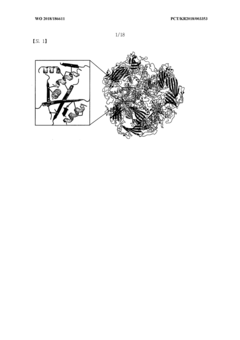
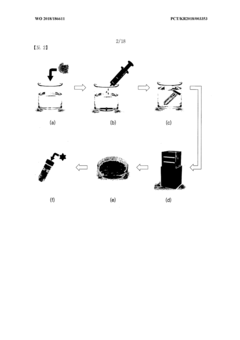
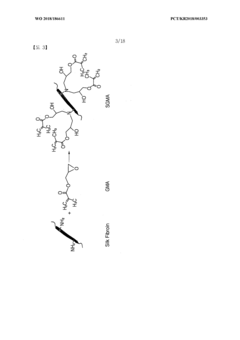
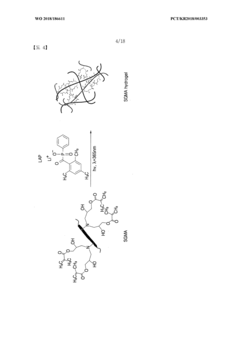
- A bio-ink composed of silk fibroin and methacrylate-based compounds, polymerized with a photoinitiator, which forms a hydrogel upon light exposure, offering enhanced mechanical properties and biocompatibility, suitable for 3D printing using methods like DLP, enabling the creation of structures with improved cytocompatibility and physical properties.
Regulatory Framework for Bioink Medical Applications
The regulatory landscape for bioink medical applications represents a complex and evolving framework that directly impacts the assessment and approval of composite bioink blends for clinical use. Current regulatory pathways primarily fall under existing medical device classifications, with bioinks typically categorized as Class II or Class III devices depending on their intended application and risk profile. The FDA's Center for Biologics Evaluation and Research (CBER) and Center for Devices and Radiological Health (CDRH) share jurisdiction over these products, creating a dual regulatory pathway that manufacturers must navigate carefully.
International harmonization efforts through organizations like the International Council for Harmonisation (ICH) and ISO standards committees are establishing unified guidelines for biocompatibility testing protocols. ISO 10993 series standards serve as the foundation for biological evaluation of medical devices, providing specific testing requirements for cytotoxicity, sensitization, and systemic toxicity that directly apply to composite bioink formulations. These standards mandate comprehensive preclinical testing phases before human trials can commence.
The European Medicines Agency (EMA) has developed parallel regulatory frameworks under the Medical Device Regulation (MDR) 2017/745, which emphasizes risk-based classification and post-market surveillance requirements. This regulation specifically addresses combination products that incorporate biological materials, making it highly relevant for cell-laden bioink applications. The notified body assessment process requires extensive documentation of biocompatibility data and manufacturing quality controls.
Emerging regulatory considerations include the need for standardized biocompatibility assessment protocols specifically tailored to 3D bioprinting applications. Traditional testing methods may not adequately capture the unique biological interactions that occur during the printing process and subsequent tissue maturation phases. Regulatory agencies are increasingly requiring dynamic biocompatibility studies that evaluate material performance throughout the entire product lifecycle.
Quality management systems compliant with ISO 13485 are mandatory for bioink manufacturers, encompassing design controls, risk management processes, and clinical evaluation procedures. These systems must demonstrate traceability from raw material sourcing through final product delivery, with particular attention to sterility assurance and batch-to-batch consistency verification protocols that ensure reproducible biocompatibility outcomes across production runs.
Standardization Needs for Bioink Testing Protocols
The assessment of biocompatibility in composite bioink blends faces significant challenges due to the absence of standardized testing protocols across the industry. Current evaluation methods vary substantially between research institutions and commercial entities, leading to inconsistent results and hampering the translation of promising bioink formulations from laboratory to clinical applications.
Existing testing approaches often rely on adapted protocols from traditional biomaterial assessment, which may not adequately address the unique properties of composite bioinks. These materials exhibit complex interactions between multiple components, including natural polymers, synthetic materials, and bioactive additives, requiring specialized evaluation frameworks that current standards do not comprehensively cover.
The lack of harmonized protocols creates particular difficulties in comparing biocompatibility data across different studies and platforms. Researchers frequently employ varying cell lines, culture conditions, assessment timepoints, and evaluation criteria, making it challenging to establish reliable benchmarks for bioink performance. This inconsistency significantly impedes regulatory approval processes and slows the advancement of bioprinting technologies toward clinical implementation.
International standardization organizations have begun recognizing these gaps, with preliminary discussions emerging around developing specific guidelines for bioink testing. However, the complexity of composite formulations presents unique challenges in establishing universal protocols that can accommodate the diverse range of material combinations and intended applications.
Critical areas requiring standardization include cytotoxicity assessment methodologies, inflammatory response evaluation protocols, and long-term biocompatibility monitoring procedures. Additionally, standardized approaches for evaluating the biocompatibility of degradation products from composite bioinks remain underdeveloped, despite their crucial importance for in vivo applications.
The development of comprehensive testing standards must also address the scalability of assessment methods, ensuring that protocols remain practical for both research and industrial applications. This includes establishing standardized reference materials, defining minimum testing requirements, and creating guidelines for data interpretation and reporting.
Furthermore, standardization efforts must consider the rapid evolution of bioink technologies, requiring flexible frameworks that can accommodate emerging materials and novel composite formulations while maintaining rigorous safety and efficacy evaluation standards.
Unlock deeper insights with Patsnap Eureka Quick Research — get a full tech report to explore trends and direct your research. Try now!
Generate Your Research Report Instantly with AI Agent
Supercharge your innovation with Patsnap Eureka AI Agent Platform!