

Assessing Wind Turbine Performance Under Variable Wind Loads
MAR 12, 20269 MIN READ
Generate Your Research Report Instantly with AI Agent
PatSnap Eureka helps you evaluate technical feasibility & market potential.
Wind Turbine Performance Assessment Background and Objectives
Wind turbine technology has evolved significantly since its inception in the late 19th century, transitioning from simple mechanical designs to sophisticated aerodynamic systems capable of generating megawatts of clean electricity. The historical development trajectory reveals a consistent challenge: optimizing turbine performance under the inherently variable and unpredictable nature of wind resources. Early wind turbines operated with fixed-pitch blades and constant rotational speeds, making them vulnerable to performance degradation and structural stress under fluctuating wind conditions.
The contemporary wind energy landscape demands increasingly sophisticated approaches to performance assessment, driven by the industry's maturation and the critical need for reliable renewable energy sources. Modern wind turbines face complex operational environments where wind loads vary dramatically in magnitude, direction, and frequency, creating multifaceted challenges for performance optimization. These variations encompass not only steady-state wind speed changes but also turbulence, wind shear, gusts, and directional shifts that significantly impact energy capture efficiency and structural integrity.
Current technological evolution focuses on developing advanced control systems, adaptive blade technologies, and intelligent monitoring solutions that can respond dynamically to variable wind conditions. The integration of machine learning algorithms, real-time sensor networks, and predictive analytics represents the cutting edge of wind turbine performance optimization. These innovations aim to maximize energy extraction while minimizing mechanical stress and extending operational lifespan under diverse wind loading scenarios.
The primary objective of assessing wind turbine performance under variable wind loads centers on establishing comprehensive methodologies for quantifying energy conversion efficiency across the full spectrum of operational conditions. This encompasses developing robust performance metrics that account for temporal variations in wind resources, spatial wind field heterogeneity, and the complex interactions between atmospheric conditions and turbine response characteristics.
Secondary objectives include advancing predictive modeling capabilities to forecast performance degradation patterns, optimizing maintenance scheduling based on load history analysis, and enhancing turbine design parameters to improve resilience under extreme wind events. The ultimate goal involves creating standardized assessment frameworks that enable accurate performance benchmarking, facilitate technology comparison, and support informed decision-making for wind farm development and operation strategies.
The contemporary wind energy landscape demands increasingly sophisticated approaches to performance assessment, driven by the industry's maturation and the critical need for reliable renewable energy sources. Modern wind turbines face complex operational environments where wind loads vary dramatically in magnitude, direction, and frequency, creating multifaceted challenges for performance optimization. These variations encompass not only steady-state wind speed changes but also turbulence, wind shear, gusts, and directional shifts that significantly impact energy capture efficiency and structural integrity.
Current technological evolution focuses on developing advanced control systems, adaptive blade technologies, and intelligent monitoring solutions that can respond dynamically to variable wind conditions. The integration of machine learning algorithms, real-time sensor networks, and predictive analytics represents the cutting edge of wind turbine performance optimization. These innovations aim to maximize energy extraction while minimizing mechanical stress and extending operational lifespan under diverse wind loading scenarios.
The primary objective of assessing wind turbine performance under variable wind loads centers on establishing comprehensive methodologies for quantifying energy conversion efficiency across the full spectrum of operational conditions. This encompasses developing robust performance metrics that account for temporal variations in wind resources, spatial wind field heterogeneity, and the complex interactions between atmospheric conditions and turbine response characteristics.
Secondary objectives include advancing predictive modeling capabilities to forecast performance degradation patterns, optimizing maintenance scheduling based on load history analysis, and enhancing turbine design parameters to improve resilience under extreme wind events. The ultimate goal involves creating standardized assessment frameworks that enable accurate performance benchmarking, facilitate technology comparison, and support informed decision-making for wind farm development and operation strategies.
Market Demand for Variable Wind Load Performance Solutions
The global wind energy market has experienced unprecedented growth, driven by increasing environmental consciousness and government mandates for renewable energy adoption. This expansion has created substantial demand for advanced wind turbine performance assessment solutions, particularly those capable of handling variable wind load conditions. Traditional wind assessment methods often fall short in accurately predicting turbine behavior under dynamic wind conditions, creating a significant market gap for sophisticated analytical tools.
Industrial wind farm operators represent the primary market segment demanding variable wind load performance solutions. These operators manage large-scale installations where even marginal improvements in performance prediction can translate to substantial revenue gains. The complexity of modern wind farms, often featuring hundreds of turbines across diverse topographical conditions, necessitates advanced assessment capabilities that can account for turbulence, wind shear, and directional variability.
Utility companies constitute another critical market segment, particularly those integrating wind power into their energy portfolios. These organizations require precise performance forecasting to optimize grid integration and ensure reliable power delivery. The intermittent nature of wind resources makes accurate performance assessment under variable conditions essential for maintaining grid stability and meeting regulatory requirements.
The offshore wind sector presents rapidly expanding market opportunities for variable wind load assessment solutions. Offshore installations face unique challenges including complex marine boundary layer effects, wake interactions between turbines, and extreme weather conditions. These factors create heightened demand for sophisticated performance assessment tools capable of modeling variable load scenarios specific to marine environments.
Emerging markets in developing countries are increasingly recognizing the importance of accurate wind resource assessment. As these regions invest in wind energy infrastructure, demand grows for cost-effective solutions that can optimize turbine placement and performance prediction under local wind conditions. The economic constraints in these markets drive demand for scalable, efficient assessment technologies.
Regulatory frameworks worldwide are evolving to require more stringent performance verification and environmental impact assessments for wind energy projects. This regulatory pressure creates sustained market demand for comprehensive performance assessment solutions that can demonstrate compliance with increasingly complex standards. The trend toward performance-based incentives in renewable energy policies further amplifies this demand.
Technological convergence with digital transformation initiatives in the energy sector is expanding market opportunities. Integration with IoT sensors, machine learning platforms, and predictive analytics systems creates new market segments focused on real-time performance optimization and predictive maintenance applications.
Industrial wind farm operators represent the primary market segment demanding variable wind load performance solutions. These operators manage large-scale installations where even marginal improvements in performance prediction can translate to substantial revenue gains. The complexity of modern wind farms, often featuring hundreds of turbines across diverse topographical conditions, necessitates advanced assessment capabilities that can account for turbulence, wind shear, and directional variability.
Utility companies constitute another critical market segment, particularly those integrating wind power into their energy portfolios. These organizations require precise performance forecasting to optimize grid integration and ensure reliable power delivery. The intermittent nature of wind resources makes accurate performance assessment under variable conditions essential for maintaining grid stability and meeting regulatory requirements.
The offshore wind sector presents rapidly expanding market opportunities for variable wind load assessment solutions. Offshore installations face unique challenges including complex marine boundary layer effects, wake interactions between turbines, and extreme weather conditions. These factors create heightened demand for sophisticated performance assessment tools capable of modeling variable load scenarios specific to marine environments.
Emerging markets in developing countries are increasingly recognizing the importance of accurate wind resource assessment. As these regions invest in wind energy infrastructure, demand grows for cost-effective solutions that can optimize turbine placement and performance prediction under local wind conditions. The economic constraints in these markets drive demand for scalable, efficient assessment technologies.
Regulatory frameworks worldwide are evolving to require more stringent performance verification and environmental impact assessments for wind energy projects. This regulatory pressure creates sustained market demand for comprehensive performance assessment solutions that can demonstrate compliance with increasingly complex standards. The trend toward performance-based incentives in renewable energy policies further amplifies this demand.
Technological convergence with digital transformation initiatives in the energy sector is expanding market opportunities. Integration with IoT sensors, machine learning platforms, and predictive analytics systems creates new market segments focused on real-time performance optimization and predictive maintenance applications.
Current Challenges in Wind Turbine Variable Load Assessment
Wind turbine performance assessment under variable load conditions faces significant technical and methodological challenges that impede accurate evaluation and optimization of turbine systems. The dynamic nature of wind resources creates complex loading scenarios that traditional assessment methods struggle to capture comprehensively.
One of the primary challenges lies in the accurate modeling of turbulent wind conditions and their impact on turbine structural components. Current assessment methodologies often rely on simplified wind models that fail to capture the full spectrum of wind variability, including gusts, wind shear, and directional changes. This limitation results in incomplete understanding of fatigue loading patterns and their long-term effects on turbine reliability and performance.
The integration of multiple variable parameters presents another significant obstacle. Wind turbines operate under simultaneous variations in wind speed, direction, temperature, and atmospheric pressure, creating multidimensional loading scenarios that are difficult to model accurately. Existing assessment tools often treat these variables independently, leading to oversimplified analyses that may not reflect real-world operating conditions.
Measurement and data acquisition challenges further complicate variable load assessment. Current sensor technologies and data collection systems may not provide sufficient temporal and spatial resolution to capture rapid load fluctuations. The harsh operating environment of wind turbines also poses reliability issues for monitoring equipment, potentially resulting in data gaps that compromise assessment accuracy.
Computational limitations represent a substantial barrier to comprehensive variable load analysis. High-fidelity simulations that account for all relevant variables require significant computational resources and time, making them impractical for routine performance assessment. This constraint forces engineers to rely on simplified models that may not adequately represent the complexity of variable loading conditions.
The lack of standardized methodologies for variable load assessment creates inconsistencies across the industry. Different organizations employ varying approaches and criteria, making it difficult to compare results and establish industry-wide best practices. This fragmentation hinders the development of more effective assessment techniques and limits knowledge sharing within the wind energy community.
Finally, the challenge of translating variable load assessment results into actionable insights for turbine design and operation remains significant. Current assessment methods often produce complex datasets that are difficult to interpret and apply to practical decision-making processes, limiting their utility for improving turbine performance and reliability.
One of the primary challenges lies in the accurate modeling of turbulent wind conditions and their impact on turbine structural components. Current assessment methodologies often rely on simplified wind models that fail to capture the full spectrum of wind variability, including gusts, wind shear, and directional changes. This limitation results in incomplete understanding of fatigue loading patterns and their long-term effects on turbine reliability and performance.
The integration of multiple variable parameters presents another significant obstacle. Wind turbines operate under simultaneous variations in wind speed, direction, temperature, and atmospheric pressure, creating multidimensional loading scenarios that are difficult to model accurately. Existing assessment tools often treat these variables independently, leading to oversimplified analyses that may not reflect real-world operating conditions.
Measurement and data acquisition challenges further complicate variable load assessment. Current sensor technologies and data collection systems may not provide sufficient temporal and spatial resolution to capture rapid load fluctuations. The harsh operating environment of wind turbines also poses reliability issues for monitoring equipment, potentially resulting in data gaps that compromise assessment accuracy.
Computational limitations represent a substantial barrier to comprehensive variable load analysis. High-fidelity simulations that account for all relevant variables require significant computational resources and time, making them impractical for routine performance assessment. This constraint forces engineers to rely on simplified models that may not adequately represent the complexity of variable loading conditions.
The lack of standardized methodologies for variable load assessment creates inconsistencies across the industry. Different organizations employ varying approaches and criteria, making it difficult to compare results and establish industry-wide best practices. This fragmentation hinders the development of more effective assessment techniques and limits knowledge sharing within the wind energy community.
Finally, the challenge of translating variable load assessment results into actionable insights for turbine design and operation remains significant. Current assessment methods often produce complex datasets that are difficult to interpret and apply to practical decision-making processes, limiting their utility for improving turbine performance and reliability.
Existing Variable Wind Load Assessment Technologies
01 Blade design and aerodynamic optimization
Wind turbine performance can be enhanced through improved blade design and aerodynamic optimization. This includes modifications to blade geometry, airfoil profiles, and surface characteristics to maximize energy capture efficiency. Advanced blade configurations can reduce drag, improve lift-to-drag ratios, and optimize the angle of attack across different wind conditions. These design improvements help increase power output while reducing mechanical stress on turbine components.- Blade design and aerodynamic optimization: Wind turbine performance can be enhanced through improved blade design and aerodynamic optimization. This includes modifications to blade geometry, airfoil profiles, and surface characteristics to maximize energy capture efficiency. Advanced blade configurations can reduce drag, improve lift-to-drag ratios, and optimize the angle of attack across different wind conditions. These design improvements help increase power output while reducing mechanical stress on turbine components.
- Control systems and operational optimization: Advanced control systems play a crucial role in optimizing wind turbine performance by adjusting operational parameters in real-time. These systems monitor wind conditions, turbine status, and power output to make dynamic adjustments to blade pitch, rotor speed, and yaw orientation. Intelligent control algorithms can maximize energy capture while protecting turbine components from excessive loads and extending operational lifespan. Performance optimization through control systems enables turbines to operate more efficiently across varying wind speeds and environmental conditions.
- Structural and mechanical enhancements: Improvements to the structural and mechanical components of wind turbines contribute significantly to overall performance. This includes innovations in tower design, nacelle configuration, drivetrain systems, and bearing assemblies. Enhanced structural integrity allows turbines to withstand higher loads and operate in more challenging environmental conditions. Mechanical improvements reduce friction losses, minimize maintenance requirements, and increase the reliability and availability of wind turbines for power generation.
- Monitoring and diagnostic systems: Performance monitoring and diagnostic systems enable continuous assessment of wind turbine operation and early detection of potential issues. These systems utilize sensors, data analytics, and predictive maintenance algorithms to track key performance indicators and identify degradation or anomalies. Real-time monitoring allows operators to optimize performance, schedule maintenance proactively, and minimize downtime. Advanced diagnostic capabilities help extend turbine lifespan and improve overall energy production efficiency.
- Site-specific optimization and environmental adaptation: Wind turbine performance can be optimized through site-specific adaptations that account for local wind patterns, terrain characteristics, and environmental conditions. This includes customized turbine configurations, optimized placement within wind farms, and adaptive operational strategies tailored to specific locations. Environmental adaptation techniques address challenges such as extreme temperatures, humidity, icing conditions, and turbulence. Site-specific optimization ensures maximum energy capture while maintaining safe and reliable operation under diverse environmental conditions.
02 Control systems and operational optimization
Advanced control systems play a crucial role in optimizing wind turbine performance by adjusting operational parameters in real-time. These systems monitor wind conditions, turbine status, and power output to make dynamic adjustments to blade pitch, rotor speed, and yaw orientation. Intelligent control algorithms can maximize energy capture while protecting the turbine from damage during extreme weather conditions. Performance optimization through control systems also includes predictive maintenance capabilities and load management strategies.Expand Specific Solutions03 Structural and mechanical enhancements
Improvements to the structural and mechanical components of wind turbines contribute significantly to overall performance. This includes innovations in tower design, nacelle configuration, drivetrain efficiency, and bearing systems. Enhanced structural integrity allows turbines to operate reliably under varying load conditions while minimizing downtime. Mechanical improvements focus on reducing friction losses, improving power transmission efficiency, and extending component lifespan through better materials and engineering solutions.Expand Specific Solutions04 Monitoring and diagnostic systems
Performance monitoring and diagnostic systems enable continuous assessment of wind turbine operation and health status. These systems collect data from multiple sensors to track parameters such as vibration, temperature, power output, and environmental conditions. Advanced analytics and diagnostic algorithms can identify performance degradation, predict component failures, and optimize maintenance schedules. Real-time monitoring capabilities allow operators to respond quickly to issues and maintain optimal performance levels throughout the turbine's operational life.Expand Specific Solutions05 Site-specific optimization and environmental adaptation
Wind turbine performance can be optimized for specific installation sites and environmental conditions. This includes customization based on local wind patterns, terrain characteristics, temperature ranges, and atmospheric conditions. Site-specific optimization may involve adjustments to turbine configuration, control strategies, and operational parameters to maximize energy production in particular environments. Environmental adaptation also addresses challenges such as icing, extreme temperatures, offshore conditions, and varying air density to ensure consistent performance across diverse locations.Expand Specific Solutions
Major Players in Wind Turbine Performance Assessment Industry
The wind turbine performance assessment sector represents a mature yet rapidly evolving industry driven by increasing global renewable energy demands and technological sophistication. The market has reached substantial scale, with established players like Vestas Wind Systems, Siemens Gamesa, and General Electric dominating through decades of operational experience and extensive turbine installations worldwide. Technology maturity varies significantly across the competitive landscape, with European leaders such as Vestas and Siemens Gamesa demonstrating advanced performance monitoring capabilities, while Asian manufacturers like Goldwind Science & Technology and Envision Energy are rapidly advancing their assessment technologies. Emerging players including specialized engineering firms like Innovative Windpower AG and research institutions such as Fraunhofer-Gesellschaft are pushing technological boundaries in variable load analysis and predictive maintenance solutions, indicating a dynamic ecosystem where traditional turbine manufacturers compete alongside innovative technology developers to optimize wind energy performance under increasingly complex operational conditions.
Vestas Wind Systems A/S
Technical Solution: Vestas employs advanced load assessment systems combining LIDAR technology with predictive control algorithms to optimize turbine performance under variable wind conditions. Their WindGuard system continuously monitors wind patterns and adjusts blade pitch angles in real-time to minimize fatigue loads while maximizing energy capture. The company utilizes machine learning algorithms to predict wind behavior patterns and proactively adjust turbine operations, reducing structural stress by up to 15% while maintaining optimal power output. Their digital twin technology creates virtual models of each turbine to simulate performance under various wind load scenarios.
Strengths: Market leader with extensive field data and proven load mitigation technologies. Weaknesses: High implementation costs for advanced monitoring systems may limit adoption in cost-sensitive markets.
Siemens Gamesa Renewable Energy AS
Technical Solution: Siemens Gamesa implements their proprietary WindGuard technology integrated with advanced blade design featuring variable geometry capabilities. Their system uses real-time wind measurement data from nacelle-mounted sensors and ground-based meteorological stations to assess incoming wind loads and adjust turbine parameters accordingly. The company's digital platform processes over 50,000 data points per second to optimize blade pitch control and yaw positioning, reducing extreme loads by approximately 20% compared to conventional systems. Their predictive maintenance algorithms analyze vibration patterns and load histories to prevent component failures.
Strengths: Strong integration of hardware and software solutions with comprehensive data analytics capabilities. Weaknesses: Complex system architecture may require specialized maintenance expertise and higher operational costs.
Core Innovations in Dynamic Wind Load Performance Analysis
A method for monitoring and assessing power performance changes of a wind turbine
PatentActiveUS20180335019A1
Innovation
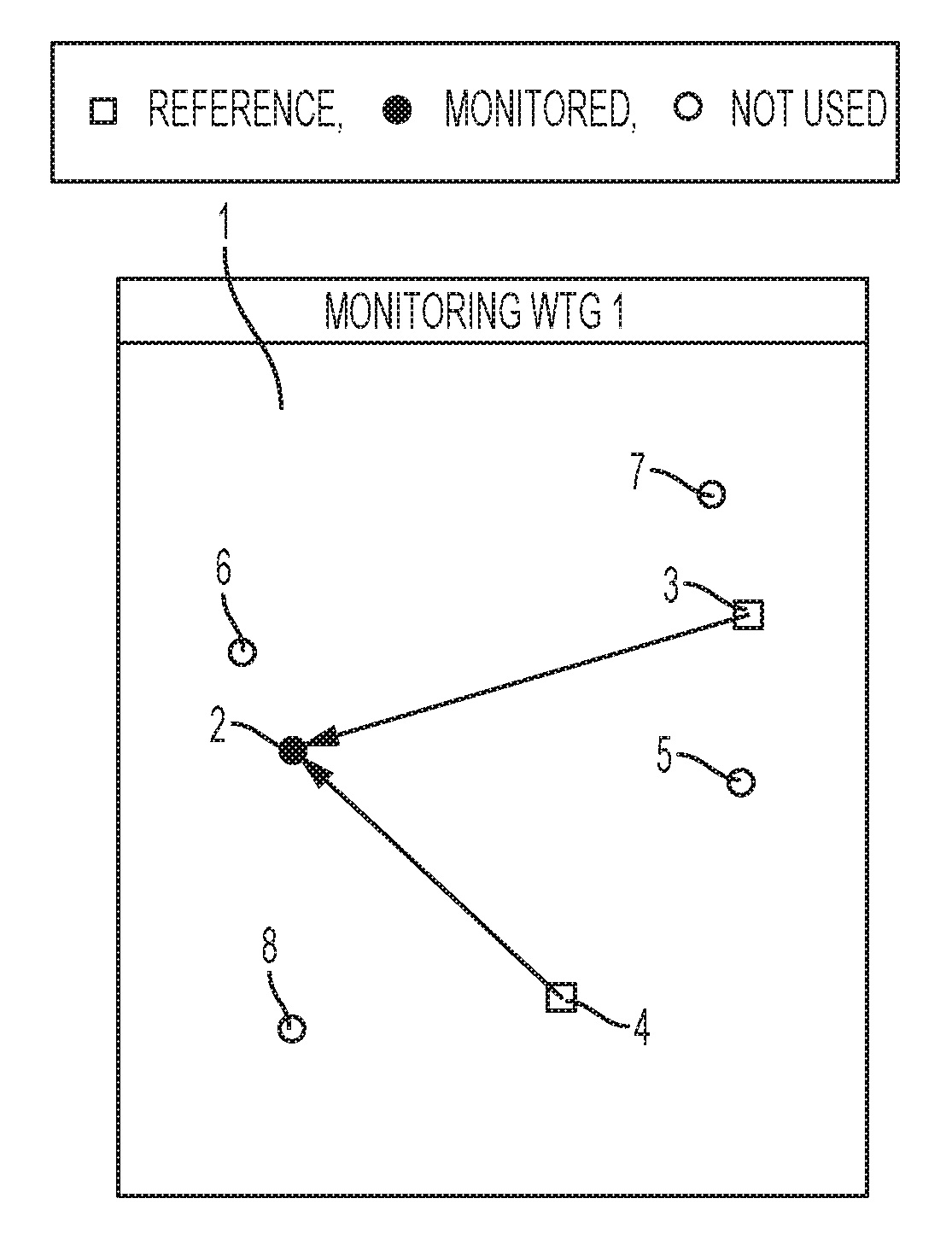
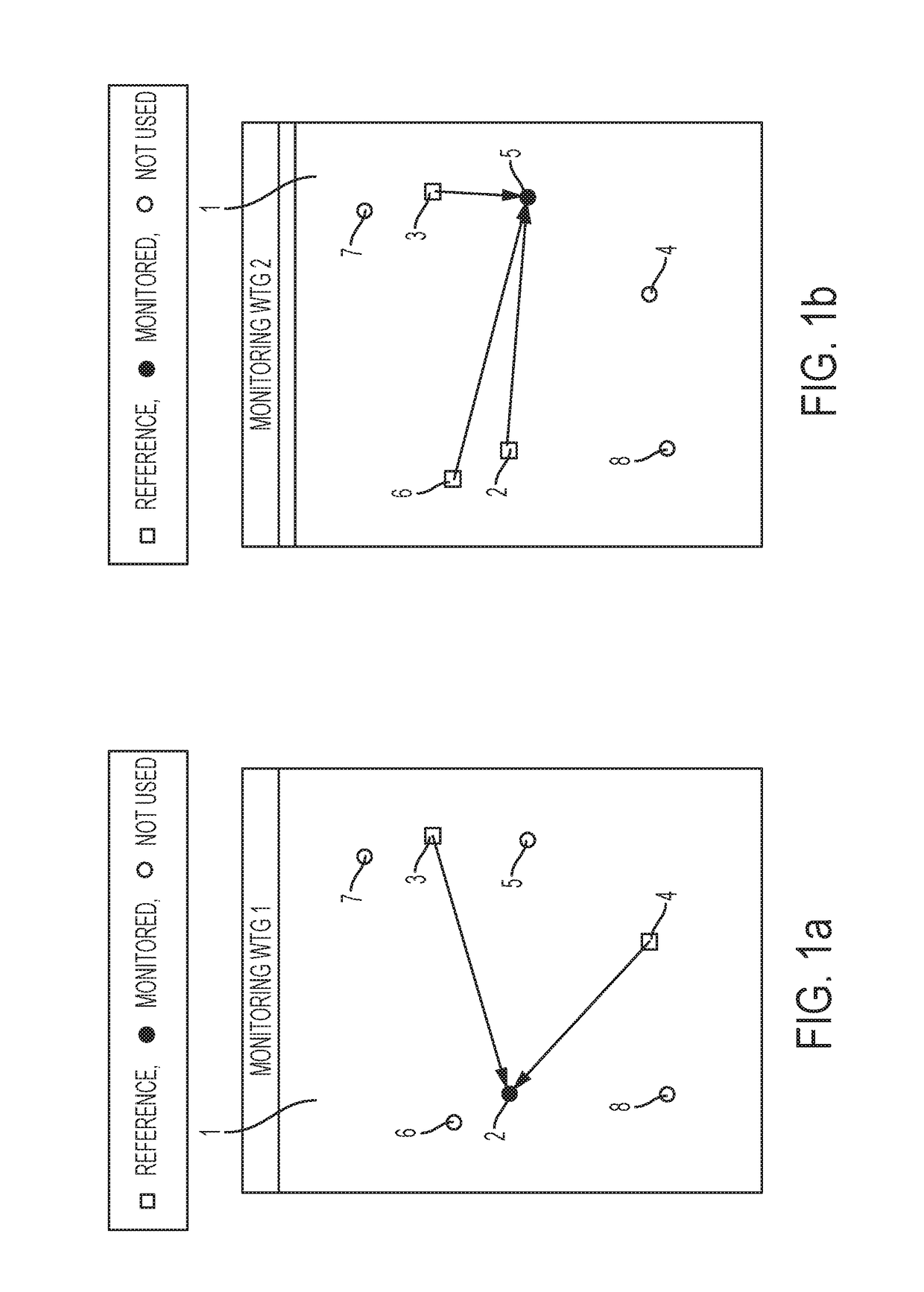
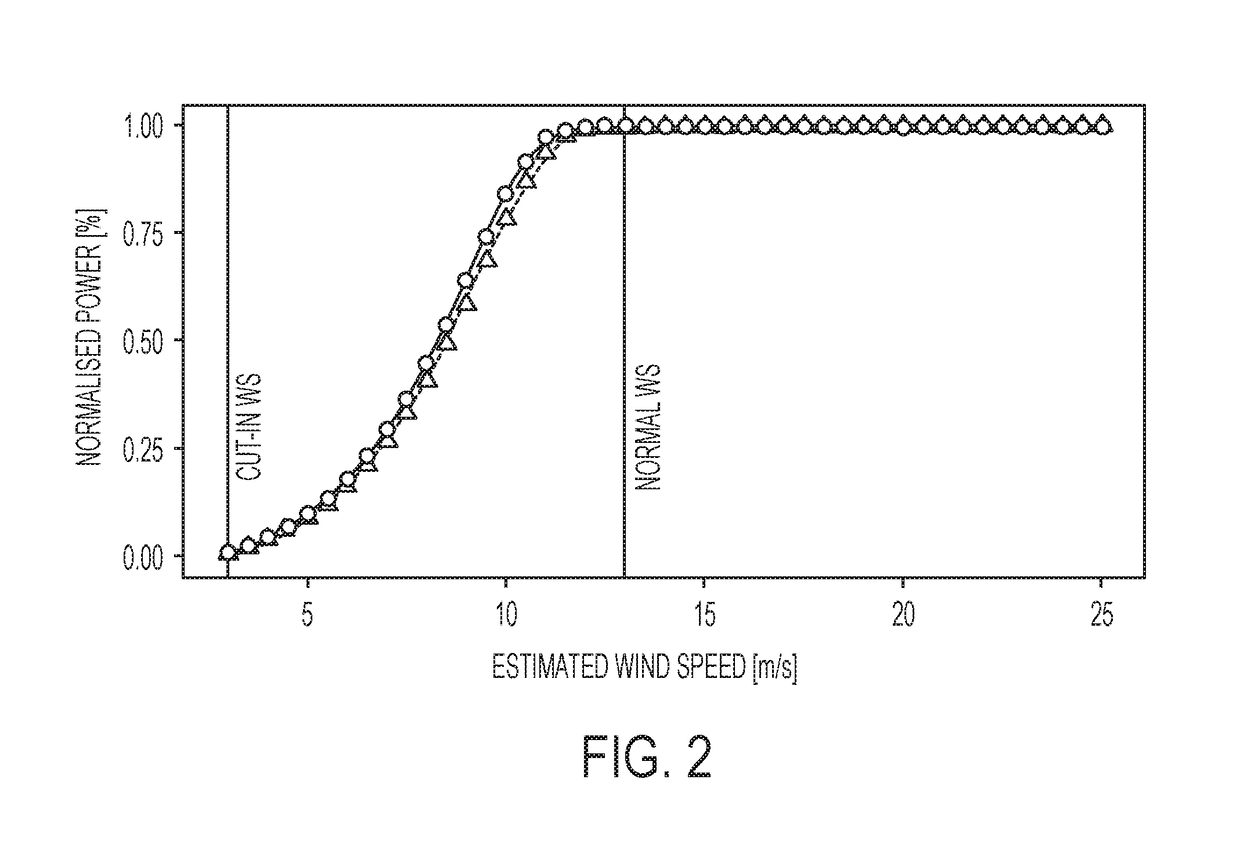
- A method involving defining a group of reference wind turbines, generating a transfer function based on locally measured wind speeds and power performance data during a training period, and comparing this data to predicted performance during test periods to assess power changes, allowing for reliable detection of degradation.

Environmental Impact Assessment for Wind Energy Systems
Wind energy systems, while representing a crucial component of renewable energy infrastructure, present complex environmental considerations that require comprehensive assessment throughout their operational lifecycle. The environmental impact evaluation of wind turbines operating under variable wind loads encompasses multiple dimensions, including ecological disruption, noise pollution, visual impact, and broader ecosystem effects that must be systematically analyzed to ensure sustainable deployment.
The acoustic emissions generated by wind turbines under varying wind conditions constitute a primary environmental concern. As wind loads fluctuate, turbine operational parameters adjust dynamically, resulting in variable noise signatures that can affect local wildlife populations and human communities. Studies indicate that noise levels typically range from 35-45 decibels at residential distances, with frequency characteristics changing based on wind speed and turbulence intensity. These acoustic variations can disrupt bird migration patterns and alter local fauna behavior, particularly during peak wind seasons when turbines operate at maximum capacity.
Avian and bat mortality represents another critical environmental impact directly correlated with variable wind load conditions. Research demonstrates that collision rates increase significantly during periods of high wind variability, as turbulent conditions affect animal flight patterns and reduce their ability to detect rotating blades. Annual mortality rates vary considerably based on geographic location and seasonal wind patterns, with some installations reporting impacts on protected species populations.
The electromagnetic interference generated by wind turbines under different operational loads can affect local communication systems and radar installations. Variable wind conditions cause fluctuating electromagnetic signatures that may interfere with aviation radar, weather monitoring systems, and telecommunications infrastructure. This impact becomes particularly pronounced in areas with high wind variability, where constant operational adjustments create dynamic interference patterns.
Soil and groundwater impacts from wind turbine foundations require evaluation under various wind load scenarios. Extreme wind events can generate substantial foundation stresses, potentially affecting soil stability and local hydrology. Long-term monitoring indicates that repeated variable loading cycles may influence subsurface water flow patterns and soil compaction characteristics around turbine installations.
Visual impact assessment must consider the dynamic nature of wind turbine operations under variable conditions. Shadow flicker effects, blade reflection patterns, and landscape integration vary significantly with changing wind loads and operational states. These visual impacts can affect property values and community acceptance, particularly in areas experiencing frequent wind condition changes that result in variable turbine operational patterns throughout different seasons.
The acoustic emissions generated by wind turbines under varying wind conditions constitute a primary environmental concern. As wind loads fluctuate, turbine operational parameters adjust dynamically, resulting in variable noise signatures that can affect local wildlife populations and human communities. Studies indicate that noise levels typically range from 35-45 decibels at residential distances, with frequency characteristics changing based on wind speed and turbulence intensity. These acoustic variations can disrupt bird migration patterns and alter local fauna behavior, particularly during peak wind seasons when turbines operate at maximum capacity.
Avian and bat mortality represents another critical environmental impact directly correlated with variable wind load conditions. Research demonstrates that collision rates increase significantly during periods of high wind variability, as turbulent conditions affect animal flight patterns and reduce their ability to detect rotating blades. Annual mortality rates vary considerably based on geographic location and seasonal wind patterns, with some installations reporting impacts on protected species populations.
The electromagnetic interference generated by wind turbines under different operational loads can affect local communication systems and radar installations. Variable wind conditions cause fluctuating electromagnetic signatures that may interfere with aviation radar, weather monitoring systems, and telecommunications infrastructure. This impact becomes particularly pronounced in areas with high wind variability, where constant operational adjustments create dynamic interference patterns.
Soil and groundwater impacts from wind turbine foundations require evaluation under various wind load scenarios. Extreme wind events can generate substantial foundation stresses, potentially affecting soil stability and local hydrology. Long-term monitoring indicates that repeated variable loading cycles may influence subsurface water flow patterns and soil compaction characteristics around turbine installations.
Visual impact assessment must consider the dynamic nature of wind turbine operations under variable conditions. Shadow flicker effects, blade reflection patterns, and landscape integration vary significantly with changing wind loads and operational states. These visual impacts can affect property values and community acceptance, particularly in areas experiencing frequent wind condition changes that result in variable turbine operational patterns throughout different seasons.
Grid Integration Standards for Variable Wind Performance
Grid integration standards for variable wind performance represent a critical framework governing how wind energy systems connect to and interact with electrical power networks under fluctuating operational conditions. These standards establish the technical requirements, operational protocols, and performance criteria that wind turbines must meet to ensure reliable grid operation despite the inherent variability in wind resources and corresponding power output fluctuations.
The International Electrotechnical Commission (IEC) 61400-21 series serves as the primary global standard for measuring and assessing power quality characteristics of grid-connected wind turbines. This standard specifically addresses how wind turbines behave under variable wind conditions and their impact on grid stability. It defines testing procedures for evaluating power quality parameters including voltage fluctuations, flicker, harmonics, and reactive power capabilities during varying wind speeds and turbulence levels.
Grid codes worldwide have evolved to accommodate the unique characteristics of variable wind generation. The IEEE 1547 standard in North America and the European Network of Transmission System Operators for Electricity (ENTSO-E) grid code establish requirements for fault ride-through capabilities, frequency response, and voltage regulation during wind variability. These standards mandate that wind turbines maintain grid connection during voltage sags and contribute to grid stability through advanced control systems that can respond to variable wind conditions.
Power quality management under variable wind loads requires sophisticated control algorithms and hardware solutions. Modern wind turbines must demonstrate compliance with harmonic distortion limits, voltage flicker coefficients, and power factor requirements across the entire operational wind speed range. The standards specify acceptable levels of power output variations and require implementation of power smoothing technologies when necessary.
Reactive power management represents another crucial aspect of grid integration standards for variable wind performance. Wind turbines must provide dynamic reactive power support to maintain voltage stability as wind conditions change. The standards define the reactive power capability curves that turbines must maintain across different active power output levels, ensuring grid voltage regulation during variable generation periods.
Frequency regulation requirements under variable wind conditions have become increasingly stringent as wind penetration levels increase. Standards now require wind turbines to provide primary frequency response services, automatically adjusting power output in response to grid frequency deviations while accounting for available wind resources and turbine operational constraints.
The International Electrotechnical Commission (IEC) 61400-21 series serves as the primary global standard for measuring and assessing power quality characteristics of grid-connected wind turbines. This standard specifically addresses how wind turbines behave under variable wind conditions and their impact on grid stability. It defines testing procedures for evaluating power quality parameters including voltage fluctuations, flicker, harmonics, and reactive power capabilities during varying wind speeds and turbulence levels.
Grid codes worldwide have evolved to accommodate the unique characteristics of variable wind generation. The IEEE 1547 standard in North America and the European Network of Transmission System Operators for Electricity (ENTSO-E) grid code establish requirements for fault ride-through capabilities, frequency response, and voltage regulation during wind variability. These standards mandate that wind turbines maintain grid connection during voltage sags and contribute to grid stability through advanced control systems that can respond to variable wind conditions.
Power quality management under variable wind loads requires sophisticated control algorithms and hardware solutions. Modern wind turbines must demonstrate compliance with harmonic distortion limits, voltage flicker coefficients, and power factor requirements across the entire operational wind speed range. The standards specify acceptable levels of power output variations and require implementation of power smoothing technologies when necessary.
Reactive power management represents another crucial aspect of grid integration standards for variable wind performance. Wind turbines must provide dynamic reactive power support to maintain voltage stability as wind conditions change. The standards define the reactive power capability curves that turbines must maintain across different active power output levels, ensuring grid voltage regulation during variable generation periods.
Frequency regulation requirements under variable wind conditions have become increasingly stringent as wind penetration levels increase. Standards now require wind turbines to provide primary frequency response services, automatically adjusting power output in response to grid frequency deviations while accounting for available wind resources and turbine operational constraints.
Unlock deeper insights with PatSnap Eureka Quick Research — get a full tech report to explore trends and direct your research. Try now!
Generate Your Research Report Instantly with AI Agent
Supercharge your innovation with PatSnap Eureka AI Agent Platform!