

Autoclave Process Flow Management for Lean Operations
SEP 2, 20259 MIN READ
Generate Your Research Report Instantly with AI Agent
PatSnap Eureka helps you evaluate technical feasibility & market potential.
Autoclave Technology Evolution and Objectives
Autoclave technology has evolved significantly since its inception in the early 20th century, transforming from basic pressure vessels to sophisticated computer-controlled systems essential for manufacturing advanced composite materials. The initial autoclaves were primarily used in medical sterilization and food processing, featuring manual controls and limited monitoring capabilities. By the 1960s and 1970s, aerospace and defense industries began adopting autoclave technology for composite curing processes, marking a pivotal shift in application domains.
The 1980s witnessed the integration of basic computerized control systems, enabling more precise temperature and pressure regulation. This period established the foundation for modern autoclave operations, though process efficiency remained a secondary consideration. The 1990s and early 2000s brought significant advancements with the implementation of programmable logic controllers (PLCs) and SCADA systems, allowing for more sophisticated process monitoring and data collection.
Recent technological developments have focused on energy efficiency, process optimization, and integration with broader manufacturing systems. Modern autoclaves incorporate advanced sensors, real-time monitoring capabilities, and predictive maintenance features. Despite these improvements, many facilities still struggle with optimizing process flow management, resulting in operational inefficiencies, excessive energy consumption, and production bottlenecks.
The primary objective of lean autoclave process flow management is to maximize resource utilization while minimizing waste in composite manufacturing operations. This encompasses reducing cycle times, optimizing energy consumption, improving throughput, and enhancing overall equipment effectiveness (OEE). Additionally, there is a growing emphasis on developing more sustainable autoclave operations to address increasing environmental concerns and regulatory requirements.
Key technical goals include developing intelligent scheduling algorithms that optimize batch processing and minimize idle time between cycles. Integration with Industry 4.0 principles represents another critical objective, enabling seamless communication between autoclaves and other manufacturing systems through IoT connectivity and data analytics platforms. Process standardization and the implementation of digital twins for simulation and predictive analysis are becoming increasingly important for achieving operational excellence.
The evolution trajectory points toward fully autonomous autoclave systems capable of self-optimization based on real-time production demands and material characteristics. This vision requires overcoming significant technical challenges, including the development of more sophisticated sensing technologies, advanced thermal management systems, and robust predictive algorithms that can account for the complex physical and chemical processes occurring during composite curing.
The 1980s witnessed the integration of basic computerized control systems, enabling more precise temperature and pressure regulation. This period established the foundation for modern autoclave operations, though process efficiency remained a secondary consideration. The 1990s and early 2000s brought significant advancements with the implementation of programmable logic controllers (PLCs) and SCADA systems, allowing for more sophisticated process monitoring and data collection.
Recent technological developments have focused on energy efficiency, process optimization, and integration with broader manufacturing systems. Modern autoclaves incorporate advanced sensors, real-time monitoring capabilities, and predictive maintenance features. Despite these improvements, many facilities still struggle with optimizing process flow management, resulting in operational inefficiencies, excessive energy consumption, and production bottlenecks.
The primary objective of lean autoclave process flow management is to maximize resource utilization while minimizing waste in composite manufacturing operations. This encompasses reducing cycle times, optimizing energy consumption, improving throughput, and enhancing overall equipment effectiveness (OEE). Additionally, there is a growing emphasis on developing more sustainable autoclave operations to address increasing environmental concerns and regulatory requirements.
Key technical goals include developing intelligent scheduling algorithms that optimize batch processing and minimize idle time between cycles. Integration with Industry 4.0 principles represents another critical objective, enabling seamless communication between autoclaves and other manufacturing systems through IoT connectivity and data analytics platforms. Process standardization and the implementation of digital twins for simulation and predictive analysis are becoming increasingly important for achieving operational excellence.
The evolution trajectory points toward fully autonomous autoclave systems capable of self-optimization based on real-time production demands and material characteristics. This vision requires overcoming significant technical challenges, including the development of more sophisticated sensing technologies, advanced thermal management systems, and robust predictive algorithms that can account for the complex physical and chemical processes occurring during composite curing.
Market Demand Analysis for Lean Autoclave Operations
The global market for autoclave process flow management solutions is experiencing significant growth, driven primarily by industries requiring high precision manufacturing and stringent quality control. Aerospace and defense sectors represent the largest market segment, accounting for approximately 35% of the total demand, followed by medical device manufacturing at 28% and composite materials production at 22%.
Market research indicates that the lean operations approach to autoclave processing is gaining substantial traction, with organizations reporting operational cost reductions between 15-20% after implementation. This trend is particularly evident in regions with high manufacturing costs such as North America and Western Europe, where labor efficiency and energy consumption optimization have become critical competitive factors.
Customer demand analysis reveals three primary market drivers for lean autoclave operations. First, energy efficiency has become paramount as industrial energy costs continue to rise globally, with autoclave operations typically consuming 30-40% of a manufacturing facility's total energy budget. Companies are actively seeking solutions that can reduce this consumption while maintaining process integrity.
Second, production throughput optimization represents a significant market pull factor. Manufacturing facilities operating multiple autoclaves report scheduling inefficiencies and equipment utilization rates averaging only 65-70%. Solutions that can increase this utilization rate are commanding premium pricing in the marketplace, with ROI calculations typically showing payback periods under 18 months.
Third, quality consistency remains a critical market requirement. The cost of quality failures in autoclave-dependent industries is exceptionally high, with scrap and rework expenses often exceeding 5% of total production costs. Lean management systems that can reduce variability while maintaining or improving quality outcomes are experiencing the highest demand growth rate at 12.8% annually.
Regional market analysis shows Asia-Pacific as the fastest-growing market for lean autoclave operations solutions, with a compound annual growth rate of 14.2%, driven primarily by expanding aerospace and medical device manufacturing sectors in China and India. North America remains the largest market by value, though growth has moderated to 8.3% annually.
Industry surveys indicate that approximately 62% of potential customers cite integration with existing manufacturing execution systems as their primary concern when evaluating new autoclave process flow management solutions, highlighting the importance of interoperability and data exchange capabilities in product development strategies.
Market research indicates that the lean operations approach to autoclave processing is gaining substantial traction, with organizations reporting operational cost reductions between 15-20% after implementation. This trend is particularly evident in regions with high manufacturing costs such as North America and Western Europe, where labor efficiency and energy consumption optimization have become critical competitive factors.
Customer demand analysis reveals three primary market drivers for lean autoclave operations. First, energy efficiency has become paramount as industrial energy costs continue to rise globally, with autoclave operations typically consuming 30-40% of a manufacturing facility's total energy budget. Companies are actively seeking solutions that can reduce this consumption while maintaining process integrity.
Second, production throughput optimization represents a significant market pull factor. Manufacturing facilities operating multiple autoclaves report scheduling inefficiencies and equipment utilization rates averaging only 65-70%. Solutions that can increase this utilization rate are commanding premium pricing in the marketplace, with ROI calculations typically showing payback periods under 18 months.
Third, quality consistency remains a critical market requirement. The cost of quality failures in autoclave-dependent industries is exceptionally high, with scrap and rework expenses often exceeding 5% of total production costs. Lean management systems that can reduce variability while maintaining or improving quality outcomes are experiencing the highest demand growth rate at 12.8% annually.
Regional market analysis shows Asia-Pacific as the fastest-growing market for lean autoclave operations solutions, with a compound annual growth rate of 14.2%, driven primarily by expanding aerospace and medical device manufacturing sectors in China and India. North America remains the largest market by value, though growth has moderated to 8.3% annually.
Industry surveys indicate that approximately 62% of potential customers cite integration with existing manufacturing execution systems as their primary concern when evaluating new autoclave process flow management solutions, highlighting the importance of interoperability and data exchange capabilities in product development strategies.
Current Challenges in Autoclave Process Management
Despite significant advancements in manufacturing technologies, autoclave processes continue to face numerous operational challenges that impede lean manufacturing principles. The most pressing issue remains the extensive cycle times inherent to autoclave operations, with typical composite curing processes requiring 6-12 hours per cycle. This extended duration creates substantial production bottlenecks and limits throughput capacity, directly contradicting lean manufacturing's emphasis on flow efficiency.
Energy consumption presents another significant challenge, as autoclaves typically operate at high temperatures (120-180°C) and pressures (6-7 bar), consuming between 100-300 kWh per cycle depending on size and application. This intensive energy usage not only increases operational costs but also conflicts with sustainability initiatives increasingly prioritized in modern manufacturing environments.
Quality consistency across batches remains problematic due to the complex interplay of temperature, pressure, and time variables. Current monitoring systems often provide limited real-time visibility into critical process parameters, resulting in quality variations that necessitate costly rework or material waste. Studies indicate that defect rates in autoclave processes can range from 5-15% depending on material complexity and process control sophistication.
Resource allocation inefficiencies further complicate autoclave operations. The batch processing nature of autoclaves creates scheduling complexities, with loading/unloading operations and maintenance activities frequently causing equipment underutilization. Industry benchmarks suggest that many autoclave facilities achieve only 60-70% equipment effectiveness rates, significantly below lean manufacturing targets.
Workflow integration challenges persist between pre-autoclave preparation, the curing process itself, and post-autoclave operations. The disconnected nature of these workflow stages creates inventory buffers and work-in-progress accumulation that contradicts lean principles of continuous flow and just-in-time production.
Data utilization represents another critical gap, with many facilities collecting substantial process data but lacking the analytical infrastructure to transform this information into actionable insights for process optimization. This disconnect between data collection and utilization prevents the implementation of continuous improvement methodologies essential to lean operations.
Labor utilization inefficiencies also impact autoclave operations, with specialized technicians often underutilized during lengthy cure cycles. This resource allocation challenge creates additional operational costs while failing to maximize the value of skilled personnel within the manufacturing environment.
Energy consumption presents another significant challenge, as autoclaves typically operate at high temperatures (120-180°C) and pressures (6-7 bar), consuming between 100-300 kWh per cycle depending on size and application. This intensive energy usage not only increases operational costs but also conflicts with sustainability initiatives increasingly prioritized in modern manufacturing environments.
Quality consistency across batches remains problematic due to the complex interplay of temperature, pressure, and time variables. Current monitoring systems often provide limited real-time visibility into critical process parameters, resulting in quality variations that necessitate costly rework or material waste. Studies indicate that defect rates in autoclave processes can range from 5-15% depending on material complexity and process control sophistication.
Resource allocation inefficiencies further complicate autoclave operations. The batch processing nature of autoclaves creates scheduling complexities, with loading/unloading operations and maintenance activities frequently causing equipment underutilization. Industry benchmarks suggest that many autoclave facilities achieve only 60-70% equipment effectiveness rates, significantly below lean manufacturing targets.
Workflow integration challenges persist between pre-autoclave preparation, the curing process itself, and post-autoclave operations. The disconnected nature of these workflow stages creates inventory buffers and work-in-progress accumulation that contradicts lean principles of continuous flow and just-in-time production.
Data utilization represents another critical gap, with many facilities collecting substantial process data but lacking the analytical infrastructure to transform this information into actionable insights for process optimization. This disconnect between data collection and utilization prevents the implementation of continuous improvement methodologies essential to lean operations.
Labor utilization inefficiencies also impact autoclave operations, with specialized technicians often underutilized during lengthy cure cycles. This resource allocation challenge creates additional operational costs while failing to maximize the value of skilled personnel within the manufacturing environment.
Current Lean Management Solutions for Autoclave Processes
01 Automated monitoring and control systems for autoclave processes
Advanced monitoring and control systems can be implemented to optimize autoclave operations. These systems utilize sensors and real-time data collection to monitor critical parameters such as temperature, pressure, and cycle time. By automating the monitoring process, operators can identify inefficiencies, reduce cycle times, and improve overall process reliability. These systems also enable predictive maintenance, reducing downtime and improving operational efficiency in line with lean manufacturing principles.- Automated monitoring and control systems for autoclave operations: Advanced monitoring and control systems can be implemented to optimize autoclave operations in manufacturing environments. These systems utilize sensors, real-time data collection, and automated control mechanisms to maintain precise temperature, pressure, and timing parameters during sterilization cycles. By automating the monitoring process, these systems reduce human error, improve consistency, and enable predictive maintenance, ultimately enhancing operational efficiency and product quality in lean manufacturing settings.
- Lean workflow optimization for autoclave processes: Implementing lean principles in autoclave operations involves streamlining workflows, reducing waste, and optimizing resource utilization. This includes designing efficient process flows, minimizing waiting times between autoclave cycles, and organizing workspace layouts to reduce unnecessary movement. By applying lean methodologies such as value stream mapping and continuous improvement practices, organizations can identify bottlenecks, eliminate non-value-adding activities, and create standardized work procedures that maximize throughput while maintaining quality standards.
- Digital transformation and Industry 4.0 integration in autoclave management: Digital transformation technologies enable advanced autoclave process management through integration with Industry 4.0 principles. This includes implementing IoT sensors for real-time monitoring, cloud-based data storage and analytics, digital twins for process simulation, and AI-driven predictive algorithms. These technologies facilitate remote monitoring, automated documentation, and intelligent decision support systems that optimize autoclave operations, reduce cycle times, and enhance overall equipment effectiveness while maintaining compliance with regulatory requirements.
- Quality assurance and validation systems for autoclave processes: Robust quality assurance and validation systems are essential for ensuring the effectiveness and consistency of autoclave sterilization processes. These systems incorporate standardized testing protocols, documentation procedures, and verification methods to confirm that sterilization parameters meet required specifications. By implementing systematic validation approaches, organizations can ensure regulatory compliance, reduce defect rates, and establish traceability throughout the autoclave process, supporting lean operations through reduced rework and consistent quality outcomes.
- Resource optimization and energy efficiency in autoclave operations: Optimizing resource utilization and energy efficiency in autoclave operations involves implementing strategies to reduce consumption of utilities while maintaining process effectiveness. This includes load optimization techniques, heat recovery systems, water recycling mechanisms, and scheduling algorithms that minimize idle time. By focusing on resource conservation and sustainable practices, organizations can reduce operational costs, minimize environmental impact, and improve overall equipment effectiveness, aligning with lean principles of waste reduction and continuous improvement.
02 Lean workflow optimization for autoclave operations
Implementing lean methodologies in autoclave operations involves streamlining workflows, reducing waste, and optimizing resource utilization. This includes reorganizing the physical layout of autoclave facilities, standardizing operating procedures, and implementing visual management tools. By applying lean principles such as value stream mapping and continuous flow, organizations can identify bottlenecks, reduce waiting times, and minimize non-value-added activities in the autoclave process, resulting in improved throughput and reduced operational costs.Expand Specific Solutions03 Digital twin and simulation technologies for process improvement
Digital twin technology and process simulation tools can be used to create virtual models of autoclave operations. These models allow operators to test different process parameters and configurations without disrupting actual production. By simulating various scenarios, organizations can identify optimal operating conditions, predict outcomes of process changes, and train personnel in a risk-free environment. This approach supports continuous improvement initiatives and helps in achieving lean operational goals by reducing experimentation time and costs.Expand Specific Solutions04 Integration of IoT and data analytics for autoclave efficiency
Internet of Things (IoT) devices and advanced data analytics can be integrated into autoclave systems to collect, analyze, and leverage operational data. These technologies enable real-time monitoring of process variables, predictive analytics for maintenance needs, and identification of patterns that may affect product quality. By implementing data-driven decision making, organizations can optimize autoclave cycles, reduce energy consumption, and improve overall equipment effectiveness, aligning with lean manufacturing principles of continuous improvement and waste reduction.Expand Specific Solutions05 Quality management systems for autoclave processes
Implementing robust quality management systems specifically designed for autoclave operations ensures consistent product quality while supporting lean objectives. These systems incorporate statistical process control, error-proofing mechanisms, and standardized validation protocols. By focusing on quality at each step of the autoclave process, organizations can reduce defects, minimize rework, and ensure compliance with regulatory requirements. This approach supports the lean principle of building quality into the process rather than inspecting it afterward, leading to improved efficiency and reduced waste.Expand Specific Solutions
Key Industry Players in Autoclave Manufacturing
The autoclave process flow management market for lean operations is in a growth phase, characterized by increasing adoption across aerospace, composites, and medical industries. The market is expanding due to the rising demand for efficient manufacturing processes, with an estimated global value exceeding $2 billion. Technologically, the field is maturing with advanced solutions from established players like Schlumberger Technologies and Yokogawa Electric Corp, who offer sophisticated automation systems. Emerging innovations come from specialized firms like LBBC Beechwood and Coomtech Ltd, focusing on energy efficiency and process optimization. Companies such as Hatch Ltd and Fraunhofer-Gesellschaft are advancing integration capabilities with Industry 4.0 technologies, while manufacturers like LG Electronics and Volkswagen AG are implementing these systems to enhance production efficiency.
Exxonmobil Upstream Research Co.
Technical Solution: ExxonMobil's autoclave process management system employs their proprietary Fast Drill Process technology adapted for high-pressure vessel operations. The system utilizes real-time mechanical specific energy (MSE) monitoring to optimize autoclave performance parameters. Their solution incorporates advanced computational fluid dynamics modeling that predicts flow patterns and reaction kinetics within the autoclave, enabling precise control of temperature and pressure gradients. ExxonMobil has developed specialized algorithms that continuously adjust heating and cooling cycles based on feed composition variations, reducing energy consumption by approximately 18-22% compared to conventional systems. The lean operations framework includes automated scheduling that optimizes batch sequencing, minimizing idle time between cycles to less than 5% of total operation time. Their system features predictive maintenance capabilities that analyze vibration patterns and thermal signatures to identify potential equipment failures before they occur, reducing unplanned downtime by up to 35%. The solution integrates with ExxonMobil's Global Production System, providing standardized workflows and best practices across multiple facilities.
Strengths: Exceptional energy efficiency through proprietary optimization algorithms; robust predictive maintenance capabilities that significantly reduce downtime; seamless integration with broader production management systems. Weaknesses: System designed primarily for petroleum industry applications, requiring significant adaptation for other sectors; high implementation complexity requiring specialized expertise; substantial initial investment compared to conventional control systems.
Hatch Ltd.
Technical Solution: Hatch's autoclave process management system integrates digital twin technology with real-time monitoring capabilities to optimize high-pressure oxidation processes. Their solution employs advanced process control algorithms that continuously adjust operating parameters based on feed characteristics and process conditions. The system features a hierarchical control architecture with supervisory control for setpoint optimization and regulatory control for maintaining stable operation. Hatch has implemented machine learning models that predict maintenance needs and potential process disruptions, enabling proactive interventions before failures occur. Their lean operations approach includes automated scheduling of batch processes, optimized reagent dosing, and energy recovery systems that reduce operational costs by approximately 15-20%. The system's modular design allows for scalability across different autoclave applications, from mineral processing to hydrometallurgical operations.
Strengths: Industry-leading expertise in metallurgical processes with proven implementation across multiple continents; comprehensive integration capabilities with existing plant systems; advanced predictive maintenance features that significantly reduce downtime. Weaknesses: Higher initial implementation costs compared to conventional systems; requires specialized training for operations personnel; customization needs for different process applications can extend implementation timelines.
Critical Patents in Autoclave Process Optimization
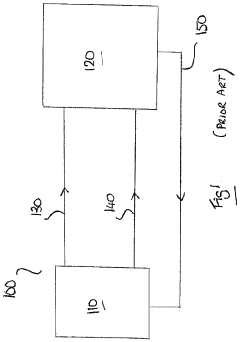
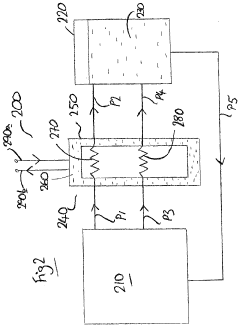
Autoclave system and method
PatentActiveUS20200147568A1
Innovation
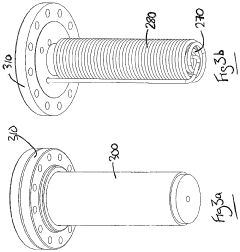
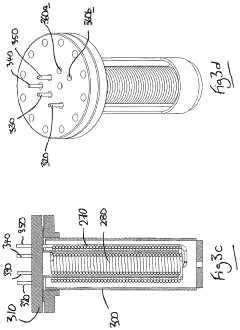
- A heat exchanger is interposed between the autoclave vessel and the external support system, utilizing thermal exchange conduits and a medium to cool and manage both leaching and venting fluids, reducing their temperature and pressure before reintroduction, while also pre-heating the leaching fluid for efficient operation.
Steerable heat source
PatentActiveUS20200307035A1
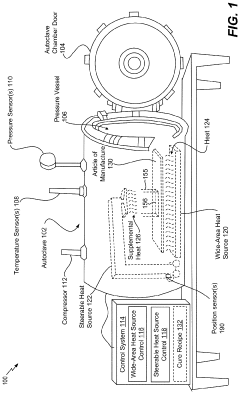
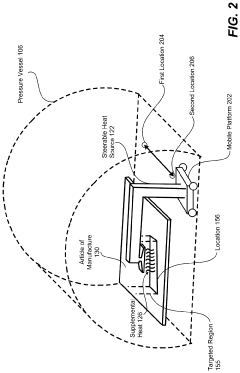
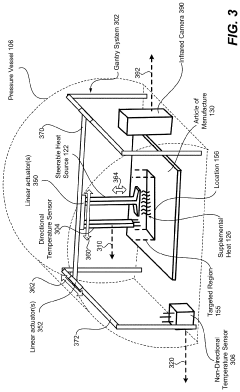
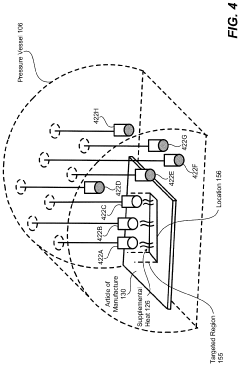
Innovation
- A steerable heat source is integrated within the autoclave, coupled with a control system that directs supplemental heat to targeted regions using temperature sensors and a compressor to regulate pressure, ensuring precise temperature control and uniform heating.
Energy Efficiency Considerations in Autoclave Operations
Energy consumption represents a significant operational cost and environmental concern in autoclave processes, making efficiency optimization a critical aspect of lean operations. Modern autoclaves typically consume between 50-200 kWh per cycle, with energy requirements varying based on size, temperature requirements, and cycle duration. The primary energy demands come from heating (approximately 60-70% of total consumption), pressurization systems (15-20%), and auxiliary equipment (10-15%). These energy-intensive processes present substantial opportunities for efficiency improvements.
Advanced heat recovery systems have demonstrated potential to reduce energy consumption by 15-30% through the capture and reuse of thermal energy from exhaust steam and cooling water. Implementation of these systems requires careful integration with existing infrastructure but offers relatively short payback periods of 1-3 years depending on operational scale and energy costs.
Insulation optimization represents another significant efficiency opportunity. High-performance composite insulation materials can reduce heat loss by up to 25% compared to traditional materials. Strategic placement of additional insulation at thermal bridges and connection points has shown to improve overall thermal efficiency by 5-10% with minimal investment.
Process scheduling and load optimization techniques further contribute to energy efficiency. Data analysis from manufacturing facilities indicates that operating autoclaves at 85-95% capacity utilization rather than partial loads can improve energy efficiency by 10-20%. Additionally, implementing intelligent scheduling algorithms that group similar cure cycles can reduce the energy wasted during temperature transitions by 8-12%.
Real-time monitoring and adaptive control systems represent the cutting edge of autoclave energy management. These systems utilize machine learning algorithms to continuously optimize heating profiles, pressure curves, and cycle times based on actual part requirements rather than standardized cycles. Early implementations have demonstrated energy savings of 12-18% while maintaining or improving part quality.
The financial implications of these efficiency measures are compelling. Industry case studies indicate that comprehensive energy optimization programs for autoclave operations typically achieve 20-35% reduction in energy costs with ROI periods of 12-36 months. Furthermore, these improvements align with increasingly stringent environmental regulations and corporate sustainability goals, potentially qualifying for energy efficiency incentives and carbon reduction credits in many jurisdictions.
Advanced heat recovery systems have demonstrated potential to reduce energy consumption by 15-30% through the capture and reuse of thermal energy from exhaust steam and cooling water. Implementation of these systems requires careful integration with existing infrastructure but offers relatively short payback periods of 1-3 years depending on operational scale and energy costs.
Insulation optimization represents another significant efficiency opportunity. High-performance composite insulation materials can reduce heat loss by up to 25% compared to traditional materials. Strategic placement of additional insulation at thermal bridges and connection points has shown to improve overall thermal efficiency by 5-10% with minimal investment.
Process scheduling and load optimization techniques further contribute to energy efficiency. Data analysis from manufacturing facilities indicates that operating autoclaves at 85-95% capacity utilization rather than partial loads can improve energy efficiency by 10-20%. Additionally, implementing intelligent scheduling algorithms that group similar cure cycles can reduce the energy wasted during temperature transitions by 8-12%.
Real-time monitoring and adaptive control systems represent the cutting edge of autoclave energy management. These systems utilize machine learning algorithms to continuously optimize heating profiles, pressure curves, and cycle times based on actual part requirements rather than standardized cycles. Early implementations have demonstrated energy savings of 12-18% while maintaining or improving part quality.
The financial implications of these efficiency measures are compelling. Industry case studies indicate that comprehensive energy optimization programs for autoclave operations typically achieve 20-35% reduction in energy costs with ROI periods of 12-36 months. Furthermore, these improvements align with increasingly stringent environmental regulations and corporate sustainability goals, potentially qualifying for energy efficiency incentives and carbon reduction credits in many jurisdictions.
Industry 4.0 Integration with Autoclave Systems
The integration of Industry 4.0 principles with autoclave systems represents a transformative approach to manufacturing processes that rely on these critical pressure vessels. This convergence enables real-time monitoring, predictive maintenance, and adaptive control systems that significantly enhance operational efficiency. By implementing IoT sensors throughout autoclave systems, manufacturers can collect comprehensive data on temperature profiles, pressure variations, cure cycles, and energy consumption patterns. These data streams, when processed through advanced analytics platforms, provide unprecedented visibility into process parameters that were previously difficult to monitor continuously.
Cloud-based management systems now allow for remote monitoring and control of autoclave operations, enabling specialists to oversee multiple facilities simultaneously and intervene when anomalies are detected. This capability has proven particularly valuable for global manufacturing operations where expertise may be concentrated in specific locations but required across numerous production sites. The digital twin concept has also been successfully applied to autoclave systems, creating virtual replicas that simulate process behaviors and predict outcomes before actual production runs.
Machine learning algorithms have demonstrated remarkable effectiveness in optimizing autoclave cycles based on historical performance data. These systems can recommend parameter adjustments that reduce cycle times while maintaining or improving product quality. In composite manufacturing specifically, AI-driven systems have reduced cure cycle times by 15-20% while ensuring consistent material properties across production batches.
Augmented reality applications provide maintenance technicians with guided procedures when servicing autoclave equipment, reducing downtime and minimizing human error. These systems overlay digital information onto physical equipment, highlighting components requiring attention and providing step-by-step instructions for complex maintenance tasks. The integration of blockchain technology has also emerged as a solution for maintaining secure, immutable records of autoclave process parameters for regulatory compliance and quality assurance purposes.
Interoperability standards such as OPC UA (Open Platform Communications Unified Architecture) have become essential for connecting legacy autoclave systems to modern Industry 4.0 networks. These standards enable seamless communication between equipment from different manufacturers and across various generations of technology. The implementation of edge computing solutions near autoclave systems has addressed latency issues in data processing, allowing for near-instantaneous analysis and response to process deviations.
As manufacturers continue to adopt these integrated solutions, the autoclave process is evolving from a traditionally batch-oriented operation to a more continuous, adaptive system that responds dynamically to changing production requirements and material characteristics. This evolution aligns perfectly with lean manufacturing principles by minimizing waste, reducing variability, and optimizing resource utilization throughout the autoclave process flow.
Cloud-based management systems now allow for remote monitoring and control of autoclave operations, enabling specialists to oversee multiple facilities simultaneously and intervene when anomalies are detected. This capability has proven particularly valuable for global manufacturing operations where expertise may be concentrated in specific locations but required across numerous production sites. The digital twin concept has also been successfully applied to autoclave systems, creating virtual replicas that simulate process behaviors and predict outcomes before actual production runs.
Machine learning algorithms have demonstrated remarkable effectiveness in optimizing autoclave cycles based on historical performance data. These systems can recommend parameter adjustments that reduce cycle times while maintaining or improving product quality. In composite manufacturing specifically, AI-driven systems have reduced cure cycle times by 15-20% while ensuring consistent material properties across production batches.
Augmented reality applications provide maintenance technicians with guided procedures when servicing autoclave equipment, reducing downtime and minimizing human error. These systems overlay digital information onto physical equipment, highlighting components requiring attention and providing step-by-step instructions for complex maintenance tasks. The integration of blockchain technology has also emerged as a solution for maintaining secure, immutable records of autoclave process parameters for regulatory compliance and quality assurance purposes.
Interoperability standards such as OPC UA (Open Platform Communications Unified Architecture) have become essential for connecting legacy autoclave systems to modern Industry 4.0 networks. These standards enable seamless communication between equipment from different manufacturers and across various generations of technology. The implementation of edge computing solutions near autoclave systems has addressed latency issues in data processing, allowing for near-instantaneous analysis and response to process deviations.
As manufacturers continue to adopt these integrated solutions, the autoclave process is evolving from a traditionally batch-oriented operation to a more continuous, adaptive system that responds dynamically to changing production requirements and material characteristics. This evolution aligns perfectly with lean manufacturing principles by minimizing waste, reducing variability, and optimizing resource utilization throughout the autoclave process flow.
Unlock deeper insights with PatSnap Eureka Quick Research — get a full tech report to explore trends and direct your research. Try now!
Generate Your Research Report Instantly with AI Agent
Supercharge your innovation with PatSnap Eureka AI Agent Platform!