

Battery Junction Boxes For Solar Microgrids: Streamlining Power Distribution
MAY 27, 202610 MIN READ
Generate Your Research Report Instantly with AI Agent
PatSnap Eureka helps you evaluate technical feasibility & market potential.
Solar Microgrid Battery Junction Box Technology Background and Goals
Solar microgrids have emerged as a transformative solution for distributed energy systems, representing a paradigm shift from centralized power generation to localized, resilient energy networks. These systems integrate renewable energy sources, primarily photovoltaic panels, with energy storage systems and intelligent control mechanisms to create self-sufficient power ecosystems capable of operating independently or in conjunction with the main electrical grid.
The evolution of solar microgrid technology has been driven by the convergence of several technological advancements, including improved photovoltaic efficiency, declining battery costs, and sophisticated power management systems. Early implementations focused primarily on remote applications and emergency backup systems, but contemporary deployments span residential communities, commercial facilities, military installations, and critical infrastructure networks.
Battery junction boxes represent a critical component within solar microgrid architectures, serving as the central nervous system for power distribution and energy management. These sophisticated electrical enclosures house essential switching, protection, and monitoring equipment that ensures safe and efficient operation of battery energy storage systems. The complexity of modern solar microgrids demands junction box solutions that can handle bidirectional power flows, multiple battery configurations, and dynamic load management requirements.
Traditional power distribution approaches have proven inadequate for the unique challenges presented by solar microgrids, particularly in managing the intermittent nature of renewable energy sources and the complex interactions between generation, storage, and consumption. Conventional electrical panels and distribution systems were designed for unidirectional power flow from centralized sources, creating significant limitations when applied to distributed energy resources with variable output characteristics.
The primary technological objectives for advanced battery junction boxes in solar microgrids encompass several critical performance areas. Enhanced safety protocols must address the unique risks associated with DC power systems, including arc fault protection, ground fault detection, and thermal management under varying environmental conditions. Intelligent monitoring capabilities should provide real-time visibility into battery performance, state of charge, and system health parameters to optimize operational efficiency and predict maintenance requirements.
Scalability represents another fundamental goal, as junction box designs must accommodate diverse system configurations ranging from small residential installations to large commercial deployments. Modular architectures that support seamless expansion and reconfiguration enable microgrid systems to evolve with changing energy demands and technological advancements.
Integration capabilities constitute a crucial objective, requiring junction boxes to interface seamlessly with various battery technologies, inverter systems, and energy management platforms. Standardized communication protocols and interoperability features ensure compatibility across diverse equipment manufacturers and enable sophisticated grid-tie functionalities.
The ultimate goal involves creating junction box solutions that streamline power distribution while maintaining the highest standards of reliability, safety, and operational efficiency, thereby accelerating the adoption of solar microgrid technology across diverse applications and market segments.
The evolution of solar microgrid technology has been driven by the convergence of several technological advancements, including improved photovoltaic efficiency, declining battery costs, and sophisticated power management systems. Early implementations focused primarily on remote applications and emergency backup systems, but contemporary deployments span residential communities, commercial facilities, military installations, and critical infrastructure networks.
Battery junction boxes represent a critical component within solar microgrid architectures, serving as the central nervous system for power distribution and energy management. These sophisticated electrical enclosures house essential switching, protection, and monitoring equipment that ensures safe and efficient operation of battery energy storage systems. The complexity of modern solar microgrids demands junction box solutions that can handle bidirectional power flows, multiple battery configurations, and dynamic load management requirements.
Traditional power distribution approaches have proven inadequate for the unique challenges presented by solar microgrids, particularly in managing the intermittent nature of renewable energy sources and the complex interactions between generation, storage, and consumption. Conventional electrical panels and distribution systems were designed for unidirectional power flow from centralized sources, creating significant limitations when applied to distributed energy resources with variable output characteristics.
The primary technological objectives for advanced battery junction boxes in solar microgrids encompass several critical performance areas. Enhanced safety protocols must address the unique risks associated with DC power systems, including arc fault protection, ground fault detection, and thermal management under varying environmental conditions. Intelligent monitoring capabilities should provide real-time visibility into battery performance, state of charge, and system health parameters to optimize operational efficiency and predict maintenance requirements.
Scalability represents another fundamental goal, as junction box designs must accommodate diverse system configurations ranging from small residential installations to large commercial deployments. Modular architectures that support seamless expansion and reconfiguration enable microgrid systems to evolve with changing energy demands and technological advancements.
Integration capabilities constitute a crucial objective, requiring junction boxes to interface seamlessly with various battery technologies, inverter systems, and energy management platforms. Standardized communication protocols and interoperability features ensure compatibility across diverse equipment manufacturers and enable sophisticated grid-tie functionalities.
The ultimate goal involves creating junction box solutions that streamline power distribution while maintaining the highest standards of reliability, safety, and operational efficiency, thereby accelerating the adoption of solar microgrid technology across diverse applications and market segments.
Market Demand Analysis for Solar Microgrid Power Distribution Solutions
The global solar microgrid market is experiencing unprecedented growth driven by increasing demand for decentralized energy solutions and grid resilience. Remote communities, industrial facilities, and commercial establishments are actively seeking reliable power distribution systems that can operate independently from traditional grid infrastructure. This surge in demand is particularly pronounced in developing regions where grid connectivity remains limited and in developed markets where energy security concerns are mounting.
Battery junction boxes represent a critical component within solar microgrid architectures, serving as the nexus for power distribution, protection, and system monitoring. The market demand for these specialized components is being fueled by the growing adoption of distributed energy resources and the need for more sophisticated power management solutions. Educational institutions, healthcare facilities, and military installations are increasingly investing in microgrid technologies to ensure uninterrupted power supply during grid outages.
The residential sector is emerging as a significant demand driver, with homeowners seeking energy independence and reduced utility costs. Smart home integration capabilities and the declining costs of solar photovoltaic systems are accelerating adoption rates. Commercial and industrial segments are also contributing substantially to market growth, particularly in sectors requiring high reliability such as data centers, telecommunications, and manufacturing facilities.
Regulatory frameworks and government incentives are playing a pivotal role in shaping market demand. Feed-in tariffs, net metering policies, and renewable energy mandates are creating favorable conditions for solar microgrid deployment. Additionally, climate change mitigation goals and carbon reduction commitments are driving organizations to adopt clean energy solutions.
The market is witnessing increased demand for modular and scalable power distribution solutions that can accommodate varying load requirements and future expansion needs. Integration with energy storage systems and smart grid technologies is becoming a standard requirement, pushing manufacturers to develop more sophisticated junction box solutions with advanced monitoring and control capabilities.
Emerging markets in Asia-Pacific, Africa, and Latin America present substantial growth opportunities due to rural electrification initiatives and the need for reliable power infrastructure in remote areas. These regions are experiencing rapid industrialization and urbanization, creating sustained demand for distributed energy solutions that can support economic development while maintaining environmental sustainability.
Battery junction boxes represent a critical component within solar microgrid architectures, serving as the nexus for power distribution, protection, and system monitoring. The market demand for these specialized components is being fueled by the growing adoption of distributed energy resources and the need for more sophisticated power management solutions. Educational institutions, healthcare facilities, and military installations are increasingly investing in microgrid technologies to ensure uninterrupted power supply during grid outages.
The residential sector is emerging as a significant demand driver, with homeowners seeking energy independence and reduced utility costs. Smart home integration capabilities and the declining costs of solar photovoltaic systems are accelerating adoption rates. Commercial and industrial segments are also contributing substantially to market growth, particularly in sectors requiring high reliability such as data centers, telecommunications, and manufacturing facilities.
Regulatory frameworks and government incentives are playing a pivotal role in shaping market demand. Feed-in tariffs, net metering policies, and renewable energy mandates are creating favorable conditions for solar microgrid deployment. Additionally, climate change mitigation goals and carbon reduction commitments are driving organizations to adopt clean energy solutions.
The market is witnessing increased demand for modular and scalable power distribution solutions that can accommodate varying load requirements and future expansion needs. Integration with energy storage systems and smart grid technologies is becoming a standard requirement, pushing manufacturers to develop more sophisticated junction box solutions with advanced monitoring and control capabilities.
Emerging markets in Asia-Pacific, Africa, and Latin America present substantial growth opportunities due to rural electrification initiatives and the need for reliable power infrastructure in remote areas. These regions are experiencing rapid industrialization and urbanization, creating sustained demand for distributed energy solutions that can support economic development while maintaining environmental sustainability.
Current State and Challenges of Battery Junction Box Technologies
Battery junction boxes in solar microgrids currently represent a critical infrastructure component that has evolved significantly over the past decade. Traditional junction boxes were primarily designed for centralized solar installations, featuring basic overcurrent protection and simple DC switching capabilities. However, the emergence of distributed solar microgrids has exposed fundamental limitations in conventional designs, particularly regarding scalability, intelligent monitoring, and seamless integration with energy storage systems.
The current technological landscape is dominated by passive junction box solutions that rely on mechanical switching and basic fuse protection. These systems typically operate at voltage ranges between 600V to 1500V DC, with current handling capabilities varying from 15A to 63A per string. While adequate for simple solar arrays, these conventional approaches struggle to meet the dynamic requirements of modern microgrids where battery integration, bidirectional power flow, and real-time load balancing are essential.
Geographically, technology development is concentrated in three primary regions. European manufacturers lead in standardization and safety compliance, particularly following IEC 62790 and EN 50548 standards. Asian producers, predominantly in China and South Korea, focus on cost-effective manufacturing and high-volume production capabilities. North American companies emphasize smart grid integration and advanced monitoring functionalities, driven by utility-scale microgrid deployments.
Several technical challenges significantly constrain current battery junction box performance in microgrid applications. Arc fault detection and interruption remain problematic, especially during battery charging and discharging cycles where DC arcing can occur without proper detection mechanisms. Thermal management presents another critical issue, as battery junction boxes must handle varying load conditions while maintaining optimal operating temperatures across diverse environmental conditions.
Communication protocol standardization represents a major impediment to widespread adoption. Current systems often employ proprietary communication interfaces, limiting interoperability between different manufacturers' equipment. This fragmentation complicates system integration and increases maintenance complexity for microgrid operators.
Power electronics integration poses additional challenges, particularly regarding DC-DC conversion efficiency and power quality management. Existing junction box designs lack sophisticated power conditioning capabilities, requiring external components that increase system complexity and potential failure points. Furthermore, cybersecurity vulnerabilities in connected junction boxes create potential attack vectors for malicious actors targeting critical energy infrastructure.
The manufacturing ecosystem faces constraints related to component sourcing and quality assurance. Semiconductor shortages have impacted smart junction box production, while the need for specialized materials capable of withstanding harsh environmental conditions limits supplier options and increases costs.
The current technological landscape is dominated by passive junction box solutions that rely on mechanical switching and basic fuse protection. These systems typically operate at voltage ranges between 600V to 1500V DC, with current handling capabilities varying from 15A to 63A per string. While adequate for simple solar arrays, these conventional approaches struggle to meet the dynamic requirements of modern microgrids where battery integration, bidirectional power flow, and real-time load balancing are essential.
Geographically, technology development is concentrated in three primary regions. European manufacturers lead in standardization and safety compliance, particularly following IEC 62790 and EN 50548 standards. Asian producers, predominantly in China and South Korea, focus on cost-effective manufacturing and high-volume production capabilities. North American companies emphasize smart grid integration and advanced monitoring functionalities, driven by utility-scale microgrid deployments.
Several technical challenges significantly constrain current battery junction box performance in microgrid applications. Arc fault detection and interruption remain problematic, especially during battery charging and discharging cycles where DC arcing can occur without proper detection mechanisms. Thermal management presents another critical issue, as battery junction boxes must handle varying load conditions while maintaining optimal operating temperatures across diverse environmental conditions.
Communication protocol standardization represents a major impediment to widespread adoption. Current systems often employ proprietary communication interfaces, limiting interoperability between different manufacturers' equipment. This fragmentation complicates system integration and increases maintenance complexity for microgrid operators.
Power electronics integration poses additional challenges, particularly regarding DC-DC conversion efficiency and power quality management. Existing junction box designs lack sophisticated power conditioning capabilities, requiring external components that increase system complexity and potential failure points. Furthermore, cybersecurity vulnerabilities in connected junction boxes create potential attack vectors for malicious actors targeting critical energy infrastructure.
The manufacturing ecosystem faces constraints related to component sourcing and quality assurance. Semiconductor shortages have impacted smart junction box production, while the need for specialized materials capable of withstanding harsh environmental conditions limits supplier options and increases costs.
Current Battery Junction Box Solutions for Microgrids
01 Junction box structural design and housing configurations
Battery junction boxes require specialized structural designs to accommodate electrical connections while providing protection from environmental factors. The housing configurations must ensure proper sealing, ventilation, and accessibility for maintenance. Various materials and construction methods are employed to create robust enclosures that can withstand mechanical stress and environmental conditions while maintaining electrical integrity.- Junction box structural design and housing configurations: Battery junction boxes require specialized structural designs to accommodate electrical connections while providing protection from environmental factors. The housing configurations must ensure proper sealing, thermal management, and mechanical stability. Various materials and construction methods are employed to create robust enclosures that can withstand operational stresses and maintain electrical integrity over extended periods.
- Power distribution switching and control mechanisms: Advanced switching and control mechanisms are essential for managing power distribution in battery junction boxes. These systems enable selective routing of electrical power, load balancing, and circuit protection. The control mechanisms incorporate various switching technologies and automated systems to optimize power flow and ensure safe operation under different load conditions.
- Electrical connection and terminal arrangements: The arrangement and design of electrical connections and terminals within battery junction boxes are critical for efficient power distribution. These systems feature specialized terminal blocks, connection interfaces, and wiring configurations that minimize resistance and ensure reliable electrical contact. The designs accommodate various cable sizes and connection types while maintaining safety standards.
- Safety and protection systems integration: Battery junction boxes incorporate comprehensive safety and protection systems to prevent electrical hazards and equipment damage. These include overcurrent protection, short circuit prevention, and isolation mechanisms. The protection systems are designed to respond rapidly to fault conditions and provide multiple layers of safety for both equipment and personnel.
- Monitoring and diagnostic capabilities: Modern battery junction boxes feature integrated monitoring and diagnostic systems that provide real-time information about power distribution performance. These capabilities include current sensing, voltage monitoring, and fault detection systems. The diagnostic features enable predictive maintenance and help optimize system performance through continuous monitoring of electrical parameters and operational status.
02 Power distribution circuit arrangements and switching mechanisms
Effective power distribution in battery junction boxes involves sophisticated circuit arrangements that manage current flow between multiple battery cells or modules. These systems incorporate switching mechanisms, protective devices, and control circuits to ensure optimal power delivery and system safety. The arrangements must handle varying load conditions and provide reliable operation under different operational scenarios.Expand Specific Solutions03 Electrical connection systems and terminal configurations
Battery junction boxes utilize specialized electrical connection systems designed to handle high current loads while maintaining low resistance connections. Terminal configurations must accommodate different wire sizes and connection methods, ensuring secure and reliable electrical contact. These systems often incorporate features for easy installation, maintenance, and replacement of connections.Expand Specific Solutions04 Safety and protection mechanisms for overcurrent and fault conditions
Modern battery junction boxes incorporate comprehensive safety and protection mechanisms to prevent damage from overcurrent conditions, short circuits, and other fault scenarios. These protective systems include fuses, circuit breakers, monitoring devices, and automatic disconnect features that respond to abnormal operating conditions to protect both the battery system and connected equipment.Expand Specific Solutions05 Monitoring and control systems for battery management
Advanced battery junction boxes integrate monitoring and control systems that provide real-time information about battery status, power flow, and system performance. These systems enable remote monitoring, data logging, and automated control functions that optimize battery operation and extend system life. The integration of smart technologies allows for predictive maintenance and enhanced system reliability.Expand Specific Solutions
Key Players in Solar Microgrid and Junction Box Industry
The battery junction box market for solar microgrids represents a rapidly evolving sector within the broader renewable energy ecosystem, currently in its growth phase with expanding market opportunities driven by increasing microgrid deployments globally. The technology demonstrates varying maturity levels across different players, with established photovoltaic companies like Trina Solar, CSI Solar, and Canadian Solar Manufacturing leveraging their solar expertise to develop integrated junction box solutions. Component specialists including TE Connectivity, Molex, and Amphenol bring mature connector technologies from other industries, while energy storage leaders like BYD and Tesla contribute advanced battery management capabilities. Chinese manufacturers such as QC Solar and Jiangsu Tongling Electric are emerging as key suppliers, benefiting from cost advantages and proximity to solar manufacturing hubs. The competitive landscape reflects a convergence of traditional electrical components, solar technology, and energy storage expertise, with market consolidation expected as standardization increases and larger players like Delta Electronics and Huawei Technologies integrate comprehensive power distribution solutions for microgrid applications.
TE Connectivity Corp.
Technical Solution: TE Connectivity specializes in high-performance electrical connection solutions for battery junction boxes in solar microgrid applications. Their junction boxes feature ruggedized connectors and terminals designed to withstand harsh environmental conditions while maintaining reliable electrical connections. The system incorporates TE's advanced contact technology with low resistance connections that minimize power losses and heat generation. Their junction boxes support high current applications up to 1000A with voltage ratings suitable for both low and high voltage battery systems. TE's solution includes integrated monitoring capabilities through smart connectors that can detect connection integrity and provide early warning of potential failures. The modular connector design enables flexible configuration and easy maintenance, with IP67 sealing protection ensuring reliable operation in outdoor installations.
Strengths: Superior connector reliability, high current handling capability, excellent environmental protection. Weaknesses: Limited integrated intelligence features, requires additional components for advanced monitoring functions.
Delta Electronics, Inc.
Technical Solution: Delta Electronics provides advanced battery junction box solutions specifically designed for solar microgrid power distribution systems. Their junction boxes feature high-efficiency power conversion with up to 98% efficiency ratings and support multiple battery chemistries including lithium-ion, lead-acid, and emerging solid-state technologies. The system incorporates Delta's proprietary grid-forming inverter technology that enables seamless islanding capabilities and black-start functionality for critical load applications. Their junction boxes include integrated energy management software that optimizes charging and discharging cycles based on solar generation forecasts and load demand patterns. The modular design supports hot-swappable components for minimal downtime during maintenance, and includes comprehensive protection features such as ground fault detection, arc fault protection, and rapid shutdown compliance with safety standards.
Strengths: High power conversion efficiency, multi-chemistry battery support, robust grid-forming capabilities. Weaknesses: Complex configuration requirements, higher maintenance complexity due to advanced features.
Core Innovations in Streamlined Power Distribution Technologies
Junction box with improved heat dissipation
PatentInactiveUS20110244719A1
Innovation
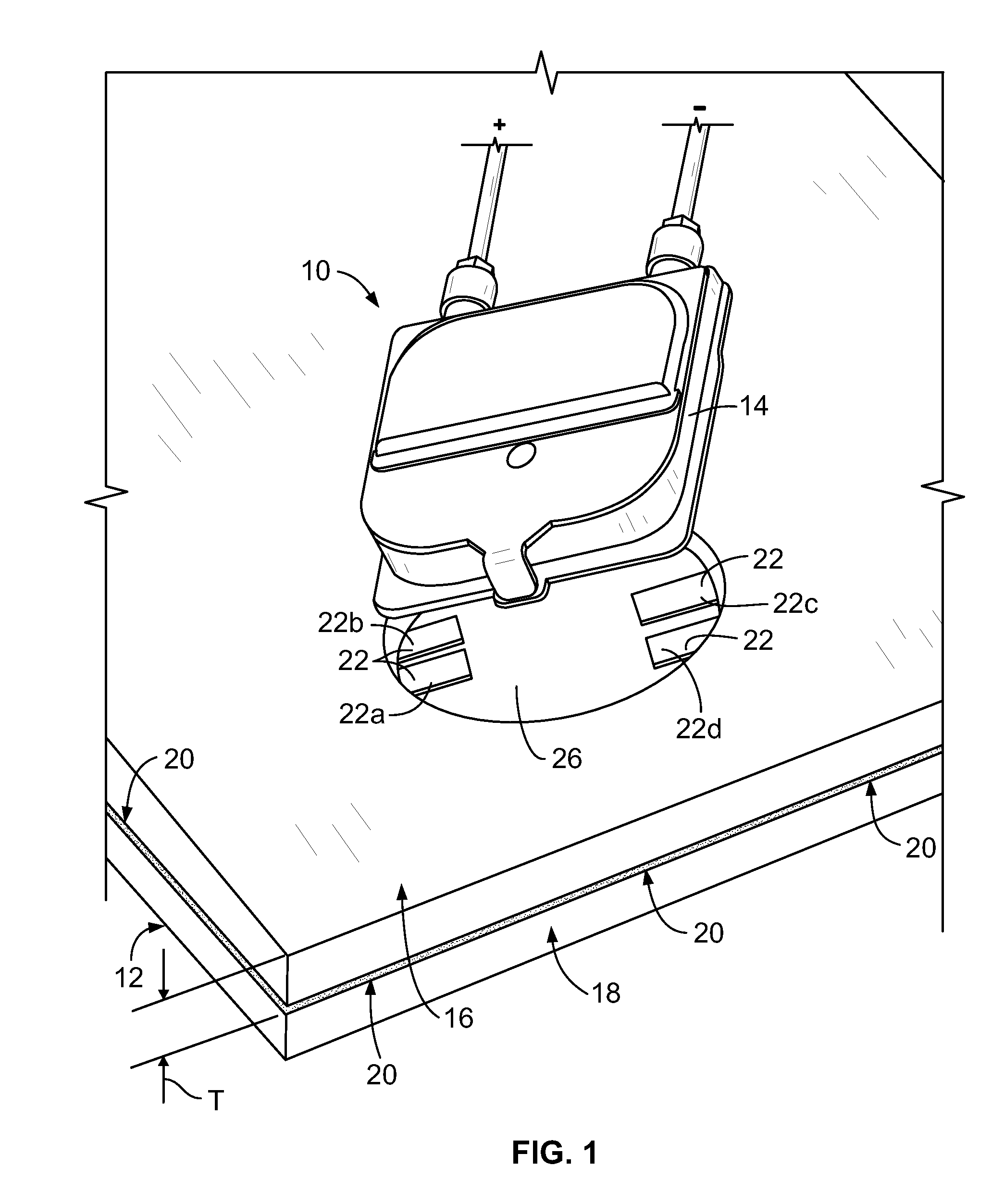
- The junction box design features contacts with a flat base portion, a first connecting portion for the photovoltaic module, and a second connecting portion for cables, with side arms protruding into the cavity and cutouts to increase the exposed heat dissipation area, enhancing heat dissipation through increased surface area exposure.


Modular Junction Box for a Photovoltaic Module
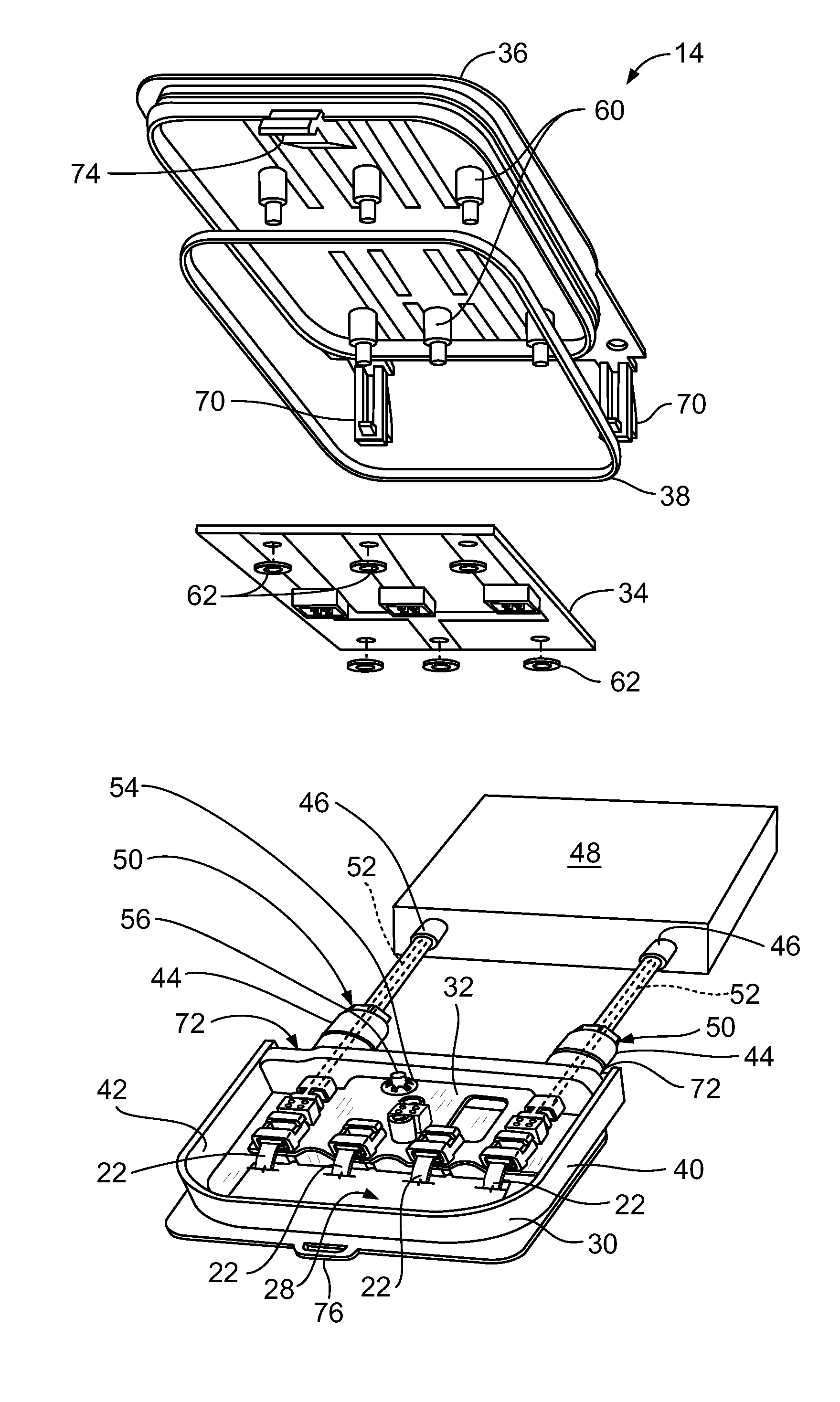
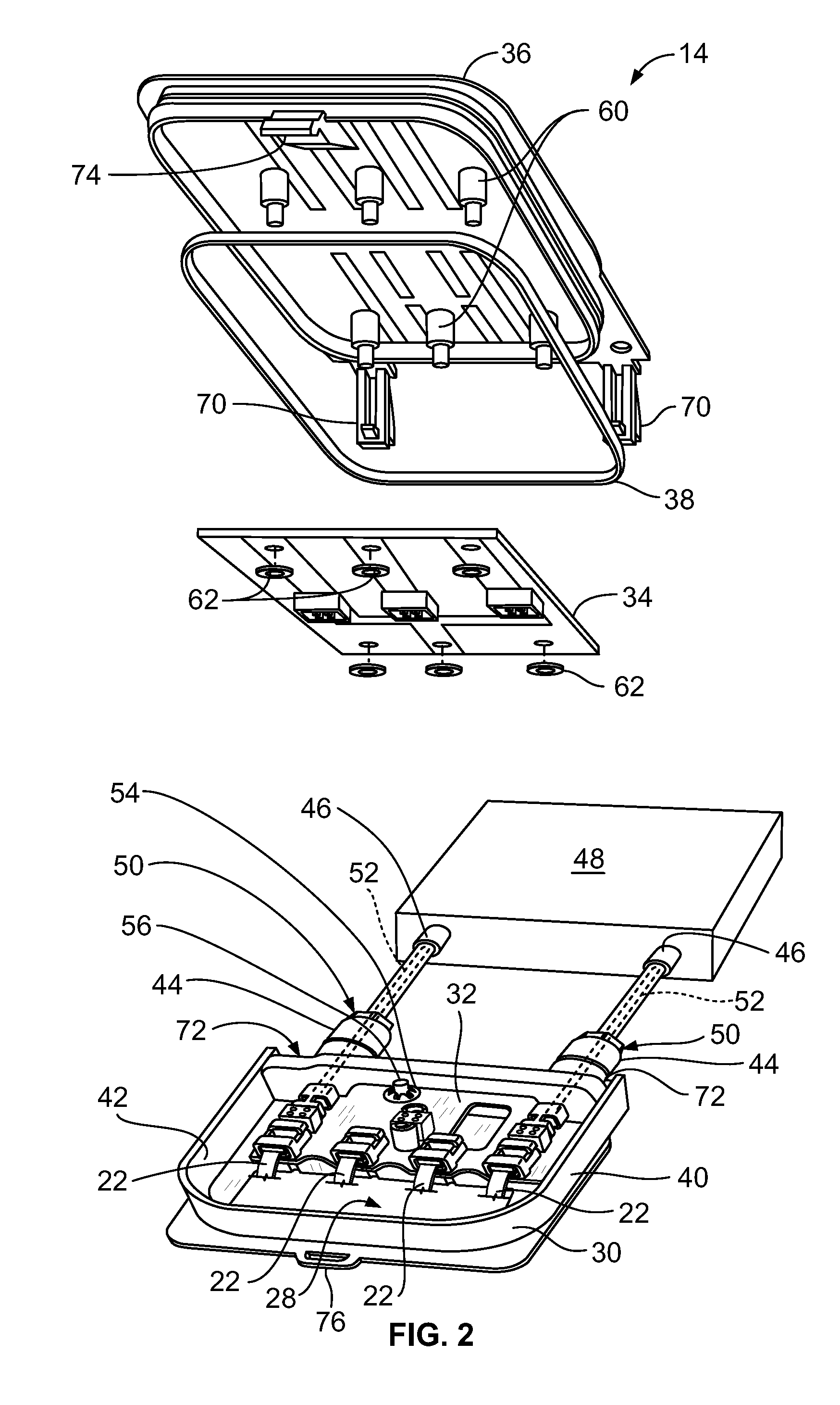
PatentInactiveUS20120033392A1
Innovation
- A junction box design with a user-removable control board that can be upgraded without modifying the electrical connections, featuring a power transfer structure with conductive connectors and a transfer interface to convey power from the PV module to the control board, allowing for easy replacement or addition of new features, and includes a safety isolation device for communication signals to operate in different modes.

Grid Integration Standards and Safety Regulations
The integration of battery junction boxes into solar microgrids requires strict adherence to established grid integration standards that govern interconnection protocols, power quality requirements, and system interoperability. IEEE 1547 serves as the foundational standard for distributed energy resource interconnection, defining voltage and frequency operating ranges, power factor requirements, and ride-through capabilities during grid disturbances. For solar microgrids, battery junction boxes must comply with anti-islanding protection requirements and provide seamless transition capabilities between grid-connected and islanded operation modes.
Safety regulations form a critical framework encompassing electrical safety codes, fire protection standards, and environmental compliance requirements. The National Electrical Code (NEC) Article 706 specifically addresses energy storage systems, mandating proper overcurrent protection, grounding systems, and disconnection means for battery installations. UL 9540 certification ensures comprehensive safety evaluation of energy storage systems, including thermal runaway propagation testing and hazardous gas emission assessments that directly impact junction box design specifications.
International standards such as IEC 62933 series provide global harmonization for electrical energy storage systems, establishing performance testing protocols and safety requirements that influence junction box manufacturing standards. These regulations address arc fault protection, ground fault detection, and rapid shutdown capabilities essential for safe microgrid operation during emergency conditions.
Regulatory compliance extends to grid codes that vary by jurisdiction, requiring junction boxes to accommodate different voltage levels, frequency ranges, and power quality standards. Recent updates to IEEE 1547-2018 introduce advanced grid support functions including voltage regulation, frequency response, and dynamic reactive power control capabilities that battery junction boxes must facilitate through sophisticated monitoring and control interfaces.
Environmental regulations impact junction box design through requirements for hazardous material restrictions, recycling protocols, and electromagnetic compatibility standards. The integration of smart grid communication protocols such as IEEE 2030.5 and IEC 61850 necessitates cybersecurity compliance frameworks that protect critical infrastructure from potential threats while maintaining reliable power distribution functionality.
Safety regulations form a critical framework encompassing electrical safety codes, fire protection standards, and environmental compliance requirements. The National Electrical Code (NEC) Article 706 specifically addresses energy storage systems, mandating proper overcurrent protection, grounding systems, and disconnection means for battery installations. UL 9540 certification ensures comprehensive safety evaluation of energy storage systems, including thermal runaway propagation testing and hazardous gas emission assessments that directly impact junction box design specifications.
International standards such as IEC 62933 series provide global harmonization for electrical energy storage systems, establishing performance testing protocols and safety requirements that influence junction box manufacturing standards. These regulations address arc fault protection, ground fault detection, and rapid shutdown capabilities essential for safe microgrid operation during emergency conditions.
Regulatory compliance extends to grid codes that vary by jurisdiction, requiring junction boxes to accommodate different voltage levels, frequency ranges, and power quality standards. Recent updates to IEEE 1547-2018 introduce advanced grid support functions including voltage regulation, frequency response, and dynamic reactive power control capabilities that battery junction boxes must facilitate through sophisticated monitoring and control interfaces.
Environmental regulations impact junction box design through requirements for hazardous material restrictions, recycling protocols, and electromagnetic compatibility standards. The integration of smart grid communication protocols such as IEEE 2030.5 and IEC 61850 necessitates cybersecurity compliance frameworks that protect critical infrastructure from potential threats while maintaining reliable power distribution functionality.
Environmental Impact and Sustainability Considerations
Battery junction boxes for solar microgrids present significant environmental advantages throughout their operational lifecycle. These systems contribute to substantial carbon footprint reduction by enabling efficient renewable energy distribution and storage management. The streamlined power distribution architecture minimizes energy losses during transmission, typically reducing system-wide inefficiencies by 15-25% compared to traditional centralized grid configurations. This enhanced efficiency directly translates to reduced reliance on fossil fuel-based backup power systems and lower overall greenhouse gas emissions.
The manufacturing phase of battery junction boxes incorporates increasingly sustainable practices, with leading manufacturers adopting recycled materials for housing components and implementing closed-loop production processes. Modern junction box designs utilize recyclable aluminum alloys and thermoplastic materials that can be recovered and reprocessed at end-of-life. The compact, modular design philosophy reduces material consumption while extending operational lifespan, typically achieving 20-25 year service lives under optimal conditions.
End-of-life management represents a critical sustainability consideration for these systems. Advanced battery junction boxes incorporate design-for-disassembly principles, enabling efficient separation of electronic components, metals, and polymeric materials during decommissioning. The standardization of connection interfaces and modular architectures facilitates component reuse and refurbishment, creating circular economy opportunities within the solar microgrid ecosystem.
Environmental impact assessment studies indicate that battery junction boxes contribute to overall microgrid sustainability through improved system reliability and reduced maintenance requirements. The enhanced monitoring and protection capabilities minimize premature battery degradation, extending energy storage system lifespans and reducing replacement frequency. This reliability improvement translates to reduced environmental burden associated with manufacturing, transportation, and installation of replacement components.
The integration of smart monitoring technologies within junction boxes enables predictive maintenance strategies that optimize system performance while minimizing environmental impact. Real-time data collection facilitates precise energy management, reducing unnecessary cycling and thermal stress on battery systems. These intelligent features contribute to overall microgrid sustainability by maximizing renewable energy utilization efficiency and minimizing waste generation throughout the system operational period.
The manufacturing phase of battery junction boxes incorporates increasingly sustainable practices, with leading manufacturers adopting recycled materials for housing components and implementing closed-loop production processes. Modern junction box designs utilize recyclable aluminum alloys and thermoplastic materials that can be recovered and reprocessed at end-of-life. The compact, modular design philosophy reduces material consumption while extending operational lifespan, typically achieving 20-25 year service lives under optimal conditions.
End-of-life management represents a critical sustainability consideration for these systems. Advanced battery junction boxes incorporate design-for-disassembly principles, enabling efficient separation of electronic components, metals, and polymeric materials during decommissioning. The standardization of connection interfaces and modular architectures facilitates component reuse and refurbishment, creating circular economy opportunities within the solar microgrid ecosystem.
Environmental impact assessment studies indicate that battery junction boxes contribute to overall microgrid sustainability through improved system reliability and reduced maintenance requirements. The enhanced monitoring and protection capabilities minimize premature battery degradation, extending energy storage system lifespans and reducing replacement frequency. This reliability improvement translates to reduced environmental burden associated with manufacturing, transportation, and installation of replacement components.
The integration of smart monitoring technologies within junction boxes enables predictive maintenance strategies that optimize system performance while minimizing environmental impact. Real-time data collection facilitates precise energy management, reducing unnecessary cycling and thermal stress on battery systems. These intelligent features contribute to overall microgrid sustainability by maximizing renewable energy utilization efficiency and minimizing waste generation throughout the system operational period.
Unlock deeper insights with PatSnap Eureka Quick Research — get a full tech report to explore trends and direct your research. Try now!
Generate Your Research Report Instantly with AI Agent
Supercharge your innovation with PatSnap Eureka AI Agent Platform!