Battery Management System's Role in Autonomous Drones: Testing
MAR 20, 20269 MIN READ
Generate Your Research Report Instantly with AI Agent
Patsnap Eureka helps you evaluate technical feasibility & market potential.
Drone BMS Technology Background and Objectives
The evolution of autonomous drone technology has fundamentally transformed the landscape of unmanned aerial systems, with Battery Management Systems emerging as a critical component that directly influences operational safety, performance, and mission success. As drones transition from simple remote-controlled devices to sophisticated autonomous platforms capable of complex decision-making, the role of BMS has expanded beyond basic power management to encompass intelligent energy optimization, predictive maintenance, and real-time safety monitoring.
Modern autonomous drones operate in increasingly demanding environments, from urban delivery networks to remote surveillance missions, where battery performance directly correlates with mission reliability and operational efficiency. The integration of advanced BMS technology addresses the fundamental challenge of maximizing flight time while ensuring consistent power delivery to critical flight control systems, navigation equipment, and payload devices. This technological convergence has created new requirements for battery management that extend far beyond traditional consumer electronics applications.
The primary objective of contemporary drone BMS development centers on achieving autonomous energy management capabilities that can adapt to dynamic flight conditions without human intervention. This includes real-time optimization of power distribution based on mission requirements, environmental factors, and remaining battery capacity. Advanced BMS systems must demonstrate the ability to predict energy consumption patterns, automatically adjust flight parameters to extend operational range, and execute safe landing protocols when battery levels reach critical thresholds.
Testing methodologies for drone BMS technology have evolved to address the unique challenges of aerial applications, where system failures can result in catastrophic outcomes. The testing framework encompasses multiple validation layers, including laboratory-based cell characterization, integrated system testing under controlled flight conditions, and field validation across diverse operational scenarios. These comprehensive testing protocols aim to verify not only basic functionality but also the system's ability to maintain safety margins under extreme conditions such as temperature variations, high discharge rates, and electromagnetic interference.
The strategic importance of robust BMS testing extends to regulatory compliance and commercial viability, as aviation authorities worldwide implement increasingly stringent safety standards for autonomous drone operations. Effective testing protocols must demonstrate system reliability across extended operational periods while validating the accuracy of state-of-charge estimation, thermal management effectiveness, and fault detection capabilities that are essential for autonomous flight operations.
Modern autonomous drones operate in increasingly demanding environments, from urban delivery networks to remote surveillance missions, where battery performance directly correlates with mission reliability and operational efficiency. The integration of advanced BMS technology addresses the fundamental challenge of maximizing flight time while ensuring consistent power delivery to critical flight control systems, navigation equipment, and payload devices. This technological convergence has created new requirements for battery management that extend far beyond traditional consumer electronics applications.
The primary objective of contemporary drone BMS development centers on achieving autonomous energy management capabilities that can adapt to dynamic flight conditions without human intervention. This includes real-time optimization of power distribution based on mission requirements, environmental factors, and remaining battery capacity. Advanced BMS systems must demonstrate the ability to predict energy consumption patterns, automatically adjust flight parameters to extend operational range, and execute safe landing protocols when battery levels reach critical thresholds.
Testing methodologies for drone BMS technology have evolved to address the unique challenges of aerial applications, where system failures can result in catastrophic outcomes. The testing framework encompasses multiple validation layers, including laboratory-based cell characterization, integrated system testing under controlled flight conditions, and field validation across diverse operational scenarios. These comprehensive testing protocols aim to verify not only basic functionality but also the system's ability to maintain safety margins under extreme conditions such as temperature variations, high discharge rates, and electromagnetic interference.
The strategic importance of robust BMS testing extends to regulatory compliance and commercial viability, as aviation authorities worldwide implement increasingly stringent safety standards for autonomous drone operations. Effective testing protocols must demonstrate system reliability across extended operational periods while validating the accuracy of state-of-charge estimation, thermal management effectiveness, and fault detection capabilities that are essential for autonomous flight operations.
Market Demand for Autonomous Drone Battery Solutions
The autonomous drone market is experiencing unprecedented growth driven by expanding applications across commercial, industrial, and defense sectors. Commercial delivery services represent one of the most significant demand drivers, with major logistics companies investing heavily in last-mile delivery solutions. The need for reliable, long-duration flights has intensified focus on advanced battery management systems that can ensure consistent performance and safety standards required for urban operations.
Industrial inspection and monitoring applications constitute another substantial market segment demanding sophisticated battery solutions. Oil and gas facilities, power transmission networks, and infrastructure monitoring require drones capable of extended flight times with predictable power performance. These applications cannot tolerate unexpected power failures, creating strong demand for intelligent battery management systems with real-time monitoring and predictive maintenance capabilities.
Agricultural drone operations present unique battery management challenges due to varying payload requirements and environmental conditions. Precision agriculture applications require drones to carry sensors, cameras, and sometimes spray equipment, creating dynamic power demands that necessitate adaptive battery management solutions. The seasonal nature of agricultural work also drives demand for battery systems with extended storage capabilities and rapid deployment readiness.
Emergency response and public safety sectors are increasingly adopting autonomous drones for search and rescue operations, disaster assessment, and surveillance activities. These critical applications demand battery systems with exceptional reliability and the ability to operate in extreme weather conditions. The life-safety nature of these missions has created a premium market segment willing to invest in advanced battery management technologies.
The defense and security market represents a high-value segment with stringent performance requirements. Military and border security applications require drones with extended operational ranges and the ability to function in contested environments. This sector drives demand for battery management systems with enhanced security features, electromagnetic interference resistance, and the capability to operate under extreme temperature variations.
Market growth is further accelerated by regulatory developments that are gradually opening airspace for commercial drone operations. As regulatory frameworks mature, the demand for certified battery management systems that meet aviation safety standards is increasing significantly. This regulatory evolution is creating opportunities for battery management solutions that can demonstrate compliance with emerging safety and performance standards.
The convergence of artificial intelligence with drone operations is creating new market opportunities for intelligent battery management systems. Advanced algorithms for route optimization, predictive maintenance, and autonomous charging are becoming essential features that customers expect from modern drone battery solutions.
Industrial inspection and monitoring applications constitute another substantial market segment demanding sophisticated battery solutions. Oil and gas facilities, power transmission networks, and infrastructure monitoring require drones capable of extended flight times with predictable power performance. These applications cannot tolerate unexpected power failures, creating strong demand for intelligent battery management systems with real-time monitoring and predictive maintenance capabilities.
Agricultural drone operations present unique battery management challenges due to varying payload requirements and environmental conditions. Precision agriculture applications require drones to carry sensors, cameras, and sometimes spray equipment, creating dynamic power demands that necessitate adaptive battery management solutions. The seasonal nature of agricultural work also drives demand for battery systems with extended storage capabilities and rapid deployment readiness.
Emergency response and public safety sectors are increasingly adopting autonomous drones for search and rescue operations, disaster assessment, and surveillance activities. These critical applications demand battery systems with exceptional reliability and the ability to operate in extreme weather conditions. The life-safety nature of these missions has created a premium market segment willing to invest in advanced battery management technologies.
The defense and security market represents a high-value segment with stringent performance requirements. Military and border security applications require drones with extended operational ranges and the ability to function in contested environments. This sector drives demand for battery management systems with enhanced security features, electromagnetic interference resistance, and the capability to operate under extreme temperature variations.
Market growth is further accelerated by regulatory developments that are gradually opening airspace for commercial drone operations. As regulatory frameworks mature, the demand for certified battery management systems that meet aviation safety standards is increasing significantly. This regulatory evolution is creating opportunities for battery management solutions that can demonstrate compliance with emerging safety and performance standards.
The convergence of artificial intelligence with drone operations is creating new market opportunities for intelligent battery management systems. Advanced algorithms for route optimization, predictive maintenance, and autonomous charging are becoming essential features that customers expect from modern drone battery solutions.
Current BMS Challenges in Drone Applications
Battery Management Systems in autonomous drone applications face significant technical challenges that directly impact flight safety, operational efficiency, and mission reliability. The complexity of drone operations, combined with demanding environmental conditions and stringent weight constraints, creates a unique set of obstacles that current BMS technologies struggle to address comprehensively.
Power density limitations represent one of the most critical challenges in drone BMS design. Autonomous drones require high energy output for propulsion, navigation systems, and payload operations while maintaining minimal weight. Current lithium-ion battery technologies, despite their advantages, still suffer from energy density constraints that limit flight duration and operational range. The BMS must optimize power distribution across multiple systems while preventing over-discharge conditions that could lead to catastrophic power loss during flight.
Thermal management poses another substantial challenge, particularly in high-performance drone applications. Rapid charging and discharging cycles generate significant heat, which can degrade battery performance and create safety hazards. Traditional cooling solutions add weight and complexity, making them unsuitable for drone applications. Current BMS designs struggle to implement effective thermal regulation without compromising the drone's weight-to-power ratio or aerodynamic efficiency.
Real-time monitoring and fault detection capabilities remain inadequate for autonomous operations. Drones operating beyond visual line of sight require sophisticated BMS systems capable of predicting battery failures, estimating remaining flight time accurately, and initiating emergency protocols autonomously. Existing BMS technologies often lack the computational power and sensor integration necessary for comprehensive real-time analysis of battery health and performance parameters.
Environmental resilience presents ongoing challenges for drone BMS implementations. Autonomous drones frequently operate in extreme temperatures, high humidity, and varying atmospheric pressures. These conditions affect battery chemistry, charging efficiency, and overall system reliability. Current BMS designs often fail to maintain optimal performance across the full range of environmental conditions encountered in autonomous drone operations.
Integration complexity with drone flight control systems creates additional technical hurdles. The BMS must communicate seamlessly with autopilot systems, providing accurate power status information while receiving flight plan data to optimize energy consumption. Achieving this integration while maintaining system redundancy and fail-safe operations remains a significant challenge for current BMS architectures in autonomous drone applications.
Power density limitations represent one of the most critical challenges in drone BMS design. Autonomous drones require high energy output for propulsion, navigation systems, and payload operations while maintaining minimal weight. Current lithium-ion battery technologies, despite their advantages, still suffer from energy density constraints that limit flight duration and operational range. The BMS must optimize power distribution across multiple systems while preventing over-discharge conditions that could lead to catastrophic power loss during flight.
Thermal management poses another substantial challenge, particularly in high-performance drone applications. Rapid charging and discharging cycles generate significant heat, which can degrade battery performance and create safety hazards. Traditional cooling solutions add weight and complexity, making them unsuitable for drone applications. Current BMS designs struggle to implement effective thermal regulation without compromising the drone's weight-to-power ratio or aerodynamic efficiency.
Real-time monitoring and fault detection capabilities remain inadequate for autonomous operations. Drones operating beyond visual line of sight require sophisticated BMS systems capable of predicting battery failures, estimating remaining flight time accurately, and initiating emergency protocols autonomously. Existing BMS technologies often lack the computational power and sensor integration necessary for comprehensive real-time analysis of battery health and performance parameters.
Environmental resilience presents ongoing challenges for drone BMS implementations. Autonomous drones frequently operate in extreme temperatures, high humidity, and varying atmospheric pressures. These conditions affect battery chemistry, charging efficiency, and overall system reliability. Current BMS designs often fail to maintain optimal performance across the full range of environmental conditions encountered in autonomous drone operations.
Integration complexity with drone flight control systems creates additional technical hurdles. The BMS must communicate seamlessly with autopilot systems, providing accurate power status information while receiving flight plan data to optimize energy consumption. Achieving this integration while maintaining system redundancy and fail-safe operations remains a significant challenge for current BMS architectures in autonomous drone applications.
Existing BMS Testing Solutions for Drones
01 Battery state monitoring and estimation techniques
Battery management systems employ various methods to monitor and estimate critical battery parameters such as state of charge (SOC), state of health (SOH), and remaining useful life. These techniques utilize voltage, current, and temperature measurements combined with algorithms including Kalman filtering, coulomb counting, and machine learning approaches to provide accurate real-time assessment of battery conditions. Advanced estimation methods help optimize battery performance and prevent over-discharge or overcharge conditions.- Battery state monitoring and estimation techniques: Battery management systems employ various methods to monitor and estimate critical battery parameters such as state of charge (SOC), state of health (SOH), and remaining useful life. These techniques utilize voltage, current, and temperature measurements combined with algorithms including Kalman filtering, coulomb counting, and machine learning approaches to provide accurate real-time assessment of battery conditions. Advanced estimation methods help optimize battery performance and prevent over-discharge or overcharge conditions.
- Cell balancing and equalization systems: Battery management systems incorporate cell balancing mechanisms to ensure uniform charge distribution across individual cells in a battery pack. These systems employ passive or active balancing techniques to equalize voltage differences between cells, extending overall battery life and improving pack performance. Balancing circuits can redistribute energy from higher-charged cells to lower-charged cells or dissipate excess energy to maintain optimal cell voltage levels.
- Thermal management and temperature control: Effective thermal management is critical for battery safety and longevity. Battery management systems integrate temperature sensing and control mechanisms to monitor cell temperatures and activate cooling or heating systems as needed. These systems prevent thermal runaway, optimize operating temperature ranges, and ensure uniform temperature distribution across the battery pack through active cooling, heating elements, or phase change materials.
- Communication protocols and data management: Battery management systems utilize standardized communication protocols to interface with vehicle control units, charging systems, and external monitoring devices. These systems collect, process, and transmit battery data through protocols enabling real-time diagnostics, remote monitoring, and integration with broader energy management systems. Data logging capabilities support predictive maintenance and performance analysis.
- Safety protection and fault detection mechanisms: Battery management systems incorporate multiple layers of safety protection including overvoltage, undervoltage, overcurrent, and short circuit detection. These systems continuously monitor for abnormal conditions and can disconnect the battery or activate protective measures to prevent damage or hazardous situations. Fault diagnosis algorithms identify cell degradation, internal shorts, and other failure modes to ensure safe operation throughout the battery lifecycle.
02 Cell balancing and equalization systems
Battery management systems incorporate cell balancing mechanisms to ensure uniform charge distribution across individual cells in a battery pack. These systems can employ passive balancing using resistive dissipation or active balancing that transfers energy between cells. Proper balancing extends battery lifespan, improves overall pack capacity, and prevents premature degradation of weaker cells. The balancing circuits can operate during charging, discharging, or idle states.Expand Specific Solutions03 Thermal management and temperature control
Effective thermal management is critical for battery safety and performance. Battery management systems integrate temperature sensing and control mechanisms to maintain optimal operating temperatures. These systems can activate cooling or heating elements based on temperature thresholds, distribute thermal loads evenly across the battery pack, and prevent thermal runaway conditions. Temperature monitoring at multiple points enables early detection of abnormal heating patterns.Expand Specific Solutions04 Communication protocols and data management
Modern battery management systems utilize standardized communication protocols to interface with vehicle control units and external systems. These protocols enable real-time data transmission of battery parameters, diagnostic information, and status updates. The systems support various communication standards and can store historical data for analysis and predictive maintenance. Secure data transmission and encryption methods protect sensitive battery information.Expand Specific Solutions05 Safety protection and fault diagnosis
Battery management systems incorporate multiple safety layers to protect against overcurrent, overvoltage, undervoltage, and short circuit conditions. Advanced fault diagnosis algorithms detect abnormal behavior patterns and can isolate problematic cells or modules. The systems implement emergency shutdown procedures and provide warnings to prevent catastrophic failures. Continuous monitoring and diagnostic capabilities enable early intervention before safety thresholds are exceeded.Expand Specific Solutions
Key Players in Drone BMS Industry
The autonomous drone battery management system market represents a rapidly evolving competitive landscape characterized by significant growth potential and diverse technological approaches. The industry is currently in an expansion phase, driven by increasing demand across commercial, industrial, and consumer applications. Market leaders like DJI and Autel Robotics dominate consumer and commercial segments, while specialized players such as Nearthlab and Airscort focus on autonomous solutions for specific industries like wind energy inspection and military applications. Technology maturity varies significantly across the ecosystem, with established companies like Qualcomm, BYD, and LG Energy Solution providing advanced battery and semiconductor technologies, while emerging firms like EHang and Brookhurst Garage pioneer fully autonomous systems. The competitive dynamics reflect a convergence of traditional electronics manufacturers, automotive battery specialists, and innovative drone startups, indicating a market transitioning from basic flight control to sophisticated autonomous operations requiring robust power management solutions.
Autel Robotics Co Ltd
Technical Solution: Autel Robotics implements intelligent battery management systems in their drone platforms featuring smart battery technology with integrated microprocessors for real-time monitoring and control. Their BMS includes automatic cell balancing, temperature monitoring, and power optimization algorithms that extend flight time and battery lifespan. The system provides detailed battery analytics through mobile applications, including charge cycle tracking, capacity degradation monitoring, and maintenance scheduling. Autel's BMS also incorporates safety features such as over-discharge protection and emergency power reserve management for critical flight operations.
Strengths: Cost-effective solutions, good integration with consumer and commercial drone platforms, user-friendly interface. Weaknesses: Less advanced than premium competitors, limited presence in high-end commercial markets.
SZ DJI Technology Co., Ltd.
Technical Solution: DJI implements advanced battery management systems featuring intelligent flight battery technology with built-in power management units that monitor cell voltage, temperature, and current in real-time. Their BMS includes automatic discharge functionality to maintain optimal battery health during storage, overcurrent protection, and thermal management systems. The system provides precise remaining flight time calculations and integrates with flight controllers to enable safe return-to-home functionality when battery levels reach critical thresholds. DJI's BMS also features cell balancing technology and communicates battery status through mobile applications for comprehensive monitoring.
Strengths: Market-leading integration with flight systems, proven reliability in consumer and commercial markets, comprehensive safety features. Weaknesses: Proprietary system limits third-party integration, higher cost compared to generic solutions.
Core BMS Testing Innovations for Autonomous Flight
Battery Management Systems for Autonomous Vehicles
PatentInactiveUS20170072812A1
Innovation
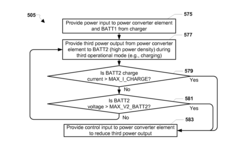
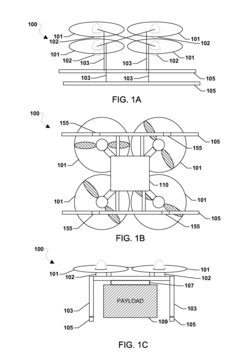
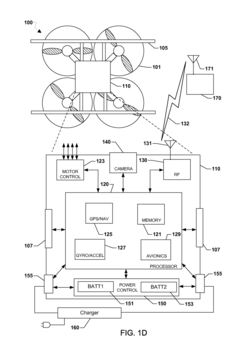
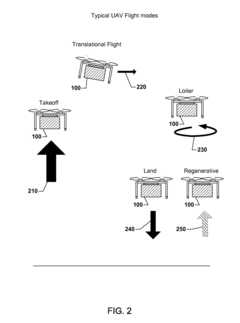
- A power control system that utilizes a high energy density battery and a high power density battery in conjunction, with a power converter element and processor to manage power outputs based on thresholds, ensuring efficient energy distribution across various operational modes, including takeoff, loitering, and charging.
Battery management system having a plurality of backup communication main units, and aircraft
PatentWO2024055900A1
Innovation
- Design a battery management system with multiple backup communication hosts. By selecting some battery management units in each power battery component as backup communication hosts, and using the battery management unit ID size as the priority, it ensures that there is a backup host when the host fails. Take over data transmission and improve the fault tolerance and reliability of the system.


Aviation Safety Regulations for Drone BMS Testing
Aviation safety regulations for drone Battery Management Systems (BMS) testing represent a critical framework that governs the certification and operational approval of autonomous unmanned aerial vehicles. The regulatory landscape is primarily shaped by aviation authorities such as the Federal Aviation Administration (FAA), European Union Aviation Safety Agency (EASA), and International Civil Aviation Organization (ICAO), each establishing comprehensive standards for electrical power systems in unmanned aircraft.
Current regulatory frameworks mandate rigorous testing protocols for drone BMS components, including thermal runaway prevention, overcharge protection, and fail-safe mechanisms. The FAA's Part 107 regulations, while primarily addressing operational aspects, increasingly incorporate technical standards for power management systems, particularly for Beyond Visual Line of Sight (BVLOS) operations where system reliability becomes paramount.
EASA's Specific Category regulations under EU 2019/945 establish detailed technical requirements for drone electrical systems, mandating compliance with RTCA DO-160 environmental testing standards. These regulations require BMS testing under extreme temperature conditions, electromagnetic interference scenarios, and vibration stress tests that simulate real-world flight conditions.
The emerging regulatory trend focuses on risk-based certification approaches, where BMS testing requirements scale with operational complexity and potential hazard exposure. For autonomous drones operating in controlled airspace, regulators demand enhanced testing protocols including redundant power management systems, real-time health monitoring capabilities, and predictive failure detection mechanisms.
International harmonization efforts are establishing unified testing standards through organizations like ASTM International and ISO, developing consensus standards such as ASTM F3322 for small unmanned aircraft system airworthiness. These standards specifically address BMS testing methodologies, including cycle life testing, capacity degradation analysis, and safety system validation protocols.
Compliance verification requires third-party testing laboratories accredited under ISO/IEC 17025 standards, ensuring independent validation of BMS performance against regulatory requirements. The certification process typically involves comprehensive documentation of testing procedures, failure mode analysis, and long-term reliability assessments that demonstrate system safety margins exceeding regulatory minimums.
Current regulatory frameworks mandate rigorous testing protocols for drone BMS components, including thermal runaway prevention, overcharge protection, and fail-safe mechanisms. The FAA's Part 107 regulations, while primarily addressing operational aspects, increasingly incorporate technical standards for power management systems, particularly for Beyond Visual Line of Sight (BVLOS) operations where system reliability becomes paramount.
EASA's Specific Category regulations under EU 2019/945 establish detailed technical requirements for drone electrical systems, mandating compliance with RTCA DO-160 environmental testing standards. These regulations require BMS testing under extreme temperature conditions, electromagnetic interference scenarios, and vibration stress tests that simulate real-world flight conditions.
The emerging regulatory trend focuses on risk-based certification approaches, where BMS testing requirements scale with operational complexity and potential hazard exposure. For autonomous drones operating in controlled airspace, regulators demand enhanced testing protocols including redundant power management systems, real-time health monitoring capabilities, and predictive failure detection mechanisms.
International harmonization efforts are establishing unified testing standards through organizations like ASTM International and ISO, developing consensus standards such as ASTM F3322 for small unmanned aircraft system airworthiness. These standards specifically address BMS testing methodologies, including cycle life testing, capacity degradation analysis, and safety system validation protocols.
Compliance verification requires third-party testing laboratories accredited under ISO/IEC 17025 standards, ensuring independent validation of BMS performance against regulatory requirements. The certification process typically involves comprehensive documentation of testing procedures, failure mode analysis, and long-term reliability assessments that demonstrate system safety margins exceeding regulatory minimums.
Environmental Impact of Drone Battery Testing
The environmental implications of battery management system testing in autonomous drones present multifaceted challenges that extend beyond immediate operational concerns. Battery testing procedures generate significant environmental footprints through energy consumption, material waste, and chemical emissions that require comprehensive assessment and mitigation strategies.
Testing protocols for drone battery management systems typically involve extensive charge-discharge cycles, thermal stress testing, and performance validation under various environmental conditions. These processes consume substantial electrical energy, often sourced from grid systems with varying carbon intensities. The cumulative energy demand for comprehensive BMS testing across the industry contributes measurably to greenhouse gas emissions, particularly when testing facilities rely on fossil fuel-based electricity generation.
Material waste represents another critical environmental concern in battery testing operations. Lithium-ion batteries subjected to accelerated aging tests, overcharge scenarios, and thermal runaway simulations often become unsuitable for operational use, creating electronic waste streams containing hazardous materials including lithium, cobalt, nickel, and organic electrolytes. The disposal and recycling of these test batteries pose environmental challenges due to limited recycling infrastructure and potential soil and water contamination risks.
Chemical emissions during testing procedures, particularly during thermal abuse and safety validation tests, release volatile organic compounds and potentially toxic gases into laboratory environments. These emissions require specialized ventilation systems and air filtration equipment, adding to the overall environmental burden of testing operations while necessitating careful monitoring to prevent atmospheric release of harmful substances.
The geographic concentration of battery testing facilities in industrial regions can create localized environmental impacts, including increased air pollution, water usage for cooling systems, and strain on local waste management infrastructure. Testing laboratories must implement comprehensive environmental management systems to monitor and minimize their ecological footprint while maintaining rigorous safety and performance validation standards.
Emerging sustainable testing methodologies focus on reducing environmental impact through simulation-based validation, energy recovery systems during discharge testing, and closed-loop battery recycling programs. These approaches aim to maintain testing rigor while significantly reducing the environmental consequences of battery management system validation for autonomous drone applications.
Testing protocols for drone battery management systems typically involve extensive charge-discharge cycles, thermal stress testing, and performance validation under various environmental conditions. These processes consume substantial electrical energy, often sourced from grid systems with varying carbon intensities. The cumulative energy demand for comprehensive BMS testing across the industry contributes measurably to greenhouse gas emissions, particularly when testing facilities rely on fossil fuel-based electricity generation.
Material waste represents another critical environmental concern in battery testing operations. Lithium-ion batteries subjected to accelerated aging tests, overcharge scenarios, and thermal runaway simulations often become unsuitable for operational use, creating electronic waste streams containing hazardous materials including lithium, cobalt, nickel, and organic electrolytes. The disposal and recycling of these test batteries pose environmental challenges due to limited recycling infrastructure and potential soil and water contamination risks.
Chemical emissions during testing procedures, particularly during thermal abuse and safety validation tests, release volatile organic compounds and potentially toxic gases into laboratory environments. These emissions require specialized ventilation systems and air filtration equipment, adding to the overall environmental burden of testing operations while necessitating careful monitoring to prevent atmospheric release of harmful substances.
The geographic concentration of battery testing facilities in industrial regions can create localized environmental impacts, including increased air pollution, water usage for cooling systems, and strain on local waste management infrastructure. Testing laboratories must implement comprehensive environmental management systems to monitor and minimize their ecological footprint while maintaining rigorous safety and performance validation standards.
Emerging sustainable testing methodologies focus on reducing environmental impact through simulation-based validation, energy recovery systems during discharge testing, and closed-loop battery recycling programs. These approaches aim to maintain testing rigor while significantly reducing the environmental consequences of battery management system validation for autonomous drone applications.
Unlock deeper insights with Patsnap Eureka Quick Research — get a full tech report to explore trends and direct your research. Try now!
Generate Your Research Report Instantly with AI Agent
Supercharge your innovation with Patsnap Eureka AI Agent Platform!