

Battery Management System vs Thermal Management: Effectiveness
MAR 20, 20268 MIN READ
Generate Your Research Report Instantly with AI Agent
PatSnap Eureka helps you evaluate technical feasibility & market potential.
Battery Thermal Management Background and Objectives
Battery thermal management has emerged as a critical technology domain driven by the exponential growth of electric vehicles, energy storage systems, and portable electronics. The evolution of battery technology from traditional lead-acid to advanced lithium-ion chemistries has fundamentally transformed thermal management requirements, as modern batteries operate within increasingly narrow temperature windows while delivering higher energy densities and power outputs.
The historical development of battery thermal management can be traced through distinct phases, beginning with passive cooling approaches in early electric vehicle applications during the 1990s. The transition period from 2000 to 2010 witnessed the introduction of active air cooling systems, while the current era has embraced sophisticated liquid cooling and phase-change material solutions. This progression reflects the industry's response to escalating thermal challenges posed by high-performance battery systems.
Contemporary thermal management systems face unprecedented complexity as battery pack designs incorporate thousands of individual cells operating in series and parallel configurations. The thermal behavior of these systems exhibits non-linear characteristics, where localized hotspots can propagate rapidly throughout the pack, leading to thermal runaway scenarios. This phenomenon has elevated thermal management from a performance optimization concern to a fundamental safety imperative.
The primary objective of modern battery thermal management extends beyond simple temperature control to encompass comprehensive thermal uniformity across all cells within a pack. Achieving temperature variations of less than 5°C between cells has become a standard industry target, as thermal gradients directly impact cell aging rates, capacity fade, and overall system reliability. Additionally, thermal management systems must maintain optimal operating temperatures across diverse environmental conditions while minimizing energy consumption penalties.
Advanced thermal management strategies now integrate predictive algorithms and real-time monitoring capabilities to anticipate thermal events before they occur. These systems aim to optimize battery performance across multiple dimensions simultaneously, including maximizing usable capacity, extending cycle life, ensuring safety compliance, and maintaining consistent power delivery characteristics throughout the operational temperature range.
The convergence of thermal management with battery management systems represents a paradigm shift toward holistic battery system optimization, where thermal control strategies are dynamically adjusted based on real-time battery state estimation, usage patterns, and environmental conditions.
The historical development of battery thermal management can be traced through distinct phases, beginning with passive cooling approaches in early electric vehicle applications during the 1990s. The transition period from 2000 to 2010 witnessed the introduction of active air cooling systems, while the current era has embraced sophisticated liquid cooling and phase-change material solutions. This progression reflects the industry's response to escalating thermal challenges posed by high-performance battery systems.
Contemporary thermal management systems face unprecedented complexity as battery pack designs incorporate thousands of individual cells operating in series and parallel configurations. The thermal behavior of these systems exhibits non-linear characteristics, where localized hotspots can propagate rapidly throughout the pack, leading to thermal runaway scenarios. This phenomenon has elevated thermal management from a performance optimization concern to a fundamental safety imperative.
The primary objective of modern battery thermal management extends beyond simple temperature control to encompass comprehensive thermal uniformity across all cells within a pack. Achieving temperature variations of less than 5°C between cells has become a standard industry target, as thermal gradients directly impact cell aging rates, capacity fade, and overall system reliability. Additionally, thermal management systems must maintain optimal operating temperatures across diverse environmental conditions while minimizing energy consumption penalties.
Advanced thermal management strategies now integrate predictive algorithms and real-time monitoring capabilities to anticipate thermal events before they occur. These systems aim to optimize battery performance across multiple dimensions simultaneously, including maximizing usable capacity, extending cycle life, ensuring safety compliance, and maintaining consistent power delivery characteristics throughout the operational temperature range.
The convergence of thermal management with battery management systems represents a paradigm shift toward holistic battery system optimization, where thermal control strategies are dynamically adjusted based on real-time battery state estimation, usage patterns, and environmental conditions.
Market Demand for Advanced Battery Thermal Solutions
The global shift toward electrification across automotive, energy storage, and consumer electronics sectors has created unprecedented demand for advanced battery thermal management solutions. Electric vehicle adoption continues accelerating worldwide, with manufacturers recognizing that effective thermal management directly impacts vehicle range, charging speed, and battery longevity. This market expansion extends beyond automotive applications to include grid-scale energy storage systems, where thermal control becomes critical for maintaining operational efficiency and safety standards.
Consumer expectations for faster charging capabilities drive significant market pressure for sophisticated thermal solutions. Modern battery systems must support rapid charging protocols while maintaining optimal temperature ranges to prevent degradation and safety hazards. The increasing energy density requirements in portable electronics and electric vehicles further amplify the need for precise thermal management technologies that can handle higher heat generation rates within compact form factors.
Industrial applications present substantial growth opportunities for advanced thermal management systems. Data centers, telecommunications infrastructure, and renewable energy installations require reliable battery backup systems with robust thermal control capabilities. These sectors demand solutions that can operate effectively across diverse environmental conditions while maintaining consistent performance over extended operational periods.
The market demonstrates strong preference for integrated thermal management approaches that combine active and passive cooling strategies. Liquid cooling systems gain traction in high-performance applications, while phase change materials and advanced heat spreaders address space-constrained environments. This diversification creates multiple market segments with distinct technical requirements and value propositions.
Regulatory frameworks increasingly emphasize battery safety and environmental performance, creating mandatory requirements for effective thermal management in many jurisdictions. These regulations drive market demand beyond performance optimization toward compliance-driven adoption, establishing thermal management as an essential rather than optional system component.
Cost reduction pressures simultaneously challenge and motivate market development. While manufacturers seek economical thermal solutions, the total cost of ownership calculations increasingly favor advanced thermal management systems that extend battery life and improve system reliability. This economic dynamic supports market growth for innovative thermal technologies that demonstrate clear return on investment through enhanced battery performance and longevity.
Consumer expectations for faster charging capabilities drive significant market pressure for sophisticated thermal solutions. Modern battery systems must support rapid charging protocols while maintaining optimal temperature ranges to prevent degradation and safety hazards. The increasing energy density requirements in portable electronics and electric vehicles further amplify the need for precise thermal management technologies that can handle higher heat generation rates within compact form factors.
Industrial applications present substantial growth opportunities for advanced thermal management systems. Data centers, telecommunications infrastructure, and renewable energy installations require reliable battery backup systems with robust thermal control capabilities. These sectors demand solutions that can operate effectively across diverse environmental conditions while maintaining consistent performance over extended operational periods.
The market demonstrates strong preference for integrated thermal management approaches that combine active and passive cooling strategies. Liquid cooling systems gain traction in high-performance applications, while phase change materials and advanced heat spreaders address space-constrained environments. This diversification creates multiple market segments with distinct technical requirements and value propositions.
Regulatory frameworks increasingly emphasize battery safety and environmental performance, creating mandatory requirements for effective thermal management in many jurisdictions. These regulations drive market demand beyond performance optimization toward compliance-driven adoption, establishing thermal management as an essential rather than optional system component.
Cost reduction pressures simultaneously challenge and motivate market development. While manufacturers seek economical thermal solutions, the total cost of ownership calculations increasingly favor advanced thermal management systems that extend battery life and improve system reliability. This economic dynamic supports market growth for innovative thermal technologies that demonstrate clear return on investment through enhanced battery performance and longevity.
Current BMS vs TMS Performance Challenges
Battery Management Systems face significant performance challenges in accurately monitoring and controlling battery states across diverse operating conditions. Current BMS architectures struggle with cell-level voltage and current measurement precision, particularly during rapid charge-discharge cycles. State-of-charge estimation algorithms often exhibit drift errors over extended operational periods, leading to reduced battery utilization efficiency and premature capacity degradation warnings.
Temperature sensing limitations represent another critical BMS challenge, as traditional point-based temperature measurements fail to capture thermal gradients across large battery packs. This inadequate thermal awareness results in suboptimal charging profiles and insufficient protection against thermal runaway scenarios. Additionally, BMS communication protocols frequently experience latency issues when managing hundreds of cells simultaneously, creating delays in critical safety interventions.
Thermal Management Systems encounter equally complex performance obstacles, primarily centered on heat distribution uniformity and energy consumption efficiency. Conventional air-cooling systems demonstrate insufficient heat removal capacity for high-power applications, while liquid cooling solutions face pump reliability issues and coolant leakage risks. The challenge intensifies with battery pack scaling, where maintaining consistent temperatures across all cells becomes increasingly difficult.
Active thermal control systems consume substantial parasitic power, directly impacting overall system efficiency. Current TMS designs often operate reactively rather than predictively, responding to temperature changes after they occur rather than anticipating thermal events. This reactive approach leads to temperature overshoots and increased energy waste during thermal regulation processes.
Integration challenges between BMS and TMS create additional performance bottlenecks. Communication delays between systems result in uncoordinated responses to thermal events, where BMS safety protocols may conflict with TMS optimization strategies. Data synchronization issues prevent effective collaborative decision-making, limiting the overall system's ability to optimize both electrical and thermal performance simultaneously.
Sensor accuracy degradation over time affects both systems, with temperature sensors experiencing drift and current sensors losing calibration precision. These measurement uncertainties compound system-level performance issues, making it difficult to distinguish between actual performance degradation and sensor-related measurement errors. The lack of standardized diagnostic protocols further complicates performance assessment and maintenance scheduling.
Temperature sensing limitations represent another critical BMS challenge, as traditional point-based temperature measurements fail to capture thermal gradients across large battery packs. This inadequate thermal awareness results in suboptimal charging profiles and insufficient protection against thermal runaway scenarios. Additionally, BMS communication protocols frequently experience latency issues when managing hundreds of cells simultaneously, creating delays in critical safety interventions.
Thermal Management Systems encounter equally complex performance obstacles, primarily centered on heat distribution uniformity and energy consumption efficiency. Conventional air-cooling systems demonstrate insufficient heat removal capacity for high-power applications, while liquid cooling solutions face pump reliability issues and coolant leakage risks. The challenge intensifies with battery pack scaling, where maintaining consistent temperatures across all cells becomes increasingly difficult.
Active thermal control systems consume substantial parasitic power, directly impacting overall system efficiency. Current TMS designs often operate reactively rather than predictively, responding to temperature changes after they occur rather than anticipating thermal events. This reactive approach leads to temperature overshoots and increased energy waste during thermal regulation processes.
Integration challenges between BMS and TMS create additional performance bottlenecks. Communication delays between systems result in uncoordinated responses to thermal events, where BMS safety protocols may conflict with TMS optimization strategies. Data synchronization issues prevent effective collaborative decision-making, limiting the overall system's ability to optimize both electrical and thermal performance simultaneously.
Sensor accuracy degradation over time affects both systems, with temperature sensors experiencing drift and current sensors losing calibration precision. These measurement uncertainties compound system-level performance issues, making it difficult to distinguish between actual performance degradation and sensor-related measurement errors. The lack of standardized diagnostic protocols further complicates performance assessment and maintenance scheduling.
Existing BMS-TMS Integration Solutions
01 Integrated thermal management systems with active cooling
Battery management systems incorporate active thermal management solutions such as liquid cooling circuits, refrigerant-based cooling systems, or phase change materials to maintain optimal battery temperature ranges. These systems actively regulate heat dissipation during charging and discharging cycles, preventing thermal runaway and extending battery lifespan. The integration includes temperature sensors, cooling pumps, and control algorithms that dynamically adjust cooling intensity based on real-time thermal conditions.- Integrated thermal management systems with active cooling: Battery management systems incorporate active thermal management solutions such as liquid cooling circuits, refrigerant-based cooling systems, or phase change materials to maintain optimal battery temperature ranges. These systems actively regulate heat dissipation during charging and discharging cycles, preventing thermal runaway and extending battery lifespan. Advanced control algorithms monitor temperature distributions across battery modules and adjust cooling intensity accordingly to ensure uniform thermal conditions.
- Thermal monitoring and predictive temperature control: Advanced battery management systems employ multiple temperature sensors strategically positioned throughout battery packs to create detailed thermal maps. These systems utilize predictive algorithms that forecast temperature trends based on usage patterns, ambient conditions, and historical data. The management system can preemptively adjust charging rates, activate cooling systems, or limit power output to prevent overheating before critical thresholds are reached.
- Passive thermal management through structural design: Battery systems incorporate passive thermal management features including heat spreaders, thermal interface materials, and optimized cell spacing to facilitate natural heat dissipation. The structural design of battery modules and packs considers airflow patterns, heat conduction pathways, and thermal insulation to maintain temperature stability without active intervention. Materials with high thermal conductivity are strategically placed to transfer heat away from critical components.
- Thermal management integration with charging systems: Battery management systems coordinate thermal management with charging protocols to optimize both charging speed and thermal safety. The systems adjust charging current and voltage based on real-time temperature feedback, implementing temperature-dependent charging profiles. During fast charging operations, enhanced cooling is activated to manage the increased heat generation, while pre-conditioning functions prepare batteries for optimal charging temperatures.
- Multi-level thermal protection and safety mechanisms: Comprehensive thermal management effectiveness is achieved through layered safety protocols that include temperature-based power limiting, emergency cooling activation, and thermal isolation of compromised cells. The battery management system implements graduated responses to thermal events, from minor adjustments to complete system shutdown. Thermal fuses, pressure relief mechanisms, and fire-resistant barriers provide additional protection layers to prevent thermal propagation between cells and modules.
02 Thermal monitoring and predictive temperature control
Advanced battery management systems employ multiple temperature sensors strategically positioned throughout the battery pack to monitor thermal distribution. Predictive algorithms analyze temperature trends and battery usage patterns to anticipate thermal events before they occur. The system can preemptively activate cooling mechanisms or adjust charging rates to prevent overheating, ensuring consistent thermal performance across all battery cells.Expand Specific Solutions03 Passive thermal management through structural design
Battery pack architecture incorporates passive thermal management features including heat spreaders, thermal interface materials, and optimized cell spacing to facilitate natural heat dissipation. The structural design promotes airflow channels and utilizes materials with high thermal conductivity to distribute heat evenly across the battery pack. This approach reduces reliance on active cooling systems while maintaining thermal stability during normal operating conditions.Expand Specific Solutions04 Thermal management optimization through battery management algorithms
Sophisticated control algorithms within the battery management system optimize thermal performance by balancing charging rates, load distribution, and cooling activation based on thermal constraints. The system implements dynamic thermal management strategies that adjust operational parameters in real-time to maintain temperature uniformity across cells. Machine learning algorithms may be employed to continuously improve thermal management efficiency based on historical performance data.Expand Specific Solutions05 Integrated safety mechanisms for thermal event prevention
Battery management systems include multiple safety layers to prevent thermal events, incorporating emergency shutdown protocols, thermal fuses, and isolation mechanisms. The system continuously monitors for abnormal temperature rises and can disconnect problematic cells or modules to prevent cascade failures. Advanced diagnostics identify early signs of thermal degradation, enabling preventive maintenance before critical failures occur.Expand Specific Solutions
Key Players in BMS and TMS Industry
The battery management system versus thermal management effectiveness landscape represents a rapidly evolving sector within the broader electric vehicle and energy storage industry, currently in its growth phase with significant market expansion driven by EV adoption and renewable energy integration. The global market demonstrates substantial scale, with billions invested annually in battery technologies and thermal solutions. Technology maturity varies significantly across key players, with established leaders like BYD Co., Ltd., Contemporary Amperex Technology Co., Ltd., and Samsung SDI Co., Ltd. demonstrating advanced integrated BMS-thermal solutions, while automotive manufacturers such as NIO Technology, Chery Automobile, and SAIC GM Wuling focus on application-specific implementations. Specialized thermal management companies like Gentherm Inc. and Valeo Thermal Systems Japan Corp. contribute mature thermal technologies, while emerging players like Rimac Technology LLC and Element Energy Inc. drive innovation in next-generation battery management systems, creating a competitive ecosystem spanning from component suppliers to system integrators.
BYD Co., Ltd.
Technical Solution: BYD has developed an integrated approach combining advanced Battery Management Systems with sophisticated thermal management solutions. Their BMS utilizes cell-level monitoring with precision voltage and temperature sensors, implementing dynamic balancing algorithms to optimize individual cell performance. The thermal management system employs liquid cooling with intelligent temperature control, maintaining optimal operating temperatures between 15-35°C. BYD's Blade Battery technology incorporates structural thermal management where the battery pack itself acts as a structural component while facilitating heat dissipation. Their system demonstrates effectiveness in maintaining battery life extension of up to 20% compared to conventional air-cooled systems, with thermal runaway prevention capabilities and real-time safety monitoring.
Strengths: Integrated design approach, proven safety record with Blade Battery technology, cost-effective manufacturing scale. Weaknesses: Limited high-performance cooling for extreme conditions, dependency on proprietary technology integration.
Samsung SDI Co., Ltd.
Technical Solution: Samsung SDI implements a comprehensive thermal-electrical management strategy focusing on prismatic and cylindrical battery cells. Their BMS architecture features multi-layer safety protocols with predictive analytics for thermal events, utilizing machine learning algorithms to anticipate temperature fluctuations before they occur. The thermal management system combines phase change materials (PCM) with active liquid cooling circuits, achieving temperature uniformity within ±2°C across the battery pack. Samsung SDI's approach emphasizes modular thermal zones, allowing independent temperature control for different battery sections. Their effectiveness is demonstrated through improved cycle life performance of 15-25% and enhanced fast-charging capabilities while maintaining thermal stability during high C-rate operations.
Strengths: Advanced predictive analytics, superior temperature uniformity control, modular design flexibility. Weaknesses: Higher system complexity, increased manufacturing costs, requires sophisticated control algorithms.
Core Technologies in Battery Thermal Control
Multi-functional electrolyte for thermal management of lithium-ion batteries
PatentActiveUS10128530B2
Innovation
- A multi-functional electrolyte (MFE) is integrated within the battery cells, comprising a lithium salt, an organic electrolyte, and a volatile fluorinated hydrocarbon, which evaporates to absorb thermal energy, condenses, and recycles, providing internal passive thermal management by creating a loop heat pipe architecture to regulate temperature.
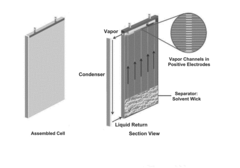
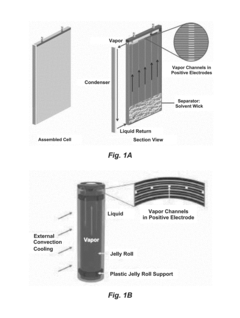
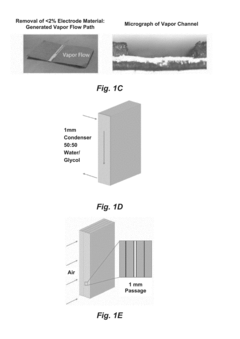
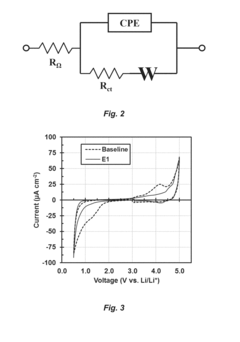
Thermal management method and apparatus for battery system, and battery management system and vehicle
PatentWO2024245230A1
Innovation
- By obtaining the overall temperature of the battery system and the temperature difference between each battery branch, using the thermal management equipment to heat or cool for different lengths, adjust the temperature of each battery branch, so that it is equalized within the preset temperature range, and control the temperature difference is less than Or equal to the preset threshold.


Safety Standards for Battery Management Systems
Battery management systems operate within a comprehensive framework of safety standards that ensure reliable performance and protection against potential hazards. These standards encompass multiple regulatory bodies and technical specifications, with IEC 62619 serving as the primary international standard for lithium-ion battery safety requirements in stationary applications. The standard addresses critical safety aspects including electrical, mechanical, and thermal protection mechanisms that BMS must implement.
UL 1973 represents the North American safety standard specifically designed for batteries used in stationary, vehicle auxiliary power, and light electric rail applications. This standard emphasizes the integration of safety features within battery management systems, requiring comprehensive monitoring of cell voltages, temperatures, and current flows. The standard mandates specific response protocols when parameters exceed safe operating ranges, ensuring immediate protective actions.
The automotive sector follows ISO 26262 functional safety standards, which define safety integrity levels for battery management systems in electric vehicles. This standard requires BMS to implement redundant safety mechanisms and fail-safe operations, particularly for thermal management integration. The standard emphasizes the critical relationship between BMS monitoring capabilities and thermal control systems to prevent thermal runaway events.
UN 38.3 transportation regulations establish safety requirements for lithium battery shipping and handling, directly impacting BMS design specifications. These regulations require battery systems to demonstrate safe operation under various stress conditions, including altitude simulation, thermal cycling, and vibration testing. BMS must maintain protective functions throughout these challenging conditions.
Regional standards such as GB/T 36276 in China and JIS C 8715-2 in Japan provide additional safety requirements tailored to local market conditions and regulatory environments. These standards often incorporate stricter thermal management requirements, reflecting regional climate considerations and application-specific safety concerns.
The convergence of these safety standards creates a comprehensive safety framework that drives BMS design toward enhanced thermal management integration, ensuring both electrical and thermal safety across diverse operating conditions and applications.
UL 1973 represents the North American safety standard specifically designed for batteries used in stationary, vehicle auxiliary power, and light electric rail applications. This standard emphasizes the integration of safety features within battery management systems, requiring comprehensive monitoring of cell voltages, temperatures, and current flows. The standard mandates specific response protocols when parameters exceed safe operating ranges, ensuring immediate protective actions.
The automotive sector follows ISO 26262 functional safety standards, which define safety integrity levels for battery management systems in electric vehicles. This standard requires BMS to implement redundant safety mechanisms and fail-safe operations, particularly for thermal management integration. The standard emphasizes the critical relationship between BMS monitoring capabilities and thermal control systems to prevent thermal runaway events.
UN 38.3 transportation regulations establish safety requirements for lithium battery shipping and handling, directly impacting BMS design specifications. These regulations require battery systems to demonstrate safe operation under various stress conditions, including altitude simulation, thermal cycling, and vibration testing. BMS must maintain protective functions throughout these challenging conditions.
Regional standards such as GB/T 36276 in China and JIS C 8715-2 in Japan provide additional safety requirements tailored to local market conditions and regulatory environments. These standards often incorporate stricter thermal management requirements, reflecting regional climate considerations and application-specific safety concerns.
The convergence of these safety standards creates a comprehensive safety framework that drives BMS design toward enhanced thermal management integration, ensuring both electrical and thermal safety across diverse operating conditions and applications.
Cost-Effectiveness Analysis of BMS vs TMS Solutions
The cost-effectiveness analysis of Battery Management System (BMS) versus Thermal Management System (TMS) solutions reveals significant variations in initial investment requirements and long-term operational benefits. BMS implementations typically require lower upfront capital expenditure, with basic systems ranging from $50-200 per kWh of battery capacity, while advanced BMS solutions can reach $300-500 per kWh. In contrast, TMS solutions demand higher initial investments, particularly for active cooling systems that can cost $400-800 per kWh, depending on the complexity and cooling medium employed.
The operational cost structure presents a contrasting scenario where TMS solutions often incur higher ongoing expenses due to energy consumption for cooling pumps, fans, and refrigeration systems. Active liquid cooling systems typically consume 3-8% of total battery energy for thermal regulation, while passive air cooling systems reduce this to 1-3%. BMS operational costs remain relatively stable, primarily involving software updates and periodic calibration procedures.
Return on investment calculations demonstrate that BMS solutions typically achieve payback within 18-24 months through improved battery utilization efficiency and extended cycle life. Advanced BMS algorithms can increase usable battery capacity by 5-15% and extend battery lifespan by 20-40%, translating to substantial cost savings over the system lifecycle. TMS solutions, despite higher initial costs, can deliver comparable ROI through prevention of thermal degradation and maintenance of optimal operating conditions.
The total cost of ownership analysis over a 10-year operational period shows that integrated BMS-TMS approaches, while requiring higher initial investment, often provide superior cost-effectiveness compared to standalone implementations. This integrated approach can reduce overall system costs by 15-25% while delivering enhanced performance and reliability metrics across diverse operating conditions and applications.
The operational cost structure presents a contrasting scenario where TMS solutions often incur higher ongoing expenses due to energy consumption for cooling pumps, fans, and refrigeration systems. Active liquid cooling systems typically consume 3-8% of total battery energy for thermal regulation, while passive air cooling systems reduce this to 1-3%. BMS operational costs remain relatively stable, primarily involving software updates and periodic calibration procedures.
Return on investment calculations demonstrate that BMS solutions typically achieve payback within 18-24 months through improved battery utilization efficiency and extended cycle life. Advanced BMS algorithms can increase usable battery capacity by 5-15% and extend battery lifespan by 20-40%, translating to substantial cost savings over the system lifecycle. TMS solutions, despite higher initial costs, can deliver comparable ROI through prevention of thermal degradation and maintenance of optimal operating conditions.
The total cost of ownership analysis over a 10-year operational period shows that integrated BMS-TMS approaches, while requiring higher initial investment, often provide superior cost-effectiveness compared to standalone implementations. This integrated approach can reduce overall system costs by 15-25% while delivering enhanced performance and reliability metrics across diverse operating conditions and applications.
Unlock deeper insights with PatSnap Eureka Quick Research — get a full tech report to explore trends and direct your research. Try now!
Generate Your Research Report Instantly with AI Agent
Supercharge your innovation with PatSnap Eureka AI Agent Platform!