

Boosting Signal Detection Accuracy in Multiplexing VLC
MAR 23, 20269 MIN READ
Generate Your Research Report Instantly with AI Agent
PatSnap Eureka helps you evaluate technical feasibility & market potential.
VLC Multiplexing Signal Detection Background and Objectives
Visible Light Communication (VLC) has emerged as a transformative technology that leverages LED lighting infrastructure for simultaneous illumination and data transmission. The evolution of VLC began in the early 2000s with basic proof-of-concept demonstrations, progressing through significant milestones including the establishment of IEEE 802.15.7 standards in 2011 and subsequent advances in modulation techniques. The technology has matured from simple on-off keying methods to sophisticated multiplexing schemes capable of supporting multiple simultaneous data streams.
The development trajectory of VLC multiplexing has been driven by the increasing demand for higher data rates and improved spectral efficiency. Early implementations focused on single-channel transmission, but the inherent limitations in bandwidth utilization led researchers to explore various multiplexing approaches including wavelength division multiplexing (WDM), spatial division multiplexing (SDM), and orthogonal frequency division multiplexing (OFDM). These advances have positioned VLC as a viable complement to traditional radio frequency communications, particularly in environments where RF interference is problematic.
Current multiplexing VLC systems face significant challenges in signal detection accuracy, primarily due to inter-channel interference, ambient light noise, and the nonlinear characteristics of LED devices. The optical channel's susceptibility to environmental factors such as atmospheric turbulence, shadowing effects, and multipath propagation creates complex signal distortion patterns that conventional detection algorithms struggle to address effectively. These challenges become more pronounced as the number of multiplexed channels increases, leading to degraded bit error rates and reduced system reliability.
The primary objective of enhancing signal detection accuracy in multiplexing VLC systems centers on developing robust algorithms capable of mitigating inter-symbol interference while maintaining high-speed data transmission capabilities. This involves creating adaptive detection schemes that can dynamically adjust to varying channel conditions and optimize performance across multiple simultaneous data streams. The goal extends beyond mere error correction to encompass predictive signal processing techniques that can anticipate and compensate for channel impairments before they significantly impact system performance.
Strategic technical objectives include achieving detection accuracy improvements of at least 15-20% compared to existing methods while maintaining computational efficiency suitable for real-time applications. The research aims to establish scalable solutions that can accommodate increasing numbers of multiplexed channels without proportional increases in processing complexity, ultimately enabling VLC systems to compete effectively with established wireless communication technologies in terms of both reliability and throughput performance.
The development trajectory of VLC multiplexing has been driven by the increasing demand for higher data rates and improved spectral efficiency. Early implementations focused on single-channel transmission, but the inherent limitations in bandwidth utilization led researchers to explore various multiplexing approaches including wavelength division multiplexing (WDM), spatial division multiplexing (SDM), and orthogonal frequency division multiplexing (OFDM). These advances have positioned VLC as a viable complement to traditional radio frequency communications, particularly in environments where RF interference is problematic.
Current multiplexing VLC systems face significant challenges in signal detection accuracy, primarily due to inter-channel interference, ambient light noise, and the nonlinear characteristics of LED devices. The optical channel's susceptibility to environmental factors such as atmospheric turbulence, shadowing effects, and multipath propagation creates complex signal distortion patterns that conventional detection algorithms struggle to address effectively. These challenges become more pronounced as the number of multiplexed channels increases, leading to degraded bit error rates and reduced system reliability.
The primary objective of enhancing signal detection accuracy in multiplexing VLC systems centers on developing robust algorithms capable of mitigating inter-symbol interference while maintaining high-speed data transmission capabilities. This involves creating adaptive detection schemes that can dynamically adjust to varying channel conditions and optimize performance across multiple simultaneous data streams. The goal extends beyond mere error correction to encompass predictive signal processing techniques that can anticipate and compensate for channel impairments before they significantly impact system performance.
Strategic technical objectives include achieving detection accuracy improvements of at least 15-20% compared to existing methods while maintaining computational efficiency suitable for real-time applications. The research aims to establish scalable solutions that can accommodate increasing numbers of multiplexed channels without proportional increases in processing complexity, ultimately enabling VLC systems to compete effectively with established wireless communication technologies in terms of both reliability and throughput performance.
Market Demand for High-Accuracy VLC Communication Systems
The global visible light communication market is experiencing unprecedented growth driven by the increasing demand for high-speed, secure, and interference-free wireless communication solutions. Traditional radio frequency communication systems face significant challenges including spectrum congestion, electromagnetic interference, and security vulnerabilities, creating substantial market opportunities for VLC technologies that can address these limitations effectively.
Industrial automation and smart manufacturing sectors represent primary demand drivers for high-accuracy VLC systems. Manufacturing facilities require reliable communication networks that operate seamlessly in electromagnetically sensitive environments where traditional wireless technologies may cause interference with precision equipment. The automotive industry demonstrates particularly strong demand for VLC solutions in vehicle-to-vehicle and vehicle-to-infrastructure communication applications, where signal accuracy directly impacts safety-critical systems.
Healthcare facilities constitute another significant market segment demanding high-accuracy VLC communication systems. Hospitals and medical centers require communication networks that do not interfere with sensitive medical equipment while maintaining reliable data transmission for patient monitoring systems, medical device connectivity, and staff communication networks. The inherent electromagnetic compatibility of VLC technology makes it particularly attractive for these applications.
The underwater communication market presents unique opportunities for multiplexing VLC systems with enhanced signal detection accuracy. Submarine operations, underwater robotics, and marine research applications require robust communication solutions that can operate effectively in challenging aquatic environments where radio frequency signals experience severe attenuation.
Data centers and high-frequency trading environments demand ultra-low latency communication systems with exceptional accuracy and reliability. These applications require precise signal detection capabilities to maintain competitive advantages in time-sensitive operations where microsecond delays can result in significant financial impacts.
The aerospace and defense sectors drive demand for secure, high-accuracy communication systems that are resistant to jamming and interception. VLC technology offers inherent security advantages through its confined transmission characteristics, making it particularly valuable for sensitive military and aerospace applications requiring reliable multiplexed communication channels.
Emerging smart city initiatives worldwide are creating substantial market demand for integrated communication infrastructure that can support multiple simultaneous data streams with high accuracy. Street lighting systems equipped with VLC capabilities can provide both illumination and communication services, creating cost-effective dual-purpose infrastructure solutions that municipal governments find increasingly attractive for urban development projects.
Industrial automation and smart manufacturing sectors represent primary demand drivers for high-accuracy VLC systems. Manufacturing facilities require reliable communication networks that operate seamlessly in electromagnetically sensitive environments where traditional wireless technologies may cause interference with precision equipment. The automotive industry demonstrates particularly strong demand for VLC solutions in vehicle-to-vehicle and vehicle-to-infrastructure communication applications, where signal accuracy directly impacts safety-critical systems.
Healthcare facilities constitute another significant market segment demanding high-accuracy VLC communication systems. Hospitals and medical centers require communication networks that do not interfere with sensitive medical equipment while maintaining reliable data transmission for patient monitoring systems, medical device connectivity, and staff communication networks. The inherent electromagnetic compatibility of VLC technology makes it particularly attractive for these applications.
The underwater communication market presents unique opportunities for multiplexing VLC systems with enhanced signal detection accuracy. Submarine operations, underwater robotics, and marine research applications require robust communication solutions that can operate effectively in challenging aquatic environments where radio frequency signals experience severe attenuation.
Data centers and high-frequency trading environments demand ultra-low latency communication systems with exceptional accuracy and reliability. These applications require precise signal detection capabilities to maintain competitive advantages in time-sensitive operations where microsecond delays can result in significant financial impacts.
The aerospace and defense sectors drive demand for secure, high-accuracy communication systems that are resistant to jamming and interception. VLC technology offers inherent security advantages through its confined transmission characteristics, making it particularly valuable for sensitive military and aerospace applications requiring reliable multiplexed communication channels.
Emerging smart city initiatives worldwide are creating substantial market demand for integrated communication infrastructure that can support multiple simultaneous data streams with high accuracy. Street lighting systems equipped with VLC capabilities can provide both illumination and communication services, creating cost-effective dual-purpose infrastructure solutions that municipal governments find increasingly attractive for urban development projects.
Current VLC Multiplexing Detection Challenges and Limitations
Visible Light Communication (VLC) multiplexing systems face significant signal detection challenges that fundamentally limit their practical deployment and performance scalability. The primary obstacle stems from inter-channel interference (ICI) that occurs when multiple data streams are transmitted simultaneously through different wavelengths, spatial positions, or temporal slots. This interference manifests as crosstalk between adjacent channels, leading to elevated bit error rates and reduced system reliability, particularly in dense multiplexing configurations.
Optical channel impairments present another critical limitation in VLC multiplexing detection. LED non-linearities, including thermal effects and current-dependent spectral shifts, introduce signal distortions that become amplified in multiplexed environments. These impairments are further exacerbated by ambient light interference, which creates additional noise floors that conventional detection algorithms struggle to differentiate from legitimate signal components.
The computational complexity of existing detection methods represents a substantial barrier to real-time implementation. Traditional maximum likelihood detection approaches require exponentially increasing processing power as the number of multiplexed channels grows, making them impractical for high-density systems. Current linear detection techniques, while computationally efficient, suffer from poor performance in scenarios with strong channel correlation and multipath propagation effects.
Synchronization challenges pose additional constraints on multiplexing VLC systems. Maintaining precise timing alignment across multiple channels becomes increasingly difficult as system complexity grows, particularly in mobile scenarios where relative motion between transmitters and receivers introduces Doppler effects and varying propagation delays. Existing synchronization algorithms often fail to adapt dynamically to changing channel conditions.
Hardware limitations further compound detection challenges in multiplexing VLC implementations. Photodetector bandwidth constraints limit the achievable data rates per channel, while analog-to-digital converter resolution affects the system's ability to distinguish between closely spaced signal levels in multilevel modulation schemes. These hardware bottlenecks become more pronounced when attempting to scale to higher-order multiplexing configurations.
Current detection algorithms also exhibit poor robustness against channel state information (CSI) estimation errors. In practical VLC environments, channel conditions fluctuate due to factors such as user mobility, shadowing effects, and varying ambient lighting conditions. Existing detection methods typically assume perfect CSI knowledge, leading to significant performance degradation when channel estimation errors are present, particularly in rapidly changing environments where adaptive algorithms cannot converge quickly enough to track channel variations effectively.
Optical channel impairments present another critical limitation in VLC multiplexing detection. LED non-linearities, including thermal effects and current-dependent spectral shifts, introduce signal distortions that become amplified in multiplexed environments. These impairments are further exacerbated by ambient light interference, which creates additional noise floors that conventional detection algorithms struggle to differentiate from legitimate signal components.
The computational complexity of existing detection methods represents a substantial barrier to real-time implementation. Traditional maximum likelihood detection approaches require exponentially increasing processing power as the number of multiplexed channels grows, making them impractical for high-density systems. Current linear detection techniques, while computationally efficient, suffer from poor performance in scenarios with strong channel correlation and multipath propagation effects.
Synchronization challenges pose additional constraints on multiplexing VLC systems. Maintaining precise timing alignment across multiple channels becomes increasingly difficult as system complexity grows, particularly in mobile scenarios where relative motion between transmitters and receivers introduces Doppler effects and varying propagation delays. Existing synchronization algorithms often fail to adapt dynamically to changing channel conditions.
Hardware limitations further compound detection challenges in multiplexing VLC implementations. Photodetector bandwidth constraints limit the achievable data rates per channel, while analog-to-digital converter resolution affects the system's ability to distinguish between closely spaced signal levels in multilevel modulation schemes. These hardware bottlenecks become more pronounced when attempting to scale to higher-order multiplexing configurations.
Current detection algorithms also exhibit poor robustness against channel state information (CSI) estimation errors. In practical VLC environments, channel conditions fluctuate due to factors such as user mobility, shadowing effects, and varying ambient lighting conditions. Existing detection methods typically assume perfect CSI knowledge, leading to significant performance degradation when channel estimation errors are present, particularly in rapidly changing environments where adaptive algorithms cannot converge quickly enough to track channel variations effectively.
Existing VLC Multiplexing Detection Enhancement Solutions
01 Advanced modulation and coding schemes for VLC signal detection
Implementation of sophisticated modulation techniques such as orthogonal frequency division multiplexing (OFDM), pulse position modulation (PPM), and adaptive coding schemes to enhance signal detection accuracy in visible light communication systems. These techniques improve the signal-to-noise ratio and reduce inter-symbol interference, enabling more reliable data transmission and reception in multiplexed VLC environments.- Advanced modulation and coding schemes for VLC signal detection: Implementing sophisticated modulation techniques such as orthogonal frequency division multiplexing (OFDM), pulse position modulation (PPM), or advanced coding schemes can significantly improve the detection accuracy of multiplexed VLC signals. These techniques enhance signal-to-noise ratio and reduce inter-symbol interference, enabling more reliable data transmission and reception in visible light communication systems.
- Multi-user detection and interference cancellation techniques: Employing multi-user detection algorithms and interference cancellation methods helps improve signal detection accuracy in multiplexed VLC systems where multiple users or channels operate simultaneously. These techniques can separate overlapping signals, reduce crosstalk between channels, and enhance the overall system capacity while maintaining high detection accuracy.
- Adaptive equalization and channel estimation: Implementing adaptive equalization techniques and accurate channel estimation algorithms can compensate for channel distortions and time-varying characteristics in VLC systems. These methods dynamically adjust receiver parameters based on channel conditions, improving signal detection accuracy under various environmental conditions and reducing bit error rates in multiplexed transmission scenarios.
- Photodetector array and spatial multiplexing optimization: Utilizing optimized photodetector arrays and spatial multiplexing techniques can enhance the detection accuracy of multiplexed VLC signals. By employing multiple photodetectors with specific arrangements and processing algorithms, the system can better distinguish between different spatial channels, improve signal separation, and increase overall detection reliability in multi-channel VLC communications.
- Machine learning and signal processing algorithms for detection enhancement: Applying machine learning algorithms and advanced signal processing techniques can significantly improve the detection accuracy of multiplexed VLC signals. These methods can learn and adapt to complex signal patterns, optimize detection thresholds, reduce false alarm rates, and enhance the robustness of the system against noise and interference in various operating conditions.
02 Multi-channel detection and spatial multiplexing techniques
Utilization of multiple photodetectors or imaging sensors to simultaneously detect signals from different light sources, enabling spatial division multiplexing. This approach includes angle diversity reception, multiple-input multiple-output (MIMO) configurations, and spatial filtering methods that improve detection accuracy by separating overlapping signals and reducing crosstalk between channels.Expand Specific Solutions03 Signal processing algorithms for interference mitigation
Development of advanced signal processing techniques including equalization algorithms, interference cancellation methods, and machine learning-based detection schemes to improve accuracy in multiplexed VLC systems. These algorithms compensate for channel distortions, ambient light interference, and multipath effects that degrade signal quality in practical deployment scenarios.Expand Specific Solutions04 Wavelength division multiplexing and color-based detection
Employment of different wavelengths or color channels of visible light to transmit multiple independent data streams simultaneously. This includes the use of RGB LEDs with separate detection for each color component, optical filtering techniques, and wavelength-selective photodetectors to achieve high-accuracy parallel signal detection without temporal interference between channels.Expand Specific Solutions05 Synchronization and timing recovery mechanisms
Implementation of precise synchronization protocols and timing recovery circuits to maintain accurate signal detection in multiplexed VLC systems. These mechanisms include frame synchronization techniques, clock recovery algorithms, and pilot signal insertion methods that ensure proper alignment of received signals and reduce detection errors caused by timing jitter and frequency offset.Expand Specific Solutions
Key Players in VLC and Optical Communication Industry
The Visible Light Communication (VLC) multiplexing signal detection market represents an emerging technology sector in its early development stage, characterized by significant growth potential as the global VLC market is projected to reach billions in the coming decade. The competitive landscape features a diverse mix of established technology giants and specialized players, with major corporations like Samsung Electronics, Sony Group, Philips, Huawei, Apple, and LG Electronics leveraging their extensive R&D capabilities and market presence to drive innovation. Technology maturity varies significantly across players, with telecommunications leaders such as Ericsson, Nokia, and ZTE demonstrating advanced implementation capabilities, while academic institutions like Southeast University, University of California, and Caltech contribute fundamental research breakthroughs. The sector shows promising technical advancement through collaborative efforts between industry leaders and research institutions, positioning VLC multiplexing as a viable next-generation communication solution.
Samsung Electronics Co., Ltd.
Technical Solution: Samsung has developed advanced multiplexing VLC systems utilizing OFDM (Orthogonal Frequency Division Multiplexing) technology combined with machine learning-based signal processing algorithms. Their approach incorporates adaptive modulation schemes and sophisticated interference cancellation techniques to enhance signal detection accuracy in multi-user VLC environments. The company's solution leverages LED array configurations with optimized beam forming and spatial diversity to minimize inter-channel interference while maximizing data throughput in multiplexed visible light communication systems.
Strengths: Strong manufacturing capabilities and integration with display technologies. Weaknesses: Limited focus on specialized VLC applications compared to consumer electronics.
Koninklijke Philips NV
Technical Solution: Philips has developed innovative multiplexing VLC solutions focusing on smart lighting applications with integrated communication capabilities. Their technology combines advanced LED driver circuits with sophisticated modulation schemes to enable high-accuracy signal detection in multiplexed environments. The system utilizes proprietary algorithms for dynamic channel allocation and interference suppression, optimized for indoor positioning and data transmission applications. Philips' approach emphasizes energy efficiency while maintaining robust communication performance through adaptive power control and intelligent beam steering mechanisms.
Strengths: Deep expertise in lighting technology and strong market presence in smart lighting solutions. Weaknesses: Limited focus on high-speed data communication compared to lighting applications.
Core Innovations in VLC Signal Boosting Algorithms
Power optimized VLC signal processing with efficient handling of ISP/VFE
PatentActiveUS10411798B2
Innovation
- A method where a first sampling identifies pixel elements receiving detectable light from VLC sources, and subsequent samplings generate frames of pixel sample values limited to these identified elements, reducing the number of processed pixels and thus power consumption and memory usage.


Signal detection system and signal detection method
PatentWO2015189920A1
Innovation
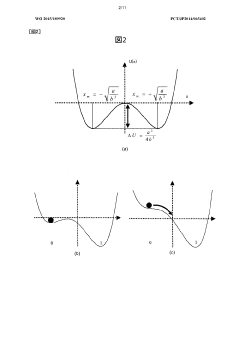
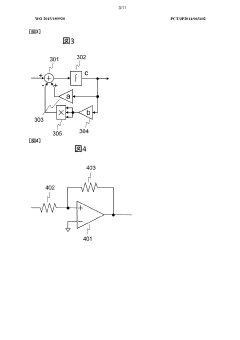
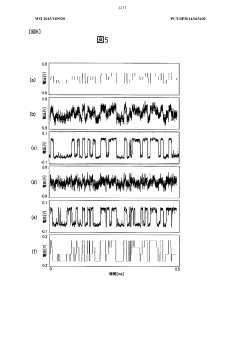
- A micro-signal detection system utilizing a cascade of nonlinear response units, including bistable circuits, which non-linearly respond to input signals, binarize them, and superimpose offsets to enhance signal detection, allowing for synchronous acquisition and processing of discrete signals into digital or image data, thereby improving detection accuracy without the need for parallel detectors.

Interference Mitigation Strategies for VLC Systems
Interference mitigation represents a critical challenge in multiplexing VLC systems, where multiple light sources and communication channels operate simultaneously within shared optical environments. The fundamental interference mechanisms include inter-channel interference (ICI), inter-symbol interference (ISI), and ambient light interference, each requiring distinct mitigation approaches to maintain signal detection accuracy.
Advanced modulation techniques serve as the primary defense against interference in VLC multiplexing scenarios. Orthogonal frequency division multiplexing (OFDM) provides robust performance by distributing data across multiple orthogonal subcarriers, effectively reducing the impact of frequency-selective interference. Complementary approaches include filter bank multicarrier (FBMC) and generalized frequency division multiplexing (GFDM), which offer improved spectral efficiency and reduced out-of-band emissions compared to conventional OFDM implementations.
Spatial diversity techniques leverage multiple transmitters and receivers to combat interference through strategic positioning and beam steering. Multiple-input multiple-output (MIMO) configurations enable spatial multiplexing while providing interference suppression capabilities through advanced signal processing algorithms. Angle diversity reception and imaging receivers further enhance interference resilience by exploiting the directional properties of optical signals.
Adaptive filtering and equalization algorithms play crucial roles in real-time interference mitigation. Minimum mean square error (MMSE) equalizers and decision feedback equalizers (DFE) effectively compensate for channel-induced distortions and inter-symbol interference. Machine learning-based approaches, including neural network equalizers and reinforcement learning algorithms, demonstrate superior performance in dynamic interference environments by continuously adapting to changing channel conditions.
Power control and resource allocation strategies optimize system performance by dynamically adjusting transmission parameters based on interference levels. Coordinated transmission schemes minimize inter-cell interference through synchronized dimming control and coordinated beamforming. These techniques ensure optimal signal-to-interference-plus-noise ratio (SINR) across all active communication links while maintaining illumination requirements.
Hybrid mitigation approaches combine multiple techniques to address complex interference scenarios. Integration of time-domain and frequency-domain processing, coupled with advanced coding schemes such as low-density parity-check (LDPC) codes, provides comprehensive interference suppression capabilities essential for high-accuracy signal detection in dense VLC multiplexing environments.
Advanced modulation techniques serve as the primary defense against interference in VLC multiplexing scenarios. Orthogonal frequency division multiplexing (OFDM) provides robust performance by distributing data across multiple orthogonal subcarriers, effectively reducing the impact of frequency-selective interference. Complementary approaches include filter bank multicarrier (FBMC) and generalized frequency division multiplexing (GFDM), which offer improved spectral efficiency and reduced out-of-band emissions compared to conventional OFDM implementations.
Spatial diversity techniques leverage multiple transmitters and receivers to combat interference through strategic positioning and beam steering. Multiple-input multiple-output (MIMO) configurations enable spatial multiplexing while providing interference suppression capabilities through advanced signal processing algorithms. Angle diversity reception and imaging receivers further enhance interference resilience by exploiting the directional properties of optical signals.
Adaptive filtering and equalization algorithms play crucial roles in real-time interference mitigation. Minimum mean square error (MMSE) equalizers and decision feedback equalizers (DFE) effectively compensate for channel-induced distortions and inter-symbol interference. Machine learning-based approaches, including neural network equalizers and reinforcement learning algorithms, demonstrate superior performance in dynamic interference environments by continuously adapting to changing channel conditions.
Power control and resource allocation strategies optimize system performance by dynamically adjusting transmission parameters based on interference levels. Coordinated transmission schemes minimize inter-cell interference through synchronized dimming control and coordinated beamforming. These techniques ensure optimal signal-to-interference-plus-noise ratio (SINR) across all active communication links while maintaining illumination requirements.
Hybrid mitigation approaches combine multiple techniques to address complex interference scenarios. Integration of time-domain and frequency-domain processing, coupled with advanced coding schemes such as low-density parity-check (LDPC) codes, provides comprehensive interference suppression capabilities essential for high-accuracy signal detection in dense VLC multiplexing environments.
Integration Challenges with Existing Communication Infrastructure
The integration of multiplexing VLC systems with existing communication infrastructure presents significant architectural challenges that require careful consideration of compatibility, scalability, and performance optimization. Traditional communication networks were primarily designed for radio frequency-based technologies, creating fundamental mismatches when incorporating optical wireless communication systems that operate on entirely different physical principles.
Legacy network protocols and switching equipment often lack native support for VLC-specific characteristics such as variable optical channel conditions, line-of-sight requirements, and illumination-dependent performance variations. This incompatibility necessitates the development of specialized gateway devices and protocol translation layers that can bridge the gap between optical and conventional communication domains while maintaining signal integrity and detection accuracy.
The deployment of multiplexing VLC systems within existing infrastructure faces substantial challenges related to power distribution and control systems. Current building management systems typically separate lighting and communication functions, requiring extensive modifications to support dual-purpose LED fixtures that serve both illumination and data transmission roles. This integration demands sophisticated power management solutions that can dynamically adjust between lighting requirements and communication performance optimization.
Interference mitigation becomes particularly complex when VLC systems operate alongside existing wireless technologies. The electromagnetic spectrum occupied by control electronics and the optical spectrum used for data transmission can create unexpected interaction patterns that degrade signal detection performance. Careful frequency planning and shielding strategies are essential to prevent cross-system interference while maintaining the accuracy of multiplexed signal detection.
Network management and monitoring systems require significant upgrades to accommodate the unique characteristics of VLC channels. Traditional network monitoring tools cannot directly assess optical link quality, channel interference, or the impact of environmental lighting conditions on communication performance. This limitation necessitates the development of hybrid monitoring solutions that can correlate optical channel performance with overall network health metrics.
The integration process also faces challenges related to standardization and interoperability. Existing communication standards lack comprehensive specifications for VLC integration, leading to proprietary solutions that may not seamlessly interact with established network equipment from different vendors. This fragmentation complicates large-scale deployments and increases integration costs significantly.
Legacy network protocols and switching equipment often lack native support for VLC-specific characteristics such as variable optical channel conditions, line-of-sight requirements, and illumination-dependent performance variations. This incompatibility necessitates the development of specialized gateway devices and protocol translation layers that can bridge the gap between optical and conventional communication domains while maintaining signal integrity and detection accuracy.
The deployment of multiplexing VLC systems within existing infrastructure faces substantial challenges related to power distribution and control systems. Current building management systems typically separate lighting and communication functions, requiring extensive modifications to support dual-purpose LED fixtures that serve both illumination and data transmission roles. This integration demands sophisticated power management solutions that can dynamically adjust between lighting requirements and communication performance optimization.
Interference mitigation becomes particularly complex when VLC systems operate alongside existing wireless technologies. The electromagnetic spectrum occupied by control electronics and the optical spectrum used for data transmission can create unexpected interaction patterns that degrade signal detection performance. Careful frequency planning and shielding strategies are essential to prevent cross-system interference while maintaining the accuracy of multiplexed signal detection.
Network management and monitoring systems require significant upgrades to accommodate the unique characteristics of VLC channels. Traditional network monitoring tools cannot directly assess optical link quality, channel interference, or the impact of environmental lighting conditions on communication performance. This limitation necessitates the development of hybrid monitoring solutions that can correlate optical channel performance with overall network health metrics.
The integration process also faces challenges related to standardization and interoperability. Existing communication standards lack comprehensive specifications for VLC integration, leading to proprietary solutions that may not seamlessly interact with established network equipment from different vendors. This fragmentation complicates large-scale deployments and increases integration costs significantly.
Unlock deeper insights with PatSnap Eureka Quick Research — get a full tech report to explore trends and direct your research. Try now!
Generate Your Research Report Instantly with AI Agent
Supercharge your innovation with PatSnap Eureka AI Agent Platform!