Bypass Valve Actuation: Comparing Electric vs Mechanical
MAR 23, 20269 MIN READ
Generate Your Research Report Instantly with AI Agent
Patsnap Eureka helps you evaluate technical feasibility & market potential.
Bypass Valve Actuation Technology Background and Objectives
Bypass valve actuation systems represent a critical component in modern industrial applications, serving as essential control mechanisms that regulate fluid flow by redirecting it around primary system components. These valves have evolved significantly since their initial development in the early 20th century, transitioning from purely mechanical systems to sophisticated electro-mechanical solutions that offer enhanced precision and control capabilities.
The historical development of bypass valve technology can be traced through several distinct phases. Early mechanical actuation systems relied on manual operation and simple spring-loaded mechanisms, which provided basic functionality but limited control precision. The introduction of pneumatic and hydraulic actuation in the mid-20th century marked a significant advancement, enabling remote operation and improved response times. The most recent evolution has seen the integration of electric actuation systems, which leverage advanced motor technologies and electronic control systems to deliver unprecedented accuracy and programmability.
Current market demands are driving the need for more sophisticated actuation solutions that can meet increasingly stringent performance requirements. Industries such as aerospace, automotive, oil and gas, and power generation require bypass valves that can operate reliably under extreme conditions while providing precise flow control. The growing emphasis on system automation and digital integration has created additional pressure for actuation systems that can seamlessly interface with modern control networks and provide real-time feedback capabilities.
The primary technical objectives for modern bypass valve actuation systems center around achieving optimal balance between reliability, precision, and operational efficiency. Electric actuation systems aim to deliver superior positioning accuracy, faster response times, and enhanced diagnostic capabilities through integrated sensors and control electronics. These systems target precise flow modulation with positioning accuracies within ±0.1% of full scale and response times measured in milliseconds.
Mechanical actuation systems, conversely, focus on maximizing operational reliability and fail-safe functionality through simplified designs that minimize dependency on external power sources. The objective is to provide robust performance in harsh environments where electrical systems might be compromised, while maintaining adequate control precision for less demanding applications.
The convergence of these technological approaches reflects the industry's pursuit of actuation solutions that can adapt to diverse operational requirements while maintaining cost-effectiveness and long-term reliability across various industrial sectors.
The historical development of bypass valve technology can be traced through several distinct phases. Early mechanical actuation systems relied on manual operation and simple spring-loaded mechanisms, which provided basic functionality but limited control precision. The introduction of pneumatic and hydraulic actuation in the mid-20th century marked a significant advancement, enabling remote operation and improved response times. The most recent evolution has seen the integration of electric actuation systems, which leverage advanced motor technologies and electronic control systems to deliver unprecedented accuracy and programmability.
Current market demands are driving the need for more sophisticated actuation solutions that can meet increasingly stringent performance requirements. Industries such as aerospace, automotive, oil and gas, and power generation require bypass valves that can operate reliably under extreme conditions while providing precise flow control. The growing emphasis on system automation and digital integration has created additional pressure for actuation systems that can seamlessly interface with modern control networks and provide real-time feedback capabilities.
The primary technical objectives for modern bypass valve actuation systems center around achieving optimal balance between reliability, precision, and operational efficiency. Electric actuation systems aim to deliver superior positioning accuracy, faster response times, and enhanced diagnostic capabilities through integrated sensors and control electronics. These systems target precise flow modulation with positioning accuracies within ±0.1% of full scale and response times measured in milliseconds.
Mechanical actuation systems, conversely, focus on maximizing operational reliability and fail-safe functionality through simplified designs that minimize dependency on external power sources. The objective is to provide robust performance in harsh environments where electrical systems might be compromised, while maintaining adequate control precision for less demanding applications.
The convergence of these technological approaches reflects the industry's pursuit of actuation solutions that can adapt to diverse operational requirements while maintaining cost-effectiveness and long-term reliability across various industrial sectors.
Market Demand Analysis for Bypass Valve Actuation Systems
The global bypass valve actuation systems market demonstrates robust growth driven by increasing industrial automation and stringent safety requirements across multiple sectors. Oil and gas industries represent the largest demand segment, where bypass valves serve critical functions in pipeline pressure management, emergency shutdown systems, and process optimization. The sector's emphasis on operational safety and environmental compliance creates sustained demand for reliable actuation solutions.
Power generation facilities constitute another significant market segment, particularly in thermal and nuclear power plants where bypass valves manage steam flow and pressure regulation. The growing adoption of renewable energy systems, including concentrated solar power and geothermal plants, further expands market opportunities as these facilities require sophisticated valve control systems for optimal performance.
Chemical and petrochemical industries drive substantial demand for bypass valve actuation systems due to complex process requirements and safety-critical applications. These sectors prioritize precise control and fail-safe operation, creating preference for advanced actuation technologies that ensure process continuity and personnel safety.
Water treatment and municipal infrastructure sectors show increasing adoption of automated bypass valve systems, driven by smart city initiatives and aging infrastructure replacement programs. The need for remote monitoring and control capabilities in water distribution networks creates growing demand for electric actuation solutions.
Aerospace and defense applications represent a specialized but high-value market segment, where bypass valves control fuel systems, hydraulic circuits, and environmental control systems. These applications demand lightweight, reliable actuation systems capable of operating under extreme conditions.
The market exhibits regional variations in demand patterns, with North America and Europe showing preference for electric actuation systems due to advanced automation infrastructure and environmental regulations. Asia-Pacific regions demonstrate rapid growth in both electric and mechanical systems, driven by industrial expansion and infrastructure development.
Emerging trends include integration with Industrial Internet of Things platforms, predictive maintenance capabilities, and enhanced cybersecurity features. The shift toward digitalization creates new market opportunities for smart actuation systems that provide real-time performance data and remote diagnostic capabilities.
Power generation facilities constitute another significant market segment, particularly in thermal and nuclear power plants where bypass valves manage steam flow and pressure regulation. The growing adoption of renewable energy systems, including concentrated solar power and geothermal plants, further expands market opportunities as these facilities require sophisticated valve control systems for optimal performance.
Chemical and petrochemical industries drive substantial demand for bypass valve actuation systems due to complex process requirements and safety-critical applications. These sectors prioritize precise control and fail-safe operation, creating preference for advanced actuation technologies that ensure process continuity and personnel safety.
Water treatment and municipal infrastructure sectors show increasing adoption of automated bypass valve systems, driven by smart city initiatives and aging infrastructure replacement programs. The need for remote monitoring and control capabilities in water distribution networks creates growing demand for electric actuation solutions.
Aerospace and defense applications represent a specialized but high-value market segment, where bypass valves control fuel systems, hydraulic circuits, and environmental control systems. These applications demand lightweight, reliable actuation systems capable of operating under extreme conditions.
The market exhibits regional variations in demand patterns, with North America and Europe showing preference for electric actuation systems due to advanced automation infrastructure and environmental regulations. Asia-Pacific regions demonstrate rapid growth in both electric and mechanical systems, driven by industrial expansion and infrastructure development.
Emerging trends include integration with Industrial Internet of Things platforms, predictive maintenance capabilities, and enhanced cybersecurity features. The shift toward digitalization creates new market opportunities for smart actuation systems that provide real-time performance data and remote diagnostic capabilities.
Current Status and Challenges in Electric vs Mechanical Actuation
Electric actuation systems in bypass valve applications have achieved significant technological maturity, with modern electric actuators offering precise positioning control, remote operation capabilities, and integration with digital control systems. These systems typically utilize servo motors or stepper motors coupled with gear reduction mechanisms to provide the necessary torque for valve operation. Current electric actuators can achieve positioning accuracy within ±0.1% of full scale and response times under one second for most industrial applications.
Mechanical actuation systems continue to dominate in high-reliability applications, particularly in aerospace and critical industrial processes. Spring-loaded mechanisms, pneumatic systems, and hydraulic actuators represent the primary mechanical solutions. These systems offer inherent fail-safe characteristics and can operate independently of external power sources, making them particularly valuable in emergency shutdown scenarios.
The primary challenge facing electric actuation systems centers on power dependency and electromagnetic interference susceptibility. In harsh industrial environments, electrical components face degradation from temperature extremes, vibration, and corrosive atmospheres. Power supply interruptions can compromise system functionality, requiring backup power systems that add complexity and cost. Additionally, electromagnetic compatibility issues in high-interference environments can affect control signal integrity and actuator performance.
Mechanical systems encounter distinct challenges related to wear, maintenance requirements, and response time limitations. Pneumatic and hydraulic systems require compressed air or fluid supply infrastructure, which introduces additional failure points. Mechanical wear in springs, seals, and moving components necessitates regular maintenance intervals that can impact system availability. Temperature variations significantly affect mechanical component performance, particularly in spring-loaded systems where material properties change with thermal cycling.
Integration challenges emerge when combining electric and mechanical systems in hybrid configurations. Achieving seamless coordination between different actuation methods requires sophisticated control algorithms and redundant sensing systems. The complexity of managing multiple actuation modes while maintaining system reliability presents ongoing engineering challenges.
Environmental compliance requirements increasingly favor electric systems due to their reduced environmental impact compared to hydraulic systems that may leak fluids. However, the electronic waste generated by electric actuator components and the energy consumption during operation present sustainability considerations that influence technology selection decisions in modern industrial applications.
Mechanical actuation systems continue to dominate in high-reliability applications, particularly in aerospace and critical industrial processes. Spring-loaded mechanisms, pneumatic systems, and hydraulic actuators represent the primary mechanical solutions. These systems offer inherent fail-safe characteristics and can operate independently of external power sources, making them particularly valuable in emergency shutdown scenarios.
The primary challenge facing electric actuation systems centers on power dependency and electromagnetic interference susceptibility. In harsh industrial environments, electrical components face degradation from temperature extremes, vibration, and corrosive atmospheres. Power supply interruptions can compromise system functionality, requiring backup power systems that add complexity and cost. Additionally, electromagnetic compatibility issues in high-interference environments can affect control signal integrity and actuator performance.
Mechanical systems encounter distinct challenges related to wear, maintenance requirements, and response time limitations. Pneumatic and hydraulic systems require compressed air or fluid supply infrastructure, which introduces additional failure points. Mechanical wear in springs, seals, and moving components necessitates regular maintenance intervals that can impact system availability. Temperature variations significantly affect mechanical component performance, particularly in spring-loaded systems where material properties change with thermal cycling.
Integration challenges emerge when combining electric and mechanical systems in hybrid configurations. Achieving seamless coordination between different actuation methods requires sophisticated control algorithms and redundant sensing systems. The complexity of managing multiple actuation modes while maintaining system reliability presents ongoing engineering challenges.
Environmental compliance requirements increasingly favor electric systems due to their reduced environmental impact compared to hydraulic systems that may leak fluids. However, the electronic waste generated by electric actuator components and the energy consumption during operation present sustainability considerations that influence technology selection decisions in modern industrial applications.
Current Electric and Mechanical Actuation Solutions
01 Hydraulic actuation systems for bypass valves
Bypass valves can be actuated using hydraulic systems that utilize fluid pressure to control valve position. These systems typically include hydraulic cylinders, pistons, and control mechanisms that respond to pressure changes in the system. The hydraulic actuation provides precise control and can handle high-pressure applications, making it suitable for industrial and automotive applications where reliable bypass valve operation is critical.- Hydraulic actuation systems for bypass valves: Bypass valves can be actuated using hydraulic systems that utilize fluid pressure to control valve position. These systems typically include hydraulic cylinders, pistons, and pressure control mechanisms that enable precise and reliable valve operation. Hydraulic actuation provides strong force output and smooth control, making it suitable for applications requiring high actuation forces and accurate positioning of bypass valves in various industrial settings.
- Pneumatic actuation mechanisms: Pneumatic systems utilize compressed air to actuate bypass valves through air-powered cylinders and actuators. These mechanisms offer fast response times and clean operation without hydraulic fluid contamination risks. Pneumatic actuation systems typically include air supply lines, pressure regulators, and control valves that manage the opening and closing of bypass valves in response to system conditions or control signals.
- Electric motor-driven actuation: Electric actuators employ motors, such as stepper motors or servo motors, to drive bypass valve mechanisms through gear systems or direct drive arrangements. These systems provide precise position control and can be easily integrated with electronic control systems for automated operation. Electric actuation offers advantages in terms of programmability, remote control capability, and elimination of hydraulic or pneumatic infrastructure requirements.
- Thermally-activated bypass valve systems: Thermal actuation mechanisms use temperature-sensitive elements such as wax motors, bimetallic strips, or shape memory alloys to automatically control bypass valve position based on temperature changes. These self-regulating systems do not require external power sources and respond directly to thermal conditions in the system. Thermal actuators are particularly useful in applications where bypass valve operation needs to correlate with temperature variations for system protection or efficiency optimization.
- Integrated control systems with feedback mechanisms: Advanced bypass valve actuation systems incorporate sensors, controllers, and feedback loops to monitor valve position and system parameters. These integrated systems use electronic control units that process input signals and adjust actuation accordingly to maintain desired operating conditions. Feedback mechanisms may include position sensors, pressure transducers, and flow meters that enable closed-loop control for optimal bypass valve performance and system efficiency.
02 Pneumatic actuation mechanisms
Pneumatic actuation systems use compressed air or gas to operate bypass valves. These mechanisms typically incorporate air cylinders, diaphragms, or bellows that convert pneumatic pressure into mechanical motion to open or close the valve. Pneumatic systems offer fast response times, clean operation, and are particularly suitable for applications requiring frequent valve cycling or operation in explosive environments.Expand Specific Solutions03 Electric motor-driven actuation
Electric actuators employ motors, such as stepper motors or servo motors, to drive bypass valve mechanisms through gear trains or direct drive systems. These systems provide precise position control, easy integration with electronic control systems, and the ability to modulate valve position continuously. Electric actuation is advantageous for applications requiring remote control, automated operation, and integration with digital control systems.Expand Specific Solutions04 Thermally-activated bypass valve systems
Thermal actuation systems utilize temperature-sensitive elements such as wax motors, bimetallic strips, or shape memory alloys to automatically actuate bypass valves based on temperature changes. These self-regulating systems do not require external power sources and can provide fail-safe operation. They are commonly used in cooling systems, engine management, and thermal regulation applications where temperature-dependent flow control is needed.Expand Specific Solutions05 Solenoid-operated bypass valve control
Solenoid actuators use electromagnetic coils to generate linear or rotary motion for operating bypass valves. These devices offer rapid response times, compact design, and simple on-off or proportional control capabilities. Solenoid actuation is particularly effective for applications requiring quick valve switching, low power consumption, and integration with electronic control units in automotive, HVAC, and fluid control systems.Expand Specific Solutions
Major Players in Valve Actuation Industry Analysis
The bypass valve actuation technology comparing electric versus mechanical systems represents a mature market experiencing significant technological transition. The industry is currently in a consolidation phase, with established automotive giants like GM Global Technology Operations, Ford Global Technologies, Hyundai Motor, and Kia Corp. leading traditional mechanical solutions, while simultaneously investing heavily in electric actuation systems. The market demonstrates substantial scale, driven by automotive, aerospace, and industrial applications, with companies like Safran Aircraft Engines, Pratt & Whitney Canada, and Moog Inc. serving high-performance sectors. Technology maturity varies significantly across segments - mechanical systems represent well-established technology with incremental improvements, while electric actuation systems are rapidly advancing through innovations from specialized players like Valeo Systèmes de Contrôle Moteur, Schaeffler Technologies, and emerging solutions from Asian manufacturers including Zhejiang Sanhua Intelligent Controls and Fuji Koki, indicating a competitive landscape balancing proven reliability with emerging smart capabilities.
GM Global Technology Operations LLC
Technical Solution: GM has implemented both electric and mechanical bypass valve actuation systems across their vehicle portfolio. Their electric systems use brushless DC motors with hall effect sensors for position feedback, integrated into engine cooling circuits and transmission thermal management. The mechanical systems employ wax-based thermostatic actuators and vacuum-operated diaphragm actuators for cost-sensitive applications. GM's electric actuators provide variable flow control with 256-step resolution, while their mechanical solutions offer fail-safe operation without electrical dependencies. The company has extensively tested both approaches for durability over 1 million cycles.
Strengths: Proven reliability, cost-effective mechanical options, precise electric control. Weaknesses: Mechanical systems have slower response, electric systems add complexity.
Valeo Systèmes de Contrôle Moteur SAS
Technical Solution: Valeo has developed advanced electric bypass valve actuation systems that integrate with their thermal management solutions for automotive applications. Their electric actuators utilize stepper motors with precise position feedback control, enabling accurate valve positioning within ±2% tolerance. The system incorporates smart diagnostic capabilities and CAN bus communication for real-time monitoring and control. Their electric actuators operate efficiently across temperature ranges from -40°C to +125°C, with response times under 200ms for full stroke operation, making them suitable for dynamic engine cooling and HVAC applications.
Strengths: High precision control, integrated diagnostics, robust temperature performance. Weaknesses: Higher cost compared to mechanical solutions, requires electrical power supply.
Core Technology Analysis of Advanced Actuation Methods
System for controlling electromechanical valves in an engine
PatentInactiveUS6971346B2
Innovation
- A system with a first and second voltage source and plural valve actuator subsystems, each with a switch, allowing current flow between the sources through the valve actuator, reducing the need for multiple switches and diodes, and utilizing a boost-buck configuration to efficiently manage freewheel currents.


Electric valve actuation system
PatentActiveUS8047166B2
Innovation
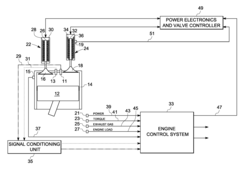
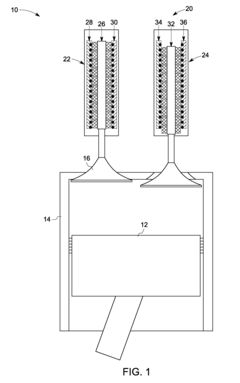
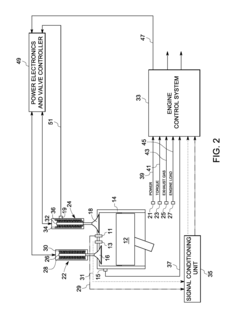
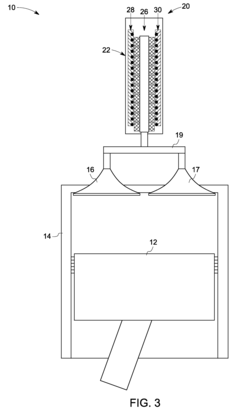
- A magnetically-geared valve actuation system that includes sensors and a control system to dynamically control valve timing, providing flexible operation and reduced valve losses by using magnetic gearing to actuate intake and exhaust valves in engines and suction and discharge valves in compressors.
Safety Standards and Regulations for Valve Actuation Systems
Safety standards and regulations for valve actuation systems represent a critical framework governing the design, installation, and operation of both electric and mechanical bypass valve actuators across various industrial sectors. These regulatory requirements have evolved significantly over the past decades, driven by increasing emphasis on operational safety, environmental protection, and system reliability in critical applications.
The International Electrotechnical Commission (IEC) provides fundamental standards for electric valve actuators, particularly IEC 60534 series, which establishes requirements for control valve performance, safety functions, and fail-safe operations. For electric actuators, IEC 61508 functional safety standards mandate specific Safety Integrity Levels (SIL) ratings, typically requiring SIL 2 or SIL 3 certification for critical bypass applications. These standards emphasize redundancy in control circuits, diagnostic capabilities, and predictable failure modes.
Mechanical actuator systems are primarily governed by ASME standards, including ASME B16.34 for valve design and ASME PTC 25 for pressure relief devices. The American Petroleum Institute (API) standards, particularly API 6D and API 609, establish specific requirements for mechanical actuator reliability, torque specifications, and environmental resistance. These standards mandate rigorous testing protocols including temperature cycling, vibration resistance, and corrosion testing.
Regional regulatory bodies impose additional compliance requirements that significantly impact actuator selection. The European Union's Pressure Equipment Directive (PED) 2014/68/EU requires CE marking for valve systems operating above specified pressure thresholds. Similarly, ATEX directives mandate explosion-proof certifications for actuators in hazardous environments, with different requirements for electric versus mechanical systems.
Industry-specific regulations further complicate compliance landscapes. Nuclear applications require adherence to IEEE 323 for electric actuators and ASME Section III for mechanical systems. Pharmaceutical industries must comply with FDA 21 CFR Part 11 for electronic records, favoring electric actuators with digital interfaces. Oil and gas operations follow API RP 14C safety analysis requirements, often preferring mechanical actuators for their inherent fail-safe characteristics.
Emerging cybersecurity regulations, including IEC 62443 standards, increasingly favor mechanical actuators in critical infrastructure applications where cyber vulnerabilities pose significant risks. These evolving requirements continue reshaping the comparative advantages between electric and mechanical bypass valve actuation technologies.
The International Electrotechnical Commission (IEC) provides fundamental standards for electric valve actuators, particularly IEC 60534 series, which establishes requirements for control valve performance, safety functions, and fail-safe operations. For electric actuators, IEC 61508 functional safety standards mandate specific Safety Integrity Levels (SIL) ratings, typically requiring SIL 2 or SIL 3 certification for critical bypass applications. These standards emphasize redundancy in control circuits, diagnostic capabilities, and predictable failure modes.
Mechanical actuator systems are primarily governed by ASME standards, including ASME B16.34 for valve design and ASME PTC 25 for pressure relief devices. The American Petroleum Institute (API) standards, particularly API 6D and API 609, establish specific requirements for mechanical actuator reliability, torque specifications, and environmental resistance. These standards mandate rigorous testing protocols including temperature cycling, vibration resistance, and corrosion testing.
Regional regulatory bodies impose additional compliance requirements that significantly impact actuator selection. The European Union's Pressure Equipment Directive (PED) 2014/68/EU requires CE marking for valve systems operating above specified pressure thresholds. Similarly, ATEX directives mandate explosion-proof certifications for actuators in hazardous environments, with different requirements for electric versus mechanical systems.
Industry-specific regulations further complicate compliance landscapes. Nuclear applications require adherence to IEEE 323 for electric actuators and ASME Section III for mechanical systems. Pharmaceutical industries must comply with FDA 21 CFR Part 11 for electronic records, favoring electric actuators with digital interfaces. Oil and gas operations follow API RP 14C safety analysis requirements, often preferring mechanical actuators for their inherent fail-safe characteristics.
Emerging cybersecurity regulations, including IEC 62443 standards, increasingly favor mechanical actuators in critical infrastructure applications where cyber vulnerabilities pose significant risks. These evolving requirements continue reshaping the comparative advantages between electric and mechanical bypass valve actuation technologies.
Cost-Benefit Analysis of Electric vs Mechanical Solutions
The economic evaluation of electric versus mechanical bypass valve actuation systems reveals significant differences in both initial investment requirements and long-term operational costs. Electric actuation systems typically demand higher upfront capital expenditure, with costs ranging from 150% to 300% more than mechanical alternatives when considering the actuator unit, control electronics, power supply infrastructure, and integration components. However, this initial investment gap narrows considerably when factoring in installation complexity and commissioning requirements.
Mechanical actuation systems demonstrate lower initial procurement costs but often require more extensive installation infrastructure, including pneumatic or hydraulic supply lines, compressors, and safety systems. The total cost of ownership calculation must account for these auxiliary systems, which can add 40-60% to the base mechanical actuator price. Additionally, mechanical systems typically require more frequent maintenance interventions, with service intervals averaging 6-12 months compared to 18-36 months for electric systems.
Operational efficiency analysis reveals that electric actuation systems offer superior energy conversion rates, typically achieving 85-95% efficiency compared to 45-65% for pneumatic mechanical systems. This efficiency differential translates to substantial energy cost savings over the system lifecycle, particularly in high-duty cycle applications. Electric systems also provide enhanced diagnostic capabilities, enabling predictive maintenance strategies that can reduce unplanned downtime by up to 40%.
The reliability factor significantly impacts long-term cost projections. Electric actuators demonstrate mean time between failures of 8-12 years under normal operating conditions, while mechanical systems typically require major overhauls every 5-8 years. Failure mode analysis indicates that electric system failures are often gradual and detectable through monitoring systems, whereas mechanical failures can be sudden and catastrophic, resulting in higher emergency repair costs.
Return on investment calculations indicate that electric systems typically achieve payback within 3-5 years in high-utilization applications, primarily through reduced maintenance costs, improved energy efficiency, and enhanced system availability. For low-duty cycle applications, mechanical systems may maintain cost advantages throughout their operational lifecycle, making application-specific analysis crucial for optimal technology selection.
Mechanical actuation systems demonstrate lower initial procurement costs but often require more extensive installation infrastructure, including pneumatic or hydraulic supply lines, compressors, and safety systems. The total cost of ownership calculation must account for these auxiliary systems, which can add 40-60% to the base mechanical actuator price. Additionally, mechanical systems typically require more frequent maintenance interventions, with service intervals averaging 6-12 months compared to 18-36 months for electric systems.
Operational efficiency analysis reveals that electric actuation systems offer superior energy conversion rates, typically achieving 85-95% efficiency compared to 45-65% for pneumatic mechanical systems. This efficiency differential translates to substantial energy cost savings over the system lifecycle, particularly in high-duty cycle applications. Electric systems also provide enhanced diagnostic capabilities, enabling predictive maintenance strategies that can reduce unplanned downtime by up to 40%.
The reliability factor significantly impacts long-term cost projections. Electric actuators demonstrate mean time between failures of 8-12 years under normal operating conditions, while mechanical systems typically require major overhauls every 5-8 years. Failure mode analysis indicates that electric system failures are often gradual and detectable through monitoring systems, whereas mechanical failures can be sudden and catastrophic, resulting in higher emergency repair costs.
Return on investment calculations indicate that electric systems typically achieve payback within 3-5 years in high-utilization applications, primarily through reduced maintenance costs, improved energy efficiency, and enhanced system availability. For low-duty cycle applications, mechanical systems may maintain cost advantages throughout their operational lifecycle, making application-specific analysis crucial for optimal technology selection.
Unlock deeper insights with Patsnap Eureka Quick Research — get a full tech report to explore trends and direct your research. Try now!
Generate Your Research Report Instantly with AI Agent
Supercharge your innovation with Patsnap Eureka AI Agent Platform!