

Cable Failures in Robotics Over Time: Detection and Solutions
APR 30, 20269 MIN READ
Generate Your Research Report Instantly with AI Agent
PatSnap Eureka helps you evaluate technical feasibility & market potential.
Robotic Cable Failure Background and Technical Objectives
Cable failures in robotic systems represent one of the most persistent and costly challenges in modern automation and robotics applications. As robots increasingly operate in demanding environments ranging from manufacturing floors to space exploration missions, the reliability of their cable systems becomes paramount to operational success. These failures encompass various manifestations including conductor breakage, insulation degradation, connector corrosion, and signal interference, each contributing to system downtime and maintenance costs.
The evolution of robotic cable technology traces back to early industrial automation in the 1960s, where simple point-to-point wiring sufficed for limited-motion applications. However, as robotic systems evolved to perform complex multi-axis movements with higher precision requirements, cable systems faced unprecedented mechanical stresses. The introduction of continuous flexing applications in the 1980s revealed fundamental limitations in traditional cable designs, prompting the development of specialized flexible cables and dynamic cable management systems.
Contemporary robotic applications have intensified these challenges significantly. Modern robots execute millions of flex cycles annually while transmitting high-frequency data signals, power, and control commands simultaneously. The integration of advanced sensors, vision systems, and real-time communication protocols has increased cable complexity, with individual robot systems often requiring dozens of specialized cables operating in harsh environmental conditions including extreme temperatures, chemical exposure, and electromagnetic interference.
Current technological objectives focus on achieving predictive failure detection capabilities that can identify cable degradation before catastrophic failure occurs. This involves developing sophisticated monitoring systems capable of detecting subtle changes in electrical characteristics, mechanical properties, and signal integrity parameters. Advanced diagnostic algorithms utilizing machine learning techniques aim to establish failure prediction models based on operational patterns, environmental factors, and historical performance data.
The industry is pursuing enhanced cable design methodologies that incorporate improved materials science, optimized conductor geometries, and advanced shielding technologies. These developments target extending operational lifespans from typical 2-3 year cycles to 5-7 years while maintaining signal integrity and mechanical flexibility. Additionally, standardization efforts seek to establish universal testing protocols and performance benchmarks that enable consistent evaluation across different robotic platforms and applications.
Integration of real-time health monitoring systems represents another critical objective, enabling continuous assessment of cable condition during operation. These systems aim to provide actionable insights for maintenance scheduling, reducing unplanned downtime while optimizing replacement intervals based on actual condition rather than predetermined schedules.
The evolution of robotic cable technology traces back to early industrial automation in the 1960s, where simple point-to-point wiring sufficed for limited-motion applications. However, as robotic systems evolved to perform complex multi-axis movements with higher precision requirements, cable systems faced unprecedented mechanical stresses. The introduction of continuous flexing applications in the 1980s revealed fundamental limitations in traditional cable designs, prompting the development of specialized flexible cables and dynamic cable management systems.
Contemporary robotic applications have intensified these challenges significantly. Modern robots execute millions of flex cycles annually while transmitting high-frequency data signals, power, and control commands simultaneously. The integration of advanced sensors, vision systems, and real-time communication protocols has increased cable complexity, with individual robot systems often requiring dozens of specialized cables operating in harsh environmental conditions including extreme temperatures, chemical exposure, and electromagnetic interference.
Current technological objectives focus on achieving predictive failure detection capabilities that can identify cable degradation before catastrophic failure occurs. This involves developing sophisticated monitoring systems capable of detecting subtle changes in electrical characteristics, mechanical properties, and signal integrity parameters. Advanced diagnostic algorithms utilizing machine learning techniques aim to establish failure prediction models based on operational patterns, environmental factors, and historical performance data.
The industry is pursuing enhanced cable design methodologies that incorporate improved materials science, optimized conductor geometries, and advanced shielding technologies. These developments target extending operational lifespans from typical 2-3 year cycles to 5-7 years while maintaining signal integrity and mechanical flexibility. Additionally, standardization efforts seek to establish universal testing protocols and performance benchmarks that enable consistent evaluation across different robotic platforms and applications.
Integration of real-time health monitoring systems represents another critical objective, enabling continuous assessment of cable condition during operation. These systems aim to provide actionable insights for maintenance scheduling, reducing unplanned downtime while optimizing replacement intervals based on actual condition rather than predetermined schedules.
Market Demand for Reliable Robotic Cable Systems
The global robotics market has experienced unprecedented growth, driving substantial demand for reliable cable systems that can withstand the rigorous operational demands of modern robotic applications. Industrial automation sectors, including automotive manufacturing, electronics assembly, and logistics, represent the largest consumer segments for robust robotic cable solutions. These industries require cables that maintain consistent performance under continuous flexing, torsional stress, and environmental challenges.
Healthcare robotics has emerged as a rapidly expanding market segment, with surgical robots, rehabilitation devices, and diagnostic equipment demanding ultra-reliable cable systems. The critical nature of medical applications necessitates cables with exceptional durability and minimal failure rates, as system downtime can directly impact patient safety and treatment outcomes. This sector particularly values cables with enhanced shielding properties and biocompatible materials.
Service robotics applications, encompassing cleaning robots, security systems, and hospitality automation, have created new market opportunities for specialized cable solutions. These applications often require cables that can operate reliably in diverse environmental conditions while maintaining cost-effectiveness for mass deployment scenarios.
The aerospace and defense sectors represent high-value market segments where cable reliability is paramount. Military robotics, unmanned aerial vehicles, and space exploration systems demand cables capable of operating in extreme conditions with zero-tolerance for failure. These applications drive premium pricing for advanced cable technologies with superior performance characteristics.
Market demand is increasingly influenced by the total cost of ownership considerations rather than initial purchase price alone. End users recognize that cable failures result in significant operational disruptions, maintenance costs, and productivity losses. This shift has created strong market pull for predictive maintenance solutions and intelligent cable systems with integrated monitoring capabilities.
Emerging applications in collaborative robotics and autonomous systems are generating new requirements for lightweight, highly flexible cables that maintain reliability over extended operational periods. These markets prioritize cables with enhanced bend radius capabilities and resistance to repetitive stress cycles, reflecting the evolving nature of robotic work environments and interaction patterns.
Healthcare robotics has emerged as a rapidly expanding market segment, with surgical robots, rehabilitation devices, and diagnostic equipment demanding ultra-reliable cable systems. The critical nature of medical applications necessitates cables with exceptional durability and minimal failure rates, as system downtime can directly impact patient safety and treatment outcomes. This sector particularly values cables with enhanced shielding properties and biocompatible materials.
Service robotics applications, encompassing cleaning robots, security systems, and hospitality automation, have created new market opportunities for specialized cable solutions. These applications often require cables that can operate reliably in diverse environmental conditions while maintaining cost-effectiveness for mass deployment scenarios.
The aerospace and defense sectors represent high-value market segments where cable reliability is paramount. Military robotics, unmanned aerial vehicles, and space exploration systems demand cables capable of operating in extreme conditions with zero-tolerance for failure. These applications drive premium pricing for advanced cable technologies with superior performance characteristics.
Market demand is increasingly influenced by the total cost of ownership considerations rather than initial purchase price alone. End users recognize that cable failures result in significant operational disruptions, maintenance costs, and productivity losses. This shift has created strong market pull for predictive maintenance solutions and intelligent cable systems with integrated monitoring capabilities.
Emerging applications in collaborative robotics and autonomous systems are generating new requirements for lightweight, highly flexible cables that maintain reliability over extended operational periods. These markets prioritize cables with enhanced bend radius capabilities and resistance to repetitive stress cycles, reflecting the evolving nature of robotic work environments and interaction patterns.
Current Cable Failure Issues and Detection Challenges
Cable failures in robotic systems represent one of the most persistent and challenging reliability issues facing modern automation industries. These failures manifest across multiple dimensions, ranging from mechanical wear and fatigue to electrical degradation and environmental damage. The complexity of robotic cable systems, which must simultaneously transmit power, data, and control signals while enduring continuous mechanical stress, creates a multifaceted failure landscape that significantly impacts operational efficiency and maintenance costs.
Mechanical stress-induced failures constitute the primary category of cable degradation in robotic applications. Repeated flexing, twisting, and stretching motions inherent to robotic operations cause conductor fatigue, insulation cracking, and shield deterioration. Industrial robots performing high-frequency operations can subject cables to millions of flex cycles annually, leading to microscopic crack propagation and eventual conductor breakage. Torsional stress from rotational joints compounds these issues, particularly in multi-axis robotic arms where cables must accommodate complex three-dimensional movements.
Environmental factors significantly accelerate cable degradation processes in robotic installations. Temperature fluctuations cause thermal expansion and contraction cycles that stress cable materials, while exposure to chemicals, oils, and particulates in industrial environments degrades insulation properties. Electromagnetic interference from nearby equipment can compromise signal integrity, leading to intermittent communication failures that are particularly difficult to diagnose and resolve.
Detection of cable failures presents substantial technical challenges due to the intermittent and progressive nature of most degradation modes. Traditional continuity testing methods often fail to identify incipient failures, as damaged cables may maintain electrical connectivity under static conditions while failing during dynamic operation. The enclosed nature of robotic cable management systems further complicates visual inspection, requiring specialized diagnostic approaches to assess cable condition without system disassembly.
Current detection methodologies rely heavily on reactive maintenance strategies, where failures are addressed only after complete breakdown occurs. This approach results in unplanned downtime, emergency repairs, and potential damage to connected equipment. Advanced diagnostic techniques such as time-domain reflectometry and impedance analysis show promise for early failure detection, but implementation challenges include integration complexity, cost considerations, and the need for specialized expertise in interpretation of diagnostic data.
The economic impact of cable failures extends beyond immediate repair costs to encompass production losses, safety risks, and cascading system failures. Manufacturing facilities report that cable-related downtime accounts for approximately 15-25% of total robotic system maintenance issues, with individual failure events potentially causing hours or days of production interruption depending on system complexity and spare parts availability.
Mechanical stress-induced failures constitute the primary category of cable degradation in robotic applications. Repeated flexing, twisting, and stretching motions inherent to robotic operations cause conductor fatigue, insulation cracking, and shield deterioration. Industrial robots performing high-frequency operations can subject cables to millions of flex cycles annually, leading to microscopic crack propagation and eventual conductor breakage. Torsional stress from rotational joints compounds these issues, particularly in multi-axis robotic arms where cables must accommodate complex three-dimensional movements.
Environmental factors significantly accelerate cable degradation processes in robotic installations. Temperature fluctuations cause thermal expansion and contraction cycles that stress cable materials, while exposure to chemicals, oils, and particulates in industrial environments degrades insulation properties. Electromagnetic interference from nearby equipment can compromise signal integrity, leading to intermittent communication failures that are particularly difficult to diagnose and resolve.
Detection of cable failures presents substantial technical challenges due to the intermittent and progressive nature of most degradation modes. Traditional continuity testing methods often fail to identify incipient failures, as damaged cables may maintain electrical connectivity under static conditions while failing during dynamic operation. The enclosed nature of robotic cable management systems further complicates visual inspection, requiring specialized diagnostic approaches to assess cable condition without system disassembly.
Current detection methodologies rely heavily on reactive maintenance strategies, where failures are addressed only after complete breakdown occurs. This approach results in unplanned downtime, emergency repairs, and potential damage to connected equipment. Advanced diagnostic techniques such as time-domain reflectometry and impedance analysis show promise for early failure detection, but implementation challenges include integration complexity, cost considerations, and the need for specialized expertise in interpretation of diagnostic data.
The economic impact of cable failures extends beyond immediate repair costs to encompass production losses, safety risks, and cascading system failures. Manufacturing facilities report that cable-related downtime accounts for approximately 15-25% of total robotic system maintenance issues, with individual failure events potentially causing hours or days of production interruption depending on system complexity and spare parts availability.
Existing Cable Health Monitoring Solutions
01 Cable fault detection and monitoring systems
Advanced monitoring systems are employed to detect and identify cable failures through various sensing technologies and diagnostic methods. These systems can continuously monitor cable conditions, detect anomalies, and provide early warning signals before complete failure occurs. The monitoring approaches include electrical parameter analysis, thermal imaging, and real-time condition assessment to prevent unexpected cable failures.- Cable fault detection and monitoring systems: Advanced monitoring systems are employed to detect and identify cable failures through various sensing technologies and diagnostic methods. These systems can continuously monitor cable conditions, detect anomalies, and provide early warning signals before complete failure occurs. The monitoring approaches include electrical parameter analysis, thermal monitoring, and signal integrity assessment to ensure reliable cable performance.
- Cable insulation and protective coating technologies: Specialized insulation materials and protective coatings are developed to prevent cable degradation and extend service life. These technologies focus on improving resistance to environmental factors such as moisture, temperature variations, chemical exposure, and mechanical stress. Advanced polymer compositions and multi-layer protective systems help maintain cable integrity under harsh operating conditions.
- Cable connection and termination methods: Improved connection techniques and termination methods are designed to reduce failure points at cable joints and endpoints. These methods include enhanced connector designs, improved sealing technologies, and specialized installation procedures that minimize stress concentrations and environmental ingress. Proper termination techniques significantly reduce the likelihood of connection-related failures.
- Cable testing and diagnostic equipment: Specialized testing equipment and diagnostic tools are utilized to assess cable condition and identify potential failure modes. These instruments can perform various tests including insulation resistance measurements, partial discharge detection, and time-domain reflectometry analysis. Regular testing protocols help predict cable failures and schedule preventive maintenance activities.
- Cable design and construction improvements: Enhanced cable design methodologies focus on improving structural integrity and reducing susceptibility to common failure mechanisms. These improvements include optimized conductor arrangements, enhanced shielding configurations, and improved mechanical properties. Design considerations address factors such as flexibility, bend radius limitations, and stress distribution to minimize failure risks during installation and operation.
02 Cable insulation failure prevention and materials
Improved insulation materials and designs are developed to prevent cable failures caused by insulation breakdown. These solutions focus on enhancing the dielectric properties of cable insulation, improving resistance to environmental factors, and extending cable lifespan. Advanced polymer materials and composite insulation systems provide better protection against electrical stress and environmental degradation.Expand Specific Solutions03 Underground and submarine cable protection methods
Specialized protection techniques are implemented for underground and submarine cables to prevent mechanical damage and environmental degradation. These methods include protective sheathing, burial techniques, and barrier systems that shield cables from external forces, moisture, and corrosive environments. The protection systems are designed to maintain cable integrity in harsh operating conditions.Expand Specific Solutions04 Cable joint and connection failure mitigation
Enhanced joint designs and connection technologies are developed to reduce failure rates at cable connection points. These solutions address common failure modes at cable joints, splices, and terminations through improved sealing methods, stress relief techniques, and connection materials. The technologies focus on maintaining electrical continuity and preventing moisture ingress at critical connection points.Expand Specific Solutions05 Predictive maintenance and cable life extension
Predictive maintenance strategies and life extension techniques are employed to prevent cable failures through proactive intervention. These approaches utilize data analytics, condition monitoring, and maintenance scheduling to optimize cable performance and extend operational life. The methods include partial discharge analysis, aging assessment, and preventive replacement strategies based on cable condition evaluation.Expand Specific Solutions
Key Players in Robotic Cable and Sensing Industry
The robotics cable failure detection and solutions market is experiencing rapid growth driven by increasing industrial automation adoption and the critical need for reliable robotic systems. The industry is transitioning from reactive maintenance to predictive and preventive approaches, with the market expanding significantly as manufacturers recognize the cost implications of unexpected cable failures. Technology maturity varies considerably across market players, with established robotics giants like FANUC Corp., ABB Ltd., YASKAWA Electric Corp., and Kawasaki Heavy Industries leading in integrated cable management solutions and advanced diagnostic capabilities. These companies leverage decades of robotics expertise to develop sophisticated cable monitoring systems. Meanwhile, specialized players like Gecko Robotics focus on inspection technologies, and cable manufacturers such as Nexans SA and Proterial Ltd. contribute materials innovation. Academic institutions like Swiss Federal Institute of Technology and Shandong University drive research advancement, while emerging companies like Estun Automation represent the growing Asian market presence, indicating a maturing ecosystem with diverse technological approaches.
FANUC Corp.
Technical Solution: FANUC has developed advanced cable monitoring systems for industrial robots that utilize real-time impedance analysis and machine learning algorithms to detect cable degradation before failure occurs. Their solution integrates proprietary sensors within robot joints to continuously monitor cable flex cycles, temperature variations, and electrical resistance changes. The system employs predictive analytics to estimate remaining cable life based on usage patterns and environmental conditions. FANUC's approach includes automated cable routing optimization to minimize stress concentration points and extend service life. Their robots feature modular cable designs that enable quick replacement without complete disassembly, reducing maintenance downtime significantly.
Strengths: Industry-leading expertise in industrial robotics with comprehensive cable management solutions and strong predictive maintenance capabilities. Weaknesses: Solutions primarily focused on industrial applications with limited adaptability to other robotic domains.
ABB Ltd.
Technical Solution: ABB has implemented a comprehensive cable health monitoring system called RobotStudio Cable Analyzer that combines finite element analysis with real-time sensor data to predict cable failures in robotic applications. Their solution uses embedded fiber optic sensors within power and signal cables to detect micro-bending, strain, and temperature anomalies that precede cable failures. The system employs digital twin technology to simulate cable behavior under various operating conditions and optimize maintenance schedules. ABB's approach includes specialized cable designs with enhanced flexibility ratings and protective sheathing materials that resist wear in high-cycle applications. Their predictive maintenance platform integrates with existing plant automation systems to provide early warning alerts and maintenance recommendations.
Strengths: Strong integration capabilities with industrial automation systems and advanced digital twin modeling for predictive maintenance. Weaknesses: Higher implementation costs and complexity may limit adoption in smaller robotic installations.
Core Innovations in Predictive Cable Failure Detection
Cable damage detection assistance apparatus and cable damage detection assistance method in robot mechanism
PatentActiveJP2019000916A
Innovation
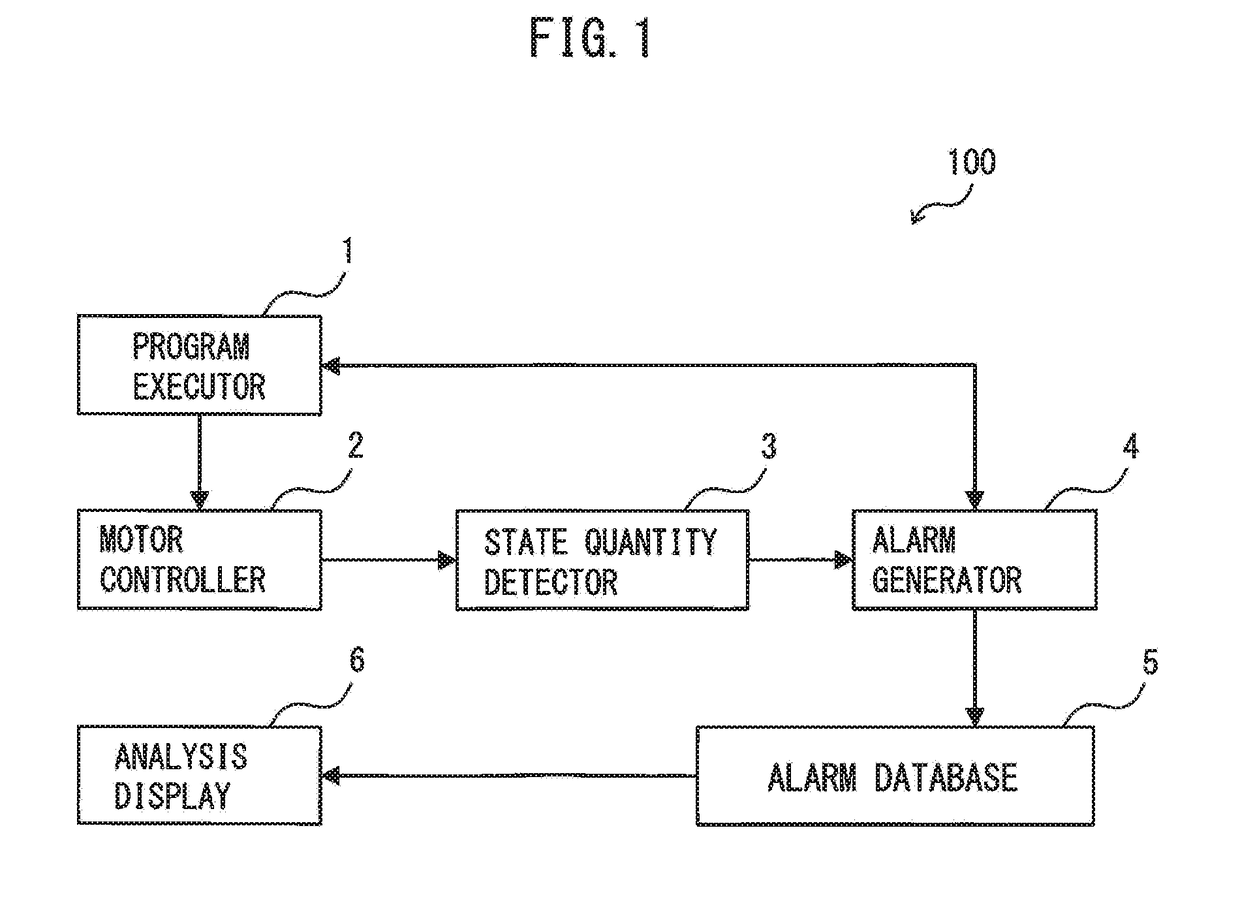
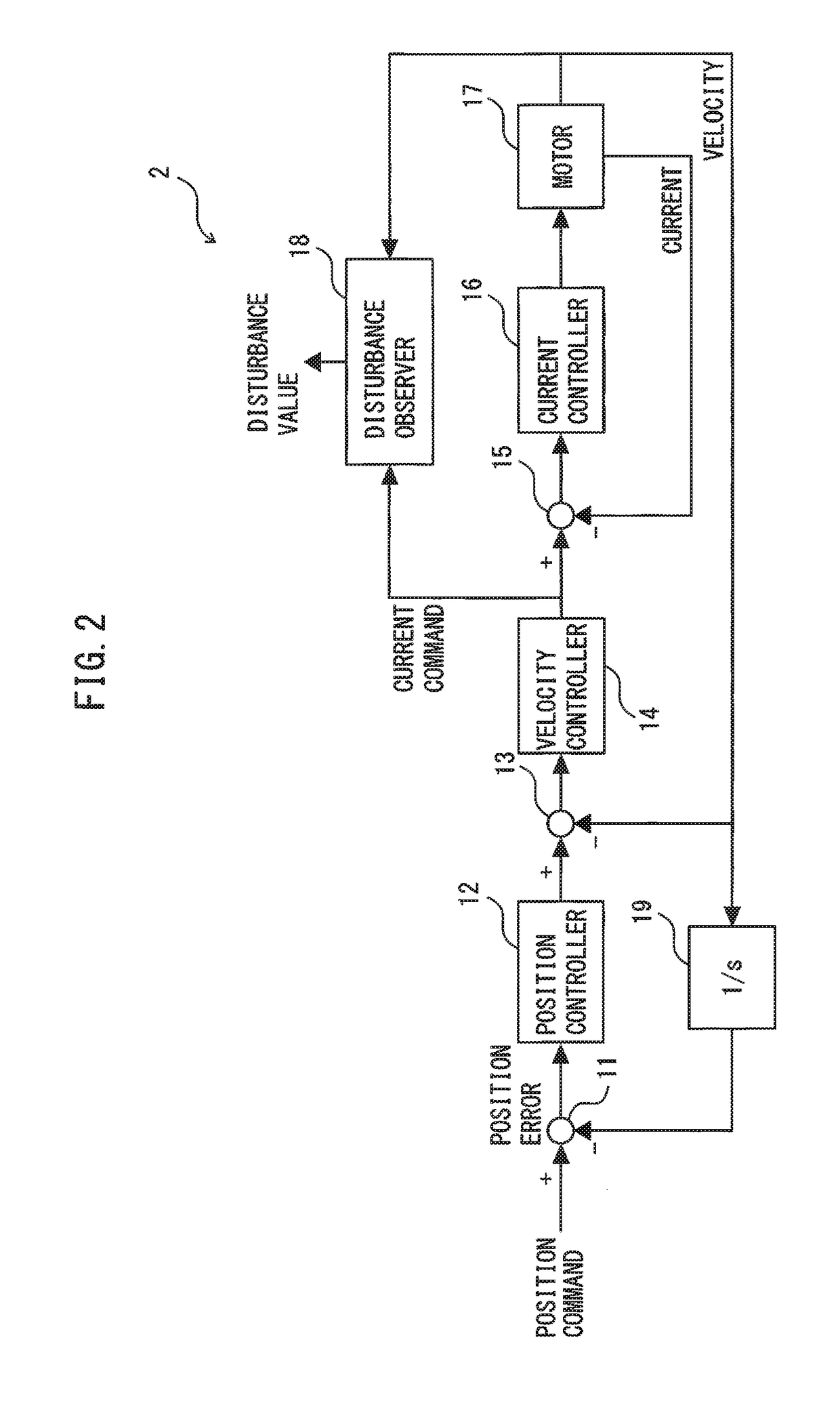
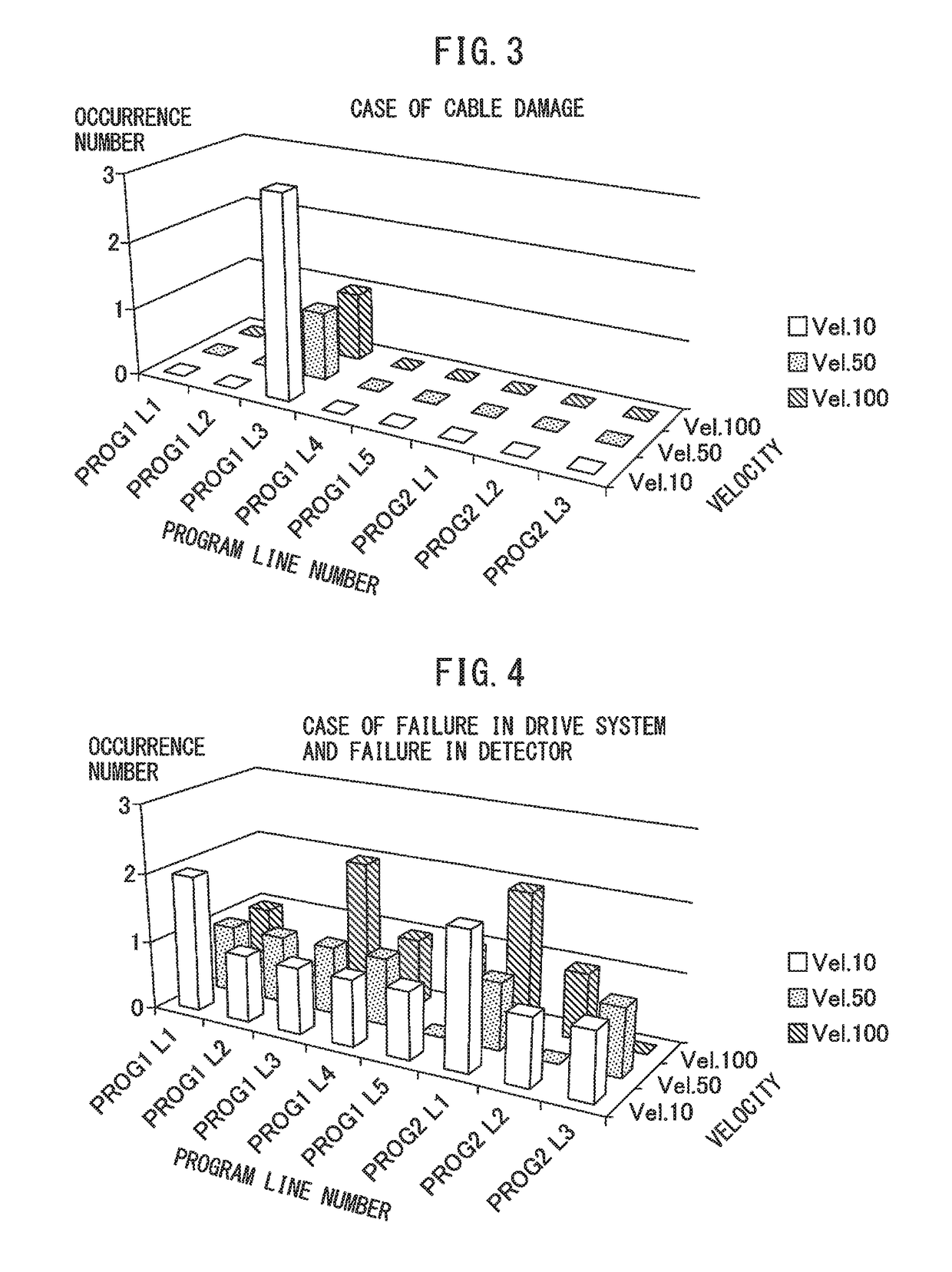
- A cable damage detection system that executes a robot program multiple times at varying speeds, monitors operating states, generates alarms at specific program steps exceeding threshold values, counts alarm occurrences, and displays the relationship between alarm frequency and speed to identify cable damage.


Cable damage detection assistance apparatus and cable damage detection assistance method in robot mechanism
PatentActiveUS20180354134A1
Innovation
- A cable damage detection apparatus and method that involves executing a robot program multiple times with varying motor velocities, generating alarms based on state quantities, and analyzing alarm occurrence frequencies to determine if a cable is damaged by identifying specific program steps with consistently high alarm rates regardless of velocity.

Safety Standards for Robotic Cable Systems
Safety standards for robotic cable systems have evolved significantly as the robotics industry has matured and expanded into critical applications across manufacturing, healthcare, and service sectors. The development of comprehensive safety frameworks has become essential to address the unique challenges posed by cable failures in dynamic robotic environments.
International standards organizations have established foundational guidelines that specifically address robotic cable systems. The ISO 10218 series provides fundamental safety requirements for industrial robots, including cable management and electrical safety protocols. IEC 60204-1 establishes electrical equipment safety standards that directly apply to robotic cable systems, emphasizing proper insulation, grounding, and protection against electrical hazards. These standards mandate specific cable routing practices, strain relief mechanisms, and environmental protection measures to prevent premature failures.
Regional safety authorities have developed complementary regulations that address local operational contexts. The European Union's Machinery Directive 2006/42/EC requires robotic systems to incorporate fail-safe cable designs and redundant safety circuits. OSHA regulations in the United States emphasize workplace safety aspects of robotic cable systems, particularly focusing on preventing electrical hazards and ensuring proper maintenance protocols. Japanese Industrial Standards (JIS) provide detailed specifications for cable durability testing and performance validation in robotic applications.
Emerging safety standards specifically target advanced robotic applications where cable reliability is critical. The recently developed ISO/TS 15066 addresses collaborative robot safety, establishing requirements for cable systems that must operate safely in human-robot interaction scenarios. This standard mandates enhanced cable protection, real-time monitoring capabilities, and immediate shutdown mechanisms upon cable integrity compromise.
Industry-specific safety standards have emerged to address specialized robotic applications. Medical robotics follows FDA guidelines and IEC 60601 standards, which impose stringent requirements on cable biocompatibility, sterilization resistance, and fail-safe operation modes. Automotive manufacturing robotics must comply with IATF 16949 standards, emphasizing cable system reliability under high-cycle operations and harsh environmental conditions.
Current safety standard development focuses on integrating predictive maintenance requirements and real-time monitoring protocols. Standards organizations are incorporating mandatory cable health monitoring systems, establishing minimum detection sensitivity levels for incipient failures, and defining response protocols for various failure modes. These evolving standards represent a shift from reactive maintenance approaches toward proactive cable system management in robotic applications.
International standards organizations have established foundational guidelines that specifically address robotic cable systems. The ISO 10218 series provides fundamental safety requirements for industrial robots, including cable management and electrical safety protocols. IEC 60204-1 establishes electrical equipment safety standards that directly apply to robotic cable systems, emphasizing proper insulation, grounding, and protection against electrical hazards. These standards mandate specific cable routing practices, strain relief mechanisms, and environmental protection measures to prevent premature failures.
Regional safety authorities have developed complementary regulations that address local operational contexts. The European Union's Machinery Directive 2006/42/EC requires robotic systems to incorporate fail-safe cable designs and redundant safety circuits. OSHA regulations in the United States emphasize workplace safety aspects of robotic cable systems, particularly focusing on preventing electrical hazards and ensuring proper maintenance protocols. Japanese Industrial Standards (JIS) provide detailed specifications for cable durability testing and performance validation in robotic applications.
Emerging safety standards specifically target advanced robotic applications where cable reliability is critical. The recently developed ISO/TS 15066 addresses collaborative robot safety, establishing requirements for cable systems that must operate safely in human-robot interaction scenarios. This standard mandates enhanced cable protection, real-time monitoring capabilities, and immediate shutdown mechanisms upon cable integrity compromise.
Industry-specific safety standards have emerged to address specialized robotic applications. Medical robotics follows FDA guidelines and IEC 60601 standards, which impose stringent requirements on cable biocompatibility, sterilization resistance, and fail-safe operation modes. Automotive manufacturing robotics must comply with IATF 16949 standards, emphasizing cable system reliability under high-cycle operations and harsh environmental conditions.
Current safety standard development focuses on integrating predictive maintenance requirements and real-time monitoring protocols. Standards organizations are incorporating mandatory cable health monitoring systems, establishing minimum detection sensitivity levels for incipient failures, and defining response protocols for various failure modes. These evolving standards represent a shift from reactive maintenance approaches toward proactive cable system management in robotic applications.
Maintenance Cost Impact of Cable Failure Prevention
Cable failure prevention strategies demonstrate substantial economic benefits through reduced maintenance costs across robotic systems. Preventive maintenance approaches typically reduce overall maintenance expenses by 25-40% compared to reactive maintenance models. The cost savings stem from avoiding emergency repairs, minimizing production downtime, and extending cable service life through proactive monitoring and replacement schedules.
Unplanned cable failures generate cascading cost impacts beyond immediate repair expenses. Emergency maintenance operations often require premium labor rates, expedited parts procurement, and potential production line shutdowns. Manufacturing facilities report average downtime costs ranging from $5,000 to $50,000 per hour depending on production complexity and automation levels. Cable failures in critical robotic applications can trigger these expensive interruptions with minimal warning.
Predictive maintenance technologies significantly reduce long-term operational costs despite higher initial investments. Advanced monitoring systems, including impedance analyzers and thermal imaging equipment, typically cost $10,000-$50,000 per installation but generate return on investment within 12-18 months through failure prevention. These systems enable condition-based maintenance scheduling, optimizing cable replacement timing and reducing inventory carrying costs.
Labor cost optimization represents another significant economic advantage of prevention-focused strategies. Planned maintenance activities allow efficient workforce scheduling and bulk purchasing of replacement components. Studies indicate that planned cable replacements cost 60-70% less in labor expenses compared to emergency repairs, as technicians can prepare tools, access equipment, and coordinate with production schedules effectively.
Insurance and liability considerations further amplify the financial benefits of cable failure prevention. Robotic system failures due to cable malfunctions can result in product damage, safety incidents, and regulatory compliance issues. Proactive maintenance programs often qualify for reduced insurance premiums and demonstrate due diligence in risk management protocols.
The cumulative maintenance cost impact extends beyond immediate operational savings to include improved asset utilization and extended equipment lifecycles. Facilities implementing comprehensive cable failure prevention programs report 15-25% increases in overall equipment effectiveness and 20-30% extensions in robotic system service life, creating substantial long-term value propositions for industrial operations.
Unplanned cable failures generate cascading cost impacts beyond immediate repair expenses. Emergency maintenance operations often require premium labor rates, expedited parts procurement, and potential production line shutdowns. Manufacturing facilities report average downtime costs ranging from $5,000 to $50,000 per hour depending on production complexity and automation levels. Cable failures in critical robotic applications can trigger these expensive interruptions with minimal warning.
Predictive maintenance technologies significantly reduce long-term operational costs despite higher initial investments. Advanced monitoring systems, including impedance analyzers and thermal imaging equipment, typically cost $10,000-$50,000 per installation but generate return on investment within 12-18 months through failure prevention. These systems enable condition-based maintenance scheduling, optimizing cable replacement timing and reducing inventory carrying costs.
Labor cost optimization represents another significant economic advantage of prevention-focused strategies. Planned maintenance activities allow efficient workforce scheduling and bulk purchasing of replacement components. Studies indicate that planned cable replacements cost 60-70% less in labor expenses compared to emergency repairs, as technicians can prepare tools, access equipment, and coordinate with production schedules effectively.
Insurance and liability considerations further amplify the financial benefits of cable failure prevention. Robotic system failures due to cable malfunctions can result in product damage, safety incidents, and regulatory compliance issues. Proactive maintenance programs often qualify for reduced insurance premiums and demonstrate due diligence in risk management protocols.
The cumulative maintenance cost impact extends beyond immediate operational savings to include improved asset utilization and extended equipment lifecycles. Facilities implementing comprehensive cable failure prevention programs report 15-25% increases in overall equipment effectiveness and 20-30% extensions in robotic system service life, creating substantial long-term value propositions for industrial operations.
Unlock deeper insights with PatSnap Eureka Quick Research — get a full tech report to explore trends and direct your research. Try now!
Generate Your Research Report Instantly with AI Agent
Supercharge your innovation with PatSnap Eureka AI Agent Platform!