Cathode Materials Optimization for Aerospace Power Storage Applications
SEP 22, 20259 MIN READ
Generate Your Research Report Instantly with AI Agent
PatSnap Eureka helps you evaluate technical feasibility & market potential.
Aerospace Battery Cathode Evolution and Objectives
The evolution of cathode materials for aerospace power storage applications has undergone significant transformation since the early days of space exploration. Initially, nickel-cadmium (NiCd) batteries dominated the aerospace sector in the 1960s and 1970s due to their reliability and established performance characteristics. However, their limited energy density and environmental concerns prompted the industry to seek alternatives.
The 1980s witnessed the emergence of nickel-hydrogen (NiH2) systems, which became the standard for satellite applications due to their extended cycle life and improved energy density. These systems served as the backbone for numerous space missions but still presented limitations in terms of weight and volumetric efficiency—critical factors in aerospace applications where every gram matters.
Lithium-ion technology revolutionized aerospace power storage in the 1990s, introducing cathode materials such as lithium cobalt oxide (LiCoO2) that significantly increased energy density. This breakthrough enabled longer mission durations and expanded payload capabilities. The early 2000s saw further refinements with lithium nickel manganese cobalt oxide (NMC) and lithium iron phosphate (LFP) cathodes, offering improved thermal stability and safety profiles essential for aerospace applications.
Current technological objectives focus on developing cathode materials that can withstand the extreme conditions encountered in aerospace environments. These include temperature fluctuations ranging from -150°C to +150°C, radiation exposure, vacuum conditions, and the need for exceptional reliability where maintenance is impossible. Advanced materials such as lithium-rich layered oxides and high-voltage spinel structures are being investigated for their potential to deliver higher energy densities while maintaining structural integrity under these harsh conditions.
Another critical objective is the development of cathode materials with reduced cobalt content, addressing both supply chain vulnerabilities and cost concerns. The aerospace industry is particularly sensitive to material availability issues, as mission-critical components cannot be compromised by supply disruptions.
The integration of nanomaterials and advanced coating technologies represents another frontier in cathode development, with aims to enhance ion transport, structural stability, and interfacial properties. These innovations are expected to extend cycle life beyond 10,000 cycles—a requirement for long-duration space missions and satellite applications where replacement is not an option.
Looking forward, the industry is setting ambitious targets for next-generation cathode materials, including energy densities exceeding 400 Wh/kg at the cell level, operational temperature ranges of -180°C to +200°C, and radiation hardening capabilities that can withstand the harsh environment of deep space missions and potential Mars exploration initiatives.
The 1980s witnessed the emergence of nickel-hydrogen (NiH2) systems, which became the standard for satellite applications due to their extended cycle life and improved energy density. These systems served as the backbone for numerous space missions but still presented limitations in terms of weight and volumetric efficiency—critical factors in aerospace applications where every gram matters.
Lithium-ion technology revolutionized aerospace power storage in the 1990s, introducing cathode materials such as lithium cobalt oxide (LiCoO2) that significantly increased energy density. This breakthrough enabled longer mission durations and expanded payload capabilities. The early 2000s saw further refinements with lithium nickel manganese cobalt oxide (NMC) and lithium iron phosphate (LFP) cathodes, offering improved thermal stability and safety profiles essential for aerospace applications.
Current technological objectives focus on developing cathode materials that can withstand the extreme conditions encountered in aerospace environments. These include temperature fluctuations ranging from -150°C to +150°C, radiation exposure, vacuum conditions, and the need for exceptional reliability where maintenance is impossible. Advanced materials such as lithium-rich layered oxides and high-voltage spinel structures are being investigated for their potential to deliver higher energy densities while maintaining structural integrity under these harsh conditions.
Another critical objective is the development of cathode materials with reduced cobalt content, addressing both supply chain vulnerabilities and cost concerns. The aerospace industry is particularly sensitive to material availability issues, as mission-critical components cannot be compromised by supply disruptions.
The integration of nanomaterials and advanced coating technologies represents another frontier in cathode development, with aims to enhance ion transport, structural stability, and interfacial properties. These innovations are expected to extend cycle life beyond 10,000 cycles—a requirement for long-duration space missions and satellite applications where replacement is not an option.
Looking forward, the industry is setting ambitious targets for next-generation cathode materials, including energy densities exceeding 400 Wh/kg at the cell level, operational temperature ranges of -180°C to +200°C, and radiation hardening capabilities that can withstand the harsh environment of deep space missions and potential Mars exploration initiatives.
Market Analysis for Advanced Aerospace Power Storage
The aerospace power storage market is experiencing unprecedented growth, driven by increasing satellite deployments, space exploration missions, and the expanding commercial space sector. Current market valuations indicate the global aerospace battery market reached approximately $2.5 billion in 2022, with projections suggesting a compound annual growth rate of 7.2% through 2030. This growth trajectory is particularly evident in the advanced cathode materials segment, which represents nearly 40% of the total aerospace battery value chain.
Demand for high-performance cathode materials is primarily fueled by the unique requirements of aerospace applications, including extreme temperature tolerance (-150°C to +150°C), radiation resistance, and exceptional cycle life under partial discharge conditions. The market has seen a significant shift from traditional nickel-cadmium systems toward lithium-based chemistries, with lithium-ion technologies now dominating approximately 65% of new aerospace power storage implementations.
Regional analysis reveals North America maintains market leadership with 42% market share, followed by Europe (28%) and Asia-Pacific (23%). This distribution closely aligns with aerospace manufacturing hubs and space agency headquarters. However, emerging players in China, India, and the United Arab Emirates are rapidly expanding their market presence through aggressive investment in domestic battery production capabilities.
Customer segmentation within this market reveals three primary buyer categories: government space agencies (38% of market volume), commercial satellite operators (33%), and defense contractors (21%). Each segment prioritizes different performance attributes, with government agencies emphasizing reliability and radiation hardness, commercial operators focusing on energy density and cost efficiency, and defense applications requiring extreme durability and security features.
Pricing trends indicate premium positioning for advanced cathode materials, with specialized aerospace-grade lithium nickel manganese cobalt oxide (NMC) commanding prices 4-6 times higher than equivalent automotive-grade materials. This premium reflects the rigorous qualification processes, specialized manufacturing requirements, and limited production volumes characteristic of aerospace applications.
Market barriers remain significant, including lengthy qualification cycles (typically 3-5 years), stringent reliability requirements (99.999% reliability standard), and complex regulatory frameworks spanning multiple jurisdictions. These factors contribute to the consolidated nature of the market, with five major suppliers controlling approximately 78% of cathode material production for aerospace applications.
Demand for high-performance cathode materials is primarily fueled by the unique requirements of aerospace applications, including extreme temperature tolerance (-150°C to +150°C), radiation resistance, and exceptional cycle life under partial discharge conditions. The market has seen a significant shift from traditional nickel-cadmium systems toward lithium-based chemistries, with lithium-ion technologies now dominating approximately 65% of new aerospace power storage implementations.
Regional analysis reveals North America maintains market leadership with 42% market share, followed by Europe (28%) and Asia-Pacific (23%). This distribution closely aligns with aerospace manufacturing hubs and space agency headquarters. However, emerging players in China, India, and the United Arab Emirates are rapidly expanding their market presence through aggressive investment in domestic battery production capabilities.
Customer segmentation within this market reveals three primary buyer categories: government space agencies (38% of market volume), commercial satellite operators (33%), and defense contractors (21%). Each segment prioritizes different performance attributes, with government agencies emphasizing reliability and radiation hardness, commercial operators focusing on energy density and cost efficiency, and defense applications requiring extreme durability and security features.
Pricing trends indicate premium positioning for advanced cathode materials, with specialized aerospace-grade lithium nickel manganese cobalt oxide (NMC) commanding prices 4-6 times higher than equivalent automotive-grade materials. This premium reflects the rigorous qualification processes, specialized manufacturing requirements, and limited production volumes characteristic of aerospace applications.
Market barriers remain significant, including lengthy qualification cycles (typically 3-5 years), stringent reliability requirements (99.999% reliability standard), and complex regulatory frameworks spanning multiple jurisdictions. These factors contribute to the consolidated nature of the market, with five major suppliers controlling approximately 78% of cathode material production for aerospace applications.
Current Limitations in Cathode Materials Technology
Current cathode materials for aerospace power storage applications face significant limitations that hinder their performance in extreme aerospace environments. The primary challenge lies in energy density constraints, with current lithium-ion cathode materials (primarily LiCoO2, LiFePO4, and NMC variants) delivering only 140-200 Wh/kg at the cell level, insufficient for advanced aerospace applications requiring 350+ Wh/kg for extended missions.
Thermal stability presents another critical limitation, as aerospace environments experience temperature fluctuations from -150°C to +150°C. Most existing cathode materials demonstrate optimal performance within a narrow range (0°C to 45°C), with significant capacity degradation and safety risks outside this window. Conventional NMC and NCA cathodes particularly suffer from thermal runaway risks at elevated temperatures, creating unacceptable safety hazards for aerospace applications.
Cycle life deficiencies represent a substantial barrier, with current materials typically supporting 500-1000 cycles before significant capacity fade occurs. Aerospace applications demand 2000+ cycles to support multi-year missions without replacement. The degradation mechanisms, including structural collapse, electrolyte decomposition, and transition metal dissolution, accelerate in aerospace conditions.
Radiation resistance poses a unique aerospace challenge, as cosmic radiation can trigger defect formation in crystal structures, accelerating capacity fade. Current cathode materials lack sufficient radiation hardening, with studies showing up to 30% capacity loss after exposure to radiation levels common in orbital environments.
Manufacturing consistency presents significant obstacles for aerospace-grade materials. Current production methods struggle to deliver the ultra-high purity and defect-free structures required for aerospace reliability standards. Batch-to-batch variations in composition and morphology lead to performance inconsistencies unacceptable for critical aerospace systems.
Resource constraints further complicate advancement, with cobalt and nickel facing supply chain vulnerabilities and price volatility. These materials constitute significant portions of high-performance cathodes but face geopolitical supply risks incompatible with aerospace program requirements.
Finally, integration challenges with aerospace systems persist. Current cathode materials often require complex thermal management systems and protective enclosures that add significant weight and volume, negating their energy density advantages. The materials also demonstrate limited compatibility with aerospace-grade electrolytes designed for extreme environment operation, creating interface stability issues that compromise long-term performance and safety.
Thermal stability presents another critical limitation, as aerospace environments experience temperature fluctuations from -150°C to +150°C. Most existing cathode materials demonstrate optimal performance within a narrow range (0°C to 45°C), with significant capacity degradation and safety risks outside this window. Conventional NMC and NCA cathodes particularly suffer from thermal runaway risks at elevated temperatures, creating unacceptable safety hazards for aerospace applications.
Cycle life deficiencies represent a substantial barrier, with current materials typically supporting 500-1000 cycles before significant capacity fade occurs. Aerospace applications demand 2000+ cycles to support multi-year missions without replacement. The degradation mechanisms, including structural collapse, electrolyte decomposition, and transition metal dissolution, accelerate in aerospace conditions.
Radiation resistance poses a unique aerospace challenge, as cosmic radiation can trigger defect formation in crystal structures, accelerating capacity fade. Current cathode materials lack sufficient radiation hardening, with studies showing up to 30% capacity loss after exposure to radiation levels common in orbital environments.
Manufacturing consistency presents significant obstacles for aerospace-grade materials. Current production methods struggle to deliver the ultra-high purity and defect-free structures required for aerospace reliability standards. Batch-to-batch variations in composition and morphology lead to performance inconsistencies unacceptable for critical aerospace systems.
Resource constraints further complicate advancement, with cobalt and nickel facing supply chain vulnerabilities and price volatility. These materials constitute significant portions of high-performance cathodes but face geopolitical supply risks incompatible with aerospace program requirements.
Finally, integration challenges with aerospace systems persist. Current cathode materials often require complex thermal management systems and protective enclosures that add significant weight and volume, negating their energy density advantages. The materials also demonstrate limited compatibility with aerospace-grade electrolytes designed for extreme environment operation, creating interface stability issues that compromise long-term performance and safety.
State-of-the-Art Cathode Material Solutions
01 Lithium-based cathode materials optimization
Lithium-based compounds are widely used as cathode materials in batteries due to their high energy density and stability. Optimization techniques include doping with transition metals, controlling particle size and morphology, and surface coating to enhance electrochemical performance. These modifications improve cycling stability, rate capability, and overall battery life while reducing capacity fading during charge-discharge cycles.- Lithium-based cathode material compositions: Optimization of lithium-based cathode materials involves developing specific compositions to enhance battery performance. These materials typically include lithium metal oxides with various dopants and structural modifications to improve energy density, cycling stability, and rate capability. Innovations focus on controlling crystal structure, particle morphology, and elemental ratios to achieve optimal electrochemical properties while maintaining thermal stability.
- Nanostructured cathode materials: Nanostructuring techniques are employed to optimize cathode materials by creating high surface area architectures that facilitate ion transport and electron transfer. These approaches include developing nanoparticles, nanowires, nanosheets, and hierarchical structures that reduce diffusion distances for lithium ions. The controlled synthesis of these nanostructures enables improved capacity retention, faster charging capabilities, and enhanced electrochemical performance.
- Surface coating and interface engineering: Surface modification strategies for cathode materials involve applying protective coatings and engineering interfaces to mitigate degradation mechanisms. These techniques include atomic layer deposition of metal oxides, polymer coatings, and gradient composition layers that stabilize the cathode-electrolyte interface. Such modifications prevent unwanted side reactions, suppress transition metal dissolution, and enhance structural stability during cycling.
- Doping and elemental substitution: Strategic doping and elemental substitution in cathode materials can significantly improve their electrochemical performance. By incorporating specific elements into the crystal structure, properties such as electronic conductivity, structural stability, and ion diffusion can be enhanced. Common dopants include aluminum, magnesium, zirconium, and various transition metals that can occupy lattice sites or interstitial positions to optimize material properties.
- Manufacturing process optimization: Optimization of manufacturing processes for cathode materials focuses on developing scalable, cost-effective production methods that ensure consistent quality. Innovations include precise control of synthesis parameters such as temperature profiles, reaction atmospheres, and mixing conditions. Advanced techniques like spray pyrolysis, sol-gel processing, and hydrothermal synthesis are employed to achieve desired particle characteristics and electrochemical performance.
02 Nanostructured cathode materials
Nanostructuring of cathode materials offers significant advantages for battery performance. By controlling the material at nanoscale dimensions, researchers can enhance ion diffusion pathways, increase active surface area, and improve electrical conductivity. Techniques include creating nanoparticles, nanowires, nanotubes, and hierarchical nanostructures that optimize electron transport and lithium-ion insertion/extraction kinetics, resulting in batteries with higher power density and faster charging capabilities.Expand Specific Solutions03 Composite and hybrid cathode materials
Composite and hybrid cathode materials combine different components to leverage the advantages of each while mitigating their individual limitations. These materials often incorporate carbon-based materials (graphene, carbon nanotubes), conductive polymers, or metal oxides to enhance electrical conductivity, mechanical stability, and electrochemical performance. The synergistic effects between components result in improved capacity retention, cycling stability, and rate capability compared to single-component cathodes.Expand Specific Solutions04 Surface modification and coating technologies
Surface modification and coating technologies are critical for optimizing cathode materials by creating protective layers that prevent direct contact between the cathode active material and the electrolyte. These techniques include atomic layer deposition, sol-gel methods, and wet-chemical approaches to apply thin films of metal oxides, phosphates, or fluorides. Such modifications effectively suppress side reactions, prevent dissolution of transition metals, and enhance structural stability during cycling, leading to improved battery performance and longevity.Expand Specific Solutions05 Advanced synthesis and processing methods
Advanced synthesis and processing methods play a crucial role in optimizing cathode materials by enabling precise control over composition, crystal structure, and morphology. Techniques include hydrothermal/solvothermal synthesis, co-precipitation, sol-gel processing, solid-state reactions, and spray pyrolysis. These methods allow for tailored design of cathode materials with optimized properties such as high capacity, excellent rate capability, and enhanced cycling stability. Post-synthesis treatments like annealing and calcination further improve crystallinity and electrochemical performance.Expand Specific Solutions
Leading Organizations in Aerospace Battery Research
The aerospace power storage market is in a growth phase, with increasing demand for high-performance cathode materials driving innovation. The market is expanding rapidly as aerospace applications require more efficient, lightweight, and durable power storage solutions. Technologically, the field shows varying maturity levels across players. Research institutions like Dalian Institute of Chemical Physics and Naval Research Laboratory are advancing fundamental science, while commercial entities including Form Energy, LG Energy Solution, and CATL (Ningde Amperex) are developing practical applications. Aerospace specialists such as Airbus Operations GmbH collaborate with battery technology leaders to optimize cathode materials specifically for extreme aerospace conditions. The competitive landscape features both established industrial giants and specialized startups working on novel cathode chemistries for enhanced energy density and thermal stability.
Uchicago Argonne LLC
Technical Solution: Argonne National Laboratory has developed revolutionary "disordered rocksalt" cathode materials specifically engineered for aerospace power storage applications. Their proprietary Li-excess composition (Li1.2Ti0.4Mn0.4O2) enables lithium migration through low-energy pathways not available in conventional ordered structures, delivering theoretical capacities approaching 300 mAh/g - approximately 50% higher than commercial NMC cathodes. The material's unique cation-disordered structure provides inherent resistance to structural degradation during extended cycling, critical for long-duration aerospace missions. Argonne's synthesis approach employs mechanochemical activation followed by precisely controlled heat treatment, creating nanostructured particles (50-100nm) with optimized surface-to-volume ratios that enhance rate capability while minimizing unwanted side reactions. Their cathode materials incorporate gradient fluorination treatment that creates a protective surface layer while maintaining bulk lithium diffusivity, enabling stable performance across the extreme temperature ranges encountered in aerospace environments (-50°C to +70°C). Testing has demonstrated these materials maintain stable performance under simulated radiation exposure equivalent to low Earth orbit conditions, with minimal capacity degradation after doses exceeding 50 kGy.
Strengths: Exceptional theoretical capacity exceeding conventional cathode chemistries; inherent structural stability advantageous for long-duration missions; reduced reliance on critical materials like cobalt and nickel. Weaknesses: Lower voltage (average 3.0V vs. 3.7V for NMC) reduces energy density advantages; higher first-cycle irreversible capacity loss requires compensation strategies; technology remains at lower manufacturing readiness level compared to established alternatives.
Naval Research Laboratory
Technical Solution: The Naval Research Laboratory has pioneered a multi-layered cathode architecture specifically designed for aerospace power storage applications. Their technology utilizes a gradient functional cathode (GFC) approach where composition transitions from high-energy nickel-rich cores (>85% Ni content) to manganese-stabilized outer layers, creating particles that balance energy density with structural stability during charge-discharge cycles. This architecture delivers approximately 25% higher specific energy than conventional uniform composition cathodes. The NRL's proprietary surface coating technology applies ultra-thin (2-5nm) ceramic protective layers of aluminum oxide and lithium phosphate compounds that significantly improve cathode stability in extreme aerospace environments, including vacuum conditions and radiation exposure. Their cathode materials incorporate nano-engineered conductive networks using carbon nanotubes (CNTs) that maintain electrical connectivity during the mechanical stresses of launch vibrations. Testing has demonstrated these materials maintain 92% capacity retention after 1000 cycles under simulated aerospace thermal cycling conditions (-40°C to +60°C).
Strengths: Exceptional performance under extreme aerospace environmental conditions including vacuum, radiation, and wide temperature fluctuations; superior mechanical stability during launch vibration and acceleration; government-backed research with access to specialized testing facilities. Weaknesses: Higher manufacturing complexity and cost compared to commercial alternatives; potential challenges in scaling production beyond specialized military/aerospace applications.
Key Patents in High-Performance Cathode Technology
High capacity and stable cathode materials
PatentActiveUS10734641B2
Innovation
- Lithium phosphate is infused into nickel-rich LiNixMnyCozO2 (NMC) cathode materials to suppress cracking by buffering internal strain and preventing electrolyte penetration, enhancing structural integrity and cycle stability through a unique protection mechanism.


Lithium-ion batteries and cathode materials thereof
PatentInactiveUS20130260231A1
Innovation
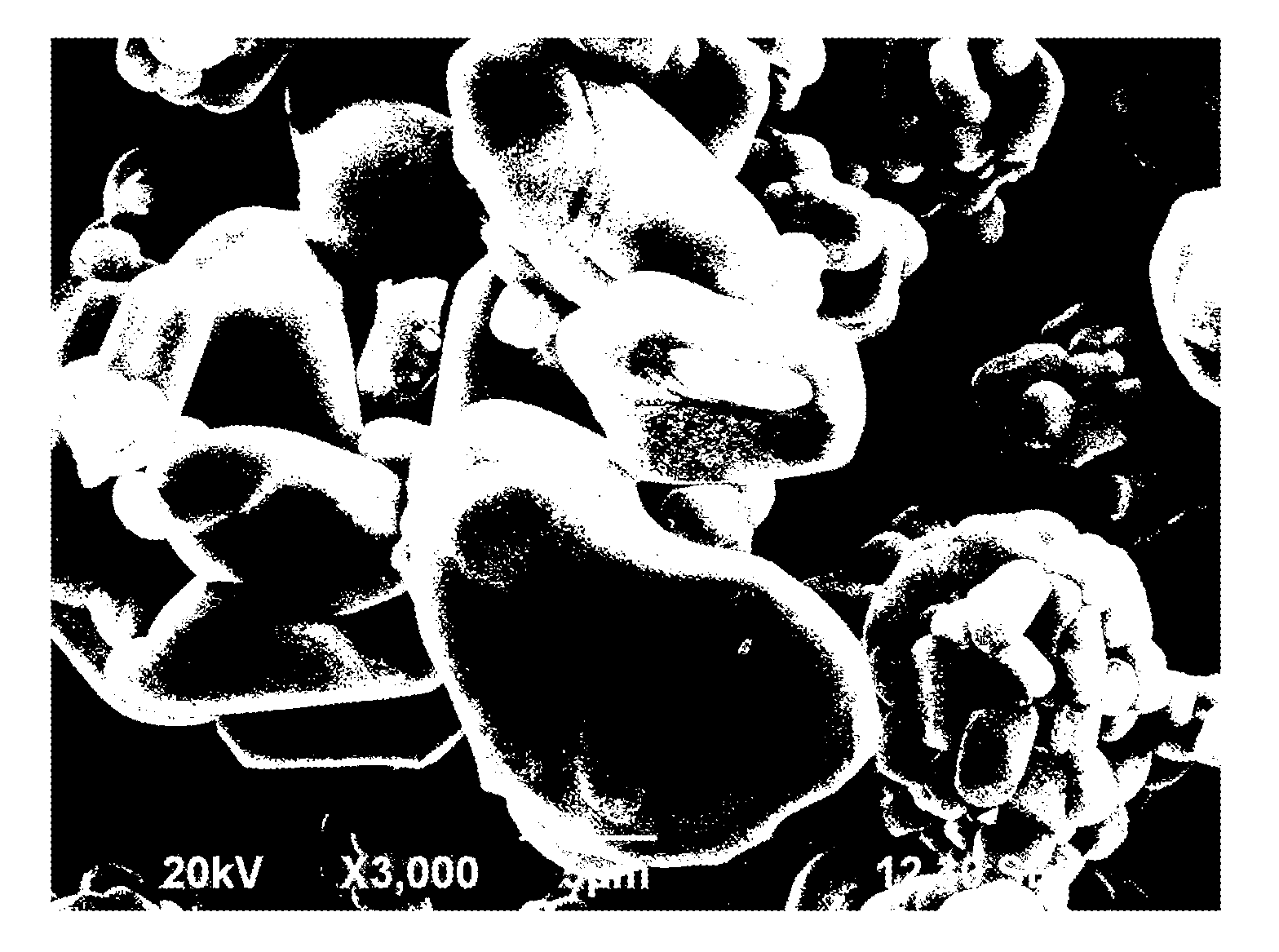
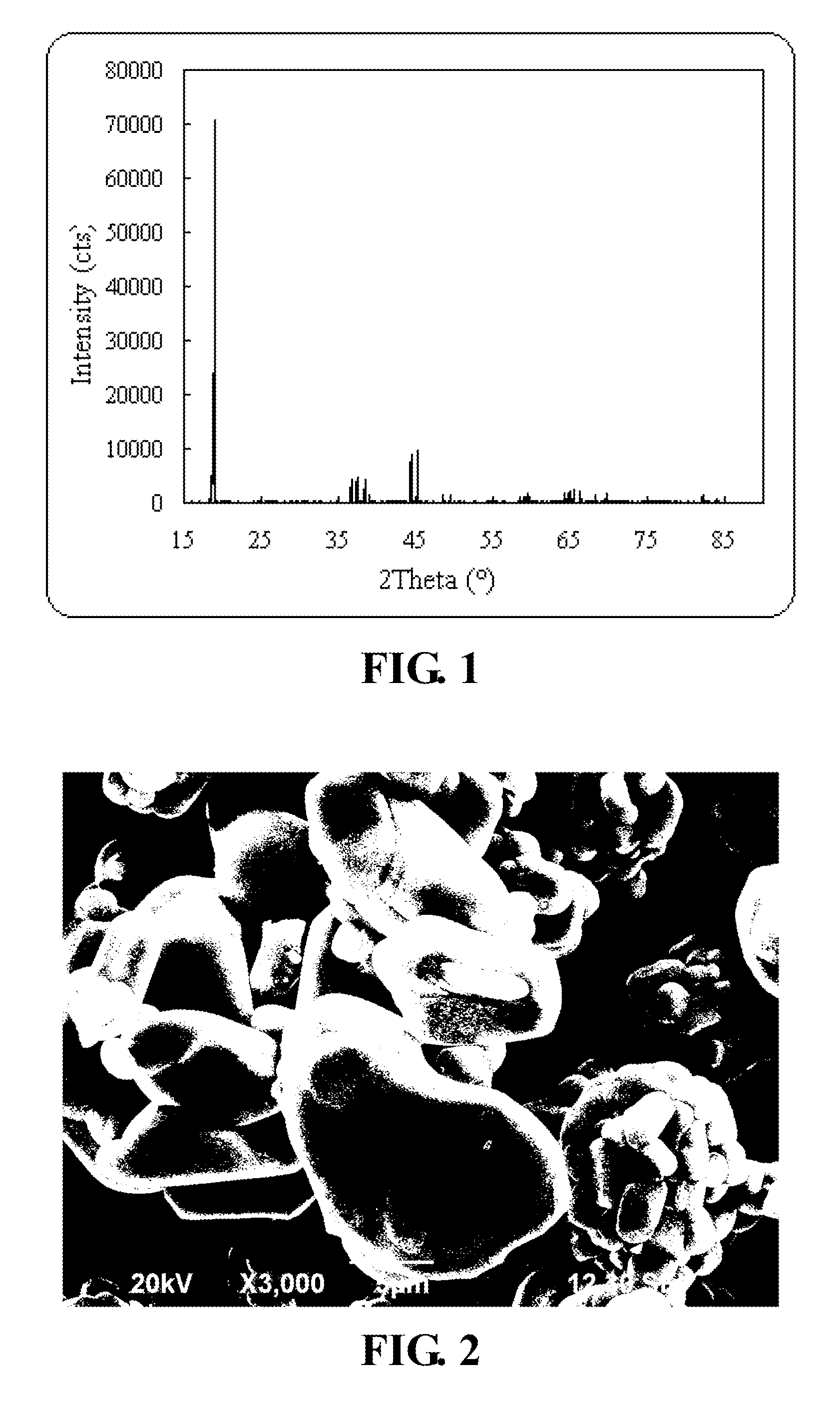
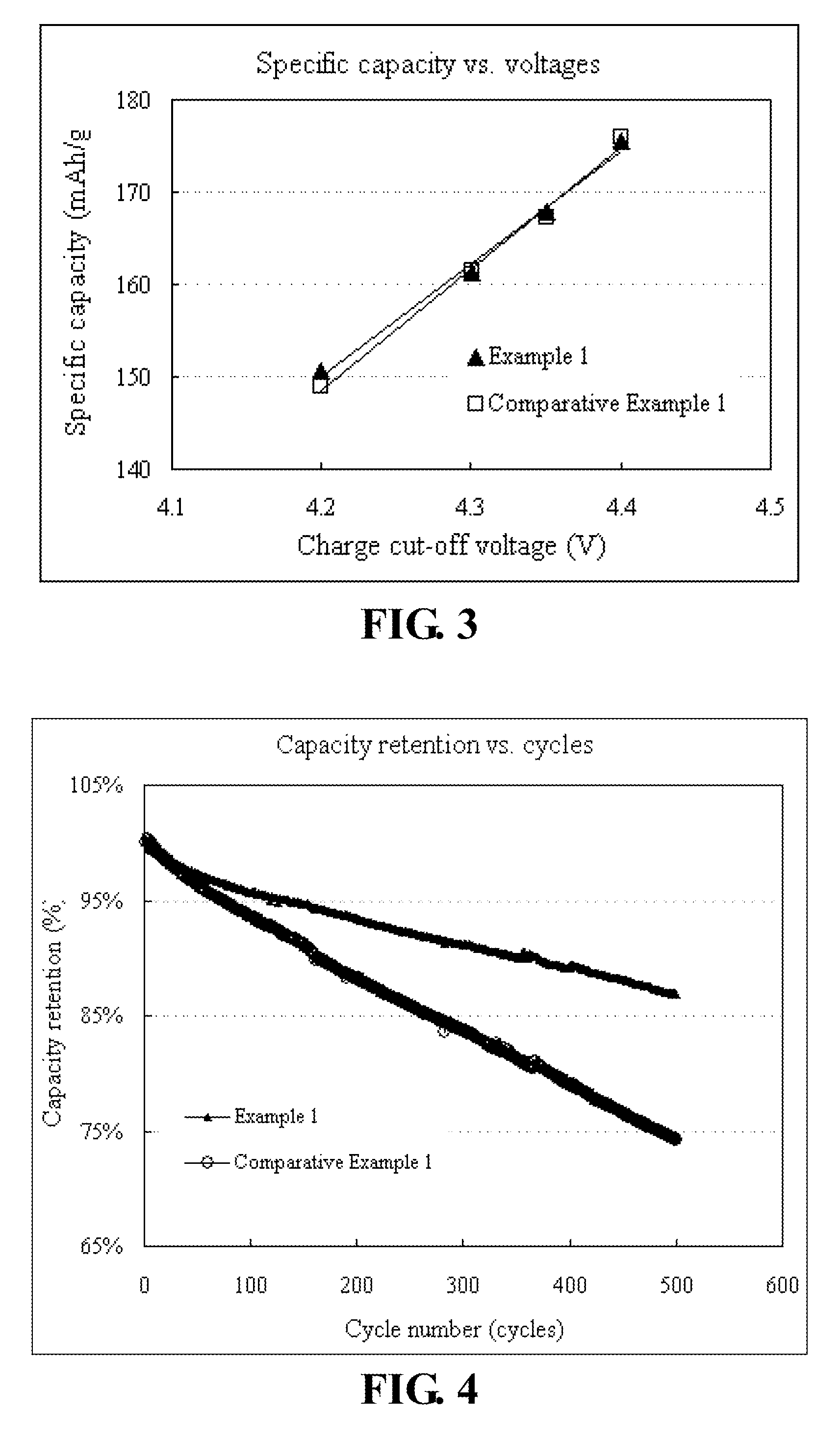
- A composite cathode material is developed by doping LiCoO2 and Li(NixCoyMn1-x-y)O2 with specific elements and applying surface coatings, optimizing crystal structure and distribution of transition metal elements to enhance stability and compatibility, allowing for higher charge cut-off voltages while maintaining reversible capacity and safety.

Safety Standards for Aerospace Battery Applications
Aerospace battery systems are subject to stringent safety standards due to the catastrophic consequences potential failures could have during flight operations. The Federal Aviation Administration (FAA), European Union Aviation Safety Agency (EASA), and International Civil Aviation Organization (ICAO) have established comprehensive regulatory frameworks specifically addressing lithium-ion batteries in aerospace applications. These regulations mandate rigorous testing protocols including thermal runaway containment, vibration resistance, altitude simulation, and electromagnetic compatibility.
Battery systems for aerospace applications must comply with DO-311A "Minimum Operational Performance Standards for Rechargeable Lithium Battery Systems," which outlines specific requirements for design, testing, and qualification. This standard addresses critical safety concerns such as thermal management, cell balancing, and failure mode mitigation strategies. Additionally, MIL-STD-810G provides environmental testing guidelines that batteries must withstand, including extreme temperature cycling, shock, and humidity exposure.
Safety certification for cathode materials requires demonstration of stability under various abuse conditions. Advanced cathode materials must maintain structural integrity during thermal events, preventing oxygen release that could fuel combustion. The UL 1642 and IEC 62133 standards provide specific testing methodologies for cell-level safety assessment, while RTCA DO-160 addresses environmental conditions specific to airborne equipment.
Risk management frameworks for aerospace battery applications follow SAE ARP4761 guidelines, requiring Failure Mode and Effects Analysis (FMEA) and Fault Tree Analysis (FTA) to identify potential failure modes in cathode materials. These analyses must demonstrate that no single point of failure in the cathode material could lead to catastrophic consequences. The implementation of Battery Management Systems (BMS) with redundant safety features is mandatory to monitor cell voltage, temperature, and state-of-charge parameters.
Recent developments in safety standards have begun addressing emerging high-energy density cathode materials specifically. The SAE AS6413 standard for transport category aircraft batteries includes specific provisions for advanced cathode chemistries, requiring demonstration of containment capabilities during thermal runaway events. Materials qualification processes now include accelerated aging tests to verify long-term stability of cathode structures under operational conditions.
Compliance with these standards requires extensive documentation and traceability throughout the cathode material development process. Material suppliers must maintain detailed records of manufacturing processes, quality control measures, and batch testing results. This documentation forms a critical component of the airworthiness certification process, ensuring that all safety-critical components meet the stringent requirements necessary for aerospace applications.
Battery systems for aerospace applications must comply with DO-311A "Minimum Operational Performance Standards for Rechargeable Lithium Battery Systems," which outlines specific requirements for design, testing, and qualification. This standard addresses critical safety concerns such as thermal management, cell balancing, and failure mode mitigation strategies. Additionally, MIL-STD-810G provides environmental testing guidelines that batteries must withstand, including extreme temperature cycling, shock, and humidity exposure.
Safety certification for cathode materials requires demonstration of stability under various abuse conditions. Advanced cathode materials must maintain structural integrity during thermal events, preventing oxygen release that could fuel combustion. The UL 1642 and IEC 62133 standards provide specific testing methodologies for cell-level safety assessment, while RTCA DO-160 addresses environmental conditions specific to airborne equipment.
Risk management frameworks for aerospace battery applications follow SAE ARP4761 guidelines, requiring Failure Mode and Effects Analysis (FMEA) and Fault Tree Analysis (FTA) to identify potential failure modes in cathode materials. These analyses must demonstrate that no single point of failure in the cathode material could lead to catastrophic consequences. The implementation of Battery Management Systems (BMS) with redundant safety features is mandatory to monitor cell voltage, temperature, and state-of-charge parameters.
Recent developments in safety standards have begun addressing emerging high-energy density cathode materials specifically. The SAE AS6413 standard for transport category aircraft batteries includes specific provisions for advanced cathode chemistries, requiring demonstration of containment capabilities during thermal runaway events. Materials qualification processes now include accelerated aging tests to verify long-term stability of cathode structures under operational conditions.
Compliance with these standards requires extensive documentation and traceability throughout the cathode material development process. Material suppliers must maintain detailed records of manufacturing processes, quality control measures, and batch testing results. This documentation forms a critical component of the airworthiness certification process, ensuring that all safety-critical components meet the stringent requirements necessary for aerospace applications.
Environmental Impact of Advanced Cathode Materials
The environmental implications of advanced cathode materials for aerospace power storage systems extend far beyond their performance characteristics. These materials, primarily composed of lithium-based compounds and transition metals, present significant ecological considerations throughout their lifecycle.
Mining operations for critical elements like cobalt, nickel, and lithium create substantial environmental disruption, including habitat destruction, soil erosion, and water contamination. For aerospace applications specifically, the environmental footprint is amplified by the stringent purity requirements, necessitating more intensive extraction and refinement processes than consumer-grade materials.
Manufacturing processes for aerospace-grade cathode materials consume considerable energy and generate hazardous byproducts. The high-temperature calcination required for crystalline perfection in aerospace applications typically demands 30-40% more energy than standard cathode production, contributing to increased carbon emissions. Chemical treatments involving N-Methyl-2-pyrrolidone (NMP) and other solvents pose particular environmental concerns due to their toxicity and persistence.
Recycling challenges present another critical environmental dimension. Current recycling technologies recover only 50-60% of cathode materials from aerospace batteries, significantly lower than the theoretical maximum. The specialized dopants and coatings used to enhance performance in extreme aerospace environments often complicate separation processes and reduce recyclability.
The aerospace industry's unique operational requirements introduce additional environmental considerations. The need for materials that maintain stability across extreme temperature ranges (-65°C to 150°C) often necessitates additives with higher environmental persistence. Furthermore, the radiation resistance requirements for space applications frequently involve compounds with greater environmental toxicity profiles.
Recent innovations are addressing these environmental challenges through several approaches. Water-based processing techniques are reducing solvent usage by approximately 80% compared to traditional methods. Bio-inspired cathode structures are improving material efficiency, potentially reducing raw material requirements by 15-25%. Additionally, direct recycling methodologies specifically designed for aerospace-grade materials show promise for recovering up to 85% of critical elements without energy-intensive reprocessing.
The aerospace sector's adoption of environmental life cycle assessment (LCA) methodologies for cathode material selection represents a significant advancement. These assessments now incorporate specialized metrics for radiation-resistant compounds and extreme-condition additives, providing a more accurate environmental impact profile for aerospace applications.
Mining operations for critical elements like cobalt, nickel, and lithium create substantial environmental disruption, including habitat destruction, soil erosion, and water contamination. For aerospace applications specifically, the environmental footprint is amplified by the stringent purity requirements, necessitating more intensive extraction and refinement processes than consumer-grade materials.
Manufacturing processes for aerospace-grade cathode materials consume considerable energy and generate hazardous byproducts. The high-temperature calcination required for crystalline perfection in aerospace applications typically demands 30-40% more energy than standard cathode production, contributing to increased carbon emissions. Chemical treatments involving N-Methyl-2-pyrrolidone (NMP) and other solvents pose particular environmental concerns due to their toxicity and persistence.
Recycling challenges present another critical environmental dimension. Current recycling technologies recover only 50-60% of cathode materials from aerospace batteries, significantly lower than the theoretical maximum. The specialized dopants and coatings used to enhance performance in extreme aerospace environments often complicate separation processes and reduce recyclability.
The aerospace industry's unique operational requirements introduce additional environmental considerations. The need for materials that maintain stability across extreme temperature ranges (-65°C to 150°C) often necessitates additives with higher environmental persistence. Furthermore, the radiation resistance requirements for space applications frequently involve compounds with greater environmental toxicity profiles.
Recent innovations are addressing these environmental challenges through several approaches. Water-based processing techniques are reducing solvent usage by approximately 80% compared to traditional methods. Bio-inspired cathode structures are improving material efficiency, potentially reducing raw material requirements by 15-25%. Additionally, direct recycling methodologies specifically designed for aerospace-grade materials show promise for recovering up to 85% of critical elements without energy-intensive reprocessing.
The aerospace sector's adoption of environmental life cycle assessment (LCA) methodologies for cathode material selection represents a significant advancement. These assessments now incorporate specialized metrics for radiation-resistant compounds and extreme-condition additives, providing a more accurate environmental impact profile for aerospace applications.
Unlock deeper insights with PatSnap Eureka Quick Research — get a full tech report to explore trends and direct your research. Try now!
Generate Your Research Report Instantly with AI Agent
Supercharge your innovation with PatSnap Eureka AI Agent Platform!