Co-Packaged Optics in Autonomous Vehicles: Data Rate Increase
APR 9, 20269 MIN READ
Generate Your Research Report Instantly with AI Agent
PatSnap Eureka helps you evaluate technical feasibility & market potential.
Co-Packaged Optics in AV: Background and Objectives
The autonomous vehicle industry has experienced unprecedented growth over the past decade, with global market projections indicating a compound annual growth rate exceeding 20% through 2030. This rapid expansion has created an urgent demand for advanced data processing and communication technologies capable of handling the massive volumes of sensor data generated by modern autonomous systems. Traditional electronic interconnects are increasingly becoming bottlenecks in achieving the high-speed, low-latency data transmission required for real-time decision-making in autonomous vehicles.
Co-packaged optics represents a revolutionary approach to addressing these bandwidth limitations by integrating optical components directly with electronic processing units. This technology eliminates the traditional separation between optical transceivers and electronic chips, reducing signal degradation, power consumption, and latency while dramatically increasing data throughput capabilities. The integration enables data rates that can exceed 100 Gbps per channel, representing a significant leap from conventional electrical interconnects.
The evolution of autonomous vehicles from Level 2 to Level 4 and Level 5 automation has exponentially increased data processing requirements. Modern autonomous vehicles generate terabytes of data daily from LiDAR sensors, high-resolution cameras, radar systems, and other sensing technologies. This data must be processed, analyzed, and acted upon within milliseconds to ensure safe operation. The computational demands have outpaced the capabilities of traditional copper-based interconnects, creating a critical need for optical solutions.
The primary objective of implementing co-packaged optics in autonomous vehicles centers on achieving sustainable data rate increases that can support next-generation autonomous driving capabilities. Current systems face significant challenges in managing the data flow between multiple processing units, memory systems, and sensor interfaces. Co-packaged optics aims to eliminate these bottlenecks by providing direct optical connections between critical components.
Furthermore, the technology seeks to address power efficiency concerns that have become paramount in electric autonomous vehicles. Traditional high-speed electrical interconnects consume substantial power and generate significant heat, requiring additional cooling systems that impact vehicle efficiency. Co-packaged optics offers the potential to reduce power consumption by up to 50% compared to equivalent electrical solutions while maintaining superior performance characteristics.
The strategic implementation of co-packaged optics also targets the miniaturization requirements of automotive applications, where space constraints and weight considerations are critical factors in system design and overall vehicle performance optimization.
Co-packaged optics represents a revolutionary approach to addressing these bandwidth limitations by integrating optical components directly with electronic processing units. This technology eliminates the traditional separation between optical transceivers and electronic chips, reducing signal degradation, power consumption, and latency while dramatically increasing data throughput capabilities. The integration enables data rates that can exceed 100 Gbps per channel, representing a significant leap from conventional electrical interconnects.
The evolution of autonomous vehicles from Level 2 to Level 4 and Level 5 automation has exponentially increased data processing requirements. Modern autonomous vehicles generate terabytes of data daily from LiDAR sensors, high-resolution cameras, radar systems, and other sensing technologies. This data must be processed, analyzed, and acted upon within milliseconds to ensure safe operation. The computational demands have outpaced the capabilities of traditional copper-based interconnects, creating a critical need for optical solutions.
The primary objective of implementing co-packaged optics in autonomous vehicles centers on achieving sustainable data rate increases that can support next-generation autonomous driving capabilities. Current systems face significant challenges in managing the data flow between multiple processing units, memory systems, and sensor interfaces. Co-packaged optics aims to eliminate these bottlenecks by providing direct optical connections between critical components.
Furthermore, the technology seeks to address power efficiency concerns that have become paramount in electric autonomous vehicles. Traditional high-speed electrical interconnects consume substantial power and generate significant heat, requiring additional cooling systems that impact vehicle efficiency. Co-packaged optics offers the potential to reduce power consumption by up to 50% compared to equivalent electrical solutions while maintaining superior performance characteristics.
The strategic implementation of co-packaged optics also targets the miniaturization requirements of automotive applications, where space constraints and weight considerations are critical factors in system design and overall vehicle performance optimization.
Market Demand for High-Speed AV Data Processing
The autonomous vehicle industry is experiencing unprecedented growth in data processing requirements, driven by the increasing sophistication of sensor technologies and real-time decision-making systems. Modern autonomous vehicles generate massive amounts of data from multiple sources including LiDAR systems, high-resolution cameras, radar arrays, and ultrasonic sensors. This data must be processed instantaneously to ensure safe navigation and optimal vehicle performance, creating substantial demand for high-speed data processing solutions.
Current autonomous vehicle architectures face significant bottlenecks in data transmission between processing units, sensors, and control systems. Traditional electrical interconnects are reaching their physical limitations in terms of bandwidth and power efficiency. The industry requires data processing capabilities that can handle terabits per second of information flow while maintaining ultra-low latency characteristics essential for safety-critical applications.
The market demand is particularly acute in Level 4 and Level 5 autonomous vehicles, where complete autonomy requires processing complex environmental data in real-time. Fleet operators and ride-sharing companies are driving demand for vehicles capable of handling diverse urban environments, weather conditions, and traffic scenarios. This operational complexity translates directly into exponentially higher data processing requirements compared to current assisted driving systems.
Co-packaged optics technology addresses these market needs by enabling unprecedented data rates between processing components within autonomous vehicle computing systems. The technology allows for seamless integration of optical interconnects directly with electronic processing units, eliminating traditional bandwidth constraints while reducing power consumption and system complexity.
Market research indicates strong demand from automotive manufacturers seeking competitive advantages in autonomous vehicle performance and efficiency. The technology enables more sophisticated artificial intelligence algorithms, enhanced sensor fusion capabilities, and improved real-time response systems. Additionally, the automotive industry's push toward centralized computing architectures creates demand for high-bandwidth interconnects that can efficiently distribute processed data across vehicle systems.
The economic drivers supporting this market demand include reduced system costs through improved integration, enhanced vehicle safety through faster processing capabilities, and improved energy efficiency leading to extended vehicle range. These factors collectively create a compelling market opportunity for co-packaged optics solutions specifically designed for autonomous vehicle applications.
Current autonomous vehicle architectures face significant bottlenecks in data transmission between processing units, sensors, and control systems. Traditional electrical interconnects are reaching their physical limitations in terms of bandwidth and power efficiency. The industry requires data processing capabilities that can handle terabits per second of information flow while maintaining ultra-low latency characteristics essential for safety-critical applications.
The market demand is particularly acute in Level 4 and Level 5 autonomous vehicles, where complete autonomy requires processing complex environmental data in real-time. Fleet operators and ride-sharing companies are driving demand for vehicles capable of handling diverse urban environments, weather conditions, and traffic scenarios. This operational complexity translates directly into exponentially higher data processing requirements compared to current assisted driving systems.
Co-packaged optics technology addresses these market needs by enabling unprecedented data rates between processing components within autonomous vehicle computing systems. The technology allows for seamless integration of optical interconnects directly with electronic processing units, eliminating traditional bandwidth constraints while reducing power consumption and system complexity.
Market research indicates strong demand from automotive manufacturers seeking competitive advantages in autonomous vehicle performance and efficiency. The technology enables more sophisticated artificial intelligence algorithms, enhanced sensor fusion capabilities, and improved real-time response systems. Additionally, the automotive industry's push toward centralized computing architectures creates demand for high-bandwidth interconnects that can efficiently distribute processed data across vehicle systems.
The economic drivers supporting this market demand include reduced system costs through improved integration, enhanced vehicle safety through faster processing capabilities, and improved energy efficiency leading to extended vehicle range. These factors collectively create a compelling market opportunity for co-packaged optics solutions specifically designed for autonomous vehicle applications.
Current CPO Limitations in Automotive Applications
Co-Packaged Optics technology faces significant implementation challenges when applied to autonomous vehicle systems, primarily due to the demanding operational requirements of automotive environments. The harsh conditions encountered in vehicular applications, including extreme temperature variations ranging from -40°C to +85°C, present substantial obstacles for maintaining optical component stability and performance consistency.
Thermal management represents one of the most critical limitations in current CPO implementations for automotive use. The close proximity of optical and electronic components in co-packaged designs creates thermal coupling issues that are exacerbated by the confined spaces and limited cooling options available in vehicle architectures. Traditional thermal dissipation methods prove inadequate when dealing with the high-power requirements of advanced sensor fusion systems and real-time processing demands.
Vibration and mechanical stress tolerance pose another fundamental challenge for CPO systems in automotive applications. Current packaging technologies struggle to maintain precise optical alignment under the constant mechanical stresses encountered during vehicle operation, including road vibrations, acceleration forces, and impact scenarios. The micro-scale positioning requirements of optical components become increasingly difficult to maintain over extended operational periods.
Power consumption constraints significantly limit the scalability of existing CPO solutions in autonomous vehicles. Current implementations require substantial power budgets that conflict with automotive efficiency requirements and thermal management capabilities. The energy density limitations of current CPO designs create bottlenecks when attempting to achieve the multi-terabit data rates necessary for advanced autonomous driving functions.
Manufacturing cost and complexity present additional barriers to widespread automotive adoption. Current CPO fabrication processes involve sophisticated assembly techniques and precision manufacturing that result in cost structures incompatible with automotive volume production requirements. The yield rates and quality control standards necessary for automotive applications exceed those typically achieved in current CPO manufacturing processes.
Reliability and longevity requirements in automotive applications expose fundamental weaknesses in existing CPO architectures. The 15-20 year operational lifespan expected in automotive systems far exceeds the proven reliability track record of current co-packaged optical solutions. Environmental sealing, contamination resistance, and long-term optical performance degradation remain unresolved challenges that limit practical deployment in autonomous vehicle platforms.
Thermal management represents one of the most critical limitations in current CPO implementations for automotive use. The close proximity of optical and electronic components in co-packaged designs creates thermal coupling issues that are exacerbated by the confined spaces and limited cooling options available in vehicle architectures. Traditional thermal dissipation methods prove inadequate when dealing with the high-power requirements of advanced sensor fusion systems and real-time processing demands.
Vibration and mechanical stress tolerance pose another fundamental challenge for CPO systems in automotive applications. Current packaging technologies struggle to maintain precise optical alignment under the constant mechanical stresses encountered during vehicle operation, including road vibrations, acceleration forces, and impact scenarios. The micro-scale positioning requirements of optical components become increasingly difficult to maintain over extended operational periods.
Power consumption constraints significantly limit the scalability of existing CPO solutions in autonomous vehicles. Current implementations require substantial power budgets that conflict with automotive efficiency requirements and thermal management capabilities. The energy density limitations of current CPO designs create bottlenecks when attempting to achieve the multi-terabit data rates necessary for advanced autonomous driving functions.
Manufacturing cost and complexity present additional barriers to widespread automotive adoption. Current CPO fabrication processes involve sophisticated assembly techniques and precision manufacturing that result in cost structures incompatible with automotive volume production requirements. The yield rates and quality control standards necessary for automotive applications exceed those typically achieved in current CPO manufacturing processes.
Reliability and longevity requirements in automotive applications expose fundamental weaknesses in existing CPO architectures. The 15-20 year operational lifespan expected in automotive systems far exceeds the proven reliability track record of current co-packaged optical solutions. Environmental sealing, contamination resistance, and long-term optical performance degradation remain unresolved challenges that limit practical deployment in autonomous vehicle platforms.
Existing CPO Solutions for Data Rate Enhancement
01 High-speed data transmission architectures for co-packaged optics
Co-packaged optics systems employ advanced architectures to achieve high data rates by integrating optical components directly with electronic integrated circuits. These architectures utilize parallel optical channels, wavelength division multiplexing, and optimized signal routing to maximize bandwidth density. The integration reduces signal path lengths and parasitic effects, enabling data rates exceeding 100 Gbps per channel. Advanced modulation formats and error correction techniques further enhance throughput while maintaining signal integrity in compact form factors.- High-speed data transmission architectures for co-packaged optics: Co-packaged optics systems employ advanced architectures to achieve high data rates by integrating optical components directly with electronic circuits. These architectures utilize parallel optical channels, wavelength division multiplexing, and optimized signal routing to maximize bandwidth. The integration reduces signal loss and latency while enabling aggregate data rates exceeding terabits per second through efficient packaging techniques.
- Multi-lane and multi-wavelength transmission schemes: Advanced transmission schemes utilize multiple lanes and wavelengths simultaneously to increase overall data throughput in co-packaged optical systems. These schemes implement parallel data streams across different optical channels, with each channel operating at high speeds. The combination of spatial and wavelength multiplexing enables scalable data rate improvements while maintaining signal integrity and power efficiency.
- Signal modulation and encoding techniques for enhanced data rates: Sophisticated modulation formats and encoding schemes are employed to maximize data transmission rates in co-packaged optics. These techniques include advanced phase and amplitude modulation, forward error correction, and adaptive equalization methods. The implementation of these techniques allows for higher spectral efficiency and enables operation at increased data rates while maintaining acceptable bit error rates.
- Thermal management and power optimization for high data rate operations: Effective thermal management solutions are critical for maintaining high data rate performance in co-packaged optics systems. These solutions include integrated cooling structures, thermal interface materials, and power distribution networks optimized for high-speed operation. Proper thermal design ensures stable operation of optical and electronic components at elevated data rates while minimizing power consumption and preventing performance degradation.
- Interface protocols and standards for co-packaged optics connectivity: Standardized interface protocols enable interoperability and scalability of co-packaged optics systems operating at various data rates. These protocols define electrical and optical specifications, signal timing requirements, and communication standards for connecting co-packaged optics modules to host systems. Implementation of industry-standard interfaces facilitates adoption across different platforms while supporting progressive data rate increases through protocol evolution.
02 Multi-lane and multi-wavelength transmission techniques
To achieve aggregate data rates in the terabit range, co-packaged optics implementations utilize multiple parallel lanes combined with wavelength division multiplexing technologies. Each lane operates at high speeds while multiple wavelengths are transmitted simultaneously through the same optical pathway. This approach scales bandwidth efficiently without proportionally increasing power consumption or footprint. Advanced multiplexing and demultiplexing components enable dense wavelength spacing and precise channel control for maximum spectral efficiency.Expand Specific Solutions03 Signal processing and modulation schemes for enhanced data rates
Advanced signal processing techniques and modulation schemes are employed to maximize data rates in co-packaged optics systems. These include pulse amplitude modulation, quadrature amplitude modulation, and coherent detection methods that encode multiple bits per symbol. Digital signal processing algorithms compensate for channel impairments, chromatic dispersion, and nonlinear effects. Forward error correction codes with optimized overhead ratios ensure reliable transmission at elevated data rates while maintaining acceptable bit error rates.Expand Specific Solutions04 Thermal management and power optimization for high data rate operations
Achieving high data rates in co-packaged optics requires effective thermal management solutions to handle increased power dissipation from high-speed electronic and photonic components. Integrated cooling structures, thermal interface materials, and heat spreading techniques maintain optimal operating temperatures. Power optimization strategies include adaptive power scaling, efficient driver circuits, and low-power photonic devices. These approaches enable sustained high data rate operation while meeting thermal and power budget constraints in compact packages.Expand Specific Solutions05 Interface standards and protocol support for co-packaged optics
Co-packaged optics systems implement standardized interfaces and protocols to ensure interoperability and support various data rate requirements. These include compatibility with Ethernet standards, optical transport network protocols, and emerging specifications for next-generation data centers. The implementations support rate adaptation, forward and backward compatibility, and flexible configuration options. Protocol-aware physical layer designs optimize performance for specific traffic patterns while maintaining compliance with industry standards for seamless integration into existing infrastructure.Expand Specific Solutions
Key Players in CPO and Automotive Semiconductor Industry
The co-packaged optics market for autonomous vehicles is in an early growth stage, driven by escalating data rate demands from advanced sensor fusion and real-time processing requirements. The competitive landscape spans multiple technology layers, with established semiconductor giants like Intel, Samsung Electronics, and Taiwan Semiconductor Manufacturing leading foundational chip technologies, while automotive OEMs including Audi, Nissan, and China FAW integrate these solutions into vehicle platforms. Autonomous vehicle specialists such as Waymo, Mobileye, GM Cruise, and Motional are pushing technological boundaries, creating demand for higher bandwidth optical interconnects. Technology maturity varies significantly across players - semiconductor companies demonstrate advanced packaging capabilities, telecommunications firms like ZTE and Fiberhome provide optical infrastructure expertise, while automotive manufacturers are still developing integration strategies. The convergence of these diverse technological competencies suggests the market is transitioning from experimental phases toward commercial viability, with data rate requirements driving rapid innovation cycles.
Waymo LLC
Technical Solution: Waymo has developed advanced co-packaged optics solutions for their autonomous vehicle fleet, integrating high-speed optical transceivers directly with processing units to achieve data rates exceeding 400 Gbps per channel. Their approach combines silicon photonics with advanced packaging techniques, enabling ultra-low latency communication between LiDAR sensors, cameras, and central processing units. The system utilizes wavelength division multiplexing (WDM) technology to support multiple data streams simultaneously, with power consumption optimized for automotive applications. Waymo's co-packaged optics architecture supports real-time processing of massive sensor data volumes, critical for safe autonomous navigation in complex urban environments.
Strengths: Industry-leading integration expertise, extensive real-world testing data, proven scalability. Weaknesses: High development costs, complex thermal management requirements in automotive environments.
Intel Corp.
Technical Solution: Intel has pioneered co-packaged optics technology through their Silicon Photonics division, developing integrated optical solutions that achieve data rates up to 1.6 Tbps for high-performance computing applications, with automotive adaptations targeting 800 Gbps throughput. Their approach leverages advanced silicon photonics manufacturing processes, integrating optical components directly onto processor packages to minimize signal latency and power consumption. Intel's automotive co-packaged optics solutions feature temperature-hardened designs capable of operating in -40°C to +125°C ranges, essential for vehicle applications. The technology incorporates advanced error correction and signal integrity features to ensure reliable data transmission in electromagnetically noisy automotive environments.
Strengths: Mature silicon photonics manufacturing capabilities, strong automotive partnerships, comprehensive thermal management solutions. Weaknesses: Higher power consumption compared to specialized automotive solutions, complex integration requirements.
Core Innovations in High-Speed Optical Data Transmission
Co-packaged optics switch solution based on analog optical engines
PatentActiveUS11630261B2
Innovation
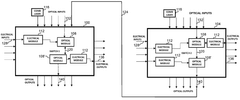
- A CPO switch assembly is developed with a switch integrated circuit (IC) chip and optical modules co-packaged within a physical enclosure, incorporating digital signal processing units and analog equalizers to simplify design, reduce power consumption, and optimize component parameters, while separating digital and analog components to facilitate independent verification and testing.


Method and system for co-packaged optics
PatentWO2024236556A1
Innovation
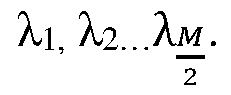
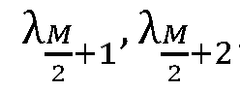
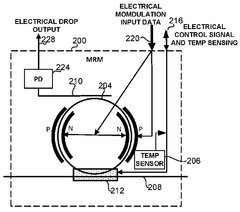
- The laser source is separated from the co-packaged system, with a comb laser serving as an external light source emitting multiple wavelengths, reducing the failure rate and maintenance needs, and used in conjunction with Micro-Ring Modulators and Micro Ring Resonators for bi-directional communication at high transfer rates with low footprint.
Automotive Safety Standards for Optical Communication
The integration of co-packaged optics in autonomous vehicles necessitates adherence to stringent automotive safety standards specifically designed for optical communication systems. These standards ensure that high-speed optical data transmission maintains reliability and safety-critical performance under diverse operating conditions encountered in automotive environments.
ISO 26262 functional safety standard serves as the foundational framework for optical communication systems in autonomous vehicles. This standard requires optical components to meet Automotive Safety Integrity Level (ASIL) classifications, with co-packaged optics typically requiring ASIL-C or ASIL-D ratings depending on their role in safety-critical functions. The standard mandates comprehensive failure mode analysis, including optical power degradation, thermal-induced signal drift, and connector reliability assessments.
IEC 60825 laser safety standards govern the optical power levels and wavelength specifications for automotive optical communication systems. Co-packaged optics must comply with Class 1 laser safety requirements to ensure eye safety during manufacturing, maintenance, and potential exposure scenarios. This includes implementing automatic power shutdown mechanisms and optical isolation features when system faults are detected.
Automotive-specific electromagnetic compatibility standards, including ISO 11452 and CISPR 25, address the unique challenges of optical systems operating in electrically noisy vehicle environments. These standards require co-packaged optics to demonstrate immunity to electromagnetic interference while maintaining signal integrity across the specified data rate ranges. Special attention is given to crosstalk prevention between optical channels and electrical systems.
Environmental durability standards such as AEC-Q100 and ISO 16750 establish temperature cycling, vibration, and humidity requirements for optical components. Co-packaged optics must demonstrate operational stability across temperature ranges from -40°C to +125°C while maintaining specified bit error rates. Mechanical shock and vibration testing protocols ensure optical alignment stability under typical automotive stress conditions.
Emerging standards specifically address cybersecurity aspects of optical communication networks, including secure key distribution and optical signal encryption requirements. These standards mandate implementation of tamper-evident optical interfaces and secure boot procedures for optical transceivers to prevent unauthorized access to vehicle communication networks.
ISO 26262 functional safety standard serves as the foundational framework for optical communication systems in autonomous vehicles. This standard requires optical components to meet Automotive Safety Integrity Level (ASIL) classifications, with co-packaged optics typically requiring ASIL-C or ASIL-D ratings depending on their role in safety-critical functions. The standard mandates comprehensive failure mode analysis, including optical power degradation, thermal-induced signal drift, and connector reliability assessments.
IEC 60825 laser safety standards govern the optical power levels and wavelength specifications for automotive optical communication systems. Co-packaged optics must comply with Class 1 laser safety requirements to ensure eye safety during manufacturing, maintenance, and potential exposure scenarios. This includes implementing automatic power shutdown mechanisms and optical isolation features when system faults are detected.
Automotive-specific electromagnetic compatibility standards, including ISO 11452 and CISPR 25, address the unique challenges of optical systems operating in electrically noisy vehicle environments. These standards require co-packaged optics to demonstrate immunity to electromagnetic interference while maintaining signal integrity across the specified data rate ranges. Special attention is given to crosstalk prevention between optical channels and electrical systems.
Environmental durability standards such as AEC-Q100 and ISO 16750 establish temperature cycling, vibration, and humidity requirements for optical components. Co-packaged optics must demonstrate operational stability across temperature ranges from -40°C to +125°C while maintaining specified bit error rates. Mechanical shock and vibration testing protocols ensure optical alignment stability under typical automotive stress conditions.
Emerging standards specifically address cybersecurity aspects of optical communication networks, including secure key distribution and optical signal encryption requirements. These standards mandate implementation of tamper-evident optical interfaces and secure boot procedures for optical transceivers to prevent unauthorized access to vehicle communication networks.
Thermal Management Challenges in AV CPO Systems
The integration of Co-Packaged Optics (CPO) systems in autonomous vehicles presents significant thermal management challenges that directly impact system reliability and performance. As data rates increase to support real-time processing of massive sensor datasets, the thermal density within CPO modules escalates dramatically, creating localized hotspots that can exceed 150°C in confined automotive environments.
Traditional cooling approaches face severe limitations in automotive CPO applications due to space constraints and power consumption restrictions. Conventional heat sinks and thermal interface materials struggle to dissipate the concentrated heat generated by high-speed optical transceivers operating at 400Gbps and beyond. The proximity of electronic and photonic components in CPO packages creates thermal crosstalk, where heat from electrical circuits affects the wavelength stability of laser diodes and photodetectors.
Automotive operating conditions exacerbate thermal management complexity. Temperature variations ranging from -40°C to 85°C ambient conditions, combined with vibration and shock requirements, demand robust thermal solutions that maintain consistent performance across extreme environments. The thermal cycling stress can cause package warpage and solder joint failures, compromising optical alignment and signal integrity.
Advanced thermal management strategies are emerging to address these challenges. Micro-channel cooling systems integrated directly into CPO substrates show promise for localized heat removal, though they introduce complexity in manufacturing and reliability concerns. Phase-change materials and vapor chambers offer enhanced heat spreading capabilities while maintaining compact form factors suitable for automotive integration.
The thermal interface between CPO modules and vehicle cooling systems requires careful optimization. Liquid cooling integration with existing automotive thermal management infrastructure presents opportunities for efficient heat dissipation, but introduces potential failure modes and maintenance requirements that must align with automotive reliability standards.
Thermal-aware design methodologies are becoming critical for CPO system development. Advanced thermal simulation tools enable prediction of temperature distributions and optimization of component placement to minimize thermal interactions. Real-time thermal monitoring and dynamic power management strategies help maintain operating temperatures within acceptable ranges while preserving system performance during peak data processing demands.
Traditional cooling approaches face severe limitations in automotive CPO applications due to space constraints and power consumption restrictions. Conventional heat sinks and thermal interface materials struggle to dissipate the concentrated heat generated by high-speed optical transceivers operating at 400Gbps and beyond. The proximity of electronic and photonic components in CPO packages creates thermal crosstalk, where heat from electrical circuits affects the wavelength stability of laser diodes and photodetectors.
Automotive operating conditions exacerbate thermal management complexity. Temperature variations ranging from -40°C to 85°C ambient conditions, combined with vibration and shock requirements, demand robust thermal solutions that maintain consistent performance across extreme environments. The thermal cycling stress can cause package warpage and solder joint failures, compromising optical alignment and signal integrity.
Advanced thermal management strategies are emerging to address these challenges. Micro-channel cooling systems integrated directly into CPO substrates show promise for localized heat removal, though they introduce complexity in manufacturing and reliability concerns. Phase-change materials and vapor chambers offer enhanced heat spreading capabilities while maintaining compact form factors suitable for automotive integration.
The thermal interface between CPO modules and vehicle cooling systems requires careful optimization. Liquid cooling integration with existing automotive thermal management infrastructure presents opportunities for efficient heat dissipation, but introduces potential failure modes and maintenance requirements that must align with automotive reliability standards.
Thermal-aware design methodologies are becoming critical for CPO system development. Advanced thermal simulation tools enable prediction of temperature distributions and optimization of component placement to minimize thermal interactions. Real-time thermal monitoring and dynamic power management strategies help maintain operating temperatures within acceptable ranges while preserving system performance during peak data processing demands.
Unlock deeper insights with PatSnap Eureka Quick Research — get a full tech report to explore trends and direct your research. Try now!
Generate Your Research Report Instantly with AI Agent
Supercharge your innovation with PatSnap Eureka AI Agent Platform!