
Cold Plates vs Solid-State Cooling: Emerging Approaches
APR 22, 20269 MIN READ
Generate Your Research Report Instantly with AI Agent
Patsnap Eureka helps you evaluate technical feasibility & market potential.
Cold Plates vs Solid-State Cooling Background and Objectives
The thermal management landscape has undergone significant transformation over the past two decades, driven by the exponential increase in power densities across electronic systems. Traditional air cooling methods have reached their physical limitations, necessitating the development of more sophisticated cooling technologies. This evolution has led to two primary cooling paradigms: liquid-based cold plate systems and emerging solid-state cooling technologies.
Cold plate cooling technology emerged as a natural progression from conventional heat sink designs, incorporating liquid coolants to enhance heat transfer capabilities. The fundamental principle relies on forced convection through engineered channels, where coolants such as water, glycol mixtures, or specialized dielectric fluids absorb heat from electronic components. This approach has dominated high-performance computing, data centers, and automotive electronics for over fifteen years, establishing a mature ecosystem of suppliers, standards, and implementation methodologies.
Solid-state cooling represents a paradigm shift toward electronically controlled thermal management without moving fluids or mechanical components. This category encompasses thermoelectric coolers, electrocaloric devices, magnetocaloric systems, and thermoacoustic coolers. These technologies leverage material properties and electronic control to achieve precise temperature regulation, offering potential advantages in reliability, miniaturization, and dynamic response characteristics.
The primary objective of comparing these cooling approaches centers on identifying optimal thermal management strategies for next-generation electronic systems. Key performance metrics include thermal resistance, power consumption efficiency, system reliability, manufacturing scalability, and integration complexity. Understanding the trade-offs between established cold plate technologies and emerging solid-state solutions is crucial for strategic technology selection in various application domains.
Current market demands are pushing both technologies toward enhanced performance boundaries. Cold plate systems are evolving through advanced microchannel designs, novel coolant formulations, and integrated pump technologies. Meanwhile, solid-state cooling is advancing through improved thermoelectric materials, innovative device architectures, and hybrid cooling configurations that combine multiple solid-state mechanisms.
The convergence of these technologies presents opportunities for hybrid solutions that leverage the strengths of both approaches. Evaluating their respective development trajectories, technical limitations, and market readiness levels will inform strategic decisions regarding technology investment, product development timelines, and competitive positioning in the rapidly evolving thermal management sector.
Cold plate cooling technology emerged as a natural progression from conventional heat sink designs, incorporating liquid coolants to enhance heat transfer capabilities. The fundamental principle relies on forced convection through engineered channels, where coolants such as water, glycol mixtures, or specialized dielectric fluids absorb heat from electronic components. This approach has dominated high-performance computing, data centers, and automotive electronics for over fifteen years, establishing a mature ecosystem of suppliers, standards, and implementation methodologies.
Solid-state cooling represents a paradigm shift toward electronically controlled thermal management without moving fluids or mechanical components. This category encompasses thermoelectric coolers, electrocaloric devices, magnetocaloric systems, and thermoacoustic coolers. These technologies leverage material properties and electronic control to achieve precise temperature regulation, offering potential advantages in reliability, miniaturization, and dynamic response characteristics.
The primary objective of comparing these cooling approaches centers on identifying optimal thermal management strategies for next-generation electronic systems. Key performance metrics include thermal resistance, power consumption efficiency, system reliability, manufacturing scalability, and integration complexity. Understanding the trade-offs between established cold plate technologies and emerging solid-state solutions is crucial for strategic technology selection in various application domains.
Current market demands are pushing both technologies toward enhanced performance boundaries. Cold plate systems are evolving through advanced microchannel designs, novel coolant formulations, and integrated pump technologies. Meanwhile, solid-state cooling is advancing through improved thermoelectric materials, innovative device architectures, and hybrid cooling configurations that combine multiple solid-state mechanisms.
The convergence of these technologies presents opportunities for hybrid solutions that leverage the strengths of both approaches. Evaluating their respective development trajectories, technical limitations, and market readiness levels will inform strategic decisions regarding technology investment, product development timelines, and competitive positioning in the rapidly evolving thermal management sector.
Market Demand Analysis for Advanced Thermal Management
The global thermal management market is experiencing unprecedented growth driven by the exponential increase in heat generation across multiple industries. Data centers, which consume substantial energy for cooling operations, represent one of the most significant demand drivers. The proliferation of artificial intelligence, machine learning, and high-performance computing applications has intensified thermal challenges, creating urgent needs for more efficient cooling solutions.
Electric vehicle adoption is fundamentally reshaping thermal management requirements. Battery thermal management systems must maintain optimal operating temperatures to ensure safety, performance, and longevity. The transition from traditional automotive cooling systems to advanced thermal solutions for electric powertrains represents a substantial market opportunity. Power electronics in EVs generate concentrated heat loads that conventional cooling methods struggle to address effectively.
Consumer electronics continue to drive demand for miniaturized yet powerful thermal management solutions. Smartphones, laptops, gaming devices, and wearable technology require increasingly sophisticated cooling approaches as processing power increases within shrinking form factors. The gaming industry particularly demands high-performance thermal solutions to support advanced graphics processing and sustained performance levels.
Industrial applications across manufacturing, aerospace, and telecommunications sectors are experiencing similar thermal management challenges. High-power LED lighting systems, 5G infrastructure equipment, and industrial automation systems all require reliable thermal control to maintain operational efficiency and prevent premature failure.
The market demonstrates clear segmentation between traditional liquid cooling solutions and emerging solid-state alternatives. Liquid cooling systems, including cold plates, currently dominate high-performance applications due to their proven effectiveness in handling substantial heat loads. However, solid-state cooling technologies are gaining traction in applications where reliability, maintenance requirements, and form factor constraints are critical considerations.
Geographic demand patterns reveal concentrated growth in regions with significant technology manufacturing and data center development. Asia-Pacific markets show particularly strong demand driven by electronics manufacturing and expanding digital infrastructure. North American and European markets focus increasingly on energy efficiency and sustainability requirements, influencing technology selection criteria.
Regulatory pressures regarding energy efficiency and environmental impact are reshaping market dynamics. Organizations seek thermal management solutions that reduce overall energy consumption while maintaining or improving cooling performance. This trend favors innovative approaches that can demonstrate measurable efficiency improvements over conventional systems.
Electric vehicle adoption is fundamentally reshaping thermal management requirements. Battery thermal management systems must maintain optimal operating temperatures to ensure safety, performance, and longevity. The transition from traditional automotive cooling systems to advanced thermal solutions for electric powertrains represents a substantial market opportunity. Power electronics in EVs generate concentrated heat loads that conventional cooling methods struggle to address effectively.
Consumer electronics continue to drive demand for miniaturized yet powerful thermal management solutions. Smartphones, laptops, gaming devices, and wearable technology require increasingly sophisticated cooling approaches as processing power increases within shrinking form factors. The gaming industry particularly demands high-performance thermal solutions to support advanced graphics processing and sustained performance levels.
Industrial applications across manufacturing, aerospace, and telecommunications sectors are experiencing similar thermal management challenges. High-power LED lighting systems, 5G infrastructure equipment, and industrial automation systems all require reliable thermal control to maintain operational efficiency and prevent premature failure.
The market demonstrates clear segmentation between traditional liquid cooling solutions and emerging solid-state alternatives. Liquid cooling systems, including cold plates, currently dominate high-performance applications due to their proven effectiveness in handling substantial heat loads. However, solid-state cooling technologies are gaining traction in applications where reliability, maintenance requirements, and form factor constraints are critical considerations.
Geographic demand patterns reveal concentrated growth in regions with significant technology manufacturing and data center development. Asia-Pacific markets show particularly strong demand driven by electronics manufacturing and expanding digital infrastructure. North American and European markets focus increasingly on energy efficiency and sustainability requirements, influencing technology selection criteria.
Regulatory pressures regarding energy efficiency and environmental impact are reshaping market dynamics. Organizations seek thermal management solutions that reduce overall energy consumption while maintaining or improving cooling performance. This trend favors innovative approaches that can demonstrate measurable efficiency improvements over conventional systems.
Current Status and Challenges in Cooling Technologies
The thermal management landscape is currently dominated by two primary cooling paradigms, each addressing different aspects of heat dissipation challenges in modern electronic systems. Cold plate cooling represents the established liquid-based approach, utilizing circulating coolants to transfer heat away from critical components through conductive and convective mechanisms. This technology has matured significantly over the past decade, finding widespread adoption in data centers, high-performance computing systems, and electric vehicle battery management applications.
Solid-state cooling technologies, primarily encompassing thermoelectric coolers (TECs) based on the Peltier effect, offer an alternative approach without moving parts or liquid circulation. These systems provide precise temperature control and rapid thermal response, making them particularly valuable in applications requiring localized cooling or temperature stabilization. Recent developments have also introduced emerging solid-state approaches such as electrocaloric and magnetocaloric cooling, though these remain largely in research phases.
The current technological landscape faces several critical challenges that limit the effectiveness of both approaches. Cold plate systems struggle with thermal interface resistance, pump reliability, and potential leakage risks, particularly in mission-critical applications. The complexity of liquid distribution networks and maintenance requirements pose additional operational challenges, especially in space-constrained environments where accessibility is limited.
Solid-state cooling technologies encounter fundamental efficiency limitations, with current thermoelectric devices achieving coefficients of performance (COP) significantly lower than traditional vapor-compression systems. The high electrical power consumption required for meaningful cooling capacity creates thermal management paradoxes, where the cooling system itself becomes a significant heat source. Material limitations in thermoelectric performance, governed by the dimensionless figure of merit (ZT), have plateaued around 1.5-2.0 for commercial applications.
Integration challenges represent another significant barrier across both technologies. Cold plates require sophisticated thermal interface materials and precise mounting mechanisms to ensure effective heat transfer, while solid-state coolers face difficulties in scaling up cooling capacity without proportional increases in power consumption. The thermal cycling reliability of both systems under varying load conditions remains a concern for long-term deployment scenarios.
Geographically, cold plate technology development is concentrated in regions with strong data center and automotive industries, particularly North America, Europe, and East Asia. Solid-state cooling research shows similar geographic distribution, with notable concentrations in countries investing heavily in semiconductor and materials science research, including the United States, Germany, Japan, and South Korea.
Solid-state cooling technologies, primarily encompassing thermoelectric coolers (TECs) based on the Peltier effect, offer an alternative approach without moving parts or liquid circulation. These systems provide precise temperature control and rapid thermal response, making them particularly valuable in applications requiring localized cooling or temperature stabilization. Recent developments have also introduced emerging solid-state approaches such as electrocaloric and magnetocaloric cooling, though these remain largely in research phases.
The current technological landscape faces several critical challenges that limit the effectiveness of both approaches. Cold plate systems struggle with thermal interface resistance, pump reliability, and potential leakage risks, particularly in mission-critical applications. The complexity of liquid distribution networks and maintenance requirements pose additional operational challenges, especially in space-constrained environments where accessibility is limited.
Solid-state cooling technologies encounter fundamental efficiency limitations, with current thermoelectric devices achieving coefficients of performance (COP) significantly lower than traditional vapor-compression systems. The high electrical power consumption required for meaningful cooling capacity creates thermal management paradoxes, where the cooling system itself becomes a significant heat source. Material limitations in thermoelectric performance, governed by the dimensionless figure of merit (ZT), have plateaued around 1.5-2.0 for commercial applications.
Integration challenges represent another significant barrier across both technologies. Cold plates require sophisticated thermal interface materials and precise mounting mechanisms to ensure effective heat transfer, while solid-state coolers face difficulties in scaling up cooling capacity without proportional increases in power consumption. The thermal cycling reliability of both systems under varying load conditions remains a concern for long-term deployment scenarios.
Geographically, cold plate technology development is concentrated in regions with strong data center and automotive industries, particularly North America, Europe, and East Asia. Solid-state cooling research shows similar geographic distribution, with notable concentrations in countries investing heavily in semiconductor and materials science research, including the United States, Germany, Japan, and South Korea.
Current Cold Plates and Solid-State Solutions
01 Cold plate cooling systems with liquid circulation
Cold plate cooling systems utilize liquid coolant circulation through channels or passages within a plate structure to absorb and dissipate heat from electronic components or other heat-generating devices. These systems typically employ water, glycol, or other liquid coolants that flow through the cold plate, transferring heat away from the source through convection. The design includes inlet and outlet ports, internal flow channels, and thermal interface materials to maximize heat transfer efficiency.- Cold plate cooling systems with liquid circulation: Cold plate cooling systems utilize liquid coolant circulation through channels or passages within a plate structure to absorb and dissipate heat from electronic components or other heat-generating devices. These systems typically employ water, glycol, or other liquid coolants that flow through the cold plate, transferring heat away from the source through convection. The design includes inlet and outlet ports, internal flow channels, and thermal interface materials to maximize heat transfer efficiency.
- Thermoelectric solid-state cooling devices: Solid-state cooling technology employs thermoelectric modules based on the Peltier effect to provide cooling without moving parts or liquid coolants. These devices use semiconductor materials that create a temperature differential when electric current passes through them, enabling heat transfer from one side to another. The technology offers advantages such as compact size, no mechanical wear, precise temperature control, and silent operation, making them suitable for applications requiring localized cooling.
- Hybrid cooling systems combining multiple technologies: Hybrid cooling approaches integrate both cold plate and solid-state cooling technologies to leverage the advantages of each method. These systems may combine liquid cooling for high heat flux areas with thermoelectric modules for precise temperature control or supplementary cooling. The integration allows for optimized thermal management across different operating conditions and power levels, providing flexibility in cooling performance and energy efficiency.
- Advanced cold plate designs with enhanced heat transfer structures: Enhanced cold plate configurations incorporate specialized internal structures such as microchannels, pin fins, or porous media to increase the heat transfer surface area and improve cooling efficiency. These designs optimize fluid flow patterns and turbulence to maximize convective heat transfer while minimizing pressure drop. Advanced manufacturing techniques enable complex geometries that provide superior thermal performance compared to conventional flat-channel cold plates.
- Thermal management systems for high-power electronics: Specialized cooling solutions designed for high-power electronic applications address the challenges of managing concentrated heat loads in compact spaces. These systems may employ either cold plate or solid-state cooling technologies, or combinations thereof, tailored to specific thermal requirements. Design considerations include thermal interface optimization, heat spreader integration, and system-level thermal architecture to ensure reliable operation under demanding conditions while maintaining acceptable component temperatures.
02 Thermoelectric solid-state cooling devices
Solid-state cooling technology employs thermoelectric modules based on the Peltier effect to provide cooling without moving parts or liquid coolants. These devices use semiconductor materials to create a temperature differential when electric current passes through them, enabling heat transfer from one side to another. The technology offers advantages such as compact size, no mechanical wear, silent operation, and precise temperature control, making them suitable for applications requiring localized cooling.Expand Specific Solutions03 Hybrid cooling systems combining multiple technologies
Hybrid cooling approaches integrate both cold plate and solid-state cooling technologies to leverage the advantages of each method. These systems may combine liquid cooling for high heat flux areas with thermoelectric modules for precise temperature control or supplementary cooling. The integration allows for optimized thermal management across different operating conditions and power levels, providing flexibility in cooling performance and energy efficiency.Expand Specific Solutions04 Advanced cold plate designs with enhanced heat transfer structures
Enhanced cold plate configurations incorporate specialized internal structures such as microchannels, pin fins, or turbulence-inducing features to improve heat transfer performance. These designs optimize fluid flow patterns and increase surface area contact between the coolant and the plate material. Advanced manufacturing techniques enable complex geometries that maximize cooling efficiency while minimizing pressure drop and pumping power requirements.Expand Specific Solutions05 Thermal management systems for high-power electronics
Specialized cooling solutions address the thermal challenges of high-power electronic devices and systems, including power electronics, processors, and telecommunications equipment. These systems must handle high heat flux densities while maintaining component temperatures within operational limits. The solutions may incorporate either cold plate technology with optimized flow distribution or solid-state cooling arrays, depending on power levels, space constraints, and reliability requirements.Expand Specific Solutions
Major Players in Thermal Management Industry
The cold plates versus solid-state cooling technology landscape represents an evolving thermal management sector currently in its growth phase, driven by increasing demands from high-performance computing, data centers, and AI infrastructure. The market demonstrates significant expansion potential as organizations seek more efficient cooling solutions for power-dense applications. Technology maturity varies considerably across the competitive landscape, with established liquid cooling specialists like CoolIT Systems, Asetek Danmark, and Iceotope Group leading cold plate innovations, while major technology corporations including Intel, IBM, and Google drive solid-state cooling research. Traditional thermal management companies such as Vertiv and MAHLE International provide foundational cooling infrastructure, while emerging players like Corintis focus on advanced microfluidic solutions. The sector benefits from diverse expertise spanning semiconductor manufacturing (Tokyo Electron, Resonac Holdings), system integration (Quanta Computer, Suzhou Inspur), and specialized cooling technologies (Wieland Microcool), indicating a maturing ecosystem with both incremental improvements and breakthrough innovations positioning the industry for substantial growth.
CoolIT Systems, Inc.
Technical Solution: CoolIT Systems specializes in advanced liquid cooling solutions including cold plate technology for high-performance computing and data center applications. Their cold plate systems utilize direct liquid cooling with optimized flow channels and micro-fin structures to achieve thermal resistance as low as 0.1°C/W. The company's modular cold plate designs feature integrated pumps and can handle heat loads exceeding 500W per processor while maintaining junction temperatures below 85°C. Their solutions incorporate predictive thermal management algorithms and real-time monitoring capabilities for dynamic cooling optimization.
Strengths: Proven liquid cooling expertise, low thermal resistance, scalable solutions. Weaknesses: Higher complexity compared to air cooling, potential leak risks, higher initial costs.
Asetek Danmark A/S
Technical Solution: Asetek is a pioneer in liquid cooling technology, developing advanced cold plate solutions for CPU and GPU cooling in gaming, workstation, and data center markets. Their cold plate designs feature optimized micro-channel structures with thermal performance achieving delta-T values below 10°C at 300W heat loads. The company's all-in-one liquid cooling systems integrate custom cold plates with variable speed pumps and radiators, delivering cooling efficiency improvements of up to 40% compared to traditional air cooling while reducing noise levels to under 25dBA.
Strengths: Market leadership in liquid cooling, proven reliability, excellent thermal performance. Weaknesses: Limited to liquid cooling approach, dependency on pump reliability, higher maintenance requirements.
Core Technologies in Advanced Cooling Systems
Cold plate for electronics cooling
PatentWO2014018852A1
Innovation
- A fluid-cooled cold plate design featuring a thermally conductive base plate with extended surface areas, such as wires or fins, configured for uniform fluid flow, where the fluid input is near the top surface and output near the base plate, creating more resistance at the top and less at the base, thereby reducing temperature gradients and enhancing heat transfer efficiency.


Parallel cooling of heat source mounted on a heat sink by means of liquid coolant
PatentInactiveUS6992888B1
Innovation
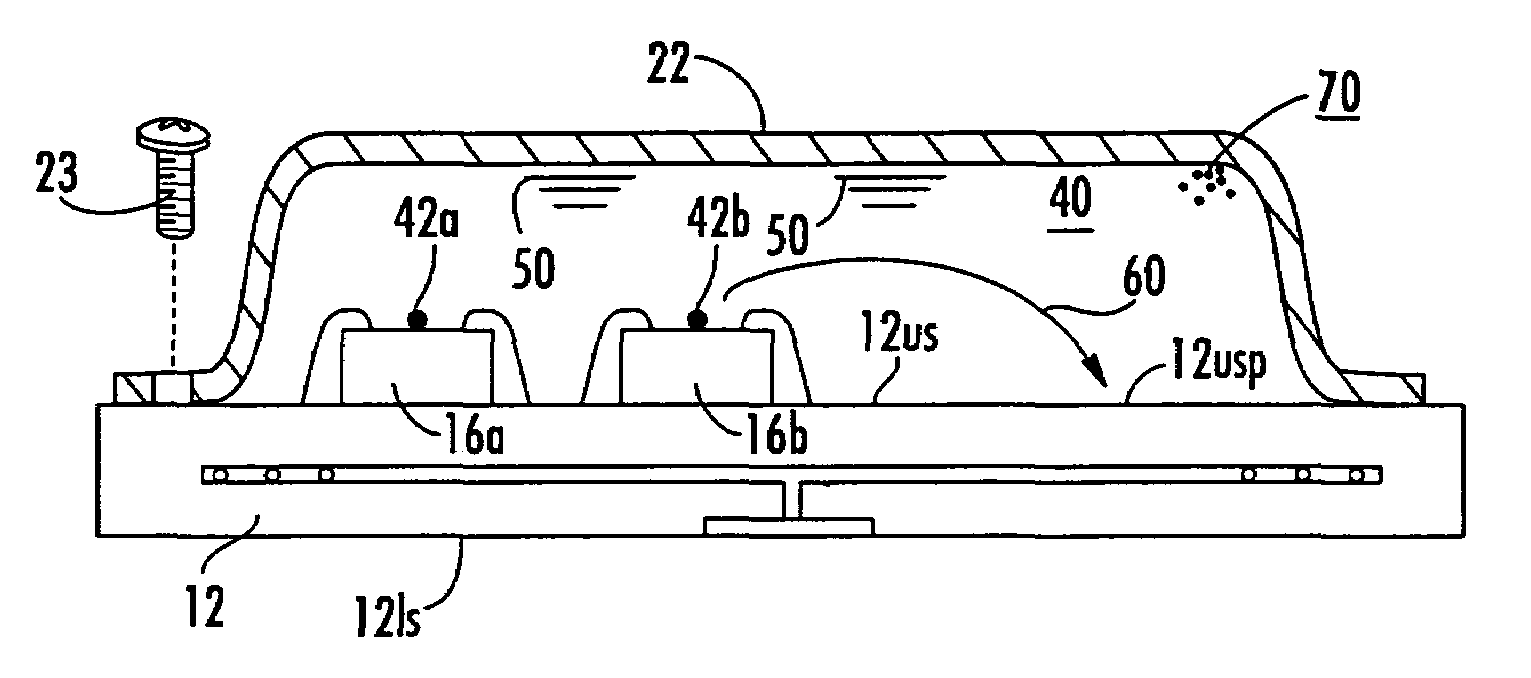
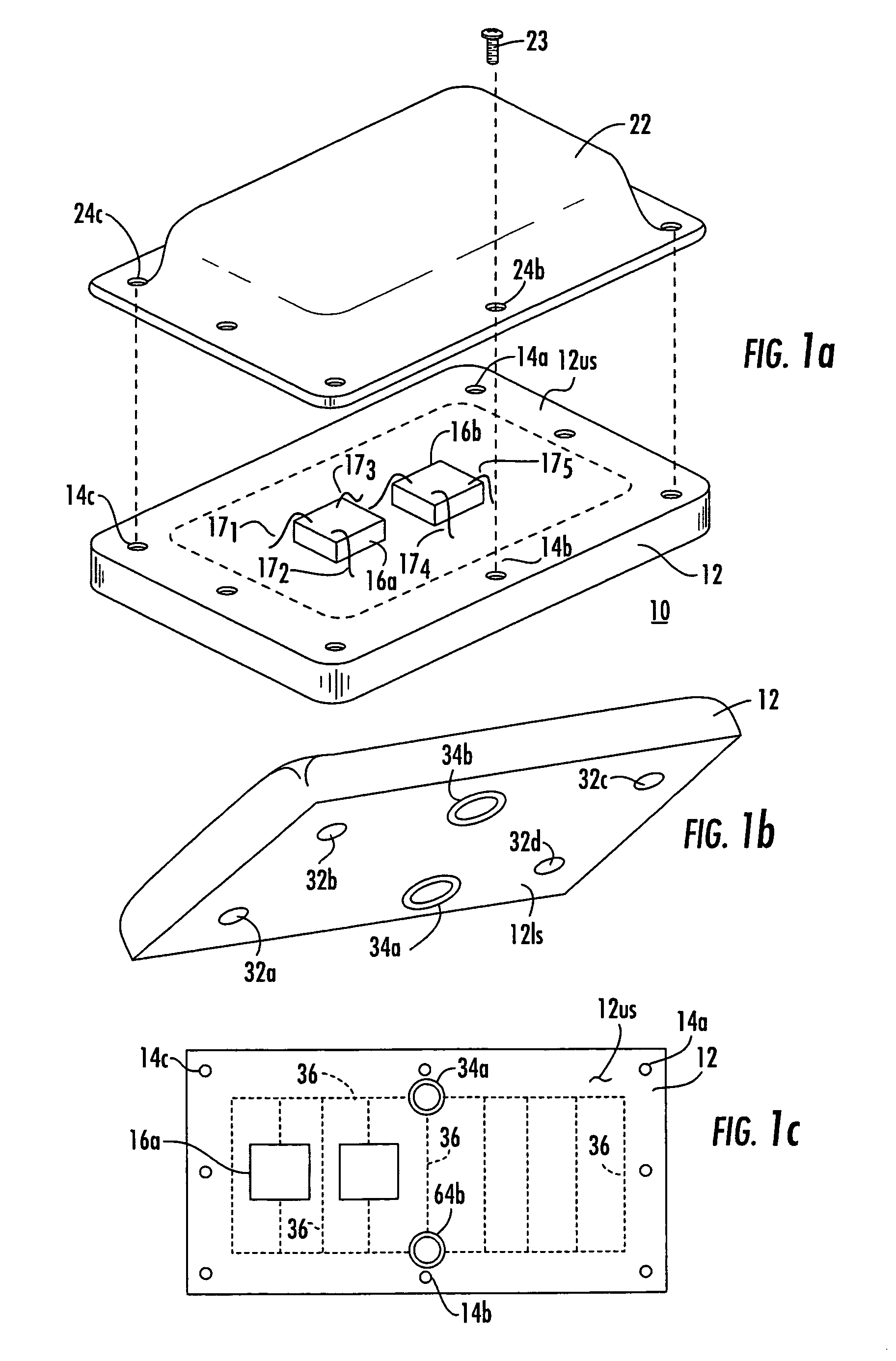
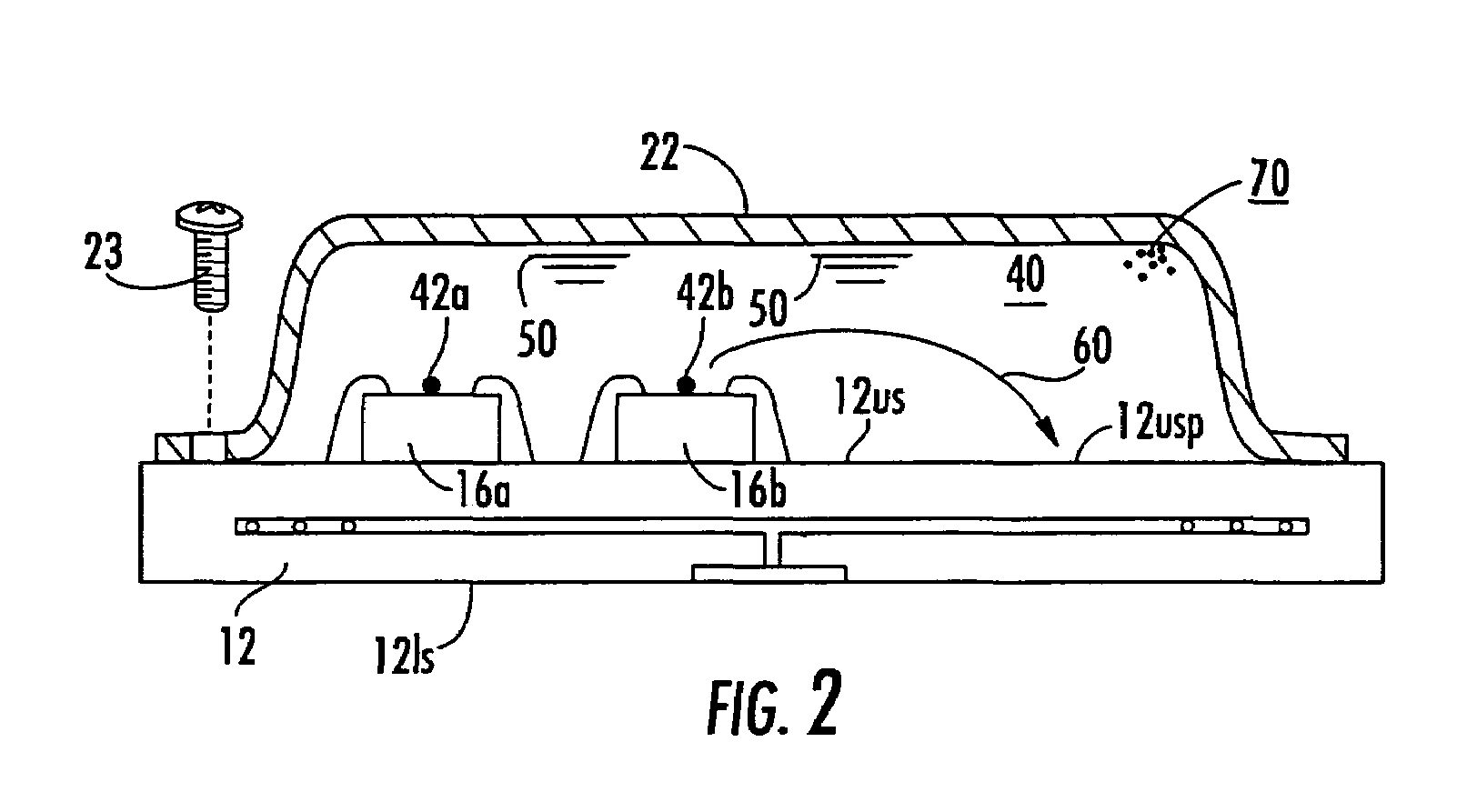
- A cooling structure incorporating a cold plate with a dielectric liquid having a boiling point slightly below the maximum operating temperature of solid-state devices, filled with diamond particles, which enhances thermal conductivity and convection by forming small bubbles, and is inert to prevent corrosion, thereby improving heat transfer efficiency.

Energy Efficiency Standards for Cooling Systems
Energy efficiency standards for cooling systems have become increasingly critical as thermal management demands escalate across industries. Current regulatory frameworks primarily focus on traditional cooling technologies, establishing baseline efficiency metrics through standards such as ASHRAE 90.1 and Energy Star certifications. These standards typically measure performance through coefficient of performance (COP) ratios and seasonal energy efficiency ratios (SEER), which were originally designed for conventional vapor-compression systems.
The emergence of cold plate and solid-state cooling technologies presents significant challenges to existing efficiency measurement paradigms. Cold plate systems, which utilize direct liquid cooling through embedded channels, demonstrate superior heat transfer coefficients compared to traditional air cooling methods. However, current standards inadequately address the unique operational characteristics of these systems, particularly their variable flow rates and temperature-dependent performance profiles.
Solid-state cooling technologies, including thermoelectric coolers and emerging magnetocaloric systems, operate on fundamentally different principles that render traditional efficiency metrics less applicable. These systems exhibit non-linear performance curves and require new evaluation criteria that account for their precise temperature control capabilities and reduced mechanical complexity. Current standards fail to capture the inherent advantages of solid-state systems, such as their ability to provide localized cooling and rapid thermal response.
International standardization bodies are actively developing new frameworks to address these technological gaps. The International Electrotechnical Commission (IEC) has initiated working groups focused on establishing efficiency benchmarks for advanced cooling technologies. These efforts aim to create comprehensive testing protocols that account for real-world operating conditions and system integration requirements.
Future efficiency standards must incorporate dynamic performance metrics that reflect the adaptive capabilities of emerging cooling technologies. This includes establishing measurement protocols for transient thermal response, spatial temperature uniformity, and system-level energy optimization. The development of these standards will be crucial for enabling fair market competition and driving continued innovation in cooling system efficiency.
The emergence of cold plate and solid-state cooling technologies presents significant challenges to existing efficiency measurement paradigms. Cold plate systems, which utilize direct liquid cooling through embedded channels, demonstrate superior heat transfer coefficients compared to traditional air cooling methods. However, current standards inadequately address the unique operational characteristics of these systems, particularly their variable flow rates and temperature-dependent performance profiles.
Solid-state cooling technologies, including thermoelectric coolers and emerging magnetocaloric systems, operate on fundamentally different principles that render traditional efficiency metrics less applicable. These systems exhibit non-linear performance curves and require new evaluation criteria that account for their precise temperature control capabilities and reduced mechanical complexity. Current standards fail to capture the inherent advantages of solid-state systems, such as their ability to provide localized cooling and rapid thermal response.
International standardization bodies are actively developing new frameworks to address these technological gaps. The International Electrotechnical Commission (IEC) has initiated working groups focused on establishing efficiency benchmarks for advanced cooling technologies. These efforts aim to create comprehensive testing protocols that account for real-world operating conditions and system integration requirements.
Future efficiency standards must incorporate dynamic performance metrics that reflect the adaptive capabilities of emerging cooling technologies. This includes establishing measurement protocols for transient thermal response, spatial temperature uniformity, and system-level energy optimization. The development of these standards will be crucial for enabling fair market competition and driving continued innovation in cooling system efficiency.
Sustainability Impact of Cooling Technologies
The sustainability impact of cooling technologies has become a critical consideration in the evaluation of cold plates versus solid-state cooling solutions, particularly as global environmental regulations tighten and corporate sustainability commitments intensify. Traditional cold plate systems, while effective in thermal management, present significant environmental challenges throughout their lifecycle, from manufacturing to disposal.
Cold plate cooling systems typically rely on liquid coolants that may contain environmentally harmful substances, including glycols and synthetic fluids that pose risks if leaked or improperly disposed. The manufacturing process of cold plates involves energy-intensive metal fabrication, often requiring aluminum or copper components that demand substantial mining and processing resources. Additionally, the pumping systems associated with cold plates consume continuous electrical power, contributing to operational carbon footprints.
In contrast, solid-state cooling technologies demonstrate superior environmental credentials across multiple sustainability metrics. Thermoelectric coolers eliminate the need for refrigerants entirely, reducing potential environmental contamination risks. The absence of moving parts in solid-state systems significantly extends operational lifespans, reducing replacement frequency and associated waste generation.
Energy efficiency represents another crucial sustainability differentiator. While early solid-state cooling solutions exhibited lower coefficient of performance compared to traditional systems, recent advances in thermoelectric materials and device architectures have substantially improved their energy conversion efficiency. Modern solid-state cooling systems can achieve competitive performance while maintaining zero emissions during operation.
The circular economy potential of solid-state cooling technologies also surpasses that of cold plate systems. Solid-state devices contain recoverable semiconductor materials that can be recycled through established electronic waste processing channels. Cold plates, conversely, often require specialized disposal procedures due to coolant contamination and mixed material compositions.
Manufacturing sustainability analysis reveals that solid-state cooling production generates lower carbon emissions per unit, primarily due to simplified assembly processes and reduced material diversity. The scalability of semiconductor manufacturing processes further enhances the environmental advantage as production volumes increase.
Lifecycle assessments consistently demonstrate that solid-state cooling technologies offer superior environmental performance when evaluated across manufacturing, operation, and end-of-life phases, positioning them as the more sustainable choice for future thermal management applications.
Cold plate cooling systems typically rely on liquid coolants that may contain environmentally harmful substances, including glycols and synthetic fluids that pose risks if leaked or improperly disposed. The manufacturing process of cold plates involves energy-intensive metal fabrication, often requiring aluminum or copper components that demand substantial mining and processing resources. Additionally, the pumping systems associated with cold plates consume continuous electrical power, contributing to operational carbon footprints.
In contrast, solid-state cooling technologies demonstrate superior environmental credentials across multiple sustainability metrics. Thermoelectric coolers eliminate the need for refrigerants entirely, reducing potential environmental contamination risks. The absence of moving parts in solid-state systems significantly extends operational lifespans, reducing replacement frequency and associated waste generation.
Energy efficiency represents another crucial sustainability differentiator. While early solid-state cooling solutions exhibited lower coefficient of performance compared to traditional systems, recent advances in thermoelectric materials and device architectures have substantially improved their energy conversion efficiency. Modern solid-state cooling systems can achieve competitive performance while maintaining zero emissions during operation.
The circular economy potential of solid-state cooling technologies also surpasses that of cold plate systems. Solid-state devices contain recoverable semiconductor materials that can be recycled through established electronic waste processing channels. Cold plates, conversely, often require specialized disposal procedures due to coolant contamination and mixed material compositions.
Manufacturing sustainability analysis reveals that solid-state cooling production generates lower carbon emissions per unit, primarily due to simplified assembly processes and reduced material diversity. The scalability of semiconductor manufacturing processes further enhances the environmental advantage as production volumes increase.
Lifecycle assessments consistently demonstrate that solid-state cooling technologies offer superior environmental performance when evaluated across manufacturing, operation, and end-of-life phases, positioning them as the more sustainable choice for future thermal management applications.
Unlock deeper insights with Patsnap Eureka Quick Research — get a full tech report to explore trends and direct your research. Try now!
Generate Your Research Report Instantly with AI Agent
Supercharge your innovation with Patsnap Eureka AI Agent Platform!