

Compare Biodegradable Polymers vs Recycled Plastics for Packaging
MAR 30, 202610 MIN READ
Generate Your Research Report Instantly with AI Agent
PatSnap Eureka helps you evaluate technical feasibility & market potential.
Biodegradable vs Recycled Packaging Evolution and Objectives
The packaging industry has undergone significant transformation over the past century, evolving from simple protective materials to sophisticated systems that balance functionality, cost-effectiveness, and environmental responsibility. Traditional petroleum-based plastics dominated the market for decades due to their versatility, durability, and low production costs. However, growing environmental awareness and regulatory pressures have catalyzed the development of alternative packaging solutions.
The emergence of biodegradable polymers represents a paradigm shift toward sustainable packaging materials. These materials, derived from renewable resources such as corn starch, sugarcane, and cellulose, are designed to decompose naturally under specific environmental conditions. Early developments in the 1990s focused on polylactic acid (PLA) and polyhydroxyalkanoates (PHA), which demonstrated promising biodegradation characteristics while maintaining adequate mechanical properties for packaging applications.
Simultaneously, recycled plastics have gained prominence as a circular economy solution. The concept of mechanical and chemical recycling has evolved from basic reprocessing techniques to advanced depolymerization and purification methods. This approach aims to extend the lifecycle of existing plastic materials, reducing the demand for virgin petroleum-based polymers while addressing waste accumulation challenges.
The convergence of these two technological pathways reflects the industry's response to mounting environmental pressures and changing consumer preferences. Regulatory frameworks such as the European Union's Single-Use Plastics Directive and various extended producer responsibility programs have accelerated the adoption of both biodegradable and recycled packaging solutions.
Current technological objectives focus on achieving performance parity with conventional plastics while maintaining economic viability. For biodegradable polymers, key targets include improving barrier properties, thermal stability, and processing compatibility with existing manufacturing equipment. The development of compostable films with enhanced moisture resistance and extended shelf-life capabilities represents a critical milestone in this evolution.
Recycled plastics face different challenges, primarily centered on maintaining material quality through multiple recycling cycles and addressing contamination issues. Advanced sorting technologies, chemical recycling processes, and polymer chain restoration techniques are being developed to achieve higher-grade recycled materials suitable for food-contact applications.
The ultimate objective encompasses creating a sustainable packaging ecosystem where materials can either return safely to the biosphere through controlled biodegradation or remain within the technical sphere through efficient recycling processes. This dual approach recognizes that different packaging applications may require distinct end-of-life solutions based on their specific use cases and disposal infrastructure availability.
The emergence of biodegradable polymers represents a paradigm shift toward sustainable packaging materials. These materials, derived from renewable resources such as corn starch, sugarcane, and cellulose, are designed to decompose naturally under specific environmental conditions. Early developments in the 1990s focused on polylactic acid (PLA) and polyhydroxyalkanoates (PHA), which demonstrated promising biodegradation characteristics while maintaining adequate mechanical properties for packaging applications.
Simultaneously, recycled plastics have gained prominence as a circular economy solution. The concept of mechanical and chemical recycling has evolved from basic reprocessing techniques to advanced depolymerization and purification methods. This approach aims to extend the lifecycle of existing plastic materials, reducing the demand for virgin petroleum-based polymers while addressing waste accumulation challenges.
The convergence of these two technological pathways reflects the industry's response to mounting environmental pressures and changing consumer preferences. Regulatory frameworks such as the European Union's Single-Use Plastics Directive and various extended producer responsibility programs have accelerated the adoption of both biodegradable and recycled packaging solutions.
Current technological objectives focus on achieving performance parity with conventional plastics while maintaining economic viability. For biodegradable polymers, key targets include improving barrier properties, thermal stability, and processing compatibility with existing manufacturing equipment. The development of compostable films with enhanced moisture resistance and extended shelf-life capabilities represents a critical milestone in this evolution.
Recycled plastics face different challenges, primarily centered on maintaining material quality through multiple recycling cycles and addressing contamination issues. Advanced sorting technologies, chemical recycling processes, and polymer chain restoration techniques are being developed to achieve higher-grade recycled materials suitable for food-contact applications.
The ultimate objective encompasses creating a sustainable packaging ecosystem where materials can either return safely to the biosphere through controlled biodegradation or remain within the technical sphere through efficient recycling processes. This dual approach recognizes that different packaging applications may require distinct end-of-life solutions based on their specific use cases and disposal infrastructure availability.
Market Demand Analysis for Sustainable Packaging Solutions
The global packaging industry is experiencing unprecedented demand for sustainable alternatives, driven by mounting environmental concerns and evolving regulatory frameworks. Consumer awareness regarding plastic pollution has reached critical levels, with surveys indicating that environmental impact significantly influences purchasing decisions across demographics. This shift in consumer behavior has created substantial market pressure for companies to adopt eco-friendly packaging solutions.
Regulatory initiatives worldwide are accelerating the transition toward sustainable packaging. The European Union's Single-Use Plastics Directive and similar legislation in various countries have established mandatory reduction targets for conventional plastic packaging. These regulations create both compliance requirements and market opportunities for biodegradable polymers and recycled plastic solutions, fundamentally reshaping industry dynamics.
The food and beverage sector represents the largest market segment for sustainable packaging solutions, accounting for the majority of packaging volume globally. E-commerce growth has further intensified packaging demand, with online retailers increasingly prioritizing sustainable materials to meet corporate sustainability commitments and consumer expectations. Personal care and cosmetics industries are also driving significant demand, particularly for premium biodegradable packaging options.
Market segmentation reveals distinct preferences between biodegradable polymers and recycled plastics across different applications. Food packaging applications show strong preference for biodegradable solutions due to contamination concerns and composting compatibility. Conversely, durable goods packaging demonstrates higher acceptance of recycled plastics, where mechanical properties and cost considerations take precedence over biodegradability.
Regional market dynamics vary considerably, with European markets leading in biodegradable polymer adoption due to supportive regulatory environments and established waste management infrastructure. North American markets show balanced growth between both technologies, while Asia-Pacific regions demonstrate rapid expansion in recycled plastic applications driven by manufacturing scale advantages.
Price sensitivity remains a critical market factor, with conventional packaging still maintaining cost advantages in many applications. However, the price gap continues to narrow as production scales increase and raw material costs for conventional plastics fluctuate. Market projections indicate accelerating adoption rates as sustainable packaging solutions approach cost parity with traditional alternatives.
Supply chain considerations significantly influence market demand patterns. Biodegradable polymers face challenges in establishing consistent supply chains and quality standards, while recycled plastics benefit from more mature collection and processing infrastructure. These factors directly impact market penetration rates and adoption timelines across different industry segments.
Regulatory initiatives worldwide are accelerating the transition toward sustainable packaging. The European Union's Single-Use Plastics Directive and similar legislation in various countries have established mandatory reduction targets for conventional plastic packaging. These regulations create both compliance requirements and market opportunities for biodegradable polymers and recycled plastic solutions, fundamentally reshaping industry dynamics.
The food and beverage sector represents the largest market segment for sustainable packaging solutions, accounting for the majority of packaging volume globally. E-commerce growth has further intensified packaging demand, with online retailers increasingly prioritizing sustainable materials to meet corporate sustainability commitments and consumer expectations. Personal care and cosmetics industries are also driving significant demand, particularly for premium biodegradable packaging options.
Market segmentation reveals distinct preferences between biodegradable polymers and recycled plastics across different applications. Food packaging applications show strong preference for biodegradable solutions due to contamination concerns and composting compatibility. Conversely, durable goods packaging demonstrates higher acceptance of recycled plastics, where mechanical properties and cost considerations take precedence over biodegradability.
Regional market dynamics vary considerably, with European markets leading in biodegradable polymer adoption due to supportive regulatory environments and established waste management infrastructure. North American markets show balanced growth between both technologies, while Asia-Pacific regions demonstrate rapid expansion in recycled plastic applications driven by manufacturing scale advantages.
Price sensitivity remains a critical market factor, with conventional packaging still maintaining cost advantages in many applications. However, the price gap continues to narrow as production scales increase and raw material costs for conventional plastics fluctuate. Market projections indicate accelerating adoption rates as sustainable packaging solutions approach cost parity with traditional alternatives.
Supply chain considerations significantly influence market demand patterns. Biodegradable polymers face challenges in establishing consistent supply chains and quality standards, while recycled plastics benefit from more mature collection and processing infrastructure. These factors directly impact market penetration rates and adoption timelines across different industry segments.
Current Status and Challenges in Bio-Recycled Packaging
The global packaging industry is experiencing a significant transformation as environmental concerns drive the adoption of sustainable alternatives to conventional plastics. Currently, biodegradable polymers represent approximately 1.2% of the total plastic packaging market, valued at around $2.8 billion in 2023, while recycled plastics account for roughly 8-10% of packaging applications with a market value exceeding $45 billion. Both segments are experiencing rapid growth, with biodegradable polymers projected to grow at 12-15% CAGR and recycled plastics at 8-10% CAGR through 2030.
Biodegradable polymers face substantial technical and economic challenges that limit widespread adoption. Material costs remain 2-4 times higher than conventional plastics, with PLA averaging $2,500-3,500 per ton compared to $1,200-1,500 for traditional polyethylene. Performance limitations include reduced barrier properties, temperature sensitivity, and shorter shelf life, making them unsuitable for many food packaging applications. Infrastructure for industrial composting remains inadequate in most regions, with fewer than 5,000 certified facilities globally, creating disposal challenges despite biodegradability claims.
Recycled plastics encounter different but equally significant obstacles. Contamination issues plague collection and processing systems, with contamination rates often exceeding 15-20% in municipal recycling streams. Quality degradation through multiple recycling cycles limits applications, as mechanical recycling typically reduces polymer chain length and introduces impurities. Food-grade recycled content faces stringent regulatory requirements, with FDA approval processes extending 12-18 months for new recycling technologies.
Supply chain complexities affect both alternatives differently. Biodegradable polymers rely heavily on agricultural feedstocks, creating competition with food production and vulnerability to crop yield variations. Recycled plastics depend on consistent waste collection infrastructure and consumer participation, with collection rates varying dramatically between regions from 15% to 85%.
Regulatory landscapes present mixed signals for both technologies. While European Union directives mandate 25% recycled content in PET bottles by 2025 and restrict single-use plastics, inconsistent global standards create market fragmentation. Biodegradable polymer regulations lack harmonization, with varying composting standards and labeling requirements across jurisdictions.
Consumer acceptance remains a critical challenge, as studies indicate 60-70% of consumers express willingness to pay premiums for sustainable packaging, yet actual purchasing behavior often contradicts stated preferences. Performance expectations remain high, with consumers unwilling to compromise on product protection and convenience despite environmental benefits.
Technological limitations persist in both sectors. Advanced recycling technologies like chemical recycling show promise but remain energy-intensive and economically unviable at scale. Biodegradable polymer development continues to struggle with balancing biodegradation rates, mechanical properties, and cost-effectiveness simultaneously.
Biodegradable polymers face substantial technical and economic challenges that limit widespread adoption. Material costs remain 2-4 times higher than conventional plastics, with PLA averaging $2,500-3,500 per ton compared to $1,200-1,500 for traditional polyethylene. Performance limitations include reduced barrier properties, temperature sensitivity, and shorter shelf life, making them unsuitable for many food packaging applications. Infrastructure for industrial composting remains inadequate in most regions, with fewer than 5,000 certified facilities globally, creating disposal challenges despite biodegradability claims.
Recycled plastics encounter different but equally significant obstacles. Contamination issues plague collection and processing systems, with contamination rates often exceeding 15-20% in municipal recycling streams. Quality degradation through multiple recycling cycles limits applications, as mechanical recycling typically reduces polymer chain length and introduces impurities. Food-grade recycled content faces stringent regulatory requirements, with FDA approval processes extending 12-18 months for new recycling technologies.
Supply chain complexities affect both alternatives differently. Biodegradable polymers rely heavily on agricultural feedstocks, creating competition with food production and vulnerability to crop yield variations. Recycled plastics depend on consistent waste collection infrastructure and consumer participation, with collection rates varying dramatically between regions from 15% to 85%.
Regulatory landscapes present mixed signals for both technologies. While European Union directives mandate 25% recycled content in PET bottles by 2025 and restrict single-use plastics, inconsistent global standards create market fragmentation. Biodegradable polymer regulations lack harmonization, with varying composting standards and labeling requirements across jurisdictions.
Consumer acceptance remains a critical challenge, as studies indicate 60-70% of consumers express willingness to pay premiums for sustainable packaging, yet actual purchasing behavior often contradicts stated preferences. Performance expectations remain high, with consumers unwilling to compromise on product protection and convenience despite environmental benefits.
Technological limitations persist in both sectors. Advanced recycling technologies like chemical recycling show promise but remain energy-intensive and economically unviable at scale. Biodegradable polymer development continues to struggle with balancing biodegradation rates, mechanical properties, and cost-effectiveness simultaneously.
Current Technical Solutions for Sustainable Packaging
01 Biodegradable polymer compositions and blends
Development of biodegradable polymer compositions that combine various biodegradable materials to create enhanced properties for specific applications. These compositions may include blends of natural and synthetic biodegradable polymers, additives to improve degradation rates, and compatibilizers to enhance material properties. The formulations aim to achieve optimal balance between mechanical strength, biodegradability, and processability for commercial applications.- Biodegradable polymer compositions and blends: Development of biodegradable polymer compositions that can naturally decompose in the environment. These compositions often involve blending different biodegradable polymers or combining them with natural materials to achieve desired properties such as mechanical strength, flexibility, and degradation rate. The formulations are designed to maintain functionality during use while ensuring complete biodegradation after disposal.
- Recycling processes for plastic waste: Methods and systems for recycling plastic materials to produce reusable polymers. These processes include mechanical recycling, chemical recycling, and depolymerization techniques that break down plastic waste into monomers or oligomers for repolymerization. The recycling technologies aim to reduce environmental impact while maintaining or improving the quality of recycled materials for various applications.
- Enhanced biodegradation additives and catalysts: Incorporation of additives, catalysts, or pro-degradant agents into polymer matrices to accelerate biodegradation processes. These additives can include enzymes, microorganisms, or chemical compounds that facilitate the breakdown of polymer chains under specific environmental conditions such as composting, soil burial, or marine environments. The technology enables conventional plastics to become more environmentally friendly.
- Composite materials from recycled plastics: Production of composite materials utilizing recycled plastic components combined with other materials such as fibers, fillers, or virgin polymers. These composites are engineered to achieve specific performance characteristics for applications in construction, automotive, packaging, and consumer goods. The technology focuses on value-added applications that maximize the utility of recycled plastic waste.
- Bio-based and renewable polymer sources: Development of polymers derived from renewable biological sources such as plant materials, agricultural waste, or microbial fermentation. These bio-based polymers offer sustainable alternatives to petroleum-based plastics and can be designed to be biodegradable or recyclable. The technology encompasses extraction, processing, and polymerization methods to create environmentally friendly materials with comparable or superior properties to conventional plastics.
02 Recycling methods for plastic waste materials
Innovative processes and technologies for recycling plastic waste into reusable materials. These methods include mechanical recycling, chemical recycling, and depolymerization techniques that break down plastic waste into monomers or other valuable chemical compounds. The approaches focus on improving the quality of recycled plastics, reducing contamination, and enabling multiple recycling cycles while maintaining material properties suitable for various applications.Expand Specific Solutions03 Composite materials incorporating recycled plastics
Development of composite materials that integrate recycled plastic components with other materials to create products with improved performance characteristics. These composites may combine recycled plastics with fibers, fillers, or virgin polymers to achieve desired mechanical, thermal, or aesthetic properties. The technology enables the utilization of lower-grade recycled plastics in high-value applications through strategic material combinations.Expand Specific Solutions04 Additives and processing aids for biodegradable polymers
Specialized additives and processing aids designed to enhance the performance, processability, and degradation characteristics of biodegradable polymers. These include plasticizers, stabilizers, nucleating agents, and pro-degradant additives that modify polymer properties. The formulations aim to improve manufacturing efficiency, extend shelf life while maintaining biodegradability, and control the rate and mechanism of environmental degradation.Expand Specific Solutions05 Packaging applications using biodegradable and recycled materials
Development of packaging solutions that utilize biodegradable polymers and recycled plastics to reduce environmental impact. These applications include food packaging, consumer goods packaging, and industrial packaging that meet regulatory requirements while offering end-of-life disposal options. The technologies focus on achieving barrier properties, mechanical strength, and cost-effectiveness comparable to conventional packaging materials while providing environmental benefits.Expand Specific Solutions
Major Players in Biodegradable and Recycled Packaging
The biodegradable polymers versus recycled plastics packaging sector represents a rapidly evolving industry transitioning from traditional petroleum-based materials to sustainable alternatives. The market is experiencing significant growth driven by regulatory pressures and consumer demand for environmental solutions, with the global biodegradable packaging market projected to reach substantial valuations. Technology maturity varies considerably across players: established chemical giants like BASF Corp. and PTT Global Chemical leverage extensive R&D capabilities to develop advanced biopolymer solutions, while specialized companies such as Novamont SpA and BIOTEC Biologische Naturverpackungen have achieved commercial-scale production of biodegradable materials. Traditional packaging manufacturers like Pactiv LLC and Bemis Co. are integrating both recycled and biodegradable options, while emerging players like Innovative Bottles focus on niche applications. Research institutions including Industrial Technology Research Institute and various universities are advancing fundamental technologies, indicating the sector remains innovation-driven with significant technological development still required for widespread adoption.
Novamont SpA
Technical Solution: Novamont is a pioneer in biodegradable polymers, specializing in Mater-Bi technology which combines starch-based polymers with biodegradable synthetic components. Their approach focuses on creating compostable packaging materials that break down completely in industrial composting facilities within 90-180 days. The company has developed various grades of Mater-Bi for different packaging applications including shopping bags, food packaging films, and agricultural mulch films. Their technology emphasizes maintaining mechanical properties comparable to conventional plastics while ensuring complete biodegradability according to international standards like ASTM D6400 and EN 13432.
Strengths: Complete biodegradability, established market presence, proven compostability standards compliance. Weaknesses: Higher production costs compared to recycled plastics, limited shelf life, requires specific composting infrastructure.
BASF Corp.
Technical Solution: BASF offers both biodegradable polymer solutions through their ecovio product line and recycled plastic technologies. Their ecovio combines PBAT (polybutylene adipate terephthalate) with PLA (polylactic acid) to create certified compostable packaging materials. For recycled plastics, BASF develops chemical recycling technologies that break down plastic waste into molecular components for creating virgin-quality recycled materials. Their approach includes advanced sorting technologies and purification processes that can handle mixed plastic waste streams, achieving recycling rates of up to 95% for certain polymer types while maintaining material properties equivalent to virgin plastics.
Strengths: Dual expertise in both technologies, strong R&D capabilities, scalable production infrastructure. Weaknesses: Chemical recycling requires significant energy input, biodegradable options have limited temperature resistance.
Core Patents in Biodegradable and Recycled Materials
Synthetic film primarily consisting of biodegradable polymers
PatentInactiveUS20150072094A1
Innovation
- A single-layer or multilayer polymer film composed predominantly of biodegradable polymers, with at least one interior layer containing a modified thermoplastic copolymer of α,β-unsaturated olefins and (meth)acrylic acid derivatives, grafted with cyclic anhydride, carboxyl, or ester groups, and optionally plasticizers and additives, achieving enhanced mechanical properties without adhesion promoting layers.
Biodegradable films and sheets suitable for use as coatings, wraps and packaging materials
PatentInactiveUS7297394B2
Innovation
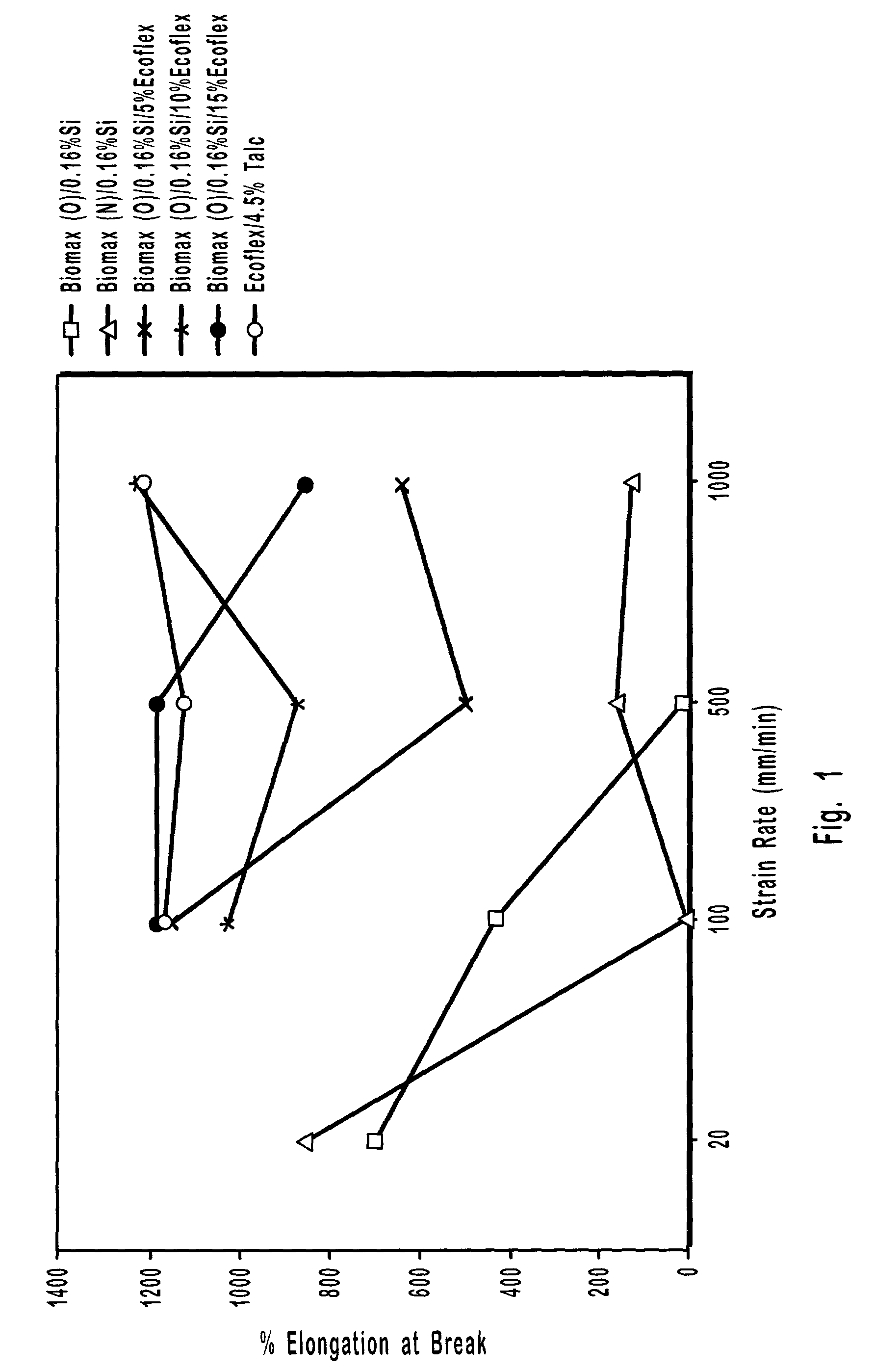
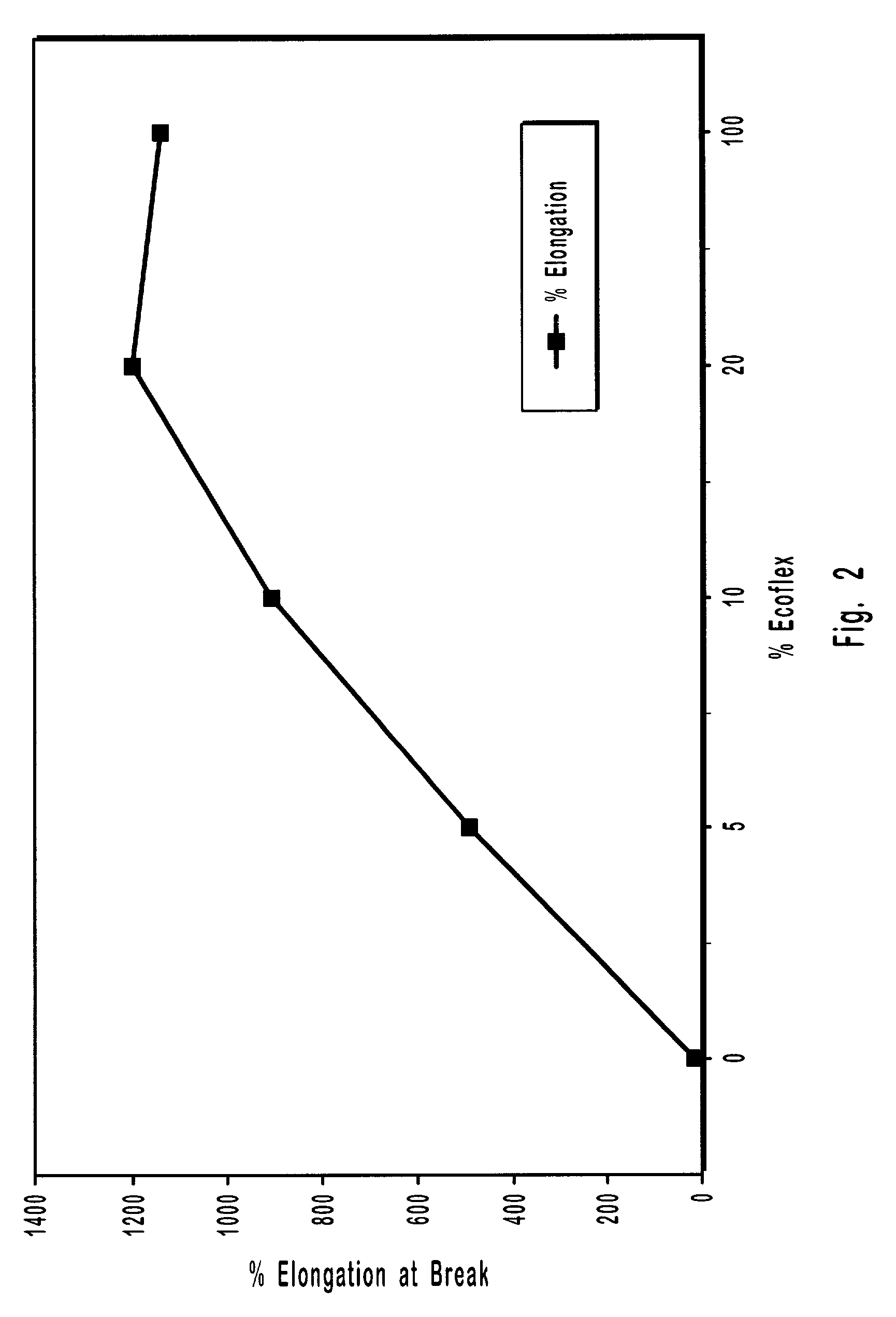
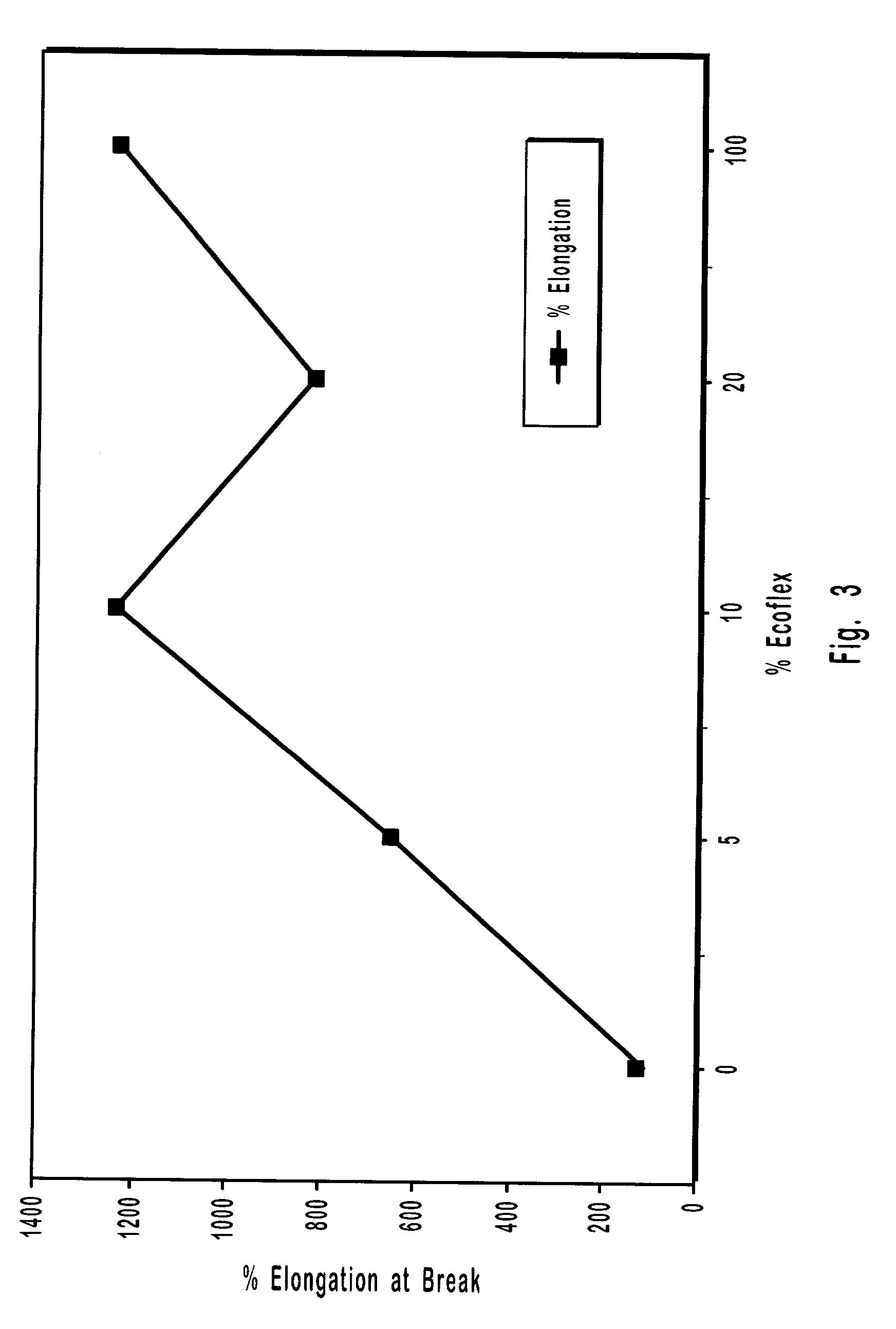
- Development of biodegradable polymer blends combining stiff and flexible biopolymers, such as BIOMAX and ECOFLEX, with the addition of fillers and texturing to enhance mechanical properties and breathability, resulting in sheets and films with improved strength, elongation, temperature stability, and dead-fold.

Environmental Policy Impact on Packaging Materials
Environmental policies worldwide are fundamentally reshaping the packaging materials landscape, creating distinct regulatory pathways that favor different sustainable solutions. The European Union's Single-Use Plastics Directive and Packaging and Packaging Waste Directive have established comprehensive frameworks that directly influence the adoption rates of biodegradable polymers versus recycled plastics. These regulations set specific targets for plastic waste reduction and recycling rates, while simultaneously creating market incentives for alternative materials.
The regulatory treatment of biodegradable polymers varies significantly across jurisdictions, with some policies providing preferential status for certified compostable materials while others maintain skepticism about their environmental benefits. The EU's EN 13432 standard for industrial composting and ASTM D6400 in the United States create certification pathways for biodegradable packaging, but implementation challenges in waste management infrastructure limit their practical adoption. Meanwhile, policies increasingly mandate minimum recycled content in packaging, directly boosting demand for recycled plastics.
Extended Producer Responsibility (EPR) schemes across multiple countries are creating economic incentives that differentially impact these material choices. These policies typically impose fees on packaging producers based on material recyclability and environmental impact, often favoring recycled plastics due to established collection and processing infrastructure. However, some EPR frameworks are beginning to incorporate biodegradability criteria, particularly for applications where recycling is technically challenging.
Carbon pricing mechanisms and environmental taxation policies are emerging as significant factors influencing material selection. Life cycle assessment requirements embedded in environmental regulations are forcing manufacturers to consider the full environmental impact of their packaging choices, from production through end-of-life management. These assessments often reveal complex trade-offs between the two material categories depending on regional waste management capabilities.
The regulatory landscape continues evolving rapidly, with proposed legislation in major markets suggesting stricter requirements for both recycled content mandates and biodegradability standards. This dynamic policy environment creates both opportunities and uncertainties for manufacturers choosing between biodegradable polymers and recycled plastics, necessitating flexible material strategies that can adapt to changing regulatory requirements while meeting sustainability objectives.
The regulatory treatment of biodegradable polymers varies significantly across jurisdictions, with some policies providing preferential status for certified compostable materials while others maintain skepticism about their environmental benefits. The EU's EN 13432 standard for industrial composting and ASTM D6400 in the United States create certification pathways for biodegradable packaging, but implementation challenges in waste management infrastructure limit their practical adoption. Meanwhile, policies increasingly mandate minimum recycled content in packaging, directly boosting demand for recycled plastics.
Extended Producer Responsibility (EPR) schemes across multiple countries are creating economic incentives that differentially impact these material choices. These policies typically impose fees on packaging producers based on material recyclability and environmental impact, often favoring recycled plastics due to established collection and processing infrastructure. However, some EPR frameworks are beginning to incorporate biodegradability criteria, particularly for applications where recycling is technically challenging.
Carbon pricing mechanisms and environmental taxation policies are emerging as significant factors influencing material selection. Life cycle assessment requirements embedded in environmental regulations are forcing manufacturers to consider the full environmental impact of their packaging choices, from production through end-of-life management. These assessments often reveal complex trade-offs between the two material categories depending on regional waste management capabilities.
The regulatory landscape continues evolving rapidly, with proposed legislation in major markets suggesting stricter requirements for both recycled content mandates and biodegradability standards. This dynamic policy environment creates both opportunities and uncertainties for manufacturers choosing between biodegradable polymers and recycled plastics, necessitating flexible material strategies that can adapt to changing regulatory requirements while meeting sustainability objectives.
Life Cycle Assessment of Packaging Material Options
Life Cycle Assessment (LCA) provides a comprehensive framework for evaluating the environmental impacts of packaging materials throughout their entire lifecycle, from raw material extraction to end-of-life disposal. When comparing biodegradable polymers and recycled plastics for packaging applications, LCA methodology enables quantitative assessment of environmental burdens across multiple impact categories including carbon footprint, energy consumption, water usage, and ecosystem effects.
The assessment begins with raw material acquisition, where biodegradable polymers typically derive from renewable biomass sources such as corn starch, sugarcane, or cellulose, while recycled plastics originate from post-consumer or post-industrial waste streams. Biodegradable polymers generally demonstrate lower fossil fuel dependency but may require significant agricultural inputs, potentially leading to land use changes and fertilizer-related emissions.
Manufacturing phase analysis reveals distinct energy profiles for each material category. Biodegradable polymer production often involves complex biochemical processes requiring specialized equipment and controlled conditions, resulting in higher energy intensity per unit mass. Conversely, recycled plastic processing typically consumes less energy than virgin plastic production, though mechanical recycling may compromise material properties, necessitating virgin material blending.
Transportation and distribution impacts largely depend on material density and packaging efficiency. Biodegradable polymers frequently exhibit different mechanical properties compared to conventional plastics, potentially affecting package design optimization and shipping volumes. Weight considerations become crucial when evaluating transportation-related emissions across supply chains.
End-of-life scenarios present the most significant differentiation between these materials. Biodegradable polymers offer composting potential under appropriate conditions, theoretically closing the carbon cycle through biological decomposition. However, industrial composting infrastructure limitations and contamination risks in municipal waste streams may compromise these theoretical benefits. Recycled plastics maintain recyclability potential but face degradation challenges through multiple recycling cycles.
LCA studies consistently demonstrate that environmental performance varies significantly based on specific polymer types, processing technologies, regional infrastructure capabilities, and waste management systems. Comprehensive assessment requires consideration of local conditions, application-specific requirements, and temporal factors affecting material degradation and disposal pathways.
The assessment begins with raw material acquisition, where biodegradable polymers typically derive from renewable biomass sources such as corn starch, sugarcane, or cellulose, while recycled plastics originate from post-consumer or post-industrial waste streams. Biodegradable polymers generally demonstrate lower fossil fuel dependency but may require significant agricultural inputs, potentially leading to land use changes and fertilizer-related emissions.
Manufacturing phase analysis reveals distinct energy profiles for each material category. Biodegradable polymer production often involves complex biochemical processes requiring specialized equipment and controlled conditions, resulting in higher energy intensity per unit mass. Conversely, recycled plastic processing typically consumes less energy than virgin plastic production, though mechanical recycling may compromise material properties, necessitating virgin material blending.
Transportation and distribution impacts largely depend on material density and packaging efficiency. Biodegradable polymers frequently exhibit different mechanical properties compared to conventional plastics, potentially affecting package design optimization and shipping volumes. Weight considerations become crucial when evaluating transportation-related emissions across supply chains.
End-of-life scenarios present the most significant differentiation between these materials. Biodegradable polymers offer composting potential under appropriate conditions, theoretically closing the carbon cycle through biological decomposition. However, industrial composting infrastructure limitations and contamination risks in municipal waste streams may compromise these theoretical benefits. Recycled plastics maintain recyclability potential but face degradation challenges through multiple recycling cycles.
LCA studies consistently demonstrate that environmental performance varies significantly based on specific polymer types, processing technologies, regional infrastructure capabilities, and waste management systems. Comprehensive assessment requires consideration of local conditions, application-specific requirements, and temporal factors affecting material degradation and disposal pathways.
Unlock deeper insights with PatSnap Eureka Quick Research — get a full tech report to explore trends and direct your research. Try now!
Generate Your Research Report Instantly with AI Agent
Supercharge your innovation with PatSnap Eureka AI Agent Platform!