

Compare Catalyst Coating Materials for Catalytic Converters
MAR 24, 20269 MIN READ
Generate Your Research Report Instantly with AI Agent
PatSnap Eureka helps you evaluate technical feasibility & market potential.
Catalyst Coating Development Background and Objectives
Catalytic converters have emerged as critical components in automotive emission control systems since their widespread adoption in the 1970s following stringent environmental regulations. The evolution of catalyst coating materials represents a continuous pursuit of enhanced performance, durability, and cost-effectiveness in reducing harmful exhaust emissions. Traditional three-way catalysts utilizing platinum group metals (PGMs) have dominated the market, but rising material costs and supply constraints have intensified research into alternative coating formulations.
The automotive industry's transition toward stricter emission standards, including Euro 7 and increasingly stringent regulations in emerging markets, has created unprecedented demands for catalyst performance optimization. Modern vehicles require catalytic systems capable of achieving rapid light-off temperatures, maintaining high conversion efficiency across diverse operating conditions, and demonstrating extended durability under thermal cycling and chemical poisoning scenarios.
Contemporary catalyst coating development focuses on addressing multiple technical challenges simultaneously. Primary objectives include reducing precious metal loading while maintaining or improving catalytic activity, enhancing thermal stability to withstand increasingly severe engine operating conditions, and developing resistance to sulfur poisoning and other deactivation mechanisms. Advanced coating architectures incorporating nanostructured supports, optimized washcoat formulations, and innovative metal dispersion techniques represent key areas of technological advancement.
The integration of hybrid and electric vehicle technologies has introduced additional complexity to catalyst coating requirements. Cold-start emissions remain a significant challenge, necessitating catalyst formulations that achieve rapid activation at lower temperatures. Furthermore, the intermittent operation patterns of hybrid vehicles demand coatings capable of maintaining performance despite frequent thermal cycling and extended periods of inactivity.
Research objectives encompass the development of next-generation coating materials that leverage advanced characterization techniques and computational modeling to optimize catalyst design. Emerging approaches include single-atom catalysts, core-shell nanoparticle architectures, and multi-functional coating systems that integrate multiple catalytic functions within unified structures. These innovations aim to achieve superior performance metrics while addressing sustainability concerns through reduced reliance on scarce precious metals and improved recyclability of catalyst materials.
The automotive industry's transition toward stricter emission standards, including Euro 7 and increasingly stringent regulations in emerging markets, has created unprecedented demands for catalyst performance optimization. Modern vehicles require catalytic systems capable of achieving rapid light-off temperatures, maintaining high conversion efficiency across diverse operating conditions, and demonstrating extended durability under thermal cycling and chemical poisoning scenarios.
Contemporary catalyst coating development focuses on addressing multiple technical challenges simultaneously. Primary objectives include reducing precious metal loading while maintaining or improving catalytic activity, enhancing thermal stability to withstand increasingly severe engine operating conditions, and developing resistance to sulfur poisoning and other deactivation mechanisms. Advanced coating architectures incorporating nanostructured supports, optimized washcoat formulations, and innovative metal dispersion techniques represent key areas of technological advancement.
The integration of hybrid and electric vehicle technologies has introduced additional complexity to catalyst coating requirements. Cold-start emissions remain a significant challenge, necessitating catalyst formulations that achieve rapid activation at lower temperatures. Furthermore, the intermittent operation patterns of hybrid vehicles demand coatings capable of maintaining performance despite frequent thermal cycling and extended periods of inactivity.
Research objectives encompass the development of next-generation coating materials that leverage advanced characterization techniques and computational modeling to optimize catalyst design. Emerging approaches include single-atom catalysts, core-shell nanoparticle architectures, and multi-functional coating systems that integrate multiple catalytic functions within unified structures. These innovations aim to achieve superior performance metrics while addressing sustainability concerns through reduced reliance on scarce precious metals and improved recyclability of catalyst materials.
Market Demand for Advanced Catalytic Converter Materials
The global automotive industry's transition toward stricter emission standards has created substantial demand for advanced catalytic converter materials. Regulatory frameworks such as Euro 7, China VI, and increasingly stringent EPA standards are driving automakers to seek more efficient catalyst coating materials that can achieve higher conversion rates while maintaining durability under extreme operating conditions.
Electric vehicle adoption, while growing, has not diminished the immediate market need for improved catalytic converters. Internal combustion engines will remain prevalent for decades, particularly in commercial vehicles, hybrid systems, and emerging markets where electrification infrastructure remains limited. This sustained ICE presence ensures continued demand for catalyst coating innovations.
The market exhibits strong preference for materials that can reduce precious metal loading while maintaining performance. Traditional platinum group metals face supply constraints and price volatility, creating urgent demand for alternative formulations. Manufacturers increasingly seek coating materials that incorporate reduced platinum, palladium, and rhodium content through enhanced dispersion techniques or partial substitution with base metals.
Automotive OEMs are prioritizing catalyst materials that demonstrate superior thermal stability and resistance to poisoning from sulfur compounds and other contaminants. The trend toward downsized, turbocharged engines with higher exhaust temperatures has intensified requirements for coating materials that maintain activity under thermal stress exceeding traditional operating ranges.
Aftermarket demand represents another significant segment, driven by aging vehicle fleets requiring replacement catalytic converters. This market segment particularly values cost-effective coating solutions that meet regulatory requirements while offering competitive pricing compared to OEM components.
Heavy-duty vehicle applications present distinct market opportunities, requiring catalyst coatings capable of handling higher exhaust volumes and more severe operating conditions. The commercial vehicle sector's focus on total cost of ownership creates demand for durable coating materials that extend service intervals and reduce maintenance requirements.
Emerging markets in Asia-Pacific and Latin America show accelerating demand as local emission regulations tighten and vehicle production increases. These regions often require coating solutions optimized for local fuel quality variations and operating conditions, creating opportunities for specialized material formulations tailored to regional requirements.
Electric vehicle adoption, while growing, has not diminished the immediate market need for improved catalytic converters. Internal combustion engines will remain prevalent for decades, particularly in commercial vehicles, hybrid systems, and emerging markets where electrification infrastructure remains limited. This sustained ICE presence ensures continued demand for catalyst coating innovations.
The market exhibits strong preference for materials that can reduce precious metal loading while maintaining performance. Traditional platinum group metals face supply constraints and price volatility, creating urgent demand for alternative formulations. Manufacturers increasingly seek coating materials that incorporate reduced platinum, palladium, and rhodium content through enhanced dispersion techniques or partial substitution with base metals.
Automotive OEMs are prioritizing catalyst materials that demonstrate superior thermal stability and resistance to poisoning from sulfur compounds and other contaminants. The trend toward downsized, turbocharged engines with higher exhaust temperatures has intensified requirements for coating materials that maintain activity under thermal stress exceeding traditional operating ranges.
Aftermarket demand represents another significant segment, driven by aging vehicle fleets requiring replacement catalytic converters. This market segment particularly values cost-effective coating solutions that meet regulatory requirements while offering competitive pricing compared to OEM components.
Heavy-duty vehicle applications present distinct market opportunities, requiring catalyst coatings capable of handling higher exhaust volumes and more severe operating conditions. The commercial vehicle sector's focus on total cost of ownership creates demand for durable coating materials that extend service intervals and reduce maintenance requirements.
Emerging markets in Asia-Pacific and Latin America show accelerating demand as local emission regulations tighten and vehicle production increases. These regions often require coating solutions optimized for local fuel quality variations and operating conditions, creating opportunities for specialized material formulations tailored to regional requirements.
Current State and Challenges of Catalyst Coating Technologies
The current landscape of catalyst coating technologies for catalytic converters is dominated by platinum group metals (PGMs), specifically platinum, palladium, and rhodium. These materials have established themselves as the industry standard due to their exceptional catalytic activity and thermal stability. However, the technology faces significant supply chain vulnerabilities, as these metals are primarily sourced from geographically concentrated regions, particularly South Africa and Russia, creating potential disruptions in availability and pricing volatility.
Contemporary coating methodologies predominantly employ washcoat techniques, where active catalytic materials are dispersed onto ceramic or metallic substrates. The most widely adopted approach involves alumina-based washcoats infused with PGM nanoparticles, achieving loading densities typically ranging from 1-5 grams per liter of substrate volume. Advanced formulations incorporate stabilizing agents such as cerium oxide and barium compounds to enhance durability and prevent sintering at elevated operating temperatures.
Manufacturing precision remains a critical challenge, as achieving uniform distribution of catalytic materials across complex substrate geometries proves technically demanding. Current coating processes struggle with maintaining consistent layer thickness and preventing agglomeration of active particles during high-temperature calcination steps. These inconsistencies directly impact conversion efficiency and long-term performance stability.
The technology confronts mounting pressure from increasingly stringent emission regulations worldwide, particularly the implementation of Real Driving Emissions (RDE) standards and cold-start performance requirements. Traditional PGM-based systems exhibit reduced effectiveness during initial warm-up periods, necessitating higher loading densities or supplementary heating systems, both of which increase overall system costs.
Economic constraints represent another fundamental challenge, as PGM prices have experienced substantial fluctuations, with palladium reaching historical peaks exceeding $2,800 per ounce in recent years. This volatility has intensified research efforts toward alternative materials, including base metal catalysts, single-atom catalysts, and hybrid systems combining reduced PGM content with enhanced support materials.
Durability concerns persist regarding catalyst poisoning from sulfur compounds, phosphorus contamination from engine oils, and thermal degradation under extreme operating conditions. Current formulations require careful balance between catalytic activity and resistance to deactivation mechanisms, often resulting in performance trade-offs that limit optimization potential.
Contemporary coating methodologies predominantly employ washcoat techniques, where active catalytic materials are dispersed onto ceramic or metallic substrates. The most widely adopted approach involves alumina-based washcoats infused with PGM nanoparticles, achieving loading densities typically ranging from 1-5 grams per liter of substrate volume. Advanced formulations incorporate stabilizing agents such as cerium oxide and barium compounds to enhance durability and prevent sintering at elevated operating temperatures.
Manufacturing precision remains a critical challenge, as achieving uniform distribution of catalytic materials across complex substrate geometries proves technically demanding. Current coating processes struggle with maintaining consistent layer thickness and preventing agglomeration of active particles during high-temperature calcination steps. These inconsistencies directly impact conversion efficiency and long-term performance stability.
The technology confronts mounting pressure from increasingly stringent emission regulations worldwide, particularly the implementation of Real Driving Emissions (RDE) standards and cold-start performance requirements. Traditional PGM-based systems exhibit reduced effectiveness during initial warm-up periods, necessitating higher loading densities or supplementary heating systems, both of which increase overall system costs.
Economic constraints represent another fundamental challenge, as PGM prices have experienced substantial fluctuations, with palladium reaching historical peaks exceeding $2,800 per ounce in recent years. This volatility has intensified research efforts toward alternative materials, including base metal catalysts, single-atom catalysts, and hybrid systems combining reduced PGM content with enhanced support materials.
Durability concerns persist regarding catalyst poisoning from sulfur compounds, phosphorus contamination from engine oils, and thermal degradation under extreme operating conditions. Current formulations require careful balance between catalytic activity and resistance to deactivation mechanisms, often resulting in performance trade-offs that limit optimization potential.
Existing Catalyst Coating Material Solutions
01 Catalyst coating materials with precious metal components
Catalyst coating materials can incorporate precious metals such as platinum, palladium, or rhodium as active catalytic components. These precious metals are typically dispersed on high surface area support materials to maximize catalytic activity. The coating formulations are designed to provide optimal dispersion and adhesion of the precious metal particles while maintaining their catalytic properties. Various techniques can be employed to control particle size, distribution, and loading levels to achieve desired catalytic performance.- Catalyst coating materials with precious metal components: Catalyst coating materials can incorporate precious metals such as platinum, palladium, or rhodium as active catalytic components. These precious metals are typically dispersed on high surface area support materials to maximize catalytic activity. The coating formulations are designed to provide optimal dispersion and adhesion of the precious metal particles while maintaining their catalytic properties. Various techniques can be employed to control particle size, distribution, and loading levels to achieve desired catalytic performance.
- Ceramic and oxide-based catalyst coating materials: Ceramic materials and metal oxides serve as important components in catalyst coating formulations. These materials can function as both catalytic supports and active catalytic phases. Common ceramic materials include alumina, silica, titania, and zirconia, which provide thermal stability and high surface area. The coating compositions may incorporate mixed metal oxides or doped ceramic materials to enhance catalytic activity and durability under harsh operating conditions.
- Binder systems for catalyst coating adhesion: Effective binder systems are essential for ensuring proper adhesion of catalyst coatings to substrates. These binder materials help maintain the structural integrity of the catalyst layer during operation and thermal cycling. Various organic and inorganic binders can be utilized, including colloidal solutions, polymeric materials, and sol-gel precursors. The binder composition is optimized to provide adequate adhesion strength while minimizing interference with catalytic activity and maintaining porosity for reactant access.
- Nanostructured catalyst coating materials: Nanostructured materials offer enhanced catalytic performance through increased surface area and unique structural properties. These coatings may incorporate nanoparticles, nanowires, or nanostructured frameworks that provide high catalytic activity. The nanoscale architecture can be engineered to optimize mass transfer, improve dispersion of active sites, and enhance thermal stability. Various synthesis methods are employed to control the morphology and composition of nanostructured catalyst coatings.
- Multi-layer catalyst coating structures: Multi-layer coating architectures enable optimization of catalytic performance through strategic layering of different materials. These structures can incorporate distinct functional layers, such as a base layer for adhesion, an intermediate layer for support, and a top layer containing active catalytic components. The multi-layer approach allows for independent optimization of each layer's properties and can improve overall catalyst durability and efficiency. Layer thickness, composition, and sequence can be tailored for specific catalytic applications.
02 Ceramic and oxide-based catalyst coating materials
Ceramic materials and metal oxides serve as important components in catalyst coating formulations. These materials can function as both catalytic supports and active catalytic phases. Common ceramic materials include alumina, silica, titania, and zirconia, which provide thermal stability and high surface area. The coating compositions may include mixed metal oxides or doped ceramic materials to enhance catalytic activity and durability under operating conditions.Expand Specific Solutions03 Multilayer catalyst coating structures
Advanced catalyst coating systems utilize multilayer architectures to optimize catalytic performance. These structures typically consist of different functional layers, each designed for specific purposes such as adhesion promotion, catalytic activity, or protective functions. The multilayer approach allows for better control of catalyst distribution, improved thermal management, and enhanced durability. Layer composition and thickness can be tailored to meet specific application requirements.Expand Specific Solutions04 Binder systems for catalyst coating adhesion
Binder materials play a crucial role in catalyst coating formulations by ensuring proper adhesion to substrates and maintaining coating integrity. These binder systems can include inorganic materials, organic polymers, or hybrid compositions that provide mechanical strength and thermal stability. The binder selection affects coating uniformity, porosity, and resistance to thermal cycling. Proper binder formulation ensures long-term catalyst stability and prevents delamination or degradation during operation.Expand Specific Solutions05 Nanostructured catalyst coating materials
Nanostructured materials are increasingly utilized in catalyst coating formulations to enhance catalytic performance through increased surface area and unique properties at the nanoscale. These materials can include nanoparticles, nanowires, or nanostructured supports that provide high catalytic activity with reduced material usage. The nanostructured coatings can be engineered to have specific morphologies and compositions that optimize mass transfer and reaction kinetics. Advanced synthesis and deposition techniques enable precise control over nanostructure characteristics.Expand Specific Solutions
Key Players in Catalyst Coating and Automotive Industry
The catalytic converter coating materials market represents a mature yet evolving industry driven by stringent emission regulations and automotive electrification trends. The market, valued at several billion dollars globally, is experiencing steady growth as environmental standards tighten worldwide. Technology maturity varies significantly across market participants, with established chemical giants like BASF SE, Umicore SA, and BASF Catalysts LLC leading through decades of R&D investment and proven platinum group metal formulations. Traditional automotive suppliers including NGK Insulators and NICHIAS Corp leverage ceramic substrate expertise, while automakers like Nissan Motor and AUDI AG drive application-specific innovations. Emerging players such as Aether Catalyst Solutions and GoNano Technologies are developing next-generation materials focusing on cost reduction and performance enhancement through novel catalyst compositions and nanotechnology approaches, indicating ongoing technological disruption potential.
NGK Insulators, Ltd.
Technical Solution: NGK specializes in ceramic substrate manufacturing with integrated coating capabilities, developing honeycomb ceramic substrates with proprietary washcoat application techniques. Their coating materials feature optimized adhesion properties and thermal expansion matching with cordierite substrates. The company has developed low-loading PGM coatings that maintain high catalytic activity through advanced dispersion techniques and support material optimization. NGK's coating technology emphasizes durability under thermal cycling conditions, with specialized formulations designed to prevent catalyst sintering and maintain surface area retention over extended operating periods exceeding 150,000 miles.
Strengths: Excellent substrate-coating integration, superior thermal durability, optimized for automotive applications. Weaknesses: Limited to ceramic substrates, higher manufacturing complexity compared to standard coating methods.
Umicore SA
Technical Solution: Umicore develops advanced precious metal-based catalyst coating materials, primarily utilizing platinum group metals (PGM) including platinum, palladium, and rhodium. Their proprietary coating technology focuses on optimizing the dispersion and loading of active metals on ceramic substrates to maximize catalytic activity while minimizing precious metal usage. The company has developed innovative washcoat formulations that enhance thermal stability and resistance to poisoning, extending catalyst lifetime. Their coating materials demonstrate superior performance in three-way catalytic conversion, achieving over 95% conversion efficiency for NOx, CO, and hydrocarbons under optimal operating conditions.
Strengths: Market leader in PGM recycling and coating technology, excellent conversion efficiency, proven durability. Weaknesses: High cost due to precious metal dependency, vulnerable to PGM price volatility.
Core Innovations in Catalyst Coating Material Patents
Catalyst on metal substrate by simultaneous electrophoretic deposition of catalyst and catalyst adhesion material
PatentInactiveAU1997015788A1
Innovation
- The method involves simultaneous electrophoretic deposition of a catalyst support material and a catalytically-active noble metal onto a metal substrate, eliminating the need for drying and impregnation steps by adding the catalyst species to the slurry, ensuring a homogenous distribution and improved adhesion through the use of electrophoretic deposition.
Catalytic converters, insert materials for catalytic converters, and methods of making
PatentInactiveUS20130034472A1
Innovation
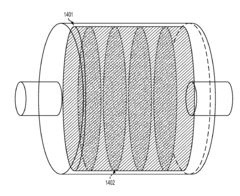
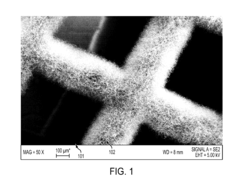
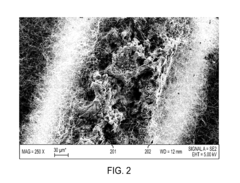
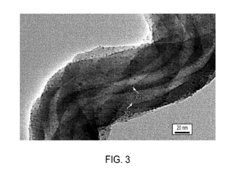
- The development of catalytic converter insert materials and particulate filters featuring nanostructures coated with metal-containing nanoparticles, such as platinum and palladium, which form a disordered array on substrates, enhancing catalytic activity and selectivity while reducing platinum group metal content, and integrating functions like CO oxidation, hydrocarbon oxidation, particulate capture, and NOx reduction in a single monolith.
Environmental Regulations Impact on Catalyst Materials
Environmental regulations have fundamentally transformed the landscape of catalyst materials development for automotive catalytic converters. The implementation of increasingly stringent emission standards worldwide has created unprecedented pressure on manufacturers to develop more efficient and durable catalyst coating materials that can meet evolving regulatory requirements while maintaining cost-effectiveness.
The European Union's Euro 6 standards and the United States' Tier 3 regulations have established some of the most demanding emission limits globally, requiring significant reductions in nitrogen oxides, particulate matter, and hydrocarbon emissions. These regulations have directly influenced the selection and optimization of precious metal catalysts, particularly platinum, palladium, and rhodium, which serve as the primary active components in three-way catalysts. The regulatory push for lower emission thresholds has necessitated higher catalyst loading densities and improved dispersion techniques to maximize catalytic activity.
California's Advanced Clean Cars II program and similar regional initiatives have introduced additional complexity by mandating zero-emission vehicle quotas alongside stricter internal combustion engine standards. This dual approach has created a unique market dynamic where catalyst manufacturers must balance short-term performance improvements with long-term sustainability considerations, influencing material selection toward more abundant and recyclable alternatives.
The regulatory emphasis on real driving emissions testing, as opposed to laboratory-only assessments, has significantly impacted catalyst durability requirements. Modern regulations demand that catalytic converters maintain their effectiveness over extended operational periods and under diverse driving conditions, leading to innovations in washcoat formulations and thermal stability enhancements. This has accelerated research into advanced support materials such as ceria-zirconia mixed oxides and novel zeolite structures.
Furthermore, emerging regulations addressing greenhouse gas emissions and fuel economy standards have created additional constraints on catalyst design. The need to minimize backpressure while maximizing conversion efficiency has driven developments in substrate geometry and coating distribution techniques, ultimately influencing the choice of catalyst materials and their application methods.
The European Union's Euro 6 standards and the United States' Tier 3 regulations have established some of the most demanding emission limits globally, requiring significant reductions in nitrogen oxides, particulate matter, and hydrocarbon emissions. These regulations have directly influenced the selection and optimization of precious metal catalysts, particularly platinum, palladium, and rhodium, which serve as the primary active components in three-way catalysts. The regulatory push for lower emission thresholds has necessitated higher catalyst loading densities and improved dispersion techniques to maximize catalytic activity.
California's Advanced Clean Cars II program and similar regional initiatives have introduced additional complexity by mandating zero-emission vehicle quotas alongside stricter internal combustion engine standards. This dual approach has created a unique market dynamic where catalyst manufacturers must balance short-term performance improvements with long-term sustainability considerations, influencing material selection toward more abundant and recyclable alternatives.
The regulatory emphasis on real driving emissions testing, as opposed to laboratory-only assessments, has significantly impacted catalyst durability requirements. Modern regulations demand that catalytic converters maintain their effectiveness over extended operational periods and under diverse driving conditions, leading to innovations in washcoat formulations and thermal stability enhancements. This has accelerated research into advanced support materials such as ceria-zirconia mixed oxides and novel zeolite structures.
Furthermore, emerging regulations addressing greenhouse gas emissions and fuel economy standards have created additional constraints on catalyst design. The need to minimize backpressure while maximizing conversion efficiency has driven developments in substrate geometry and coating distribution techniques, ultimately influencing the choice of catalyst materials and their application methods.
Cost-Performance Analysis of Catalyst Coating Materials
The cost-performance analysis of catalyst coating materials for catalytic converters reveals significant variations across different material categories, with platinum group metals (PGMs) dominating the high-performance segment despite their substantial cost implications. Platinum, palladium, and rhodium remain the gold standard for automotive catalytic applications, with current market prices ranging from $900-1,100 per ounce for platinum, $2,000-2,400 per ounce for palladium, and $4,000-5,000 per ounce for rhodium. These materials demonstrate exceptional catalytic activity and durability, achieving conversion efficiencies exceeding 95% for NOx, CO, and hydrocarbon emissions under optimal operating conditions.
Alternative coating materials present compelling cost advantages but with performance trade-offs that require careful evaluation. Copper-based catalysts offer approximately 80-90% of PGM performance at roughly 15-20% of the material cost, making them attractive for cost-sensitive applications. Nickel and cobalt-based formulations provide intermediate performance levels at 25-35% of PGM costs, while maintaining acceptable durability under moderate operating conditions.
The total cost of ownership analysis extends beyond raw material expenses to include manufacturing complexity, coating thickness requirements, and operational lifespan. PGM catalysts typically require coating loadings of 1-3 grams per liter of substrate volume, while alternative materials may need 2-5 times higher loadings to achieve comparable performance, potentially offsetting initial cost savings.
Performance degradation patterns significantly impact long-term cost effectiveness. PGM-based coatings maintain 85-90% of initial activity after 150,000 miles of operation, while alternative materials may experience 20-30% performance decline over similar periods. This degradation directly affects emission compliance and potential warranty costs.
Manufacturing scalability presents another critical cost factor. PGM coating processes benefit from mature, well-established production technologies with predictable yield rates exceeding 95%. Alternative material coating processes often require specialized equipment and may experience lower yield rates, increasing per-unit production costs despite lower raw material expenses.
The economic viability of different coating materials varies significantly based on application requirements, regulatory standards, and market positioning. Premium automotive applications continue to justify PGM costs through superior performance and reliability, while emerging markets and specific industrial applications increasingly adopt alternative materials to achieve acceptable performance at reduced costs.
Alternative coating materials present compelling cost advantages but with performance trade-offs that require careful evaluation. Copper-based catalysts offer approximately 80-90% of PGM performance at roughly 15-20% of the material cost, making them attractive for cost-sensitive applications. Nickel and cobalt-based formulations provide intermediate performance levels at 25-35% of PGM costs, while maintaining acceptable durability under moderate operating conditions.
The total cost of ownership analysis extends beyond raw material expenses to include manufacturing complexity, coating thickness requirements, and operational lifespan. PGM catalysts typically require coating loadings of 1-3 grams per liter of substrate volume, while alternative materials may need 2-5 times higher loadings to achieve comparable performance, potentially offsetting initial cost savings.
Performance degradation patterns significantly impact long-term cost effectiveness. PGM-based coatings maintain 85-90% of initial activity after 150,000 miles of operation, while alternative materials may experience 20-30% performance decline over similar periods. This degradation directly affects emission compliance and potential warranty costs.
Manufacturing scalability presents another critical cost factor. PGM coating processes benefit from mature, well-established production technologies with predictable yield rates exceeding 95%. Alternative material coating processes often require specialized equipment and may experience lower yield rates, increasing per-unit production costs despite lower raw material expenses.
The economic viability of different coating materials varies significantly based on application requirements, regulatory standards, and market positioning. Premium automotive applications continue to justify PGM costs through superior performance and reliability, while emerging markets and specific industrial applications increasingly adopt alternative materials to achieve acceptable performance at reduced costs.
Unlock deeper insights with PatSnap Eureka Quick Research — get a full tech report to explore trends and direct your research. Try now!
Generate Your Research Report Instantly with AI Agent
Supercharge your innovation with PatSnap Eureka AI Agent Platform!