Compare CRT vs AMOLED: Black Level Precision
MAR 2, 20269 MIN READ
Generate Your Research Report Instantly with AI Agent
PatSnap Eureka helps you evaluate technical feasibility & market potential.
CRT vs AMOLED Display Technology Background and Objectives
Display technology has undergone remarkable evolution since the advent of electronic visual systems, with each generation addressing fundamental challenges in image reproduction quality. Among the most critical parameters defining display performance is black level precision, which determines the deepest darkness a display can achieve and directly impacts contrast ratio, color accuracy, and overall visual fidelity. This capability has become increasingly important as content creators demand higher dynamic range and more accurate color reproduction for professional applications.
Cathode Ray Tube technology, dominant from the 1930s through the early 2000s, established the foundation for electronic display systems through electron beam manipulation on phosphor-coated screens. CRT displays achieved black levels by completely shutting off the electron beam, theoretically reaching near-absolute darkness limited primarily by ambient light reflection and residual phosphor glow. This fundamental operating principle enabled CRT monitors to deliver exceptional contrast ratios, often exceeding 10,000:1 in optimal conditions.
Active Matrix Organic Light Emitting Diode technology emerged as a revolutionary advancement in the late 1990s, fundamentally changing display architecture through self-emissive organic compounds. Unlike CRT's single-point scanning approach, AMOLED displays utilize millions of individual organic light-emitting pixels, each capable of complete shutdown to achieve true black levels. This pixel-level control theoretically enables infinite contrast ratios, as completely deactivated pixels emit no light whatsoever.
The comparative analysis of black level precision between these technologies reveals distinct advantages and limitations inherent to their respective operating principles. While both technologies can achieve impressive black levels, their methods differ significantly in implementation and real-world performance characteristics. CRT displays rely on precise electron beam control and phosphor response, whereas AMOLED displays depend on organic material properties and transistor switching accuracy.
Contemporary display applications increasingly demand superior black level performance for high dynamic range content, professional color grading, medical imaging, and immersive entertainment experiences. The ability to reproduce deep blacks directly correlates with perceived image quality, color saturation accuracy, and visual depth perception. Understanding the technical mechanisms behind black level achievement in both CRT and AMOLED technologies provides crucial insights for optimizing display performance and identifying potential improvement pathways.
This technical investigation aims to establish comprehensive performance benchmarks for black level precision across both display technologies, evaluate their respective advantages in different application scenarios, and identify the fundamental physical and engineering factors that determine ultimate black level capabilities in each system architecture.
Cathode Ray Tube technology, dominant from the 1930s through the early 2000s, established the foundation for electronic display systems through electron beam manipulation on phosphor-coated screens. CRT displays achieved black levels by completely shutting off the electron beam, theoretically reaching near-absolute darkness limited primarily by ambient light reflection and residual phosphor glow. This fundamental operating principle enabled CRT monitors to deliver exceptional contrast ratios, often exceeding 10,000:1 in optimal conditions.
Active Matrix Organic Light Emitting Diode technology emerged as a revolutionary advancement in the late 1990s, fundamentally changing display architecture through self-emissive organic compounds. Unlike CRT's single-point scanning approach, AMOLED displays utilize millions of individual organic light-emitting pixels, each capable of complete shutdown to achieve true black levels. This pixel-level control theoretically enables infinite contrast ratios, as completely deactivated pixels emit no light whatsoever.
The comparative analysis of black level precision between these technologies reveals distinct advantages and limitations inherent to their respective operating principles. While both technologies can achieve impressive black levels, their methods differ significantly in implementation and real-world performance characteristics. CRT displays rely on precise electron beam control and phosphor response, whereas AMOLED displays depend on organic material properties and transistor switching accuracy.
Contemporary display applications increasingly demand superior black level performance for high dynamic range content, professional color grading, medical imaging, and immersive entertainment experiences. The ability to reproduce deep blacks directly correlates with perceived image quality, color saturation accuracy, and visual depth perception. Understanding the technical mechanisms behind black level achievement in both CRT and AMOLED technologies provides crucial insights for optimizing display performance and identifying potential improvement pathways.
This technical investigation aims to establish comprehensive performance benchmarks for black level precision across both display technologies, evaluate their respective advantages in different application scenarios, and identify the fundamental physical and engineering factors that determine ultimate black level capabilities in each system architecture.
Market Demand for High-Precision Black Level Displays
The market demand for high-precision black level displays has experienced substantial growth across multiple sectors, driven by evolving consumer expectations and professional requirements. Entertainment industries, particularly home theater enthusiasts and professional content creators, represent a significant portion of this demand. These users require displays capable of reproducing true blacks to maintain the artistic integrity of cinematic content and ensure accurate color grading workflows.
Professional markets constitute another critical demand segment, encompassing medical imaging, aerospace, and defense applications. Medical professionals rely on precise black level reproduction for accurate diagnosis in radiological imaging, where subtle contrast variations can be clinically significant. Similarly, aerospace and military applications demand displays with exceptional contrast ratios for mission-critical operations in varying lighting conditions.
The gaming industry has emerged as a rapidly expanding market segment, with competitive gamers and enthusiasts seeking displays that provide tactical advantages through superior shadow detail visibility. This demographic particularly values the instantaneous response times and perfect black levels that influence gameplay performance in dark scenes.
Consumer electronics markets show increasing sophistication in display quality awareness. Premium smartphone and television segments demonstrate strong demand for displays with superior black level performance, as consumers become more discerning about visual quality differences. This trend is particularly pronounced in markets with higher disposable income and technology adoption rates.
Emerging applications in virtual and augmented reality create new demand categories for high-precision black level displays. These applications require exceptional contrast ratios to maintain immersion and reduce visual artifacts that can cause user discomfort or break the sense of presence.
The automotive sector represents a growing market opportunity, with luxury vehicle manufacturers integrating high-quality displays for infotainment systems and digital dashboards. Night driving scenarios particularly benefit from displays with precise black level control, improving visibility and reducing driver eye strain.
Market growth is further accelerated by content ecosystem developments, including high dynamic range video standards and streaming platforms offering premium visual content. This creates a positive feedback loop where improved content drives display technology demand, which in turn encourages further content quality improvements.
Professional markets constitute another critical demand segment, encompassing medical imaging, aerospace, and defense applications. Medical professionals rely on precise black level reproduction for accurate diagnosis in radiological imaging, where subtle contrast variations can be clinically significant. Similarly, aerospace and military applications demand displays with exceptional contrast ratios for mission-critical operations in varying lighting conditions.
The gaming industry has emerged as a rapidly expanding market segment, with competitive gamers and enthusiasts seeking displays that provide tactical advantages through superior shadow detail visibility. This demographic particularly values the instantaneous response times and perfect black levels that influence gameplay performance in dark scenes.
Consumer electronics markets show increasing sophistication in display quality awareness. Premium smartphone and television segments demonstrate strong demand for displays with superior black level performance, as consumers become more discerning about visual quality differences. This trend is particularly pronounced in markets with higher disposable income and technology adoption rates.
Emerging applications in virtual and augmented reality create new demand categories for high-precision black level displays. These applications require exceptional contrast ratios to maintain immersion and reduce visual artifacts that can cause user discomfort or break the sense of presence.
The automotive sector represents a growing market opportunity, with luxury vehicle manufacturers integrating high-quality displays for infotainment systems and digital dashboards. Night driving scenarios particularly benefit from displays with precise black level control, improving visibility and reducing driver eye strain.
Market growth is further accelerated by content ecosystem developments, including high dynamic range video standards and streaming platforms offering premium visual content. This creates a positive feedback loop where improved content drives display technology demand, which in turn encourages further content quality improvements.
Current Black Level Performance and Technical Limitations
CRT displays achieve exceptional black level performance through their fundamental operating principle of electron beam modulation. When displaying black pixels, the electron guns are completely turned off, resulting in zero light emission from the phosphor coating. This creates true blacks with luminance levels approaching 0 cd/m², establishing an effectively infinite contrast ratio. The precision of black level control in CRT technology stems from the direct relationship between electron beam intensity and light output, allowing for granular control over brightness levels.
AMOLED displays demonstrate superior black level performance compared to traditional LCD technologies but face distinct limitations. Each pixel consists of organic light-emitting diodes that can be individually controlled, enabling complete pixel shutdown for true black reproduction. When displaying black content, AMOLED pixels emit no light, theoretically achieving 0 cd/m² luminance similar to CRT displays. However, practical measurements reveal slight variations due to manufacturing tolerances and ambient light reflection from the display surface.
The technical limitations of CRT black level precision primarily relate to phosphor persistence and electron beam control accuracy. Residual phosphorescence can cause slight afterglow effects, particularly noticeable in high-refresh applications. Additionally, magnetic field interference and component aging can introduce minor variations in electron beam positioning, potentially affecting black level uniformity across the display surface.
AMOLED technology encounters several technical constraints affecting black level precision. Organic material degradation over time leads to uneven aging across different pixels, creating potential uniformity issues in black level reproduction. Manufacturing variations in OLED pixel structures can result in slight differences in off-state current leakage, causing minimal light emission even when pixels should be completely dark. Temperature fluctuations also influence organic material behavior, potentially affecting black level consistency under varying operating conditions.
Cross-contamination between adjacent pixels presents another challenge for AMOLED displays. Light bleeding from neighboring bright pixels can create subtle illumination in areas intended to display pure black, particularly noticeable in high-contrast patterns. The pixel switching speed, while generally excellent, may introduce temporary artifacts during rapid transitions between black and bright states.
Both technologies face limitations related to ambient light reflection. CRT displays with their curved glass surfaces and AMOLED displays with their cover glass layers can reflect environmental light, effectively raising the perceived black level in non-ideal viewing conditions. This external factor significantly impacts the practical black level performance regardless of the underlying display technology's theoretical capabilities.
AMOLED displays demonstrate superior black level performance compared to traditional LCD technologies but face distinct limitations. Each pixel consists of organic light-emitting diodes that can be individually controlled, enabling complete pixel shutdown for true black reproduction. When displaying black content, AMOLED pixels emit no light, theoretically achieving 0 cd/m² luminance similar to CRT displays. However, practical measurements reveal slight variations due to manufacturing tolerances and ambient light reflection from the display surface.
The technical limitations of CRT black level precision primarily relate to phosphor persistence and electron beam control accuracy. Residual phosphorescence can cause slight afterglow effects, particularly noticeable in high-refresh applications. Additionally, magnetic field interference and component aging can introduce minor variations in electron beam positioning, potentially affecting black level uniformity across the display surface.
AMOLED technology encounters several technical constraints affecting black level precision. Organic material degradation over time leads to uneven aging across different pixels, creating potential uniformity issues in black level reproduction. Manufacturing variations in OLED pixel structures can result in slight differences in off-state current leakage, causing minimal light emission even when pixels should be completely dark. Temperature fluctuations also influence organic material behavior, potentially affecting black level consistency under varying operating conditions.
Cross-contamination between adjacent pixels presents another challenge for AMOLED displays. Light bleeding from neighboring bright pixels can create subtle illumination in areas intended to display pure black, particularly noticeable in high-contrast patterns. The pixel switching speed, while generally excellent, may introduce temporary artifacts during rapid transitions between black and bright states.
Both technologies face limitations related to ambient light reflection. CRT displays with their curved glass surfaces and AMOLED displays with their cover glass layers can reflect environmental light, effectively raising the perceived black level in non-ideal viewing conditions. This external factor significantly impacts the practical black level performance regardless of the underlying display technology's theoretical capabilities.
Current Approaches for Black Level Optimization
01 CRT black level control through electron beam modulation
Cathode ray tube displays achieve black levels by controlling the electron beam intensity and cathode voltage. The precision of black level is determined by the ability to completely cut off the electron beam or reduce it to minimal levels. Advanced beam current control circuits and dynamic black level adjustment techniques enable CRTs to achieve deep blacks by preventing electron bombardment of the phosphor screen during dark scenes.- CRT black level control through electron beam modulation: Cathode ray tube displays achieve black levels by controlling electron beam intensity and cathode voltage. The precision of black level is determined by the ability to completely cut off the electron beam, preventing phosphor excitation. Advanced beam current control circuits and dynamic black level adjustment techniques enable precise control of the darkest displayable level, though residual phosphor glow and ambient light reflection can limit absolute black performance.
- AMOLED pixel-level black state through organic light emission control: Active matrix organic light emitting diode displays achieve black levels by completely turning off individual pixels at the transistor level. Each pixel can be independently controlled to emit no light, resulting in true black with theoretically infinite contrast ratio. The precision depends on thin film transistor characteristics, driving circuits, and the ability to prevent current leakage in the off state. Compensation circuits and calibration methods enhance black level uniformity across the display panel.
- Contrast ratio enhancement and measurement techniques: Methods for measuring and improving contrast ratio in display devices focus on the relationship between maximum brightness and minimum black level. Techniques include ambient light compensation, dynamic contrast adjustment, and calibration algorithms that account for viewing conditions. Measurement standards define procedures for evaluating black level precision under controlled lighting environments, considering factors such as panel reflectivity and light leakage.
- Display driving circuits for precise luminance control: Specialized driving circuits enable precise control of display luminance from peak brightness to black level. These circuits incorporate voltage regulators, current sources, and feedback mechanisms to maintain stable output across the full dynamic range. Digital-to-analog converters with high bit depth resolution allow fine gradation control in dark regions. Compensation techniques address non-linearities and temperature dependencies that affect black level stability.
- Black level uniformity and calibration methods: Techniques for achieving uniform black levels across display panels address manufacturing variations and aging effects. Calibration procedures measure and compensate for pixel-to-pixel differences in dark state performance. Methods include factory calibration with stored correction data, real-time compensation circuits, and periodic recalibration routines. These approaches ensure consistent black level precision throughout the display area and over the product lifetime.
02 AMOLED pixel-level black control through organic light emission
Active matrix organic light emitting diode displays achieve black levels through individual pixel control where organic light emitting elements can be completely turned off. Each pixel operates independently with thin film transistors controlling the current flow to organic layers. When no current is applied, the pixel emits no light, resulting in true black levels. This pixel-level control provides superior black level precision compared to backlit display technologies.Expand Specific Solutions03 Contrast ratio enhancement through dynamic range optimization
Display technologies employ various methods to enhance contrast ratios and black level precision through dynamic range optimization. These include adaptive brightness control, local dimming techniques, and gamma correction algorithms. Signal processing circuits analyze image content and adjust display parameters in real-time to maximize the difference between the darkest and brightest areas, improving overall black level performance and image quality.Expand Specific Solutions04 Compensation circuits for black level stability
Both display technologies utilize compensation circuits to maintain stable black levels across varying conditions. These circuits address issues such as temperature variations, aging effects, and voltage fluctuations that can affect black level precision. Feedback mechanisms and calibration systems continuously monitor and adjust display parameters to ensure consistent black level performance throughout the display's operational lifetime.Expand Specific Solutions05 Measurement and calibration methods for black level accuracy
Precise measurement and calibration techniques are essential for achieving and maintaining accurate black levels in display systems. These methods include optical sensing systems, photodetector arrays, and automated calibration algorithms that measure luminance levels at various gray scales. Advanced calibration procedures compensate for manufacturing variations and environmental factors to ensure uniform black level precision across the entire display panel.Expand Specific Solutions
Major Display Manufacturers and Black Level Solutions
The CRT vs AMOLED black level precision technology landscape represents a mature market transitioning from legacy to next-generation display solutions. The industry has evolved from CRT's inherent perfect blacks through phosphor extinction to AMOLED's pixel-level control achieving true blacks via organic material deactivation. Market leaders like Samsung Display, LG Display, and BOE Technology dominate AMOLED production, while companies such as Sony, Sharp, and Toshiba maintain CRT expertise for specialized applications. The technology maturity differs significantly - CRT represents established but declining technology, whereas AMOLED continues advancing through companies like Samsung Electronics, Apple, and Chinese manufacturers including TCL and Tianma Microelectronics. This competitive landscape reflects a multi-billion dollar display market where AMOLED's superior black levels and energy efficiency are driving adoption across consumer electronics, despite CRT's continued relevance in professional monitoring applications.
Sharp Corp.
Technical Solution: Sharp has developed advanced LCD technologies with quantum dot enhancement and local dimming capabilities to improve black level performance, though not matching OLED's true blacks. Their IGZO (Indium Gallium Zinc Oxide) TFT technology enables better pixel control and reduced light leakage in dark states. The company focuses on mini-LED backlighting systems with thousands of dimming zones to achieve deeper blacks and higher contrast ratios, approaching OLED performance while maintaining LCD's durability and cost advantages.
Strengths: Cost-effective LCD solutions, good durability, mini-LED technology improvements. Weaknesses: Cannot achieve true blacks like OLED, limited contrast ratios, potential backlight bleeding in dark scenes.
Samsung Electronics Co., Ltd.
Technical Solution: Samsung has developed advanced AMOLED technology with quantum dot enhancement layers that achieve true black levels by completely turning off individual pixels, reaching contrast ratios exceeding 1,000,000:1. Their Dynamic AMOLED displays incorporate adaptive brightness algorithms and per-pixel luminance control, enabling precise black level management across different ambient lighting conditions. The company's proprietary organic material formulations and TFT backplane technologies ensure consistent black uniformity across the entire display panel, minimizing light leakage and maintaining color accuracy in dark scenes.
Strengths: Industry-leading AMOLED manufacturing capabilities, excellent true black performance, high contrast ratios. Weaknesses: Higher manufacturing costs, potential burn-in issues with static content display.
Core Patents in Black Level Precision Technologies
Organic light emitting display and driving method thereof
PatentInactiveUS20110316892A1
Innovation
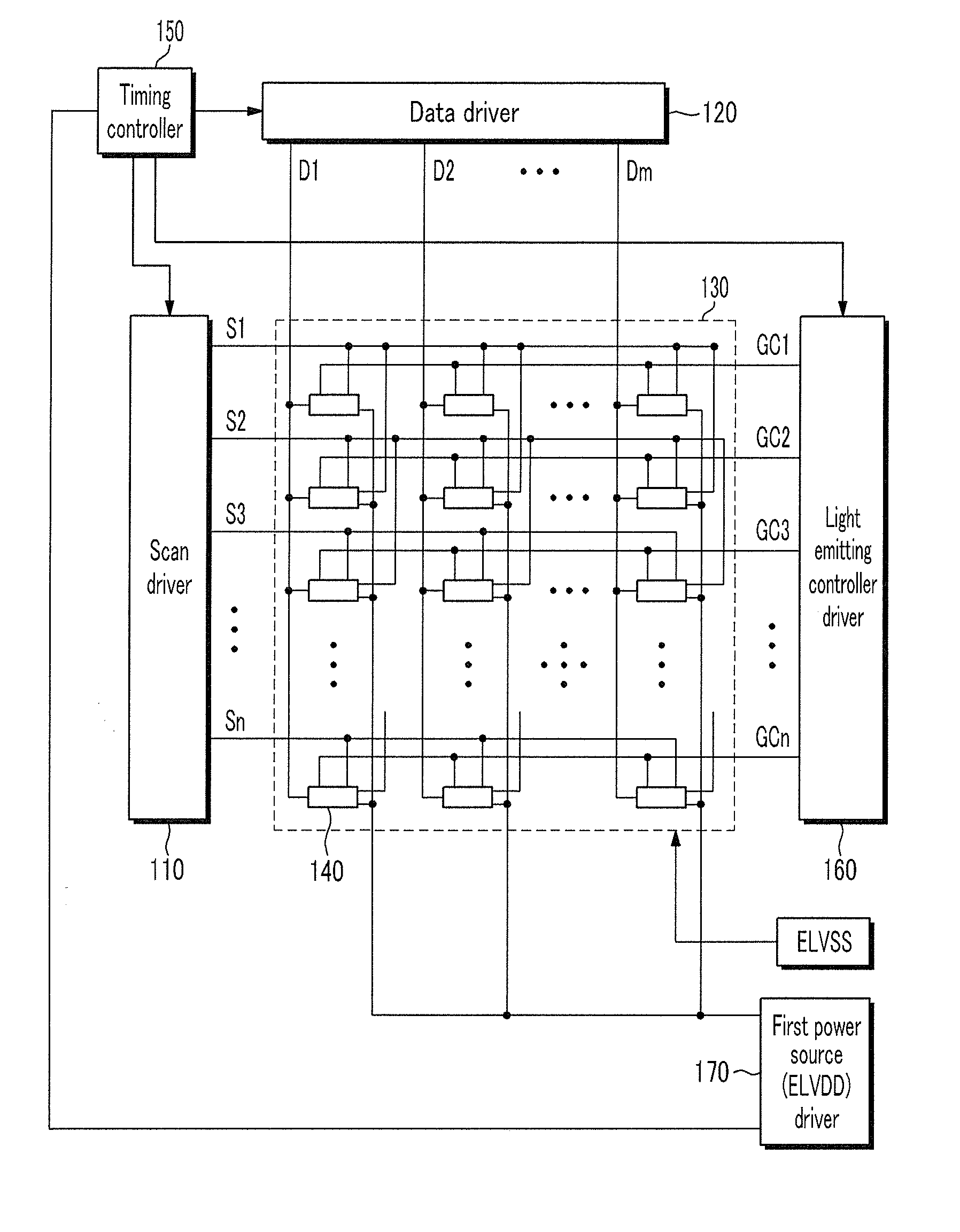
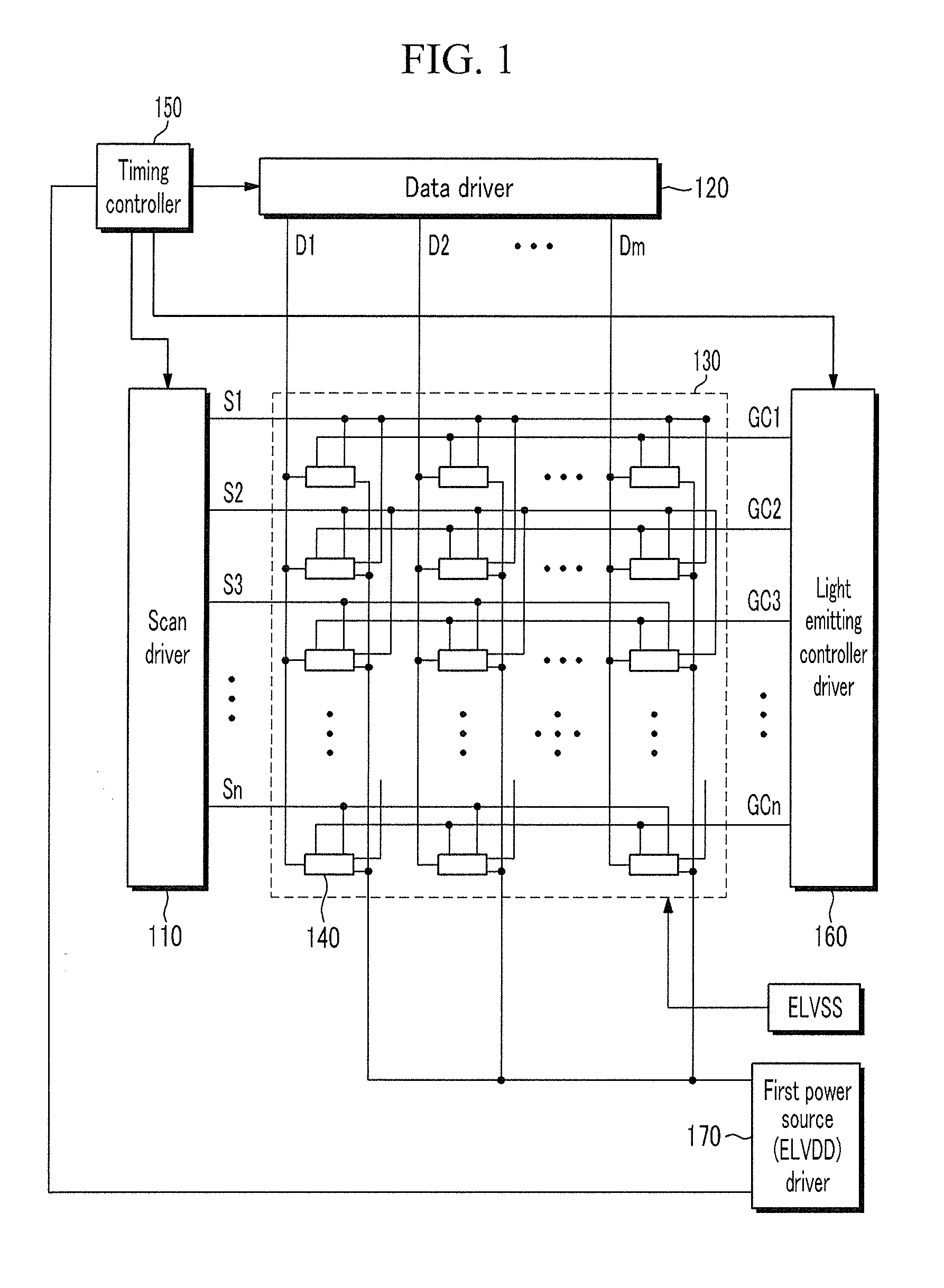
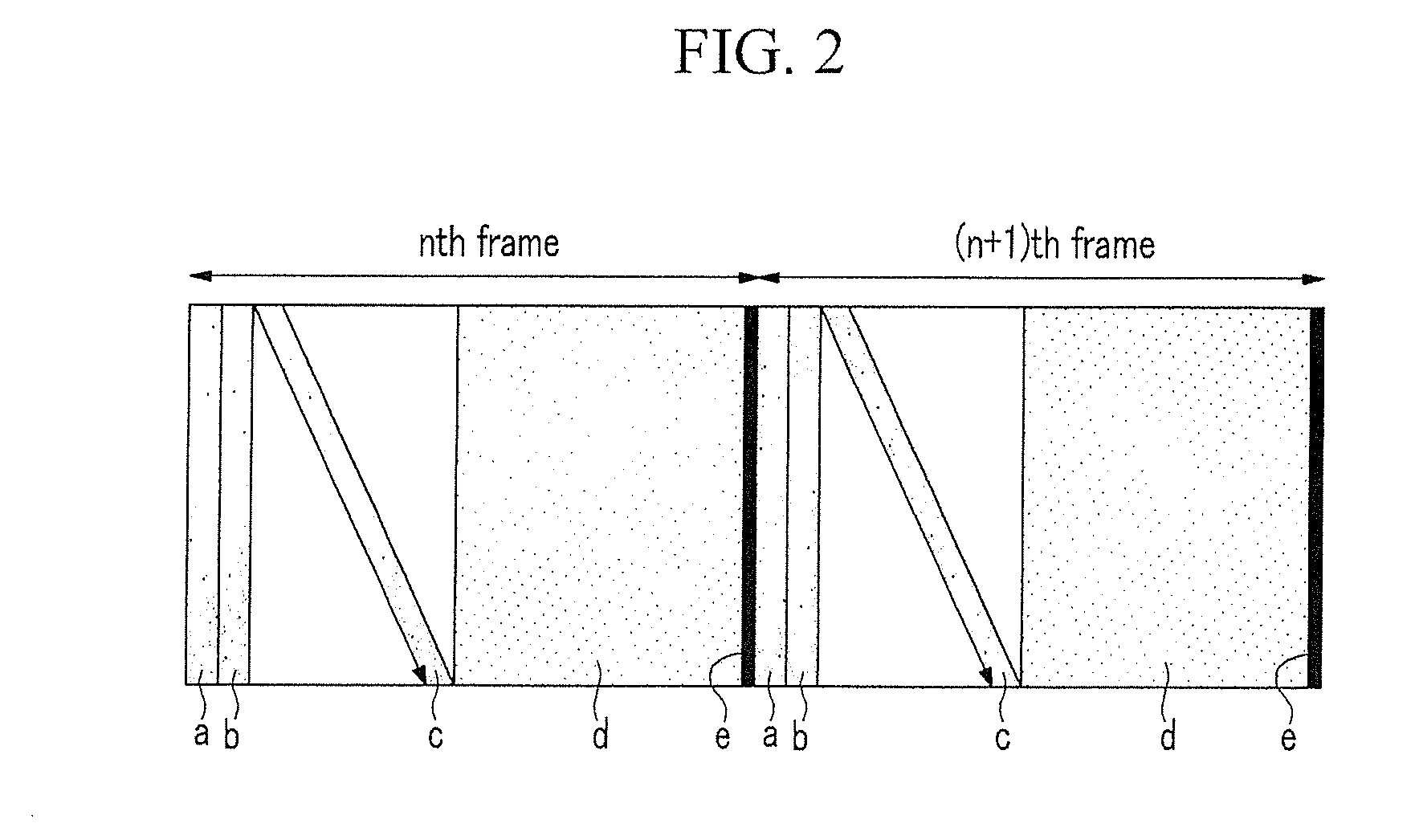
- The proposed solution involves a driving method and structure for AMOLED displays that control voltage levels during different periods to minimize leakage current, including a reset period for resetting the driving voltage, a threshold voltage compensation period, and a light emitting period, where the data signal voltage is adjusted to prevent leakage in the first switch, and the power source voltage is managed to ensure efficient operation.

Active matrix organic electro luminescence device panel
PatentInactiveUS20040262605A1
Innovation
- The integration of peripheral circuits, including drivers and a timing controller, onto a second substrate that encapsulates the organic electroluminescence layer, with wires and a sealant connecting the substrates to maintain moisture protection and enable signal transmission to the first substrate's electrodes.


Display Standards and Black Level Specifications
Display technology standards have evolved significantly to address the critical parameter of black level precision, establishing comprehensive measurement methodologies and specifications that differentiate various display technologies. The Society for Information Display (SID) and International Electrotechnical Commission (IEC) have developed standardized protocols for measuring black level performance, typically expressed in candelas per square meter (cd/m²) or nits under controlled ambient lighting conditions.
CRT displays operate under the VESA DisplayPort and older analog standards, where black level precision is fundamentally limited by cathode ray tube physics. The electron beam cannot be completely shut off, resulting in measurable luminance even during black pixel reproduction. Industry specifications for CRT monitors typically define acceptable black levels between 0.3 to 1.0 cd/m², with premium models achieving approximately 0.1 cd/m² under optimal conditions. These specifications account for the inherent phosphor afterglow and electron gun leakage current that prevents true black reproduction.
AMOLED technology adheres to more stringent black level standards established by the Display Industry Association and JEDEC Solid State Technology Association. These standards recognize AMOLED's capability for pixel-level light emission control, where individual organic light-emitting diodes can achieve complete deactivation. Current AMOLED specifications define true black as achieving luminance levels below 0.0005 cd/m², representing a theoretical perfect black state that approaches the measurement threshold of standard photometers.
Measurement protocols differ substantially between these technologies due to their distinct operational characteristics. CRT black level testing requires stabilization periods accounting for thermal drift and phosphor settling, while AMOLED measurements must consider pixel response uniformity and potential burn-in effects. The International Committee for Display Metrology has established specific testing environments with controlled ambient lighting below 1 lux and standardized viewing angles to ensure consistent black level assessments across different display technologies.
Contemporary display standards increasingly emphasize contrast ratio specifications that directly correlate with black level performance, establishing minimum requirements for professional applications, consumer electronics, and specialized industrial uses where precise black reproduction remains critical for visual accuracy and user experience optimization.
CRT displays operate under the VESA DisplayPort and older analog standards, where black level precision is fundamentally limited by cathode ray tube physics. The electron beam cannot be completely shut off, resulting in measurable luminance even during black pixel reproduction. Industry specifications for CRT monitors typically define acceptable black levels between 0.3 to 1.0 cd/m², with premium models achieving approximately 0.1 cd/m² under optimal conditions. These specifications account for the inherent phosphor afterglow and electron gun leakage current that prevents true black reproduction.
AMOLED technology adheres to more stringent black level standards established by the Display Industry Association and JEDEC Solid State Technology Association. These standards recognize AMOLED's capability for pixel-level light emission control, where individual organic light-emitting diodes can achieve complete deactivation. Current AMOLED specifications define true black as achieving luminance levels below 0.0005 cd/m², representing a theoretical perfect black state that approaches the measurement threshold of standard photometers.
Measurement protocols differ substantially between these technologies due to their distinct operational characteristics. CRT black level testing requires stabilization periods accounting for thermal drift and phosphor settling, while AMOLED measurements must consider pixel response uniformity and potential burn-in effects. The International Committee for Display Metrology has established specific testing environments with controlled ambient lighting below 1 lux and standardized viewing angles to ensure consistent black level assessments across different display technologies.
Contemporary display standards increasingly emphasize contrast ratio specifications that directly correlate with black level performance, establishing minimum requirements for professional applications, consumer electronics, and specialized industrial uses where precise black reproduction remains critical for visual accuracy and user experience optimization.
Power Efficiency Impact on Black Level Performance
The relationship between power efficiency and black level performance represents a critical trade-off in display technology design, with CRT and AMOLED technologies demonstrating fundamentally different approaches to this challenge. Power consumption patterns directly influence the precision and stability of black level reproduction, creating distinct performance characteristics for each technology.
CRT displays exhibit a unique power-black level relationship where deeper blacks actually reduce overall power consumption. When displaying true black content, the electron beam is completely shut off for those pixels, resulting in zero power draw for black areas. However, maintaining precise black levels requires consistent power delivery to the cathode ray tube's heating elements and deflection systems. Power fluctuations can introduce subtle variations in electron beam intensity, potentially compromising black level accuracy during low-power states or when transitioning between different brightness levels.
AMOLED technology presents a more complex power-black level interaction due to its pixel-level control architecture. Individual organic light-emitting diodes consume zero power when displaying true black, theoretically providing perfect black levels with optimal efficiency. However, the supporting circuitry, including thin-film transistors and driving electronics, maintains constant power consumption regardless of displayed content. This baseline power draw can introduce electrical noise and thermal effects that subtly impact black level precision.
Temperature variations caused by power consumption changes significantly affect both technologies' black level performance. CRT phosphor efficiency and electron emission characteristics vary with temperature, while AMOLED organic materials exhibit temperature-dependent luminance and color characteristics. Power management strategies must account for these thermal effects to maintain consistent black level reproduction across varying content and ambient conditions.
Dynamic power scaling presents additional challenges for black level precision. CRT displays using automatic brightness control or power-saving features may experience brief instabilities during power state transitions, temporarily affecting black level accuracy. AMOLED displays implementing adaptive refresh rates or variable pixel driving voltages must carefully balance power savings with black level consistency, as rapid power changes can introduce visible artifacts in dark content areas.
The measurement and validation of power-efficient black level performance requires sophisticated testing methodologies that account for both instantaneous and sustained power consumption patterns, ensuring that efficiency optimizations do not compromise the fundamental display quality metrics.
CRT displays exhibit a unique power-black level relationship where deeper blacks actually reduce overall power consumption. When displaying true black content, the electron beam is completely shut off for those pixels, resulting in zero power draw for black areas. However, maintaining precise black levels requires consistent power delivery to the cathode ray tube's heating elements and deflection systems. Power fluctuations can introduce subtle variations in electron beam intensity, potentially compromising black level accuracy during low-power states or when transitioning between different brightness levels.
AMOLED technology presents a more complex power-black level interaction due to its pixel-level control architecture. Individual organic light-emitting diodes consume zero power when displaying true black, theoretically providing perfect black levels with optimal efficiency. However, the supporting circuitry, including thin-film transistors and driving electronics, maintains constant power consumption regardless of displayed content. This baseline power draw can introduce electrical noise and thermal effects that subtly impact black level precision.
Temperature variations caused by power consumption changes significantly affect both technologies' black level performance. CRT phosphor efficiency and electron emission characteristics vary with temperature, while AMOLED organic materials exhibit temperature-dependent luminance and color characteristics. Power management strategies must account for these thermal effects to maintain consistent black level reproduction across varying content and ambient conditions.
Dynamic power scaling presents additional challenges for black level precision. CRT displays using automatic brightness control or power-saving features may experience brief instabilities during power state transitions, temporarily affecting black level accuracy. AMOLED displays implementing adaptive refresh rates or variable pixel driving voltages must carefully balance power savings with black level consistency, as rapid power changes can introduce visible artifacts in dark content areas.
The measurement and validation of power-efficient black level performance requires sophisticated testing methodologies that account for both instantaneous and sustained power consumption patterns, ensuring that efficiency optimizations do not compromise the fundamental display quality metrics.
Unlock deeper insights with PatSnap Eureka Quick Research — get a full tech report to explore trends and direct your research. Try now!
Generate Your Research Report Instantly with AI Agent
Supercharge your innovation with PatSnap Eureka AI Agent Platform!